
 English
 Español
 中文
中文 हिन्दी
 Français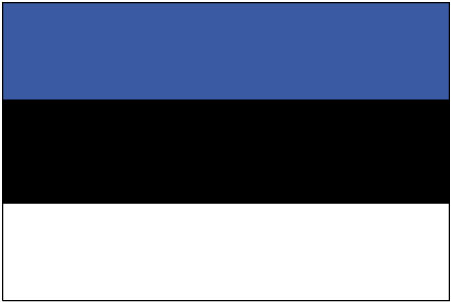
Estonia
Eesti
Declare Your Relationship to Estonia
CountryReports Community
- Studying1
- From Estonia0
- Estonia heritage0
- Visited0
- Want to visit0
Customs and Culture
Customs and Culture
About the People
Estonians are generally well educated and possess a wide range of skills. They like orderliness, hard work and efficiency. Estonians are generally shy and withdrawn. However among friends they are quite hospitable.
Cultural Attributes
Estonians are generally well educated and possess a wide range of skills. They like orderliness, hard work and efficiency. Estonians are generally shy and withdrawn. However among friends they are quite hospitable.

Digital Nation of the Baltic
Greetings, Gestures & Visiting
Estonian first names for males often end in the letter o. Young people greet elders first. Men greet women first. Estonians do not use first names until invited to do so. Estonians maintain eye contact and generally talk with their hands. Adults do not chew gum in public.
Usually people shake hands when meeting and departing. It is polite to look people in the eyes. When meeting someone for the first time it is polite to say teie. In Estonia the half hour is counted before the hour not after it. If you are going to be late it is expected to call and let your friends know.To arrive 30 minutes late is considered a social error.
Western style clothing is typically worn. Men dress conservatively and wearing a tie is optional. Women like to dress sharp and the quality of your clothes is more impressive than the fashion. Traditional dress for women includes long heavy woven skirts gathered at the waist and usually red, black orange or yellow in color. The are decorated with either fine vertical stripes or wide horizontal bands. White long-sleeve blouses are worn above the skirt with wide lace edged collars and cuffs. The blouses are sometimes embroidered with floral designs. The outfit is usually worn with white stockings and black shoes. Men wear black breeches fastened at the knees with silver buttons and a patterned vest over a long white shirt. Sometimes a skull cap is worn on the head.
Diet
Sult is often eaten as part of the Christmas dinner. Lunch is the biggest meal of the day with a typical meal consisting of meat and potatoes with gravy and a salad. Pizza and hamburgs are becoming popular lunchtime favorites. Most Estonians are health conscious and try to eat fresh fruits and vegetables.

Family
It is common for both the husband and wife to work. School children often get home earlier than their parents and spend the time home alone.
Recreation
Estonians like basketball, skiing, and soccer. There are also many yachting clubs. Many Estonians especially women like gardening.
Holidays
Independence Day
2/24Independence Day
24 February 1918 is the date Estonia declared its independence from Soviet Russia; 20 August 1991 is the date it declared its independence from the Soviet Union
Christmas
12/25Christmas
The Jõulud (Christmas) season extends from Advent to Epiphany, with the main holidays being Christmas Eve and the two days following Christmas. In southern Estonia Christmas is known as Talvistepüha (Winter Holiday). Christmas trees are decorated with small toys, sweets and candles. On Christmas Eve the President makes a declaration of “Christmas Peace” a tradition practiced since the seventeenth century. Following Christmas Eve church service, families put candles on the on the graves of ancestors. Christmas Day is a time for immediate family, while the rest of the season is a time for entertaining friends and guests.
Seven to twelve different meals are served on Christmas Eve symbolizing bounty for the coming year. The menu consist of pork with sauerkraut, “white” and “blood” sausages, Christmas barrow (bread), ale and mead. A fire must burn through the Christmas Eve night to dispel evil spirits.
Dates of Interest
- December 25th
The Jõulud (Christmas) season extends from Advent to Epiphany, with the main holidays being Christmas Eve and the two days following Christmas. In southern Estonia Christmas is known as Talvistepüha (Winter Holiday). Christmas trees are decorated with small toys, sweets and candles. On Christmas Eve the President makes a declaration of “Christmas Peace” a tradition practiced since the seventeenth century. Following Christmas Eve church service, families put candles on the on the graves of ancestors. Christmas Day is a time for immediate family, while the rest of the season is a time for entertaining friends and guests. Seven to twelve different meals are served on Christmas Eve symbolizing bounty for the coming year. The menu consist of pork with sauerkraut, “white” and “blood” sausages, Christmas barrow (bread), ale and mead. A fire must burn through the Christmas Eve night to dispel evil spirits.
How do people greet each other in Estonia?
Estonians usually shake hands when meeting and departing, maintain eye contact and often talk with their hands. Younger people greet elders first and men greet women first.
Do
- Shake hands when meeting and departing
- Maintain eye contact when speaking
- Let young people greet elders first, and men greet women first
- Say 'teie' when meeting someone for the first time
Don’t
- Don't use first names until invited to do so
- Don't chew gum in public as an adult
What are Estonian eating customs like?
Lunch is the biggest meal of the day, typically meat and potatoes with gravy and a salad. Most Estonians are health conscious and try to eat fresh fruits and vegetables.
Good to know
- Sult is often eaten as part of Christmas dinner
- Pizza and hamburgers are becoming popular lunchtime favorites
What etiquette should I know in Estonia?
Estonians value orderliness, punctuality and efficiency; they can be shy and withdrawn but are quite hospitable among friends.
Do
- Be on time — call ahead if you'll be late
- Look people in the eyes
Don’t
- Don't arrive 30 minutes late, as it is considered a social error
Good to know
- The half hour is counted before the hour, not after it
How should I dress in Estonia?
Western-style clothing is typically worn. Men dress conservatively with an optional tie, while women dress sharply, valuing quality over fashion.
Good to know
- For men, wearing a tie is optional
- For women, the quality of clothing impresses more than the fashion
What gestures matter in Estonia?
Estonians talk with their hands and consider it polite to look people in the eyes.
Do
- Look people in the eyes
What is family life like in Estonia?
It is common for both husband and wife to work, so school children often get home earlier than their parents and spend that time home alone.
What do Estonians do for recreation?
Estonians enjoy basketball, skiing, soccer and yachting, and many, especially women, like gardening.
Good to know
- There are many yachting clubs
Last updated: 2026-07-12 · Sources: CountryReports
Photos of Estonia
Photos of Estonia


Travel and Tourism
Travel and Tourism
- Travel Alert Status
- Level 1: Exercise Normal Precautions
- Currency
- 0.8985
- Time Difference
- UTC+2 (7 hours ahead of Washington, DC, during Standard Time)
- Climate
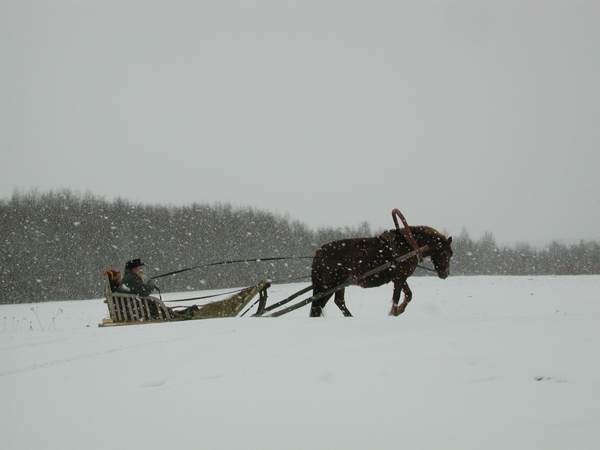
- The climate is northern continental, with long winters and short summers. Winter begins in October and lasts often well into April. Snowcover is common from mid or late November to the latter half of March. Cloud cover and slate gray skies are typical between October and early February, when drier and sunnier days arrive. Mean January temperatures are 22°-25°F(-4°-6°C). The Gulfs of Finland and Riga only freeze over during the coldest winters. In addition to being cold and snowy, winter months are characterized by shortened daylight, a result of Estonia's northern latitude (59°N). When days are at their shortest, daylight is present only between 9:30 a.m. and 3:00 p.m. Prevailing gray skies from November through January make daylight seem even more fleeting. The sun, when it shines, hugs the horizon, thus giving the impression that it is early morning or late afternoon even at midday. It is often difficult to say exactly when winter ends and spring begins. After the Vernal Equinox (March 21), daylight increases dramatically. Most days in late March, April, and May are sunny. Daytime temperatures, however, may still remain in the 30°-45°F range into late April, and it is not safe to put winter clothing into storage until late May. Occasional snow flurries and light snow are possible even through May. Summer in Estonia is a short, magical season. July and August temperatures are the warmest, averaging 67°-75°F (19°-24°C). Mornings are cooler and the late afternoon can warm up to the low-80”™s. The surface water temperature in the Baltic Sea is from 60°-78°F (16°-26°C). The heaviest rains occur in July and August, but they are usually passing showers. During summer months, Estonia benefits from its northern latitude, with daylight extending long into evening hours and reappearing well before earliest risers are out of bed. From early June to mid-July, there is no real "nighttime." The short autumn can start as early as late August and is generally cool and rainy.
- Airports
- 29
Read the full travel guide — health, safety, vaccinations, disease risk, sanitation, and transit details.
View full travel guideRecipes
Recipes
History
History
Historical Eras
Ancient & Pre-Crusade
8000 BCE – 1227
Finno-Ugric peoples settled the eastern Baltic coast following the last Ice Age, developing distinct parish and county structures without centralized statehood. Trade contacts with Scandinavian Vikings and Slavic tribes shaped early Estonian society. The region remained largely free, governed through loosely federated local communities, until German crusaders began their eastward campaign in the early thirteenth century.
Livonian Era
1227 – 1561
German Teutonic Knights and Danish forces conquered Estonian lands by 1227, incorporating them into the Livonian confederation and reducing the indigenous population to serfdom. The Hanseatic League brought commercial prosperity to Tallinn, Tartu, Pärnu, and Narva, even as Estonian peasants bore the burden of feudal subjugation. A major peasant uprising in 1343–45 briefly challenged German-Danish dominance but was ultimately crushed, leaving the social order intact for another two centuries.
Swedish Rule
1561 – 1710
Following the collapse of the Livonian confederation amid Ivan IV's invasion, Sweden gradually secured control of northern Estonia, formalizing it as the Duchy of Estland by 1629. Swedish governance brought relative stability and notable cultural advances, including the founding of Tartu University in 1632 and the establishment of the first Estonian-language parish schools in the 1680s. Decades of prior warfare had devastated the population, though recovery began under Swedish suzerainty even as the Baltic German nobility retained its privileged status.
Tsarist Russian Rule
1710 – 1918
Peter the Great's victory in the Great Northern War delivered Estland and Livland to the Russian Empire in 1710, inaugurating nearly two centuries of tsarist dominion. The Baltic German nobility preserved its legal privileges under Russian rule, while Estonian national consciousness gradually awakened in the nineteenth century, accelerated by the abolition of serfdom between 1816 and 1819 and a cultural renaissance known as the National Awakening. Revolutionary upheaval in 1905 and tsarist repression of Baltic demands sharpened independence aspirations, which came to fruition when Tsar Nicholas II abdicated in 1917.
First Independence
1918 – 1940
Estonia proclaimed independence on 24 February 1918 and successfully defended it in the War of Independence (1918–1920) against both Bolshevik and German forces, securing recognition through the Treaty of Tartu with Soviet Russia in 1920. A democratic constitution was adopted in 1920, land reform redistributed the estates of the Baltic German nobility, and Estonia joined the League of Nations in 1921. Political instability led to an authoritarian turn when Konstantin Päts declared a state of emergency in 1934, though Estonia retained nominal constitutional governance until Soviet occupation extinguished independence in 1940.
Soviet Occupation & Restored Independence
1940 – present
The Molotov–Ribbentrop Pact enabled the Soviet Union to forcibly annex Estonia in 1940; Nazi occupation followed from 1941 to 1944, after which Soviet rule resumed and mass deportations reshaped the country's demography and culture. The Singing Revolution of the late 1980s galvanized peaceful mass resistance, and Estonia restored full independence on 20 August 1991 following the collapse of the USSR. The last Russian troops withdrew in 1994, and Estonia joined NATO and the European Union in 2004, firmly anchoring itself in the Western political and economic order.
Overview
Timeline of Key Events
1 – 100
Early Baltic peoples experience rapid cultural progress.
Early Baltic peoples experience rapid cultural progress and expansion of trade with Roman Empire and Germanic tribes.
701 – 1300
Scandinavian Vikings and, subsequently, Slavic tribes engage in trade and war with Baltic peoples.
Scandinavian Vikings and, subsequently, Slavic tribes engage in trade and war with Baltic peoples.
1343 – 1345
Estonian peasant uprising prompts Danes to relinquish control of northern Estonia to Germans.
Estonian peasant uprising prompts Danes to relinquish control of northern Estonia to Germans.
1584
Northern Estonia incorporated into Sweden’s Duchy of Estland.
Northern Estonia incorporated into Sweden’s Duchy of Estland.
1710
Russian tsar Peter I (the Great) succeeds in wresting control of Estland and Livland.
Russian tsar Peter I (the Great) succeeds in wresting control of Estland and Livland (southern Estonia and northern Latvia) from Sweden.
1816 – 1819
Serfdom formally abolished in Estland and Livland.
Serfdom formally abolished in Estland and Livland.
1905
Tsarist Russian authorities respond with violence and repression to Baltic demands.
Tsarist Russian authorities respond with violence and repression to Baltic demands for radical political change during Revolution of 1905.
Read the full history profile — narrative overview, defining eras, and the complete timeline in one place.
View expanded historyInteresting Facts
Interesting Facts
Estonia has the world's most rented housing with 81.5% of property being rented.
See every fact — trivia, oddities, and curious tidbits gathered from across the country.
View all interesting factsGeography and Environment
Geography and Environment
- Terrain
- marshy, lowlands; flat in the north, hilly in the south
- Climate
- The climate is northern continental, with long winters and short summers. Winter begins in October and lasts often well into April. Snowcover is common from mid- or late November to the latter half of March. Cloud cover and slate gray skies are typical between October and early February, when drier and sunnier days arrive. Mean January temperatures are 22°F–25°(-4°C–6°C). The Gulfs of Finland and Riga only freeze over during the coldest winters. In addition to being cold and snowy, winter months are characterized by shortened daylight, a result of Estonia’s northern latitude (59°N). When days are at their shortest, daylight is present only between 9:30 a.m. and 3:00 p.m. Prevailing gray skies from November through January make daylight seem even more fleeting. The sun, when it shines, hugs the horizon, thus giving the impression that it is early morning or late afternoon even at midday. It is often difficult to say exactly when winter ends and spring begins. After the Vernal Equinox (March 21), daylight increases dramatically. Most days in late March, April, and May are sunny. Daytime temperatures, however, may still remain in the 30°F–45°F range into late April, and it is not safe to put winter clothing into storage until late May. Occasional snow flurries and light snow are possible even through May. Summer in Estonia is a short, magical season. July and August temperatures are the warmest, averaging 67°F–75°F (19°C–24°C). Mornings are cooler and the late afternoon can warm up to the low-80’s F. The surface water temperature in the Baltic Sea is from 60°F–78°F (16°C–26°C). The heaviest rains occur in July and August, but they are usually passing showers. During summer months, Estonia benefits from its northern latitude, with daylight extending long into evening hours and reappearing well before earliest risers are out of bed. From early June to mid-July, there is no real "nighttime." The short autumn can start as early as late August and is generally cool and rainy.
- Natural Hazards
- sometimes flooding occurs in the spring
- Current Environmental Issues
- air polluted with sulfur dioxide from oil-shale burning power plants in northeast; however, the amount of pollutants emitted to the air have fallen steadily, the emissions of 2000 were 80% less than in 1980; the amount of unpurified wastewater discharged to water bodies in 2000 was one twentieth the level of 1980; in connection with the start-up of new water purification plants, the pollution load of wastewater decreased; Estonia has more than 1,400 natural and manmade lakes, the smaller of which in agricultural areas need to be monitored; coastal seawater is polluted in certain locations
Read the full geography and environment profile — terrain, climate, natural resources, hazards, land use, and international agreements.
View full geographyPeople & Demographics
People & Demographics
Religion
Languages Spoken
Estonian (official), Russian, Ukrainian, Finnish, other
- Estonian
- Russian
- Ukrainian
Population
- Population
- 1,291,170
- Population in Major Urban Areas
- TALLINN (capital) 400,000
- Nationality Noun
- Estonian(s)
- Ethnic Groups
- Estonian 68.7%, Russian 24.8%, Ukrainian 1.7%, Belarusian 1%, Finn 0.6%, other 1.6%, unspecified 1.6%
Education
- Literacy Definition
- Age 15 and over can read and write
Health Information
- Major Infectious Diseases — degree of risk
- Intermediate
Read the full people and society profile — demographics, health, education, religion, languages, and notable people.
View full people and societyGovernment & Politics
Government & Politics
Country Identity
- Country Name
- Estonia
- Full Country Name
- Republic of Estonia
- Local - Long
- Eesti Vabariik
- Local - Short
- Eesti
- Former Name
- Estonian Soviet Socialist Republic
Government Structure
- Government Type
- parliamentary republic
- Legal System
- based on civil law system; no judicial review of legislative acts
- Executive Branch
- chief of state: President Alar KARIS (since 11 October 2021) head of government: Prime Minister Kristen MICHAL (since 23 July 2024) cabinet: Council of Ministers appointed by the prime minister, approved by Parliament elections: president elected by Parliament for a five-year term; if a candidate does not secure two-thirds of the votes after three rounds of balloting in Parliament, then an electoral assembly (made up of Parliament plus members of local governments) elects the president, choosing between the two candidates with the largest share of votes; election last held on 31 August 2021 (next to be held in 2026); prime minister nominated by the president and approved by Parliament election results: Alar KARIS elected president on 31 August 2021; he was nominated by several parliamentary parties as a consensus candidate and elected by Parliament in the first round of voting, having secured the required two-thirds majority; KARIS, a former head of the National Audit Office and rector of the University of Tartu, took office on 11 October 2021, succeeding Kersti KALJULAID, who had served since 2016
- Legislative Branch
- unicameral Parliament or Riigikogu (101 seats; members are elected by popular vote to serve four-year terms) elections: last held 2 March 2003 (next to be held NA March 2007) election results: percent of vote by party - Center Party of Estonia 25.4%, Res Publica 24.6%, Estonian Reform Party 17.7%, Estonian People's Union 13%, Pro Patria Union (Fatherland League) 7.3% People's Party Moodukad 7%; seats by party - Res Publica 26, Center Party 20, Reform Party 19, Estonian People's Union 13, Pro Patria Union 7, Social Democrats (formerly People's Party Moodukad) 6, non-affiliated (Social Liberals and independents) 10
- Judicial Branch
- National Court (chairman appointed by Parliament for life)
- Suffrage
- 18 years of age; universal for all Estonian citizens
- Constitution
- adopted 28 June 1992
- Independence
- regained on 20 August 1991 (from Soviet Union)
- National Holiday
- Independence Day, 24 February (1918); note - 24 February 1918 is the date Estonia declared its independence from Soviet Russia; 20 August 1991 is the date it declared its independence from the Soviet Union
Capital City
- Capital Name
- Tallinn
- Capital - geographic coordinate
- 59 26 N, 24 43 E
- Capital Time Difference
- UTC+2 (7 hours ahead of Washington, DC, during Standard Time)
The Estonian name is generally believed to be derived from "Taani-linn" (originally meaning "Danish castle", now "Danish town") after a stronghold built in the area by the Danes; it could also have come from "tali-linn" ("winter castle" or "winter town") or "talu-linn" ("home castle" or "home town")
Military
Branches: Estonian Defense Forces (Eesti Kaitsevagi): Land Force (Maavagi), Navy (Merevagi), Air Force (Ohuvagi), Defense League (Kaitseliit)
Embassy / Diplomatic Mission
U.S. Embassy Tallinn
Kentmanni 20 (postal code 15099).
Telephone: 372-668-8128 (please see our dialing instructions, below).
Emergency After-Hours Telephone: 372-668-8169
Facsimile: 372-668-8267;
E-mail: ACSTallinn@state.gov
Dialing instructions: Where you see the “ ” sign, you must begin by dialing the prefix required for international calls. If you are in the United States, you should start by dialing “011.” If you are calling from most other countries, you begin by dialing “00.” Thus, if you are in the United States, you can reach the embassy’s switchboard by dialing 011-372-668-8100. If you are calling from within Estonia, you can omit the country code ( 372).
Read the full government profile — flag symbolism, national anthem, and other national symbols.
View full government detailsEconomy
Economy
Estonia has developed into a modern, high-income market economy and is one of the most digitally advanced nations in the world. A member of the European Union since May 2004 and the eurozone since January 2011, Estonia uses the euro as its official currency. The country also joined NATO in 2004 and the OECD in 2010. Its economy is driven by strong information technology, electronics, telecommunications, and services sectors, with a globally recognized startup ecosystem that has produced multiple unicorns. Estonia's main trading partners include Finland, Sweden, Germany, Latvia, and Lithuania, making the economy sensitive to conditions in the Nordic and Baltic regions. Following a contraction tied to the energy crisis and reduced demand after Russia's invasion of Ukraine, Estonia has faced inflationary pressures and a prolonged recession, though public debt remains the lowest in the European Union. The government continues to prioritize fiscal discipline, digital innovation, and integration with Western markets.
Snapshot
- Currency Name and Code
- Euros (EUR)
- GDP — official exchange rate
- $12,190,000,000 (USD)
- GDP Real Growth Rate
- 9.6%
- Gini Index
- 37.2
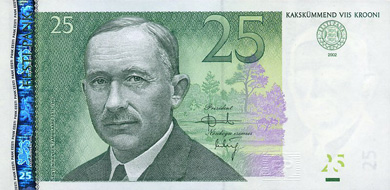
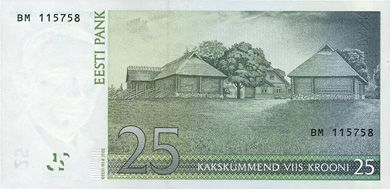
Banknotes
Budget & Public Finance
- Fiscal Year
- calendar year
- Annual Budget
- $5,017,000,000 (USD)
- Public Debt (% of GDP)
- 3.8%
- External Debt
- $10,090,000,000 (USD)
- Investment (% of GDP)
- 27.6%
- Economic Aid
- $108,000,000 (USD)
- Current Account Balance
- -$1,403,000,000 (USD)
- Reserves of Foreign Exchange
- $1,852,000,000 (USD)
Labor, Industry & Trade
- Labor Force by Occupation
- industry 20%; agriculture 11%; services 69%
- Household Income — highest 10%
- 29.8%
- Industries
- engineering, electronics, wood and wood products, textile; information technology, telecommunications
- Agriculture Products
- potatoes, vegetables; livestock and dairy products; fish
- Export Commodities
- machinery and equipment 33%, wood and paper 15%, textiles 14%, food products 8%, furniture 7%, metals, chemical products
- Export Partners
- Finland 20.4%, Sweden 12.4%, Russia 10%, Germany 8.3%, Latvia 7.7%, UK 4.2%, Lithuania 4.1%
- Import Commodities
- machinery and equipment 33.5%, chemical products 11.6%, textiles 10.3%, foodstuffs 9.4%, transportation equipment 8.9%
- Import Partners
- Finland 15.6%, Russia 12%, Germany 11.1%, Sweden 8.4%, China 4.6%, Italy 4.1%
Energy
- Oil Production
- 6,100 bbl/day
- Oil Consumption
- 25,000 bbl/day
- Oil Reserves
- 0 bbl/day
- Natural Gas Production
- 0 cu m
- Natural Gas Consumption
- 1,410,000,000 cu m
- Natural Gas Imports
- 1,270,000,000 cu m
- Natural Gas Exports
- 0 cu m
- Natural Gas Reserves
- 0 cu m
Communications
- Telephone System
- General assessment: foreign investment in the form of joint business ventures greatly improved telephone service with a wide range of high-quality voice, data, and Internet services available Domestic: substantial fiber-optic cable systems carry telephone, TV, and radio traffic in the digital mode; Internet services are widely available; schools and libraries are connected to the Internet, a large percentage of the population files income-tax returns online, and online voting was used for the first time in the 2005 local elections International: country code - 372; fiber-optic cables to Finland, Sweden, Latvia, and Russia provide worldwide packet-switched service; 2 international switches are located in Tallinn
- Internet Country Code
- .ee
News & Weather
News & Weather
Current Weather
Latest News
'Sooner Or Later This Problem Will Be On Your Soil': Estonia Pushes Europe To Bar Russian Fighters - Radio Free Europe/Radio Liberty
Radio Free Europe/Radio Liberty · 2d ago
BREAKING: Sami soars on Delfi Rally Estonia - WRC.com
WRC.com · 1d ago
The British Army’s drone force is deploying to face Putin. Good idea - The Telegraph
The Telegraph · 19h ago
The important lesson Oliver Solberg put into practice in Estonia - Motorsport.com
Motorsport.com · 20h ago
Estonia's quiet presidential race could shake up politics - The Baltic Times
The Baltic Times · 19h ago
Estonia has the best internet in the world, Canada's No. 14 - KamloopsBCNow
KamloopsBCNow · 1d ago
Estonia vs Kosovo - Class. Game 17-18 - FIBA U20 EuroBasket 2026, Division B - FIBA Basketball
FIBA Basketball · 2d ago
Estonia Demands Harsher Sanctions After Russian Ballistic Attack on Kyiv - Kyiv Post
Kyiv Post · 1d ago
News via Google News
Climate Overview
The climate is northern continental, with long winters and short summers. Winter begins in October and lasts often well into April. Snowcover is common from mid or late November to the latter half of March. Cloud cover and slate gray skies are typical between October and early February, when drier and sunnier days arrive. Mean January temperatures are 22°-25°F(-4°-6°C). The Gulfs of Finland and Riga only freeze over during the coldest winters.
In addition to being cold and snowy, winter months are characterized by shortened daylight, a result of Estonia's northern latitude (59°N). When days are at their shortest, daylight is present only between 9:30 a.m. and 3:00 p.m. Prevailing gray skies from November through January make daylight seem even more fleeting. The sun, when it shines, hugs the horizon, thus giving the impression that it is early morning or late afternoon even at midday.
It is often difficult to say exactly when winter ends and spring begins. After the Vernal Equinox (March 21), daylight increases dramatically. Most days in late March, April, and May are sunny. Daytime temperatures, however, may still remain in the 30°-45°F range into late April, and it is not safe to put winter clothing into storage until late May. Occasional snow flurries and light snow are possible even through May.
Summer in Estonia is a short, magical season. July and August temperatures are the warmest, averaging 67°-75°F (19°-24°C). Mornings are cooler and the late afternoon can warm up to the low-80”™s. The surface water temperature in the Baltic Sea is from 60°-78°F (16°-26°C). The heaviest rains occur in July and August, but they are usually passing showers. During summer months, Estonia benefits from its northern latitude, with daylight extending long into evening hours and reappearing well before earliest risers are out of bed. From early June to mid-July, there is no real "nighttime."
The short autumn can start as early as late August and is generally cool and rainy.
Videos
Videos
1 curated YouTube videos.
Source: YouTube
Frequently Asked Questions
Frequently Asked Questions
What is the population of Estonia?
How do people greet each other in Estonia?
What are Estonian eating customs like?
What etiquette should I know in Estonia?
How should I dress in Estonia?
What gestures matter in Estonia?
What is family life like in Estonia?
What do Estonians do for recreation?
What is the capital of Estonia?
Where is Estonia located?
What countries border Estonia?
What is the predominant religion in Estonia?
What currency does Estonia use?
What language is spoken in Estonia?
What is Estonia known for?
Last reviewed 2026