
 English
 Español
 中文
中文 हिन्दी
 Français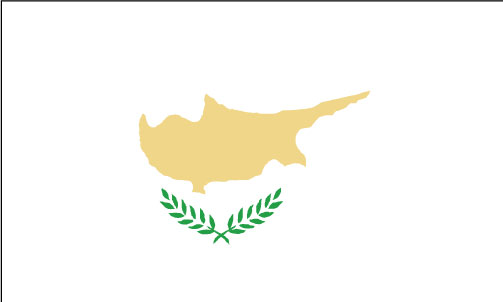
Cyprus
Declare Your Relationship to Cyprus
CountryReports Community
- Studying0
- From Cyprus2
- Cyprus heritage0
- Visited1
- Want to visit1
Customs and Culture
Customs and Culture
Cultural Attributes
Cyprus carries a rich cultural identity shaped by thousands of years of civilization, successive waves of foreign influence, and the enduring traditions of its two main communities — Greek Cypriots and Turkish Cypriots. This layered heritage makes the island one of the most culturally complex societies in the Eastern Mediterranean. The Greek Cypriot community, which makes up approximately 77 percent of the island's population, maintains strong ties to Greek Orthodox Christianity, a faith that permeates daily life, public holidays, and social customs. The Orthodox Church calendar governs many of the island's most significant celebrations, including Easter, which is observed with candlelit processions, midnight liturgies, and communal feasting. The Turkish Cypriot community, concentrated in the northern part of the island, follows Islamic traditions and observes holidays such as Eid al-Fitr, though the community is generally regarded as secular in its everyday practices. Family remains the cornerstone of Cypriot society. Extended family networks are deeply valued, and it is common for multiple generations to live in close proximity or to gather regularly for shared meals. Hospitality — known in Greek as "philoxenia," meaning love of strangers — is considered a defining national virtue. Guests are routinely offered coffee, sweets, or food as a sign of welcome. Cyprus has a vibrant folk tradition that includes distinctive music, embroidery, pottery, and lacework. The Lefkara village is internationally recognized for its intricate handmade lacework and silverware, a tradition said to date back centuries. Traditional Cypriot music features the violin, laouto (a form of lute), and the tambouras, and is closely tied to local dance forms such as the kartilliasmos and syrtos. Cuisine is an important cultural expression, with meze — a spread of small shared dishes — serving as both a culinary tradition and a social ritual. Halloumi cheese, recognized as a protected designation of origin product by the European Union, is arguably the island's most internationally recognized cultural export. The division of the island since 1974 continues to influence cultural expression and identity, with efforts at cross-community dialogue increasingly finding outlets in art, music, and shared festivals.

Island of Aphrodite, Land of Ancient Copper
Greetings, Gestures & Visiting
Cypriots are expressive in their greetings. Men hug or slap male friends on the back or shoulder. Women kiss friends on both cheeks. New acquaintances greet each other more formally, whereas friends use first names.
Cypriots can indicate 'no' by tilting the head back or shaking it from side to side. Hand movements are used expressively to accompany verbal conversation.
Visitors from outside Cyprus often note that Cyprus seems to be a place where 'everyone knows everyone else, or is related' This familiarity is reflected in an air of casual and informal friendliness. Dropping in without notice is a common occurrence, although due to time pressures in the city, this is changing. Guests are expected to eat and drink freely when pressed, to avoid hurt feelings.
Traditional costumes are worn at folk festivals and special events, including formal visits. Generally, people dress according to occupation, ranging from urban white collar to rural peasant cotton pants, skirts, and vests. Informality is the norm.
Diet
Cyprus cuisine is closely related to that of Greece, but the island's unique position at the crossroads of Europe, Africa, and the Middle East has added exotic dimensions that make it particularly varied and delicious. Emphasizing fresh local ingredients, regional herbs and spices, and the light use of natural olive oil, the Cypriot palate is quintessentially Mediterranean in character.
If freshness is one key to cooking in Cyprus, meze is the other. An abbreviation of mezedes, or "little delicacies," meze consist of as many as 30 small plates of food, from savory dips and vegetables to a wide range of fish and meat dishes. Much more than hors d'oeuvres, the meze often comprise the heart of a meal itself. In some restaurants and tavernas you can choose to order seafood meze or meat meze.
Among the items you can expect to be served are: Loukanika, coriander-seasoned sausages, soaked in red wine and smoked; Koupepia, grape leaves stuffed with minced meat and rice; Lountza, smoked pork, often served in sandwiches with halloumi, a delicious soft cheese, (usually grilled) made from thyme-fed sheep and sometimes spiced with peppermint; sheftalia, grilled pork sausage, afelia, pork marinated in wine and coriander; stiphado, beef or rabbit stew casseroled with wine vinegar, onions and spices; and ofto kleftiko, chunks of lamb cooked in a sealed clay oven and seasoned with bay leaves.
Seafood dishes include calamari, octopus in red wine, barbouni (red mullet), and sea bass. Some common vegetable preparations are potatoes in olive oil and parsley, pickled cauliflower and beets, zucchini, kolokasi (a sweet potato-like root vegetable) and asparagus.
There are also the Greek classics taramosalata, fish roe blended into a creamy pink dip of pureed potatoes with parsley, lemon juice and finely chopped onion; talatouri, cool mint and cucumber flavored yogurt with a dusting of garlic, a variation on the Greek tzatziki;
Greek salad (horiatiki salata) with tomatoes, lettuce, bell peppers, feta cheese, green olives and local herbs; moussaka, the traditional Greek dish of minced meat and eggplant topped with creamy bechamel sauce; and souvlakia, kebabs of pork, lamb and chicken.
Cypriot desserts often consist of fresh fruit, served alone or with a selection of sweet pastries or fruit preserved in syrup. These include loukoumades, Cyprus donuts with honey syrup, daktyla, ladyfingers with almonds, walnuts and cinnamon, and shiamali, orange semolina cakes cut into squares. In cafes, popular snacks include kolokoti, a pastry triangle stuffed with red pumpkin, cracked wheat and raisins, and pastellaki, a sesame, peanut and honey syrup bar. There is also galatopoureko, a cream-stuffed phyllo pastry. A traditional sweet treat is loukoumia, cubes of gelatin flavored with rose water and dusted with powdered sugar.
Lunch is still the main meal of the day, followed by a rest in the heat of the day. Eating with fingers is acceptable with some parts of the meal, eg bread and dips. It is considered impolite to leave the table before others have finished.
Fresh salads and plain yogurt accompany most meals. Pourgouri Pilafi, prepared from hulled wheat, the grain is steamed until partly cooked then dried before being ground. Pourgouri is available in fine and coarse grade. Moussaka may have its roots in Greece but no-one makes individual moussakas in terracotta pots quite like the Cypriots and Afelia is usually served with pourgouri pilafi and yogurt. Kali orexi - Bon appetit!!

Family
One should not bring dishonor on the family. Parents strive to provide the young couple with a home, and perhaps a car. However, since the move to urban living, relatives are not always close in proximity. The women still rule over the house domain, and the men preside over the political arena. Children are a high priority both in the family and community.
Dating Customs
Arranged marriages have largely disappeared, but some parents still exert a strong influence on the choice of spouse. Marriage is seen to be normal, so not marrying is considered to be unusual. Young people go out to dances, cafes and bars in the city, but in rural settings they often gather in the town square.
Recreation
Futból (Soccer) is popular for both players and spectators. Three ski runs on Mount Olympus draw skiers from January to March. Hunting is also popular during the season. Cypriots also enjoy picnics in the mountains and swimming on the beaches during the summer. Women usually participate in women-only aerobic classes.
Holidays
Independence Day
10/1Independence Day
Turkish Cypriot area celebrates 15 November (1983) as Independence Day
Dates of Interest
- October 1st
Turkish Cypriot area celebrates 15 November (1983) as Independence Day
How do people greet each other in Cyprus?
Cypriots greet expressively, with the style depending on how well people know each other.
Do
- Men hug or slap male friends on the back or shoulder
- Women kiss friends on both cheeks
- Use first names with friends
Good to know
- Greet new acquaintances more formally
What are dining customs like in Cyprus?
Cypriot cuisine is Mediterranean and social, centered on meze — a spread of up to 30 small shared plates that often make up the heart of a meal. Lunch is still the main meal of the day.
Do
- Eat bread and dips with your fingers, which is acceptable
- Try meze dishes like loukanika, koupepia, sheftalia, afelia, and ofto kleftiko
- Expect fresh salads and plain yogurt with most meals
Don’t
- Don't leave the table before others have finished
Good to know
- You can order seafood meze or meat meze in some restaurants and tavernas
- Expect a rest during the heat of the day after lunch
- Say 'Kali orexi' - Bon appetit!
What should I know about hospitality and etiquette in Cyprus?
Hospitality, known as 'philoxenia' (love of strangers), is a defining national virtue, and Cypriots are casually and informally friendly.
Do
- Eat and drink freely when pressed, to avoid causing hurt feelings
- Accept offered coffee, sweets, or food as a sign of welcome
Good to know
- Dropping in without notice is common, though this is changing due to time pressures in the city
How should I dress in Cyprus?
Informality is the norm, with people generally dressing according to their occupation.
Good to know
- Traditional costumes are worn at folk festivals, special events, and formal visits
What gestures should I be aware of in Cyprus?
Cypriots use hand movements expressively to accompany conversation.
Good to know
- 'No' can be indicated by tilting the head back or shaking it from side to side
What role does family play in Cypriot society?
Family is the cornerstone of Cypriot society, with extended networks deeply valued and children a high priority in both family and community.
Do
- Respect that one should not bring dishonor on the family
Good to know
- Multiple generations often live in close proximity or gather regularly for shared meals
- Women traditionally rule the home domain and men the political arena
- Parents may still strongly influence the choice of spouse, though arranged marriages have largely disappeared
What do people do for recreation in Cyprus?
Soccer is hugely popular, and Cypriots enjoy the outdoors year-round.
Good to know
- Ski on Mount Olympus's three runs from January to March
- Enjoy picnics in the mountains and swimming at the beaches in summer
- Hunting is popular during the season
- Women usually attend women-only aerobic classes
Last updated: 2026-07-12 · Sources: CountryReports
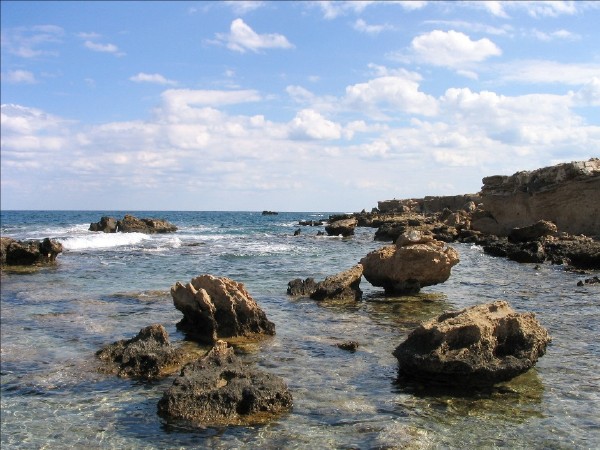
Photos of Cyprus
Photos of Cyprus


Travel and Tourism
Travel and Tourism
- Travel Alert Status
- Level 1: Exercise Normal Precautions
- Currency
- 0.9214
- Time Difference
- UTC+2 (7 hours ahead of Washington, DC, during Standard Time)
- Climate
- Cyprus has hot, dry, dusty summers and moderately cool, damp winters. Nicosia's maximum mean temperature is about 80°F, while the minimum mean temperature is 50°F. From mid-June to mid-September, the temperature sometimes exceeds 100°F. After sunset, it usually falls to between 60°F and 70°F. The summer heat is tolerable because humidity is usually low and high temperatures are often tempered by westerly winds. Nicosia's summer weather is generally more comfortable than in the seaside towns, where humidity is higher though temperatures are lower. Rain falls almost exclusively from December through March. Winters are usually cool and damp. On the whole, Cyprus has an enjoyable Mediterranean climate.
- Airports
- 17
- Recommended Vaccinations
- How important is it to do your research about vaccinations? It might just save your life! Make yourself aware of the different types of vaccinations and which ones you may need to travel to your destination. Schedule an appointment with your doctor at least four to six weeks before you travel to ensure you receive all important shots. Be sure that you and your family are up to date on your routine vaccinations. Which vaccinations you need will depend on a number of factors including your destination, whether you will be spending time in rural areas, the season of the year you are traveling, your age, health status, and previous immunizations.
Read the full travel guide — health, safety, vaccinations, disease risk, sanitation, and transit details.
View full travel guideRecipes
Recipes
History
History
Historical Eras
Ancient & Classical Cyprus
4500 BCE – 30 BCE
From early Chalcolithic settlements through successive Bronze Age cultures, Cyprus became a prized source of copper and timber, attracting Mycenaean Greeks, Phoenicians, Assyrians, Egyptians, and Persians. City-kingdoms such as Salamis, Paphos, and Tamassos flourished, and by the Early Iron Age Greek language and culture became dominant. Alexander the Great's campaigns ended Persian influence, and the Ptolemaic dynasty of Egypt subsequently ruled the island until Roman annexation.
Roman & Early Byzantine
30 BCE – 649
Rome formally annexed Cyprus in 58 BC, and the island prospered as a senatorial province. Christianity arrived early, introduced by the apostles Paul, Barnabas, and Mark; the martyrdom of Barnabas secured the autocephalous status of the Church of Cyprus. Devastating earthquakes in the fourth century reshaped the island's cities, and when the Roman Empire divided in 395 AD, Cyprus passed fully into the Byzantine sphere.
Arab Raids & Byzantine Recovery
649 – 1191
Beginning in 649, Arab fleets under Muawiya launched repeated invasions that devastated Cypriot settlements and inaugurated nearly three centuries of contested control between Byzantium and the Arab Caliphate. A treaty eventually established a condominium arrangement, leaving Cyprus in an unusual tributary status. Byzantine authority was ultimately reasserted, though the island remained vulnerable to piracy and periodic Arab incursions until the arrival of the Crusades.
Lusignan & Venetian Rule
1191 – 1571
Richard I of England seized Cyprus in 1191 during the Third Crusade and sold it to the Frankish Lusignan dynasty, which ruled for nearly three centuries and established a Latin Catholic feudal order that persistently clashed with the Orthodox church and Greek Cypriot population. Venice acquired the island in 1489, fortifying Nicosia and Famagusta as key eastern Mediterranean outposts. Ottoman forces under Sultan Selim II conquered Cyprus in 1571 after a prolonged siege of Famagusta.
Ottoman Rule
1571 – 1878
Under Ottoman governance Cyprus was administered through the millet system, which restored the Orthodox Church's institutional role and elevated the archbishop as both religious and civil leader of the Greek Cypriot community. Ottoman rule reduced the Frankish feudal aristocracy and brought a Turkish Muslim settler population that formed the basis of the later Turkish Cypriot community. Following Greece's independence in 1821, the idea of enosis — union with Greece — began to take hold among Greek Cypriots.
British Colonial Period
1878 – 1960
Britain assumed administrative control of Cyprus from the Ottomans in 1878 and formally annexed it in 1914, ruling it as a Crown Colony from 1925. Greek Cypriot agitation for enosis intensified after World War II, culminating in the EOKA guerrilla campaign led by General Grivas and politically championed by Archbishop Makarios III from 1955. A compromise brokered in Zurich and London among Greece, Turkey, and Britain ended colonial rule, and Cyprus became an independent republic on August 16, 1960.
Independent Republic
1960 – present
Archbishop Makarios III became the republic's first president, but intercommunal violence between Greek and Turkish Cypriots undermined the power-sharing constitution through the 1960s. A Greek junta–sponsored coup in 1974 triggered a Turkish military intervention that divided the island along the Attila Line, with Turkey controlling roughly 37 percent of the territory; the Turkish Cypriot north unilaterally declared the Turkish Republic of Northern Cyprus in 1983, recognized only by Turkey. The Greek Cypriot south joined the European Union in 2004, while UN-mediated reunification efforts have remained unresolved.
Overview
Timeline of Key Events
4500 BCE – 3500 BCE
The aceramic civilization of Cyprus came to an end quite abruptly around 6000 BC.
The aceramic civilization of Cyprus came to an end quite abruptly around 6000 BC. It was probably followed by a vacuum of almost 1.500 years until around 4500 BC when we have the emergence of Neolithic II. At this time newcomers arrived in Cyprus introducing a new neolithic era. The main settlement that embodies most of the characteristics of the period is Sotira near the south coast of Cyprus. It had nearly fifty houses, usually having a single room that had its own hearth, benches, platforms and partitions that provided working places. The houses were on the main free-standing, with relatively thin walls and tended to be square with rounded corners.
2500 BCE – 1900 BCE
The new era was introduced by people from Anatolia who came to Cyprus
The new era was introduced by people from Anatolia who came to Cyprus because of disturbances in Asia Minor. It is only natural that we observe the first vivid vestiges of this civilization around 2300 BC in the northern part of the island, from where it spread south and west. As the newcomers knew how to work with copper they soon moved to the so-called copperbelt of the island, that is the foothills of the Troodos mountains. This movement reflects the increased interest in the raw material that was going to be so closely connected with Cyprus for several centuries afterwards.
1900 BCE – 1600 BCE
The Middle Bronze Age is a relatively short period
The Middle Bronze Age is a relatively short period and its earlier part is marked by peaceful development in contrast to its final years which were marked by wars. Unlike the early Bronze Age which furnishes no settlements as yet, the Middle Bronze Age shows several settlements in addition to cemeteries that give us an idea about the architecture of the period. From Alambra in central Cyprus we know that the houses were rectangular with many rooms, while streets were constructed allowing people to move freely in the community. During the same period fortresses were built in various places, a clear indication of unrest, although we are not sure about its cause.
1600 BCE – 1100 BCE
The beginning of the Late Bronze Age
The beginning of the Late Bronze Age does not differ from the closing years of the previous period. Unrest, tension and anxiety mark all these years, probably because of some sort of engagement with the Hyksos who ruled Egypt at this time but were expelled from there in the mid-16th century. Soon afterwards peaceful conditions prevailed in the Eastern Mediterranean that witnessed a flowering of trade relations and the growing of urban centers. In the second half of the 13th century Cyprus suffered because of raids that were intensified and turned into devastating invasions in the last quarter of the same century. The newcomers brought with them their language, their advanced technology and introduced a new outlook for visual arts. Thus from c. 1220 BC Cyprus has remained predominantly Greek in culture, language and population despite various influences resulting from successive conquests.
1100 BCE – 750 BCE
In the ensuing Early Iron Age, Cyprus becomes predominantly Greek.
In the ensuing Early Iron Age, Cyprus becomes predominantly Greek. Pottery shapes and decoration show a marked Aegean inspiration although Oriental ideas creep in from time to time.
750 BCE – 475 BCE
The 8th century BC saw a marked increase of wealth in Cyprus.
The 8th century BC saw a marked increase of wealth in Cyprus. Communications with East and West were on the ascend and this created a prosperous society. In the Persian empire, Cyprus formed part of the fifth satrapy and in addition to tribute it had to supply the Persians with ships and crews. In their new fate the Greeks of Cyprus had as companions the Greeks of Ionia (west coast of Asia Minor; now Turkey) with whom they forged closer ties. When the Ionian Greeks revolted against Persia (499 BC) the Cypriots except for Amathus, joined in at the instigation of Onesilos, brother of the king of Salamis, whom he dethroned for not wanting to fight for independence. The Persians reacted quickly sending a considerable force against Onesilos. They won despite Ionian help.
565 BCE – 545 BCE
Cyprus was under Egyptian control.
Cyprus was under Egyptian control.
Read the full history profile — narrative overview, defining eras, and the complete timeline in one place.
View expanded historyInteresting Facts
Interesting Facts
Cyprus is said to be the birthplace of Aphrodite (Venus), the Greek goddess of love. The myth says that she rose from the sea at Petra tou Romiou in Pafo
Salt is collected from the salt lakes in summer when the heat dries up the water exposing the salt.
Copper has been mined in Cyprus for thousands of years. The name Cyprus probably derives from the Greek for copper - kypros.
See every fact — trivia, oddities, and curious tidbits gathered from across the country.
View all interesting factsGeography and Environment
Geography and Environment
- Terrain
- central plain with mountains to north and south; scattered but significant plains along southern coast
- Climate
- Cyprus has hot, dry, dusty summers and moderately cool, damp winters. Nicosia’s maximum mean temperature is about 80°F, while the minimum mean temperature is 50°F. From mid-June to mid-September, the temperature sometimes exceeds 100°F. After sunset, it usually falls to between 60°F and 70°F. The summer heat is tolerable because humidity is usually low and high temperatures are often tempered by westerly winds. Nicosia’s summer weather is generally more comfortable than in the seaside towns, where humidity is higher though temperatures are lower. Rain falls almost exclusively from December through March. Winters are usually cool and damp. On the whole, Cyprus has an enjoyable Mediterranean climate.
- Natural Hazards
- moderate earthquake activity; droughts
- Current Environmental Issues
- water resource problems (no natural reservoir catchments, seasonal disparity in rainfall, sea water intrusion to island's largest aquifer, increased salination in the north); water pollution from sewage and industrial wastes; coastal degradation; loss of wildlife habitats from urbanization
Read the full geography and environment profile — terrain, climate, natural resources, hazards, land use, and international agreements.
View full geographyPeople & Demographics
People & Demographics
Religion
Languages Spoken
Greek, Turkish, English
- Greek
- Turkish
Population
- Population
- 1,102,677
- Population: Male/Female
- male: 675,196 female: 645,329
- Population Distribution
- population concentrated in central Nicosia and in the major cities of the south: Paphos, Limassol, and Larnaca
- Urban Population
- urban population: 67% of total population rate of urbanization: 0.76% annual rate of change
- Population in Major Urban Areas
- 269,000 NICOSIA (capital)
- Nationality Noun
- noun: Cypriot(s) adjective: Cypriot
- Ethnic Groups
- Greek 98.8%, other 1% (includes Maronite, Armenian, Turkish-Cypriot), unspecified 0.2%
- Language Note
- Greek (official) 80.9%, Turkish (official) 0.2%, English 4.1%, Romanian 2.9%, Russian 2.5%, Bulgarian 2.2%, Arabic 1.2%, Filipino 1.1%, other 4.3%, unspecified 0.6%; note - data represent only the Republic of Cyprus
Education
- Literacy Definition
- age 15 and over can read and write
Health Information
- Life Expectancy at Birth
- total population: 80.2 years male: 77.4 years female: 83.1 years
- Alcohol consumption per capita
- total: 9.59 liters of pure alcohol beer: 2.85 liters of pure alcohol wine: 2.72 liters of pure alcohol spirits: 4.02 liters of pure alcohol other alcohols: 0 liters of pure alcohol
- Tobacco Use
- total: 35.1% male: 47% female: 23.2%
- Infant Mortality Rate
- total: 8.1 deaths/1,000 live births male: 9.7 deaths/1,000 live births female: 6.4 deaths/1,000 live births
Life Expectancy
- Life Expectancy at Birth
- total population: 80.2 years male: 77.4 years female: 83.1 years
- Median Age
- total: 39.5 years male: 38.2 years female: 41 years
- Age Structure
- 0-14 years: 15.6% (male 105,533/female 100,099) 15-64 years: 70% (male 486,569/female 437,651) 65 years and over: 14.4% (male 83,094/female 107,579)
- Infant Mortality Rate
- total: 8.1 deaths/1,000 live births male: 9.7 deaths/1,000 live births female: 6.4 deaths/1,000 live births
Read the full people and society profile — demographics, health, education, religion, languages, and notable people.
View full people and societyGovernment & Politics
Government & Politics
Country Identity
- Country Name
- Cyprus
- Full Country Name
- Republic of Cyprus
Government Structure
- Government Type
- republic
- Legal System
- based on common law, with civil law modifications
- Executive Branch
- chief of state: President Nikos CHRISTODOULIDES (since 28 February 2023); note - the president is both the chief of state and head of government; the post of vice president is currently vacant; under the 1960 constitution, the post is reserved for a Turkish Cypriot head of government: President Nikos CHRISTODOULIDES (since 28 February 2023); note - the president is both the chief of state and head of government; the post of vice president is currently vacant; under the 1960 constitution, the post is reserved for a Turkish Cypriot cabinet: Council of Ministers appointed by the president elections: president elected by popular vote for a five-year term; election last held on 12 February 2023, with a runoff on 26 February 2023 (next to be held in February 2028) election results: Nikos CHRISTODOULIDES elected president in runoff; percent of vote in runoff - Nikos CHRISTODOULIDES 51.9%, Andreas MAVROYIANNIS 48.1% note: Ersin TATAR has served as "president" of the Turkish Cypriot administered north Cyprus since 23 October 2020, following "presidential" elections held on 11 and 18 October 2020; results - Ersin TATAR 51.7%, Mustafa AKINCI 48.3%; Unal USTEL serves as "prime minister" of north Cyprus since 2023; there is a Council of Ministers (cabinet) in north Cyprus, appointed by the "prime minister"
- Legislative Branch
- unicameral - Republic of Cyprus: House of Representatives or Vouli Antiprosopon (80 seats; 56 assigned to the Greek Cypriots, 24 to Turkish Cypriots; note - only those assigned to Greek Cypriots are filled; members are elected by popular vote to serve five-year terms); north Cyprus: Assembly of the Republic or Cumhuriyet Meclisi (50 seats; members are elected by popular vote to serve five-year terms) elections: Republic of Cyprus: last held 27 May 2001 (next to be held 21 May 2006); north Cyprus: last held 14 December 2003 (next to be held in 2008) election results: Republic of Cyprus: House of Representatives - percent of vote by party - AKEL 34.71%, DISY 34%, DIKO 14.84%, KISOS 6.51%, others 9.94%; seats by party - AKEL (Communist) 20, DISY 19, DIKO 9, KISOS 4, other 4; north Cyprus: Assembly of the Republic - percent of vote by party - CTP 35.8%, UBP 32.3%, Peace and Democratic Movement 13.4%, DP 12.3%; seats by party - CTP 19, UBP 18, Peace and Democratic Movement 6, DP 7
- Judicial Branch
- Supreme Court (judges are appointed jointly by the president and vice president) note: there is also a Supreme Court in north Cyprus
- Suffrage
- 18 years of age; universal
- Constitution
- 16 August 1960; negotiations to create the basis for a new or revised constitution to govern the island and to better relations between Greek and Turkish Cypriots have been held intermittently; in 1975 Turkish Cypriots created their own constitution and governing bodies within the ""Turkish Federated State of Cyprus,"" which was renamed the ""Turkish Republic of Northern Cyprus"" in 1983; a new constitution for the Turkish Cypriot area passed by referendum on 5 May 1985
- Independence
- 16 August 1960 (from UK); note - Turkish Cypriot area proclaimed self-rule on 13 February 1975
- National Holiday
- Independence Day, 1 October (1960); note - Turkish Cypriot area celebrates 15 November (1983) as Independence Day
Capital City
- Capital Name
- Nicosia (Lefkosia/Lefkosa)
- Capital - geographic coordinate
- 35 10 N, 33 22 E
- Capital Time Difference
- UTC+2 (7 hours ahead of Washington, DC, during Standard Time)
A mispronunciation of the city's Greek name Lefkosia and its Turkish name Lefkosa, both of which mean "White City"; the Greek name may derive from the Greek phrase "leuke ousia" ("white estate")
Military
Branches: Republic of Cyprus: Cypriot National Guard (Ethniki Froura, EF; includes naval and air elements); Northern Cyprus: Turkish Cypriot Security Force (GKK)
Embassy / Diplomatic Mission
U.S. Embassy Nicosia
Metochiou & Ploutarchou Street
2407, Engomi
Nicosia, Cyprus
Tel: 357-22-393939
Fax: 357-22-780944
Emergency after-hours telephone: 357-22-393939; wait for the recorded message and press 0.
Read the full government profile — flag symbolism, national anthem, and other national symbols.
View full government detailsEconomy
Economy
The economy of the Republic of Cyprus is a high-income, services-based economy that has demonstrated resilience despite significant external shocks. Following the devastating 2012-2013 banking crisis, which required a €10 billion bailout from the EU and IMF and the controversial restructuring of major banks, Cyprus has staged a remarkable recovery. The country exited its bailout program in 2016 and has since posted steady GDP growth, supported by tourism, professional services, shipping, and a growing technology sector.
Cyprus joined the European Union in 2004 and adopted the euro in 2008. The services sector accounts for approximately 80 percent of GDP, with tourism remaining a critical pillar, drawing nearly four million visitors annually in peak years. Financial services, once dominated by Russian deposits, have been substantially restructured under stricter EU oversight, particularly following sanctions tied to Russia's invasion of Ukraine in 2022. The discovery of offshore natural gas reserves in the Aphrodite, Calypso, and Glaucus fields has positioned energy as a potential long-term economic driver, though development has been complicated by maritime disputes with Turkey.
The economy faces ongoing challenges including high private sector debt, non-performing loans, and vulnerability to geopolitical tensions in the Eastern Mediterranean. Water scarcity remains a structural concern, addressed through expanded desalination capacity that now supplies a significant share of domestic water needs.
The Turkish Cypriot economy in the north, recognized only by Turkey, continues to lag significantly, with per capita GDP estimated at roughly one-third to one-half that of the south. It relies heavily on the services sector, public employment, construction, and higher education, with several universities attracting international students. The north remains dependent on financial transfers from Ankara, and its use of the Turkish lira has exposed it to severe inflation and currency volatility in recent years. Reunification talks under UN auspices, most notably the 2017 Crans-Montana negotiations, have repeatedly stalled, leaving the island's division and its economic implications unresolved.
Snapshot
- Currency Name and Code
- Greek Cypriot area: euros (EUR); Turkish Cypriot area: Turkish new lira (YTL)
- GDP Real Growth Rate
- 2.6%
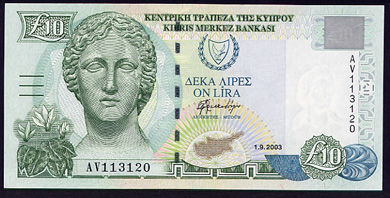
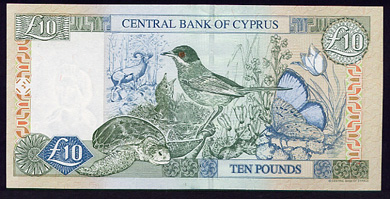
Banknotes
Budget & Public Finance
- Fiscal Year
- calendar year
- Economic Aid
- $717,000,000 (USD)
Labor, Industry & Trade
- Labor Force by Occupation
- Greek Cypriot area: services 75.6%; industry 19.4%; agriculture 4.9%; Turkish Cypriot area: services 68.9%; industry 20.5%; agriculture 10.6%
- Industries
- food, beverages, textiles, chemicals, metal products, tourism, wood products
- Agriculture Products
- potatoes, citrus, vegetables, barley, grapes, olives, vegetables, poultry, pork, lamb, kids, dairy
- Export Commodities
- Greek Cypriot area: citrus, potatoes, pharmaceuticals, cement, clothing and cigarettes; Turkish Cypriot area: citrus, potatoes, textiles
- Export Partners
- UK 26.7%, Greece 6.6%, France 4.9%, Poland 4.3%
- Import Commodities
- Greek Cypriot area: consumer goods, petroleum and lubricants, intermediate goods, machinery, transport equipment; Turkish Cypriot area: food, minerals, chemicals, machinery
- Import Partners
- Russia 17.1%, Greece 7.1%, Germany 6.6%, France 6.4%, UK 6.3%, Italy 6.3%, South Korea 5.4%, Japan 5.1%
Energy
- Oil Production
- 0 bbl/day
- Oil Consumption
- 49,000 bbl/day
- Natural Gas Reserves
- 0 cu m
Communications
- Telephone System
- general assessment: excellent in both areas under government control and areas administered by Turkish Cypriots domestic: open-wire, fiber-optic cable, and microwave radio relay international: country code - 357 (area administered by Turkish Cypriots uses the country code of Turkey - 90); a number of submarine cables, including the SEA-ME-WE-3, combine to provide connectivity to Western Europe, the Middle East, and Asia; tropospheric scatter; satellite earth stations - 8 (3 Intelsat - 1 Atlantic Ocean and 2 Indian Ocean, 2 Eutelsat, 2 Intersputnik, and 1 Arabsat)
- Internet Country Code
- .cy
News & Weather
News & Weather
Current Weather
Latest News
Cyprus marks the 52nd anniversary of Turkey's invasion of the island - Euronews.com
Euronews.com · 19h ago
Türkiye rebuts claims over its military role on Cyprus island | Daily Sabah - Daily Sabah
Daily Sabah · 19h ago
52 years since Peace Operation: Turkish Cyprus renews call to end isolation - Hürriyet Daily News
Hürriyet Daily News · 23h ago
Black Cube's video on Cyprus corruption may have been attack, investigators say - The Jerusalem Post
The Jerusalem Post · 3h ago
Alleged Hamas network member extradited from Indonesia to Cyprus - eKathimerini.com
eKathimerini.com · 14h ago
Cyprus vs Switzerland - Class. Game 13-14 - FIBA U20 EuroBasket 2026, Division B - FIBA Basketball
FIBA Basketball · 2d ago
🇨🇾 Cyprus: CyBC Commits to Participating in all Three Music Eurovision Contests - Eurovoix
Eurovoix · 1d ago
Guterres to visit Cyprus as UN seeks to revive peace talks - Inquirer.net
Inquirer.net · 14m ago
News via Google News
Climate Overview
Cyprus has hot, dry, dusty summers and moderately cool, damp winters. Nicosia's maximum mean temperature is about 80°F, while the minimum mean temperature is 50°F. From mid-June to mid-September, the temperature sometimes exceeds 100°F. After sunset, it usually falls to between 60°F and 70°F. The summer heat is tolerable because humidity is usually low and high temperatures are often tempered by westerly winds. Nicosia's summer weather is generally more comfortable than in the seaside towns, where humidity is higher though temperatures are lower. Rain falls almost exclusively from December through March. Winters are usually cool and damp. On the whole, Cyprus has an enjoyable Mediterranean climate.
Videos
Videos
2 curated YouTube videos.
Source: YouTube
Source: YouTube
Frequently Asked Questions
Frequently Asked Questions
What is the population of Cyprus?
How do people greet each other in Cyprus?
What are dining customs like in Cyprus?
What should I know about hospitality and etiquette in Cyprus?
How should I dress in Cyprus?
What gestures should I be aware of in Cyprus?
What role does family play in Cypriot society?
What do people do for recreation in Cyprus?
What is the capital of Cyprus?
Where is Cyprus located?
What are the sea borders of Cyprus?
What is the main religion practiced in Cyprus?
What currency is used in Cyprus?
What languages are spoken in Cyprus?
What is Cyprus known for?
What is the political situation in Cyprus?
Last reviewed 2026