
 English
 Español
 中文
中文 हिन्दी
 Français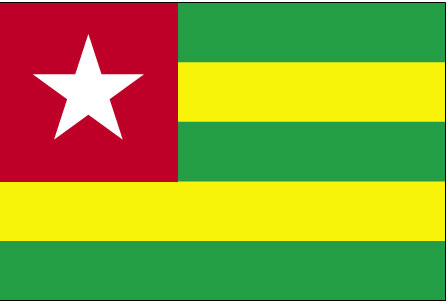
Togo
Declare Your Relationship to Togo
CountryReports Community
- Studying0
- From Togo0
- Togo heritage0
- Visited0
- Want to visit0
Customs and Culture
Customs and Culture
About the People
The people of Togo have many languages and religions. The largest group the Ewe live in the southern third of the county. The Akposo and the Aria live in the mountainous area in the center of the country. The Bassari, Konkomba, Kabrai and the Kotokoli are groups who live in the northern part of the country.
Cultural Attributes
Togo is a country rich in culture and tradition, which is reflected in its music, art, dance, and cuisine. Togolese culture is influenced by various ethnic groups, such as the Ewe, Mina, Kabye, and Cotocoli, among others. In this article, we will explore some of the key aspects of Togolese culture.
Music
Music is an essential part of Togolese culture. Traditional music is played on a variety of instruments, including the kora (a harp-like instrument), the balafon (a type of xylophone), and the ngoni (a lute-like instrument). Traditional Togolese music is characterized by its rhythm, which is often lively and upbeat. The music is also used for cultural and religious celebrations.
Dance
Dance is another important aspect of Togolese culture. Traditional dances are performed at various events, including weddings, funerals, and festivals. The dances are usually accompanied by music and are performed in traditional attire, which often includes colorful costumes and masks. Some of the most popular dances in Togo include the Agbadja, Adevu, and Kamou.
Art
Togolese art is influenced by its history and culture. Traditional art is characterized by its use of natural materials, such as wood, clay, and woven fabrics. The art often depicts scenes from daily life or cultural events. Togolese artists are also known for their intricate carvings, which are often used in masks, statues, and other decorative objects.
Cuisine
Togolese cuisine is influenced by its history and location. It is characterized by its use of fresh, locally sourced ingredients. Some of the most popular dishes in Togo include fufu (a starchy staple made from cassava), grilled fish, and yam-based dishes. Togolese cuisine also includes a variety of spices and sauces, which add flavor and depth to the dishes.
Religion
Religion is an important part of Togolese culture. The majority of the population practices traditional African religions, which involve the worship of various spirits and deities. However, there is also a significant Christian and Muslim population in the country. The practice of traditional African religion often involves rituals, such as sacrifices and offerings, which are performed to honor the spirits and seek their favor.

Land of the Gulf's Golden Trade
Greetings, Gestures & Visiting
In Togo, greetings are an important aspect of daily life and are considered a sign of respect and courtesy. The way people greet each other can vary depending on the region and the relationship between the individuals, but here are some common greetings in Togo:
Handshakes: Handshakes are a common way to greet someone in Togo. The handshake is typically firm, but not too tight, and is accompanied by a smile.
Cheek kissing: Cheek kissing is also a common way to greet someone, especially among women. The number of kisses can vary depending on the region, with some areas using two kisses and others using three.
Verbal greetings: Verbal greetings such as "Bonjour" (good morning), "Bonsoir" (good evening), and "Comment ça va?" (how are you?) are also commonly used in Togo.
Bowing: In some parts of Togo, it is customary to bow slightly when greeting someone, especially when meeting someone of higher social status.
Hand over heart: Another greeting in Togo is to place your right hand over your heart as a sign of respect and greeting.
It is important to note that in Togolese culture, it is considered impolite to rush through greetings or to ignore someone when greeting them. Greetings are seen as a way to show respect and establish a connection with others. Taking the time to exchange greetings is an important part of building and maintaining relationships in Togo.
In Togolese culture, gestures are also an important aspect of communication and are used to convey a range of emotions and messages. Here are some common gestures in Togo:
Nodding: Nodding the head up and down is a common gesture in Togo to indicate agreement or understanding. It can also be used to greet someone or acknowledge someone's presence.
Shaking the head: Shaking the head from side to side can indicate disagreement or disapproval. It can also be used to indicate that something is not understood or that the person does not have an answer to a question.
Pointing: Pointing with the index finger is generally considered impolite in Togolese culture. Instead, people often use their whole hand or gesture with their chin or lips to indicate a direction or location.
Hand gestures: Hand gestures are also commonly used in Togolese culture to indicate a range of emotions and messages, such as waving to say hello, rubbing the fingers together to indicate money or payment, or holding the hand up to indicate a stop or pause.
Thumbs up: Giving a thumbs up is generally considered a positive gesture in Togo and can indicate approval, agreement, or encouragement.
It is important to note that like greetings, gestures in Togolese culture are also subject to regional and individual variation. In some areas, certain gestures may be more or less common, and the interpretation of gestures can also vary depending on the context and the relationship between the individuals involved.
Social norms for visiting are an important aspect of the culture, and it is essential to be aware of these norms to avoid inadvertently offending your hosts. Here are some of the social norms to keep in mind when visiting Togo:
Greetings: In Togo, it is customary to greet people with a handshake or by placing your right hand over your heart. It is also considered polite to inquire about the well-being of the person you are greeting.
Dress code: As previously mentioned, Togo has a conservative dress code, and visitors should dress modestly, especially when visiting religious or cultural sites. Removing your shoes before entering someone's home is also considered respectful.
Gift-giving: It is customary to bring a small gift, such as a box of candy or a souvenir from your home country when visiting someone's home. It is also polite to bring a gift for the host's children.
Eating and drinking: If you are invited to someone's home for a meal, washing your hands before eating is customary. You should also wait for the host to begin eating before you start. It is also considered polite to leave a small amount of food on your plate to show you have had enough.
Respect for elders: In Togo, respect for elders is highly valued, and it is essential to show respect to older people. This may involve standing up when an older person enters the room or addressing them with a title such as "Mama" or "Papa."
Language: French is the official language of Togo, but many people also speak indigenous languages. Learning a few phrases in the local language, such as "hello" and "thank you," can be a way to show respect for the culture.
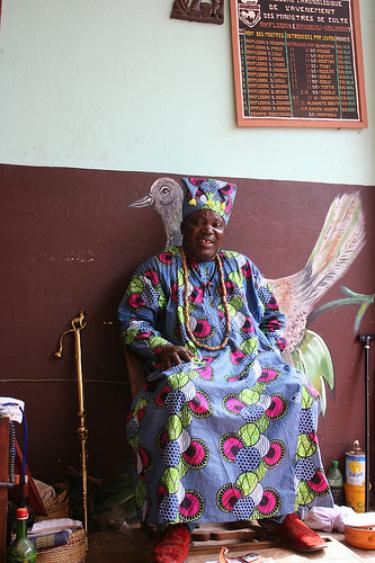
The traditional attire in Togo is known for its vibrant colors, unique designs, and intricate details. The attire varies by region, and each ethnic group has its own distinctive style.
In the northern part of Togo, the Kabye people often wear a wrap-around cloth called "fari", made from woven cotton or silk fabric. The fari is usually wrapped around the waist and tied in a knot, and can be styled in various ways. Kabye men often wear matching shirts and hats, while women may accessorize with colorful beads and jewelry.
The Ewe people in the southern part of Togo also have their own traditional attire. Women often wear a wrap-around skirt called "kente", made from strips of brightly colored fabric. Men may wear a matching shirt or a simple tunic called "agbada". The attire is often accessorized with jewelry made from beads, shells, or other natural materials.
In addition to traditional attire, Togolese people also wear modern clothing styles. Western-style clothing such as jeans, t-shirts, and dresses are commonly worn, especially in urban areas. However, traditional attire is still prevalent, particularly during cultural and religious ceremonies and festivals.
It is worth noting that the dress code in Togo is generally conservative, and it is considered inappropriate to wear revealing clothing in public. Additionally, certain clothing items, such as shorts or sleeveless shirts, may be seen as disrespectful or inappropriate in certain settings.
Diet
Food crops such as cassava, corn, millet, sorghum, and yams are grown on farms owned mainly by groups of families, while cash crops such as coffee and cacao are raised on small farms owned mainly by individuals. Harvests are small and income is low.

Family
Families play a vital role in Togolese society, and the family structure is often extended and multigenerational. Family members are expected to support and care for one another, and close-knit family ties are valued.
In Togolese culture, the family is typically headed by the father, who is responsible for providing for the family and making important decisions. However, women also play a significant role in the family and are often responsible for managing the household and raising children. In many families, grandparents, aunts, uncles, and cousins also live together or in close proximity, and they often contribute to the care and upbringing of children.
One important aspect of Togolese family life is the concept of respect for elders. In Togolese culture, elders are highly respected and are considered to be the keepers of tradition and wisdom. It is customary for younger family members to show deference to their elders, and this respect is often demonstrated through gestures such as bowing or touching an elder's feet.
Education is also highly valued in Togolese families, and parents often make great sacrifices to ensure that their children receive a good education. Many families place a high emphasis on academic achievement and encourage their children to pursue careers in fields such as medicine, law, or engineering.
Another important aspect of Togolese family life is the importance of social events and celebrations. Weddings, funerals, and other important events are typically celebrated with great pomp and ceremony, and family members often come together from far and wide to celebrate.
Dating Customs
Dating customs in Togo vary depending on the region and the individual's background, but there are some common cultural practices that are worth exploring.
In traditional Togolese culture, arranged marriages were the norm, and parents often had a significant role in selecting a suitable partner for their children. However, modern dating practices have become more common in urban areas, and many young Togolese people now meet and date potential partners independently.
In Togo, dating is often considered to be a more serious commitment than in some Western cultures, and it is typically seen as a precursor to marriage. This means that dating is often approached with a long-term perspective in mind, and couples may be expected to make a commitment to each other relatively early in the relationship.
Gender roles in dating are also somewhat traditional in Togo, with men often expected to take the lead in initiating and pursuing relationships. Women are expected to be modest and reserved in their behavior, and they may be judged harshly if they are seen as too forward or flirtatious.
Public displays of affection are generally frowned upon in Togolese culture, and couples are expected to maintain a degree of decorum when in public. Holding hands or a brief peck on the cheek is usually acceptable, but more intimate displays of affection are not.
Recreation
Recreation in Togo is diverse and reflects the country's rich cultural heritage. While some activities are more popular in certain regions, there is something for everyone to enjoy. Here are some examples of recreational activities in Togo:
Traditional music and dance: Togo has a vibrant music and dance scene, with many styles of music and dance reflecting the country's ethnic diversity. Traditional music and dance performances are often held during cultural festivals and events.
Sports: Football (soccer) is the most popular sport in Togo, and the country has a national football team. Other sports such as basketball and volleyball are also popular, and Togo has produced successful athletes in these sports.
Beaches: Togo has a beautiful coastline along the Gulf of Guinea, and there are several beaches where visitors can relax and enjoy the sun and sea. Some popular beaches include Aneho, Lome, and Baguida.
National parks and wildlife reserves: Togo has several national parks and wildlife reserves that offer opportunities for hiking and wildlife watching. Some of the most popular include Fazao-Malfakassa National Park, Koutammakou Cultural Landscape, and Keran National Park.
Cultural and historical sites: Togo has a rich cultural and historical heritage, and there are many sites of interest to visit. Some popular destinations include the Akodessewa Fetish Market, the Tamberma Valley, and the Grand Marché in Lomé.
Nightlife: Togo has a lively nightlife scene, particularly in urban areas such as Lomé. There are many bars, clubs, and restaurants where visitors can enjoy music, food, and drinks.
Holidays
Independence Day
4/27Independence Day
Dates of Interest
- November
This cultural festival celebrates the diverse ethnic groups and traditions of Togo. It features music, dance, art, and traditional cuisine, and is an opportunity for people from different parts of the country to come together and celebrate their heritage.
How do people greet each other in Togo?
Greetings are an important sign of respect and courtesy, and typically include a firm handshake with a smile, or placing your right hand over your heart. Take time to greet properly and inquire about the person's well-being.
Do
- Offer a firm but not too tight handshake with a smile
- Place your right hand over your heart as a sign of respect
- Use verbal greetings like "Bonjour," "Bonsoir," and "Comment ça va?"
- Bow slightly when greeting someone of higher social status
Don’t
- Don't rush through greetings
- Don't ignore someone when greeting them
Good to know
- Cheek kissing is common, especially among women, with two or three kisses depending on the region
- The style of greeting can vary by region and relationship
What are the dining customs in Togo?
When invited to someone's home for a meal, wash your hands first and wait for the host to begin eating. Popular dishes include fufu, grilled fish, and yam-based dishes.
Do
- Wash your hands before eating
- Wait for the host to begin eating before you start
- Leave a small amount of food on your plate to show you've had enough
What etiquette should I know when visiting someone's home in Togo?
Show respect through modest dress, gift-giving, and deference to elders. Removing your shoes before entering a home is considered respectful.
Do
- Remove your shoes before entering someone's home
- Bring a small gift such as candy or a souvenir from your home country
- Bring a gift for the host's children
- Stand up when an older person enters the room and address elders as "Mama" or "Papa"
Good to know
- Learning a few phrases in French or a local language, such as "hello" and "thank you," shows respect
- Respect for elders is highly valued in Togolese culture
How should I dress in Togo?
Togo has a generally conservative dress code, and visitors should dress modestly, especially at religious or cultural sites. Revealing clothing is considered inappropriate in public.
Do
- Dress modestly, especially at religious or cultural sites
Don’t
- Don't wear revealing clothing in public
- Avoid shorts or sleeveless shirts in certain settings, where they may be seen as disrespectful
Good to know
- Western-style clothing like jeans and t-shirts is common in urban areas
- Traditional attire, such as the Kabye "fari" and the Ewe "kente," is worn during ceremonies and festivals
What gestures should I be aware of in Togo?
Gestures are important in communication; nodding indicates agreement and a thumbs up is positive, but pointing with the index finger is considered impolite.
Do
- Nod to indicate agreement, understanding, or to acknowledge someone
- Give a thumbs up to show approval or encouragement
- Use your whole hand, chin, or lips to indicate a direction
Don’t
- Don't point with your index finger, as it is considered impolite
Good to know
- Shaking the head side to side indicates disagreement or that something isn't understood
- Rubbing the fingers together indicates money or payment
What is family life like in Togo?
Families are typically extended and multigenerational, with close-knit ties and a strong emphasis on respect for elders and education. The father usually heads the family, while women often manage the household and raise children.
Do
- Show deference to elders, sometimes through bowing or touching an elder's feet
Good to know
- Grandparents, aunts, uncles, and cousins often live nearby and help raise children
- Weddings, funerals, and other events are celebrated with great ceremony
- Education is highly valued and academic achievement is strongly encouraged
What is there to do for recreation in Togo?
Togo offers diverse recreation including football (the most popular sport), beaches along the Gulf of Guinea, national parks, cultural sites, and lively nightlife in urban areas.
Good to know
- Enjoy traditional music and dance performances at cultural festivals
- Relax at beaches such as Aneho, Lome, and Baguida
- Visit national parks like Fazao-Malfakassa and Keran, or the Koutammakou Cultural Landscape
- Explore cultural sites like the Akodessewa Fetish Market and the Grand Marché in Lomé
Last updated: 2026-07-12 · Sources: CountryReports
Photos of Togo
Photos of Togo


Travel and Tourism
Travel and Tourism
- Travel Alert Status
- Level 1: Exercise Normal Precautions
- Time Difference
- UTC 0 (5 hours ahead of Washington, DC, during Standard Time)
- Climate
- The country is divided climatically into southern and northern zones. The southern tropical average temperatures fluctuate between 70°F and 80°F , with February and March the hottest months, and June, July, and August the coolest. Humidity is high (80%-90%) most of the year. The major dry season extends from the end of November to the end of March; August and early September are also sometimes quite dry. Equatorial conditions in the mountains of Togo support the country’s only rain forest. Northern temperatures fluctuate between 65°F and over 100°F, and humidity is less than in the south. The northern zone has one rainy and one dry season. In December-January, a cool, dry, dust-laden *quot;harmattan" wind from the Sahara sweeps across the land.
- Airports
- 9
Read the full travel guide — health, safety, vaccinations, disease risk, sanitation, and transit details.
View full travel guideRecipes
Recipes
History
History
Historical Eras
Pre-Colonial Era
1200 – 1884
Ewe-speaking peoples migrated into the region from the Niger River valley between the 12th and 14th centuries, establishing the cultural foundation of modern Togo. Portuguese traders arrived along the coast in the 15th and 16th centuries, and for two centuries afterward the region became a major hub of the Atlantic slave trade, earning the grim designation 'The Slave Coast.' Danish and other European traders maintained coastal footholds, reshaping local societies and economies through commerce and conflict.
German Togoland
1884 – 1914
In 1884, Germany declared a protectorate over coastal territory following the Treaty of Togoville, then steadily extended control inland. Togoland became Germany's only self-financing colonial possession, celebrated as a model colony for its administrative efficiency and export agriculture of cocoa, cotton, and palm oil. Infrastructure including roads and railways was developed, though at the cost of forced labor and subjugation of local populations.
Franco-British Mandate
1914 – 1960
French and British forces invaded and seized Togoland in August 1914 with minimal resistance, and after World War I the territory was divided as a League of Nations mandate between the two powers. Following World War II it became a UN trust territory; in 1957 British Togoland voted to join Ghana, while French Togo gained increasing autonomy, adopting a constitution in 1956 and electing Sylvanus Olympio as prime minister in 1958.
Independence & First Republic
1960 – 1967
Togo became fully independent on April 27, 1960, with Sylvanus Olympio as its first president under a constitution granting strong executive authority. Olympio dissolved opposition parties in 1962, provoking deep political tensions that culminated in his assassination on January 13, 1963 — Africa's first post-independence coup. Nicolas Grunitzky assumed the presidency under a new multi-party constitution, but his government remained unstable and was ultimately overthrown by the military in January 1967.
Eyadéma One-Party State
1967 – 1991
General Gnassingbé Eyadéma seized power on January 13, 1967, and abolished political parties, ruling through the Rally of the Togolese People (RPT) as the sole legal party from 1969 onward. His government pursued a policy of 'authenticity,' nationalizing the phosphate industry and consolidating an authoritarian personality cult. International human rights organizations repeatedly criticized the regime for abuses, while economic performance deteriorated through the 1980s.
Contested Pluralism
1991 – present
A National Conference in 1991 briefly transferred power to a transitional government, and a new constitution approved in 1992 nominally established multiparty democracy. Eyadéma and the RPT nonetheless retained effective control through manipulated elections, military intimidation, and political violence, drawing sustained criticism from international bodies and the suspension of most bilateral and multilateral aid. Following Eyadéma's death in 2005, his son Faure Gnassingbé assumed the presidency, perpetuating the family's political dominance into the 21st century.
Overview
After World War II, the mandate became a UN trust territory administered by the United Kingdom and France. During the mandate and trusteeship periods, western Togo was administered as part of the British Gold Coast. In 1957, the residents of British Togoland voted to join the Gold Coast as part of the new independent nation of Ghana.
By statute in 1955, French Togo became an autonomous republic within the French union, although it retained its UN trusteeship status. A legislative assembly elected by universal adult suffrage had considerable power over internal affairs, with an elected executive body headed by a prime minister responsible to the legislature. These changes were embodied in a constitution approved in a 1956 referendum. On September 10, 1956, Nicholas Grunitzky became prime minister of the Republic of Togo. However, due to irregularities in the plebiscite, an unsupervised general election was held in 1958 and won by Sylvanus Olympio. On April 27, 1960, in a smooth transition, Togo severed its constitutional ties with France, shed its UN trusteeship status, and became fully independent under a provisional constitution with Olympio as president.
A new constitution in 1961 established an executive president, elected for 7 years by universal suffrage and a weak National Assembly. The president was empowered to appoint ministers and dissolve the assembly, holding a monopoly of executive power. In elections that year, from which Grunitzky’s party was disqualified, Olympio’s party won 90% of the vote and all 51 National Assembly seats, and he became Togo’s first elected president.
During this period, four principal political parties existed in Togo: the leftist Juvento (Togolese youth movement); the Union Democratique des Populations Togolaises (IDPT); the Parti Togolais Du Progres (PTP), founded by Grunitzky but having limited support; and the Unite Togolaise (UT), the party of President Olympio. Rivalries between elements of these parties had begun as early as the 1940s, and they came to a head with Olympio dissolving the opposition parties in January 1962 ostensibly because of plots against the majority party government. Many opposition members, including Grunitzky, fled to avoid arrest.
On January 13, 1963, President Olympio was assassinated in an uprising of army non-commissioned officers dissatisfied with conditions following their discharge from the French army. Grunitzky returned from exile 2 days later to head a provisional government with the title of prime minister. On May 5, 1963, the Togolese adopted a new constitution which reinstated a multi-party system, chose deputies from all political parties for the National Assembly, and elected Grunitzky as president and Antoine Meatchi as vice president. Nine days later, President Grunitzky formed a government in which all parties were represented.
During the next several years, the Grunitzky government’s power became insecure. On November 21, 1966, an attempt to overthrow Grunitzky, inspired principally by civilian political opponents in the UT party, was unsuccessful. Grunitzky then tried to lessen his reliance on the army, but on January 13, 1967, Lt. Col. Etienne Eyadema (later Gen. Gnassingbe Eyadema) ousted President Grunitzky in a bloodless military coup. Political parties were banned, and all constitutional processes were suspended. The committee of national reconciliation ruled the country until April 14, when Eyadema assumed the presidency. In late 1969, a single national political party, the Assembly of the Togolese People (RPT), was created, and President Eyadema was elected party president on November 29, 1969. In 1972, a national referendum, in which Eyadema ran unopposed, confirmed his role as the country’s president.
In late 1979, Eyadema declared a third republic and a transition to greater civilian rule with a mixed civilian and military cabinet. He garnered 99.97% of the vote in uncontested presidential elections held in late 1979 and early 1980. A new constitution also provided for
Timeline of Key Events
1700
Coastal area occupied by Danes.
Coastal area occupied by Danes.
1914
British, French forces seize Togoland.
British, French forces seize Togoland.
1960
Gained independence.
Gained independence.
1992
New constitution approved.
New constitution approved.
2003
Togo sends 150 soldiers to Liberia to bolster a West African peacekeeping force.
Togo sends 150 soldiers to Liberia to bolster a West African peacekeeping force.
2004
European Union restores partial diplomatic relations.
European Union restores partial diplomatic relations. Ties were broken in 1993 over violence and democratic shortcomings.
Read the full history profile — narrative overview, defining eras, and the complete timeline in one place.
View expanded historyInteresting Facts
Interesting Facts
The coastal area of Togo was part of the West African "Slave Coast".
See every fact — trivia, oddities, and curious tidbits gathered from across the country.
View all interesting factsGeography and Environment
Geography and Environment
- Terrain
- gently rolling savanna in north; central hills; southern plateau; low coastal plain with extensive lagoons and marshes
- Climate
- The country is divided climatically into southern and northern zones. The southern tropical average temperatures fluctuate between 70°F and 80°F , with February and March the hottest months, and June, July, and August the coolest. Humidity is high (80%-90%) most of the year. The major dry season extends from the end of November to the end of March; August and early September are also sometimes quite dry. Equatorial conditions in the mountains of Togo support the country’s only rain forest. Northern temperatures fluctuate between 65°F and over 100°F, and humidity is less than in the south. The northern zone has one rainy and one dry season. In December-January, a cool, dry, dust-laden *quot;harmattan" wind from the Sahara sweeps across the land.
- Natural Hazards
- hot, dry harmattan wind can reduce visibility in north during winter; periodic droughts
- Current Environmental Issues
- deforestation attributable to slash-and-burn agriculture and the use of wood for fuel; water pollution presents health hazards and hinders the fishing industry; air pollution increasing in urban areas
Read the full geography and environment profile — terrain, climate, natural resources, hazards, land use, and international agreements.
View full geographyPeople & Demographics
People & Demographics
Religion
Languages Spoken
French (official and the language of commerce), Ewe and Mina (the two major African languages in the south), Kabye (sometimes spelled Kabiye) and Dagomba (the two major African languages in the north)
- French
- Yoruba
Population
- Population
- 6,199,841
- Population in Major Urban Areas
- LOME (capital) 1.524 million
- Nationality Noun
- Togolese (singular and plural)
- Ethnic Groups
- native African (37 tribes; largest and most important are Ewe, Mina, and Kabre) 99%, European and Syrian-Lebanese less than 1%
Education
- Literacy Definition
- age 15 and over can read and write
Health Information
- Major Infectious Diseases — degree of risk
- very high
Read the full people and society profile — demographics, health, education, religion, languages, and notable people.
View full people and societyGovernment & Politics
Government & Politics
Country Identity
- Country Name
- Togo
- Full Country Name
- Togolese Republic
- Local - Long
- Republique Togolaise
- Former Name
- French Togoland
Government Structure
- Government Type
- republic under transition to multiparty democratic rule
- Legal System
- French-based court system
- Executive Branch
- chief of state: President Faure GNASSINGBE (since 6 February 2005); note - Gnassingbe EYADEMA, who had ruled Togo since 1967, died on 5 February 2005 and was succeeded by his son, Faure GNASSINGBE; popular elections subsequently validated the succession, and GNASSINGBE has since been re-elected multiple times, most recently in February 2020 head of government: Prime Minister Victoire Tomegah DOGBE (since 28 September 2020); note - DOGBE became Togo's first female prime minister upon her appointment cabinet: Council of Ministers appointed by the president and the prime minister elections: president elected by popular vote for a five-year term; election last held on 22 February 2020 (next to be held in 2025); prime minister appointed by the president election results: Faure GNASSINGBE re-elected president in 2020; percent of vote - Faure GNASSINGBE 72.4%, Agbeyome KODJO 18.4%, Jean-Pierre FABRE 4.4%, other candidates combined approximately 4.8%
- Legislative Branch
- unicameral National Assembly (81 seats; members are elected by popular vote to serve five-year terms) elections: last held 27 October 2002 (next to be held NA 2007) election results: percent of vote by party - NA%; seats by party - RPT 72, RSDD 3, UDPS 2, Juvento 2, MOCEP 1, independents 1 note: two opposition parties boycotted the election, the Union of the Forces for Change and the Action Committee for Renewal
- Judicial Branch
- Court of Appeal or Cour d'Appel; Supreme Court or Cour Supreme
- Suffrage
- NA years of age; universal adult
- Constitution
- multiparty draft constitution approved by High Council of the Republic 1 July 1992; adopted by public referendum 27 September 1992
- Independence
- 27 April 1960 (from French-administered UN trusteeship)
- National Holiday
- Independence Day, 27 April (1960)
Capital City
- Capital Name
- Lome
- Capital - geographic coordinate
- 6 07 N, 1 13 E
- Capital Time Difference
- UTC 0 (5 hours ahead of Washington, DC, during Standard Time)
Lome comes from "alotime" which in the native Ewe language means "among the alo plants"; alo trees dominated the city's original founding site
Military
Branches: Togolese Armed Forces (Forces Armees Togolaise, FAT): Togolese Army (l'Armee de Terre), Togolese Navy (Forces Naval Togolaises), Togolese Air Force (Force Aerienne Togolaise, TAF), National Gendarmerie
Embassy / Diplomatic Mission
Embassy Lomé
The U.S. Embassy is located on Boulevard Eyadema, Neighborhood Cité OUA, in Lomé, Togo. The local mailing address is B.P. 852, Lomé.
Telephone: (228) 22 61 54 70
Facsimile: (228) 22 61 54 99
Email: consularlome@state.gov
Read the full government profile — flag symbolism, national anthem, and other national symbols.
View full government detailsEconomy
Economy
Togo's small sub-Saharan economy remains heavily dependent on both commercial and subsistence agriculture, which provides employment for roughly 60% of the labor force and accounts for about 20% of GDP. Despite fertile land, the country still imports some basic foodstuffs to meet domestic demand. Cocoa, coffee, and cotton together generate a significant share of export earnings, with cotton remaining the most important cash crop, though phosphates, clinker, and re-exports through the Port of Lomé have grown in importance.
Togo is one of the world's leading producers of phosphate rock, a key foreign exchange earner, though output has fluctuated due to aging infrastructure, financing constraints, and global price volatility. The Port of Lomé, the only deepwater port in West Africa capable of handling large vessels, has emerged as a major regional transshipment hub and a pillar of the economy.
Under successive National Development Plans and the Togo 2025 Roadmap, the government has pursued reforms aimed at improving the business climate, expanding infrastructure, modernizing agriculture, and developing financial inclusion. Backed by the IMF, World Bank, and other partners, Togo has achieved relatively steady GDP growth averaging around 5% in recent years, though poverty, public debt, and regional security threats from the Sahel continue to weigh on prospects. Sustained progress depends on fiscal consolidation, private sector development, and continued donor engagement.
Snapshot
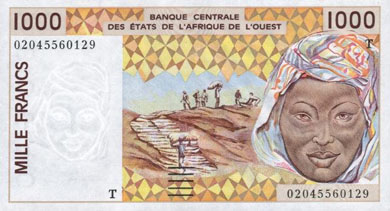
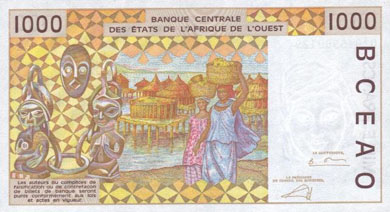
- Currency Name and Code
- CFA Franc BCEAO (XOF)
- GDP — official exchange rate
- $1,999,000,000 (USD)
- GDP Real Growth Rate
- 1%
Banknotes
Budget & Public Finance
- Fiscal Year
- calendar year
- Annual Budget
- $292,900,000 (USD)
- External Debt
- $2,000,000,000 (USD)
- Investment (% of GDP)
- 21.9%
- Economic Aid
- $80,000,000 (USD)
- Current Account Balance
- -$223,000,000 (USD)
- Reserves of Foreign Exchange
- $331,000,000 (USD)
Labor, Industry & Trade
- Labor Force by Occupation
- agriculture 65%; industry 5%; services 30%
- Industries
- phosphate mining, agricultural processing, cement; handicrafts, textiles, beverages
- Agriculture Products
- coffee, cocoa, cotton, yams, cassava (tapioca), corn, beans, rice, millet, sorghum; livestock; fish
- Export Commodities
- reexports, cotton, phosphates, coffee, cocoa
- Export Partners
- Ghana 17.7%, Benin 13.1%, Burkina Faso 8.2%
- Import Commodities
- machinery and equipment, foodstuffs, petroleum products
- Import Partners
- France 20.3%, China 16.2%, Netherlands 6.2%, Hong Kong 5.3%, Germany 4.9%, UK 4.6%, Italy 4.3%
Energy
- Oil Production
- 0 bbl/day
- Oil Consumption
- 8,500 bbl/day
- Oil Reserves
- 0 bbl/day
- Natural Gas Production
- 0 cu m
- Natural Gas Consumption
- 0 cu m
- Natural Gas Imports
- 0 cu m
- Natural Gas Exports
- 0 cu m
- Natural Gas Reserves
- 0 cu m
Communications
- Telephone System
- general assessment: fair system based on a network of microwave radio relay routes supplemented by open-wire lines and a mobile-cellular system domestic: microwave radio relay and open-wire lines for conventional system; combined fixed-line and mobile-cellular teledensity roughly 50 telephones per 100 persons with mobile-cellular use predominating international: country code - 228; satellite earth stations - 1 Intelsat (Atlantic Ocean), 1 Symphonie
- Internet Country Code
- .tg
News & Weather
News & Weather
Current Weather
Latest News
North Dakota Guard, Togo Partners Sharpen Disaster Response - nationalguard.mil
nationalguard.mil · 12d ago
Revitalizing a rural health center in Togo - Peace Corps (.gov)
Peace Corps (.gov) · 11d ago
Togo: ECA and UNFPA provide high-level technical support to strengthen the integration of demographic dividend-sensitive expenditures into the 2027 National Budget - United Nations Economic Commission for Africa
United Nations Economic Commission for Africa · 6d ago
Togo: weapons and ammunition management - The HALO Trust
The HALO Trust · 21d ago
Air quality in Togo - IQAir
IQAir · 27d ago
Togo, Luxembourg sign €14 million cybersecurity investment agreement - Tech Review Africa
Tech Review Africa · 18h ago
Edible products of animal origin, n.e.s. in Togo Trade - The Observatory of Economic Complexity
The Observatory of Economic Complexity · 12d ago
Togo Opens 10-Day Review of Gender Integration in Public Budgets - Togo First
Togo First · 17h ago
News via Google News
Climate Overview
The country is divided climatically into southern and northern zones. The southern tropical average temperatures fluctuate between 70°F and 80°F , with February and March the hottest months, and June, July, and August the coolest. Humidity is high (80%-90%) most of the year. The major dry season extends from the end of November to the end of March; August and early September are also sometimes quite dry.
Equatorial conditions in the mountains of Togo support the country’s only rain forest.
Northern temperatures fluctuate between 65°F and over 100°F, and humidity is less than in the south. The northern zone has one rainy and one dry season. In December-January, a cool, dry, dust-laden *quot;harmattan" wind from the Sahara sweeps across the land.
Videos
Videos
1 curated YouTube videos.
Source: YouTube
Frequently Asked Questions
Frequently Asked Questions
What is the population of Togo?
How do people greet each other in Togo?
What are the dining customs in Togo?
What etiquette should I know when visiting someone's home in Togo?
How should I dress in Togo?
What gestures should I be aware of in Togo?
What is family life like in Togo?
What is there to do for recreation in Togo?
What is the capital of Togo?
Where is Togo located?
What countries border Togo?
What religion is practiced in Togo?
What is the currency of Togo?
What languages are spoken in Togo?
What is the geography of Togo like?
What is Togo known for?
Last reviewed 2026