
 English
 Español
 中文
中文 हिन्दी
 Français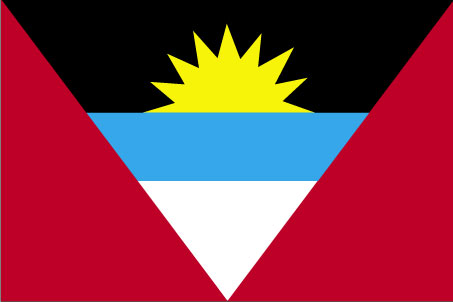
Antigua and Barbuda
Declare Your Relationship to Antigua and Barbuda
CountryReports Community
- Studying0
- From Antigua and Barbuda0
- Antigua and Barbuda heritage0
- Visited0
- Want to visit0
Customs and Culture
Customs and Culture
About the People
Antiguans are warm and friendly. They take a casual approach to life. People are more important than schedules. Antiguans are proud of international cricket reputation.
Cultural Attributes
Antiguans are warm and friendly. They take a casual approach to life. People are more important than schedules. Antiguans are proud of international cricket reputation.

Island of Eternal Spring and Cricket Glory
Greetings, Gestures & Visiting
Aunty and Uncle are sometimes used as terms of respect when addressing someone older. A woman may be addressed with Mistress.
Raising the hand palm out, and wagging an extended index finger from side to side indicates disagreement. This is usually accomplished with NO, NO, NO. A handshake is a customary greeting among business associates.
Antiguans enjoy socializing; the term lime or liming is used to describe time spent relaxing. When visiting someone who is inside, a person approaches the gate and shouts Inside!
The people wear Western-style clothing. At work, men do not wear shorts, colorful designs on shirts and light pants are more common. The national costume is worn on Heritage Day, the last day of business before Independence Day. It was designed by Antiguan Heather Doram. The costume is made of madras fabric.
Diet
Most food is imported to the islands Tropical fruits include Coconuts, Mangos, pumpkins, yams and potatoes. The basic food is rice and meat. A popular dish is Doucouna.
The Creole food is similar to that of other West Indian nations. Fungi a cornmeal pudding made with boiled okra is a staple on the islands. Breadfruit is another staple. The countries most distinctive fruit is the Antigua black pineapple.
Originally introduced by Arawakan speaking people. Today it is known
as one of the sweetest pineapples in the world and is grown mainly in the South of the
island. It is also the National Fruit.
Most food is imported to the islands Tropical fruits include Coconuts, Mangos, pumpkins, yams and potatoes. The basic food is rice and meat. A popular dish is Doucouna.

Family
Bearing or fathering children is highly valued. The traditional two-parent family is the norm.
Dating Customs
Couples are affectionate but not in public. Parents and churches encourage marriage over other types of relationships. Weddings are lavish with a decorated church service.
Recreation
Cricket is very popular from November to May. Soccer is also popular. Draughts (a form of checkers) is played by men and boys. Dominoes is also played. A game called Warri is also popular. The word Warri refers to the hollows (depressions) carved into a game board. Counters are usually nickars, a small nut belonging to the Guillandria Bush. The object of the game is to capture 25 counters.
Holidays
Independence Day
11/1Independence Day
Dates of Interest
- November 1st
A cultural celebration of the nation's heritage, featuring local music, dance performances, art exhibitions, and traditional cuisine.
How do people greet each other in Antigua and Barbuda?
Greetings are warm and often use respectful terms; a handshake is customary among business associates.
Do
- Use Aunty or Uncle as terms of respect when addressing someone older
- Address a woman with Mistress
- Shake hands when meeting business associates
What is the food like in Antigua and Barbuda?
The cuisine is Creole, similar to other West Indian nations, with rice and meat as the basic food and much of it imported.
Good to know
- Try Doucouna, a popular dish
- Fungi (a cornmeal pudding made with boiled okra) and breadfruit are staples
- Look for the Antigua black pineapple, the national fruit and one of the world's sweetest, grown mainly in the south
- Tropical fruits include coconuts, mangos, pumpkins, yams and potatoes
How should I behave socially in Antigua and Barbuda?
Antiguans are warm, friendly and casual, valuing people over schedules and enjoying socializing.
Do
- Relax and socialize; the term 'lime' or 'liming' describes time spent relaxing
- When visiting someone inside, approach the gate and shout 'Inside!'
Good to know
- Expect a casual approach to life where people matter more than schedules
How should I dress in Antigua and Barbuda?
People wear Western-style clothing, with more formal attire at work.
Do
- For men at work, wear light pants rather than shorts, with shirts in colorful designs common
Good to know
- The national costume, made of madras fabric and designed by Heather Doram, is worn on Heritage Day, the last business day before Independence Day
What gestures should I know in Antigua and Barbuda?
Some hand gestures carry specific meanings.
Good to know
- Raising the hand palm out and wagging an extended index finger side to side indicates disagreement, often with 'No, no, no'
What is family life like in Antigua and Barbuda?
Family and children are highly valued, with the traditional two-parent family as the norm.
Good to know
- Bearing or fathering children is highly valued
- Couples are affectionate but not in public
- Parents and churches encourage marriage, and weddings are lavish with a decorated church service
What do people do for recreation in Antigua and Barbuda?
Sports and games are popular, with cricket being especially loved.
Good to know
- Cricket is very popular from November to May, and soccer is also popular
- Men and boys play draughts (a form of checkers) and dominoes
- Try Warri, a board game where the object is to capture 25 counters (nickars, small nuts from the Guillandria Bush)
Last updated: 2026-07-12 · Sources: CountryReports
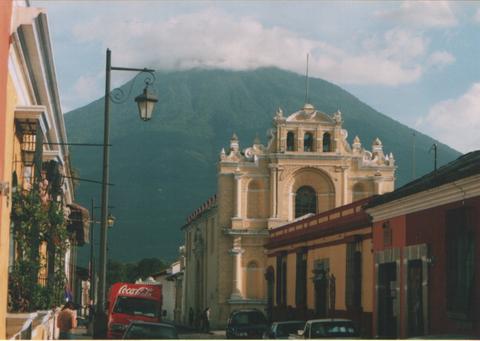
Photos of Antigua and Barbuda
Photos of Antigua and Barbuda


Travel and Tourism
Travel and Tourism
- Travel Alert Status
- Level 1: Exercise Normal Precautions
- Currency
- 2.7
- Time Difference
- UTC-4 (1 hour ahead of Washington, DC, during Standard Time)
- Climate
- Tropical; little seasonal temperature variation
- Airports
- 3
- Recommended Vaccinations
- How important is it to do your research about vaccinations? It might just save your life! Make yourself aware of the different types of vaccinations and which ones you may need to travel to your destination. Schedule an appointment with your doctor at least four to six weeks before you travel to ensure you receive all important shots. Be sure that you and your family are up to date on your routine vaccinations. Which vaccinations you need will depend on a number of factors including your destination, whether you will be spending time in rural areas, the season of the year you are traveling, your age, health status, and previous immunizations.
Read the full travel guide — health, safety, vaccinations, disease risk, sanitation, and transit details.
View full travel guideRecipes
Recipes
History
History
Historical Eras
Pre-Columbian Era
2400 BCE – 1493
The Siboney were the earliest known inhabitants of Antigua and Barbuda, with settlements dating to around 2400 BC. They were succeeded by the Arawak people, who migrated northward from Venezuela through the Lesser Antilles. The warlike Carib later displaced Arawaks on surrounding islands, though Antigua and Barbuda appear to have remained largely Arawak-inhabited at the time of European contact.
Colonial Plantation Era
1493 – 1834
Christopher Columbus sighted the islands in 1493, and England formally colonized Antigua in 1632, with possession confirmed by the Treaty of Breda in 1667. Sir Christopher Codrington established the first major sugar estate in 1674 and leased Barbuda in 1685 as a provisioning ground, bringing enslaved Africans to work the plantations. Sugar cultivation dominated the economy and society for nearly two centuries, sustained entirely by enslaved labor.
Post-Emancipation Period
1834 – 1941
Slavery was abolished in 1834, but freed Antiguans remained economically constrained by scarce land, lack of credit, and an agricultural economy that offered few alternatives to plantation labor. Barbuda reverted to direct British Crown control in 1860, and both islands were administered within the Leeward Islands federation from 1871 to 1956. Conditions changed little until a 1939 royal commission spurred the formation of a labor union movement, marking the beginning of organized political consciousness.
Labour & Self-Governance
1941 – 1981
The Antigua Trades and Labour Union, founded in the early 1940s, became the political vehicle for Vere Cornwall Bird, who transformed it into the Antigua Labour Party (ALP) in 1946. The ALP became the majority party by 1951, steering the islands toward greater autonomy. Antigua and Barbuda achieved associated statehood with full internal self-government in 1967, setting the stage for full independence.
Independence & Modern Era
1981 – present
Antigua and Barbuda became a fully independent nation within the Commonwealth on November 1, 1981, with Vere Bird serving as the first Prime Minister. The ALP dominated national politics for decades, succeeded briefly by the United Progressive Party following its 2004 electoral victory. The modern era has been shaped by the transition from sugar agriculture to a tourism-based economy, along with ongoing challenges of hurricane vulnerability, economic diversification, and regional integration.
Overview
Christopher Columbus landed on the islands in 1493, naming the larger one "Santa Maria de la Antigua." The English colonized the islands in 1632. Sir Christopher Codrington established the first large sugar estate in Antigua in 1674, and leased Barbuda to raise provisions for his plantations. Barbuda’s only town is named after him. Codrington and others brought slaves from Africa’s west coast to work the plantations.
Antiguan slaves were emancipated in 1834 but remained economically dependent on the plantation owners. Economic opportunities for the new freedmen were limited by a lack of surplus farming land, no access to credit, and an economy built on agriculture rather than manufacturing. Poor labor conditions persisted until 1939 when a member of a royal commission urged the formation of a trade union movement.
The Antigua Trades and Labor Union, formed shortly afterward, became the political vehicle for Vere Cornwall Bird, who became the union’s president in 1943. The Antigua Labor Party (ALP), formed by Bird and other trade unionists, first ran candidates in the 1946 elections and became the majority party in 1951, beginning a long history of electoral victories.
Voted out of office in the 1971 general elections that swept the progressive labor movement into power, Bird and the ALP returned to office in 1976, winning renewed mandates in every subsequent election under Vere Bird’s leadership until 1994 and also under the leadership of his son, Lester Bird, up until March 2004, when the ALP lost power in national elections.
In the last elections on March 23, 2004, the United Progressive Party (UPP) gained a 13-seat majority, while the opposition, now led by Robin Yearwood, retained four seats.
Timeline of Key Events
35
Occupation of island by Arawak Indians.
Occupation of island by Arawak Indians.
1100
Overthrow of the island by Carib Indians.
Overthrow of the island by Carib Indians.
1493
Discovered by Christopher Columbus.
Discovered by Christopher Columbus.
1632
Antigua claimed for Great Britain.
Antigua claimed for Great Britain.
1667
Treaty of Breda
France formally ends its claim to Antigua in accordance with the Treaty of Breda.
1674
sugar plantation in Antigua
Christopher Codrington, a sugar planter from Barbados, sets up a sugar plantation in Antigua.
1685
Codrington leases the island of Barbuda from the British crown
Codrington leases the island of Barbuda from the British crown; African slaves imported to grow first tobacco and then sugarcane on plantations.
Read the full history profile — narrative overview, defining eras, and the complete timeline in one place.
View expanded historyInteresting Facts
Interesting Facts
In 1493, Columbus sighted Antigua from near Redonda and named it Antigua after the Church of Santa Maria de la Antigua in Seville.
See every fact — trivia, oddities, and curious tidbits gathered from across the country.
View all interesting factsGeography and Environment
Geography and Environment
- Terrain
- mostly low-lying limestone and coral islands, with some higher volcanic areas
- Climate
- tropical; little seasonal temperature variation
- Natural Hazards
- hurricanes and tropical storms (July to October); periodic droughts
- Current Environmental Issues
- water management - a major concern because of limited natural fresh water resources - is further hampered by the clearing of trees to increase crop production, causing rainfall to run off quickly
Read the full geography and environment profile — terrain, climate, natural resources, hazards, land use, and international agreements.
View full geographyPeople & Demographics
People & Demographics
Religion
Languages Spoken
English (official), local dialects
- English
Population
- Population
- 86,754
- Population: Male/Female
- male: 48,311 female: 54,323
- Population Distribution
- the island of Antigua is home to approximately 97% of the population; nearly the entire population of Barbuda lives in Codrington
- Urban Population
- urban population: 24.3% of total population rate of urbanization: 0.87% annual rate of change
- Population in Major Urban Areas
- 21,000 SAINT JOHN'S (capital)
- Nationality Noun
- noun: Antiguan(s), Barbudan(s) adjective: Antiguan, Barbudan
- Ethnic Groups
- African descent 87.3%, mixed 4.7%, Hispanic 2.7%, White 1.6%, other 2.7%, unspecified 0.9%
- Language Note
- English (official), Antiguan Creole (an English-based creole)
Education
- Literacy Definition
- age 15 and over has completed five or more years of schooling
Health Information
- Life Expectancy at Birth
- total population: 78.3 years male: 76.1 years female: 80.5 years
- Alcohol consumption per capita
- total: 11.88 liters of pure alcohol beer: 2.97 liters of pure alcohol wine: 3.95 liters of pure alcohol spirits: 4.55 liters of pure alcohol other alcohols: 0.41 liters of pure alcohol
- Infant Mortality Rate
- total: 13.6 deaths/1,000 live births male: 16.4 deaths/1,000 live births female: 10.7 deaths/1,000 live births
Life Expectancy
- Life Expectancy at Birth
- total population: 78.3 years male: 76.1 years female: 80.5 years
- Median Age
- total: 33.9 years male: 31.9 years female: 35.7 years
- Age Structure
- 0-14 years: 21.8% (male 11,384/female 11,034) 15-64 years: 67.6% (male 32,312/female 37,094) 65 years and over: 10.5% (male 4,615/female 6,195)
- Infant Mortality Rate
- total: 13.6 deaths/1,000 live births male: 16.4 deaths/1,000 live births female: 10.7 deaths/1,000 live births
Read the full people and society profile — demographics, health, education, religion, languages, and notable people.
View full people and societyGovernment & Politics
Government & Politics
Country Identity
- Country Name
- AntiguaandBarbuda
- Full Country Name
- Antigua and Barbuda
Government Structure
- Government Type
- constitutional monarchy with UK-style parliament
- Legal System
- based on English common law
- Executive Branch
- chief of state: King CHARLES III (since 8 September 2022), represented by Governor General Sir Rodney WILLIAMS (since 14 August 2014) head of government: Prime Minister Gaston BROWNE (since 13 June 2014; reelected 21 January 2021) cabinet: Council of Ministers appointed by the governor general on the advice of the prime minister elections: none; the monarch is hereditary; governor general chosen by the monarch on the advice of the prime minister; following legislative elections, the leader of the majority party or the leader of the majority coalition is usually appointed prime minister by the governor general
- Legislative Branch
- bicameral Parliament consists of the Senate (17-member body appointed by the governor general) and the House of Representatives (17 seats; members are elected by proportional representation to serve five-year terms) elections: House of Representatives - last held 23 March 2004 (next to be held in 2009) election results: percent of vote by party - NA; seats by party - ALP 4, UPP 13
- Judicial Branch
- Eastern Caribbean Supreme Court (based in Saint Lucia; one judge of the Supreme Court is a resident of the islands and presides over the Court of Summary Jurisdiction)
- Suffrage
- 18 years of age; universal
- Constitution
- 1-Nov-81
- Independence
- 1 November 1981 (from UK)
- National Holiday
- Independence Day (National Day), 1 November (1981)
Capital City
- Capital Name
- Saint John's
- Capital - geographic coordinate
- 17 07 N, 61 51 W
- Capital Time Difference
- UTC-4 (1 hour ahead of Washington, DC, during Standard Time)
named after Saint John the Apostle
Military
Branches: Ministry of National Security, Royal Antigua and Barbuda Defense Force (includes Antigua and Barbuda Coast Guard)
Embassy / Diplomatic Mission
U.S. Embassy in Bridgetown
Wildey Business Park
Wildey
St. Michael, Barbados
Telephone: (246) 227-4399
Emergency after-hours telephone: (246) 227-4000
Facsimile: (246) 431-0179
Email: BridgetownACS@state.gov
Hours of operation are 8:30 a.m. – 4:30 p.m. Monday through Friday, except Barbadian and U.S. holidays.
Additionally, the U.S. Embassy maintains a Consular Agency in Antigua. The Agent can assist with routine U.S. Citizens Services and with U.S. citizen emergencies taking place in Antigua and Barbuda.
Consular Agency
Suite #2 Jasmine Court
Friars Hill Road, St. John's.
Telephone: (268) 463-6531
Cell Phone (268) 726-6531
Read the full government profile — flag symbolism, national anthem, and other national symbols.
View full government detailsEconomy
Economy
Tourism remains the dominant force in Antigua and Barbuda's economy, directly and indirectly accounting for nearly 60 percent of GDP and serving as the primary driver of employment and foreign exchange earnings. The sector rebounded strongly following the disruptions of the COVID-19 pandemic, with visitor arrivals surpassing pre-pandemic levels by 2024 and helping fuel real GDP growth of around 4 to 5 percent in recent years. The dual-island nation's agricultural sector is focused largely on the domestic market and remains constrained by a limited freshwater supply and persistent labor shortages, as workers continue to be drawn toward higher-paying opportunities in tourism and construction. The government's Citizenship by Investment Program has become an important secondary revenue stream, contributing meaningfully to fiscal receipts, though regional and international scrutiny of such programs has increased pressure to tighten due diligence standards. Manufacturing remains limited, consisting primarily of enclave-style assembly operations for export, with key products including handicrafts and light industrial goods. The financial services sector also plays a supporting role in the broader economy. Antigua and Barbuda remains highly vulnerable to external shocks, including fluctuations in global travel demand, natural disasters, climate change, and elevated energy and food import costs. Public debt, while on a downward trajectory from pandemic-era highs, still hovers near 70 percent of GDP, underscoring the importance of fiscal consolidation. Prospects for sustained economic growth continue to depend heavily on income levels in key source markets, particularly the United States, the United Kingdom, and Canada, which together account for the largest share of tourist arrivals, as well as on the government's ability to manage its public debt, diversify revenue streams, and strengthen resilience to climate-related risks.
Snapshot
- Currency Name and Code
- East Caribbean dollars (XCD)
- GDP Real Growth Rate
- 3%
- GDP by Sector
- agriculture: 3.9% industry: 19.2% services: 76.8%
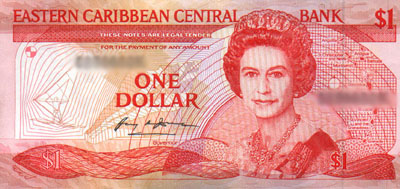
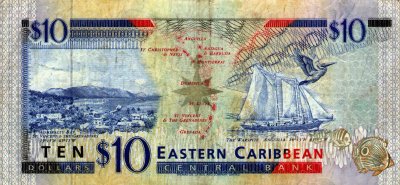
Banknotes
Budget & Public Finance
- Fiscal Year
- 1 April - 31 March
- Annual Budget
- $145,900,000 (USD)
- External Debt
- $231,000,000 (USD)
- Economic Aid
- $2,300,000 (USD)
Labor, Industry & Trade
- Labor Force by Occupation
- commerce and services 82%; agriculture 11%; industry 7%
- Industries
- tourism, construction, light manufacturing (clothing, alcohol, household appliances)
- Agriculture Products
- cotton, fruits, vegetables, bananas, coconuts, cucumbers, mangoes, sugarcane; livestock
- Export Commodities
- petroleum products 48%, manufactures 23%, machinery and transport equipment 17%, food and live animals 4%, other 8%
- Export Partners
- France 68.7%, Germany 26.6%, Italy 1.2%
- Import Commodities
- food and live animals, machinery and transport equipment, manufactures, chemicals, oil
- Import Partners
- France 23%, Germany 14.9%, US 13%, South Korea 8.1%, Singapore 4.9%, Poland 4.6%, UK 4.3%
Energy
- Oil Production
- 0 bbl/day
- Oil Consumption
- 3,600 bbl/day
- Oil Reserves
- 0 bbl/day
- Natural Gas Production
- 0 cu m
- Natural Gas Consumption
- 0 cu m
- Natural Gas Imports
- 0 cu m
- Natural Gas Exports
- 0 cu m
- Natural Gas Reserves
- 0 cu m
Communications
- Telephone System
- General Assessment: Good automatic telephone system Domestic: Fixed-line teledensity is roughly 40 per 100 persons; mobile-cellular teledensity is some 200 per 100 persons International: country code - 1-268; landing points for the East Caribbean Fiber System (ECFS) and the Global Caribbean Network (GCN) submarine cable systems with links to other islands in the eastern Caribbean extending from the British Virgin Islands to Trinidad; satellite earth stations - 2; tropospheric scatter to Saba (Netherlands) and Guadeloupe (France)
- Internet Country Code
- .ag
News & Weather
News & Weather
Current Weather
Latest News
Antigua and Barbuda Wants US to Correct Misinformation in Proposed Immigration Bill - Caribbean Today
Caribbean Today · 17h ago
Bill seeks to ban nationals of 39 countries from U.S. One Caribbean nation is pushing back - Miami Herald
Miami Herald · 3d ago
Caribbean Roundup: Antigua and Barbuda, Caricom, Cuba, Haiti, and Jamaica - caribbeanlife.com
caribbeanlife.com · 16h ago
Antigua and Barbuda Population 2026 - World Population Review
World Population Review · 4d ago
Antigua and Barbuda Goes Hand In Hand With Barbados, Saint Lucia And 6 Other Countries Across Caribbean In Driving Tourism And Revenue Growth As Spain Confirms Barrier-Free Travel In Schengen Area Without Visa - Travel And Tour World
Travel And Tour World · 14h ago
Antigua & Barbuda CBI: 30-Day Residency Rule Explained - Outbound Investment Group
Outbound Investment Group · 2d ago
Antigua and Barbuda Welcomes Caribbean Premier League to the Home of Party Cricket - eTurboNews
eTurboNews · 16h ago
Antigua and Barbuda welcomes the Caribbean Premier League to the ‘Home of Party Cricket’ - SKNVibes
SKNVibes · 7h ago
News via Google News
Climate Overview
Tropical; little seasonal temperature variation
Videos
Videos
2 curated YouTube videos.
Source: YouTube
Source: YouTube
Frequently Asked Questions
Frequently Asked Questions
What is the population of Antigua and Barbuda?
How do people greet each other in Antigua and Barbuda?
What is the food like in Antigua and Barbuda?
How should I behave socially in Antigua and Barbuda?
How should I dress in Antigua and Barbuda?
What gestures should I know in Antigua and Barbuda?
What is family life like in Antigua and Barbuda?
What do people do for recreation in Antigua and Barbuda?
What is the capital of Antigua and Barbuda?
Where is Antigua and Barbuda located?
What are the ocean and sea borders of Antigua and Barbuda?
What religion is practiced in Antigua and Barbuda?
What currency is used in Antigua and Barbuda?
What language is spoken in Antigua and Barbuda?
What is the geography of Antigua and Barbuda like?
What is Antigua and Barbuda known for?
Last reviewed 2026