
 English
 Español
 中文
中文 हिन्दी
 Français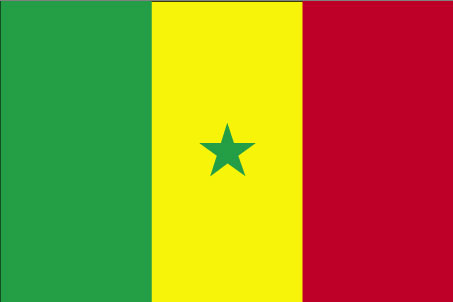
Senegal
Senegal
Declare Your Relationship to Senegal
CountryReports Community
- Studying4
- From Senegal1
- Senegal heritage4
- Visited2
- Want to visit1
Customs and Culture
Customs and Culture
About the People
Senegal is home to many different groups of people. Most belong to one of seven ethnic groups: The Wolof, Serer, Fulani(Peul), Tukulor, Diola, Malinke(Mandingo), and Soninke. Generally the different ethnic groups are cordial to one another and have lived alongside each other for many centuries. The Wolof language is spoken by most of the population. The name of the Tukulor group is derived from the ancient kingdom of Tekrur. The Tukulor were among the first converts to Islam south of the Sahara and they take great pride in their religious fervor. The traditional occupation of the Fulani is raising livestock. The Serer are usually farmers and they have exceptional farming skills. The name Malinke is a Fulani word meaning "the people of the ancient empire of Mali".
Cultural Attributes
Senegal is home to many different groups of people. Most belong to one of seven ethnic groups: The Wolof, Serer, Fulani(Peul), Tukulor, Diola, Malinke(Mandingo), and Soninke. Generally, the different ethnic groups are cordial to one another and have lived alongside each other for many centuries. The Wolof language is spoken by most of the population. The name of the Tukulor group is derived from the ancient kingdom of Tekrur. The Tukulor were among the first converts to Islam south of the Sahara and they take great pride in their religious fervor. The traditional occupation of the Fulani is raising livestock. The Serer are usually farmers with exceptional farming skills. The name Malinke is a Fulani word meaning "the people of the ancient empire of Mali".

Land of Seven Nations, One Song
Greetings, Gestures & Visiting
Geetings are important and in many cases can last up to ten minutes as friends find out how each other is doing. Most greetings begin with a handshake. Traditionally men do not shake hands with women. When leaving others, Senegales shake hands or kiss cheeks and extend best wishes to family members. At meetings, it is customary to discuss work, health, family and mutual friends before discussing the reason for the meeting.
It is not polite to make eye contact while eating. Senegalese avoid eye contact with a person they consider superior in age or status. It is impolite to ask personal questions. Asking questions about children (how many one has or their ages) is considered to bring bad luck.
When visiting Senegal, it's important to be mindful of the local customs and etiquette to show respect for the culture and traditions of the Senegalese people.
Greetings: Greetings are important in Senegalese culture. It's customary to greet people with a handshake and exchange pleasantries. In more informal settings, such as among friends and family, hugs and cheek kisses may also be exchanged.
Respect for Elders: Senegalese society places great emphasis on respect for elders. When interacting with older individuals, it's important to show deference and use polite language and gestures.
Hospitality: Senegalese people are known for their hospitality and generosity. If invited into someone's home, it's customary to remove your shoes before entering and to express gratitude for any food or drink offered to you.
Dress Code: Senegalese people generally dress modestly, especially in rural areas and religious settings. When visiting mosques or other religious sites, it's important to dress conservatively, covering your shoulders and knees.
Religious Observance: Senegal is a predominantly Muslim country, and Islam plays a significant role in daily life. Visitors should be respectful of Islamic customs and practices, such as refraining from eating, drinking, or smoking in public during the fasting month of Ramadan.
Gift Giving: Giving gifts is a common practice in Senegal, especially when visiting someone's home. Small tokens of appreciation, such as food items, sweets, or souvenirs from your home country, are often appreciated.
Language: The official language of Senegal is French, although many Senegalese people also speak Wolof, the most widely spoken indigenous language. Learning a few basic phrases in Wolof or French can go a long way in making connections with locals and showing respect for their culture.
Time: Senegalese time can be more relaxed compared to Western standards. It's important to be patient and flexible, especially when it comes to scheduling appointments or meetings.
Personal appearance is important. In cities businessmen usually wear European style clothing is worn during the day and change to their boubou during the evening. Younger men wear Western style clothing all day. In the rural areas people wear the traditional boubous (BOO-boo) which are loose fitting cotton tunics with large openings under the arms. Some men might wear a pagne (Pa-nyuh) which is a length of cloth wrapped around the hips and a short sleeved shirt. Wolof women are known for their love of ornamentation.
Diet
Rice, corn, millet, sorghum, peanuts, beans, milk and sugar are the staple foods. The main meal is during the middle of the day. The evening meal is served late. Senegalese eat from a communal bowl with the right hand. Tiébiy Dienn (CHEB-oo Jen) a fish stew eaten on rice is the national dish.

Family
The extended family is the norm in most parts of Senegal, and elders are respected. Few rural women work outside the home unless it is to cultivate family gardens. During the dry seasons, many men leave their homes to find work in the cities. In Wolof villages, people group around in compounds surrounding a village center or pencha (PAHN-cha). A family compound is called a ker (kair). A ker consists of a house or houses enclosed by a fence of dried palm fronds or millet or reed stalks. There is typically a house for the man of the household, situated at the compound's entrance, and one for each of his wives. Small children and unmarried girls live with their mothers. Older boys live with their father. Many houses are made of mud. City life is like all big cities.
Except for the Diola, the ethnic groups follow the rigid system of social stratification at birth. There are three main strata; free people, artisans, and slaves. Although slavery has been abolished, members of the slave castes are still despised. Marriage across castes is forbidden, and lying about one's caste is grounds for divorce.
Senegalese take their father's name, but land is passed on by the mother's side of the family. The mother linage is dominated by the tokor (tuh-CORE), the oldest man. The tokor holds all the family money. The tokor is the person who must permit marriage. He also receives the bride price that is traditionally paid to the bride's family.
Many people observe the naming ceremony when the child is seven days old. At this ceremony, the newborn is officially given a name. In rural areas, the day is celebrated by sacrificing a sheep, goat, or chicken. Family members and friends gather to give the child and the mother gifts.
Dating Customs
Dating traditions in Senegal are influenced by cultural, religious, and societal norms. While dating practices may vary depending on individual preferences and backgrounds, there are some common customs and expectations that are often observed:
Family Involvement: Family plays a significant role in dating and relationships in Senegal. It's common for individuals to seek the approval of their families before entering into a relationship, particularly in more traditional households.
Group Socializing: Dating often begins with group socializing, where young people may gather with friends in public places such as cafes, parks, or cultural events. This allows individuals to get to know each other in a social setting before pursuing a more formal relationship.
Respect and Modesty: Senegalese culture places a strong emphasis on respect, modesty, and traditional gender roles. Courting couples are expected to behave modestly and show respect for each other, as well as for elders and the broader community.
Religious Considerations: Senegal is a predominantly Muslim country, and Islamic values influence dating practices for many Senegalese individuals. Premarital sex and physical intimacy are generally discouraged, and couples may choose to adhere to traditional courtship practices that prioritize chastity and moral integrity.
Marriage as the Goal: In many cases, dating in Senegal is seen as a precursor to marriage. Couples may enter into courtship with the intention of finding a life partner, and dating relationships are often viewed as a path towards marriage and starting a family.
Arranged Marriages: While arranged marriages are less common in urban areas and among younger generations, they still occur in some parts of Senegal, particularly in rural communities and among certain ethnic groups. In arranged marriages, families play a central role in selecting a suitable partner for their child based on factors such as compatibility, social status, and family connections.
Modern Influences: With globalization and the influence of Western culture, modern dating practices are becoming more prevalent in urban areas of Senegal. Young people may meet through social media, dating apps, or organized events, and dating relationships may be less formal and structured compared to traditional courtship.
Recreation
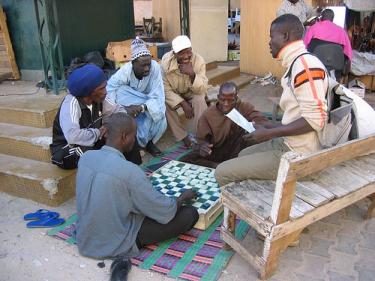
Soccer, basketball, track and field and wrestling are popular sports. Visiting is a favorite pastime. Older men enjoy playing checkers. A traditional sport is wrestling or laamb (lambe) in Wolof language. Wrestling is described as a combination or wrestling and judo. Wrestling is valued for its ceremonial aspects where wrestlers wearing various kinds of amulets on his arms or legs dances around the arena to the music of drummers and singers. This ritual protects the wrestler from the evil spirits used by other wrestlers.
Holidays
Independence Day
4/4Independence Day
Dates of Interest
- April 4th
Festival Kaay Fecc is an international dance festival held in Dakar, showcasing contemporary dance performances from Senegal and around the world. The festival promotes artistic exchange, cultural diversity, and innovation in dance.
How do people greet each other in Senegal?
Greetings are important and can last up to ten minutes, usually beginning with a handshake, as people ask about each other's family, health and friends.
Do
- Begin greetings with a handshake
- Ask about family, health, work and mutual friends before getting down to business
- Exchange handshakes or cheek kisses and extend best wishes to family when leaving
- Learn a few basic phrases in Wolof or French
Don’t
- Don't rush straight into the reason for a meeting
Good to know
- Traditionally men do not shake hands with women
- Among friends and family, hugs and cheek kisses may also be exchanged
What are the dining customs in Senegal?
Senegalese eat from a communal bowl using the right hand, with the main meal at midday and the evening meal served late.
Do
- Eat with your right hand from the communal bowl
Don’t
- Don't make eye contact while eating
Good to know
- Staple foods include rice, corn, millet, sorghum, peanuts, beans, milk and sugar
- The national dish is Tiébou Dienn, a fish stew eaten on rice
What etiquette should I know when visiting Senegal?
Show respect for elders, be hospitable and mindful of Islamic customs, as Senegal is a predominantly Muslim country.
Do
- Remove your shoes before entering someone's home
- Express gratitude for any food or drink offered
- Show deference to elders with polite language and gestures
- Bring small gifts such as food, sweets or souvenirs when visiting a home
Don’t
- Don't ask personal questions
- Don't ask about someone's children or their ages, as this is thought to bring bad luck
- Don't eat, drink or smoke in public during the fasting month of Ramadan
Good to know
- Avoid eye contact with those considered superior in age or status
- Senegalese time can be relaxed, so be patient and flexible with scheduling
How should I dress in Senegal?
Personal appearance matters and dress is generally modest, especially in rural areas and religious settings.
Do
- Dress conservatively at mosques and religious sites, covering shoulders and knees
- Dress modestly, particularly in rural areas
Good to know
- In cities businessmen wear European-style clothing by day and change into a boubou in the evening
- In rural areas people wear the traditional boubou, a loose cotton tunic; some men wear a pagne wrapped around the hips
- Wolof women are known for their love of ornamentation
Are there gestures or body language to be careful with in Senegal?
Eye contact is used cautiously and personal questions are considered impolite.
Don’t
- Don't make eye contact while eating
- Don't make eye contact with someone considered superior in age or status
- Don't ask personal questions, especially about children
What is family life like in Senegal?
The extended family is the norm and elders are highly respected, with families often living together in a compound.
Good to know
- Wolof families group in compounds (ker) around a village center (pencha)
- Senegalese take their father's name, but land passes through the mother's side
- Except for the Diola, ethnic groups follow a rigid social stratification, and marriage across castes is forbidden
- Many families hold a naming ceremony when a child is seven days old
What do people do for fun and sport in Senegal?
Soccer, basketball, track and field, and traditional wrestling are popular, and visiting friends is a favorite pastime.
Good to know
- Traditional wrestling (laamb) combines wrestling and judo and is valued for its ceremonial aspects
- Wrestlers wear amulets and dance around the arena to drummers and singers
- Older men enjoy playing checkers
Last updated: 2026-07-12 · Sources: CountryReports
Photos of Senegal
Photos of Senegal


Travel and Tourism
Travel and Tourism
- Travel Alert Status
- Level 1: Exercise Normal Precautions
- Time Difference
- UTC 0 (5 hours ahead of Washington, DC, during Standard Time)
- Climate
- Senegal has two well-defined seasons: northeasterly winds produce the cool, dry winter season (November to June) and southwesterly winds produce the hot, humid summer (July to October). During winter, Dakar days are invariably sunny with temperatures between 63 and 80° F. During summer, the average temperature is 86° F to 96° F with high humidity. Beginning in January, the harmattan brings dust and sand from the Sahara Desert for 2 or 3 months. Between July and October, Dakar receives 16 - 20 inches of rainfall. Precipitation increases farther south, exceeding 60 inches in parts of the Casamance Region in the southern part of the country. Typically, Senegal is considered a dry, almost desert country with a pleasant climate along the coast and much higher temperatures inland.
- Airports
- 20
Read the full travel guide — health, safety, vaccinations, disease risk, sanitation, and transit details.
View full travel guideRecipes
Recipes
L’Assiette Des Assiettes
Main Dish
Main Dish
Yassa au Poulet de la Casamance — Barbecued Chicken with Lemon and Onions over Rice
Main Dish
Ceeb u Jenn — Rice with Fish
Main Dish
Senegalese Stew with Millet
Main Dish
Maffe aux Legumes Arachid — Chopped Beef in the Boer Manner
Main Dish
L’Assiette Des Assiettes
Main Dish
L’Assiette Des Assiettes
History
History
Historical Eras
Prehistoric & Early Kingdoms
500 BCE – 1444
Archaeological evidence confirms human habitation of the Senegal region from prehistoric times. Islam took root in the Senegal River valley in the 11th century, and by the 13th and 14th centuries the powerful Jolof Empire had emerged as a dominant political force, alongside influence from the Mandingo empires to the east. These early polities established the cultural and religious foundations — most notably Islam — that continue to define Senegalese society.
European Contact & Slave Trade
1445 – 1816
Portuguese navigators reached the Senegalese coast in 1445, initiating sustained European commercial engagement with West Africa. The island of Gorée became a focal point of the Atlantic slave trade, passing from Dutch to French control in 1677, and briefly to Britain before returning to France in 1816. France abolished the slave trade in 1815, marking the beginning of a shift toward colonial economic and administrative ambitions.
French Colonial Era
1816 – 1960
France consolidated its grip on Senegal throughout the 19th century, formally incorporating it into French West Africa in 1895 and later into the French Union in 1946. Dakar served as the administrative capital of the entire French West African federation, making Senegal the political and economic hub of French sub-Saharan Africa. Nationalist sentiment grew steadily in the postwar period, culminating in the formation of the Mali Federation with French Soudan in January 1959.
Independence & Nation-Building
1960 – 1981
Senegal achieved full independence on June 20, 1960, following the rapid dissolution of the Mali Federation, with Léopold Sédar Senghor — celebrated poet and statesman — elected as the country's first president. A 1962 attempted coup by Prime Minister Mamadou Dia was suppressed, prompting a new constitution that centralized presidential authority. Senghor guided Senegal toward relative stability and intellectual prominence before voluntarily retiring in 1980, handing power to Abdou Diouf.
Democratic Consolidation
1981 – 2000
President Abdou Diouf broadened political participation, liberalized the economy, and elevated Senegal's diplomatic profile among developing nations. The country joined the Senegambia Confederation with The Gambia in 1982, though the union collapsed by 1989 without achieving meaningful integration. A persistent separatist insurgency in the southern Casamance region produced sporadic violence, yet Senegal's democratic institutions and commitment to human rights continued to deepen.
Modern Senegal
2000 – present
The landmark 2000 presidential election saw opposition leader Abdoulaye Wade defeat Diouf in a free and fair contest, marking Senegal's first peaceful transfer of power between political parties. A new constitution backed by voters in 2001 further reformed governance structures. Senegal has since maintained a reputation as one of West Africa's most stable democracies, while continuing to manage the low-level Casamance conflict and expanding its role in international peacekeeping missions.
Overview
In January 1959, Senegal and the French Soudan merged to form the Mali Federation, which became fully independent on June 20, 1960, as a result of the independence and the transfer of power agreement signed with France on April 4, 1960. Due to internal political difficulties, the Federation broke up on August 20, 1960. Senegal and Soudan (renamed the Republic of Mali) proclaimed independence. Leopold Sedar Senghor, internationally known poet, politician, and statesman, was elected Senegal’s first President in August 1960.
After the breakup of the Mali Federation, President Senghor and Prime Minister Mamadou Dia governed together under a parliamentary system. In December 1962, their political rivalry led to an attempted coup by Prime Minister Dia. Although this was put down without bloodshed, Dia was arrested and imprisoned, and Senegal adopted a new constitution that consolidated the President’s power. In 1980, President Senghor decided to retire from politics, and he handed over power in 1981 to his handpicked successor, Abdou Diouf. Abdou Diouf was President from 1981-2000. He encouraged broader political participation, reduced government involvement in the economy, and widened Senegal’s diplomatic engagements, particularly with other developing nations. Domestic politics on occasion spilled over into street violence, border tensions, and a violent separatist movement in the southern region of the Casamance. Nevertheless, Senegal’s commitment to democracy and human rights strengthened. Diouf served four terms as President. In the presidential election of 2000, he was defeated, in a free and fair election, by opposition leader Abdoulaye Wade. Senegal experienced its second peaceful transition of power, and its first from one political party to another. Parliamentary and presidential elections are scheduled for 2006 and 2007, respectively.
Timeline of Key Events
1445
Portuguese navigators reached the Senegal coast; begin of European-West African trade.
Portuguese navigators reached the Senegal coast; begin of European-West African trade.
1588
Dutch establish slave port on island of Goree.
Dutch establish slave port on island of Goree.
1677
French take over island of Goree from the Dutch.
French take over island of Goree from the Dutch.
1800
British occupation of Senegal.
British occupation of Senegal.
1815
France abolished slave trade.
France abolished slave trade.
1816
The British returned Senegal to France.
The British returned Senegal to France.
1895
Senegal becomes part of French West Africa.
Senegal becomes part of French West Africa.
Read the full history profile — narrative overview, defining eras, and the complete timeline in one place.
View expanded historyInteresting Facts
Interesting Facts
People travel from all over West Africa to the town of Yoff, near Dakar, to have their mental illness treated by a faith healer. This usually involves a public ceremony, animal sacrifice and large payments to the faith healer.
See every fact — trivia, oddities, and curious tidbits gathered from across the country.
View all interesting factsGeography and Environment
Geography and Environment
- Terrain
- generally low, rolling, plains rising to foothills in southeast
- Climate
- Senegal has two well-defined seasons: northeasterly winds produce the cool, dry winter season (November to June) and southwesterly winds produce the hot, humid summer (July to October). During winter, Dakar days are invariably sunny with temperatures between 63 and 80° F. During summer, the average temperature is 86° F to 96° F with high humidity. Beginning in January, the harmattan brings dust and sand from the Sahara Desert for 2 or 3 months. Between July and October, Dakar receives 16 - 20 inches of rainfall. Precipitation increases farther south, exceeding 60 inches in parts of the Casamance Region in the southern part of the country. Typically, Senegal is considered a dry, almost desert country with a pleasant climate along the coast and much higher temperatures inland.
- Natural Hazards
- lowlands seasonally flooded; periodic droughts
- Current Environmental Issues
- wildlife populations threatened by poaching; deforestation; overgrazing; soil erosion; desertification; overfishing
Read the full geography and environment profile — terrain, climate, natural resources, hazards, land use, and international agreements.
View full geographyPeople & Demographics
People & Demographics
Religion
Languages Spoken
French (official), Wolof, Pulaar, Jola, Mandinka
- French
Population
- Population
- 14,086,103
- Population in Major Urban Areas
- DAKAR (capital) 3.035 million
- Nationality Noun
- Senegalese (singular and plural)
- Ethnic Groups
- Wolof 43.3%, Pular 23.8%, Serer 14.7%, Jola 3.7%, Mandinka 3%, Soninke 1.1%, European and Lebanese 1%, other 9.4%
Education
- Literacy Definition
- age 15 and over can read and write
Health Information
- Major Infectious Diseases — degree of risk
- very high
Read the full people and society profile — demographics, health, education, religion, languages, and notable people.
View full people and societyGovernment & Politics
Government & Politics
Country Identity
- Country Name
- Senegal
- Full Country Name
- Republic of Senegal
- Local - Long
- Republique du Senegal
- Local - Short
- Senegal
Government Structure
- Government Type
- republic under multiparty democratic rule
- Legal System
- based on French civil law system; judicial review of legislative acts in Constitutional Court; the Council of State audits the government's accounting office; has not accepted compulsory ICJ jurisdiction
- Executive Branch
- chief of state: President Bassirou Diomaye FAYE (since 24 March 2024) head of government: Prime Minister Ousmane SONKO (since 2 April 2024) cabinet: Council of Ministers appointed by the prime minister in consultation with the president elections: president elected by popular vote for a five-year term; election last held on 24 March 2024 (next to be held in 2029); prime minister appointed by the president election results: Bassirou Diomaye FAYE elected president in the first round; percent of vote - Bassirou Diomaye FAYE (PASTEF) 54.99%, Amadou BA (APR) 35.79%, other candidates 9.22%
- Legislative Branch
- unicameral National Assembly or Assemblee Nationale (120 seats; members are elected by direct, popular vote to serve five-year terms) note: the former National Assembly, dissolved in the spring of 2001, had 140 seats elections: last held 29 April 2001 (next to be held in February 2007) note - the National Assembly in December 2005 voted to postpone legislative elections originally scheduled for 2006, they will now coincide with presidential elections in 2007 election results: percent of vote by party - NA%; seats by party - SOPI Coalition 89, AFP 11, PS 10, other 10
- Judicial Branch
- Constitutional Court; Council of State; Court of Final Appeals or Cour de Cassation; Court of Appeals
- Suffrage
- 18 years of age; universal
- Constitution
- a new constitution was adopted 7 January 2001
- Independence
- 4 April 1960 (from France); complete independence was achieved upon dissolution of federation with Mali on 20 August 1960
- National Holiday
- Independence Day, 4 April (1960)
Capital City
- Capital Name
- Dakar
- Capital - geographic coordinate
- 14 44 N, 17 38 W
- Capital Time Difference
- UTC 0 (5 hours ahead of Washington, DC, during Standard Time)
the Atlantic coast trading settlement of Ndakaaru came to be called "Dakar" by French colonialists
Military
Branches: Senegalese Armed Forces: Army, Senegalese National Navy (Marine Senegalaise, MNS), Senegalese Air Force (Armee de l'Air du Senegal)
Embassy / Diplomatic Mission
U.S. Embassy Dakar
Route des Almadies – B.P. 49
Dakar, Senegal
Telephone: (221) 33-879-4000
Emergency after-hours telephone: (221) 33-879-4444.
Facsimile: (221) 33-879-4050
Read the full government profile — flag symbolism, national anthem, and other national symbols.
View full government detailsEconomy
Economy
Senegal is one of West Africa's most stable economies and has undergone significant transformation since launching an ambitious economic reform program in January 1994 with support from the international donor community. That reform began with a 50% devaluation of the CFA franc, which was previously pegged to the French franc and is now linked to the euro. Government price controls and subsidies have been steadily dismantled over the years.
Today, Senegal is classified as a lower-middle-income country and ranks among the fastest-growing economies in sub-Saharan Africa. Real GDP growth has averaged around 6% annually in the years preceding the COVID-19 pandemic, and growth has rebounded strongly, with projections exceeding 8% in 2024 as the country begins commercial production of oil and gas from the Sangomar and Greater Tortue Ahmeyim offshore fields. Inflation, which spiked in 2022 due to global food and energy pressures, has since moderated back toward the low single digits.
As a member of the West African Economic and Monetary Union (WAEMU) and the Economic Community of West African States (ECOWAS), Senegal continues to pursue regional integration through a unified external tariff and harmonized economic policies. The government's Plan Sénégal Émergent (PSE) remains the guiding framework for development, targeting infrastructure, agriculture, energy, and digital economy expansion. The information and communication technology sector, which took off after Senegal achieved full internet connectivity in 1996, remains a key driver of services growth, and the private sector accounts for the large majority of GDP.
Despite these gains, Senegal continues to face significant challenges, including high youth unemployment, urban poverty, informal labor market dominance, vulnerability to climate shocks affecting agriculture, and rising public debt. Political tensions in recent years have also tested investor confidence, though the peaceful 2024 presidential transition reinforced the country's reputation for democratic stability.
Snapshot
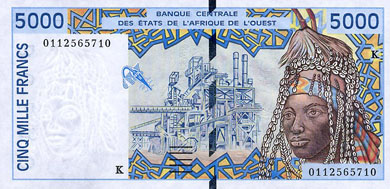
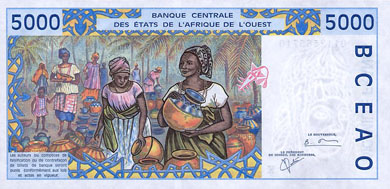
- Currency Name and Code
- CFA Franc BCEAO (XOF)
- GDP — official exchange rate
- $7,972,000,000 (USD)
- GDP Real Growth Rate
- 6.1%
- Gini Index
- 41.3
Banknotes
Budget & Public Finance
- Fiscal Year
- calendar year
- Annual Budget
- $1,926,000,000 (USD)
- Public Debt (% of GDP)
- 46.5%
- External Debt
- $3,610,000,000 (USD)
- Investment (% of GDP)
- 22.4%
- Economic Aid
- $362,600,000 (USD)
- Current Account Balance
- -$638,000,000 (USD)
- Reserves of Foreign Exchange
- $1,324,000,000 (USD)
Labor, Industry & Trade
- Labor Force by Occupation
- agriculture 70%
- Household Income — highest 10%
- 33.5%
- Industries
- agricultural and fish processing, phosphate mining, fertilizer production, petroleum refining, construction materials
- Agriculture Products
- peanuts, millet, corn, sorghum, rice, cotton, tomatoes, green vegetables; cattle, poultry, pigs; fish
- Export Commodities
- fish, groundnuts (peanuts), petroleum products, phosphates, cotton
- Export Partners
- India 20.8%, France 13%, Mali 8.9%, Greece 7.7%, Italy 4.4%
- Import Commodities
- foods and beverages, capital goods, fuels
- Import Partners
- France 25.6%, Nigeria 8.7%, Thailand 7.2%, US 5.4%, Germany 5.4%, Italy 4.5%
Energy
- Oil Production
- 0 bbl/day
- Oil Consumption
- 31,000 bbl/day
- Oil Reserves
- 0 bbl/day
- Natural Gas Production
- 50,000,000 cu m
- Natural Gas Consumption
- 50,000,000 cu m
- Natural Gas Imports
- 0 cu m
- Natural Gas Exports
- 0 cu m
- Natural Gas Reserves
- 0 cu m
Communications
- Telephone System
- general assessment: good system with microwave radio relay, coaxial cable and fiber-optic cable in trunk system domestic: above-average urban system with a fiber-optic network; nearly two-thirds of all fixed-line connections are in Dakar where a call-center industry is emerging; expansion of fixed-line services in rural areas needed; mobile-cellular service is expanding rapidly international: country code - 221; the SAT-3/WASC fiber-optic cable provides connectivity to Europe and Asia while Atlantis-2 provides connectivity to South America; satellite earth station - 1 Intelsat (Atlantic Ocean)
- Internet Country Code
- .sn
News & Weather
News & Weather
Current Weather
Latest News
Senegal's Faye backs ex-president Sall's bid for UN top job, ministry says - Reuters
Reuters · 14h ago
Senegal backs Macky Sall's bid for UN Secretary-General - africanews.com
africanews.com · 13h ago
Senegal's Faye named chair of 15-member ECOWAS bloc amid security threats, regional divisions - Business Insider Africa
Business Insider Africa · 1d ago
Senegal’s President Faye becomes one of ECOWAS’ youngest Chairmen - GhanaWeb
GhanaWeb · 5h ago
Senegal: Faye, ex-president Macky Sall hold high-stakes meeting - africanews.com
africanews.com · 3d ago
USMNT rides Christian Pulisic breakout to 3–2 win over Senegal in chaotic friendly - Yahoo Sports
Yahoo Sports · 51d ago
Senegal’s Faye Moves to Form New Party After Split With Sonko - Bloomberg.com
Bloomberg.com · 20h ago
The UAE as co-host of the UN Water Conference: Africa's agenda, centre stage - Business Insider Africa
Business Insider Africa · 2d ago
News via Google News
Climate Overview
Senegal has two well-defined seasons: northeasterly winds produce the cool, dry winter season (November to June) and southwesterly winds produce the hot, humid summer (July to October). During winter, Dakar days are invariably sunny with temperatures between 63 and 80° F. During summer, the average temperature is 86° F to 96° F with high humidity. Beginning in January, the harmattan brings dust and sand from the Sahara Desert for 2 or 3 months. Between July and October, Dakar receives 16 - 20 inches of rainfall. Precipitation increases farther south, exceeding 60 inches in parts of the Casamance Region in the southern part of the country. Typically, Senegal is considered a dry, almost desert country with a pleasant climate along the coast and much higher temperatures inland.
Videos
Videos
1 curated YouTube videos.
Source: YouTube
Frequently Asked Questions
Frequently Asked Questions
What is the population of Senegal?
How do people greet each other in Senegal?
What are the dining customs in Senegal?
What etiquette should I know when visiting Senegal?
How should I dress in Senegal?
Are there gestures or body language to be careful with in Senegal?
What is family life like in Senegal?
What do people do for fun and sport in Senegal?
What is the capital of Senegal?
Where is Senegal located?
What countries border Senegal?
What is the predominant religion in Senegal?
What is the currency of Senegal?
What languages are spoken in Senegal?
What is the geography of Senegal like?
What is Senegal known for?
Last reviewed 2026