
 English
 Español
 中文
中文 हिन्दी
 Français
Venezuela
Venezuela
Declare Your Relationship to Venezuela
CountryReports Community
- Studying1
- From Venezuela0
- Venezuela heritage0
- Visited0
- Want to visit0
Customs and Culture
Customs and Culture
About the People
Venezuelans tend to be tolerant of cultural and racial differences. Venezuelans tend to have a more relaxed view of time. They even say that they are on Venezuelan time (hora venezolana).
Venezuelans consider it important to finish conversations, even if it means they arrive a little later at their next destination. Venezuelans are proud of their country and heritage.
Cultural Attributes
Venezuelans tend to be tolerant of cultural and racial differences. Venezuelans tend to have a more relaxed view of time. They even say that they are on Venezuelan time (hora Venezolana).
Venezuelans consider it important to finish conversations, even if it means they arrive a little later at their next destination. Venezuelans are proud of their country and heritage.

Home of the World's Highest Falls
Greetings, Gestures & Visiting
Many Venezuelans use affectionate nicknames for people whom they do not know well. For instance, it is not strange to be called “my love” (mi amor) by an acquaintance. Many nicknames are given on the basis of a person's appearance. When shaking hands, Venezuelans use the appropriate greeting for the time of day - 'buenos dias', 'buenas tardes', or 'buenas noches'.
A firm handshake is a common greeting among acquaintances and strangers. Venezuelans communicate with various hand gestures to emphasize a point. Pointing with one's index finger is considered rude. It is polite to maintain eye contact throughout a conversation.
When a visitor arrives at a home or business, a small cup of strong thick coffee is usually offered. Table manners are Continental style (the fork is held in the left hand and the knife in the right while eating). When eating it is considered polite to leave a small amount of food on your plate when you have finished eating. When finished eating, place the knife and fork diagonally across the plate with the prongs facing down and the handles facing to the right.
Venezuelans take pride in their clothes and appearance. Being neat, clean, and properly groomed is important. Venezuelans may wear traditional clothing with French and Italian styles.
Diet
Instead of bread, most Venezuelans eat arepas. Arepas are fried or baked corn or wheat pancakes, often filled with meat, eggs or cheese. They are so popular that there are food stands, called areperas, that specialize in making arepas. Similar foods include cachapas (sweet corn pancakes usually filled with cheese), tequenos (fried dough combined with cheese), empanadas (hearty cheese-filled pastries) and pan de jámon, long bread filled with ham, olives and raisins.
Meat is another important part of Venezuelan cuisine. One common dish, sancocho (a meat and vegetable stew) is usually served with arepas and toasted cassava. One of Venezuela's national dishes is pabellón criollo, which is made with flank steak, black beans, rice and fried plantains (cooking bananas). Mondogo is another popular dish. It is a thick soup made from tripe and vegetables.
Guavas in syrup with cream cheese, and strawberries with cream are common Venezuelan desserts. Májarete, a coconut custard, and quesillo, an egg custard, are favorite desserts. Locally grown fresh fruits include papayas, watermelons, mangoes, bananas, pineapples, guavas, oranges and strawberries.
The largest meal in Venezuela is eaten between noon and 3 p.m. Many Venezuelans go home to eat lunch with their families. Venezuelans eat a light supper at 8 p.m. or later.
Instead of bread, most Venezuelans eat arepas. Arepas are fried or baked corn or wheat pancakes, often filled with meat, eggs or cheese. They are so popular that there are food stands, called "areperas", that specialize in making arepas. Similar foods include cachapas (sweet corn pancakes usually filled with cheese), tequenos (fried dough combined with cheese), empanadas (hearty cheese-filled pastries) and pan de jámon, long bread filled with ham, olives and raisins.
Meat is another important part of Venezuelan cuisine. One common dish, sancocho (a meat and vegetable stew) is usually served with arepas and toasted cassava. One of Venezuela's national dishes is pabellón criollo, which is made with flank steak, black beans, rice and fried plantains (cooking bananas). Mondogo is another popular dish. It is a thick soup made from tripe and vegetables.
Guavas in syrup with cream cheese, and strawberries with cream are common Venezuelan desserts. Májarete, a coconut custard, and quesillo, an egg custard, are favorite desserts. Locally grown fresh fruits include papayas, watermelons, mangoes, bananas, pineapples, guavas, oranges and strawberries.
The largest meal in Venezuela is eaten between noon and 3 p.m. Many Venezuelans go home to eat lunch with their families. Venezuelans eat a light supper at 8 p.m. or later.

Family
To Venezuelans, the family is at the center of their lives. Most spend a great deal of their free time with their families. Three generations of people may live together in the same house or apartment, and elderly people are usually treated with respect. Grandparents, or abuelitos, often look after young children if both parents work outside the home.
Some people in the coastal regions of Venezuela live in houses on stilts called palefitos. Larger cities have modern housing developments and apartment buildings. Some of the indigenous peoples have unique types of housing. Yanomami people live under a large circular roof called a yano. One yano can hold up to one hundred families. Each family has its own place within the yano.
Recreation
Venezuelans enjoy baseball, and soccer is also popular, particularly in the Andean region. They like to spend their vacations on the beach or in one of the country's several freshwater lakes, where they go water skiing, surfing, scuba diving, scuba diving, and fishing. Others enjoy bullfighting.
An exclusive pastime for Venezuelans is a game known as bolas criollas, or Venezuelan bowling. This team game is played outdoors on a flat surface. One of the players throws a ball some three or four meters away that will be the target. Players then take turns shooting their balls trying to get them as close to the object ball as possible. The team that ends up with the balls closest to the object ball wins.
Popular children's games include marbles (bolitas), flying kites (barriletes), and dominoes. One popular game called "trompo" (spinning top) is played with a wooden top. Some children play "carrucha", making homemade cars out of wooden boxes, or "pelota de goma", a version of baseball played with a rubber ball, using a fist for the bat.
Most people have television. Among the most popular shows are soap operas and beauty pageants. Venezuelan soap operas are very successful in Argentina, Ecuador, and Peru.
Venezuelans have won international competitions in water skiing and motorcycling. Many talented boxers are also from Venezuela, such is the case of "morocho" Hernández and "morochito" Rodríguez who have participated in the Olympic Games and other international competitions.
Luis Aparicio is considered by many to be the best baseball player in the history of Venezuela. He was inducted into the Baseball Hall of Fame in Cooperstown, New York.
Student Life
Children must leave early for school in Venezuela, which means that getting ready in the morning is usually simple and fast. Many schools begin as early as 7:00 or 7:30. A favorite bread called arepas is made with corn flour, water, and salt and is very popular at all meals.
Although some private schools have their own school-owned bus systems to transport kids to and from school, kids will usually walk or ride a public bus to school, depending on the local circumstances. They will catch their bus between 6:00 and 6:30, and arrive at school around 7:00. At the end of the day, students return home the same way they came.
All children must wear a uniform to school. And under the current political emphasis on education, school meals are provided in every nationally-funded school, called a “Bolivarian” school. In order to improve the general education level of its citizens, the Venezuelan education office requires that school last much of the day, from 8:00 in the morning until later afternoon, with up to three meals provided, depending on the actual length of the school day in each school. The school canteen is open most of the school day, and the students are responsible for keeping the area clean and tidy. Parents can arrange for a prepaid amount to be available for their child to take advantage of each day or week. The canteen offers a variety of healthy sandwiches, salads, stews, fruit drinks, and lunch meals that include beef, pork chops, chicken, and fish.
The language of Venezuela is Spanish. In addition to Spanish, elementary schools teach mathematics, reading, science, and social studies, among other basic subjects. Education is a very important part of Venezuelan life under the direction of President Hugo Chavez. Although President Chavez is politically controversial, he has done much to improve the education and other social conditions of his country’s people. For example, not only do children attend class during the day but so also many parents in the evenings after work attend the same schools, where they are taught to read and write by hundreds of volunteers throughout the country. In areas that have been difficult to access with the new emphasis on education, “educational missions” have been organized, each one named after a hero from the country’s history. These innovative missions, directed by highly motivated and skilled educators, are making steady progress against the poor education that had become so prevalent. As money is more available for schools, and as the basics of seats, decent classrooms, working bathrooms, and the like are provided once again, more advanced tools can be added, such as computers and overhead projectors. But these are still relatively rare, especially in rural schools. Families must buy their own books, arrange transportation, and cover basic daily expenses such as food. Instead of being given a letter grade or a percentage, Venezuelan students are often marked out of twenty. On this scale, ten is a passing mark. Deaf and hearing-impaired people use Venezuelan sign language. State-run schools for deaf people have been operating since 1937, and many go to college or university with a sign language interpreter.
Extracurricular activities in Venezuela are largely nonexistent. The few schools that may sponsor art or science clubs following school are large national schools rather than community-based schools. Some private schools tend to offer more after-school activities than public schools, such as basketball, soccer, language clubs, band, orchestra, gymnastics, and karate.
Venezuelans love fútbol (soccer), which is their favorite sport. However, they are also fond of baseball, basketball, and boxing. Coastal or river areas enjoy water sports. Venezuelans are friendly and love to party. They mix play with their school and with their work. They are creative and social with one another. Unfortunately, many families are poor and require that their older children work after school or drop out of school altogether in order to help support the family.
In Venezuela, the close relationship of families and friends ties communities and the nation together. Families are very important. Thus, much of the time at home in the evening is spent with family, either working, celebrating, or just plain socializing. Families are very protective of their children, especially of the girls. As grandparents get older, they often move in with their children and help as they can with raising the grandchildren.
Education in Venezuela has improved significantly during the past several years under a new government direction. In the past, most of Venezuela’s profits from its oil industry, which is the country’s biggest money-maker, have gone to a relatively small part of the population. About 80% of the people were living at the poverty level. By contrast, in 2006 over 40% of the national budget was focused on improving conditions for the poor, including improving education. And just as important is a shift in the attitude of Venezuelans in general, for in areas where government changes have not improved education, often local communities are taking charge of the schools and together are fixing up school buildings, providing teachers, and in general making sure that their children will get a good education. Schooling is required and is free for children from ages seven to fourteen years old. Venezuela has 20,000 elementary schools, but only 2,000 secondary and technical schools. After the age of fourteen, fewer than 50% of students continue on to complete their secondary education. The emphasis on getting children into schools and keeping them there longer has been working, however. Between 1999 and 2002 the total number of children attending school increased by 1.5 million. Some private schools do exist, but they are usually attended by the children of wealthy families or children of international businessmen. Interestingly, if the children are from a country other than Venezuela, sometimes the teacher will allow the students to bring their home-country textbooks so the students can maintain consistency with their previous studies. Elementary school begins with a year of preparatory subjects and is roughly equal to first grade in the United States. All students must complete this year before they can advance to the six main years of elementary school. Following elementary school is a secondary school, which is divided into two parts. The first three years consist of general studies, but the final two years focus on more specialized learning in an area of interest. The school day is usually five hours long, and children attend in shifts. Some begin early in the morning and go until about 1:00, while others begin in the early afternoon and attend until 6:00 in the evening. Not only are the children benefiting from the increased emphasis on education, but so are their parents. In a country plagued with illiteracy, more than 1.5 million adults have been taught to read and write in the last decade. Adult literacy now stands at just over 90% and continues to rise.
Holidays
Independence Day
7/5Independence Day
Birth date - Simón Bolívar
7/24Birthday
Birth date - Simón Bolívar , South American revolutionary, was born in Caracas, Venezuela on July 24, 1783.
Christmas
12/25Christmas
The Christmas season begins with the Misa del Aguinald (Mass of the Gift) held each morning around 5 am. Church bells ringing and children setting off firecrackers alert villages that the hour of Mass has arrived. Aguinaldo (Holiday Music) is also played.
Christmas dinner includes hallacas (cornmeal pie stuffed with pork, chicken, olives, raisins, wrapped in banana leaves and boiled), pan de jamón (long bread filled with ham and raisins), pavo (turkey), pernil de cochino (pork dish), dulce de lechoza (cold dessert of green papaya and brown sugar), and ponche crema (cream punch with or without liquor).
Children receive Christmas gifts from El Niño Jesus (the Christ child), who leaves them under their beds.
In some areas on New Year ’s Eve, children create a life-size effigy of the apostle Judas and solicit money for the poor. At midnight they burn Judas with fireworks as a sign of burning away the old year and bringing in the New Year.
Between New Year’s day and February 2 (Candlemas), Andean cities observe the custom of La paradura del Niño (The Standing up of the Christ Child).
Dates of Interest
- Annually
During the annual celebrations of the Feast of Corpus Christi in the small communities of the central coast of Venezuela, dancers disguised as masked devils dance backwards in penitence as an official of the Catholic Church carries forth the Blessed Sacrament. At the climax of the celebration the devils surrender to the Sacrament symbolizing the triumph of good over evil. The dancers or ''promeseros'' (promise-keepers) are lifelong members of a confraternity that transmit the historical memory and ancestral traditions of the communities.
How do people greet each other in Venezuela?
Venezuelans greet with a firm handshake and a time-appropriate phrase, and often use affectionate nicknames even for people they don't know well.
Do
- Use the greeting for the time of day: 'buenos días', 'buenas tardes', or 'buenas noches'
- Offer a firm handshake to acquaintances and strangers
Good to know
- Don't be surprised to be called 'mi amor' (my love) by an acquaintance
- Many nicknames are based on a person's appearance
What are dining customs and typical foods in Venezuela?
Venezuelans eat Continental style and enjoy arepas in place of bread; the largest meal is eaten between noon and 3 p.m., with a light supper at 8 p.m. or later.
Do
- Hold the fork in your left hand and the knife in your right while eating
- Leave a small amount of food on your plate when finished
- Place the knife and fork diagonally across the plate, prongs down and handles to the right, when done
Good to know
- Try arepas (corn or wheat pancakes filled with meat, eggs or cheese)
- Sample national dishes like pabellón criollo, sancocho, cachapas, tequeños and empanadas
- Save room for desserts like quesillo, májarete, or guavas with cream cheese
What should I know about etiquette and social customs in Venezuela?
Venezuelans are tolerant, proud of their heritage, and have a relaxed view of time, valuing the completion of conversations over strict punctuality.
Do
- Accept the small cup of strong, thick coffee usually offered when you arrive at a home or business
- Take time to finish conversations rather than rushing off
Good to know
- Expect a more relaxed sense of time ("hora venezolana")
How should I dress in Venezuela?
Venezuelans take pride in their appearance, so being neat, clean, and well-groomed is important.
Do
- Dress neatly and keep well-groomed
Good to know
- Clothing may reflect French and Italian styles, and some wear traditional dress
What gestures should I be aware of in Venezuela?
Venezuelans use many hand gestures to emphasize points and value eye contact during conversation.
Do
- Maintain eye contact throughout a conversation
Don’t
- Don't point with your index finger, as it is considered rude
What role does family play in Venezuela?
Family is at the center of Venezuelan life, and many spend much of their free time together, with up to three generations living in one home.
Good to know
- Elderly people are usually treated with respect
- Grandparents (abuelitos) often care for young children when both parents work
What do people do for recreation in Venezuela?
Baseball and soccer are popular, and Venezuelans enjoy beaches and lakes for water sports as well as games like bolas criollas (Venezuelan bowling).
Good to know
- Watch for baseball, soccer, and bullfighting
- Try or watch bolas criollas, an outdoor team bowling game
- Soap operas and beauty pageants are popular on television
Last updated: 2026-07-12 · Sources: CountryReports
Photos of Venezuela
Photos of Venezuela
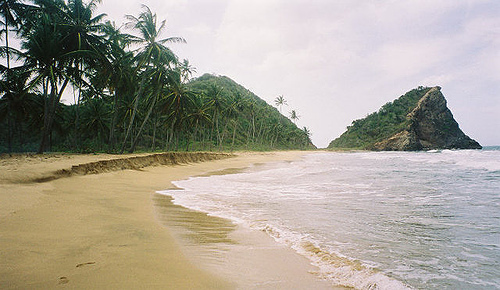
Beach in Veneluela
Morrocoy, Venezuela
Sardines being cooked to eat.
Beach in Veneluela
CacaO plantation, Venezuela
Farmer in rural Venezuela
Cactus near a Venezuela beach
Interesting stairs near a Venezuela beach
Terrazas de La Vega, Caracas, Venezuela
Terrazas de La Vega, Caracas, Venezuela
Terrazas de La Vega, Caracas, Venezuela
La Vega, Caracas, Venezuela


Travel and Tourism
Travel and Tourism
- Travel Alert Status
- Level 4: Do Not Travel
- Currency
- Venezuelan bolivar (VEB)
- Time Difference
- UTC-4 (1 hour ahead of Washington, DC, during Standard Time)
- Climate
- tropical; hot, humid; more moderate in highlands
- Airports
- 368
Read the full travel guide — health, safety, vaccinations, disease risk, sanitation, and transit details.
View full travel guideRecipes
Recipes
Arepas (cornmeal cakes)
Main Dish
Main Dish
VENEZUELAN PEPPERS WITH SHRIMP
Main Dish
Arroz Con Bananas (Rice with Bananas)
Main Dish
Arepas Rellenas Con Guiso de Carne
Main Dish
(Venezuelan Black Beans and Rice)
Main Dish
(Venezuelan Peppers with Shrimp)
Main Dish
Milanesa Uruguaya
Main Dish
PremiumCachapas
Soup
Premium(Venezuelan Meat Stew)
Main Dish
PremiumArepas (cornmeal cakes)
History
History
Historical Eras
Pre-Colonial Era
1000 BCE – 1498
Before European contact, Venezuela's territory was home to diverse indigenous peoples including the Caribs, Arawaks, and Timoto-Cuicas, who inhabited coastal regions, llanos, and Andean highlands. These societies were organized into chiefdoms and villages sustained by fishing, agriculture, and trade. Unlike neighboring regions, Venezuela fell outside the territorial reach of the great Mesoamerican and Andean empires.
Spanish Colonial Period
1498 – 1811
Christopher Columbus made his first landfall on the South American mainland along Venezuela's coast in 1498, and Spanish colonization followed with the founding of settlements such as Nueva Cádiz on Isla de Cubagua around 1500. Venezuela remained a peripheral outpost of the Spanish empire, lacking significant gold or silver deposits, though it grew prosperous through cocoa and later coffee cultivation. The late colonial period saw rising discontent, culminating in Venezuela's first formal rebellion against Spanish rule in 1749.
Independence & Gran Colombia
1811 – 1830
Venezuela became the first South American colony to formally declare independence from Spain in 1811, launching a brutal decade-long war of liberation led most prominently by Simón Bolívar. Decisive victories at the Battle of Boyacá in 1819 and the Battle of Carabobo in 1821 secured Venezuelan and Colombian independence and enabled the formation of Gran Colombia. Venezuela seceded from that federation in 1829–1830, the same year Bolívar died, disillusioned by the failure of his dream of unified Latin American statehood.
Caudillo Republic
1830 – 1908
Following independence, Venezuela descended into prolonged political instability dominated by regional strongmen, or caudillos, who repeatedly seized and lost power through armed conflict. The devastating Federal War of 1859–1863, in which federalist forces under Ezequiel Zamora challenged the centralist government, epitomized the era's chronic violence and social upheaval. Coffee exports sustained the economy, but the nation's political culture remained fractured and authoritarian throughout the nineteenth century.
Military Rule & Oil Age
1908 – 1958
The dictatorship of Juan Vicente Gómez, who ruled from 1908 until his death in 1935, coincided with the explosive growth of Venezuela's petroleum industry, transforming the country from an agricultural exporter into one of the world's leading oil producers. Successive military governments oversaw the gradual assertion of state authority over the foreign-dominated oil sector and allowed limited social reforms. Venezuela became a founding member of OPEC in 1960, though the transition to civilian democracy was already under way by 1958.
Democratic Era
1958 – present
The overthrow of dictator Marcos Pérez Jiménez in 1958 inaugurated a sustained period of elected civilian government, making Venezuela a rare democratic model in Latin America for decades. The nationalization of the oil industry in 1976 cemented state control over the country's dominant economic resource, though dependence on volatile petroleum revenues created deep vulnerabilities. From the late 1990s onward, Hugo Chávez's Bolivarian Revolution and subsequent political crises under Nicolás Maduro reshaped Venezuelan society amid growing authoritarianism, economic collapse, and mass emigration.
Overview
Timeline of Key Events
1498
Christopher Columbus landed in Venezuela
Christopher Columbus landed in Venezuela which is inhabited by Carib, Arawak and Chibcha peoples.
1500
Nueva Cadiz was established on Isla de Cubagua
Nueva Cadiz was established on Isla de Cubagua off the coast of Venezuela after Columbus discovered rich pearl oyster beds nearby.
1509 – 1520
The Spanish colonized the area of Nueva Granada (modern Colombia, Ecuador, Panama, Venezuela)
The Spanish colonized the area of Nueva Granada (modern Colombia, Ecuador, Panama, Venezuela).
1521
Spanish colonization begins
Spanish colonization begins on the north-east coast.
1541
Earthquake and tidal wave
An earthquake and tidal wave finished off the settlement of Nueva Cadiz on Isla de Cubagua off the coast of Venezuela.
1749
First rebellion against Spanish colonial rule
First rebellion against Spanish colonial rule.
1800
Civil war
Venezuela was torn by civil war.
Read the full history profile — narrative overview, defining eras, and the complete timeline in one place.
View expanded historyInteresting Facts
Interesting Facts
When a child loses a tooth they put their tooth under their pillow. While they are asleep, a mouse will take the tooth and bring some coins.
The world's highest waterfall is Angel Falls. It is 3,212 feet high.
The name “Venezuela” actually means “Little Venice”. The Italian explorer, Amerigo Vespucci, noticed houses built on stilts in the water. This reminded him of Venice, Italy, where canals run through the city.
Lake Maracaibo in western Venezuela is the largest lake in South America. It is joined to the Caribbean sea by a narrow body of water, and the waters are partly salty. In 1922, a huge oilfield was discovered near the lake.
The highest waterfall in the world, at 807 metres, is Angel Falls in Canaima National Park in southwest Venezuela. It is named after an American pilot and explorer, Jimmy Angel, who spotted the falls from an airplane in 1935 and later crash-landed nearby.
Simón Bolívar is called the Great Liberator, and Venezuelans are extremely proud that he was born in Venezuela.
See every fact — trivia, oddities, and curious tidbits gathered from across the country.
View all interesting factsGeography and Environment
Geography and Environment
- Terrain
- Andes Mountains and Maracaibo Lowlands in northwest; central plains (llanos); Guiana Highlands in southeast
- Climate
- tropical; hot, humid; more moderate in highlands
- Natural Hazards
- subject to floods, rockslides, mudslides; periodic droughts
- Current Environmental Issues
- sewage pollution of Lago de Valencia; oil and urban pollution of Lago de Maracaibo; deforestation; soil degradation; urban and industrial pollution, especially along the Caribbean coast; threat to the rainforest ecosystem from irresponsible mining operations
Read the full geography and environment profile — terrain, climate, natural resources, hazards, land use, and international agreements.
View full geographyPeople & Demographics
People & Demographics
Religion
Languages Spoken
Spanish (official), numerous indigenous dialects
- Spanish
Population
- Population
- 27,223,228
- Population: Male/Female
- male: 15,555,451 female: 15,694,855
- Population Distribution
- most of the population is concentrated in the northern and western highlands along an eastern spur at the northern end of the Andes, an area that includes the capital of Caracas
- Urban Population
- urban population: 88.4% of total population (2023) rate of urbanization: 1.16% annual rate of change
- Population in Major Urban Areas
- 2.972 million CARACAS (capital), 2.368 million Maracaibo, 1.983 million Valencia, 1.254 million Barquisimeto, 1.243 million Maracay, 964,000 Ciudad Guayana
- Nationality Noun
- noun: Venezuelan(s) adjective: Venezuelan
- Ethnic Groups
- unspecified Spanish, Italian, Portuguese, Arab, German, African, Indigenous
- Language Note
- Spanish (official) 98.2%, indigenous 1.3%, Portuguese 0.1%, other 0.4%
Demographic Profile
Venezuela’s ongoing socio-economic, political, and human rights crises have resulted in widespread poverty and food insecurity and have devastated the country’s healthcare system. According to a 2018 national hospital survey, many hospitals were unable to provide basic services, and 20% of operating rooms and intensive care units were non-functional. Hospitals reported shortages in water (79%), medicines (88%), and surgical supplies (79%). The poor conditions in healthcare facilities have motivated many doctors and other health professionals to emigrate, resulting in shortages of specialists, particularly in emergency care. The scarcity of medicines, vaccines, medical supplies, and mosquito controls is leading to a rise in infectious diseases. Tuberculosis cases jumped by 68% between 2014 and 2017, and malaria rates had the largest rise in the world from 2016 to 2017 at 69%. Diptheria, which had been eradicated in the country in 1999, re-emerged in 2016, and new cases have surfaced in 2023. Infectious disease outbreaks, such as measles and malaria, have crossed into neighboring countries. Infant mortality, which had been decreasing since the 1950s, has been on the rise since 2009. Between 2015 and 2016, infant deaths increased 30%, while maternal mortality increased 65%.
As of November 2023, more than 7.7 million Venezuelan migrants, refugees, and asylum seekers had been reported by host governments, with approximately 85% relocating in Latin America and the Caribbean. Colombia has been the largest recipient, accommodating almost 2.5 million as of February 2022, followed by Peru and Ecuador. As of June 2022, almost 212,000 of the refugees and close to 1.04 million of the asylum seekers were recognized by national authorities. An additional 4.3 million Venezuelans have been granted residence permits or other types of regular stay arrangements, as of March 2023. The initial wave of migrants were highly educated professionals. These were followed by university-educated young people. As the economy collapsed in 2017-2018, Venezuelan migrants have been less-educated and from low-income households.
Education
- Literacy Definition
- age 15 and over can read and write
All children must wear a uniform to school. And under the current political emphasis on education, school meals are provided in every nationally-funded school, called a “Bolivarian” school. In order to improve the general education level of its citizens, the Venezuelan education office requires that school last much of the day, from 8:00 in the morning until later afternoon, with up to three meals provided, depending on the actual length of the school day in each school.
The school canteen is open most of the school day, and the students are responsible for keeping the area clean and tidy. Parents can arrange for a prepaid amount to be available for their child to take advantage of each day or week. The canteen offers a variety of healthy sandwiches, salads, stews, fruit drinks, and lunch meals that include beef, pork chops, chicken, and fish.
Health Information
- Life Expectancy at Birth
- total population: 74.5 years male: 71.5 years female: 77.7 years
- Major Infectious Diseases — degree of risk
- degree of risk: high food or waterborne diseases: bacterial diarrhea and hepatitis A vectorborne diseases: dengue fever and malaria
- Alcohol consumption per capita
- total: 2.51 liters of pure alcohol beer: 1.54 liters of pure alcohol wine: 0.01 liters of pure alcohol spirits: 0.92 liters of pure alcohol other alcohols: 0.03 liters of pure alcohol
- Infant Mortality Rate
- total: 13.9 deaths/1,000 live births male: 15.4 deaths/1,000 live births female: 12.2 deaths/1,000 live births
Life Expectancy
- Life Expectancy at Birth
- total population: 74.5 years male: 71.5 years female: 77.7 years
- Median Age
- total: 31 years male: 30.3 years female: 31.7 years
- Age Structure
- 0-14 years: 25% (male 3,987,361/female 3,811,307) 15-64 years: 65.9% (male 10,264,353/female 10,330,376) 65 years and over: 9.1% (male 1,303,737/female 1,553,172)
- Infant Mortality Rate
- total: 13.9 deaths/1,000 live births male: 15.4 deaths/1,000 live births female: 12.2 deaths/1,000 live births
Read the full people and society profile — demographics, health, education, religion, languages, and notable people.
View full people and societyGovernment & Politics
Government & Politics
Country Identity
- Country Name
- Venezuela
- Full Country Name
- Bolivarian Republic of Venezuela
- Local - Long
- Republica Bolivariana de Venezuela
- Local - Short
- Venezuela
Government Structure
- Government Type
- federal republic
- Legal System
- based on organic laws as of July 1999; open, adversarial court system; has not accepted compulsory ICJ jurisdiction
- Executive Branch
- Acting Pres. Delcy RODRIGUEZ Gomez Executive Vice Pres. Delcy RODRIGUEZ Gomez Min. of Borders Gerardo IZQUIERDO Torres, Maj. Gen. Min. of Communes & Social Movements Angel PRADO Min. of Communications & Information Miguel Angel PEREZ Pirela Min. of Culture Raul CAZAL Min. of Defense Gustavo GONZALEZ Lopez, Gen. Min. of Ecological Mining Development Hector SILVA Min. of Economy & Finance Anabel PEREIRA Fernandez Min. of Ecosocialism Freddy NANEZ Min. of Education Hector RODRIGUEZ Min. of the Elderly Magally VINA Gutierrez Min. of Electricity Rolando ALCALA Min. of Fisheries & Aquaculture Juan Carlos LOYO Min. of Food Carlos LEAL Telleria Min. of Foreign Affairs Yvan GIL Pinto Min. of Foreign Trade Johann ALVAREZ Marquez Min. of Habitat & Housing Paola POSANI Min. of Health Nuramy GUTIERREZ Min. of Hydrocarbons Paula HENAO Min. of Indigenous Peoples Clara VIDAL Min. of Commerce, Industry, & National Production Luis VILLEGAS Min. of Interior, Justice & Peace Diosdado CABELLO Rondon Min. of Labor Carlos Alexis CASTILLO Min. of the Office of the Presidency & Govt. Performance Monitoring Juan ESCALONA Min. of Penitentiary Services Julio Garcia ZERPA Min. of Planning Ricardo MENENDEZ Prieto Min. of Productive Agriculture & Lands Vladimir PADRINO Lopez Min. of Public Works Juan Jose RAMIREZ Min. of Science, Technology, & Innovation Gabriela JIMENEZ Ramirez Min. of Sports Franklin CARRILLO Min. of Tourism Daniella CABELLO Contreras Min. of Transportation Francisco GARCES Min. of University Education Ana Maria SANJUAN Min. of Water Carlos Guillermo MAST Yustiz Min. of Women & Gender Equality Yelitze SANTAELLA Min. of Youth Sergio LOTARTARO Attorney Gen. Larry DEVOE Chief, Capital District Govt. Nahum FERNANDEZ Pres., Central Bank Luis Alberto PEREZ Gonzalez Permanent Representative to the UN, New York Coromoto GODOY Calderon
- Legislative Branch
- unicameral National Assembly or Asamblea Nacional (167 seats; members elected by popular vote to serve five-year terms; three seats reserved for the indigenous peoples of Venezuela) elections: last held 4 December 2005 (next to be held in 2010) election results: percent of vote by party - NA%; seats by party - pro-government 167 (MVR 114, PODEMOS 15, PPT 11, indigenous 2, other 25), opposition 0
- Judicial Branch
- Supreme Tribunal of Justice or Tribuna Suprema de Justicia (magistrates are elected by the National Assembly for a single 12-year term)
- Suffrage
- 18 years of age; universal
- Constitution
- 30-Dec-99
- Independence
- 5 July 1811 (from Spain)
- National Holiday
- Independence Day, 5 July (1811)
Capital City
- Capital Name
- Caracas
- Capital - geographic coordinate
- 10 29 N, 66 52 W
- Capital Time Difference
- UTC-4 (1 hour ahead of Washington, DC, during Standard Time)
named for the native Caracas tribe that originally settled in the city's valley site near the Caribbean coast
Military
Branches: Bolivarian National Armed Forces (Fuerza Armada Nacional Bolivariana, FANB): Bolivarian Army (Ejercito Bolivariano, EB), Bolivarian Navy (Armada Bolivariana, AB; includes marines, Coast Guard), Bolivarian Military Aviation (Aviacion Militar Bolivariana, AMB; includes a joint-service Aerospace Defense Command (Comando de Defensa Aeroespacial Integral, CODAI), Bolivarian Militia (Milicia Bolivariana), Bolivarian National Guard (Guardia Nacional Bolivaria, GNB) Bolivarian National Police (Policía Nacional Bolivariana, PNB) includes the Special Action Forces (Fuerzas de Acciones Especiales, FAES) (2022) note 1: the Bolivarian Militia was added as a "special component" to the FANB in 2020; it is comprised of armed civilians who receive periodic training in exchange for a small stipend note 2: the National Guard is responsible for maintaining public order, guarding the exterior of key government installations and prisons, conducting counter-narcotics operations, monitoring borders, and providing law enforcement in remote areas; it reports to both the Ministry of Defense and the Ministry of Interior, Justice, and Peace note 3: the PNB's FAES paramilitary unit was created by President MADURO after the 2017 anti-government protests to bolster internal security; it has been accused of multiple human rights abuses
Embassy / Diplomatic Mission
U.S. Embassy Caracas
Calle Suapure and Calle F
Colinas de Valle Arriba
Caracas, Venezuela
Telephone: 58-212-975-6411
Emergency after-hours telephone: 58-212-907-8400
Facsimile: 58-212-907-8199
In addition to the Embassy, there is a United States consular agency located in Maracaibo, Venezuela.
U.S. Consular Agency Maracaibo
Calle 77 (5 de Julio) Con Avenida 3F No. 3F-13
Sector Valle Frio
Maracaibo, Venezuela
Telephone: 58-261-200-0600, 58-261-718-0843 or 58-261-718-0845.
Fax: 58-261-792-9674
Read the full government profile — flag symbolism, national anthem, and other national symbols.
View full government detailsEconomy
Economy
Venezuela's economy remains heavily dependent on the petroleum sector, which historically accounts for roughly 25% of GDP and the vast majority of export earnings and government revenues. Once one of Latin America's wealthiest nations, Venezuela has endured one of the most severe economic collapses in modern history outside of war, with GDP contracting by roughly 75% between 2014 and 2021 amid mismanagement, falling oil production, and sweeping international sanctions.
Hyperinflation, which peaked in 2018 and 2019 at rates exceeding one million percent annually, has eased in recent years but remains among the highest in the world, prompting widespread de facto dollarization of the economy. Oil output, which exceeded 3 million barrels per day in the late 1990s, fell below 400,000 barrels per day in 2020 before partially recovering to around 800,000–900,000 barrels per day by 2024, supported by limited U.S. licenses granted to Chevron and other foreign operators.
The country continues to struggle with crumbling infrastructure, chronic shortages of basic goods, electricity blackouts, and a collapsed public health system. More than 7 million Venezuelans have emigrated since 2015, creating one of the largest displacement crises in the world. Modest GDP growth has returned since 2022, driven by higher oil revenues and loosened currency controls, though poverty rates remain above 80% and the long-term outlook hinges on political developments, sanctions relief, and the rehabilitation of the oil industry.
Snapshot
- Currency Name and Code
- Venezuelan Bolivar (VEF)
- GDP — official exchange rate
- $106,100,000,000 (USD)
- GDP Real Growth Rate
- 9.3%
- Gini Index
- 49.1
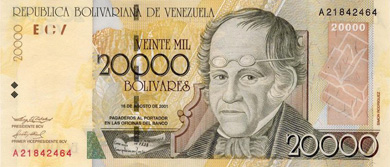
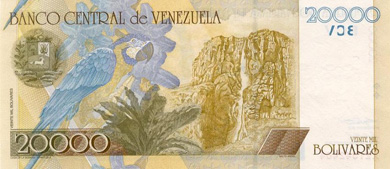
Banknotes
Budget & Public Finance
- Fiscal Year
- calendar year
- Annual Budget
- $41,270,000,000 (USD)
- Public Debt (% of GDP)
- 32%
- External Debt
- $39,790,000,000 (USD)
- Investment (% of GDP)
- 23.8%
- Economic Aid
- $74,000,000 (USD)
- Current Account Balance
- $20,300,000,000 (USD)
- Reserves of Foreign Exchange
- $2,147,483,647 (USD)
Labor, Industry & Trade
- Labor Force by Occupation
- services 64%; industry 23%; agriculture 13%
- Household Income — highest 10%
- 36.5%
- Industries
- petroleum, iron ore mining, construction materials, food processing, textiles, steel, aluminum, motor vehicle assembly
- Agriculture Products
- corn, sorghum, sugarcane, rice, bananas, vegetables, coffee; beef, pork, milk, eggs; fish
- Export Commodities
- petroleum, bauxite and aluminum, steel, chemicals, agricultural products, basic manufactures
- Export Partners
- US 45.1%, Netherlands Antilles 12.8%, Dominican Republic 2.8%
- Import Commodities
- raw materials, machinery and equipment, transport equipment, construction materials
- Import Partners
- US 32.1%, Colombia 8%, Brazil 6.2%, Germany 4.6%, Mexico 4.4%, Italy 4.1%
Energy
- Oil Production
- 3,081,000 bbl/day
- Oil Consumption
- 530,000 bbl/day
- Oil Reserves
- 75,590,000,000 bbl/day
- Natural Gas Production
- 29,700,000,000 cu m
- Natural Gas Consumption
- 29,700,000,000 cu m
- Natural Gas Imports
- 0 cu m
- Natural Gas Exports
- 0 cu m
- Natural Gas Reserves
- 4,191,000,000,000 cu m
Communications
- Telephone System
- General Assessment: modern and expanding Domestic: 2 domestic satellite systems with 3 earth stations; recent substantial improvement in telephone service in rural areas; a substantial increase in digitalization of exchanges and trunk lines; installation of a national interurban fiber-optic network capable of digital multimedia services; combined fixed and mobile-cellular telephone subscribership 130 per 100 persons International: country code - 58; submarine cable systems provide connectivity to Cuba and the Caribbean, Central, and South America, and the United States; satellite earth stations - 1 Intelsat (Atlantic Ocean) and 1 PanAmSat; participating with Colombia, Ecuador, Peru, and Bolivia in the construction of an international fiber-optic network
- Internet Country Code
- .ve
News & Weather
News & Weather
Current Weather
Latest News
Why Iran didn’t turn out like Venezuela for Trump. - vox.com
vox.com · 21h ago
Lionheart Closes In on $400 Million Venezuela Oil Field Deal - Bloomberg.com
Bloomberg.com · 13h ago
Venezuela earthquakes death toll surpasses 5,000 - AP News
AP News · 2d ago
María Corina Machado’s Opposition in Exile - The New Yorker
The New Yorker · 21h ago
In Venezuela’s Rubble, a Search for the Family Pets - The New York Times
The New York Times · 13h ago
Trump, Rubio and a Zombie State In Venezuela - Time Magazine
Time Magazine · 21h ago
Cat rescued from Venezuela earthquake rubble as death toll tops 5,200 - CBS News
CBS News · 20h ago
Hundreds of pets were rescued following Venezuela’s earthquakes. Now they’re looking for their families - CNN
CNN · 2d ago
News via Google News
Climate Overview
tropical; hot, humid; more moderate in highlands
Videos
Videos
2 curated YouTube videos.
Source: YouTube
Source: YouTube
Frequently Asked Questions
Frequently Asked Questions
What is the population of Venezuela?
How do people greet each other in Venezuela?
What are dining customs and typical foods in Venezuela?
What should I know about etiquette and social customs in Venezuela?
How should I dress in Venezuela?
What gestures should I be aware of in Venezuela?
What role does family play in Venezuela?
What do people do for recreation in Venezuela?
What is the capital of Venezuela?
Where is Venezuela located?
What countries border Venezuela?
What is the predominant religion in Venezuela?
What is the currency of Venezuela?
What language is spoken in Venezuela?
What is Venezuela known for?
What is the origin of the name Venezuela?
Last reviewed 2026