
 English
 Español
 中文
中文 हिन्दी
 Français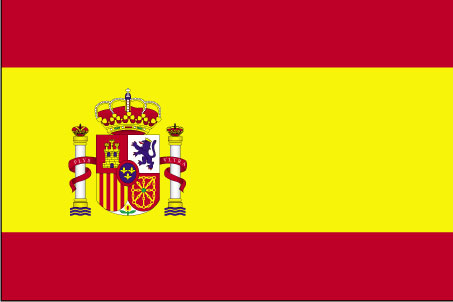
Spain
Espana
Declare Your Relationship to Spain
CountryReports Community
- Studying4
- From Spain0
- Spain heritage3
- Visited1
- Want to visit1
Customs and Culture
Customs and Culture
About the People
The Spanish are generally friendly, helpful, and individualistic. They enjoy conversation and giving advice. The Spanish often consider it their duty to correct “errors” as they see them in others.
Along with the spirit of individualism comes a strong sense of personal pride. Spanish people feel it is very important to project an impression of affluence and social position. Appearance is extremely important. Regional pride and devotion are strong and increasingly expressed
Cultural Attributes
The Spanish are generally friendly, helpful, and individualistic. They enjoy conversation and giving advice. The Spanish often consider it their duty to correct “errors” as they see them in others.
Along with the spirit of individualism comes a strong sense of personal pride. Spanish people feel it is very important to project an impression of affluence and social position. Appearance is extremely important. Regional pride and devotion are strong and increasingly expressed.

Passion Runs Deep
Greetings, Gestures & Visiting
The usual greeting by Spanish males is a handshake. Friends may pat one another on the back and, may give a abrazo (hug) if they have not seen each other for a long period of time. Women also shake hands when greeting others, but close female friends also kiss each other on the cheek. A slight embrace and kiss on the cheek are also used among women when parting. Family names and titles, such as Senor (Mr) Senora (Mrs), and Senora (Miss) may be used to address older people or professionals.
Spaniards like kissing and hugging. Women always give two kisses (one on each cheek) to almost everyone. Men greet themselves with hugs, if they know them well (relatives, good friends) or just with a handshaking. Men only greet women kisses. All these social rules also apply to strangers.
In former times, there used to be some protocol rules in Spain which are not longer in application: e.g. the guests were always supposed to come at least ten minutes late. In the same way, years ago it was considered distasteful to come with a bottle of wine when you were invited to dinner, because apparently it indicated that you did not expect the host to have good wine.
Times have changed, and nowadays you are expected to be punctual and it is considered a very nice gesture and almost a must if you show up with a bottle of wine, the dessert (for example, a frozen tart you can buy in very bakery), some sweets or some other present when you are invited to dinner or to have coffee. The gesture is more important than the present itself. For some strange reason, flowers are not popular, although Spain is Europe's biggest flower producer.
The Spanish are concerned with their public appearance, even when just running errands. A person's social standing is often shown by the style and the quality of clothing worn. Spanish women try to dress in the latest styles. In Spain, men normally dress conservatively. During festivals local costumes are frequently worn.
Diet
Typical Spanish food includes fresh vegetables, meat, eggs, chicken, and fish. Most fried foods are cooked in olive oil. Breakfast is generally a light meal of coffee or hot chocolate, bread and jam, or sometimes churros (a batter made of flour and butter, deep-fried and sprinkled with sugar). A substantial meal is eaten at about 2:00 p.m., and it usually includes soup, a salad, a dish with some kind of fish, a main dish, and fresh fruit. Around 5:00-6:00 p.m., Spaniards eat a snack (merienda), usually a sandwich or sweet bread or crackers with tea or hot milk. Dinner is usually at 9:00 - 10:00 p.m. and is not as large as the midday meal. It may consist of breads and cold meats or other light foods.
At a formal dinner, the host or hostess indicates seating arrangements for guests. For example, ladies, older people, and guests of honor are seated first. At any meal, the continental style of eating is followed, which means one holds a fork in the left hand and a knife in the right. The knife is used for cutting and for pushing food onto the fork. Traditionally, hands are kept above the table at all times and are not placed in the lap during the meal. However, elbows are not to rest on the table; it is best to rest the wrists or forearms on the table edge. Hosts appreciate compliments on the meal. For family meals, the father sits at the head of the table. It is considered poor manners for adults to eat while waking down the street.
Typical Spanish food includes fresh vegetables, meat, eggs, chicken, and fish. Most fried foods are cooked in olive oil. Breakfast is generally a light meal of coffee or hot chocolate, bread and jam, or sometimes churros (a batter made of flour and butter, deep-fried and sprinkled with sugar). A substantial meal is eaten at about 2:00 p.m., and it usually includes soup, a salad, a dish with some kind of fish, a main dish, and fresh fruit. Around 5:00-6:00 p.m., Spaniards eat a snack (merienda), usually a sandwich or sweet bread or crackers with tea or hot milk. Dinner is usually at 9:00 - 10:00 p.m. and is not as large as the midday meal. It may consist of breads and cold meats or other light foods.

Family
The average Spanish family today has 0.7 children., the Spanish birth rate is one of the lowest in the European Union. At the same time, more and more couples simply live together. In some cases, this is legally recognized by the state.
What hasn't changed is the Spanish concept of family. It is quite larger than the northern european one and the close family includes not only direct relatives, but also other distant relatives (for instance, cousins and their women, husbands or kids). Family gatherings are still very popular, at least once a year.
Dating Customs
Dating often begins around age fourteen with group activities. Many young men and women begin dating at about age eighteen. In some place couples only date if they plan to marry. A boy often meets a girl at a a place outside her home instead of where she lives. Potential spouses must usually be approved by parents. The average marriage age for men is twenty-seven, while women marry between the age of 20 and 24.
Recreation
Football (soccer) is the national sport in Spain. Nearly all children learn how to play the sport, and watching important matches can rise to the level of a national obsession. The Spanish also enjoy cycling and tennis. Because of many miles of coastline, swimming and other water sports are also very popular, such as fishing, sailing, and diving. Spain's diverse terrain provides many opportunities, from beach activities to mountain climbing, from horseback riding to snow skiing, and from international sports such as basketball to regional sports such as (Basque ball). This latter sport is actually a group of games that are played in a variety of settings with different equipment. One version is similar to handball, while another is more like tennis. The most common version is the "jai alai" that is played throughout the Hispanic world and even in some parts of the United States. This game is played against a wall and is considered the fastest sport in the world because of the speeds traveled by the ball. Players use a curved wicker basket to hurl the ball as well as catch and return it.
Gardening is a common recreational pastime. For other forms of recreation, the Spanish turn to their love for music and other cultural arts. At home, many people enjoy watching television in the evening. Spain has a long tradition in literature, architecture, and drama.
Student Life
Because Spanish families tend to stay up late at night, work and school starts later in the morning in Spain than in many other countries. Nonetheless, children must often arise by 7:00 a.m. After showering and dressing, they have a light breakfast, which typically consists of hot chocolate or café con leche (coffee mixed with an equal amount of hot, frothy milk), sweet rolls, or bread or toast with jam or mild cheese. This is also called a continental breakfast.
Students often walk, ride bikes, or ride special school buses or public transportation, depending on the distance from the school and individual circumstances. Students in rural areas generally ride the school bus. Wealthier families might take their children to school, especially if they attend a private school. At the end of the school day, children return home the same way. Students who attend a school with a long lunch break will sometimes go home for lunch and then return for the afternoon session of school if their family gathers for a traditional midday meal.
The school system in Spain is free to all children, but families must buy the text books, school supplies, and other materials that might be required for school courses or extracurricular activities. Although the state helps to support all public schools and many private and religious schools, families are required to play a significant role in educating the children. When it comes to lunch, Spanish schools will follow one of two schedules. One option begins at about 8:00 in the morning and goes through to 1:30 or 2:00. These schools do not provide lunch for their students. Instead, children return home to eat in the early afternoon. Throughout Spain, the midday meal is traditionally the main family meal. Most secondary schools follow this schedule. However, some schools, including most nursery and primary schools, begin later in the morning (usually 9:00) and then break for lunch at noon. Those schools will offer lunch (which are low-cost but must be paid for by the family), along with some extracurricular activities during the break, and then begin school again at 3:00 in the afternoon, finishing at 5:00. Some families will have their children come home for lunch; others have their children purchase school lunch or send them with a packed lunch from home.
Very few public schools require school uniforms, although infants in nursery school are expected to wear a blue-and-white checked overall. Beyond that, students may dress as they wish. The atmosphere in Spanish schools can be quite relaxed. For instance, it is not unusual for children in primary schools to call their teachers by their first names. However, subjects are often challenging, and regular homework might be assigned as early as the first grade (age 6). Nursery schools focus on the basics of learning the alphabet and basic skills. Primary schools teach Spanish, math, history, biography, science, physical education, art, and a second language (often English). Most schools will also teach a religion course in Catholicism. Secondary schools serve children between the ages of 12-16, with courses of study becoming more specialized as is typical of most school systems. For example, technology, natural sciences, literature, music, and additional language studies are available to these older students. At the end of secondary school, students take a comprehensive test covering 14 subjects. They must pass at least 12 of the subjects in order to receive a certificate of graduation.
Spanish schools offer a variety of extracurricular activities to provide balance to their academic studies. At the beginning of each year, parents may arrange for one or more afternoon extracurricular activities for their children. These activities include such things as music lessons, tutoring in a specific subject, language classes, computer instruction, art lessons, or a variety of sports. However, since schools in Spain, like most European schools, emphasize academics, most sports, drama, and other activities are sponsored by private clubs. Sporting competitions are especially held among private groups rather than schools. At schools with longer lunch breaks (chiefly primary schools) between the morning and afternoon sessions of classes, students participate in extracurricular activities during the break. Schools that finish their day at 2:00 p.m. (typically secondary schools) offer these activities after school--or students will participate in private sports clubs. These extracurricular activities not only help better educate children, but they also serve to fill children's time with meaningful activities while their parents are working. Unfortunately, some studies are showing that many children have too many extracurricular activities, which is causing an increase in anxiety and stress, headaches, sleep disorders, and other physical illnesses. According to one study, nearly 10% of younger children experience these problems, and approximately 20% of teenagers do.
Spanish people are well-known for their love of staying up late at night to socialize and enjoy friends and cultural activities. That means that the hours after school allow for some free time (even with a couple of hours or more dedicated to homework) before the family gathers at 9:00 in the evening for dinner. Older children may enjoy some of the local festivals and cultural celebrations, and most children of all ages enjoy the many outdoor sports available, such as soccer, walking, hiking, and biking. Teenagers will often "hang out" in cafés quite late on weekends, and they also enjoy going to movies. Streets are still busy at 11:00 at night, with restaurants doing a brisk business for several hours to come. Because of Spain’s many miles of coastline, swimming and other water sports are also very popular, such as fishing, sailing, and diving. Spain’s diverse terrain provides many opportunities, from beach activities to mountain climbing, from horseback riding to snow skiing, and from international sports such as basketball to regional sports such as pelota vasca (Basque ball). This latter sport is actually a group of games that are played in a variety of settings with different equipment. One version is similar to handball, while another is more like tennis. The most common version is the jai alai that is played throughout the Hispanic world and even in some parts of the United States. This game is played against a wall and is considered the fastest sport in the world because of the speeds traveled by the pelota (ball). Players use a curved wicker basket to hurl the ball as well as catch and return it.
Unlike school children in North America, many children in Spain do not eat lunch at school, especially those in secondary school. Instead, they go home for the midday meal, which is called la comida and is the largest meal of the day. This meal will have several courses and may require up to two hours to eat. First would come some type of vegetable or a seafood soup. Next would come a meat dish such as fresh fish or other seafood, chicken, or lamb, fried potatoes, rabbit stew, or something similar. And always bread—freshly baked and lots of it. Following the meat would be a vegetable or a green salad, and then a light dessert, such as a light pastry or fresh fruit. And to finish, a round of coffee and pleasant conversation. Dinner comes sometime between 9:00 p.m. and midnight and is smaller than lunch. It would include soup or a meat dish (similar to what was served at lunch), along with fried potatoes or rice. Green salads and vegetables are usually part of the meal, followed by a light dessert of fresh fruit or flan (a type of vanilla custard). Familes may choose to eat out in the evening, where restaurants are known for low prices and large portions. Families in Spain love to stay up late at night, so it is not unusual to visit with friends or family until close to midnight on weekdays, and weekends can mean staying up until two or three in the morning.
Children in Spain are required to attend school between the ages of 5 and 16. Approximately 30% of all children attend private rather than the state-funded public schools. However, the lines between public, private, and religious schools are not as clear as in many countries, and many private and religious schools also receive financial support from the state. The school year runs from September to June, followed by a summer break of about 10 to 12 weeks that begins around the end of June. Parents must register their children each May for the next year of school. Children usually begin their formal education at age 3, although they can wait until age 5, and some schools accommodate children as young as 9 months. These early years of schooling are called nursery education. By the end of the third year (age 5), nursery children will know at least the alphabet and other basic skills. At age 4, they begin to learn to read and write. Primary education covers ages 6 to 12, and is divided into three two-year stages. If a student does not master the material taught at the end of the second year in any phase, he or she might have to repeat that year of schooling. Parents are expected to support their children, and they can visit with the teachers as often as once a week to ensure their children are progressing or to help solve problems that might arise.
Holidays
National Day
10/12Independence
Birth date - Placido Domingo
1/21Birthday
Birth date - Placido Domingo, opera singer was born in Madrid, Spain on Jan. 21, 1941.
Birth date - Andres Segovia
2/21Birthday
Birth date - Andres Segovia, Spanish guitarist was born in Linares, Spain on Feb. 21, 1893.
Birth date - Francisco Jose de Goya y Lucientes
3/30Birthday
Birth date - Francisco Jose de Goya y Lucientes, Spanish artist, was born in Fuendetodos, Zaragoza, Spain on March 30, 1746.
Birth date - Pablo Ruiz y Picasso
10/25Birthday
Birth date - Pablo Ruiz y Picasso, artist, was born in Málaga, Spain on Oct. 25, 1881.
Birth date - Diego Rodriguez de Silva y Velázquez
6/6Birthday
Birth date - Diego Rodriguez de Silva y Velázquez, Spanish artist was born on June 6, 1599.
Birth date - Pablo Ruiz Picasso
10/25Birthday
Birth date - Pablo Ruiz Picasso, Spanish artist, was born on Oct. 25, 1881 in Malaga, Spain.
Birth date - Pablo Casals
12/29Birthday
Birth date - Pablo Casals, Spanish cellist, was born Dec. 29, 1876 in Vendrell, Catalonia, Spain.
Christmas
12/25Christmas
The Christmas season begins with the Feast of the Immaculate Conception traditionally celebrated on December 8th when choirboys costumed in pale blue satin trimmed in lace and with plumed, wide-brimmed hats perform a ritualistic dance called Los Seises (Dance of Sixes). As the boys dance they sing an Advent hymn invoking the presence of Jesus.
Traditionally from December 16 to December 24 towns observe a Novena — a devotional period of nine days in which the Nativity scene is the central figure which does not have the Christ child until Christmas eve. However the Christmas tree and Santa Claus are becoming more popular.
Christmas eve dinner is usually multiple courses which could including escudella (soup with meatballs and grated cheese) turkey stuffed with bacon, sausage or ham, paella (saffron-flavored rice), flan (caramel custard), besuo (Mediterranean sea bream), roasted chestnuts, turron (nougat candy), and an assortment of wines.
Although children may receive gifts on Christmas morning, the traditional gift-giving day is Epiphany (January 6th). Tradition holds that the three Wise Men passed through Spain on the journey to Bethlehem arriving in Bethlehem on Epiphany. The day is known as Dia de los tres Reyes (Day of the Three Kings). In the days before Epiphany children write letters to the Maji with requests for gifts and visit the Maji in department stores much like children in some countries visit Santa Claus. On Epiphany eve children fill their shoes with straw for the Maji camels and place them on window sills, balconies or doorsteps. In the morning the shoes are filled with gifts by the three kings. A favorite Epiphany treat is roscón (a fruit-cake that contains a small toy).
Dates of Interest
- Date varies
This unique tradition, held in the village of Castrillo de Murcia, involves men dressed as the Devil jumping over babies in the street, believed to cleanse them of sin and bring good luck.
How do people greet each other in Spain?
Men typically greet with a handshake, while women shake hands with acquaintances and close female friends kiss on both cheeks; women give two kisses (one on each cheek) to almost everyone, and men greet women with kisses.
Do
- Shake hands as the standard greeting between men
- Use two cheek kisses (one on each cheek) as women often do
- Give an abrazo (hug) to friends or relatives you haven't seen in a long time
- Address older people or professionals with titles like Señor, Señora, or Señorita
Good to know
- A slight embrace and cheek kiss are used among women when parting too
- These social rules also apply when meeting strangers
What are the dining and mealtime customs in Spain?
Spaniards eat their substantial meal around 2:00 p.m. and a lighter dinner at 9:00-10:00 p.m., using the continental style of eating with fork in the left hand and knife in the right.
Do
- Hold the fork in your left hand and knife in your right, continental style
- Keep your hands above the table during the meal
- Rest your wrists or forearms on the table edge
- Compliment the host on the meal
Don’t
- Don't place your hands in your lap during the meal
- Don't rest your elbows on the table
- Don't eat while walking down the street (poor manners for adults)
Good to know
- At formal dinners, the host indicates seating; ladies, older people, and guests of honor are seated first
- Expect a light breakfast, a big midday meal around 2:00 p.m., a merienda snack around 5:00-6:00 p.m., and a light dinner at 9:00-10:00 p.m.
- Fried foods are typically cooked in olive oil
What should I know about visiting and hospitality in Spain?
When invited to dinner or coffee, be punctual and bring a small gift such as wine, dessert, or sweets—the gesture matters more than the present itself.
Do
- Be punctual when invited
- Bring a bottle of wine, dessert (like a frozen tart), sweets, or a small present
Don’t
- Don't bring flowers, which are surprisingly not popular
Good to know
- Older protocol rules, like arriving ten minutes late or avoiding wine as a gift, no longer apply
- The gesture of bringing something is more important than the present itself
How should I dress in Spain?
Appearance is extremely important, and the Spanish dress well even for errands, as clothing style and quality often signal social standing.
Do
- Dress with care and attention to appearance, even for everyday errands
- Men should dress conservatively
Good to know
- Women tend to dress in the latest styles
- Local costumes are frequently worn during festivals
What is family life like in Spain?
The Spanish concept of family is broad, with the close family including distant relatives such as cousins and their spouses and children, and family gatherings remain popular.
Good to know
- Family gatherings happen at least once a year
- At family meals, the father sits at the head of the table
- More couples now live together, sometimes with legal recognition
- Potential spouses must usually be approved by parents
What do people do for fun in Spain?
Football (soccer) is the national sport and near-obsession, while cycling, tennis, water sports, and diverse outdoor activities are also popular.
Good to know
- Watching important football matches can be a national obsession
- Coastal water sports like swimming, fishing, sailing, and diving are popular
- Regional sports include Basque ball, with jai alai considered the fastest sport in the world
- Gardening, music, cultural arts, and evening television are common pastimes
- Spain has a long tradition in literature, architecture, and drama
Last updated: 2026-07-12 · Sources: CountryReports
Photos of Spain
Photos of Spain
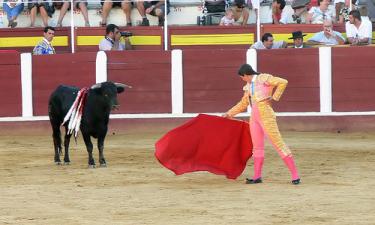
Bullfighting
Spain Sidestreet
Spain Olive Trees
Spain- Barcelona Harbour
Stain glass window in the Monastery of Montserrat, Barcelona
Monastery of Montserrat, Barcelona, Spain
Barcelona
Mountains near Montserrat, Catalonia
Roman Theatre in Merida, Spain
Fira de Barcelona
Caceres, Spain
Palacio Real, Madrid, Spain


Travel and Tourism
Travel and Tourism
- Travel Alert Status
- Level 2: Exercise Increased Caution
- Currency
- euro (EUR)
- Time Difference
- UTC+1 (6 hours ahead of Washington, DC, during Standard Time) time zone note: Spain has two time zones, including the Canary Islands (UTC 0)
- Climate
- Madrid's climate is predominantly dry, sunny, and agreeable. Because of its elevation (about 2,000 feet above sea level) and its proximity to mountains, Madrid often experiences wide variations in temperature between winter and high summer. In winter, temperatures drop slightly below freezing and many winter days can be uncomfortably cold. Summers are quite warm with average midday temperatures of 95°F to 100°F. Except at the height of summer, evenings and nights are cool. Daily mean temperature ranges from 50°F to 68°F during 8 months of the year. Rainfall is scarce, except during a brief rainy season in October and November and again in spring. Snow, uncommon in Madrid, usually becomes rain and slush within hours.
- Airports
- 152
Read the full travel guide — health, safety, vaccinations, disease risk, sanitation, and transit details.
View full travel guideRecipes
Recipes
History
History
Historical Eras
Ancient Hispania
218 BCE – 476
Roman legions entered the Iberian Peninsula during the Second Punic War, gradually subjugating Carthaginian and Iberian peoples to forge the province of Hispania. Over six centuries, Roman rule brought Latin language, law, urban infrastructure, and Christianity to the region. The era ended as Germanic tribes — Vandals, Suevi, and ultimately Visigoths — swept across the collapsing Western Empire.
Visigothic & Moorish Spain
476 – 1479
The Visigoths established a Germanic Christian kingdom across Hispania by the late fifth century, but their realm collapsed swiftly when Umayyad Muslim forces crossed from North Africa in 711 and conquered most of the peninsula within a decade. The following centuries were defined by Al-Andalus — a sophisticated Islamic civilization — alongside the gradual Christian Reconquista, during which kingdoms of Asturias, León, Castile, Aragon, and Navarre fought to reclaim territory, producing figures such as El Cid and culminating in the reduction of Muslim rule to the Kingdom of Granada.
Unification & Empire
1479 – 1700
The marriage of Ferdinand of Aragon and Isabella of Castile unified Spain's principal crowns, and their reign brought the fall of Granada in 1492, the expulsion of Jews and Muslims, the establishment of the Inquisition, and Columbus's voyages to the Americas. Under the Habsburg monarchs Charles I and Philip II, Spain became the foremost world power, commanding a global empire stretching from the Americas to the Philippines and controlling vast swaths of Europe. Spanish silver from the New World funded near-constant European wars, even as the defeat of the Armada in 1588 foreshadowed declining naval supremacy.
Decline & Bourbon Reform
1700 – 1808
The death of the last Spanish Habsburg without an heir triggered the War of the Spanish Succession, ultimately seating the French Bourbon dynasty on the throne under Philip V. Bourbon monarchs attempted sweeping administrative and economic reforms throughout the eighteenth century, centralizing power and modernizing institutions, but Spain fell progressively behind Britain and France in commercial and industrial development. The loss of Gibraltar in 1713 and Spain's entanglement in Atlantic imperial rivalries steadily eroded its great-power standing.
Instability & Civil War
1808 – 1939
Napoleon's invasion in 1808 sparked the Peninsular War and ignited independence movements across Spanish America, stripping Spain of nearly all its empire by the 1820s. The nineteenth and early twentieth centuries were plagued by constitutional crises, military coups, the Carlist Wars, and deepening conflicts over regionalism, the Church, and class inequality. These tensions erupted catastrophically in the Spanish Civil War of 1936–39, in which Nationalist forces under General Francisco Franco, aided by Nazi Germany and Fascist Italy, defeated the Republican government at the cost of over 500,000 lives.
Franco to Democracy
1939 – present
Francisco Franco's authoritarian regime ruled Spain until his death in 1975, suppressing regional autonomy and political opposition while guiding a significant but state-directed economic modernization in the 1960s. King Juan Carlos I, crowned upon Franco's death, defied expectations by overseeing a rapid and peaceful transition to parliamentary democracy alongside Prime Minister Adolfo Suárez, ratifying a new constitution in 1978. Spain joined NATO in 1982 and the European Union in 1986, firmly anchoring itself in the Western democratic order, though challenges including Basque separatist violence and regional tensions have persisted into the twenty-first century.
Overview
Timeline of Key Events
573
The Visigoths conquered Spain.
The Visigoths conquered Spain.
711
Muslims from northern Africa invaded Spain displacing the Goths.
Muslims from northern Africa invaded Spain displacing the Goths.
1094
El Cid, a Castilian Christian, fought the Moors and conquered Valencia.
El Cid, a Castilian Christian, fought the Moors and conquered Valencia.
1100
Portugal gained its independence.
Portugal gained its independence.
1200
The Christian territory controlled the Kingdoms of Aragon, Navarre, and Castile.
The Christian territory controlled the Kingdoms of Aragon, Navarre, and Castile.
1200
The Muslim territory had been reduced to the Kingdom of Granada.
The Muslim territory had been reduced to the Kingdom of Granada.
1469
The marriage of Prince Ferdinand of Aragon and Princess Isabella of Castille.
The marriage of Prince Ferdinand of Aragon and Princess Isabella of Castille.
Read the full history profile — narrative overview, defining eras, and the complete timeline in one place.
View expanded historyInteresting Facts
Interesting Facts
When a child loses a tooth they put their tooth under their pillow. While they are asleep, the little mouse called Ratoncito Perez will take their tooth and leave money or candy.
The tradition of “el ratoncito Perez” was invented as the character of a story for a young king who had fear of losing his baby teeth.
There is a first tooth ceremony. Whoever finds the first tooth becomes one's Godmother. After finding the tooth she buys the child a new outfit to celebrate.
Every year, Buñol hosts La Tomatina, the world's largest vegetable fight. Situated only 30 kilometers inland from the Mediterranean Sea, and well-connected by motorway and rail to Madrid and Valencia, this town erupts into a fiery blaze of tomato-hurling on the last Wednesday of every August. The “batalla” takes place during a week-long celebration filled with on-going festivities and with even greater anticipation for the tomato battle that serves as the culmination of the week's events.
For each gong of the clock at midnight, people pop a grape into their mouths. Twelve grapes symbolize good luck for each month of the New Year
In an effort to draw more tourism into the small town of Buñol, La Tomatina has blossomed into a full-blown fiesta that coincides with the festival for the town's patron saint. For a week leading up to the epic battle, the 20,000-strong town of Buñol, is filled with parades, fireworks, food and street parties.
See every fact — trivia, oddities, and curious tidbits gathered from across the country.
View all interesting factsGeography and Environment
Geography and Environment
- Terrain
- large, flat to dissected plateau surrounded by rugged hills; Pyrenees in north
- Climate
- Madrid's climate is predominantly dry, sunny, and agreeable. Because of its elevation (about 2,000 feet above sea level) and its proximity to mountains, Madrid often experiences wide variations in temperature between winter and high summer. In winter, temperatures drop slightly below freezing and many winter days can be uncomfortably cold. Summers are quite warm with average midday temperatures of 95°F to 100°F are common. Except at the height of summer, evenings and nights are cool. Daily mean temperature ranges from 50°F to 68°F during 8 months of the year. Rainfall is scarce, except during a brief rainy season in October and November and again in spring. Snow, uncommon in Madrid, usually becomes rain and slush within hours.
- Natural Hazards
- periodic droughts
- Current Environmental Issues
- pollution of the Mediterranean Sea from raw sewage and effluents from the offshore production of oil and gas; water quality and quantity nationwide; air pollution; deforestation; desertification
Read the full geography and environment profile — terrain, climate, natural resources, hazards, land use, and international agreements.
View full geographyPeople & Demographics
People & Demographics
Religion
Languages Spoken
Castilian Spanish (official) 74%, Catalan 17%, Galician 7%, and Basque 2%
note: Catalan is official in Catalonia, the Balearic Islands, and the Valencian Community (where it is known as Valencian); in the northwest corner of Catalonia (Vall d'Aran), Aranese is official along with Catalan; Galician is official in Galicia; Basque is official in the Basque Country
- Spanish
- Basque
Population
- Population
- 40,548,753
- Population: Male/Female
- male: 23,069,327 female: 24,211,106
- Population Distribution
- with the notable exception of Madrid, Sevilla, and Zaragoza, the largest urban agglomerations are found along the Mediterranean and Atlantic coasts; numerous smaller cities are spread throughout the interior reflecting Spain's agrarian heritage; very dense settlement around the capital of Madrid, as well as the port city of Barcelona
- Urban Population
- urban population: 81.6% of total population rate of urbanization: 0.24% annual rate of change
- Population in Major Urban Areas
- 6.751 million MADRID (capital), 5.687 million Barcelona, 838,000 Valencia
- Nationality Noun
- noun: Spaniard(s) adjective: Spanish
- Ethnic Groups
- Spanish 84.8%, Moroccan 1.7%, Romanian 1.2%, other 12.3%
- Language Note
- Castilian Spanish (official nationwide) 74%, Catalan (official in Catalonia, the Balearic Islands, and the Valencian Community (where it is known as Valencian)) 17%, Galician (official in Galicia) 7%, Basque (official in the Basque Country and in the Basque-speaking area of Navarre) 2%, Aranese (official in the northwest corner of Catalonia (Vall d'Aran) along with Catalan, <5,000 speakers); note - Aragonese, Aranese Asturian, Basque, Calo, Catalan, Galician, and Valencian are recognized as regional languages under the European Charter for Regional or Minority Languages
Education
- Literacy Definition
- age 15 and over can read and write
The school system in Spain is free to all children, but families must buy the text books, school supplies, and other materials that might be required for school courses or extracurricular activities. Although the state helps to support all public schools and many private and religious schools, families are required to play a significant role in educating the children.
When it comes to lunch, Spanish schools will follow one of two schedules. One option begins at about 8:00 in the morning and goes through to 1:30 or 2:00. These schools do not provide lunch for their students. Instead, children return home to eat in the early afternoon. Throughout Spain, the midday meal is traditionally the main family meal. Most secondary schools follow this schedule.
However, some schools, including most nursery and primary schools, begin later in the morning (usually 9:00) and then break for lunch at noon. Those schools will offer lunch (which are low-cost but must be paid for by the family), along with some extracurricular activities during the break, and then begin school again at 3:00 in the afternoon, finishing at 5:00. Some families will have their children come home for lunch; others have their children purchase school lunch or send them with a packed lunch from home.
Health Information
- Life Expectancy at Birth
- total population: 83 years male: 80.3 years female: 85.8 years
- Alcohol consumption per capita
- total: 10.72 liters of pure alcohol beer: 4.67 liters of pure alcohol wine: 3.52 liters of pure alcohol spirits: 2.34 liters of pure alcohol other alcohols: 0.19 liters of pure alcohol
- Tobacco Use
- total: 27.7% male: 28.6% female: 26.7%
- Infant Mortality Rate
- total: 2.4 deaths/1,000 live births male: 2.7 deaths/1,000 live births female: 2.1 deaths/1,000 live births
Life Expectancy
- Life Expectancy at Birth
- total population: 83 years male: 80.3 years female: 85.8 years
- Median Age
- total: 46.8 years male: 45.7 years female: 47.8 years
- Age Structure
- 0-14 years: 13% (male 3,147,019/female 3,012,821) 15-64 years: 66.1% (male 15,662,492/female 15,585,138) 65 years and over: 20.9% (male 4,259,816/female 5,613,147)
- Infant Mortality Rate
- total: 2.4 deaths/1,000 live births male: 2.7 deaths/1,000 live births female: 2.1 deaths/1,000 live births
Read the full people and society profile — demographics, health, education, religion, languages, and notable people.
View full people and societyGovernment & Politics
Government & Politics
Country Identity
- Country Name
- Spain
- Full Country Name
- Kingdom of Spain
- Local - Short
- Espana
Government Structure
- Government Type
- parliamentary monarchy
- Legal System
- civil law system, with regional applications; has not accepted compulsory ICJ jurisdiction
- Executive Branch
- chief of state: King FELIPE VI (since 19 June 2014); Heir Apparent Princess LEONOR, daughter of the monarch, born 31 October 2005 head of government: President of the Government (Prime Minister) Pedro SANCHEZ (since 2 June 2018); First Vice President and Deputy Prime Minister Maria Jesus MONTERO (since 2024); Second Vice President Yolanda DIAZ (since 2021) cabinet: Council of Ministers designated by the president and appointed by the monarch note: there is also a Council of State that serves as the supreme consultative organ of the government, but its recommendations are non-binding elections: the monarchy is hereditary; following legislative elections, the leader of the majority party or the leader of the majority coalition is usually proposed as president by the monarch and then elected by the National Assembly; election last held on 23 July 2023 (next to be held in 2027); vice presidents appointed by the monarch on the proposal of the president election results: Pedro SANCHEZ (PSOE) re-elected president following the July 2023 general election; after coalition negotiations, SANCHEZ secured a parliamentary investiture vote in November 2023, returning to the presidency with support from a coalition of left-wing and regional parties
- Legislative Branch
- bicameral; General Courts or National Assembly or Las Cortes Generales consists of the Senate or Senado (259 seats - 208 members directly elected by popular vote and the other 51 appointed by the regional legislatures to serve four-year terms) and the Congress of Deputies or Congreso de los Diputados (350 seats; members are elected by popular vote on block lists by proportional representation to serve four-year terms) elections: Senate - last held 14 March 2004 (next to be held March 2008); Congress of Deputies - last held 14 March 2004 (next to be held March 2008) election results: Senate - percent of vote by party - PP 49%, PSOE 38.9%, Entesa Catalona de Progress 5.7%, CiU 1.99%, PNV 2.8%, CC 1.4%; seats by party - PP 102, PSOE 81, Entesa Catalona de Progress 12, CiU 4, PNV 6, CC 3; Congress of Deputies - percent of vote by party - PSOE 43.3%, PP 37.8%, CiU 3.2%, ERC 2.5%, PNV 1.6%, IU 3.2%, CC 0.9%; seats by party - PSOE 164, PP 148, CiU 10, ERC 8, PNV 7, IU 2, CC 3, other 8
- Judicial Branch
- Supreme Court or Tribunal Supremo
- Suffrage
- 18 years of age; universal
- Constitution
- 6 December 1978, effective 29 December 1978
- Independence
- the Iberian peninsula was characterized by a variety of independent kingdoms prior to the Moslem occupation that began in the early 8th Century A. D. and lasted nearly seven centuries; the small Christian redoubts of the north began the reconquest almost
- National Holiday
- National Day, 12 October
Capital City
- Capital Name
- Madrid
- Capital - geographic coordinate
- 40 24 N, 3 41 W
- Capital Time Difference
- UTC+1 (6 hours ahead of Washington, DC, during Standard Time) time zone note: Spain has two time zones, including the Canary Islands (UTC 0)
the Romans named the original settlement "Matrice" after the river that ran through it; under Arab rule it became "Majerit," meaning "source of water"; in medieval Romance dialects (Mozarabic) it became "Matrit," which over time changed to "Madrid"
Military
Branches: Spanish Armed Forces: Army (Ejercito de Tierra), Spanish Navy (Armada Espanola, AE; includes Marine Corps), Spanish Air Force (Ejercito del Aire Espanola, EdA)
Embassy / Diplomatic Mission
U.S. Embassy Madrid
Calle Serrano, 75
28006 Madrid, Spain
Telephone: (34) 91 587 2240
Emergency after-hours telephone: (34) 91 587 2200
Ask to speak to the duty officer if you need emergency assistance outside business hours.
Facsimile: (34) 91 587 2303
E-mail: askacs@state.gov
Website: U.S. Embassy Madrid
U.S. Consulate General Barcelona
Paseo Reina Elisenda de Montcada, 23-25
08034 Barcelona, Spain
Telephone: (34) 93 280 2227
Emergency after-hours telephone: (34) 91 587 2200
Ask to speak to the duty officer if you need emergency assistance outside business hours.
Facsimile: (34) 93 280 6175
E-mail: BarcelonaACS@state.gov
Website: U.S. Consulate General Barcelona
Routine and emergency services for U.S. citizens are provided by the American Citizens Services section of the Consular Section at the U.S. Embassy. Appointments are required for routine consular services. Additional information is available through the U.S. Citizen Services page on the Embassy’s website. To make an appointment, please visit the U.S. Embassy's online appointment system for U.S. Citizen Services.
The U.S. Consulate General in Barcelona provides many services for U.S. citizens, including emergency passport services. The American Citizens Services section’s assistance also includes, but is not limited to, routine passport services, notary services, and Consular Reports of Births Abroad. The Consulate General also assists in emergencies, including deaths, arrests and crisis situations. You need to make an online appointment for routine consular services. For assistance regarding Andorra, please contact the U.S. Consulate General in Barcelona.
U.S. Consular Agencies: There are six consular agencies in Spain, which provide limited services to U.S. citizens. Passport applications may be submitted at the agencies. However, the agencies are not authorized to issue passports and will forward the applications for processing. Anyone requesting service at one of the consular agencies should call ahead to verify that the service requested will be available on the day you expect to visit the agency. The agencies’ contact information is below. Please note that the emergency after-hours telephone number for all of Spain is: (34) 91 587 2200. Ask to speak to the duty officer if you call this number for emergency assistance outside business hours.
U.S. Consular Agency Fuengirola (Málaga)
Avenida Juan Gómez "Juanito", 8
Edificio Lucía 1º-C
29640 Fuengirola (Málaga), Spain
Telephone: (34) 95 247 4891
Facsimile: (34) 95 246 5189
Hours: 10:00 a.m. to 2:00 p.m.
E-mail: conagencymalaga@telefonica.net
Website: U.S. Consular Agency Fuengirola (Málaga)
U.S. Consular Agency A Coruña
Calle Juana de Vega 8
Piso 5, Izquierda
15003 La Coruna, Spain
Telephone: (34) 98 121 3233
Facsimile: (34) 98 122 2808
Hours: 10:00 a.m. to 1:00 p.m.
E-mail: acorunacons@telefonica.net
Website: U.S. Consular Agency A Coruña
U.S. Consular Agency Las Palmas
Edificio Arca
Calle Los Martinez de Escobar 3, Oficina 7
35007 Las Palmas, Gran Canaria, Spain
Telephone: (34) 92 827 1259
Facsimile: (34) 92 822 5863
Hours: 10:00 a.m. to 1:00 p.m.
E-mail: canariascons@telefonica.net
Website: U.S. Consular Agency Las Palmas
U.S. Consular Agency Palma de Mallorca
at Edificio Reina Constanza
Porto Pi, 8, 9-D
07015 Palma, Islas Baleares, Spain
Telephone: (34) 97 140 3707 or (34) 97 140 3905
Facsimile: (34) 97 140 3971
Hours: 10:30 a.m. to 1:30 p.m.
E-mail: pmagency@telefonica.net
Website: U.S. Consular Agency Palma de Mallorca
U.S. Consular Agency Seville
Plaza Nueva 8-8 duplicado
2nd Floor, Office E-2 No.4
41101 Sevilla, Spain
Telephone: (34) 95 421 8751
Facsimile: (34) 95 422 0791
Hours: 10:00 a.m. to 1:00 p.m.
E-mail: sevillecons@telefonica.net
Website: U.S. Consular Agency Seville
U.S. Consular Agency Valencia
Doctor Romagosa 1, 2-J
46002 Valencia, Spain
Telephone: (34) 96 351 6973
Facsimile: (34) 96 352 9565
Hours: 10:00 a.m. to 2:00 p.m.
E-mail: valenciacons@telefonica.net
Website: U.S. Consular Agency Valencia
Read the full government profile — flag symbolism, national anthem, and other national symbols.
View full government detailsEconomy
Economy
Spain has a mixed capitalist economy and is the fourth-largest economy in the eurozone, behind Germany, France, and Italy. GDP per capita stands at roughly 85% of the EU average, with the country generating a nominal GDP of approximately $1.7 trillion. Spain adopted the euro upon its launch on 1 January 1999 and has since pursued ongoing structural reforms aimed at liberalization, labor market flexibility, and fiscal consolidation. The services sector dominates the economy, accounting for nearly three-quarters of output and employment, with tourism playing a particularly vital role — Spain consistently ranks among the world's top tourist destinations. Manufacturing, automotive production, renewable energy, and agriculture also remain significant contributors. Following the deep recession triggered by the 2008 financial crisis and the more recent shock of the COVID-19 pandemic, the Spanish economy has rebounded, supported by EU recovery funds under the NextGenerationEU program. Persistent challenges include relatively high unemployment, particularly among youth, public debt levels exceeding 100% of GDP, and regional economic disparities.
Snapshot
- Currency Name and Code
- Euro (EUR)
- GDP — official exchange rate
- $1,019,000,000,000 (USD)
- GDP Real Growth Rate
- 3.4%
- Gini Index
- 32.5
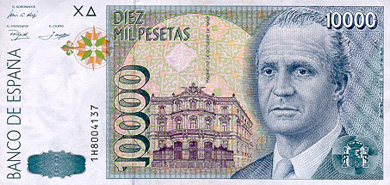
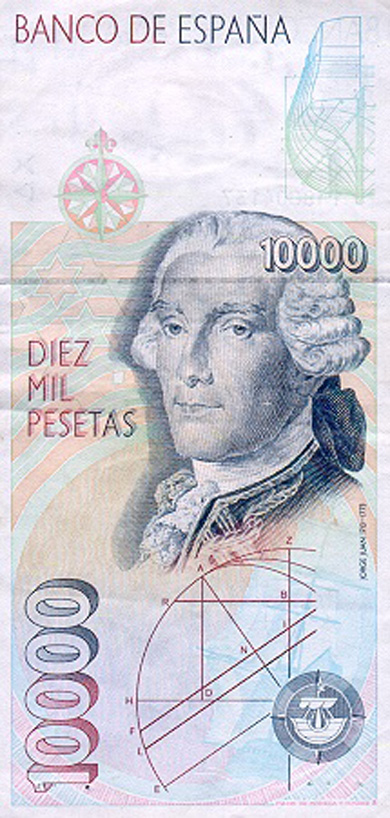
Banknotes
Budget & Public Finance
- Fiscal Year
- calendar year
- Annual Budget
- $448,400,000,000 (USD)
- Public Debt (% of GDP)
- 48.5%
- External Debt
- $1,249,000,000,000 (USD)
- Investment (% of GDP)
- 28.1%
- Current Account Balance
- -$64,620,000,000 (USD)
- Reserves of Foreign Exchange
- $2,147,483,647 (USD)
Labor, Industry & Trade
- Labor Force by Occupation
- services 64%; manufacturing; mining; and construction 29%; agriculture 7%
- Household Income — highest 10%
- 25.2%
- Industries
- textiles and apparel (including footwear), food and beverages, metals and metal manufactures, chemicals, shipbuilding, automobiles, machine tools, tourism
- Agriculture Products
- grain, vegetables, olives, wine grapes, sugar beets, citrus; beef, pork, poultry, dairy products; fish
- Export Commodities
- machinery, motor vehicles; foodstuffs, other consumer goods
- Export Partners
- France 19%, Germany 11.4%, UK 9.6%, Portugal 9.5%, Italy 9.3%, US 4.6%
- Import Commodities
- machinery and equipment, fuels, chemicals, semifinished goods; foodstuffs, consumer goods
- Import Partners
- France 17%, Germany 16.5%, Italy 8.6%, UK 6.4%, Netherlands 4.8%
Energy
- Oil Production
- 24,540 bbl/day
- Oil Consumption
- 1,544,000 bbl/day
- Oil Reserves
- 10,500,000 bbl/day
- Natural Gas Production
- 216,000,000 cu m
- Natural Gas Consumption
- 23,270,000,000 cu m
- Natural Gas Imports
- 17,260,000,000 cu m
- Natural Gas Exports
- 0 cu m
- Natural Gas Reserves
- 2,662,000,000 cu m
Communications
- Telephone System
- general assessment: well-developed, modern facilities; fixed-line teledensity exceeds 40 per 100 persons domestic: combined fixed-line and mobile-cellular teledensity exceeds 150 telephones per 100 persons international: country code - 34; submarine cables provide connectivity to Europe, Middle East, Asia, and US; satellite earth stations - 2 Intelsat (1 Atlantic Ocean and 1 Indian Ocean), NA Eutelsat; tropospheric scatter to adjacent countries
- Internet Country Code
- .es
News & Weather
News & Weather
Current Weather
Latest News
FIFA to investigate clashes between Spain and Argentina players after World Cup final - The New York Times
The New York Times · 12h ago
Jon Stewart Criticizes Trump for Tainting Spain's World Cup Victory With His 'Overinflated Ego' - Rolling Stone
Rolling Stone · 1h ago
Stargazing: Inside the last days of Spain's quest for a second World Cup - ESPN
ESPN · 13h ago
Spain's World Cup Parade Highlights, From Yamal And His Brother To Joyful Fans - FOX Sports
FOX Sports · 7h ago
World Cup champions Spain return to royal welcome, parade through Madrid - Al Jazeera
Al Jazeera · 10h ago
Spain celebrates World Cup win at parade - CNN
CNN · 10h ago
Spain won the World Cup, but Donald Trump 'cast a shadow' - DW.com
DW.com · 12h ago
Spain rejoices in World Cup victory, even if some fans say Trump lingered too long in team's photo-op - CBS News
CBS News · 16h ago
News via Google News
Climate Overview
Madrid's climate is predominantly dry, sunny, and agreeable. Because of its elevation (about 2,000 feet above sea level) and its proximity to mountains, Madrid often experiences wide variations in temperature between winter and high summer. In winter, temperatures drop slightly below freezing and many winter days can be uncomfortably cold. Summers are quite warm with average midday temperatures of 95°F to 100°F. Except at the height of summer, evenings and nights are cool. Daily mean temperature ranges from 50°F to 68°F during 8 months of the year. Rainfall is scarce, except during a brief rainy season in October and November and again in spring. Snow, uncommon in Madrid, usually becomes rain and slush within hours.
Videos
Videos
2 curated YouTube videos.
Source: YouTube
Source: YouTube
Frequently Asked Questions
Frequently Asked Questions
What is the population of Spain?
How do people greet each other in Spain?
What are the dining and mealtime customs in Spain?
What should I know about visiting and hospitality in Spain?
How should I dress in Spain?
What is family life like in Spain?
What do people do for fun in Spain?
What is the capital of Spain?
Where is Spain located?
What countries border Spain?
What is the main religion in Spain?
What currency does Spain use?
What languages are spoken in Spain?
What is Spain known for?
What are some distinctive cultural traditions in Spain?
Last reviewed 2026