
 English
 Español
 中文
中文 हिन्दी
 Français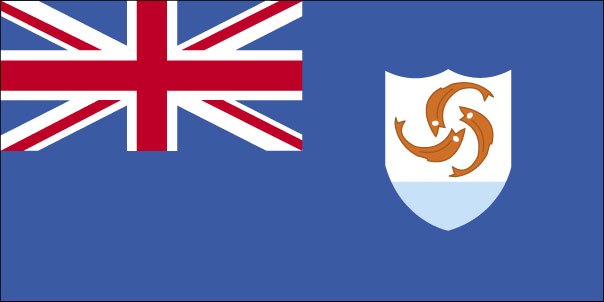
Anguilla
Anguilla
Declare Your Relationship to Anguilla
CountryReports Community
- Studying0
- From Anguilla0
- Anguilla heritage0
- Visited0
- Want to visit0
Customs and Culture
Customs and Culture
Cultural Attributes
Anguilla's culture is a vibrant blend of African, British, and Caribbean influences, shaped by centuries of history and the enduring spirit of its people. The island's cultural identity is deeply rooted in its African heritage, brought by enslaved Africans who were transported to the island primarily during the 17th and 18th centuries. Today, the majority of Anguillans trace their ancestry to these African roots, and this heritage is reflected throughout the island's music, food, festivals, and community life.

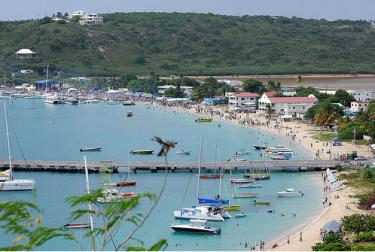
Island of Pristine Shores and Tranquil Waters

Holidays
Independence Day
8/19Independence Day
Dates of Interest
- December 26th
Held annually in March: An internationally recognized music festival that brings together local and international artists for a weekend of live performances, showcasing various genres of music.
What is the food like in Anguilla?
Anguillan cuisine reflects the island's maritime environment and Caribbean heritage, with seafood central to the local diet and communal meals an important part of social life.
Do
- Try local seafood such as lobster, conch, and red snapper
- Look for traditional dishes made with locally grown vegetables and herbs
Good to know
- Communal meals are an important aspect of social life in Anguilla
What do people do for fun and recreation in Anguilla?
Music and boat racing are central to Anguillan cultural life, with an annual Summer Festival in August featuring live music, parades, boat racing, and cultural performances.
Good to know
- Traditional wooden sailboat racing is the national sport and draws large crowds at local regattas
- Listen for 'Shando' (Shandu), Anguilla's unique folk music blending African rhythms with local storytelling
- Calypso, reggae, and soca are widely enjoyed
- The Summer Festival takes place in August
What should travelers know before visiting Anguilla?
Anguilla's culture blends African, British, and Caribbean influences, and its people hold strong cultural pride, especially regarding the 1967 revolution.
Good to know
- English is the official language, though a distinctive local dialect is common in everyday conversation
- The island is predominantly Christian, with Methodist, Anglican, and Baptist denominations most common
- Anguilla Day is observed annually on May 30th, commemorating the 1967 revolution
- Boat building craftsmanship is a treasured cultural tradition passed down through families
Last updated: 2026-07-12 · Sources: CountryReports
Photos of Anguilla
Photos of Anguilla


Travel and Tourism
Travel and Tourism
- Travel Alert Status
- Level 1: Exercise Normal Precautions
- Currency
- 2.7
- Time Difference
- UTC-4 (1 hour ahead of Washington, DC, during Standard Time)
- Climate
- Tropical; moderated by northeast trade winds
- Airports
- 3
- Recommended Vaccinations
- How important is it to do your research about vaccinations? It might just save your life! Make yourself aware of the different types of vaccinations and which ones you may need to travel to your destination. Schedule an appointment with your doctor at least four to six weeks before you travel to ensure you receive all important shots. Be sure that you and your family are up to date on your routine vaccinations. Which vaccinations you need will depend on a number of factors including your destination, whether you will be spending time in rural areas, the season of the year you are traveling, your age, health status, and previous immunizations.
Read the full travel guide — health, safety, vaccinations, disease risk, sanitation, and transit details.
View full travel guideHistory
History
Historical Eras
Pre-Colonial Period
2000 BCE – 1650
Anguilla was inhabited by Amerindian peoples, including the Arawaks and later the Caribs, long before European contact. Whether Christopher Columbus sighted the island during his 1493 voyage remains uncertain, though a French expedition noted it in 1564. The island's name derives from the Spanish word for eel, reflecting its long, narrow shape and serpentine shoreline.
Early British Settlement
1650 – 1825
English settlers from Saint Kitts colonized Anguilla in 1650, establishing the island as a British possession. The settlement faced repeated violent challenges, including Carib raids in 1656, Irish landings in 1698, and French attacks in 1745 and 1796, all of which were repelled. The island developed modest plantations relying on enslaved African labor, though its thin soils limited large-scale agricultural prosperity.
Federation with St. Kitts
1825 – 1967
Against the strong objections of its inhabitants, Anguilla was incorporated into a unified British dependency with Saint Kitts and Nevis in 1825, subordinating the island to Saint Kitts-based administration. Anguillans resented this arrangement for over a century, as the island received little investment or political representation relative to its partners. Multiple attempts to achieve separation or greater autonomy during the 19th and early 20th centuries were rejected by British authorities.
Revolution & Secession
1967 – 1980
When Britain granted Saint Kitts-Nevis-Anguilla associated statehood in 1967, Anguillans revolted, expelling Saint Kitts police and burning down the Government House, then declaring their own independence. A 1969 unilateral declaration of a republic prompted Britain to send paratroopers and police in 1969, though negotiations ultimately favored the Anguillans. By 1971 Britain formally allowed Anguilla to separate, and in 1980 the island became a distinct British dependent territory.
British Overseas Territory
1980 – present
Since 1980 Anguilla has functioned as a British Overseas Territory with its own elected House of Assembly and Executive Council, while Britain retains responsibility for defense and foreign affairs. The island developed a prosperous, tourism-driven economy and a thriving offshore financial sector over subsequent decades. Anguilla continues to maintain its distinct identity and has consistently rejected full independence in favor of its constitutional relationship with the United Kingdom.
Overview
The Leeward Islands British dependencies lie east of Puerto Rico in the region where the Greater Antilles and Lesser Antilles meet. The British Virgin Islands, immediately east of their United States counterparts, consist of more than forty islands, rocks, and islets, the most important of which are Tortola (containing the capital of Road Town), Virgin Gorda, and Anegada (see fig. 16). Anguilla (pronounced "an-GWIL-a") lies some 120 kilometers east of the British Virgin Islands (see fig. 17).
Timeline of Key Events
1493
Anguilla was first spotted by Christopher Columbus in 1493.
Anguilla, the smallest Island in the Leeward Island, was first spotted by Christopher Columbus in 1493 . He gave the Island her name “Anguilla” because of its shape resemblance to an eel, Anguilla means “eel” in Spanish.
1650
Anguilla became a British colony.
Anguilla became a British colony.
1656
Amerindian attack English settlement on Anguilla.
Amerindian attack English settlement on Anguilla; killed men, captured women and children.
1666
French attack Anguilla.
French attack Anguilla.
1688
French and Irish attack Anguilla, colonists flee to Antigua.
French and Irish attack Anguilla, colonists flee to Antigua.
1825
Against the wishes of the islanders, Anguilla became incorporated with St Kitts and Nevis.
Against the wishes of the islanders, Anguilla became incorporated with St Kitts and Nevis.
1967
Locals burned down Government House and declared their independence.
In Anguilla locals burned down Government House and declared their independence from St. Kitts & Nevis. Britain sent 300 troops followed by police to quell the rebellion.
Read the full history profile — narrative overview, defining eras, and the complete timeline in one place.
View expanded historyInteresting Facts
Interesting Facts
Anguilla means eel in Spanish
See every fact — trivia, oddities, and curious tidbits gathered from across the country.
View all interesting factsGeography and Environment
Geography and Environment
- Terrain
- flat and low-lying island of coral and limestone
- Climate
- tropical; moderated by northeast trade winds
- Natural Hazards
- frequent hurricanes and other tropical storms (July to October)
- Current Environmental Issues
- supplies of potable water sometimes cannot meet increasing demand largely because of poor distribution system
Read the full geography and environment profile — terrain, climate, natural resources, hazards, land use, and international agreements.
View full geographyPeople & Demographics
People & Demographics
Religion
Languages Spoken
English (official)
- English
Population
- Population
- 14,764
- Population: Male/Female
- male: 9,107 female: 10,309
- Population Distribution
- most of the population is concentrated in The Valley in the center of the island; settlmement is fairly uniform in the southwest, but rather sparce in the northeast
- Urban Population
- urban population: 100% of total population rate of urbanization: 0.47% annual rate of change
- Population in Major Urban Areas
- 1,000 THE VALLEY (capital)
- Nationality Noun
- noun: Anguillan(s) adjective: Anguillan
- Ethnic Groups
- African/Black 85.3%, Hispanic 4.9%, mixed 3.8%, White 3.2%, East Indian/Indian 1%, other 1.6%, unspecified 0.3%
- Language Note
- English (official)
Education
- Literacy Definition
- age 12 and over can read and write
Health Information
- Life Expectancy at Birth
- total population: 82.6 years male: 80 years female: 85.3 years
- Infant Mortality Rate
- total: 3 deaths/1,000 live births male: 3.9 deaths/1,000 live births female: 2.1 deaths/1,000 live births
Life Expectancy
- Life Expectancy at Birth
- total population: 82.6 years male: 80 years female: 85.3 years
- Median Age
- total: 37.1 years male: 34.8 years female: 39 years
- Age Structure
- 0-14 years: 20.8% (male 2,056/female 1,992) 15-64 years: 67.5% (male 5,958/female 7,147) 65 years and over: 11.7% (male 1,093/female 1,170)
- Infant Mortality Rate
- total: 3 deaths/1,000 live births male: 3.9 deaths/1,000 live births female: 2.1 deaths/1,000 live births
Read the full people and society profile — demographics, health, education, religion, languages, and notable people.
View full people and societyGovernment & Politics
Government & Politics
Country Identity
- Country Name
- Anguilla
- Full Country Name
- Anguilla
- Local - Short
- Anguilla
Government Structure
- Government Type
- NA
- Legal System
- based on English common law
- Executive Branch
- chief of state: Queen ELIZABETH II (since 6 February 1952); represented by Governor Alan Eden HUCKLE (since 28 May 2004) head of government: Chief Minister Osbourne FLEMING (since 3 March 2000) cabinet: Executive Council appointed by the governor from among the elected members of the House of Assembly elections: none; the monarch is hereditary; governor appointed by the monarch; following legislative elections, the leader of the majority party or the leader of the majority coalition is usually appointed chief minister by the governor
- Legislative Branch
- unicameral House of Assembly (11 seats total, 7 elected by direct popular vote, 2 ex officio members, and 2 appointed; members serve five-year terms) elections: last held 21 February 2005 (next to be held 2010) election results: percent of vote by party - AUF 38.9%, ANSA 19.2%, AUM 19.4%, APP 9.5%, independents 13%; seats by party - AUF 4, ANSA 2, AUM 1
- Judicial Branch
- High Court (judge provided by Eastern Caribbean Supreme Court)
- Suffrage
- 18 years of age; universal
- Constitution
- Anguilla Constitutional Order 1 April 1982; amended 1990
- Independence
- none (overseas territory of the UK)
- National Holiday
- Anguilla Day, 30 May
Capital City
- Capital Name
- The Valley
- Capital - geographic coordinate
- 18 13 N, 63 03 W
- Capital Time Difference
- UTC-4 (1 hour ahead of Washington, DC, during Standard Time)
name derives from the capital's location between several hills
Embassy / Diplomatic Mission
U.S. Embassy in Bridgetown
Wildey Business park
Wildey
St. Michael, Barbados
Telephone: (246) 227-4399
Emergency after-hours telephone: (246) 227-4000
Facsimile: (246) 431-0179
Email: BridgetownACS@state.gov
Hours of operation are 8:30 a.m. – 4:30 p.m. Monday through Friday, except Barbadian and U.S. holidays.
Read the full government profile — flag symbolism, national anthem, and other national symbols.
View full government detailsEconomy
Economy
Anguilla has few natural resources, and the economy depends heavily on luxury tourism, offshore banking, lobster fishing, and remittances from emigrants. Tourism remains the dominant sector, accounting for roughly 60 percent of GDP and serving as the primary driver of employment and foreign exchange earnings. Growth in tourism has spurred expansion in the construction sector, particularly in high-end resort and villa development. Anguillan officials continue to develop the offshore financial sector, which remains small but provides important government revenue through licensing and registration fees.
The economy was severely disrupted by Hurricane Irma in 2017, which damaged much of the island's tourism infrastructure, and again by the COVID-19 pandemic in 2020, which caused GDP to contract sharply. Recovery has since been strong, supported by the return of visitors and a notable surge in revenue from the licensing of Anguilla's .ai internet domain, which has become a significant source of government income amid the global boom in artificial intelligence. In the medium term, prospects for the economy will depend largely on the tourism sector and, therefore, on income growth in source markets such as the United States and Europe, as well as on favorable weather conditions and resilience to climate-related risks.
Snapshot
- Currency Name and Code
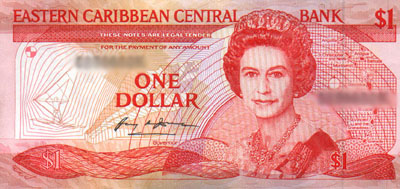
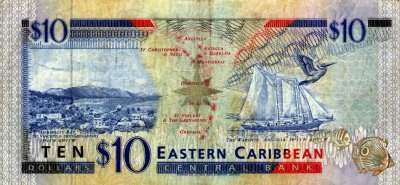
- East Caribbean dollars (XCD)
- GDP Real Growth Rate
- 2.8%
- GDP by Sector
- agriculture: 4% industry: 18% services: 78%
Banknotes
Budget & Public Finance
- Fiscal Year
- 1 April - 31 March
- Annual Budget
- $22,500,000 (USD)
- Economic Aid
- $3,500,000 (USD)
Labor, Industry & Trade
- Labor Force by Occupation
- commerce 36%; services 29%; construction 18%; transportation and utilities 10%; manufacturing 3%; agriculture/fishing/forestry/mining 4% (2000 est)
- Industries
- tourism, boat building, offshore financial services
- Agriculture Products
- small quantities of tobacco, vegetables; cattle raising
- Export Commodities
- lobster, fish, livestock, salt, concrete blocks, rum
- Export Partners
- UK, US, Puerto Rico, Saint-Martin
- Import Commodities
- fuels, foodstuffs, manufactures, chemicals, trucks, textiles
- Import Partners
- US, Puerto Rico, UK
Energy
- Oil Production
- 0 bbl/day
- Oil Consumption
- 0 bbl/day
- Oil Reserves
- 0 bbl/day
- Natural Gas Production
- 0 cu m
- Natural Gas Consumption
- 0 cu m
- Natural Gas Imports
- 0 cu m
- Natural Gas Exports
- 0 cu m
- Natural Gas Reserves
- 0 cu m
Communications
- Telephone System
- General Assessment: modern internal telephone system Domestic: fixed-line teledensity is roughly 40 per 100 persons; mobile-cellular teledensity is roughly 170 per 100 persons International: country code - 1-264; landing point for the East Caribbean Fiber System submarine cable with links to 13 other islands in the eastern Caribbean extending from the British Virgin Islands to Trinidad; microwave radio relay to the island of Saint Martin/Sint Maarten
- Internet Country Code
- .ai
News & Weather
News & Weather
Current Weather
Latest News
20 Unforgettable Experiences To Try on Your Next Trip to Anguilla - Travel + Leisure
Travel + Leisure · 2d ago
Anguilla Bolsters Winter Connectivity with Expanded North American Airlift - Breaking Travel News
Breaking Travel News · 8h ago
St. Lucia Takes the Lead Followed By the Bahamas, Anguilla, Antigua and Jamaica in Achieving the Luxury Resorts Anchored by Legendary Estates to Captivate the Most Discerning Travelers to Spend Cozy and Private Holidays in 2026 in the Caribbean - Travel And Tour World
Travel And Tour World · 3h ago
Anguilla team prepares for Commonwealth Games - thedailyherald.sx
thedailyherald.sx · 5h ago
Anguilla Announces Additional Winter Air Service from US and Canada - TravelPulse
TravelPulse · 6d ago
Anguilla adds winter airlift from Toronto with new BermudAir service - Travelweek
Travelweek · 5d ago
The Bird Island: One of Anguilla's Largest Private Islands Is for Sale - Haute Residence by Haute Living - Haute Living
Haute Living · 6d ago
Anguilla welcomes expanded air service from Canada this winter - TravelPress
TravelPress · 5d ago
News via Google News
Climate Overview
Tropical; moderated by northeast trade winds
Videos
Videos
1 curated YouTube videos.
Source: YouTube
Frequently Asked Questions
Frequently Asked Questions
What is the population of Anguilla?
What is the food like in Anguilla?
What do people do for fun and recreation in Anguilla?
What should travelers know before visiting Anguilla?
What is the capital of Anguilla?
Where is Anguilla located?
What are the ocean borders of Anguilla?
What religion is practiced in Anguilla?
What currency is used in Anguilla?
What language is spoken in Anguilla?
What is Anguilla known for?
What is the history behind Anguilla's political separation from Saint Kitts?
Last reviewed 2026