
 English
 Español
 中文
中文 हिन्दी
 Français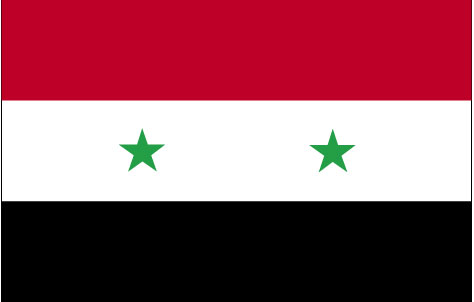
Syria
Suriyah
Declare Your Relationship to Syria
CountryReports Community
- Studying0
- From Syria0
- Syria heritage0
- Visited0
- Want to visit0
Customs and Culture
Customs and Culture
About the People
Syrians are often aggressive in public. Haggling over prices is a way of life. Punctuality is not considered important.
Cultural Attributes
Syria has a rich and diverse cultural heritage shaped by its long history and the influences of various civilizations. Here are some notable cultural attributes of Syria:
Historical Significance: Syria is known for its ancient historical sites and cities, including Damascus, Aleppo, Palmyra, and Bosra, which have played a vital role in the region's history. These sites showcase the country's deep cultural roots and architectural marvels.
Arab Culture: Syria is predominantly an Arab country, and the Arabic language is the official language. The Arab culture, including customs, traditions, music, and cuisine, is an integral part of Syrian society.
Islamic Influence: Islam has had a significant influence on Syrian culture for centuries. The majority of Syrians are Muslims, with the country being home to various Islamic architectural wonders, such as the Umayyad Mosque in Damascus.
Cuisine: Syrian cuisine is renowned for its flavorsome dishes, often characterized by a blend of Mediterranean and Middle Eastern influences. Popular Syrian dishes include kebabs, falafel, hummus, tabbouleh, and baklava.
Traditional Music and Dance: Music and dance are integral to Syrian culture. Traditional music often features instruments like the oud, qanun, and ney. The country is also known for the dabke, a line dance performed at celebrations and cultural events.
Handicrafts and Art: Syria has a long history of skilled craftsmanship, producing intricate textiles, carpets, pottery, and metalwork. Traditional Syrian art forms, such as calligraphy, miniature painting, and mosaic work, have also contributed to the country's cultural heritage.
Hospitality: Syrians are known for their warm hospitality and generosity towards guests. Hosting guests and offering tea or coffee as a sign of welcome is deeply ingrained in the culture.
Family and Community: Family ties and community bonds hold great importance in Syrian culture. Extended families often live in close proximity and provide support to one another, emphasizing the value of communal relationships.
Syrians are often aggressive in public. Haggling over prices is a way of life. Punctuality is not considered important.

Land of Ancient Crossroads, Where Empires Rose
Greetings, Gestures & Visiting
In Syria, greetings are an important part of social interaction, and Syrians generally value politeness and respect when greeting others. The specific greeting customs may vary depending on the region, age, and the relationship between the individuals. Here are some common ways Syrians greet each other:
Handshake: Handshakes are the most common form of greeting between people of the same gender. When meeting someone for the first time or when reuniting with acquaintances, it is customary to shake hands. A firm handshake while maintaining eye contact is seen as a sign of respect.
Cheek Kisses: Among close friends, relatives, or people of the opposite gender who have a familiar relationship, cheek kisses are a common greeting. The number of kisses can vary depending on the region and the individuals involved. In urban areas, two or three kisses on alternating cheeks may be exchanged, while in more conservative or rural settings, a single cheek kiss may be more common.
Verbal Greetings: Verbal greetings are important in Syrian culture. It is customary to exchange greetings such as "Marhaba" (hello), "Salam" (peace), or "Ahlan" (welcome) when meeting someone. When responding to a greeting, it is polite to reciprocate with the same or a similar greeting.
Enquiries about Well-being: Syrians often inquire about each other's well-being as part of the greeting. It is common to ask "Keefak" (How are you?) or "Shlonak" (How are you doing?) as a form of polite conversation. Responding with a positive answer, even if there are concerns, is generally expected in casual greetings.
Hand-to-Heart Gesture: In more formal or respectful greetings, particularly with elders or people of higher social status, a hand-to-heart gesture may be used. Placing the right hand over the heart while nodding the head is a way of showing respect and expressing sincerity.
Use of Titles and Honorifics: Syrians often use honorific titles when greeting someone, especially when addressing elders or people in positions of authority. Titles such as "Sheikh" (for an older man), "Sayyid" (sir), or "Sayyida" (madam) followed by the person's name are used as a sign of respect.
Non-Verbal Cues: Non-verbal cues such as smiling, maintaining eye contact, and a warm demeanor are important elements of greetings in Syria. These cues convey friendliness, sincerity, and a welcoming attitude.
Syrians stand close together and use hand gestures. A downward nod of the head to oneside means yes. Brushing open palms together quickly as if to brush off dirt means "I'm finished" Patting the hand over the hear when meeting expresses affection for that person.
When visiting in Syria, it's important to be aware of and respect the social norms and customs of the country. Here are some general social norms to keep in mind:
Greetings: Syrians value polite greetings and respect for one another. When meeting someone for the first time or when entering a room, it is customary to greet them with a handshake, especially between people of the same gender. Men should wait for women to initiate a handshake, as some women may prefer not to shake hands due to cultural or religious reasons. Greetings are usually accompanied by friendly inquiries about one's well-being and family.
Hospitality: Syrians are known for their warm hospitality, and guests are typically treated with great respect and generosity. If invited to someone's home, it is customary to bring a small gift, such as flowers or sweets, as a token of appreciation. It is polite to remove your shoes before entering a host's home, and it's common for hosts to offer tea, coffee, or refreshments.
Modesty in Dress: Syrian society places importance on modesty in dress, particularly in more conservative areas. It is respectful to dress modestly, especially when visiting religious sites or attending formal occasions. Both men and women should avoid revealing clothing and ensure that their shoulders and knees are covered.
Gender Etiquette: Syrian society has traditional gender roles and etiquette. In public, it is common for men and women to socialize separately. It is important to be respectful of these norms and not make assumptions or impose Western concepts of gender equality. When interacting with Syrians of the opposite gender, it is best to follow their lead and respect their comfort levels regarding physical contact or personal space.
Dining Etiquette: If invited to a Syrian home for a meal, it is customary to accept the offer graciously. When dining, it is polite to wait for the host to start eating before you begin. Use your right hand for eating and avoid using your left hand, as it is considered unclean. It is customary to finish your plate as a sign of appreciation for the meal. When eating with your hands, follow the lead of your hosts and observe proper hygiene.
Cultural Sensitivity: Syrians appreciate visitors who show interest in and respect for their culture and customs. Avoid discussing sensitive topics such as politics, religion, or ongoing conflict, as these can be sensitive subjects. Instead, focus on positive aspects of Syrian culture, such as art, history, and cuisine.
Photography: Always ask for permission before taking photos of people, especially in more conservative or religious settings. Some individuals may prefer not to be photographed, particularly women or religious figures. It is also important to respect any restrictions on photography in certain areas or at cultural sites.
Traditional clothing in Syria varies based on the region and cultural background of individuals. However, in urban areas, modern Western-style clothing is prevalent, especially among younger generations. Traditional attire is more commonly seen in rural areas and during cultural events. Here are some examples of traditional clothing in Syria:
Men: In rural areas, men often wear a long robe called a "dishdasha" or "thawb." It is typically made of light, breathable fabric like cotton and reaches the ankles. They may also wear a head covering, such as a "keffiyeh" or "shemagh," which is a square scarf worn on the head and secured with an agal, a black cord. In urban areas, men commonly wear modern clothing, such as shirts, pants, and suits.
Women: Traditional attire for women can vary across different regions of Syria. In some areas, women wear a loose-fitting, ankle-length dress called a "jilbab" or "abayah" along with a headscarf. The headscarf may be a hijab, which covers the hair, or a more elaborate style known as a "tarha" or "shawl" that covers the head, shoulders, and sometimes the upper body. In urban areas, women often wear modern clothing, including dresses, skirts, and blouses, sometimes paired with a headscarf.
Bedouin Influence: In desert regions, especially among the Bedouin communities, traditional clothing includes robes with intricate embroidery and decorative details. Men may wear a "bisht," a cloak-like garment, and a "aghalsah," a headband or cord to secure their head covering. Women may wear vibrant dresses adorned with embroidery, along with jewelry and head coverings.
Wedding Attire: Syrian wedding ceremonies often feature traditional attire. Brides may wear a heavily embroidered, colorful dress known as a "jirah" or "zaffeh." The dress is often accessorized with jewelry, and the bride's hair may be adorned with intricate braids or ornaments. Grooms typically wear a tailored suit or traditional attire similar to the dishdasha.
Diet
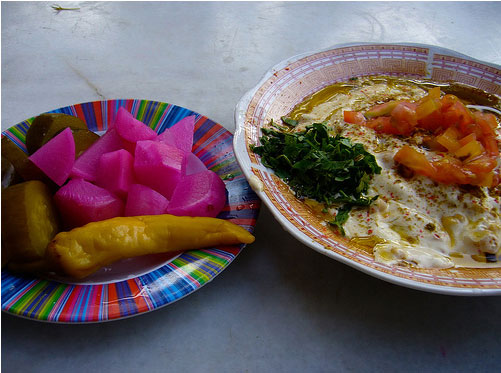
Syrians food is either very sweet or very sour. Basic foods include lamb, chicken, chickpeas, eggplant, olives, yogurt, rice, and burghul (cracked wheat). Stuffed grape leaves are a common dish. Other common dishes include hummus (a ground chickpea paste) falafel (fried ground chickpeas) and shish kebab (lamb chunks on skewers). Most food is eaten by hand or scooped up with flatbread. Many meals usually last two or three hours.

Family
Families in Syria are typically close-knit and hold a central position in the social fabric of society. Family ties are highly valued, and family members often provide support and care for one another. Here are some characteristics and aspects of Syrian families:
Extended Family Structure: Syrian families often have an extended family structure, where multiple generations live together or in close proximity. It is common for parents, grandparents, and unmarried siblings to reside in the same household or nearby, fostering strong intergenerational bonds.
Respect for Elders: Elders hold a significant position of respect within Syrian families. Older family members are regarded as sources of wisdom and experience and are often consulted for guidance and decision-making. Their opinions and preferences are considered important and respected.
Gender Roles and Hierarchy: Syrian families generally adhere to traditional gender roles, with men typically taking on the role of the family's primary provider, while women often assume responsibilities related to homemaking and childcare. However, these roles can vary based on individual families and urban versus rural settings.
Emphasis on Education: Education is highly valued in Syrian families, and parents strive to provide their children with educational opportunities. Pursuing higher education is often seen as a pathway to success and a source of pride for the family.
Support and Solidarity: Syrians place great importance on supporting and standing by their family members in times of need. Families provide emotional, financial, and social support during challenging situations, such as illness, financial hardships, or personal crises. Mutual assistance and solidarity among family members are considered essential.
Celebration of Milestones: Syrian families celebrate important milestones together, such as births, weddings, and religious ceremonies. These occasions bring family members together, strengthening bonds and creating cherished memories.
Decision-Making and Consultation: Decision-making within Syrian families often involves consultation and input from multiple family members, particularly the elders. Major decisions, such as marriage, education, or career choices, are typically discussed and decided upon collectively, considering the opinions and perspectives of different family members.
Importance of Hospitality: Syrian families are known for their hospitality. Welcoming guests and offering generous hospitality, such as sharing meals, tea, and coffee, is deeply ingrained in Syrian culture. Visitors are often treated with warmth and respect, regardless of their relationship to the family.
There are no nursing homes in Syria, the elderly are cared for by their family. Divorce is rare, and when it is granted the father usually gets custody of the children.
Dating Customs
Dating rituals in Syria are influenced by cultural traditions and societal expectations. It's important to note that dating practices can vary among individuals and communities, and urban areas may have more diverse and modern approaches compared to rural regions. Here are some general aspects of dating rituals in Syria:
Traditional Gender Roles: Traditional gender roles play a significant role in dating customs. Men are typically expected to take the initiative in pursuing a romantic interest, while women are often more reserved and may wait for men to make the first move.
Family Involvement: Family involvement and approval are highly valued in Syrian dating. The opinion and acceptance of the family, particularly the parents, can significantly impact the progress of a romantic relationship. Many individuals seek their families' blessing and involve them in the dating process, especially when considering marriage.
Introduction through Connections: In traditional Syrian dating, introductions often occur through mutual acquaintances, family connections, or community networks. Family and friends may act as intermediaries, helping to facilitate the initial contact and assess the compatibility of potential partners.
Courtship Period: Once a romantic interest is established, the couple typically enters a courtship period. During this stage, they spend time getting to know each other and exploring the possibility of a long-term commitment. It is common for the couple to spend time together in public places and engage in conversations to deepen their understanding of each other.
Chaperoned Dates: In more traditional settings, especially in rural areas or conservative families, dating couples may have chaperones present during their outings. Chaperones can be family members or trusted individuals who accompany the couple to ensure appropriate conduct and maintain social norms.
Respect for Cultural Norms: Syrians value modesty and respect for cultural norms in dating. Public displays of affection, such as kissing or excessive physical contact, are generally considered inappropriate and are often avoided in public settings.
Emphasis on Marriage: Dating in Syria is often viewed as a precursor to marriage. Couples who enter into a serious relationship with the intention of marriage are expected to demonstrate commitment and work towards building a strong foundation for a future together.
Impact of Modernization: In urban areas and among younger generations, dating practices have become more influenced by Western culture and modern norms. Young Syrians may meet potential partners through social events, online platforms, or dating apps, similar to dating practices in other parts of the world.
Recreation
Recreation activities in Syria vary depending on the region, urban or rural settings, and individual preferences. However, here are some common recreational activities enjoyed by Syrians:
Socializing with Family and Friends: Spending time with family and friends is an important aspect of recreation for Syrians. Gathering for meals, picnics, or simply engaging in conversations and storytelling is a cherished pastime.
Cafes and Tea Houses: Cafes and tea houses are popular social spaces in Syria. Syrians often visit these establishments to relax, enjoy a cup of tea or coffee, and engage in conversations with friends. These places also serve as venues for playing board games, backgammon, or chess.
Traditional Music and Dance: Music and dance play a significant role in Syrian recreation. Syrians appreciate traditional music performances, often featuring live musicians playing instruments such as the oud, ney, or qanun. Traditional dances like the dabke, a line dance performed at weddings and celebrations, are also enjoyed.
Sports and Outdoor Activities: Syrians participate in various sports and outdoor activities for recreation and leisure. Football (soccer) is particularly popular, with Syrians being passionate fans of both local and international football matches. Basketball, volleyball, tennis, and table tennis are also enjoyed. Additionally, recreational activities like hiking, camping, and picnicking in natural settings are popular, especially in areas with scenic landscapes.
Shopping and Markets: Syrians enjoy visiting markets and shopping centers, particularly during weekends and holidays. Exploring local markets, known as souks, offers opportunities to find unique goods, handicrafts, spices, and traditional clothing.
Festivals and Celebrations: Syrians celebrate numerous cultural and religious festivals throughout the year. These festivals often involve music, dance, traditional performances, and various forms of entertainment. The most notable festival is Eid al-Fitr, marking the end of Ramadan, during which families come together to celebrate and enjoy festive meals and activities.
Art and Cultural Events: Syria has a vibrant artistic and cultural scene, and attending art exhibitions, theater performances, or film screenings is a popular recreational activity for many Syrians. Visiting museums and historical sites to explore the country's rich cultural heritage is also highly valued.
Soccer is a popular sport as well as participating in Martial arts. Syrians also enjoy swimming, and ping pong tournaments. Eating and socializing are the main forms of entertainment. Men sit for many hours in all-male teahouses drinking tea and playing a board game like backgammon.
Holidays
Independence Day
4/17Independence Day
Christmas
12/25xmas
Dates of Interest
- April 17th
Syrian National Day (April 17): This day commemorates the withdrawal of French troops from Syria in 1946. Syrians celebrate with patriotic ceremonies, parades, and cultural events.
How do people greet each other in Syria?
Greetings are important and emphasize politeness and respect, most commonly a firm handshake between people of the same gender, along with verbal greetings and inquiries about well-being.
Do
- Shake hands firmly with the same gender while maintaining eye contact
- Use verbal greetings like "Marhaba" (hello), "Salam" (peace), or "Ahlan" (welcome)
- Ask about the person's well-being, e.g. "Keefak" (How are you?)
- Use honorific titles like "Sheikh," "Sayyid" (sir), or "Sayyida" (madam) for elders and authority figures
Don’t
- Don't initiate a handshake with a woman as a man; wait for her to offer first
Good to know
- Cheek kisses (two or three in urban areas, one in more conservative areas) are common among close friends and relatives
- A hand-to-heart gesture shows respect in formal greetings, especially with elders
- Smiling and a warm demeanor convey sincerity
What are the dining customs in Syria?
Meals are relaxed social events that can last two or three hours, with most food eaten by hand or scooped up with flatbread.
Do
- Wait for the host to start eating before you begin
- Eat with your right hand
- Finish your plate as a sign of appreciation
- Accept a meal invitation graciously
Don’t
- Don't eat with your left hand, as it is considered unclean
Good to know
- Basic foods include lamb, chicken, chickpeas, eggplant, olives, yogurt, rice, and burghul
- Common dishes include stuffed grape leaves, hummus, falafel, and shish kebab
- Hosts commonly offer tea, coffee, or refreshments
What etiquette should I know when visiting Syria?
Syrians are known for warm hospitality, and visitors are expected to show cultural sensitivity, modesty, and respect for traditional gender norms.
Do
- Bring a small gift such as flowers or sweets when invited to a home
- Remove your shoes before entering a host's home
- Ask permission before photographing people, especially women or religious figures
- Focus conversation on positive topics like art, history, and cuisine
Don’t
- Don't discuss sensitive topics like politics, religion, or conflict
- Don't impose Western concepts of gender equality
- Don't assume women want to shake hands or have close personal contact
Good to know
- Punctuality is not considered important
- Haggling over prices is a way of life
- Men and women often socialize separately in public
How should I dress in Syria?
Syrian society values modesty in dress, though modern Western-style clothing is common in urban areas, especially among younger generations.
Do
- Dress modestly, especially at religious sites or formal occasions
- Ensure shoulders and knees are covered
- Avoid revealing clothing
Good to know
- Traditional attire is more common in rural areas and at cultural events
- Rural men may wear a long robe (dishdasha/thawb) and a keffiyeh head covering
- Some women wear an abayah or jilbab with a headscarf such as a hijab
What gestures should I be aware of in Syria?
Syrians stand close together and use hand gestures frequently.
Good to know
- A downward nod of the head to one side means yes
- Brushing open palms together quickly means "I'm finished"
- Patting the hand over the heart when meeting expresses affection
What is family life like in Syria?
Families are close-knit and central to society, often with an extended structure where multiple generations live together or nearby, and elders are held in high respect.
Good to know
- Elders are consulted for guidance and their opinions are respected
- Major decisions like marriage, education, or career are made collectively
- Education is highly valued as a path to success
- The elderly are cared for by family; there are no nursing homes
What do people do for fun in Syria?
Eating and socializing with family and friends are the main forms of entertainment, alongside visits to cafes, sports, and cultural events.
Good to know
- Cafes and tea houses are popular for tea, coffee, and board games like backgammon or chess
- Football (soccer) is especially popular, along with basketball, volleyball, tennis, and swimming
- Men spend hours in all-male teahouses drinking tea and playing backgammon
- Traditional music (oud, ney, qanun) and the dabke line dance are enjoyed at celebrations
Last updated: 2026-07-12 · Sources: CountryReports
Photos of Syria
Photos of Syria


Travel and Tourism
Travel and Tourism
- Travel Alert Status
- Level 4: Do Not Travel
- Currency
- Syrian pound (SYP)
- Time Difference
- UTC+3 (8 hours ahead of Washington, DC, during Standard Time)
- Climate
- The Syrian Arab Republic comprises several distinct climatic conditions. The western coastal plain is the most humid area of the country, with milder winters and summers than the rest of the country. East of the Orontes Valley begins the desert region. In general the climate is mostly desert; hot, dry, sunny summers (June to August) and mild, rainy winters (December to February) along the coast There are four seasons in Damascus, with spring, winter, and fall generally lasting 8 to 12 weeks apiece. Summers can be long, dry, and hot. Short winters can be cold and rainy, with occasional snow. Annual rainfall in Damascus averages 81.6 millimeters (3.21 inches.) Temperatures in Damascus range from lows 0 °C (32 °F) at night to highs of 20 °C (68 °F during the day in the winter, and in the summer from 16 °C (60 °F) to 38 °C (100 °F). Though snow falls infrequently in Damascus, it does snow in the mountains near the city, and some roads are impassible during these storms.
- Airports
- 93
Read the full travel guide — health, safety, vaccinations, disease risk, sanitation, and transit details.
View full travel guideRecipes
Recipes
History
History
Historical Eras
Ancient Syria
3000 BCE – 64 BCE
Among the earliest cradles of urban civilization, the region hosted Semitic Amorite kingdoms, the great trading city-states of Ugarit and Ebla, and successive conquests by Egyptians, Assyrians, Babylonians, and Persians. Alexander the Great's conquest in 333 BCE introduced Hellenism, and the Seleucid dynasty established Antioch as its imperial capital, making Syria a hub of Greek culture and commerce.
Roman & Byzantine Era
64 BCE – 636
Pompey's annexation in 64 BCE brought Syria into the Roman Empire as one of its wealthiest provinces, with Palmyra briefly challenging Rome under Queen Zenobia in the 270s CE. Christianity spread rapidly, and following the empire's division in 395, Syria became a cornerstone of the Byzantine realm, contested repeatedly by Sassanid Persia before Arab Muslim armies decisively conquered the region at the Battle of Yarmouk in 636.
Umayyad & Medieval Islamic
636 – 1516
The Arab conquest inaugurated Syria's most celebrated era, as Damascus became the capital of the Umayyad Caliphate (661–750), ruling an empire stretching from Spain to Central Asia. Subsequent rule passed through Abbasid governors, Fatimid and Egyptian Mamluk sultans, and the turbulent Crusader period, during which Latin Christian states controlled coastal Syria until Mamluk forces expelled the last Crusaders by 1303.
Ottoman Syria
1516 – 1918
Sultan Selim I's defeat of the Mamluks at Marj Dabiq in 1516 incorporated Syria into the Ottoman Empire for four centuries. Governed as several vilayets, Syria experienced periods of economic decline, a brief Egyptian occupation under Muhammad Ali's son Ibrahim Pasha (1831–1840), and a gradual awakening of Arab nationalist sentiment in the late 19th century that culminated in Arab forces capturing Damascus in October 1918.
French Mandate
1918 – 1946
Despite Arab expectations of independence promised during World War I, French forces seized Damascus in 1920 following the Battle of Maysalun, and the League of Nations formalized the French Mandate over Syria and Lebanon. Nationalist resistance was fierce, including the Great Syrian Revolt of 1925–1927, and France artificially divided the territory along sectarian lines before granting full independence in April 1946.
Independent & Modern Syria
1946 – present
Independence was followed by chronic political instability, military coups, and the short-lived United Arab Republic union with Egypt (1958–1961). The Ba'ath Party seized power in 1963, and Hafez al-Assad consolidated authoritarian rule from 1970 until his death in 2000, succeeded by his son Bashar. The Arab Spring triggered a devastating civil war beginning in 2011, drawing in regional and global powers and displacing millions of Syrians.
Overview
Timeline of Key Events
2100 BCE
Amorites came from the Arabian peninsula
Amorites came from the Arabian peninsula and were the first important Semitic settlers in the area of Damascus. They established many small states.
300 BCE – 64 BCE
Antioch served as the capital of the kingdom of Syria.
Antioch served as the capital of the kingdom of Syria.
101 – 200
Christianity grows into a strong religion in Syria.
Christianity grows into a strong religion in Syria.
395
With the division of the Roman empire, Syria falls to Byzantine.
With the division of the Roman empire, Syria falls to Byzantine (the eastern part of the Roman empire). Syria remained a region of prosperity.
636
After years of war, Syria is easily conquered by the Arabs.
After years of war, Syria is easily conquered by the Arabs, and included in the Caliphate of Islam.
877
Syria is annexed by Egypt.
Syria is annexed by Egypt.
1099
Western parts of Syria is incorporated in the Latin Kingdom of Jerusalem.
Western parts of Syria is incorporated in the Latin Kingdom of Jerusalem.
Read the full history profile — narrative overview, defining eras, and the complete timeline in one place.
View expanded historyInteresting Facts
Interesting Facts
Syria is part of an area known as the Levant, which also includes Lebanon. Levant means “rising” in French, and refers to the sunrise, because these countries are east of the Mediterranean. The word came into use during the 1920s and 1930s, when the French ruled Syria and Lebanon.
Lake Al Assad is an artificial lake created by the Tabaqah Dam. Syria has two natural lakes: Arram, which fills the crater of an extinct volcano, and Mzerib.
In the 3rd century A.D., the powerful Queen Zenobia of Palmyra ruled Syria after the death of her husband the king. Her armies controlled all of Syria and some of the surrounding area. The Romans fought against her and eventually defeated her. She was taken to Rome where she ended her days..
When a Muslim person dies, he or she must be buried within 24 hours, dressed only in a shroud.
The traditional water wheels, known as norias or nawaeers, are used to irrigate Syria’s farmland. Lack of water is one of the main causes of economic problems in Syria.
The Syrian government encourages the making of handicrafts by offering workshops, equipment and other incentives to craft workers. Syrian jewellery, woodwork and carpets are admired throughout the world.
See every fact — trivia, oddities, and curious tidbits gathered from across the country.
View all interesting factsGeography and Environment
Geography and Environment
- Terrain
- primarily semiarid and desert plateau; narrow coastal plain; mountains in west
- Climate
- The Syrian Arab Republic comprises several distinct climatic conditions. The western coastal plain is the most humid area of the country, with milder winters and summers than the rest of the country. East of the Orontes Valley begins the desert region. In general the climate is mostly desert; hot, dry, sunny summers (June to August) and mild, rainy winters (December to February) along the coast There are four seasons in Damascus, with spring, winter, and fall generally lasting 8 to 12 weeks apiece. Summers can be long, dry, and hot. Short winters can be cold and rainy, with occasional snow. Annual rainfall in Damascus averages 81.6 millimeters (3.21 inches.) Temperatures in Damascus range from lows 0 °C (32 °F) at night to highs of 20 °C (68 °F during the day in the winter, and in the summer from 16 °C (60 °F) to 38 °C (100 °F). Though snow falls infrequently in Damascus, it does snow in the mountains near the city, and some roads are impassible during these storms.
- Natural Hazards
- dust storms, sandstorms
- Current Environmental Issues
- deforestation; overgrazing; soil erosion; desertification; water pollution from raw sewage and petroleum refining wastes; inadequate potable water
Read the full geography and environment profile — terrain, climate, natural resources, hazards, land use, and international agreements.
View full geographyPeople & Demographics
People & Demographics
Religion
Languages Spoken
Arabic (official); Kurdish, Armenian, Aramaic, Circassian widely understood; French, English somewhat understood
- Arabic
- Armenian
- French
- Kurdish
Population
- Population
- 22,198,110
- Population in Major Urban Areas
- Aleppo 3.164 million; DAMASCUS (capital) 2.65 million; Hims 1.369 million; Hamah 933,000
- Nationality Noun
- Syrian(s)
- Ethnic Groups
- Arab 90.3%, Kurds, Armenians, and other 9.7%
Education
- Literacy Definition
- age 15 and over can read and write
Read the full people and society profile — demographics, health, education, religion, languages, and notable people.
View full people and societyGovernment & Politics
Government & Politics
Country Identity
- Country Name
- Syria
- Full Country Name
- Syrian Arab Republic
- Local - Long
- Al Jumhuriyah al Arabiyah as Suriyah
- Local - Short
- Suriyah
Government Structure
- Government Type
- republic under military regime since March 1963
- Legal System
- based on Islamic law and civil law system; special religious courts; has not accepted compulsory ICJ jurisdiction
- Executive Branch
- chief of state: Following the fall of Bashar al-ASAD's government in December 2024, Syria entered a transitional period. Ahmad al-SHARAA (also known as Abu Mohammad al-JOLANI), leader of Hayat Tahrir al-Sham (HTS), was named transitional president in January 2025 after rebel forces led by HTS captured Damascus and effectively ended over five decades of Assad family rule. head of government: Mohammad al-BASHIR was appointed head of the transitional government (Prime Minister) in December 2024, tasked with overseeing a transitional period expected to last until March 2025, after which a new governing framework is to be established. cabinet: A transitional governing body has been established, with ministers appointed to manage the transition and maintain basic governmental functions across Syrian territory. elections: Under the Assad government, the president was approved by popular referendum for a seven-year term. Bashar al-ASAD had most recently secured approval in a 2021 referendum, officially receiving 95.1% of the vote — an election widely criticized by Western governments and human rights organizations as neither free nor fair. With the collapse of the Assad government, the future electoral framework for Syria remains under discussion as part of the transitional process. note: Bashar al-ASAD fled Syria on 8 December 2024 as rebel forces swept through the country, ultimately taking Damascus. This brought an end to the Assad family's grip on power, which began when Hafiz al-ASAD seized control in 1970. Hafiz al-ASAD died on 10 June 2000, after which his son Bashar assumed the presidency following a referendum held on 10 July 2000.
- Legislative Branch
- unicameral People's Council or Majlis al-Shaab (250 seats; members elected by popular vote to serve four-year terms) elections: last held 2-3 March 2003 (next to be held NA 2007) election results: percent of vote by party - NPF 67%, independents 33%; seats by party - NPF 167, independents 83; note - the constitution guarantees that the Ba'th Party (part of the NPF alliance) receives one-half of the seats
- Judicial Branch
- Supreme Constitutional Court (adjudicates electoral disputes and rules on constitutionality of laws and decrees; justices appointed for four-year terms by the President); High Judicial Council (appoints and dismisses judges; headed by the President); Court of Cassation (national level); State Security Courts (hear cases related to national security); Personal Status Courts (religious; hear cases related to marriage and divorce); Courts of First Instance (local level; include magistrate, summary, and peace courts)
- Suffrage
- 18 years of age; universal
- Constitution
- 13-Mar-73
- Independence
- 17 April 1946 (from League of Nations mandate under French administration)
- National Holiday
- Independence Day, 17 April (1946)
Capital City
- Capital Name
- Damascus
- Capital - geographic coordinate
- 33 30 N, 36 18 E
- Capital Time Difference
- UTC+3 (8 hours ahead of Washington, DC, during Standard Time)
Damascus is a very old city; its earliest name, Temeseq, first appears in an Egyptian geographical list of the 15th century B.C., but the meaning is uncertain
Military
Branches: Syrian Armed Forces: Land Forces, Naval Forces, Air Forces (includes Air Defense Forces)
Embassy / Diplomatic Mission
The U.S. Embassy in Damascus suspended operations in February 2012 and therefore cannot provide protection or routine consular services to U.S. citizens in Syria. The Government of the Czech Republic, acting through its Embassy in Damascus, serves as Protecting Power for U.S. interests in Syria. The range of consular services the Czech Republic provides to U.S. citizens is extremely limited, and those services may require significantly more processing time than at U.S. embassies or consulates outside of Syria. U.S. citizens in Syria who seek consular services should contact the U.S. Interests Section of the Embassy of the Czech Republic in Damascus at USIS_damascus@embassy.mzv.cz.
U.S. citizens in Syria who are in need of emergency assistance in Syria, and are unable to reach the U.S. Interests Section of the Embassy of the Czech Republic or must make contact outside business hours, should contact the U.S. Embassy in Amman, Jordan:
Telephone: 962 (6) 590-6950 (Daily 2-3:30 local time)
Emergencies: 962 (6) 590-6500
E-mail: Amman-ACS@state.gov
If you seek information about U.S. citizens’ services in Syria from the Office of Overseas Citizens’ Services in Washington, please e-mail: SyriaEmergencyUSC@state.gov.
Read the full government profile — flag symbolism, national anthem, and other national symbols.
View full government detailsEconomy
Economy
Syria's economy has been devastated by more than a decade of civil war that began in 2011, transforming what was once a lower-middle-income country into one of the most fragile economies in the world. Before the conflict, Syria had a diversified economy based on agriculture, oil production, manufacturing, and tourism, with a GDP of approximately $60 billion in 2010. By some estimates, the country's GDP has since contracted by more than 60 percent, and the Syrian pound has lost over 99 percent of its pre-war value against the US dollar.
Agriculture remains a cornerstone of the economy, employing a significant portion of the workforce and producing wheat, barley, cotton, olives, citrus fruits, and livestock. However, prolonged drought, displacement of rural populations, and damaged irrigation infrastructure have sharply reduced output. The fertile Euphrates River basin and the coastal plains around Latakia continue to be key agricultural zones.
Oil and natural gas, historically major sources of government revenue and exports, have been severely disrupted. Many oil fields in the northeast lie outside government control, and production has fallen from roughly 380,000 barrels per day before the war to a fraction of that figure. International sanctions, particularly those imposed by the United States and the European Union, have further restricted the energy sector and broader trade.
The industrial base, once centered in Aleppo, Damascus, and Homs, included textiles, food processing, cement, and pharmaceuticals. Widespread destruction of factories and infrastructure, combined with electricity shortages and fuel scarcity, has crippled manufacturing. Inflation has soared, with consumer prices rising dramatically and more than 90 percent of the population estimated to live below the poverty line. Food insecurity affects over 12 million Syrians.
Remittances from the Syrian diaspora and humanitarian assistance from United Nations agencies and international donors have become critical lifelines. The informal economy, smuggling networks, and trade with neighboring Lebanon, Iraq, and Turkey play outsized roles. Reconstruction needs are estimated by the UN at more than $400 billion, though political conditions and ongoing instability continue to deter large-scale foreign investment.
Snapshot
- Currency Name and Code
- Syrian Pound (SYP)
- GDP — official exchange rate
- $25,840,000,000 (USD)
- GDP Real Growth Rate
- 4.5%
Banknotes
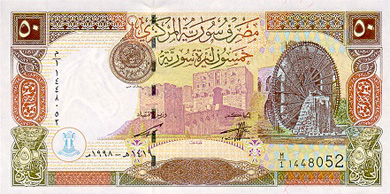
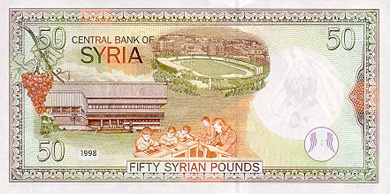
Budget & Public Finance
- Fiscal Year
- calendar year
- Annual Budget
- $7,613,000,000 (USD)
- Public Debt (% of GDP)
- 45%
- External Debt
- $8,590,000,000 (USD)
- Investment (% of GDP)
- 21.1%
- Economic Aid
- $199,000,000 (USD)
- Current Account Balance
- $980,000,000 (USD)
- Reserves of Foreign Exchange
- $2,147,483,647 (USD)
Labor, Industry & Trade
- Labor Force by Occupation
- agriculture; industry; services NA
- Industries
- petroleum, textiles, food processing, beverages, tobacco, phosphate rock mining
- Agriculture Products
- wheat, barley, cotton, lentils, chickpeas, olives, sugar beets; beef, mutton, eggs, poultry, milk
- Export Commodities
- crude oil, petroleum products, fruits and vegetables, cotton fiber, clothing, meat and live animals, wheat
- Export Partners
- Germany 17.5%, Italy 15.9%, Turkey 7.1%, France 6.8%, UAE 6.6%, Lebanon 4.8%
- Import Commodities
- machinery and transport equipment, electric power machinery, food and livestock, metal and metal products, chemicals and chemical products, plastics, yarn, paper
- Import Partners
- Italy 8.1%, Germany 7.4%, China 5.6%, South Korea 4.6%, France 4.4%, US 4.3%, Turkey 4%
Energy
- Oil Production
- 403,800 bbl/day
- Oil Consumption
- 240,000 bbl/day
- Oil Reserves
- 2,500,000,000 bbl/day
- Natural Gas Production
- 6,950,000,000 cu m
- Natural Gas Consumption
- 6,950,000,000 cu m
- Natural Gas Imports
- 0 cu m
- Natural Gas Exports
- 0 cu m
- Natural Gas Reserves
- 240,700,000,000 cu m
Communications
- Telephone System
- general assessment: fair system currently undergoing significant improvement and digital upgrades, including fiber-optic technology and expansion of the network to rural areas; the armed insurgency that began in 2011 has led to major disruptions to the network and has caused telephone and Internet outages throughout the country domestic: the number of fixed-line connections has increased markedly since 2000; mobile-cellular service growing with telephone subscribership nearly 60 per 100 persons in 2011 international: country code - 963; submarine cable connection to Egypt, Lebanon, and Cyprus; satellite earth stations - 1 Intelsat (Indian Ocean) and 1 Intersputnik (Atlantic Ocean region); coaxial cable and microwave radio relay to Iraq, Jordan, Lebanon, and Turkey; participant in Medarabtel
- Internet Country Code
- .sy
News & Weather
News & Weather
Current Weather
Latest News
Thousands Of Trucks Haul Iraq’s Oil Through Syria In Sign Of Hormuz Legacy - Bloomberg.com
Bloomberg.com · 2d ago
Syrian Jews helped repeal Caesar Act sanctions on Syria after Assad’s fall - The Jerusalem Post
The Jerusalem Post · 7h ago
Syria’s Al-Sharaa reshuffles security and intelligence leadership - Al Jazeera
Al Jazeera · 1d ago
Syria taken off US terror blacklist after 47 years, paving way for investment - RFI
RFI · 2d ago
Elgin Symphony CEO, YES Academy founder visit Syria to share talents with students - CBS News
CBS News · 8h ago
Settler activists illegally cross into Syria, stay for full day before being nabbed by IDF - The Times of Israel
The Times of Israel · 3d ago
Suwayda’s Struggle - Foreign Policy
Foreign Policy · 15h ago
Syria’s Jihadist Crackdown Raises Concerns Over Potential Islamic State Defections - Homeland Security Today
Homeland Security Today · 19h ago
News via Google News
Climate Overview
The Syrian Arab Republic comprises several distinct climatic conditions. The western coastal plain is the most humid area of the country, with milder winters and summers than the rest of the country. East of the Orontes Valley begins the desert region. In general the climate is mostly desert; hot, dry, sunny summers (June to August) and mild, rainy winters (December to February) along the coast
There are four seasons in Damascus, with spring, winter, and fall generally lasting 8 to 12 weeks apiece. Summers can be long, dry, and hot. Short winters can be cold and rainy, with occasional snow. Annual rainfall in Damascus averages 81.6 millimeters (3.21 inches.) Temperatures in Damascus range from lows 0 °C (32 °F) at night to highs of 20 °C (68 °F during the day in the winter, and in the summer from 16 °C (60 °F) to 38 °C (100 °F). Though snow falls infrequently in Damascus, it does snow in the mountains near the city, and some roads are impassible during these storms.
Videos
Videos
1 curated YouTube videos.
Source: YouTube
Frequently Asked Questions
Frequently Asked Questions
What is the population of Syria?
How do people greet each other in Syria?
What are the dining customs in Syria?
What etiquette should I know when visiting Syria?
How should I dress in Syria?
What gestures should I be aware of in Syria?
What is family life like in Syria?
What do people do for fun in Syria?
What is the capital of Syria?
Where is Syria located?
What countries border Syria?
What is the primary religion in Syria?
What is the currency of Syria?
What language is spoken in Syria?
What is Syria's geography like?
What is Syria known for?
Last reviewed 2026