
 English
 Español
 中文
中文 हिन्दी
 Français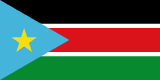
South Sudan
South Sudan
Declare Your Relationship to South Sudan
CountryReports Community
- Studying0
- From South Sudan2
- South Sudan heritage1
- Visited0
- Want to visit0
Customs and Culture
Customs and Culture
Cultural Attributes
Sudanese from the north are inclined to be polite, reserved, and cautious. They view whatever happens as the will of God presenting challenges. Sudanese value good humor, courtesy, and strong family ties. Society is highly stratified, with respect given to those with wealth and status.
Power may be reflected in having a government position, coming from a respected family, being a religious leader, or being a chief (in the South). Educated people earn respect as they are likely to obtain good positions in society.
The Nile's Gift to Africa
Greetings, Gestures & Visiting
The common greeting is "salaam aleykom" (Peace be with you). Good friends sometimes exchange a casual Salaam. Friends or relatives typically shake hands when greeting. Generally, a verbal greeting is used. However, both men and women shake hands. Locally used phrases are "do pure" (good morning) or "do parana" (good afternoon).
Nodding one's head downward means 'yes', and nodding up means 'no'. The left hand is never used for eating, and both hands should be used for passing items between people. Pointing with a finger is not polite. Pointing the sole of one's feet toward someone is considered offensive.
Visiting usually takes place in the home, with close friends and family visiting spontaneously. Arrangements are made if the person is less known. Religious holidays and special events offer the best opportunity for relaxed gatherings. It is considered best to visit mid-morning or evening, because at other times people may be sleeping or eating.
Men and women generally socialize separately. Children are requested to play away from the adults to enable conversation. Guests are served coffee, tea, coffee, water, or soft drinks. When visiting for the first time, short stays are best.
Southern men and women usually wear Western attire, and jewelry is a sign of affluence. Women frequently wear attractive beads and earrings
Western clothing is typically worn by men in the north, but traditional "jalabia" (white robes) and "imma" (turbans) are worn in the towns as well as rural areas. Women need to cover themselves from head to ankle when in public (hijab).
Family
The Sudanese family is based around the extended family and is headed by males. Men are responsible for the herd, earning an income, and leading the family in discipline. Children are punished harshly if they shame the family. Women clean and cook, look after young children, and help with the farm and garden. Women do not leave the house for 40 days after giving birth. Southern women in general have more equality with men than women in the North.
Dating Customs
Northern marriages are still arranged between cousins within families. A couple may usually, however, refuse the match. The groom's family must pay a dowry to the bride's family, preferably in cash. Both families host wedding feasts and parties which may last for days.
Young people meet at schools, shopping places, local dances, and at church. They are often permitted to go out together, but parents become involved when engagement takes place. Grooms also pay a dowry, often cattle or cash. The divorce rate is very low in Sudan.
Recreation
Soccer is popular in Sudan. Volleyball and basketball are also played. Popular traditional sports are wrestling and a kind of martial art performed with long sticks and shields. Women and men enjoy traditional dancing together.
The Sudanese have a game they play at night or at "moon time", called "shelel", which involves stones, sticks, and holes made in a wooden board or in the earth.
Young Sudanese girls enjoy playing with dolls, jump rope and arika (hopscotch). Tawal (backgammon), and a board game called mangala using stones are also played. Men and women have different ways of socializing in urban Sudan. Women entertain friends at home and men socialize with friends elsewhere. In rural areas, men socialize in a diwanya, a hut used as a meeting place.
Dates of Interest
- Untitled date
How do people greet each other in South Sudan?
The common greeting is "salaam aleykom" (Peace be with you), and both men and women shake hands when greeting friends or relatives.
Do
- Shake hands with both men and women when greeting
- Use a verbal greeting
- Try local phrases like "do pure" (good morning) or "do parana" (good afternoon)
What are the dining customs in South Sudan?
Guests are commonly served coffee, tea, water, or soft drinks, and eating practices follow specific hand customs.
Don’t
- Never use the left hand for eating
What etiquette should I follow when visiting someone in South Sudan?
Visiting usually takes place in the home; arrange visits in advance if you are not well known, and keep first visits short.
Do
- Visit mid-morning or evening
- Keep first-time visits short
- Pass items using both hands
Don’t
- Avoid visiting at times when people may be sleeping or eating
Good to know
- Men and women generally socialize separately
- Children are asked to play away from adults so conversation can flow
- Religious holidays and special events are the best times for relaxed gatherings
What should I wear in South Sudan?
Southern men and women usually wear Western attire, while in the north traditional "jalabia" (white robes) and "imma" (turbans) are also common. Women must cover from head to ankle in public.
Do
- Women should cover themselves from head to ankle in public (hijab)
Good to know
- Jewelry, beads, and earrings are worn as a sign of affluence
What gestures are important to know in South Sudan?
Head nods work differently here: nodding down means 'yes' and nodding up means 'no'.
Do
- Use both hands when passing items between people
Don’t
- Don't use your left hand for eating
- Don't point with a finger
- Don't point the sole of your foot toward someone
What is family life like in South Sudan?
Family life centers on the extended family and is headed by males, with defined roles for men and women. Southern women generally have more equality with men than women in the north.
Good to know
- Men are responsible for the herd, income, and family discipline
- Women clean, cook, care for young children, and help with the farm and garden
- Women do not leave the house for 40 days after giving birth
What do people do for fun in South Sudan?
Soccer is popular, along with volleyball, basketball, traditional wrestling, and a martial art performed with long sticks and shields; men and women enjoy traditional dancing together.
Good to know
- "Shelel," played at night with stones, sticks, and holes, is a traditional game
- Girls enjoy dolls, jump rope, and arika (hopscotch)
- Tawal (backgammon) and mangala (a stone board game) are also played
- In rural areas, men socialize in a diwanya, a hut used as a meeting place
Last updated: 2026-07-12 · Sources: CountryReports
Travel and Tourism
Travel and Tourism
- Travel Alert Status
- Level 4: Do Not Travel
- Time Difference
- UTC+2 (8 hours ahead of Washington, DC, during Standard Time)
- Climate
- hot with seasonal rainfall influenced by the annual shift of the Inter-Tropical Convergence Zone; rainfall is heaviest in the upland areas of the south and diminishes to the north
- Airports
- 84
Read the full travel guide — health, safety, vaccinations, disease risk, sanitation, and transit details.
View full travel guideHistory
History
Historical Eras
Pre-Colonial Era
3000 BCE – 1820
The region encompassing modern South Sudan was home to diverse Nilotic and Bantu peoples, including the Dinka, Nuer, Shilluk, and Azande, organized into kingdoms and chiefdoms. The Shilluk Kingdom, established around the 15th century along the White Nile, represented one of the most sophisticated political structures in the region. Trade, cattle herding, and seasonal migration shaped the social and economic fabric of these communities for millennia.
Turco-Egyptian Rule
1820 – 1885
The Ottoman-backed Egyptian Khedivate extended its reach southward into the Nilotic Sudan, bringing the region under Turco-Egyptian administration and opening it to the ivory and slave trades that devastated local populations. European explorers and administrators, including Samuel Baker and Charles Gordon, served as governors of the Equatoria province and attempted to suppress the slave trade. This era introduced the region to extractive colonial commerce and left lasting disruptions to indigenous societies.
Mahdist & British Era
1885 – 1956
The Mahdist revolt overthrew Turco-Egyptian rule and briefly unified Sudan under an Islamic theocracy, until the Anglo-Egyptian Reconquest of 1898 established joint British and Egyptian Condominium rule. Under the British, the southern region was administered separately under the Southern Policy, which restricted northern Arab-Muslim influence and fostered distinct political and cultural development among southern peoples. Christian missionary activity and limited Western education began during this period, deepening the north-south divide.
First Civil War
1955 – 1972
Even before Sudanese independence in 1956, southern soldiers mutinied at Torit in 1955, igniting the first Sudanese civil war as southern factions resisted Arabization and Islamization policies imposed by Khartoum. The Anyanya insurgency waged prolonged guerrilla warfare against the northern-dominated government throughout the 1960s. The Addis Ababa Agreement of 1972, brokered by Emperor Haile Selassie, temporarily ended hostilities and granted the south a measure of regional autonomy.
Second Civil War
1983 – 2005
President Nimeiry's imposition of Sharia law and the dissolution of southern autonomy reignited conflict in 1983, giving rise to the Sudan People's Liberation Movement and Army (SPLM/A) under John Garang. The ensuing war was one of Africa's longest and deadliest, resulting in approximately two million deaths and four million displaced persons over two decades. The Comprehensive Peace Agreement (CPA) signed in Nairobi in January 2005 ended the war and granted the south a six-year path to a self-determination referendum.
Independence & Nation-Building
2005 – present
Following a January 2011 referendum in which nearly 99% voted for secession, South Sudan became the world's newest nation on July 9, 2011, with Salva Kiir as its first president. Political tensions between Kiir and former Vice President Riek Machar erupted into a brutal civil war in December 2013, drawing largely along Dinka-Nuer ethnic lines and causing hundreds of thousands of deaths and massive displacement. A revitalized peace agreement in 2018 established a transitional government, though political instability, food insecurity, and nation-building challenges continue to define the country's trajectory.
Read the full history profile — narrative overview, defining eras, and the complete timeline in one place.
View expanded historyGeography and Environment
Geography and Environment
- Terrain
- the terrain gradually rises from plains in the north and center to southern highlands along the border with Uganda and Kenya; the White Nile, flowing north out of the uplands of Central Africa, is the major geographic feature of the country supporting agriculture and extensive wild animal populations; The Sudd (a name derived from floating vegetation that hinders navigation) is a large swampy area of more than 100,000 sq km fed by the waters of the White Nile that dominates the center of the country
- Climate
- hot with seasonal rainfall influenced by the annual shift of the Inter-Tropical Convergence Zone; rainfall is heaviest in the upland areas of the south and diminishes to the north
Read the full geography and environment profile — terrain, climate, natural resources, hazards, land use, and international agreements.
View full geographyPeople & Demographics
People & Demographics
Languages Spoken
English (official), Arabic (includes Juba and Sudanese variants) (official), regional languages include Dinka, Nuer, Bari, Zande, Shilluk
Population
- Population
- 10
- Population in Major Urban Areas
- JUBA (capital) 269,000
- Nationality Noun
- South Sudanese (singular and plural)
- Ethnic Groups
- Dinka, Kakwa, Bari, Azande, Shilluk, Kuku, Murle, Mandari, Didinga, Ndogo, Bviri, Lndi, Anuak, Bongo, Lango, Dungotona, Acholi
Education
- Literacy Definition
- age 15 and over can read and write
Health Information
- Major Infectious Diseases — degree of risk
- very high
Read the full people and society profile — demographics, health, education, religion, languages, and notable people.
View full people and societyGovernment & Politics
Government & Politics
Country Identity
- Country Name
- SouthSudan
- Full Country Name
- South Sudan
- Local - Long
- South Sudan
- Local - Short
- South Sudan
- Former Name
- South Sudan
Capital City
- Capital Name
- Juba
- Capital - geographic coordinate
- 04 51 N 31 37 E
- Capital Time Difference
- UTC+2 (8 hours ahead of Washington, DC, during Standard Time)
the name derives from Djouba, another name for the Bari people of South Sudan
Military
Branches: Sudan People's Liberation Army (SPLA)
Embassy / Diplomatic Mission
U.S. Embassy, Juba
Kololo Road, Tongping
Juba, South Sudan
Telephone: +211 912 105 188
The U.S. Embassy in Juba is only able to offer very limited emergency services to U.S. citizens in South Sudan at this time. Routine consular services are available at the U.S. embassies in Kampala, Uganda, and Nairobi, Kenya. See the following websites for information: http://kampala.usembassy.gov ; http://nairobi.usembassy.gov.
Read the full government profile — flag symbolism, national anthem, and other national symbols.
View full government detailsEconomy
Economy
Snapshot
- Currency Name and Code
- South Sudanese Pound
Communications
- Telephone System
- international: country code - 211
- Internet Country Code
- .ss
News & Weather
News & Weather
Current Weather
Latest News
NEC: Funding, security still challenge South Sudan election preparations - Radio Tamazuj
Radio Tamazuj · 2d ago
South Sudan foreign minister holds low-key talks in UAE - Sudan Tribune
Sudan Tribune · 10h ago
17 people killed in Panyijar County cattle raid - Radio Tamazuj
Radio Tamazuj · 8h ago
EU committed to South Sudan’s transitional justice, international criminal justice - Radio Tamazuj
Radio Tamazuj · 21h ago
China delivers 3,256 metric tons of food aid to South Sudan - Radio Tamazuj
Radio Tamazuj · 8h ago
Opinion| The connection between human rights and conflicts in South Sudan - Radio Tamazuj
Radio Tamazuj · 8h ago
Opinion| Discarding foreign electoral models is a vital act of self-determination - Radio Tamazuj
Radio Tamazuj · 8h ago
Information for Travelers Returning from Ebola-Affected Areas - Centers for Disease Control and Prevention | CDC (.gov)
Centers for Disease Control and Prevention | CDC (.gov) · 4d ago
News via Google News
Climate Overview
hot with seasonal rainfall influenced by the annual shift of the Inter-Tropical Convergence Zone; rainfall is heaviest in the upland areas of the south and diminishes to the north
Videos
Videos
1 curated YouTube videos.
Source: YouTube
Frequently Asked Questions
Frequently Asked Questions
What is the population of South Sudan?
How do people greet each other in South Sudan?
What are the dining customs in South Sudan?
What etiquette should I follow when visiting someone in South Sudan?
What should I wear in South Sudan?
What gestures are important to know in South Sudan?
What is family life like in South Sudan?
What do people do for fun in South Sudan?
What is the capital of South Sudan?
Where is South Sudan located?
What countries border South Sudan?
What currency is used in South Sudan?
What languages are spoken in South Sudan?
What is the geography of South Sudan like?
What is South Sudan known for?
Last reviewed 2026