
 English
 Español
 中文
中文 हिन्दी
 Français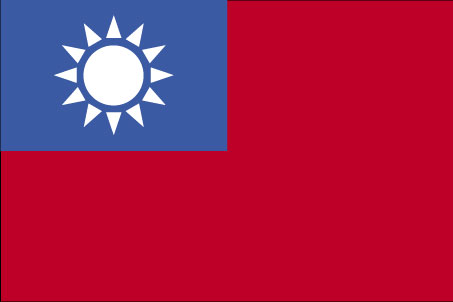
Taiwan
T'ai-wan
Declare Your Relationship to Taiwan
CountryReports Community
- Studying0
- From Taiwan2
- Taiwan heritage2
- Visited1
- Want to visit1
Customs and Culture
Customs and Culture
About the People
The confucian ethnic of proper social and family relations forms the foundation of society. Great importance on the concept of "face." "Face" roughly equates to western concepts of status and respect. Chinese people regard the respect of their elderly, peers, and colleagues as a matter of utmost importance. Conversely, to be humiliated or embarrassed in public is to be regarded with great shame. Taiwanese people are usually reserved, refined, and friendly. Matters which foreigners may regard as funny may be a source of great humiliation to a Chinese person and it is therefore always necessary to be conscious of the public image of the person they deal with. Difficult situations should always be handled delicately and without showing anger. Never raise your voice, as this would cause the person you are angry with to lose face. To shout at a Chinese person in public, correct them in front of their peers or raise your voice in public would cause them to lose face. Try to avoid situations which place a Chinese person on the spot. One of the most common ways for a Chinese person to gain face is to spend vast sums of money on food and entertainment. If you are taken out to dinner by Chinese people, always compliment your host on his/her choice of restaurant, the quality of food and entertainment, even if they personally criticize these things. This will give them face in the eyes of the other people at the table. An individuals actions reflect on the entire family. In Business "Guanxi"(relationships or connections) is of paramount importance. Chinese prefer to deal with people they know and trust. Chinese people are superstitious about the number four, which signifies death.
Cultural Attributes
Great importance on the concept of "face"." "Face" roughly equates to Western concepts of status and respect. Chinese people regard the respect of their elderly, peers, and colleagues as a matter of utmost importance. Conversely, to be humiliated or embarrassed in public is to be regarded with great shame. Taiwanese people are usually reserved, refined, and friendly.
Matters that foreigners may regard as funny may be a source of great humiliation to a Chinese person and it is therefore always necessary to be conscious of the public image of the person they deal with. Difficult situations should always be handled delicately and without showing anger. Never raise your voice, as this would cause the person you are angry with to lose face.
To shout at a Chinese person in public, correct them in front of their peers or raise your voice in public would cause them to lose face. Try to avoid situations that place a Chinese person on the spot. One of the most common ways for a Chinese person to gain face is to spend vast sums of money on food and entertainment.
If you are taken out to dinner by Chinese people, always compliment your host on his/her choice of restaurant, the quality of food, and entertainment, even if they personally criticize these things. This will give them face in the eyes of the other people at the table. An individual's actions reflect on the entire family.
In Business "Guanxi" (relationships or connections) is of paramount importance. Chinese prefer to deal with people they know and trust. Chinese people are superstitious about the number four, which signifies death.

Island of Ancient Grace
Greetings, Gestures & Visiting
In Taiwan, greeting others is an important part of social interaction, and there are some specific social norms that are expected when greeting someone. Here are some common social norms when greeting in Taiwan:
Bowing: Bowing is not common in Taiwan, but a slight nod of the head is a sign of respect and acknowledgement when greeting someone.
Handshakes: Handshakes are becoming more common in Taiwan, especially in business settings. However, it is still not as common as in Western cultures.
Greetings: It is customary to greet someone with a "n? h?o" (??), which means "hello" in Mandarin Chinese. However, if you are meeting someone older or in a more formal setting, it is appropriate to use a more respectful greeting such as "nín h?o" (??).
Titles: It is customary to address someone by their formal title, such as "xi?nsh?ng" (??) for Mr. or "tàitái" (??) for Mrs. This is especially important when meeting someone for the first time.
Small Talk: Small talk is an important part of greeting someone in Taiwan. It is customary to ask about the other person's health, family, and work before moving on to the main topic of conversation.
Politeness: Politeness and respect are highly valued in Taiwanese culture. It is important to use polite language and to avoid interrupting or speaking too loudly when greeting someone.
Putting one's arm around the shoulder of another person and winking is inappropriate. Avoid touching a child on the top of his or her head. To show great respect for an elderly person, cover your left fist with your right hand and raise both hands to your heart. Good posture is important, men usually sit with both feet firmly fixed to the floor, and women will cross their legs at the knees or ankles. Always present and receive a gift with both hands. Toasting while dining in Taiwan is common, with the word being Kan-pie, which means "bottoms up".
First impressions are very important when dealing with Chinese people and a great deal of emphasis is placed upon the way a person conducts themselves at the first meeting. Guests acknowledge and greet the elderly first. Social visits occur mostly in the home. Visitors are likely to receive tea or a soft drink.
In business situations, the use of business cards is extremely important. Always use both hands when receiving and distributing cards as this is interpreted as a sign of respect. When handing out business cards it is important to give your attention solely to the person receiving your card. When receiving cards, always study the card for several seconds. This shows how much importance you place on the status of the person who has given you their card. Never write on the back of a person's card or place it immediately into your pocket or wallet, as this would cause the other person to lose face.
Many Chinese business people use English first names when conducting business with foreigners. Chinese names are usually three syllables long, with the surname preceding the given name.
Western-Style clothing is common. A suit is the most appropriate attire for conducting business in Taiwan. In less formal situations, smart pants and a shirt and tie for men, and a skirt and blouse for women may suffice. Most Adults wear conservative clothing. It is important to always present yourself well. Taiwanese people place a great deal of emphasis on appearance, especially cleanliness and neatness.
Diet
When setting down chopsticks between courses, never place them in the rice bowl vertically or at an angle as this resembles sticks of incense burned at a funeral and is considered highly inauspicious. Always lie chopsticks horizontally across the rim of the bowl.
When setting down chopsticks between courses, never place them in the rice bowl vertically or at an angle as this resembles sticks of incense burned at a funeral and is considered highly inauspicious. Always lie chopsticks horizontally across the rim of the bowl.

Family
The Taiwanese concept of family includes children, parents, extended family, elders, and ancestors. Taiwanese often live in small and crowded conditions. As a result, they are comfortable sitting or standing close together. In a traditional Taiwanese family, age, gender, and generation determine the role that each family member plays. For example, the father is the breadwinner and his authority is unquestioned. His primary duty is to be a good son. His roles as husband and father are secondary. Traditionally, women identified with their husband's family.
Wives were expected to be obedient to both their husbands and mothers-in-law. Mothers were expected to take primary responsibility for the care of the children, although the extended family played an important role in child care.
Dating Customs
Customs and practices observed in Taiwanese society:
Introduction through Friends: Many people in Taiwan prefer to meet potential partners through mutual friends or social connections. This is seen as a more reliable way to meet someone and establishes a sense of trust.
Group Dates: In the initial stages of dating, it is common for couples to go on group dates or hang out with friends. This helps create a more relaxed and comfortable environment for getting to know each other.
Polite and Reserved Behavior: Taiwanese culture places emphasis on politeness and respect, and this extends to dating. People tend to be more reserved and may take time to open up emotionally. Modesty and humility are valued traits.
Slow Progression: Relationships in Taiwan often progress at a slower pace compared to some Western cultures. It is common for couples to spend time as friends before becoming romantically involved. Patience is important, as rushing into a relationship is generally not favored.
Importance of Family Approval: Family plays a significant role in Taiwanese culture, and their approval is often sought when it comes to serious relationships. Introducing a partner to one's family is considered a significant step in the relationship.
Gift-Giving: Gift-giving is a common practice in dating. Small tokens of affection or thoughtful gestures are appreciated. Gifts should be modest and thoughtful rather than extravagant.
Face-to-Face Communication: Direct, face-to-face communication is valued in Taiwanese dating culture. Texting and social media interactions are common, but personal interaction is considered essential for building a connection.
Emphasis on Education and Career: Taiwanese society places a strong emphasis on education and career success. As a result, individuals may prioritize these aspects before pursuing serious relationships.
Recreation
Many Taiwanese enjoy golf, ping-pong, basketball, soccer, softball, and badminton. Health clubs and gyms are used regularly. Senior men can often be found seated together in small groups, in a temple, or on the street around a teapot the size of a fist. This gathering is often referred to as the old men's tea ceremony or lao-ren ch'a.
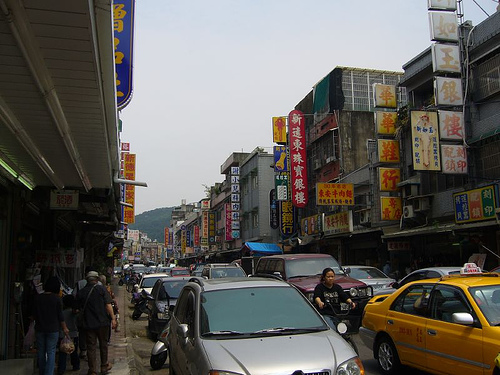
Ma-jong is a game that older women play for hours as a way to keep their minds active Karaoke is a popular form of entertainment especially at business dinners. Taiwanese families usually spend their weekends together. Often they will leave the city for a picnic in the country. Night markets are also popular. In Taiwan, many markets come alive only in the evening and are like grand carnivals.
Holidays
Republic Day
10/10Independence
Anniversary of the Chinese Revolution
Christmas
12/25Christmas
December 25 is not officially celebrated or legally recognized in Taiwan as Christmas, but it is inadvertently the Constitution Day, the date of the signing of the Constitutions of the republic of China in 1947. Despite this, there are still unofficial celebrations of Christmas. The Christmas trees are called "Trees of Light.” Christian children of Taiwan decorate their trees at home with colorful ornaments, made from paper in the shapes of flowers, chains and lanterns. They hang muslin stockings in the hopes that the Christmas Old Man will fill them with gifts and treats. Santa Clause is translated in their language as 聖誕老人, read as shengdan laoren, which means Christmas Old Men.
Christmas is referred as the Spring Festival by the non-Christian Chinese who celebrate with various festivities that include eating and paying homage to their ancestors. Aside from the gifts, red packets or red envelopes with money inside are passed out during the Chinese New Year’s celebrations. Red packets are also known as the money used to suppress or put down the evil spirit during this period.
The Spring Festival, Lantern Festival, or the Chinese New year often called the Lunar New Year is the most important of the traditional Chinese holidays. This starts on the first day of the first month based on the Chinese calendar and ends on the 15th. The origin of Chinese New Year is itself centuries old and gains significance because of several myths and traditions. Every family should thoroughly clean the house to sweep away any ill-fortune in hopes to make way for good incoming luck. Red color paper-cuts and couplets with popular themes of “happiness”, “wealth”, and “longevity” adorn the doors and windows.
Supper is a feast with families on the Chinese New Year’s eve. Foods range from pigs, to ducks, to chicken and sweet delicacies. Buddha’s delight (simplified Chinese: 罗汉斋; luóhàn zhai) is an elaborate vegetarian dish served by Chinese families on the eve and the first day of the New Year. Ingredients are cooked in soy sauce-based liquid with other seasonings until tender.
The family will end the night with a colorful array of fireworks and noisy firecrackers to drive away bad luck. The next morning witnesses children greeting their parents with a healthy and happy new year, and receiveing money in red paper envelopes. The Chinese New Year is often accompanied by loud, enthusiastic greetings of Gong hei fat choi which loosely translates to "Congratulations and be prosperous". Though this may be different from Christmas in some way, the Chinese New Year tradition has the same spirit of forgetting all grudges, and sincerely wishing peace and happiness for everyone
Dates of Interest
- October 10th
Celebrated on October 10th, this is Taiwan's National Day, commemorating the establishment of the Republic of China (ROC). Festivities include flag-raising ceremonies, parades, fireworks, and cultural performances.
How do people greet each other in Taiwan?
A slight nod of the head shows respect; handshakes are becoming more common, especially in business, but greetings are typically accompanied by polite small talk about health, family, and work.
Do
- Say "ni hao" for hello, or "nin hao" for older people or formal settings
- Address people by formal title, such as "xiansheng" (Mr.) or "taitai" (Mrs.)
- Greet and acknowledge the elderly first
- Make small talk before moving to the main topic
Don’t
- Don't interrupt or speak too loudly
- Don't assume bowing is expected—it is not common
Good to know
- Politeness and respect are highly valued
- First impressions carry great weight
What are the dining customs in Taiwan?
Meals are important for building relationships and "face," and there are strict conventions around chopstick placement.
Do
- Lay chopsticks horizontally across the rim of the bowl between courses
- Compliment your host on the restaurant, food, and entertainment
- Toast with "Kan-pie" (bottoms up)
Don’t
- Never stick chopsticks vertically or at an angle in the rice bowl—it resembles funeral incense and is highly inauspicious
Good to know
- Hosts often gain face by spending generously on food and entertainment
- Karaoke is popular entertainment, especially at business dinners
What etiquette should I know in Taiwan?
The concept of "face" (status and respect) is central; humiliating someone in public brings great shame, and relationships ("guanxi") are paramount.
Do
- Handle difficult situations delicately and calmly
- Compliment your host to help them gain face
- Present and receive gifts and business cards with both hands
- Study a business card for several seconds when receiving it
Don’t
- Never raise your voice or shout at someone in public
- Don't correct someone in front of their peers
- Don't write on the back of a card or immediately pocket it
- Avoid placing a person on the spot
Good to know
- Chinese people are superstitious about the number four, which signifies death
- Chinese prefer to deal with people they know and trust
- Social visits usually happen in the home, where you may be offered tea or a soft drink
How should I dress in Taiwan?
Western-style, conservative, and neat clothing is common; a suit is most appropriate for business.
Do
- Wear a suit for business
- For less formal settings, men can wear smart pants, shirt and tie; women a skirt and blouse
- Present yourself well, prioritizing cleanliness and neatness
Good to know
- Taiwanese place great emphasis on appearance
What gestures should I be aware of in Taiwan?
Good posture and respectful body language matter; some casual Western gestures are inappropriate.
Do
- Maintain good posture—men sit with both feet on the floor, women cross legs at knees or ankles
- Show respect to elders by covering your left fist with your right hand and raising both to your heart
Don’t
- Don't put your arm around someone's shoulder or wink
- Avoid touching a child on the top of the head
How does family life work in Taiwan?
Family includes children, parents, extended family, elders, and ancestors, with roles traditionally set by age, gender, and generation.
Good to know
- The father is traditionally the breadwinner with unquestioned authority
- Mothers take primary responsibility for children, with help from extended family
- People are comfortable sitting or standing close together due to crowded living conditions
- An individual's actions reflect on the entire family
What do people do for recreation in Taiwan?
Popular activities include golf, ping-pong, basketball, soccer, softball, badminton, karaoke, and gyms, with families spending weekends together.
Good to know
- Senior men gather for the old men's tea ceremony (lao-ren ch'a)
- Older women play ma-jong to stay mentally active
- Families often picnic in the country on weekends
- Evening night markets are popular and lively
Last updated: 2026-07-12 · Sources: CountryReports
Photos of Taiwan
Photos of Taiwan


Travel and Tourism
Travel and Tourism
- Travel Alert Status
- Level 1: Exercise Normal Precautions
- Currency
- new Taiwan dollar (TWD)
- Time Difference
- UTC+8 (13 hours ahead of Washington, DC, during Standard Time)
- Climate
- The Tropic of Cancer bisects the island, so the climate is sub-tropical with temperatures ranging from 12 to 35 degrees Celsius (54-95 degrees Fahrenheit). Northern Taiwan has two long seasons (summer & winter) and two short seasons (spring and autumn). Spring, mid-March to mid-May, is mostly sunny and mild with brief spells of cloudy skies and rain showers. Spring's average daily temperature is 17-25C or 62-77F. Summer, mid-May through late September, is hot with an average rainfall of 10 inches a month, mostly from afternoon showers and thunderstorms. Autumn, late September to early November, is characterized by mild temperatures and afternoon showers. Winter, November through mid-April, is characterized by low cloud drizzle, fog, and occasional winds. The daily temperatures range between 17 - 24 degrees C (62-75F) in November, dropping to 12 - 19C (54 - 66F) in January and then rising to 14 - 22C (57 - 72F) in March. Occasionally, the temperature drops below 1OC (50F), especially in mountainous areas. The typhoon season usually starts in mid-June and lasts through October. An average of 12 typhoons form in the Western Pacific each year. The average daily temperature range in Taipei is 21 - 29C (70 - 84F) in May; 24 - 35C (75 - 95F) in July and August; 23 - 33C (73 - 91F) in September; and 20 - 27C (68 - 81F) in October. Kaohsiung enjoys a milder, drier winter than Taipei, but summer temperatures average about the same. As a result of its subtropical position and heavy rainfall, Taiwan's natural landscape is constantly green with varied hues of forest, shrubs, and coarse tropical grass. All but the peaks of the highest mountains are covered with vegetation.
- Airports
- 40
Read the full travel guide — health, safety, vaccinations, disease risk, sanitation, and transit details.
View full travel guideRecipes
Recipes
History
History
Historical Eras
Aboriginal & Early Settlement
13000 BCE – 1624
Austronesian aboriginal peoples inhabited Taiwan for roughly 12,000 to 15,000 years before significant outside contact. Sporadic migration from mainland China began around A.D. 500, and Portuguese sailors dubbed the island Ilha Formosa — 'beautiful island' — in 1517. These centuries established the island's indigenous cultural foundations before European colonial ambitions arrived.
European Colonial Era
1624 – 1661
The Dutch East India Company established a colonial administration in southern Taiwan in 1624, using the island as a trading hub linking Japan and the China coast. Spain simultaneously occupied the northwest coast from 1626 until the Dutch expelled them in 1642. Dutch rule accelerated the first major wave of Han Chinese migration from the mainland, driven by chaos during the collapse of the Ming Dynasty.
Koxinga & Qing Rule
1661 – 1895
Ming loyalist Zheng Chenggong (Koxinga) expelled the Dutch in 1661 and used Taiwan as a base to resist Manchu rule, though his heirs submitted to the Qing Dynasty in 1683. The Qing administered Taiwan as a prefecture and elevated it to a full province in 1887, while steady migration from Fujian and Guangdong transformed the island into a predominantly Han Chinese society. Taiwan was ceded to Japan in 1895 following China's defeat in the First Sino-Japanese War.
Japanese Colonial Period
1895 – 1945
Japan governed Taiwan for fifty years under the Treaty of Shimonoseki, investing heavily in infrastructure, agriculture, and industrial development while enforcing cultural assimilation through compulsory Japanese education and the adoption of Japanese names. Resistance movements were suppressed, and aboriginal communities faced particularly harsh policies. Despite its exploitative character, Japanese colonial rule laid economic foundations that would later support Taiwan's rapid industrialization.
KMT Rule & Authoritarian Era
1945 – 1987
Taiwan reverted to Nationalist Chinese (KMT) control in 1945, but early governance was marred by repression culminating in the brutal suppression of the February 28, 1947 uprising, in which thousands were killed. Following the Communist victory on the mainland, Chiang Kai-shek relocated the Republic of China government to Taipei in 1949 with two million refugees. The KMT ruled under martial law from 1949 to 1987, while simultaneously executing land reforms and steering Taiwan toward becoming one of Asia's foremost export-driven economies.
Democratization & Modern Taiwan
1987 – present
The lifting of martial law in 1987 inaugurated a sweeping democratic transition; Taiwan held its first direct presidential election in 1996, and in 2000 a peaceful transfer of power to the Democratic Progressive Party marked the consolidation of multiparty democracy. Taiwan emerged as one of East Asia's economic 'Tigers,' a global leader in semiconductor manufacturing and technology. Cross-strait relations with the People's Republic of China remain the defining geopolitical tension, with questions of sovereignty and potential unification unresolved.
Overview
In 1664, a Chinese fleet led by the Ming loyalist Cheng Ch’eng-kung (Zheng Chenggong, known in the West as Koxinga) retreated from the mainland and occupied Taiwan. Cheng expelled the Dutch and established Taiwan as a base in his attempt to restore the Ming Dynasty. He died shortly thereafter, and in 1683 his successors submitted to Manchu (Qing Dynasty) control. From 1680 the Qing Dynasty ruled Taiwan as a prefecture and in 1875 divided the island into two prefectures, north and south. In 1887 the island was made into a separate Chinese province.
During the 18th and 19th centuries, migration from Fujian and Guangdong provinces steadily increased, and Chinese supplanted aborigines as the dominant population group. In 1895, a weakened Imperial China ceded Taiwan to Japan in the Treaty of Shimonoseki following the first Sino-Japanese war.
During its 50 years (1895-1945) of colonial rule, Japan expended considerable effort in developing Taiwan’s economy. At the same time, Japanese rule led to the "Japanization" of the island, including compulsory Japanese education and forcing residents of Taiwan to adopt Japanese names.
At the end of World War II in 1945, Taiwan reverted to Chinese rule. During the immediate postwar period, the Nationalist Chinese (KMT) administration on Taiwan was repressive and corrupt, leading to local discontent. Anti-mainlander violence flared on February 28, 1947, prompted by an incident in which a cigarette seller was injured and a passerby was shot to death by Nationalist authorities. The island-wide rioting was brutally put down by Nationalist Chinese troops, who killed thousands of people. As a result of the February 28 Incident, the native Taiwanese felt a deep-seated bitterness toward the mainlanders. For 50 years the KMT authorities suppressed accounts of this episode in Taiwan history. In 1995 a monument was dedicated to the victims of the "2-28 Incident," and for the first time Taiwan’s leader, President Lee Teng-hui, publicly apologized for the Nationalists’ brutality.
Starting before World War II and continuing afterwards, a civil war was fought on the mainland between Chiang Kai-shek’s KMT government and the Chinese Communist Party led by Mao Zedong. When the civil war ended in 1949, 2 million refugees, predominately from the Nationalist government, military, and business community, fled to Taiwan. In October 1949 the People’s Republic of China (P.R.C.) was founded on the mainland by the victorious communists. Chiang Kai-shek established a "provisional" KMT capital in Taipei in December 1949. During the 1950s, the KMT authorities implemented a far-reaching and highly successful land reform program on Taiwan. They redistributed land among small farmers and compensated large landowners with commodities certificates and stock in state-owned industries. Although this left some large landowners impoverished, others turned their compensation into capital and started commercial and industrial enterprises. These entrepreneurs were to become Taiwan’s first industrial capitalists. Together with refugee businessmen from the mainland, they managed Taiwan’s transition from an agricultural to a commercial, industrial economy.
Taiwan has developed steadily into a major international trading power with nearly $342 billion in two-way trade (2004) and the world’s 17th largest economy. Taiwan’s accession to the World Trade Organization in 2002 has expanded its trade opportunities and further strengthened its standing in the global economy. Tremendous prosperity on the island has been accompanied by economic and social stability. Chiang Kai-shek’s successor, his son Chiang Ching-kuo, began to liberalize Taiwan’s political system, a process that continued when President Lee Teng-hui took office in 1988. The direct election of Lee Teng-hui as president in 1996 was followed by opposition Democratic Progressive Party candidate Chen Shui-bian’s election victory in March 2000. Chen was re-elected in March 2004 in a tightly contested election. Two lawsuits were filed by the opposition
Timeline of Key Events
1517
Portuguese sailors named Ilha Formosa (beautiful island), later known as Taiwan.
Portuguese sailors named Ilha Formosa (beautiful island), later known as Taiwan.
1624
The Dutch colonize the south of Formosa.
The Dutch colonize the south of Formosa.
1626
The Spanish colonize northern Taiwan.
The Spanish colonize northern Taiwan.
1661
Chinese Ming dynasty occupied Taiwan.
Chinese Ming dynasty occupied Taiwan.
1683
The Manchus (Tartars) conquer Taiwan which becomes part of the Chinese empire.
The Manchus (Tartars) conquer Taiwan which becomes part of the Chinese empire.
1884
French forces lead by Admiral Coubert invade northern Taiwan.
French forces lead by Admiral Coubert invade northern Taiwan.
1895
China cedes Taiwan to Japan.
China ceded Taiwan to Japan under the Apr 17 Treaty of Shimonoseki. This followed a war over control of the Korean peninsula. Japanese occupation ended in 1945.
Read the full history profile — narrative overview, defining eras, and the complete timeline in one place.
View expanded historyInteresting Facts
Interesting Facts
When a child loses a tooth they throw their tooth on the roof.
The capital of Taiwan, Taipei, is built in a big, flat basin that used to be a lake.
The Chinese have an intricate culture which dates back at least 3000 years, making it one of the world's oldest surviving societies.
Taiwan has the second highest population density in the world. In downtown Taichung City, the population density is as high as 32,000 persons per square kilometre.
Taiwanese people put their family name or last name first. For example, everyone's name in the family would start with Chang. The only exception might be the mother, who can choose to keep her maiden name or combine it with her husband's.
Taiwan has one of the world's most dynamic export-oriented economies.
See every fact — trivia, oddities, and curious tidbits gathered from across the country.
View all interesting factsGeography and Environment
Geography and Environment
- Terrain
- eastern two-thirds mostly rugged mountains; flat to gently rolling plains in west
- Climate
- The Tropic of Cancer bisects the island, so the climate is sub-tropica with temperatures ranging from 12 to 35 degrees Celsius (54-95 degrees Fahrenheit). Northern Taiwan has two long seasons (summer & winter) and two short seasons (spring & autumn). Spring, mid-March to mid-May, is mostly sunny and mild with brief spells of cloudy skies and rain showers. Spring's average daily temperature is 17-25C or 62-77F. Summer, mid-May through late September, is hot with an average rainfall of 10 inches a month, mostly from afternoon showers and thunderstorms. Autumn, late September to early November, is characterized by mild temperatures and afternoon showers. Winter, November through mid-April, is characterized by low cloud drizzle, fog and occasional winds. The daily temperatures range between 17 - 24 degrees C (62-75F) in November, dropping to 12 - 19C (54 - 66F) in January and then rising to 14 - 22C (57 - 72F) in March. Occasionally, the temperature drops below 1OC (50F), especially in the mountainous areas. The typhoon season usually starts in mid-June and lasts through October. An average of 12 typhoons form in the Western Pacific each year. The average daily temperature range in Taipei is 21 - 29C (70 - 84F) in May; 24 - 35C (75 - 95F) in July and August; 23 - 33C (73 - 91F) in September; and 20 - 27C (68 - 81F) in October. Kaohsiung enjoys a milder, drier winter than Taipei, but summer temperatures average about the same. As a result of its subtropical position and heavy rainfall, Taiwan's natural landscape is constantly green with the varied hues of forest, shrubs and coarse tropical grass. All but the peaks of the highest mountains are covered with vegetation.
- Natural Hazards
- earthquakes and typhoons
- Current Environmental Issues
- air pollution; water pollution from industrial emissions, raw sewage; contamination of drinking water supplies; trade in endangered species; low-level radioactive waste disposal
Read the full geography and environment profile — terrain, climate, natural resources, hazards, land use, and international agreements.
View full geographyPeople & Demographics
People & Demographics
Religion
Languages Spoken
Chinese: Mandarin (official), Taiwanese (Min), Hakka dialects
- Mandarin
Population
- Population
- 23,024,956
- Nationality Noun
- Chinese/Taiwanese (singular and plural)
- Ethnic Groups
- Taiwanese (including Hakka) 84%, mainland Chinese 14%, aborigine 2%
Education
- Literacy Definition
- age 15 and over can read and write
Read the full people and society profile — demographics, health, education, religion, languages, and notable people.
View full people and societyGovernment & Politics
Government & Politics
Country Identity
- Country Name
- Taiwan
- Full Country Name
- Republic of China
- Local - Short
- T'ai-wan
- Former Name
- Formosa
Government Structure
- Government Type
- multiparty democratic regime headed by popularly-elected president and unicameral legislature
- Legal System
- based on civil law system; accepts compulsory ICJ jurisdiction, with reservations
- Executive Branch
- chief of state: President LAI Ching-te (since 20 May 2024) and Vice President HSIAO Bi-khim (since 20 May 2024) head of government: Premier (President of the Executive Yuan) CHO Jung-tai (since 20 May 2024) and Vice Premier (Vice President of the Executive Yuan) CHENG Li-chiun (since 20 May 2024) cabinet: Executive Yuan appointed by the president elections: president and vice president elected on the same ticket by popular vote for four-year terms; election last held 13 January 2024 (next to be held in January 2028); premier appointed by the president; vice premiers appointed by the president on the recommendation of the premier election results: LAI Ching-te elected president; percent of vote - LAI Ching-te (DPP) 40.1%, HOU Yu-ih (KMT) 33.5%, KO Wen-je (TPP) 26.5%
- Legislative Branch
- Legislative Yuan (225 seats - 168 elected by popular vote, 41 elected on basis of proportion of islandwide votes received by participating political parties, eight elected from overseas Chinese constituencies on basis of proportion of island-wide votes received by participating political parties, eight elected by popular vote among aboriginal populations; members serve three-year terms); National Assembly (300 seat nonstanding body; delegates nominated by parties and elected by proportional representation six to nine months after Legislative Yuan calls to amend Constitution, impeach president, or change national borders) - see note note: as a result of constitutional amendments approved by National Assembly in June 2005, number of seats in legislature will be reduced from 225 to 113 beginning with election in 2007; amendments also eliminated National Assembly thus giving Taiwan a unicameral legislature elections: Legislative Yuan - last held 11 December 2004 (next to be held in December 2007); National Assembly - last held 14 May 2005; dissolved in June 2005 election results: Legislative Yuan - percent of vote by party - DPP 38%, KMT 35%, PFP 15%, TSU 8%, other parties and independents 4%; seats by party - DPP 89, KMT 79, PFP 34, TSU 12, other parties 7, independents 4; National Assembly - percent of vote by party - DPP 42.5%, KMT 38.9%, TSU 7%, PFP 6%, others 6.6%; seats by party - DPP 127, KMT 117, TSU 21, PFP 18, others 17 (2005)
- Judicial Branch
- Judicial Yuan (justices appointed by the president with consent of the Legislative Yuan)
- Suffrage
- 20 years of age; universal
- Constitution
- 25 December 1946, amended in 1992, 1994, 1997, 1999, and 2000
- National Holiday
- Republic Day (Anniversary of the Chinese Revolution), 10 October (1911)
Capital City
- Capital Name
- Taipei
- Capital - geographic coordinate
- 25 02 N, 121 31 E
- Capital Time Difference
- UTC+8 (13 hours ahead of Washington, DC, during Standard Time)
the Chinese meaning is "Northern Taiwan," reflecting the city's position in the far north of the island
Military
Branches: Army, Navy (includes Marine Corps), Air Force, Coast Guard Administration, Armed Forces Reserve Command, Combined Service Forces Command, Armed Forces Police Command
Embassy / Diplomatic Mission
The American Institute in Taiwan
No.7 Lane 134
Xinyi Road Section 3
Taipei, Taiwan
Telephone: (886) 2-2162-2000
Facsimile: (886) 2-2162-2239
The American Institute in Taiwan (Kaohsiung Branch Office)
No. 2 Chung Cheng 3rd Road, 5th Floor
Kaohsiung, Taiwan
Telephone: (886) 7-238-7744
Facsimile: (886) 7-238-5237
Email: amcit-ait-t@state.gov
Duty Officer After-Hours Emergency Telephone: (886) 2-2162-2000. Press “0” or “*”.
Read the full government profile — flag symbolism, national anthem, and other national symbols.
View full government detailsEconomy
Economy
Taiwan has a dynamic capitalist economy that has become one of the most technologically advanced in the world, with the government gradually reducing its guidance of investment and foreign trade. In line with this trend, several large state-owned banks and industrial firms have been privatized. Exports, particularly of semiconductors and electronics, remain the primary engine of growth, and Taiwan consistently records a substantial trade surplus. Its foreign exchange reserves rank among the largest globally. Agriculture now contributes less than 2% to GDP, down from 32% in 1952.
Taiwan is a major investor throughout Asia, and while China (including Hong Kong) remains its largest export market, accounting for roughly 35% of total exports, this share has been declining as companies diversify supply chains amid rising geopolitical tensions and US-China trade friction. The United States has reemerged as a critical export destination, particularly for advanced semiconductors produced by firms such as Taiwan Semiconductor Manufacturing Company (TSMC), which dominates global production of cutting-edge chips.
Taiwan weathered the 2008 global financial crisis and the COVID-19 pandemic better than many of its peers, thanks to strong manufacturing fundamentals, prudent fiscal management, and surging global demand for electronics. The economy contracted briefly during the pandemic-related downturn but rebounded strongly, with GDP growth exceeding 6% in 2021 driven by record chip demand. Growth moderated in 2022 and 2023 amid weaker global electronics demand and inflationary pressures, but rebounded in 2024 with GDP growth estimated above 4%, largely fueled by the artificial intelligence boom and resulting demand for advanced semiconductors.
Key long-term challenges include an aging population, energy security, heavy reliance on the semiconductor sector, and the economic and political implications of cross-strait relations with China. The government has prioritized initiatives to diversify trade through the New Southbound Policy, strengthen domestic supply chains, and expand investment in renewable energy, biotechnology, and advanced manufacturing.
Snapshot
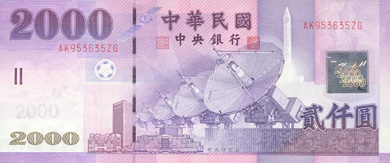
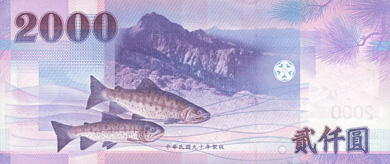
- Currency Name and Code
- New Taiwan Dollar (TWD)
- GDP — official exchange rate
- $323,400,000,000 (USD)
- GDP Real Growth Rate
- 3.8%
Banknotes
Budget & Public Finance
- Fiscal Year
- 1 July - 30 June
- Annual Budget
- $50,260,000,000 (USD)
- Public Debt (% of GDP)
- 33.3%
- External Debt
- $81,640,000,000 (USD)
- Investment (% of GDP)
- 20.8%
- Current Account Balance
- $15,030,000,000 (USD)
- Reserves of Foreign Exchange
- $2,147,483,647 (USD)
Labor, Industry & Trade
- Labor Force by Occupation
- services 57%; industry 35%; agriculture 8%
- Household Income — highest 10%
- 41.1%
- Industries
- electronics, petroleum refining, chemicals, textiles, iron and steel, machinery, cement, food processing
- Agriculture Products
- rice, corn, vegetables, fruit, tea; pigs, poultry, beef, milk, fish
- Export Commodities
- computer products and electrical equipment, metals, textiles, plastics and rubber products, chemicals
- Export Partners
- China 25.3%, US 20.5%, Japan 9.2%
- Import Commodities
- machinery and electrical equipment 44.5%, minerals, precision instruments (2002)
- Import Partners
- Japan 24.2%, US 16.1%, China 7.1%, South Korea 6.9%
Energy
- Oil Production
- 8,354 bbl/day
- Oil Consumption
- 915,000 bbl/day
- Oil Reserves
- 2,900,000 bbl/day
- Natural Gas Production
- 970,000,000 cu m
- Natural Gas Consumption
- 8,450,000,000 cu m
- Natural Gas Imports
- 7,480,000,000 cu m
- Natural Gas Exports
- 0 cu m
- Natural Gas Reserves
- 76,460,000,000 cu m
Communications
- Telephone System
- general assessment: provides telecommunications service for every business and private need domestic: thoroughly modern; completely digitalized international: country code - 886; roughly 15 submarine fiber cables provide links throughout Asia, Australia, the Middle East, Europe, and the US; satellite earth stations - 2
- Internet Country Code
- .tw
News & Weather
News & Weather
Current Weather
Latest News
Taiwan indicts ex-TSMC employee over alleged theft of trade secrets for intended use in China - Reuters
Reuters · 20h ago
Taiwan alleges ex-TSMC staff stole chip secrets to sell to China - Nikkei Asia
Nikkei Asia · 19h ago
Ex-TSMC worker indicted for alleged trade secret theft - Taipei Times
Taipei Times · 15h ago
Taiwan says ‘significant’ rise in China maritime activity near island - Hong Kong Free Press HKFP
Hong Kong Free Press HKFP · 21h ago
Taiwan says Chinese vessel activity jumps, raising fears for Pacific supply routes - Reuters
Reuters · 1d ago
China intensifies activity around Taiwan: CGA - Taipei Times
Taipei Times · 15h ago
Lai congratulates Burnham on UK prime minister appointment - Taipei Times
Taipei Times · 3h ago
Democratic Taiwan must not become ‘China’s Taiwan,’ president says - NBC News
NBC News · 1d ago
News via Google News
Climate Overview
The Tropic of Cancer bisects the island, so the climate is sub-tropical with temperatures ranging from 12 to 35 degrees Celsius (54-95 degrees Fahrenheit).
Northern Taiwan has two long seasons (summer & winter) and two short seasons (spring and autumn).
Spring, mid-March to mid-May, is mostly sunny and mild with brief spells of cloudy skies and rain showers. Spring's average daily temperature is 17-25C or 62-77F. Summer, mid-May through late September, is hot with an average rainfall of 10 inches a month, mostly from afternoon showers and thunderstorms. Autumn, late September to early November, is characterized by mild temperatures and afternoon showers. Winter, November through mid-April, is characterized by low cloud drizzle, fog, and occasional winds.
The daily temperatures range between 17 - 24 degrees C (62-75F) in November, dropping to 12 - 19C (54 - 66F) in January and then rising to 14 - 22C (57 - 72F) in March. Occasionally, the temperature drops below 1OC (50F), especially in mountainous areas.
The typhoon season usually starts in mid-June and lasts through October. An average of 12 typhoons form in the Western Pacific each year. The average daily temperature range in Taipei is 21 - 29C (70 - 84F) in May; 24 - 35C (75 - 95F) in July and August; 23 - 33C (73 - 91F) in September; and 20 - 27C (68 - 81F) in October.
Kaohsiung enjoys a milder, drier winter than Taipei, but summer temperatures average about the same.
As a result of its subtropical position and heavy rainfall, Taiwan's natural landscape is constantly green with varied hues of forest, shrubs, and coarse tropical grass. All but the peaks of the highest mountains are covered with vegetation.
Videos
Videos
1 curated YouTube videos.
Source: YouTube
Frequently Asked Questions
Frequently Asked Questions
What is the population of Taiwan?
How do people greet each other in Taiwan?
What are the dining customs in Taiwan?
What etiquette should I know in Taiwan?
How should I dress in Taiwan?
What gestures should I be aware of in Taiwan?
How does family life work in Taiwan?
What do people do for recreation in Taiwan?
What is the capital of Taiwan?
Where is Taiwan located?
What are Taiwan's ocean and sea borders?
What religion is practiced in Taiwan?
What is the currency of Taiwan?
What language is spoken in Taiwan?
What is the geography of Taiwan like?
What is Taiwan known for?
Last reviewed 2026