
 English
 Español
 中文
中文 हिन्दी
 Français
Isle of Man
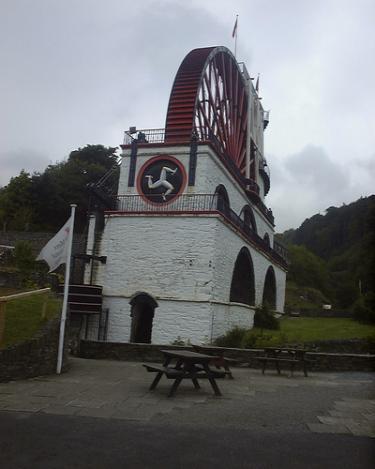
Declare Your Relationship to Isle of Man
CountryReports Community
- Studying0
- From Isle of Man0
- Isle of Man heritage0
- Visited0
- Want to visit0
Customs and Culture
Customs and Culture
Cultural Attributes
The Isle of Man occupies a distinctive cultural position in the British Isles, blending Celtic heritage with Norse influences that date back over a thousand years. As a Crown dependency rather than part of the United Kingdom, the island maintains its own parliament — Tynwald — which is one of the oldest continuously operating legislative assemblies in the world, having functioned for over 1,000 years. This deep sense of self-governance shapes a strong local identity among Manx people, who take considerable pride in their island's autonomy and traditions. The indigenous Manx language, known as Gaelg or Manx Gaelic, is a Celtic language closely related to Irish and Scottish Gaelic. Although it was declared extinct in 1974 following the death of its last native speaker, Edward "Ned" Maddrell, remarkable revival efforts have brought the language back into public life. Today, Manx is taught in schools through a Bunscoill (immersion primary school) program, and a growing number of residents have achieved conversational or fluent proficiency. Traditional Manx culture is celebrated through music, dance, and folklore. The island hosts Yn Chruinnaght, an annual inter-Celtic festival that draws performers from Celtic nations including Ireland, Scotland, Wales, Brittany, Cornwall, and Galicia. Manx folk music features instruments such as the fiddle, and traditional dancing remains an active part of local culture promoted through organizations like the Manx Folk Dance Society. The triskelion — a symbol of three armored legs joined at the thigh — is the national emblem of the Isle of Man and appears on the island's flag. It is one of the most recognizable national symbols in the world and reflects the island's long historical identity. The Manx cat, a breed distinguished by its naturally short or absent tail, also originates from the island and serves as an unofficial cultural icon. Motorsport holds particular cultural significance as well; the Tourist Trophy (TT) motorcycle races, held annually since 1907, are deeply embedded in island identity and attract tens of thousands of visitors each year.

Isle of the Three Legs

Holidays
Tynwald Day
7/14Other
Dates of Interest
- July 14th
What should I know about local identity and customs on the Isle of Man?
The Isle of Man is a Crown dependency, not part of the UK, with its own ancient parliament (Tynwald) that has operated for over 1,000 years. Manx people take considerable pride in the island's autonomy and traditions.
Do
- Recognize the island as a self-governing Crown dependency, distinct from the UK
- Show respect for the strong local Manx identity and traditions
Good to know
- The triskelion (three armored legs joined at the thigh) is the national emblem and appears on the flag
- The indigenous Manx language (Gaelg) was declared extinct in 1974 but has been revived and is taught in schools through a Bunscoill immersion program
- The tailless Manx cat originates from the island and is an unofficial cultural icon
What cultural events and pastimes can I enjoy on the Isle of Man?
Traditional Manx culture is celebrated through music, dance, and folklore, while motorsport — especially the TT motorcycle races — is deeply embedded in island identity.
Good to know
- Yn Chruinnaght is an annual inter-Celtic festival drawing performers from Ireland, Scotland, Wales, Brittany, Cornwall, and Galicia
- Manx folk music features instruments such as the fiddle, and traditional dancing is promoted by groups like the Manx Folk Dance Society
- The Tourist Trophy (TT) motorcycle races have been held annually since 1907 and attract tens of thousands of visitors each year
Last updated: 2026-07-12 · Sources: CountryReports
Photos of Isle of Man
Photos of Isle of Man


Travel and Tourism
Travel and Tourism
- Currency
- British pound (GBP); note - there is also a Manx pound
- Time Difference
- UTC 0 (5 hours ahead of Washington, DC, during Standard Time)
- Climate
- temperate; cool summers and mild winters; overcast about one-third of the time
- Airports
- 1
Read the full travel guide — health, safety, vaccinations, disease risk, sanitation, and transit details.
View full travel guideHistory
History
Historical Eras
Ancient & Celtic Mona
54 BCE – 490
Caesar noted the island as 'Mona' in his accounts, placing it within the wider Celtic world of the British Isles. The island functioned as a regional hub of Celtic culture and was connected to the Kingdom of Strathclyde before asserting independence around 490 CE. This era established the foundational Gaelic identity that would persist through subsequent conquests.
Norse Settlement & Kingdom
490 – 1079
Norse settlers arrived in significant numbers between 850 and 950, transforming the island's culture, language, and governance. The Tynwald parliament — one of the oldest continuous legislatures in the world — was founded in 979, reflecting Norse traditions of open-air assembly. The Battle of Scacafell in 1079 marked a violent contest for control that defined the turbulent Norse-Gaelic political order.
Kingdom of the Hebrides
1079 – 1265
The Isle of Man formed the political and geographic heart of the Norse-controlled Kingdom of the Hebrides, subject to the Norwegian crown. Internal conflict was endemic, as seen in the civil war culminating in the Battle of Santwat in 1098 and the Battle of Tynwald in 1228. Norwegian sovereignty was ultimately undermined by Scottish ambition, and the Treaty of Dumfries in 1264 precipitated the island's transfer to Scottish rule.
Scottish & Feudal Contest
1265 – 1406
Following the Treaty of Perth in 1266, the Isle of Man formally passed into the Scottish sphere, though English claims ensured persistent conflict. Robert the Bruce seized Castle Rushen in 1313, consolidating Scottish dominance, while the Three Legs emblem appeared as a recognized sigil in international diplomacy by 1395. Scottish military pressure continued until the last Scottish attack on Mann in 1456, by which time the island's administration had stabilized under the Lords of Mann.
Lords of Mann
1406 – 1765
From 1406 the island was governed by sovereign Lords of Mann — most notably the Stanley family, Earls of Derby — who held near-regal authority under nominal English overlordship. The title 'King of Mann' was formally waived in favor of 'Lord of Mann' in 1504, reflecting a pragmatic accommodation with the English Crown. This era preserved considerable Manx autonomy, distinct laws, and the Tynwald's legislative function.
British Crown Dependency
1765 – present
In 1765 the British Crown purchased the feudal rights of the last Lord of Mann under the Revestment Act, integrating the island into a closer constitutional relationship with Britain while preserving Tynwald and Manx customary law. The island developed a distinctive offshore financial sector in the 20th century and gained greater self-governance through successive constitutional reforms. Contemporary priorities include the revival of Manx Gaelic, an indigenous language that had approached extinction by the late 20th century.
Overview
Timeline of Key Events
54 BCE
Ceasar names Isle of Man Mona
Ceasar names Isle of Man Mona.
490
Isle of Man becomes independent from the Kingdom of Strathclyde
Following the death of Dumnagual Hen, Isle of Man (Ynys Manaw) becomes independent from the Kingdom of Strathclyde.
850 – 950
Norse settlements in Mann
Norse settlements in Mann.
979
The Tynwald, the parliament of the Isle of Man, is founded
The Tynwald, the parliament of the Isle of Man, is founded.
1079
Battle of Scacafell (Skyhill)
Battle of Scacafell (Skyhill) won by Godred Crovan, who became King of Mann and the Isles.
1098
Civil war in Man results in the Battle of Santwat
Civil war in Man results in the Battle of Santwat.
1228
Battle of Tynwald
Battle of Tynwald and death and defeat of Reginald.
Read the full history profile — narrative overview, defining eras, and the complete timeline in one place.
View expanded historyInteresting Facts
Interesting Facts
Among its earliest inhabitants were Celts, and their language, Manx, which is closely related to Irish and Scottish Gaelic, remained the everyday speech of the people until the first half of the 19th century.
Among the first countries to give women the vote in 1881.
First country in Western Europe to allow 16 and 17 year olds to vote in national elections.
See every fact — trivia, oddities, and curious tidbits gathered from across the country.
View all interesting factsGeography and Environment
Geography and Environment
- Terrain
- hills in north and south bisected by central valley
- Climate
- temperate; cool summers and mild winters; overcast about one-third of the time
- Natural Hazards
- NA
- Current Environmental Issues
- waste disposal (both household and industrial); transboundary air pollution
Read the full geography and environment profile — terrain, climate, natural resources, hazards, land use, and international agreements.
View full geographyPeople & Demographics
People & Demographics
Languages Spoken
English, Manx Gaelic
- English
- Manx Gaelic
Population
- Population
- 76,913
- Population in Major Urban Areas
- DOUGLAS (capital) 27,000
- Nationality Noun
- Manxman (men), Manxwoman (women)
- Ethnic Groups
- Manx (Norse-Celtic descent), Briton
Education
- Literacy Definition
- NA
Read the full people and society profile — demographics, health, education, religion, languages, and notable people.
View full people and societyGovernment & Politics
Government & Politics
Country Identity
- Country Name
- ManIsleof
Government Structure
- Government Type
- parliamentary democracy
- Legal System
- English common law and Manx statute
- Executive Branch
- chief of state: Lord of Mann King CHARLES III (since 8 September 2022), represented by Lieutenant Governor Sir John LORIMER (since 4 September 2021) head of government: Chief Minister Alfred CANNAN (since 12 October 2021) cabinet: Council of Ministers elections: the monarchy is hereditary; lieutenant governor appointed by the monarch for a five-year term; the chief minister is elected by the Tynwald election results: Alfred CANNAN elected chief minister by the Tynwald on 12 October 2021 following the general election held on 23 September 2021
- Legislative Branch
- bicameral Tynwald consists of the Legislative Council (an 11-member body composed of the President of Tynwald, the Lord Bishop of Sodor and Man, a nonvoting attorney general, and eight others named by the House of Keys) and the House of Keys (24 seats; members are elected by popular vote to serve five-year terms) elections: House of Keys - last held 22 November 2001 (next to be held November 2006) election results: House of Keys - percent of vote by party - Man Labor Party 17.3%, Alliance for Progressive Government 14.6%; seats by party - Man Labor Party 2, Alliance for Progressive Government 3, independents 19
- Judicial Branch
- High Court of Justice (justices are appointed by the Lord Chancellor of England on the nomination of the lieutenant governor)
- Suffrage
- 18 years of age; universal
- Constitution
- unwritten; note - The Isle of Man Constitution Act, 1961, does not embody the unwritten Manx Constitution
- Independence
- none (British crown dependency)
- National Holiday
- Tynwald Day, 5 July
Capital City
- Capital Name
- Douglas
- Capital - geographic coordinate
- 54 09 N, 4 29 W
- Capital Time Difference
- UTC 0 (5 hours ahead of Washington, DC, during Standard Time)
name derives from the Dhoo and Glass Rivers, which flow through the valley in which the town is located and which in Manx mean the "dark" and the "light" rivers respectively
Read the full government profile — flag symbolism, national anthem, and other national symbols.
View full government detailsEconomy
Economy
The Isle of Man's economy is driven primarily by financial services, insurance, online gambling (eGaming), information and communications technology, and professional business services, with manufacturing and tourism also contributing meaningfully. The government's long-standing policy of offering incentives to high-technology companies, financial institutions, and digital businesses to locate on the island has expanded employment opportunities in high-income industries and helped diversify the economy. As a result, agriculture and fishing, once the mainstays of the economy, now account for only a small share of GDP. Trade remains heavily oriented toward the United Kingdom, with which the island shares a customs union. Although the Isle of Man is not a member of the European Union and lost its previous special trading relationship following Brexit, it benefits from the UK-EU Trade and Cooperation Agreement and maintains low taxation, with a zero percent standard corporate tax rate, to remain competitive as an international business center.
Snapshot
- Currency Name and Code
- Pound Sterling (GBP)
Banknotes
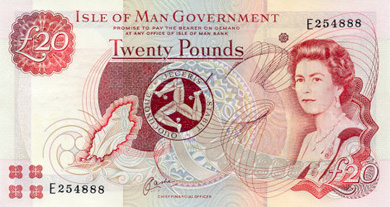
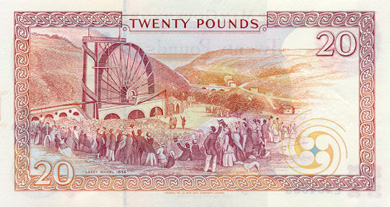
Budget & Public Finance
- Fiscal Year
- 1 April - 31 March
- Annual Budget
- $463,000,000 (USD)
Labor, Industry & Trade
- Labor Force by Occupation
- agriculture; forestry and fishing 3%; manufacturing 11%; construction 10%; transport and communication 8%; wholesale and retail distribution 11%; professional and scientific services 18%; public administration 6%; banking and finance 18%; tourism 2%
- Industries
- financial services, light manufacturing, tourism
- Agriculture Products
- cereals, vegetables; cattle, sheep, pigs, poultry
- Export Commodities
- tweeds, herring, processed shellfish, beef, lamb
- Export Partners
- UK
- Import Commodities
- timber, fertilizers, fish
- Import Partners
- UK
Energy
- Oil Production
- 0 bbl/day
- Oil Consumption
- 0 bbl/day
- Oil Reserves
- 0 bbl/day
- Natural Gas Production
- 0 cu m
- Natural Gas Consumption
- 0 cu m
- Natural Gas Imports
- 0 cu m
- Natural Gas Exports
- 0 cu m
- Natural Gas Reserves
- 0 cu m
Communications
- Telephone System
- domestic: landline, telefax, mobile cellular telephone system international: country code - 44; fiber-optic cable, microwave radio relay, satellite earth station, submarine cable
- Internet Country Code
- .im
News & Weather
News & Weather
Current Weather
Latest News
Isle of Man tour of Spain 2022/23 Fixtures, Live Score, Schedule, Points Table & News - Cricinfo
Cricinfo · 3d ago
The Isle of Man is a magical place – here’s my guide to making the most of it - The Telegraph
The Telegraph · 6d ago
Out And About At The 2026 Isle Of Man TT - Motorcycle.com
Motorcycle.com · 35d ago
Isle of Man TT 2026: How to watch today, schedule, timings, dates, entry list, lap records, Michael Dunlop records - ESPN
ESPN · 45d ago
ULTIMATE BIKER'S HOLIDAY GUIDE - Isle of Man TT Races
Isle of Man TT Races · 1d ago
King Charles jokes about Queen Camilla during Isle of Man visit - MSN
MSN · 5d ago
2026 Isle of Man TT Results - Cycle News
Cycle News · 45d ago
Maria Costello admits life-changing Isle of Man TT injuries “hard for me to take in” - Visordown
Visordown · 7d ago
News via Google News
Climate Overview
temperate; cool summers and mild winters; overcast about one-third of the time
Frequently Asked Questions
Frequently Asked Questions
What is the population of Isle of Man?
What should I know about local identity and customs on the Isle of Man?
What cultural events and pastimes can I enjoy on the Isle of Man?
What is the capital of the Isle of Man?
Where is the Isle of Man located?
What sea and ocean borders surround the Isle of Man?
What currency is used in the Isle of Man?
What languages are spoken in the Isle of Man?
What is the history and government of the Isle of Man?
What is the Isle of Man known for?
Last reviewed 2026