
 English
 Español
 中文
中文 हिन्दी
 Français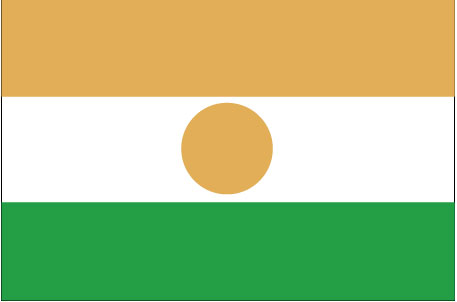
Niger
Niger
Declare Your Relationship to Niger
CountryReports Community
- Studying0
- From Niger0
- Niger heritage0
- Visited0
- Want to visit0
Customs and Culture
Customs and Culture
About the People
City people are working for rent, electricity, water bills or occasionally major purchases like a t.v. or satellite dish or maybe a motorcycle. These people are in the minority. Normally people are working for food.
The poorest people normally live in a hut and rarely have electricity or running water. Kerosene lamps and the well are standard. Livestock is a symbol of wealth. So is a trip to Mecca. The majority of the population lives in a rural area, no debts, rent, etc. Most people wish for food.
Cultural Attributes
City people are working for rent, electricity, water bills or occasionally major purchases like a t.v. or satellite dish or maybe a motorcycle. These people are in the minority. Normally people are working for food.
The poorest people normally live in a hut and rarely have electricity or running water. Kerosene lamps and the well are standard. Livestock is a symbol of wealth. So is a trip to Mecca. The majority of the population lives in a rural area, no debts, rent, etc. Most people wish for food.

Land of the Niger, Desert and Resilience
Greetings, Gestures & Visiting
In Niger there are many different languages, greetings depend upon the language In the Hausa language one might say “Ina ini?” to which a person would respond “Lahiya lau” (Fine). In the morning one might say “Ina Kwana”(good morning). In the Djerma language one might say “Mate ni go?” to which one would respond by saying “Bani samaay” (Fine).
If you need to get someone's attention in the Hausa language you would say “kai mi yaki” (Hey, come here). In Djerma you would say “Kai, ka.”
A parting expression in Hausa would be “Sai an jima”(See you later). A person would respond by saying “An jima daya or allah ya kai mu gobe” (may God carry us to tomorrow).
When meeting someone Men usually shake hands and then touch their heart to show sincerity. Women usually do not shake but they do touch their heart.
It is very common for two people of the same sex to hold hands in a non-affectionate way. It shows that you are happy to see the person. There are no displays of public intimacy in a romantic way. Not giving direct eye contact is respectful when speaking to elders of the opposite sex (if you are a woman).
People do lots of things like talk under shade trees, eat together (men with men, women with women), people bring there televisions outside and watch it together. Women go to the well and socialize, impromptu visits are the norm a visitor is never turned away. There is a moto in Niger, it is, "Your guest is you god." The most important social event is traditional tea which is strongly brewed in a small teas pot on coals.
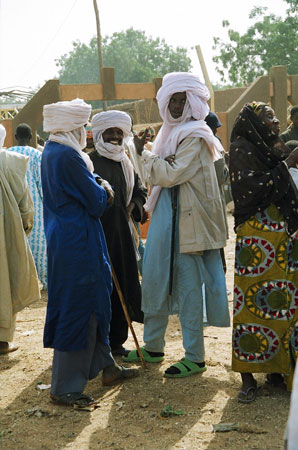
Men where boo-boo's (a long roomy dress that comes to the ankles). They also wear pants under the boo-boo. A woman wears a long wrap around skirt very colorful with a matching shirt, a head covering, and normally a shawl that covers the head and shoulders.
Diet
Typically Nigerian eat only one meal a day. It is usually Millet patties with sauce in the evening. During the rest of the day people drink a millet porridge. If they can afford it they might have beans and rice or rice and sauce for lunch. Mealtimes are early morning before work 6-7 AM, lunch depends on your work schedule, and dinner after the last prayer about 8:30. Breakfast and dinner are eaten at home. School kids eat lunch at home as well. There are no school lunch programs, Siesta is from 12:30 to 3:30 because of the heat. People also buy food from street vendors and eat in the benches on the sidewalk.
Typically there are no tables at houses and people eat in chairs or on mats on the floor. Women and children eat together and the men eat together. The right hand is normally in the food bowl, no utensils are required, the left hand is considered unclean, and it never touches the food.

Family
Women spend most of the day taking care of the children and preparing meals. Among the Hausu a woman cannot show affection for her eldest child in public. Young men are responsible for raising money on their own when they are ready to marry. There is no limit to how many wives a man can have in his lifetime as long as he is only married to four at a time.
Recreation
Soccer is a favorite sport among Niger children.Wrestling is also popular and most cities have wrestling arenas. Horse races are also popular. Storytelling is a popular pastime. In rural areas market days are opportunities to socialize.
Holidays
Republic Day
12/18Independence
Dates of Interest
- December 18th
How do people greet each other in Niger?
Greetings depend on the language spoken; Hausa and Djerma each have their own common exchanges. Men usually shake hands and touch their heart to show sincerity, while women do not shake but touch their heart.
Do
- In Hausa, say "Ina ini?" (reply "Lahiya lau" - Fine) or "Ina Kwana" for good morning
- In Djerma, say "Mate ni go?" (reply "Bani samaay" - Fine)
- Use "Sai an jima" (See you later) in Hausa when parting
- Touch your heart when meeting someone to show sincerity
Good to know
- To get attention in Hausa say "kai mi yaki" (Hey, come here); in Djerma "Kai, ka"
What are the dining customs in Niger?
People typically eat one main meal a day, usually millet patties with sauce in the evening, and eat from a shared bowl using the right hand. Women and children eat together while men eat separately.
Do
- Eat with your right hand from the shared food bowl
- Expect to eat seated in chairs or on mats on the floor
- Eat breakfast (6-7 AM) and dinner (after last prayer, about 8:30) at home
Don’t
- Do not use your left hand to touch food, as it is considered unclean
- Do not expect utensils or tables
Good to know
- A millet porridge is drunk during the day; beans and rice or rice and sauce may be had for lunch if affordable
- Siesta runs from 12:30 to 3:30 because of the heat
- Street vendors sell food eaten on sidewalk benches
What should I know about hospitality and social etiquette in Niger?
Hospitality is central: impromptu visits are the norm and a visitor is never turned away, following the motto "Your guest is your god." Traditional strongly brewed tea is the most important social event.
Do
- Accept and share traditional tea brewed in a small teapot on coals
- Socialize under shade trees or while watching television together
Good to know
- Men eat and socialize with men, women with women
- Women socialize at the well
How should I dress in Niger?
Traditional dress is modest and covering. Men wear a boo-boo (a long roomy ankle-length dress) with pants underneath.
Do
- Women wear a long, colorful wrap-around skirt with a matching shirt, a head covering, and usually a shawl covering head and shoulders
What gestures and body language should I be aware of in Niger?
Same-sex handholding is common and non-affectionate, showing happiness to see someone, but there are no public displays of romantic intimacy.
Do
- Men shake hands and touch the heart; women touch the heart without shaking
- As a woman, avoid direct eye contact with elders of the opposite sex to show respect
Don’t
- Do not display romantic intimacy in public
What are family customs like in Niger?
Women spend most of the day caring for children and preparing meals. A man may have up to four wives at a time.
Don’t
- Among the Hausa, a woman cannot show affection for her eldest child in public
Good to know
- Young men must raise money on their own when ready to marry
What do people do for recreation in Niger?
Soccer is a favorite among children, and wrestling is popular with arenas in most cities. Horse races and storytelling are also common pastimes.
Good to know
- In rural areas, market days are opportunities to socialize
Last updated: 2026-07-12 · Sources: CountryReports
Photos of Niger
Photos of Niger


Travel and Tourism
Travel and Tourism
- Travel Alert Status
- Level 3: Reconsider Travel
- Time Difference
- UTC+1 (6 hours ahead of Washington, DC, during Standard Time)
- Climate
- Niamey's climate varies with distinct seasons. April and May are the hottest months, with noontime temperatures often rising above 48°C (118°F) in the shade. Direct sunlight is intense during this period, and at night temperatures remain above 20°C (80°F). In May, the first rains come to the usually parched landscape and with them the planting of millet and sorghum, the major food crops. Niamey gets on average 55.8 centimeters (22 inches) of rainfall between June and September, normally in short torrential downpours preceded by high winds and dust or sand storms. At this time, the surrounding countryside takes on a verdant hue as the crops and the native grasses begin to grow. The rainy season is followed by a short period of hot, humid weather in October during which temperatures range between 15°C (60°F) and 45°C (112°F). From November to March, the weather is dry and pleasant. During this season, clear days are interspersed with hazy, overcast skies caused by the "harmattan"--a hot, dry wind carrying dust from the Sahara. Normally, the winds stay at high altitudes, creating slightly overcast skies; the harmattan, however, occasionally causes localized dust storms.
- Airports
- 27
Read the full travel guide — health, safety, vaccinations, disease risk, sanitation, and transit details.
View full travel guideRecipes
Recipes
History
History
Historical Eras
Pre-Islamic Kingdoms
600000 BCE – 1591
The Niger region hosted human habitation for hundreds of thousands of years and became a vital Saharan crossroads. Successive empires — including Mali, Songhai, Kanem-Bornu, and the Gao state — controlled portions of the territory, while Hausa city-states flourished in the south. The fall of the Songhai Empire after the Moroccan invasion of 1591 fragmented centralized power and reshaped the region's political landscape.
Fulani & Tuareg Era
1591 – 1890
Following the collapse of Songhai, the nomadic Tuareg formed powerful confederations and pushed southward, clashing with the expanding Fulani Empire of Sokoto, which seized much of Hausa territory in the late 18th century. European explorers, notably Mungo Park and Heinrich Barth, traversed the region in the 19th century seeking the Niger River's course. This era was defined by competing Islamic polities, slave trading networks, and the first tentative Western contacts.
French Colonial Period
1890 – 1960
France began military pacification campaigns before 1900, but Tuareg resistance in the desert north was not fully subdued until 1922, when Niger was formally constituted as a French colony administered from Dakar. The 1946 French constitution and the 1956 Loi Cadre progressively extended limited self-governance, and by 1958 Niger became an autonomous republic within the French Community. Colonial rule shaped Niger's administrative structures, infrastructure, and political class, though economic development remained severely limited.
First Republic & Military Rule
1960 – 1991
Niger gained full independence on August 3, 1960, with Hamani Diori leading a single-party civilian state for fourteen years. A catastrophic drought and widespread corruption charges prompted a 1974 military coup by Colonel Seyni Kountché, whose junta governed until his death in 1987. His successor, Colonel Ali Saibou, liberalized some policies and introduced a new constitution in 1989, but mounting union and student pressure forced the regime to accept multiparty democracy by 1990.
Democratic Transition & Instability
1991 – 1999
A national conference convened in July 1991 paved the way for the Third Republic, and Niger's first free elections were held in 1993 under President Mahamane Ousmane. Coalition rivalries paralyzed governance, enabling Colonel Ibrahim Baré Maïnassara's coup in 1996; his assassination in 1999 triggered a second coup and the formation of a National Reconciliation Council. A 1995 peace accord had meanwhile ended the five-year Tuareg insurgency in the north, and civilian rule was restored by December 1999.
Modern Niger
1999 – present
Elected civilian governments have alternated with periodic political crises, including further coups in 2010 and 2023, underscoring the fragility of democratic consolidation. Niger remains one of the world's poorest nations, persistently challenged by Sahel droughts, food insecurity, jihadist insurgencies in border regions, and a rapidly growing population. Significant uranium and oil deposits offer potential development resources, but governance instability and climate vulnerability continue to constrain economic progress.
Overview
During recent centuries, the nomadic Tuareg formed large confederations, pushed southward, and, siding with various Hausa states, clashed with the Fulani Empire of Sokoto, which had gained control of much of the Hausa territory in the late 18th century.
In the 19th century, contact with the West began when the first European explorers--notably Mungo Park (British) and Heinrich Barth (German)--explored the area searching for the mouth of the Niger River. Although French efforts at pacification began before 1900, dissident ethnic groups, especially the desert Tuareg, were not subdued until 1922, when Niger became a French colony.
Niger’s colonial history and development parallel that of other French West African territories. France administered its West African colonies through a governor general at Dakar, Senegal, and governors in the individual territories, including Niger. In addition to conferring French citizenship on the inhabitants of the territories, the 1946 French constitution provided for decentralization of power and limited participation in political life for local advisory assemblies.
A further revision in the organization of overseas territories occurred with the passage of the Overseas Reform Act (Loi Cadre) of July 23, 1956, followed by reorganizational measures enacted by the French Parliament early in 1957. In addition to removing voting inequalities, these laws provided for creation of governmental organs, assuring individual territories a large measure of self-government. After the establishment of the Fifth French Republic on December 4, 1958, Niger became an autonomous state within the French Community. Following full independence on August 3, 1960, however, membership was allowed to lapse.
For its first 14 years as an independent state, Niger was run by a single-party civilian regime under the presidency of Hamani Diori. In 1974, a combination of devastating drought and accusations of rampant corruption resulted in a military coup that overthrew the Diori regime. Col. Seyni Kountche and a small group of military ruled the country until Kountche’s death in 1987. He was succeeded by his Chief of Staff, Col. Ali Saibou, who released political prisoners, liberalized some of Niger’s laws and policies, and promulgated a new constitution. However, President Saibou’s efforts to control political reforms failed in the face of union and student demands to institute a multi-party democratic system. The Saibou regime acquiesced to these demands by the end of 1990. New political parties and civic associations sprang up, and a national conference was convened in July 1991 to prepare the way for the adoption of a new constitution and the holding of free and fair elections. The debate was often contentious and accusatory, but under the leadership of Prof. Andre Salifou, the conference developed consensus on the modalities of a transition government. A transition government was installed in November 1991 to manage the affairs of state until the institutions of the Third Republic were put into place in April 1993. While the economy deteriorated over the course of the transition, certain accomplishments stand out, including the successful conduct of a constitutional referendum; the adoption of key legislation such as the electoral and rural codes; and the holding of several free, fair, and nonviolent nationwide elections. Freedom of the press flourished with the appearance of several new independent newspapers.
Rivalries within a ruling coalition elected in 1993 led to governmental paralysis, which provided Col. Ibrahim Baré Maïnassara a rationale to overthrow the Third Republic in January 1996. While leading a military authority that ran the government (Conseil de Salut National) during a 6-month transition period, Bare enlisted specialists to draft a new constitution for a Fourth Republic announced in May 1996. After dissolving the national electoral committee, Bare organized and won a flawed presidential election in July 1996 and his party won 90% of parliament seats in a flawed legislative election in November 1996. When his efforts to justify his coup and subsequent questionable elections failed to convince donors to restore multilateral and bilateral economic assistance, a desperate Bare ignored an international embargo against Libya and sought Libyan funds to aid Niger’s economy. In repeated violations of basic civil liberties by the regime, opposition leaders were imprisoned; journalists often arrested, beaten, and deported by an unofficial mili
Timeline of Key Events
1890
French occupy Niger.
French occupy Niger.
1958
Niger becomes autonomous republic of the French Community.
Niger becomes autonomous republic of the French Community.
1960
Niger gained independence from France. Hamani Diori was president.
Niger gained independence from France. Hamani Diori was president.
1968 – 1973
Severe drought devastates Niger’s livestock and crop production.
Severe drought devastates Niger’s livestock and crop production.
1989
A new constitution brings Niger back to civilian rule, but under a one-party system.
A new constitution brings Niger back to civilian rule, but under a one-party system; Seybou re-elected president.
1990
Rebellion by Tuareg people in the north begins.
Rebellion by Tuareg people in the north begins.
1993
The first democratic government was elected.
The first democratic government was elected.
Read the full history profile — narrative overview, defining eras, and the complete timeline in one place.
View expanded historyInteresting Facts
Interesting Facts
With little primary education, Niger has one of the lowest literacy rates in the world.
As of December 2009 there were 23,982,200 Internet users in Niger
Niger is a leading producer of uranium, and is rich in other minerals. However, the United Nations rates it as one of world’s poorest countries.
See every fact — trivia, oddities, and curious tidbits gathered from across the country.
View all interesting factsGeography and Environment
Geography and Environment
- Terrain
- predominately desert plains and sand dunes; flat to rolling plains in south; hills in north
- Climate
- Niamey's climate varies with distinct seasons. April and May are the hottest months, with noontime temperatures often rising above 48°C (118°F) in the shade. Direct sunlight is intense during this period, and at night temperatures remain above 20°C (80°F). In May, the first rains come to the usually parched landscape and with them the planting of millet and sorghum, the major food crops. Niamey gets on average 55.8 centimeters (22 inches) of rainfall between June and September, normally in short torrential downpours preceded by high winds and dust or sand storms. At this time, the surrounding countryside takes on a verdant hue as the crops and the native grasses begin to grow. The rainy season is followed by a short period of hot, humid weather in October during which temperatures range between 15°C (60°F) and 45°C (112°F). From November to March, the weather is dry and pleasant. During this season, clear days are interspersed with hazy, overcast skies caused by the "harmattan"--a hot, dry wind carrying dust from the Sahara. Normally, the winds stay at high altitudes, creating slightly overcast skies; the harmattan, however, occasionally causes localized dust storms.
- Natural Hazards
- recurring droughts
- Current Environmental Issues
- overgrazing; soil erosion; deforestation; desertification; wildlife populations (such as elephant, hippopotamus, giraffe, and lion) threatened because of poaching and habitat destruction
Read the full geography and environment profile — terrain, climate, natural resources, hazards, land use, and international agreements.
View full geographyPeople & Demographics
People & Demographics
Religion
Languages Spoken
French (official), Hausa, Djerma
- French
- Hausa
Population
- Population
- 15,878,271
- Population in Major Urban Areas
- NIAMEY (capital) 1.297 million
- Nationality Noun
- Nigerien(s)
- Ethnic Groups
- Hausa 56%, Djerma 22%, Fula 8.5%, Tuareg 8%, Beri Beri (Kanouri) 4.3%, Arab, Toubou, and Gourmantche 1.2%, about 1,200 French expatriates
Education
- Literacy Definition
- age 15 and over can read and write
Health Information
- Major Infectious Diseases — degree of risk
- very high
Read the full people and society profile — demographics, health, education, religion, languages, and notable people.
View full people and societyGovernment & Politics
Government & Politics
Country Identity
- Country Name
- Niger
- Full Country Name
- Republic of Niger
- Local - Long
- Republique du Niger
- Local - Short
- Niger
Government Structure
- Government Type
- republic
- Legal System
- based on French civil law system and customary law; has not accepted compulsory ICJ jurisdiction
- Executive Branch
- chief of state: President of the National Council for the Safeguard of the Homeland (CNSP) General Abdourahamane TCHIANI (since 28 July 2023); note - General TCHIANI assumed power following a military coup that deposed elected President Mohamed BAZOUM on 26 July 2023 head of government: Prime Minister Ali MAHAMAN LAMINE ZEINE (since 9 August 2023); appointed by General TCHIANI following the coup; the CNSP has suspended the constitution and dissolved government institutions, concentrating executive authority within the military council cabinet: Cabinet appointed by the CNSP following the suspension of constitutional governance elections: Prior to the coup, the president was elected by popular vote for a five-year term; the most recent democratic presidential election was held in February 2021, in which Mohamed BAZOUM won with approximately 55.7% of the vote in the second round, defeating Mahamadou ISSOUFOU's former ally Mahamane OUSMANE; all electoral and constitutional processes have been suspended under the current military administration election results: Mohamed BAZOUM was elected president in the February 2021 runoff with approximately 55.7% of the vote versus Mahamane OUSMANE's 44.3%; BAZOUM was subsequently deposed in a military coup on 26 July 2023 and remains detained by the CNSP
- Legislative Branch
- unicameral National Assembly (113 seats; note - expanded from 83 seats; members elected by popular vote for five-year terms) elections: last held 4 December 2004 (next to be held December 2009) election results: percent of vote by party - NA%; seats by party - MNSD 47, CDS 22, PNDS 25, RSD 7, RDP 6, ANDP 5, PSDN 1
- Judicial Branch
- State Court or Cour d'Etat; Court of Appeals or Cour d'Appel
- Suffrage
- 18 years of age; universal
- Constitution
- the constitution of January 1993 was revised by national referendum on 12 May 1996 and again by referendum on 18 July 1999
- Independence
- 3 August 1960 (from France)
- National Holiday
- Republic Day, 18 December (1958)
Capital City
- Capital Name
- Niamey
- Capital - geographic coordinate
- 13 31 N, 2 07 E
- Capital Time Difference
- UTC+1 (6 hours ahead of Washington, DC, during Standard Time)
according to tradition, the site was originally a fishing village named after a prominent local tree referred to as "nia niam"
Military
Branches: Nigerien Armed Forces (Forces Armees Nigeriennes, FAN): Army, Nigerien Air Force (Force Aerienne du Niger)
Embassy / Diplomatic Mission
Embassy Niamey
Address: The U.S. Embassy is located on Rue des Ambassades, Niamey, Niger. The U.S. Embassy's mailing address is B.P. 11201, Niamey, Niger.
Telephone: 227-20-72-26-61 through 64
Emergency after-hours telephone: 227-20-72-31-41
Facsimile: 227- 20-73-31-67 or 20-72-31-46
Read the full government profile — flag symbolism, national anthem, and other national symbols.
View full government detailsEconomy
Economy
Niger is one of the world's poorest countries, a landlocked Sub-Saharan nation whose economy is built on subsistence agriculture, livestock, and the export of raw commodities, particularly uranium and, more recently, crude oil. Agriculture employs the vast majority of the workforce, while the formal economy remains small and highly vulnerable to drought, commodity price swings, and regional security shocks.
Niger is among the world's largest producers of uranium, with mining operations historically dominated by French interests. The sector has faced disruption following the July 2023 military coup, which prompted France and other Western partners to suspend aid and cooperation, and led to the revocation of operating permits for some foreign mining companies. The Economic Community of West African States imposed sanctions after the coup, which were lifted in early 2024, though relations with traditional Western donors remain strained as the junta has pivoted toward Russia and other partners.
Oil has become an increasingly important pillar of the economy. The completion of the Niger-Benin export pipeline in 2024 was expected to dramatically boost crude exports, though disputes with Benin and security incidents have disrupted throughput. The government projects oil revenues will help offset the loss of donor budget support.
Economic growth, which had been forecast at over 11% in 2024 on the back of oil exports, has been tempered by political instability, sanctions aftereffects, and insecurity linked to jihadist insurgencies in the Sahel. Inflation, public debt pressures, and a youthful, rapidly growing population continue to challenge development. Long-term prospects depend on stable hydrocarbon exports, diversification, improved security, and the restoration of external financing relationships.
Snapshot
- Currency Name and Code
- West Afrtican CFA Franc (XOF)
- GDP — official exchange rate
- $3,432,000,000 (USD)
- GDP Real Growth Rate
- 4.5%
- Gini Index
- 50.5
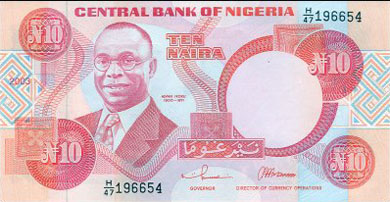
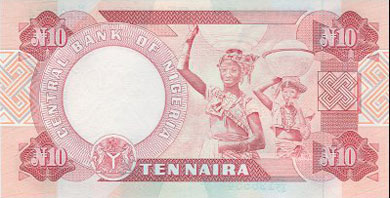
Banknotes
Budget & Public Finance
- Fiscal Year
- calendar year
- Annual Budget
- $320,000,000 (USD)
- External Debt
- $2,100,000,000 (USD)
- Economic Aid
- $341,000,000 (USD)
Labor, Industry & Trade
- Labor Force by Occupation
- agriculture 90%; industry and commerce 6%; government 4%
- Household Income — highest 10%
- 35.4%
- Industries
- uranium mining, cement, brick, textiles, food processing, chemicals, slaughterhouses
- Agriculture Products
- cowpeas, cotton, peanuts, millet, sorghum, cassava (tapioca), rice; cattle, sheep, goats, camels, donkeys, horses, poultry
- Export Commodities
- uranium ore, livestock, cowpeas, onions
- Export Partners
- France 39.1%, Nigeria 33.3%, Japan 17.3%
- Import Commodities
- foodstuffs, machinery, vehicles and parts, petroleum, cereals
- Import Partners
- France 17%, Cote d'Ivoire 14.9%, China 9.9%, Nigeria 7.3%, US 5.3%, Japan 4.6%, India 4.3%
Energy
- Oil Production
- 0 bbl/day
- Oil Consumption
- 5,400 bbl/day
- Oil Reserves
- 0 bbl/day
- Natural Gas Production
- 0 cu m
- Natural Gas Consumption
- 0 cu m
- Natural Gas Imports
- 0 cu m
- Natural Gas Exports
- 0 cu m
- Natural Gas Reserves
- 0 cu m
Communications
- Telephone System
- general assessment: inadequate; small system of wire, radio telephone communications, and microwave radio relay links concentrated in the southwestern area of Niger domestic: combined fixed-line and mobile-cellular teledensity remains only about 30 per 100 persons despite a rapidly increasing cellular subscribership base; domestic satellite system with 3 earth stations and 1 planned international: country code - 227; satellite earth stations - 2 Intelsat (1 Atlantic Ocean and 1 Indian Ocean)
- Internet Country Code
- .ne
News & Weather
News & Weather
Current Weather
Latest News
Niger joins regional biometric passport initiative with Burkina Faso, Mali - Biometric Update
Biometric Update · 15h ago
Who are the militant groups operating in western Niger? - Latest news from Azerbaijan
Latest news from Azerbaijan · 5h ago
ExxonMobil Declares $1 Billion FID on Usan Deepwater Project in the Niger Delta - JPT Homepage
JPT Homepage · 15h ago
Niger kicks off public consultation on 5G spectrum plan - Developing Telecoms
Developing Telecoms · 1h ago
‘Witch-hunt’ in Niger as military regime rounds up LGBTQ+ population - The Guardian
The Guardian · 20d ago
Burkina Faso/Mali/Niger: Withdrawal from the Rome Statute consecrates impunity and threatens to deny victims of war crimes justice and reparations - Amnesty International
Amnesty International · 19d ago
Niger State Governor Purges Fulani Chieftains from County Leadership Positions - Truth Nigeria
Truth Nigeria · 10h ago
ICC 'concerned' over withdrawal of Mali, Burkina Faso and Niger - africanews.com
africanews.com · 19d ago
News via Google News
Climate Overview
Niamey's climate varies with distinct seasons. April and May are the hottest months, with noontime temperatures often rising above 48°C (118°F) in the shade. Direct sunlight is intense during this period, and at night temperatures remain above 20°C (80°F). In May, the first rains come to the usually parched landscape and with them the planting of millet and sorghum, the major food crops. Niamey gets on average 55.8 centimeters (22 inches) of rainfall between June and September, normally in short torrential downpours preceded by high winds and dust or sand storms. At this time, the surrounding countryside takes on a verdant hue as the crops and the native grasses begin to grow. The rainy season is followed by a short period of hot, humid weather in October during which temperatures range between 15°C (60°F) and 45°C (112°F).
From November to March, the weather is dry and pleasant. During this season, clear days are interspersed with hazy, overcast skies caused by the "harmattan"--a hot, dry wind carrying dust from the Sahara. Normally, the winds stay at high altitudes, creating slightly overcast skies; the harmattan, however, occasionally causes localized dust storms.
Frequently Asked Questions
Frequently Asked Questions
What is the population of Niger?
How do people greet each other in Niger?
What are the dining customs in Niger?
What should I know about hospitality and social etiquette in Niger?
How should I dress in Niger?
What gestures and body language should I be aware of in Niger?
What are family customs like in Niger?
What do people do for recreation in Niger?
What is the capital of Niger?
Where is Niger located?
What countries border Niger?
What is the predominant religion in Niger?
What currency does Niger use?
What language is spoken in Niger?
What is Niger known for?
Last reviewed 2026