
 English
 Español
 中文
中文 हिन्दी
 Français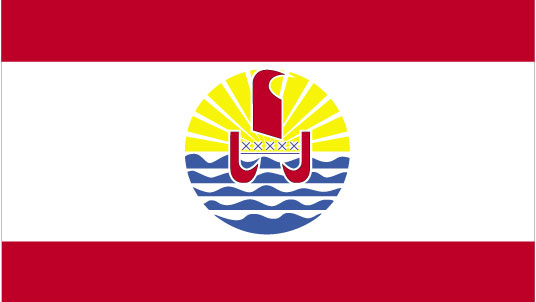
French Polynesia
Polynesie Francaise
Declare Your Relationship to French Polynesia
CountryReports Community
- Studying0
- From French Polynesia0
- French Polynesia heritage0
- Visited0
- Want to visit0
Customs and Culture
Customs and Culture
About the People
Kindness, generosity, and hospitality are central values in the islands.
Cultural Attributes
Kindness, generosity, and hospitality are central values in the islands.

Islands of Aloha and Atolls
Greetings, Gestures & Visiting
Remove your shoes before entering a house. Wash your hands before eating as most Tahitians eat with their hands. It is customary and polite to shake the hands of everyone in a group. Kissing friends on the cheeks still signals the French influence among the islands. Unless there is a large number of people in the room, it is considered impolite not to shake hands with all of them.
Clothing styles are relaxed in French Polynesia. For men Beach wear is often just from the waist down.
Sunday is a day of worship and requires best dress.
Diet
Lunch is usually a large meal and in some areas the only cooked meal of the day. Dinner a lighter meal and in some areas leftovers from lunch. In the urban areas breakfast is usually baguettes with butter and jam. They do eat with their fingers for some traditional foods but mainly use a knife and fork. In rural areas, people provide much of their own food through fishing and gardening taro, breadfruit, sweet potatoes, and manioc. In larger villages and urban areas, Chinese food is available at the local Chinese-owned general store, and in small restaurants.

Family
The hierarchy of ranked titles and chieftainship has disappeared, but the descendants of chiefly families are aware of their
history. The descendants of the Tahitian monarchy are socially prominent. The way of life in French Polynesia varies depending on location. Papeete is a cosmopolitan city with a strong Western influence. Most clothing and other goods are also imported, largely from France. On more remote islands, the lifestyle is much slower in pace. In these areas, people rely more heavily on subsistence activities and materials found locally.
Holidays
Bastille Day
7/14Other
Dates of Interest
- July 14th
How do people greet each other in French Polynesia?
Handshakes are customary, and it's polite to shake hands with everyone in a group. Kissing friends on the cheeks reflects the French influence in the islands.
Do
- Shake the hands of everyone in a group
- Kiss friends on the cheeks in keeping with French custom
Don’t
- Don't fail to shake hands with everyone unless the room is very crowded
What are dining customs like in French Polynesia?
Lunch is usually the large, main meal of the day, while dinner is lighter and sometimes leftovers from lunch. People mainly use a knife and fork but eat some traditional foods with their fingers.
Do
- Wash your hands before eating, as many Tahitians eat with their hands
- Expect breakfast of baguettes with butter and jam in urban areas
Good to know
- In rural areas, people provide much of their own food through fishing and gardening taro, breadfruit, sweet potatoes, and manioc
- Chinese food is available at local Chinese-owned general stores and small restaurants in larger villages and urban areas
What etiquette should I know in French Polynesia?
Kindness, generosity, and hospitality are central values in the islands.
Do
- Remove your shoes before entering a house
How should I dress in French Polynesia?
Clothing styles are relaxed in French Polynesia, though Sunday worship calls for your best dress.
Do
- Wear your best dress on Sunday, a day of worship
Good to know
- For men, beachwear is often just from the waist down
What is family and social life like in French Polynesia?
The way of life varies by location: Papeete is a cosmopolitan, Western-influenced city, while remote islands move at a slower pace and rely on subsistence activities.
Good to know
- Descendants of chiefly families and the Tahitian monarchy remain socially prominent
- On remote islands, people rely more heavily on subsistence activities and locally found materials
- Most clothing and goods in Papeete are imported, largely from France
Last updated: 2026-07-12 · Sources: CountryReports
Photos of French Polynesia
Photos of French Polynesia


Travel and Tourism
Travel and Tourism
- Travel Alert Status
- Level 1: Exercise Normal Precautions
- Currency
- Comptoirs Francais du Pacifique franc (XPF)
- Time Difference
- UTC-10 (5 hours behind Washington, DC, during Standard Time)
- Climate
- Tropical, but moderate
- Airports
- 49
Read the full travel guide — health, safety, vaccinations, disease risk, sanitation, and transit details.
View full travel guideRecipes
Recipes
History
History
Historical Eras
Polynesian Settlement
300 BCE – 1767
Skilled Polynesian navigators settled the islands of what is now French Polynesia beginning around 300 CE, developing rich oral traditions, hierarchical chiefdom societies, and distinctive art forms including tapa cloth and intricate tattooing. European contact began incrementally, with Magellan sighting the Tuamotus in 1521 and Dutch explorer Roggeveen glimpsing Bora Bora in 1722, before Englishman Samuel Wallis made the first recorded European landing on Tahiti in 1767.
Early Contact & Pomare Era
1767 – 1842
European contact transformed Tahitian society through the introduction of new goods, diseases, and Christian missionaries, while the Pomare dynasty consolidated political power across the islands. Queen Pomare IV, who began her influential 50-year reign in 1827, presided over a kingdom increasingly pressured by competing French and British colonial interests, navigating a rapidly changing social and religious landscape shaped by the London Missionary Society.
French Protectorate
1842 – 1880
France declared Tahiti and the Marquesas a protectorate in 1842, triggering the Tahitian War of Independence from 1844 to 1847, in which local resistance fighters mounted a determined but ultimately unsuccessful guerrilla campaign against French forces. The capital of Papeete was formally founded in 1843, becoming the administrative center of expanding French influence. Queen Pomare IV died in 1877, and her son Pomare V ceded full sovereignty to France in 1880.
Colonial Period
1880 – 1946
Formally annexed as a French colony, the territory was reorganized under direct metropolitan administration and its diverse island groups progressively brought under centralized French control. The 1918 influenza pandemic devastated the indigenous population, killing roughly 20 percent of Polynesians. During World War II, the islands declared for Free France under de Gaulle, and the United States established a strategic military base on Bora Bora in 1942 as part of Allied Pacific operations.
Overseas Territory
1946 – 1996
Redesignated an Overseas Territory in 1946, French Polynesia received a Territorial Assembly and gradually expanded its administrative autonomy, with France granting partial internal self-governance in 1977. The territory became the site of French nuclear testing, most controversially at Mururoa Atoll, generating sustained international protest and environmental concern. France's resumption of nuclear tests in September 1995 after a three-year moratorium provoked widespread global demonstrations before testing was suspended in January 1996.
Autonomy & Overseas Collectivity
1996 – present
Organic laws in 1996 and 2004 progressively deepened French Polynesia's autonomy, redefining it as an overseas country within the French Republic and creating the elected office of President of French Polynesia. Political life has been marked by significant instability, with seven changes of government following the landmark 2004 statute, as independentist leaders such as Oscar Temaru competed with long-dominant figures like Gaston Flosse. French Polynesia retains its own flag, anthem, and seal while France maintains authority over defense, foreign affairs, and monetary policy.
Overview
Recent political developments
The political environment in French Polynesia has been marked by considerable instability in recent years with seven changes of government since 2004. The most recent general elections were held in French Polynesia in January and February 2008. Three main political groupings contested the Assembly election: the UPLD independentist coalition which former President, Oscar Temaru, leads; the Tahoera’a Huiraatira party which is led by a long-time political leader, Gaston Flosse (who led French Polynesia for most of the two decades until 2004), and the To Tatou Ai’a coalition, which is led by Gaston Tong Sang. In the 2008 elections, the former ruling party, the UPLD independentist coalition, lost support. With 38.26% of the vote, the UPLD secured 20 seats; 7 seats fewer than it held previously. The To Tatou Ai’a coalition polled 44.87% to secure 27 seats in the new Assembly. The big loser in terms of seats was Gaston Flosse’s Tahoera’a Huiraatira party, which, after polling 16.88%, lost 7 seats to retain only 10 seats in the new Assembly. An alliance was assembled involving Gaston Flosse and Oscar Temaru. Flosse was elected to the position of President, with Temaru subsequently elected as Assembly Speaker on 1 March 2008. The government comprised five Tahoera’a and 10 UPLD members. The To Tatou Ai’a coalition, which attracted more party preferred support but which failed to achieve a simple majority was excluded. Members of Tong Sang’s coalition reacted strongly. Tong Sang led a demonstration of 10,000 in Papeete to protest the election of Flosse, and lodged a legal appeal with the French State Council. Reactions from France were similarly negative – the French governing party, with which Flosse had been affiliated, announced it would sever all ties with him. After the governing alliance was agreed by Flosse and Temaru, UPLD and nine of the 10 Tahoera’a members united to formTimeline of Key Events
1521
Magellan sights the Pukapuka Atoll in the Tuamotus.
Magellan sights the Pukapuka Atoll in the Tuamotus .
1722
Dutch explorer Roggeveen sights Bora Bora.
Dutch explorer Roggeveen sights Bora Bora .
1767
English explorer Samuel Wallis lands on Tahiti.
English explorer Samuel Wallis lands on Tahiti .
1827
The 50-year reign of Queen Pomare IV begins.
The 50-year reign of Queen Pomare IV begins.
1842
France declares Tahiti and the Marquesas as a protectorate.
France declares Tahiti and the Marquesas as a protectorate.
1843
The capitol city of Papeete is founded.
The capitol city of Papeete is founded.
1844 – 1847
Tahitian War of Independence.
Tahitian War of Independence.
Read the full history profile — narrative overview, defining eras, and the complete timeline in one place.
View expanded historyInteresting Facts
Interesting Facts
Tahiti is French Polynesia's largest island.
See every fact — trivia, oddities, and curious tidbits gathered from across the country.
View all interesting factsGeography and Environment
Geography and Environment
- Terrain
- mixture of rugged high islands and low islands with reefs
- Climate
- tropical, but moderate
- Natural Hazards
- occasional cyclonic storms in January
- Current Environmental Issues
- NA
Read the full geography and environment profile — terrain, climate, natural resources, hazards, land use, and international agreements.
View full geographyPeople & Demographics
People & Demographics
Religion
Languages Spoken
French (official), Tahitian (official)
- Tahitian
Population
- Population
- 291,000
- Population in Major Urban Areas
- PAPEETE (capital) 137,000
- Nationality Noun
- French Polynesian(s)
- Ethnic Groups
- Polynesian 78%, Chinese 12%, local French 6%, metropolitan French 4%
Education
- Literacy Definition
- Age 14 and over can read and write
Read the full people and society profile — demographics, health, education, religion, languages, and notable people.
View full people and societyGovernment & Politics
Government & Politics
Country Identity
- Country Name
- FrenchPolynesia
- Full Country Name
- Territory of French Polynesia
- Local - Long
- Territoire de la Polynesie Francaise
- Local - Short
- Polynesie Francaise
- Former Name
- French Colony of Oceania
Government Structure
- Government Type
- NA
- Legal System
- based on French system
- Executive Branch
- chief of state: President Emmanuel MACRON of France (since 14 May 2017), represented by High Commissioner of the Republic Eric SPITZ (since July 2021) head of government: President of the Government of French Polynesia Moetai BROTHERSON (since 12 May 2023); President of the Territorial Assembly Antony GEROS (since May 2023) cabinet: Council of Ministers; the president of French Polynesia submits a list of members drawn from the Territorial Assembly for approval by the assembly to serve as ministers elections: French president elected by popular vote for a five-year term; high commissioner appointed by the French president on the advice of the French Ministry of Interior; president of the Government of French Polynesia and the president of the Territorial Assembly are elected by the members of the assembly
- Legislative Branch
- unicameral Territorial Assembly or Assemblee Territoriale (57 seats - changed from 49 seats for May 2004 election; members are elected by popular vote to serve five-year terms) elections: last held 23 May 2004 (next to be held May 2009) election results: percent of vote by party - NA; seats by party - People's Rally for the Republic (Gaullist) 28, Union for Democracy 27, New Star 1, This Country is Yours 1; after by-elections of 13 February 2005 seating was as follows: People's Rally for the Republic 27, Union for Democracy 27, and Alliance for a New Democracy 3 note: one seat was elected to the French Senate on 27 September 1998 (next to be held September 2007); results - percent of vote by party - NA; seats by party - NA; two seats were elected to the French National Assembly on 9 June-16 June 2002 (next to be held in 2007); results - percent of vote by party - NA; seats by party - UMP/RPR 1, UMP 1
- Judicial Branch
- Court of Appeal or Cour d'Appel; Court of the First Instance or Tribunal de Premiere Instance; Court of Administrative Law or Tribunal Administratif
- Suffrage
- 18 years of age; universal
- Constitution
- 28 September 1958 (French Constitution)
- Independence
- none (overseas territory of France)
- National Holiday
- Bastille Day, 14 July (1789)
Capital City
- Capital Name
- Papeete (located on Tahiti)
- Capital - geographic coordinate
- 17 32 S, 149 34 W
- Capital Time Difference
- UTC-10 (5 hours behind Washington, DC, during Standard Time)
The name means "water basket" and refers to the fact that the islanders originally used calabashes enclosed in baskets to fetch water at a spring in the area
Military
Branches: No regular military forces
Read the full government profile — flag symbolism, national anthem, and other national symbols.
View full government detailsEconomy
Economy
Since 1962, when France stationed military personnel in the region, French Polynesia transitioned from a subsistence agricultural economy to one heavily dependent on the French military presence and the tourism sector. With the cessation of French nuclear testing in 1996, the military's contribution to the economy declined sharply, though France continues to provide substantial financial support through annual transfers and development compacts.
Tourism remains the cornerstone of the economy, accounting for roughly 12 to 15 percent of GDP directly and serving as the territory's principal source of foreign exchange earnings. The sector rebounded strongly after the COVID-19 pandemic, with visitor arrivals exceeding 260,000 in 2023 and continuing to grow. Cultured black pearl production, once the second-largest export earner, has faced challenges from declining global prices and competition but remains a significant industry alongside deep-sea commercial fishing, vanilla cultivation, and noni production.
The small manufacturing sector primarily processes agricultural and marine products, including coconut oil, fish, and pearls. Construction, public administration, and services dominate domestic employment. The territory benefits substantially from financial transfers and development agreements with France, which fund infrastructure, public services, and initiatives aimed at diversifying the economy and reducing dependence on imports. Despite these supports, French Polynesia continues to face challenges including a high cost of living, persistent trade deficits, and economic disparities between Tahiti and the outer islands.
Snapshot
- Currency Name and Code
- CFP Franc (XPF)
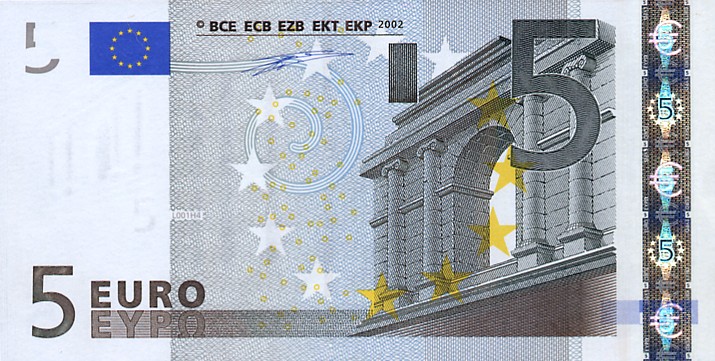
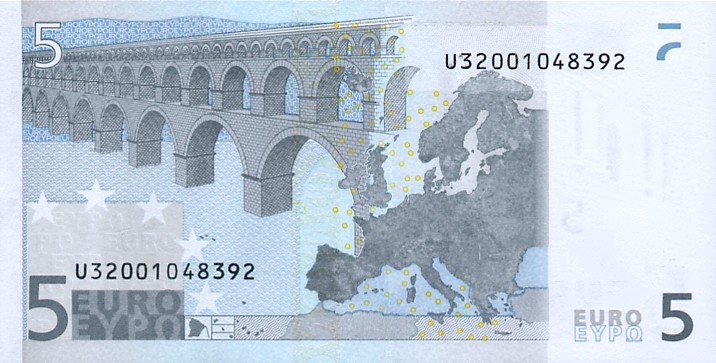
Banknotes
Budget & Public Finance
- Fiscal Year
- calendar year
- Annual Budget
- $644,100,000 (USD)
- Economic Aid
- $367,000,000 (USD)
Labor, Industry & Trade
- Labor Force by Occupation
- agriculture 13%; industry 19%; services 68%
- Industries
- tourism, pearls, agricultural processing, handicrafts, phosphates
- Agriculture Products
- coconuts, vanilla, vegetables, fruits; poultry, beef, dairy products, coffee
- Export Commodities
- cultured pearls, coconut products, mother-of-pearl, vanilla, shark meat
- Export Partners
- France 37.9%, Japan 35.7%, US 17.9%
- Import Commodities
- fuels, foodstuffs, machinery and equipment
- Import Partners
- France 57.6%, Australia 11.9%, New Zealand 6.8%, US 6.5%
Energy
- Oil Production
- 0 bbl/day
- Oil Consumption
- 4,800 bbl/day
- Oil Reserves
- 0 bbl/day
- Natural Gas Production
- 0 cu m
- Natural Gas Consumption
- 0 cu m
- Natural Gas Imports
- 0 cu m
- Natural Gas Exports
- 0 cu m
- Natural Gas Reserves
- 0 cu m
Communications
- Telephone System
- Domestic: Combined fixed and mobile-cellular density is roughly 100 per 100 persons International: Country code - 689; satellite earth station - 1 Intelsat (Pacific Ocean)
- Internet Country Code
- .pf
News & Weather
News & Weather
Current Weather
Latest News
Fall 2026 Writers to Watch: Manuia Heinrich - Publishers Weekly
Publishers Weekly · 3d ago
Papeete Air Quality Index (AQI) and French Polynesia Air Pollution | IQAir Hong Kong - IQAir
IQAir · 2d ago
French Polynesia’s diverse islands offer beauty, culture and memory-making splendors - Pioneer Press
Pioneer Press · 23d ago
French Polynesia expands ocean protections to 30% of its waters - news - Mongabay
news - Mongabay · 33d ago
The world just gained a marine protected area the size of France - Conservation International
Conservation International · 41d ago
Gisele Bündchen Shares Rare Photo of 1-Year-Old Son’s Face During Family Vacation in French Polynesia - instyle.com
instyle.com · 2d ago
Pacific ties spotlighted during French Polynesia president’s library visit - University of Hawaii System
University of Hawaii System · 137d ago
Coral Reefs in French Polynesia Are Stuck Between Life and Death - Inside Climate News
Inside Climate News · 50d ago
News via Google News
Climate Overview
Tropical, but moderate
Videos
Videos
1 curated YouTube videos.
Source: YouTube
Frequently Asked Questions
Frequently Asked Questions
What is the population of French Polynesia?
How do people greet each other in French Polynesia?
What are dining customs like in French Polynesia?
What etiquette should I know in French Polynesia?
How should I dress in French Polynesia?
What is family and social life like in French Polynesia?
What is the capital of French Polynesia?
Where is French Polynesia located?
What are the ocean and sea borders of French Polynesia?
What religion is practiced in French Polynesia?
What currency is used in French Polynesia?
What languages are spoken in French Polynesia?
What is the geography of French Polynesia like?
What is French Polynesia known for?
Last reviewed 2026