
 English
 Español
 中文
中文 हिन्दी
 Français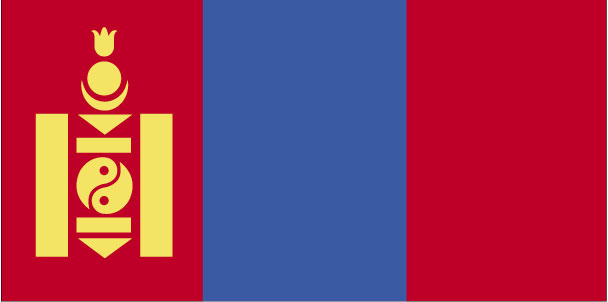
Mongolia
Mongol Uls
Declare Your Relationship to Mongolia
CountryReports Community
- Studying3
- From Mongolia2
- Mongolia heritage1
- Visited1
- Want to visit1
Customs and Culture
Customs and Culture
About the People
Most people are working to earn money. If people have money they can put food on the table, and gain leisure opportunities ,but some people work to have friends, to be not alone. Wealth is best defined with ownership of real property, having money and possession of livestock
Mongolia is sparsely populated with an average of only 4 people per square mile.
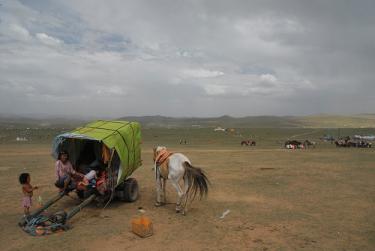
Many people are changing from the traditional nomadic lifestyle to one of city living. About half of the countries population now lives in cities. Modern conveniences such as radio's and tv's are becoming popular as nomads move to the city. With this change traditional family life has changed with parents having much less influence on arranging their children's marriages.
Cultural Attributes
Most people are working to earn money. If people have money, they can put food on the table and gain leisure opportunities, but some work to have friends or not be alone during the workday. Wealth is best defined as owning real property, having money, and possessing livestock.
Mongolia is sparsely populated, with an average of only four people per square mile.
Many people are changing from the traditional nomadic lifestyle to city living. About half of the country's population now lives in cities. Modern conveniences such as radios and TVs are becoming popular as nomads move to the city. With this change, traditional family life has changed, with parents having much less influence on arranging their children's marriages.

Empire of the Eternal Blue Sky
Greetings, Gestures & Visiting
Greetings vary between age groups and between peers. Youth greet each other using the informal greeting "sainu" which means hello. Youth greet older people and older
people greet each other using a formal greeting "sain baina u?" (a long form of hi).
Mongolians usually shake hands when they greet people and hug people close to them, such as close friends and relatives. When Mongolians speak to another person, they must look straight at the person. Mongolians use an open hand to point, and pointing with a finger is seen as a threat.
When guests leave Mongolians shake hands and if they know them well, they hug and kiss them.
On a typical day, Mongolians wear what Europeans and Americans wear, jeans, jacket, sweater, and t-shirt. Mongolian traditional dress clothes are called "deel" and it is made of silk. It is long and has belt. Most people have one and they usually wear it for special occasions especially for any national celebrations.
Diet
A typical family eats 3 meals in a day Breakfast, lunch, and dinner. There are not standard mealtimes for most people. But in most organizations lunch time is from 1 p.m to 2 p.m and people have breakfast before 9 a.m because they have to work. Dinner is usually after 6 p.m for most people.
For most people dinner is eaten at home. Children have lunch at school cafeteria and people have lunch at restaurant, cafeteria etc.,

Family
Many people are changing from the traditional nomadic lifestyle to city living. About half of the country's population now lives in cities. Modern conveniences such as radios and TVs are becoming popular as nomads move to the city. With this change, traditional family life has changed, with parents having much less influence on arranging their children's marriages.
Recreation
The three main sports are horse racing, archery and wrestling. The archery target is made of woven leather rings. Men shoot 40 arrows from 75 meters.
Holidays
Independence Day/Revolution Day
7/11Independence
Christmas
12/25Christmas
Christmas is not widely celebrated in Mongolia, instead Mongolians celebrate Tsagaan Sar (white moon or white month) a New Year festival celebrated two months after the first new moon following the winter solstice. On the day of the white moon, people greet each other by saying ’Amar mend uu?’ or ’Amar bain uu?’, a very formal greeting which is reserved for one’s elders. A typical Mongolian family will meet in the home dwelling of the eldest in the family in their full garment of national Mongolian costumes. Traditional food for the festival includes dairy products, rice with curds or rice with raisin, traditional cookies resembling a pyramid on a large dish in a special fashion symbolizing Mount Sumeruor Shambhalarealm, a grilled side of sheep and minced beef or minced mutton steamed inside pastry, a dish known as buuz, horse meat and traditional cookies. Tsagaan Sar is a lavish feast, requiring preparation days in advance, as the women make large quantities of buuz and freeze them to save for the holiday. The popular beverage is salted milk tea or Süütei Tsa, which may turn into a more healthy soup by adding rice, meat, or Bansh.
Dates of Interest
- November 11th
National Pride Day, observed on November 11th, celebrates Mongolian culture, heritage, and national identity. It is a day for patriotic activities, cultural performances, and expressions of national pride.
How do people greet each other in Mongolia?
Greetings vary by age and relationship: youth use the informal "sainu" (hello) with each other, while the formal "sain baina u?" is used when greeting older people or between older people.
Do
- Use "sainu" informally among youth
- Use "sain baina u?" with older people
What are the dining customs in Mongolia?
A typical family eats three meals a day—breakfast, lunch and dinner—though there are no standard mealtimes for most people.
Good to know
- In most organizations lunch is 1 p.m. to 2 p.m.
- People have breakfast before 9 a.m. because of work
- Dinner is usually after 6 p.m. and eaten at home
- Children eat lunch in the school cafeteria; others eat at restaurants or cafeterias
How should I dress in Mongolia?
On a typical day Mongolians wear the same clothes as Europeans and Americans—jeans, a jacket, sweater and t-shirt.
Good to know
- Traditional dress is the "deel," a long silk garment with a belt
- Most people own a deel and wear it for special occasions, especially national celebrations
What gestures should I know in Mongolia?
Mongolians shake hands when greeting and hug those close to them, and they look straight at the person they are speaking to.
Do
- Shake hands when greeting
- Hug close friends and relatives
- Look straight at the person you speak to
- Point using an open hand
Don’t
- Don't point with a finger—it is seen as a threat
What is family life like in Mongolia?
Family life is changing as many shift from a nomadic lifestyle to city living, and parents now have much less influence on arranging their children's marriages.
Good to know
- About half the population now lives in cities
- Modern conveniences like radios and TVs are becoming popular
What sports and recreation are popular in Mongolia?
The three main sports are horse racing, archery and wrestling.
Good to know
- Archery targets are made of woven leather rings
- Men shoot 40 arrows from 75 meters
Last updated: 2026-07-12 · Sources: CountryReports
Photos of Mongolia
Photos of Mongolia


Travel and Tourism
Travel and Tourism
- Travel Alert Status
- Level 1: Exercise Normal Precautions
- Currency
- togrog/tugrik (MNT)
- Time Difference
- UTC+8 (13 hours ahead of Washington, DC, during Standard Time) time zone note: Mongolia has two time zones - Ulaanbaatar Time (8 hours in advance of UTC) and Hovd Time (7 hours in advance of UTC)
- Climate
- Because of the elevation and distance from any ocean or sea, Mongolia has a harsh continental climate. Marked seasonal, even daily, changes in temperature, numerous high-pressure systems, and severe cold occur most of the year. A remarkably sunny country, Mongolia enjoys 250 sunny days a year, often with clear cloudless skies, making even the coldest temperatures more tolerable.
- Airports
- 36
Read the full travel guide — health, safety, vaccinations, disease risk, sanitation, and transit details.
View full travel guideRecipes
Recipes
Budatai heuivga (Meat with Fried-Rice, Garlic and Onions)
Main Dish
Main Dish
Goulash
Main Dish
Tumsuii huchmal (Mashed Potato and Meat Casserole)
Main Dish
Tsuivan (Meat Dumplings)
Main Dish
Buuz (Steamed Dumplings)
Main Dish
Budatai heuivga (Meat with Fried-Rice, Garlic and Onions)
History
History
Historical Eras
Early Steppe Peoples
300 BCE – 1206
The Mongolian steppe was home to successive nomadic confederations, including the Xiongnu, Xianbei, and Kitan, whose cyclical conflicts with China and internal power struggles defined the region. These groups established patterns of tribal alliance, raiding, and occasional dynastic conquest of northern China that persisted for over a millennium. The Kitan Liao Dynasty (916–1125) and the Jurchen Jin Dynasty (1115–1234) represent the era's most sophisticated statebuilding efforts before Mongol unification.
Mongol Empire
1206 – 1368
Temujin united the fractious Mongol tribes and assumed the title Chinggis Khan in 1206, launching the greatest contiguous land empire in history — stretching from Korea to Hungary. His successors conquered China, Persia, Russia, and Central Asia, establishing the Yuan Dynasty in China and ruling from the capital Karakorum. The empire fragmented into competing khanates after Chinggis Khan's death, and the Yuan Dynasty was finally expelled from China by the Ming in 1368.
Post-Imperial Decline
1368 – 1691
Driven back onto the steppe after the Yuan collapse, the Mongols entered a prolonged period of civil war, fragmentation, and diminishing power. Chinese forces destroyed Karakorum in 1388, and internecine conflict between the Eastern Mongols (Khalkha) and Western Mongols (Oirat) prevented any lasting reunification. Tibetan Buddhism spread deeply throughout Mongolian society during this period, reshaping cultural and political life.
Qing Dynasty Rule
1691 – 1911
The Khalkha Mongols submitted to the Manchu Qing Dynasty in 1691 following devastating Oirat incursions, placing Outer Mongolia under Chinese imperial administration for over two centuries. The Qing governed through a system of leagues and banners that preserved nominal Mongol aristocratic structures while suppressing political autonomy. Population decline, debt bondage to Chinese merchants, and the authority of Buddhist monasteries defined social life under Qing rule.
Independence & Communism
1911 – 1990
Mongolia declared independence following the collapse of the Qing Dynasty in 1911, though its sovereignty remained contested until Soviet-backed forces defeated Chinese control in 1921. The Mongolian People's Republic was proclaimed in 1924, establishing one of the world's first Communist states outside the Soviet Union. For nearly seven decades, the country operated as a close Soviet satellite, undergoing forced collectivization, purges of Buddhist institutions, and rapid if dependent industrialization.
Democratic Mongolia
1990 – present
Mass pro-democracy protests in 1990 forced the Communist Mongolian People's Revolutionary Party to relinquish its monopoly on power, leading to a new constitution and multiparty elections in 1992. The Democratic Union Coalition's landmark 1996 electoral victory accelerated market reforms and political liberalization, though economic transition brought significant hardship. Mongolia's vast mineral wealth — particularly coal, copper, and gold — has since become the central driver of its development and foreign relations.
Overview
Timeline of Key Events
300 BCE
Iron weapons in use; Xiongnu invasion of China repulsed.
Iron weapons in use; Xiongnu invasion of China repulsed.
200 BCE
Nomads expand west; pressure on China continues.
Nomads expand west; pressure on China continues.
317
Xianbei conquer northern China.
Xianbei conquer northern China.
386 – 533
Period of Northern Wei Dynasty, established by the Toba in northern China mid-8th century.
Period of Northern Wei Dynasty, established by the Toba in northern China mid-8th century.
916 – 1125
Period of Kitan Liao Dynasty.
Period of Kitan Liao Dynasty, established over eastern Mongolia, Manchuria, and northern China.
1038 – 1227
Tangut Western Xia Dynasty, established in northwestern China.
Tangut Western Xia Dynasty, established in northwestern China.
1115 – 1234
Jurchen establish Jin Dynasty in Manchuria, northern China.
Jurchen establish Jin Dynasty in Manchuria, northern China.
Read the full history profile — narrative overview, defining eras, and the complete timeline in one place.
View expanded historyInteresting Facts
Interesting Facts
Mongolia has the world's most private housing at 100% of the houses being privately owned.
See every fact — trivia, oddities, and curious tidbits gathered from across the country.
View all interesting factsGeography and Environment
Geography and Environment
- Terrain
- vast semidesert and desert plains, grassy steppe, mountains in west and southwest; Gobi Desert in south-central
- Climate
- Because of the elevation and distance from any ocean or sea, Mongolia has a harsh continental climate. Marked seasonal, even daily, changes in temperature, numerous high-pressure systems, and severe cold occur most of the year. A remarkably sunny country, Mongolia enjoys 250 sunny days a year, often with clear cloudless skies, making even the coldest temperatures more tolerable.
- Natural Hazards
- dust storms, grassland and forest fires, drought, and ""zud,"" which is harsh winter conditions
- Current Environmental Issues
- limited natural fresh water resources in some areas; the policies of former Communist regimes promoted rapid urbanization and industrial growth that had negative effects on the environment; the burning of soft coal in power plants and the lack of enforcement of environmental laws severely polluted the air in Ulaanbaatar; deforestation, overgrazing, and the converting of virgin land to agricultural production increased soil erosion from wind and rain; desertification and mining activities had a deleterious effect on the environment
Read the full geography and environment profile — terrain, climate, natural resources, hazards, land use, and international agreements.
View full geographyPeople & Demographics
People & Demographics
Religion
Languages Spoken
Khalkha Mongol 90%, Turkic, Russian
- Khalkha Mongol
- Russian
Population
- Population
- 3,086,918
- Population in Major Urban Areas
- ULAANBAATAR (capital) 1.184 million
- Nationality Noun
- Mongolian(s)
- Ethnic Groups
- Mongol (predominantly Khalkha) 85%, Turkic (of which Kazakh is the largest group) 7%, Tungusic 4.6%, other (including Chinese and Russian) 3.4%
Education
- Literacy Definition
- age 15 and over can read and write
Read the full people and society profile — demographics, health, education, religion, languages, and notable people.
View full people and societyGovernment & Politics
Government & Politics
Country Identity
- Country Name
- Mongolia
- Local - Short
- Mongol Uls
- Former Name
- Outer Mongolia
Government Structure
- Government Type
- parliamentary
- Legal System
- blend of Soviet, German, and US systems of law that combines aspects of a parliamentary system with some aspects of a presidential system; constitution ambiguous on judicial review of legislative acts; has not accepted compulsory ICJ jurisdiction
- Executive Branch
- chief of state: President Khurelsukh UKHNAA (since 25 June 2021) head of government: Prime Minister Oyun-Erdene LUVSANNAMSRAI (since 27 January 2021); Deputy Prime Minister Amarsaikhan SAINBUYAN (since 2021) cabinet: Cabinet nominated by the Prime Minister in consultation with the President and confirmed by the State Great Hural (parliament) elections: presidential candidates nominated by political parties represented in the State Great Hural and elected by popular vote for a four-year term; presidential tenure limited to one six-year term (amended from two four-year terms); election last held on 9 June 2021 (next to be held in 2025); following legislative elections, the leader of the majority party or majority coalition is usually elected Prime Minister by the State Great Hural election results: Khurelsukh UKHNAA elected president; percent of vote - Khurelsukh UKHNAA (Mongolian People's Party) 67.7%, Dangaasuren ENKHBAT (Right Person Electorate Coalition) 20.3%, Sodnomzundui ERDENE (Democratic Party) 6.0%; Oyun-Erdene LUVSANNAMSRAI elected Prime Minister by the State Great Hural
- Legislative Branch
- unicameral State Great Hural 76 seats; members elected by popular vote to serve four-year terms elections: last held 27 June 2004 (next to be held in June 2008) election results: percent of vote by party - MPRP 48.78%, MDC 44.8%, independents 3.5%, Republican Party 1.5%, others 1.42%; seats by party - MPRP 36, MDC 34, others 4; note - following June 2004 election MDC collapsed; as of 1 December 2005 composition of legislature was MPRP 38, DP 25, M-MNSDP 6, CWRP 2, MRP 1, PP 1, independents 3
- Judicial Branch
- Supreme Court (serves as appeals court for people's and provincial courts but rarely overturns verdicts of lower courts; judges are nominated by the General Council of Courts and approved by the president)
- Suffrage
- 18 years of age; universal
- Constitution
- 12-Feb-92
- Independence
- 11 July 1921 (from China)
- National Holiday
- Independence Day/Revolution Day, 11 July (1921)
Capital City
- Capital Name
- Ulaanbaatar
- Capital - geographic coordinate
- 47 55 N, 106 55 E
- Capital Time Difference
- UTC+8 (13 hours ahead of Washington, DC, during Standard Time) time zone note: Mongolia has two time zones - Ulaanbaatar Time (8 hours in advance of UTC) and Hovd Time (7 hours in advance of UTC)
the name means "red hero" in Mongolian and honors national hero Damdin SUKHBAATAR, leader of the partisan army that with Soviet Red Army help, liberated Mongolia from Chinese occupation in the early 1920s
Military
Branches: Mongolian Armed Forces (Mongol ulsyn zevsegt huchin): Mongolian Army (includes Mongolian Air and Air Defense, which is to become a separate service in 2015); there is no navy
Embassy / Diplomatic Mission
U.S. Embassy Ulaanbaatar
Micro Region 11, Big Ring Road, Ulaanbaatar
Telephone: (976) 7007-6001
Emergency after-hours telephone: 976-9911-4168
Facsimile: (976) 7007-6016
You can email the Consular Section directly. The Consular Section is open for American Citizens Services by appointment Monday and Thursday from 1-3 p.m., except on U.S. and Mongolian holidays.
Read the full government profile — flag symbolism, national anthem, and other national symbols.
View full government detailsEconomy
Economy
Mongolia's economy has traditionally been based on agriculture and livestock breeding, but the country's vast mineral wealth has transformed it into one of the world's most resource-dependent economies. Mongolia holds extensive deposits of copper, coal, gold, molybdenum, tin, tungsten, uranium, and rare earth elements, and mining now accounts for roughly a quarter of GDP and more than 80% of exports.
Following the collapse of the Soviet Union in 1990-1991, Soviet assistance—which had reached as much as one-third of GDP—disappeared almost overnight, plunging Mongolia into deep recession. The transition to a market economy was gradual, marked by political instability and alternating governments led by the Mongolian People's Revolutionary Party (later renamed the Mongolian People's Party, MPP) and the Democratic Party. Reforms included price liberalization, banking and energy sector restructuring, privatization of state enterprises, and the opening of trade and foreign investment. Mongolia joined the World Trade Organization in 1997.
The economy began a dramatic transformation in the late 2000s with the development of major mining projects, most notably the Oyu Tolgoi copper-gold mine and the Tavan Tolgoi coal deposit. Mongolia recorded one of the world's fastest GDP growth rates in 2011, exceeding 17%, driven by mining investment and commodity exports, particularly to China, which now absorbs more than 80% of Mongolia's exports.
Heavy reliance on mineral commodities has left the economy highly vulnerable to global price swings and to disputes with foreign investors. Falling commodity prices, slowing Chinese demand, and a sharp decline in foreign direct investment caused a severe downturn in 2015-2016, prompting Mongolia to secure a $5.5 billion financial assistance package led by the International Monetary Fund in 2017. The economy rebounded strongly through 2019 before contracting in 2020 due to the COVID-19 pandemic and border closures with China. Growth resumed in subsequent years, with GDP expanding by around 7% in 2023, supported by the launch of underground production at Oyu Tolgoi and a recovery in coal exports.
Persistent challenges include high inflation, currency volatility, public debt, corruption, environmental degradation, and the impact of severe winter weather events (dzud) on the herding population. Russia's historical claims regarding Soviet-era debt were largely resolved through settlements in the 2000s. Mongolia continues to pursue a "third neighbor" foreign and economic policy aimed at diversifying partnerships beyond its two giant neighbors, China and Russia, while seeking to develop value-added industries, infrastructure, and renewable energy.
Snapshot
- Currency Name and Code
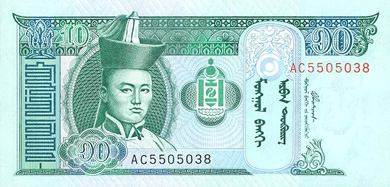
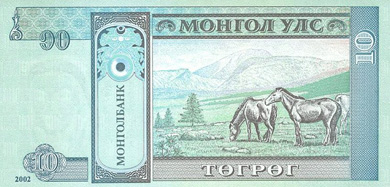
- Mongolia Tughrik (MNT)
- GDP — official exchange rate
- $1,400,000,000 (USD)
- GDP Real Growth Rate
- 6.2%
- Gini Index
- 44
Banknotes
Budget & Public Finance
- Fiscal Year
- calendar year
- Annual Budget
- $651,000,000 (USD)
- Economic Aid
- $211,300,000 (USD)
Labor, Industry & Trade
- Labor Force by Occupation
- herding/agriculture 46%; manufacturing 6%; trade 10.3%; public sector 4.7%; other/unemployed 33%
- Household Income — highest 10%
- 37%
- Industries
- construction materials; mining (coal, copper, molybdenum, fluorspar, and gold); oil; food and beverages; processing of animal products
- Agriculture Products
- wheat, barley, potatoes, forage crops, sheep, goats, cattle, camels, horses
- Export Commodities
- copper, livestock, animal products, cashmere, wool, hides, fluorspar, other nonferrous metals
- Export Partners
- China 41.4%, US 31.7%, Russia 9.2%, South Korea 4.2%
- Import Commodities
- machinery and equipment, fuels, food products, industrial consumer goods, chemicals, building materials, sugar, tea
- Import Partners
- Russia 34.4%, China 20.1%, South Korea 12.4%, Japan 6.2%, Germany 4.3%, Hong Kong 4.1%
Energy
- Oil Production
- 548 bbl/day
- Oil Consumption
- 8,750 bbl/day
- Oil Reserves
- 0 bbl/day
- Natural Gas Production
- 0 cu m
- Natural Gas Consumption
- 0 cu m
- Natural Gas Imports
- 0 cu m
- Natural Gas Exports
- 0 cu m
- Natural Gas Reserves
- 0 cu m
Communications
- Telephone System
- general assessment: network is improving with international direct dialing available in many areas; a fiber-optic network has been installed that is improving broadband and communication services between major urban centers with multiple companies providing inter-city fiber-optic cable services domestic: very low fixed-line teledensity; there are multiple mobile-cellular providers and subscribership is increasing international: country code - 976; satellite earth stations - 7
- Internet Country Code
- .mn
News & Weather
News & Weather
Current Weather
Latest News
Israelis attacked at remote Mongolia campsite; 1 suffers broken jaw - Ynetnews
Ynetnews · 2d ago
Israeli tourists attacked by axe-wielding man in Mongolia — reports - The Times of Israel
The Times of Israel · 1d ago
Live: Feel the pulse of Inner Mongolia's Naadam festival - news.cgtn.com
news.cgtn.com · 1d ago
Korea's Mongolian mineral bet may become a geopolitical tightrope walk between China, Russia and the U.S. - Korea JoongAng Daily
Korea JoongAng Daily · 1d ago
Attackers shout ‘heil Hitler’ during assault on Israelis in Mongolia - The Jerusalem Post
The Jerusalem Post · 2d ago
A bachelor’s in rare earths? In China, there are schools for that - Reuters
Reuters · 51d ago
The changing face of Mongolia as, beneath the grass, permafrost thaws - The Guardian
The Guardian · 32d ago
Israeli Tourists Attacked With Axes and Knives by Men Shouting 'Heil Hitler' at Mongolia Campsite - Combat Antisemitism Movement
Combat Antisemitism Movement · 16h ago
News via Google News
Climate Overview
Because of the elevation and distance from any ocean or sea, Mongolia has a harsh continental climate. Marked seasonal, even daily, changes in temperature, numerous high-pressure systems, and severe cold occur most of the year. A remarkably sunny country, Mongolia enjoys 250 sunny days a year, often with clear cloudless skies, making even the coldest temperatures more tolerable.
Videos
Videos
1 curated YouTube videos.
Source: YouTube
Frequently Asked Questions
Frequently Asked Questions
What is the population of Mongolia?
How do people greet each other in Mongolia?
What are the dining customs in Mongolia?
How should I dress in Mongolia?
What gestures should I know in Mongolia?
What is family life like in Mongolia?
What sports and recreation are popular in Mongolia?
What is the capital of Mongolia?
Where is Mongolia located?
What countries border Mongolia?
What is the main religion practiced in Mongolia?
What currency does Mongolia use?
What language is spoken in Mongolia?
What is the geography of Mongolia like?
What is Mongolia known for?
Last reviewed 2026