English
 Español
 中文
中文 हिन्दी
 Français
Government and Politics
Government and Politics of Mongolia
Government structure, leadership, capital, military, and national symbols of Mongolia.
Government Structure
Constitutional foundations, branches, parties, and leadership.
- Government Type
- parliamentary
- Administrative Divisions
- 21 provinces (aymguud, singular - aymag) and 1 municipality* (singular - hot); Arhangay, Bayanhongor, Bayan-Olgiy, Bulgan, Darhan Uul, Dornod, Dornogovi, Dundgovi, Dzavhan, Govi-Altay, Govi-Sumber, Hentiy, Hovd, Hovsgol, Omnogovi, Orhon, Ovorhangay, Selenge, Suhbaatar, Tov, Ulaanbaatar*, Uvs
- Legal System
- blend of Soviet, German, and US systems of law that combines aspects of a parliamentary system with some aspects of a presidential system; constitution ambiguous on judicial review of legislative acts; has not accepted compulsory ICJ jurisdiction
- Suffrage
- 18 years of age; universal
- Citizenship
- citizenship by birth: no citizenship by descent only: both parents must be citizens of Mongolia; one parent if born within Mongolia dual citizenship recognized: no residency requirement for naturalization: 5 years
- Executive Branch
- chief of state: President Khurelsukh UKHNAA (since 25 June 2021) head of government: Prime Minister Oyun-Erdene LUVSANNAMSRAI (since 27 January 2021); Deputy Prime Minister Amarsaikhan SAINBUYAN (since 2021) cabinet: Cabinet nominated by the Prime Minister in consultation with the President and confirmed by the State Great Hural (parliament) elections: presidential candidates nominated by political parties represented in the State Great Hural and elected by popular vote for a four-year term; presidential tenure limited to one six-year term (amended from two four-year terms); election last held on 9 June 2021 (next to be held in 2025); following legislative elections, the leader of the majority party or majority coalition is usually elected Prime Minister by the State Great Hural election results: Khurelsukh UKHNAA elected president; percent of vote - Khurelsukh UKHNAA (Mongolian People's Party) 67.7%, Dangaasuren ENKHBAT (Right Person Electorate Coalition) 20.3%, Sodnomzundui ERDENE (Democratic Party) 6.0%; Oyun-Erdene LUVSANNAMSRAI elected Prime Minister by the State Great Hural
- Legislative Branch
- unicameral State Great Hural 76 seats; members elected by popular vote to serve four-year terms elections: last held 27 June 2004 (next to be held in June 2008) election results: percent of vote by party - MPRP 48.78%, MDC 44.8%, independents 3.5%, Republican Party 1.5%, others 1.42%; seats by party - MPRP 36, MDC 34, others 4; note - following June 2004 election MDC collapsed; as of 1 December 2005 composition of legislature was MPRP 38, DP 25, M-MNSDP 6, CWRP 2, MRP 1, PP 1, independents 3
- Judicial Branch
- Supreme Court (serves as appeals court for people's and provincial courts but rarely overturns verdicts of lower courts; judges are nominated by the General Council of Courts and approved by the president)
- Political Parties
- Citizens' Will Republican Party or CWRP (also called Civil Courage Republican Party or CCRP) [Sanjaasurengiin OYUN]; Democratic Party or DP [Radnaasumbere GONCHIKDORJ]; Motherland-Mongolian New Socialist Democratic Party or M-MNSDP [Badarchyn ERDENEBAT]; Mongolian People's Revolutionary Party or MPRP [Miegombyn ENKHBOLD]; Mongolian Republican Party or MRP [Bazarsadyn JARGALSAIKHAN]; People's Party or PP [Lamjav GUNDALAI] note: DP and M-MNSDP formed Motherland-Democracy Coalition (MDC) in 2003 and with CWRP contested June 2004 elections as single party; MDC's leadership dissolved coalition in December 2004
- Head of State
- President Tsakhia Elbegdorj
- Head of Government
- Prime Minister Sukhbaatar Batbold
- Cabinet
- Cabinet nominated by the prime minister in consultation with the president and confirmed by the State Great Hural (parliament)
- Elections
- presidential candidates nominated by political parties represented in State Great Hural and elected by popular vote for a four-year term (eligible for a second term); election last held on 24 May 2009 (next to be held in May 2013); following legislative elections, leader of majority party or majority coalition usually elected prime minister by State Great Hural
- Election Results
- in elections in May 2009, Tsakhia ELBEGDORJ elected president; percent of vote - Tsakhia ELBEGDORJ 51.2%, Nambaryn ENKHBAYAR 47.4%, others 1.3%
- Constitution
- 12-Feb-92
- Independence
- 11 July 1921 (from China)
- National Holiday
- Independence Day/Revolution Day, 11 July (1921)
- International Organization Participation
- ARF, AsDB, CP, EBRD, FAO, G-77, IAEA, IBRD, ICAO, ICC, ICCt, ICFTU, ICRM, IDA, IFAD, IFC, IFRCS, ILO, IMF, IMO, Interpol, IOC, ISO, ITU, MINURSO, MONUC, NAM, OPCW, UN, UNCTAD, UNESCO, UNIDO, UPU, WCO, WHO, WIPO, WMO, WToO, WTrO
- Diplomatic Representation in the U.S.
- chief of mission: Ambassador Ravdan BOLD chancery: 2833 M Street NW, Washington, DC 20007 telephone: [1] (202) 333-7117 FAX: [1] (202) 298-9227 consulate(s) general: New York
- U.S. Diplomatic Representation
- chief of mission: Ambassador Pamela J. SLUTZ embassy: Micro Region 11, Big Ring Road, C.P.O. 1021, Ulaanbaatar 13 mailing address: PSC 461, Box 300, FPO AP 96521-0002 telephone: [976] (11) 329095 FAX: [976] (11) 320776
Capital City
Seat of government and political history.
- Capital City
- Ulaanbaatar
- Location
- 47 55 N, 106 55 E
- Time Difference
- UTC+8 (13 hours ahead of Washington, DC, during Standard Time) time zone note: Mongolia has two time zones - Ulaanbaatar Time (8 hours in advance of UTC) and Hovd Time (7 hours in advance of UTC)
- History
- the name means "red hero" in Mongolian and honors national hero Damdin SUKHBAATAR, leader of the partisan army that with Soviet Red Army help, liberated Mongolia from Chinese occupation in the early 1920s
Embassy and Diplomatic Representation
Embassy location and contact details.
U.S. Embassy Ulaanbaatar Micro Region 11, Big Ring Road, Ulaanbaatar Telephone: (976) 7007-6001 Emergency after-hours telephone: 976-9911-4168 Facsimile: (976) 7007-6016 You can email the Consular Section directly. The Consular Section is open for American Citizens Services by appointment Monday and Thursday from 1-3 p.m., except on U.S. and Mongolian holidays.
Military
Branches, service obligations, expenditures, and manpower.
- Military Branches
- Mongolian Armed Forces (Mongol ulsyn zevsegt huchin): Mongolian Army (includes Mongolian Air and Air Defense, which is to become a separate service in 2015); there is no navy
- Service Age and Obligation
- 18-25 years of age for compulsory and voluntary military service; conscript service obligation is 12 months in land or air defense forces or police; a small portion of Mongolian land forces (2.5 percent) is comprised of contract soldiers; women cannot be deployed overseas for military operations
National Symbols
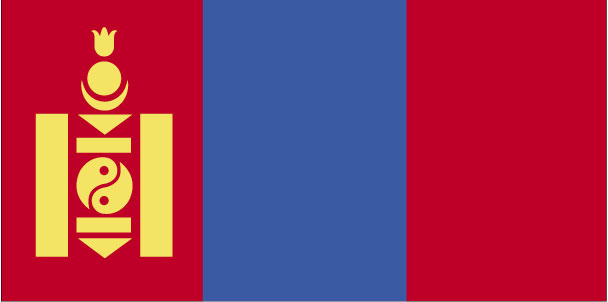
Flag, anthem, and other symbols of national identity.