
 English
 Español
 中文
中文 हिन्दी
 Français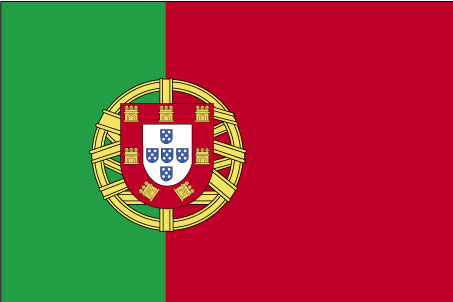
Portugal
Portugal
Declare Your Relationship to Portugal
CountryReports Community
- Studying2
- From Portugal1
- Portugal heritage6
- Visited3
- Want to visit5
Customs and Culture
Customs and Culture
About the People
The Portuguese are generally traditional and conservative. People and relationships are more important than time, so punctuality is not always stressed. The Portuguese are proud of their cultural heritage, sense of nation, and economic progress. They are very open and friendly to people of other nations.
Cultural Attributes
The Portuguese are generally conservative and traditional. However, they are very open and friendly to people of other nations. The Portuguese are proud of their economic progress, cultural history, and sense of nation.

The Navigator's Heart
Greetings, Gestures & Visiting
A handshake is the typical greeting. Friends will often hug each other. Relatives or close female friends kiss each cheek, beginning with the right cheek first.
First names are used for friends, youth, and children. Otherwise, a title is used with a surname to address an adult.
The Portuguese frequently use physical gestures in conversation. Making a "V" sign or "rabbit ears" behind someone's head is an insult, and it is impolite to point at a person with one's index finger.
When visiting, one waits outside until invited in by the host. It is expected that a guest wipes their feet before entering. The host escorts guests out when it is time for them to leave.
Guests usually avoid inquisitive personal questions. Guests often take small gifts to their hosts or send a thank-you note after a dinner engagement.
The Portuguese are usually conservative in their dress. Men typically wear a suit to work. Clothing is usually well-kept, and wearing wrinkled clothing is considered to be sloppy. People are careful to be well-dressed in public.
Diet
The staple foods in Portugal include fish, vegetables, and fruits. One of the national dishes is bacalhau (dried cod), which is usually served with potatoes and green vegetables, and sometimes beans. The traditional Portuguese salad includes dark green lettuce, tomatoes, onions, vinegar, olive oil, and salt. Olive oil is the favorite cooking oil, and garlic is a commonly used seasoning. Sweets are very popular. Wine is inexpensive and consumed by all members of the family with their meals.
The continental style of eating is followed. Portuguese eat with a knife and fork, but a special knife and fork are used when eating fish. It is important to keep the hands above the table at all times, and it is impolite to stretch at the table. A small breakfast is eaten around 8 am, a large lunch at about 1 PM, and dinner is generally served between 8 and 9 PM.
The staple foods in Portugal include fish, vegetables, and fruits. One of the national dishes is bacalhau (dried cod), which is usually served with potatoes and green vegetables, and sometimes beans. The traditional Portuguese salad includes dark green lettuce, tomatoes, onions, vinegar, olive oil, and salt. Olive oil is the favorite cooking oil, and garlic is a commonly used seasoning. Sweets are very popular. Wine is inexpensive and consumed by all members of the family with their meals.

Family
The family is the core of Portuguese life. Nuclear families tend to be minor, averaging two children. Women often work outside the home in urban areas.
Dating Customs
Dating habits in Portugal are similar to those currently prevailing in the rest of Europe, although they are more conservative in the rural areas. Young people associate in groups first and later pair off in couples. Going on a date signifies a serious relationship. Marriage ceremonies generally follow the Catholic tradition. It is not uncommon for young people to live together before getting married.
Recreation
Football (soccer) is the most popular sport. Golf and tennis are also widely played. Watching bullfights and dancing are popular recreational activities, along with fishing and water sports.
Holidays
Portugal Day
6/10Independence
Christmas
12/25Christmas
Fun and fervor characterizes Christmas in Portugal, since the predominant religion of the country is Catholicism, and the Birth of Jesus is quite a celebration. Christmas in Portuguese is pronounced Natal or Boas, and ‘Merry Christmas’ is Feliz Natal, pronounced ‘fay-leez nut-all.’ Portuguese children believe that Father Christmas, the Portuguese version of Santa Claus known as ‘Pai Natal,’ pronounced ‘pie-nut-all,’ brings presents on Christmas Eve rather than Christmas Day. Christmas presents are left in shoes by the fireplace in anticipation of Pai Natal, or under the Christmas tree.
Many families set up a Nativity Scene called a ‘prosperio’ featuring Joseph, Mary, the animals, the three wise men. The figure of baby Jesus is put in after the family has arrived from Midnight Mass. Midnight Mass is also called ‘Missa do galo’ or ‘rooster’s mass’ and are attended to by most Portuguese families.
In Portugal, Christmas corresponds to the Christmas Feast of the Immaculate Conception and the Feast of the Holy Innocents which involve gift exchanging. On Christmas Day, extra places on the table are set for the souls of the dead, known as ‘consoda.’ The Portuguese believe that sharing your food with your ancestor’s soul will make them help you in the coming year. Family reunions take place on Christmas Eve and enjoy Christmas dinner together.
Christmas Eve dinner, also called ‘cielo de natal,’ usually consists of boiled codfish, Portuguese sprouts, rice pudding with cinnamon, rabandas or a kind of French toast, filhoses or fried desserts and broas de mel which are pastries made with honey. Sonhos or pumkin fritters are also traditional, along with a King’s Cake called ‘bolo rei.’ This is a rich fruit cake shaped like a wreath and crystalized with fruits and pine nuts.
A boradbean present inside the King’s cake is hidden, and whoever finds the broadbean in his slice of cake needs to buy next Christmas’ King Cake. Christmas lunch the next day consists of roast chicken, lamb or turkey.
To make a traditional Portuguese Rabanda, you will need 1 baguette loaf, an egg, three-fourths cup milk, olive oil and sugar or cinnamon. Cut the baguette in to half-inch thick slices and remove the crust. Dip each slice into an egg beaten with the milk. The ratio should be one egg for every three-fourths cup milk. Fry each dipped slice in olive oil in a skillet for a few seconds on each side. Drain and sprinkle with cinnamon and sugar.
A Christmas log or a Cepo de Catal is burned slowly throughout the entire Christmas Day. In some regions of the country, Janeiras, or Christmas carols are sung in the streets.
Christmas trees and decorations begin on the first week of December and end the day after Epiphany Eve on January 6, called ‘Dias de Reis.’ Children fill their shoes or socks with straw and carrots to ‘attract’ the Three Kings who leave gifts and treats for the children to enjoy. The next day, their shoes or socks normally contain candied fruit and sweet bread.
Christmas songs of Portugal include Boa NoiteSenhores or Good Evenign Milords, QuemDiremosNos Viva or Whom Shall We Tell That He Lives, SaoChegadosOsTrez Reis or The Three Kings Have Arrived,Viemos do Mando de Deus or We Come Here Sent by God, A Sanhora Da Paz or Our Lady of Peace, Viva La! Or Long Live There and Cancao Dos Reis or Song of the Kings.
Dates of Interest
- August 15th
Held annually in November in Golegã, the National Horse Fair is one of the largest equestrian events in Portugal, featuring horse shows, competitions, exhibitions, and cultural events celebrating the country's equestrian heritage.
How do people greet each other in Portugal?
A handshake is the typical greeting; friends often hug, while relatives or close female friends kiss each cheek, starting with the right.
Do
- Shake hands as the standard greeting
- Kiss the right cheek first when greeting close female friends or relatives
- Use a title with the surname when addressing adults
Good to know
- First names are used for friends, youth, and children
What are the dining customs in Portugal?
Portuguese follow the continental style of eating with a knife and fork, with a small breakfast, large lunch, and late dinner.
Do
- Keep your hands above the table at all times
- Use the special knife and fork provided when eating fish
Don’t
- Don't stretch at the table, as it is impolite
Good to know
- Breakfast is small around 8 am, lunch is large around 1 PM, and dinner is served between 8 and 9 PM
- Try bacalhau (dried cod), a national dish served with potatoes and green vegetables
- Wine is inexpensive and consumed by all family members with meals
What etiquette should I know when visiting a Portuguese home?
Guests wait outside until invited in and are escorted out by the host when it is time to leave.
Do
- Wait outside until the host invites you in
- Wipe your feet before entering
- Bring a small gift or send a thank-you note after a dinner engagement
Don’t
- Avoid asking inquisitive personal questions
How should I dress in Portugal?
The Portuguese are conservative in dress and careful to be well-dressed in public.
Do
- Keep clothing well-kept
- Wear a suit to work (typical for men)
Don’t
- Don't wear wrinkled clothing, as it is considered sloppy
What gestures should I be aware of in Portugal?
The Portuguese use physical gestures frequently, but some are considered insulting.
Don’t
- Don't make a 'V' sign or 'rabbit ears' behind someone's head
- Don't point at a person with your index finger
What is family life like in Portugal?
The family is the core of Portuguese life, with nuclear families averaging two children.
Good to know
- Women often work outside the home in urban areas
- Marriage ceremonies generally follow the Catholic tradition
What do people do for recreation in Portugal?
Football (soccer) is the most popular sport, alongside golf, tennis, and other activities.
Good to know
- Golf and tennis are widely played
- Watching bullfights, dancing, fishing, and water sports are popular
Last updated: 2026-07-12 · Sources: CountryReports
Photos of Portugal
Photos of Portugal


Travel and Tourism
Travel and Tourism
- Travel Alert Status
- Level 1: Exercise Normal Precautions
- Currency
- euro (EUR)
- Time Difference
- UTC 0 (5 hours ahead of Washington, DC, during Standard Time) time zone note: Portugal has two time zones, including the Azores (UTC-1)
- Climate
- Mainland Portugal experiences two distinct seasons. From late October to mid-May rain is frequent and sometimes heavy. Temperatures may drop into the low 30s at night during the coldest months, with daytime highs in the 50s and 60s. Annual variations in rainfall can be considerable, with years of flooding followed by years of drought. The remainder of the year is normally sunny with minimal rainfall. Days are pleasant, with temperatures seldom exceeding 95° F, except in the southern interior of the country. Afternoons and evenings are breezy, with nighttime temperatures in the 60s and low 70s. Spells of intense heat are infrequent and last only a few days. The Tagus River, flowing west into the Atlantic at Lisbon divides mainland Portugal into two distinct climatic regions. The northern part is relatively cool and rainy. In the south the climate is drier and warmer, particularly in the interior. The Azores climate tends to be moist and moderate throughout the year.
- Airports
- 66
Read the full travel guide — health, safety, vaccinations, disease risk, sanitation, and transit details.
View full travel guideRecipes
Recipes
History
History
Historical Eras
Pre-Kingdom Lusitania
800 BCE – 1128
The western Iberian Peninsula experienced successive waves of settlement and conquest by Phoenicians, Greeks, Celts, Romans, Visigoths, and Moors. Roman rule left the most enduring cultural and linguistic imprint, laying foundations for the Portuguese language and legal tradition. The Moorish period beginning in 711 was gradually reversed by Christian reconquest under Leonese and later local lords.
House of Burgundy
1128 – 1383
Afonso Henriques established Portugal as an independent monarchy, winning recognition from Castile and the papacy by the mid-twelfth century. The dynasty steadily expanded southward through the Reconquista, culminating in Afonso III's capture of Faro from the Moors in 1249. King Dinis later promoted agricultural development, founded the University of Lisbon, and secured stable borders with Castile by treaty in 1297.
House of Avis & Empire
1383 – 1580
João I founded the House of Avis following a dynastic crisis and decisive victory over Castile at Aljubarrota in 1385. Under Prince Henry the Navigator and his successors, Portugal pioneered Atlantic exploration — colonizing Madeira and the Azores, mapping the African coast, and opening the sea route to India when Vasco da Gama reached Calicut in 1498. The colonization of Brazil from 1500 and the building of a vast Asian trading empire made Portugal the foremost maritime power of the sixteenth century.
Iberian Union & Bragança
1580 – 1820
A dynastic crisis brought Portugal under Spanish rule as the Iberian Union from 1580 to 1640, during which overseas territories suffered under combined Iberian-Dutch rivalry. The House of Bragança restored independence in 1640, though Portugal faced prolonged war with Spain before securing recognition. The era culminated in catastrophe with the 1755 Lisbon earthquake and French Napoleonic occupation from 1807, which forced the royal court to flee to Brazil.
Constitutional Monarchy
1820 – 1910
A liberal revolution in 1820 introduced Portugal's first written constitution, triggering a civil war between constitutionalists and absolutists that ended in liberal victory by 1834. Brazil declared independence in 1822, stripping Portugal of its most valuable colony and accelerating economic decline. The late nineteenth century was marked by the rotativismo system of alternating party rule, growing instability, and renewed but contested engagement with Portugal's African territories.
Republic & Dictatorship
1910 – 1974
The monarchy was overthrown in 1910, but the First Republic proved unstable, yielding to a military coup in 1926. António de Oliveira Salazar then built the Estado Novo, a corporatist authoritarian regime that endured for decades through censorship, a secret police, and costly colonial wars in Africa. The "Carnation Revolution" of April 25, 1974 — a left-wing military coup — peacefully ended the dictatorship and set Portugal on the path to democracy.
Democratic Portugal
1974 – present
Following the 1974 revolution, Portugal rapidly decolonized all its African territories and adopted a democratic constitution in 1976, establishing the Second Republic. The country joined NATO as a founding member and acceded to the European Community in 1986, anchoring itself in Western institutions and undergoing rapid modernization. Despite economic crises — including a severe sovereign debt crisis requiring an international bailout in 2011 — Portugal has remained a stable parliamentary democracy.
Overview
Timeline of Key Events
416
Portugal was ruled by the Visigoths.
Portugal was ruled by the Visigoths.
711
Portugal was ruled by the Arabs (Moors).
Portugal was ruled by the Arabs (Moors).
739
Portugal was ruled by the Leonese.
Portugal was ruled by the Leonese.
905
Navarre becomes a kingdom.
Navarre becomes a kingdom.
1035
King Sancho III of Navarre, Aragon and Castile dies and his lands become separate Kingdoms.
King Sancho III of Navarre, Aragon and Castile dies and his lands become separate Kingdoms.
1095
The time of the Crusades.
The time of the Crusades. The Crusaders assist the Portuguese in defeating the Moors.
1112
Afonso inherits the County of Portugal, a province of Castile.
Afonso inherits the County of Portugal, a province of Castile.
Read the full history profile — narrative overview, defining eras, and the complete timeline in one place.
View expanded historyInteresting Facts
Interesting Facts
Portugal's natural resources include cork, tungsten, coal, iron, uranium, pyrite and marble.
Vasco da Gama, a Portuguese explorer, found a route to the Far East in 1498, six years after Columbus' voyage across the Atlantic. Pedro Alvares Cabral landed in South America in 1500.
In the 15th and 16th centuries, Portugal's seagoing strength gave it naval superiority and a privileged economic position in Europe.
The bullfights in Portugal are very different from those of Spain and South America. In Portugal it is illegal to kill the bull during the fight.
The Portuguese enjoy drinking wine and view it as therapeutic.
Portugal has an International University in Lisbon, where students from 19 to 90 can obtain a bachelor's degree after completing a three-year program.
See every fact — trivia, oddities, and curious tidbits gathered from across the country.
View all interesting factsGeography and Environment
Geography and Environment
- Terrain
- mountainous north of the Tagus River, rolling plains in south
- Climate
- Mainland Portugal experiences two distinct seasons. From late October to mid-May rain is frequent and sometimes heavy. Temperatures may drop into the low 30s at night during the coldest months, with daytime highs in the 50s and 60s. Annual variations in rainfall can be considerable, with years of flooding followed by years of drought. The remainder of the year is normally sunny with minimal rainfall. Days are pleasant, with temperatures seldom exceeding 95° F, except in the southern interior of the country. Afternoons and evenings are breezy, with nighttime temperatures in the 60s and low 70s. Spells of intense heat are infrequent and last only a few days. The Tagus River, flowing west into the Atlantic at Lisbon divides mainland Portugal into two distinct climatic regions. The northern part is relatively cool and rainy. In the south the climate is drier and warmer, particularly in the interior. The Azores climate tends to be moist and moderate throughout the year.
- Natural Hazards
- Azores subject to severe earthquakes
- Current Environmental Issues
- soil erosion; air pollution caused by industrial and vehicle emissions; water pollution, especially in coastal areas
Read the full geography and environment profile — terrain, climate, natural resources, hazards, land use, and international agreements.
View full geographyPeople & Demographics
People & Demographics
Religion
Languages Spoken
Portuguese (official), Mirandese (official - but locally used)
- Portuguese
Population
- Population
- 10,735,765
- Population: Male/Female
- male: 4,835,763 female: 5,371,414
- Population Distribution
- concentrations are primarily along or near the Atlantic coast; both Lisbon and the second largest city, Porto, are coastal cities
- Urban Population
- urban population: 67.9% of total population rate of urbanization: 0.44% annual rate of change
- Population in Major Urban Areas
- 3.001 million LISBON (capital), 1.325 million Porto
- Nationality Noun
- noun: Portuguese (singular and plural) adjective: Portuguese
- Ethnic Groups
- Portuguese 95%; citizens from Portugal’s former colonies in Africa, Asia (Han Chinese), and South America (Brazilian) and other foreign born 5%
- Language Note
- Portuguese (official), Mirandese (official, but locally used)
Education
- Literacy Definition
- age 15 and over can read and write
Health Information
- Life Expectancy at Birth
- total population: 81.9 years male: 78.8 years female: 85.2 years
- Alcohol consumption per capita
- total: 10.37 liters of pure alcohol beer: 2.62 liters of pure alcohol wine: 6.04 liters of pure alcohol spirits: 1.34 liters of pure alcohol other alcohols: 0.37 liters of pure alcohol
- Tobacco Use
- total: 25.4% male: 30.5% female: 20.2%
- Infant Mortality Rate
- total: 2.4 deaths/1,000 live births male: 2.8 deaths/1,000 live births female: 2.1 deaths/1,000 live births
Life Expectancy
- Life Expectancy at Birth
- total population: 81.9 years male: 78.8 years female: 85.2 years
- Median Age
- total: 46.4 years male: 44.3 years female: 48.3 years
- Age Structure
- 0-14 years: 12.7% (male 662,419/female 631,284) 15-64 years: 65% (male 3,264,766/female 3,371,087) 65 years and over: 22.3% (male 908,578/female 1,369,043)
- Infant Mortality Rate
- total: 2.4 deaths/1,000 live births male: 2.8 deaths/1,000 live births female: 2.1 deaths/1,000 live births
Read the full people and society profile — demographics, health, education, religion, languages, and notable people.
View full people and societyGovernment & Politics
Government & Politics
Country Identity
- Country Name
- Portugal
- Full Country Name
- Portuguese Republic
- Local - Long
- Republica Portuguesa
- Local - Short
- Portugal
Government Structure
- Government Type
- parliamentary democracy
- Legal System
- civil law system; the Constitutional Tribunal reviews the constitutionality of legislation; accepts compulsory ICJ jurisdiction, with reservations
- Executive Branch
- chief of state: President Marcelo REBELO de Sousa (since 9 March 2016) head of government: Prime Minister Luis MONTENEGRO (since 2 April 2024) cabinet: Council of Ministers appointed by the president on the recommendation of the prime minister note: there is also a Council of State that acts as a consultative body to the president elections: president elected by popular vote for a five-year term; election last held 24 January 2021 (next to be held January 2026); following legislative elections, the leader of the majority party or leader of a majority coalition is usually appointed prime minister by the president election results: Marcelo REBELO de Sousa reelected president; percent of vote - Marcelo REBELO de Sousa 60.7%, Ana GOMES 12.97%, Andre VENTURA 11.9%, João FERREIRA 4.32%, Marisa MATIAS 3.95%, Vitorino SILVA 2.97%
- Legislative Branch
- unicameral Assembly of the Republic or Assembleia da Republica (230 seats; members are elected by popular vote to serve four-year terms) elections: last held 20 February 2005 (next to be held February 2009) election results: percent of vote by party - PS 45.1%, PSD 28.7%, CDU 7.6%, PP 7.3%, BE 6.4%; seats by party - PS 121, PSD 75, CDU 14, PP 12, BE 8
- Judicial Branch
- Supreme Court or Supremo Tribunal de Justica (judges appointed for life by the Conselho Superior da Magistratura)
- Suffrage
- 18 years of age; universal
- Constitution
- 25 April 1976, revised 30 October 1982, 1 June 1989, 5 November 1992, and 3 September 1997
- Independence
- 1143 (independent republic proclaimed 5 October 1910)
- National Holiday
- Portugal Day, 10 June (1580)
Capital City
- Capital Name
- Lisbon
- Capital - geographic coordinate
- 38 43 N, 9 08 W
- Capital Time Difference
- UTC 0 (5 hours ahead of Washington, DC, during Standard Time) time zone note: Portugal has two time zones, including the Azores (UTC-1)
Lisbon is one of Europe's oldest cities (the second oldest capital city after Athens) and the origin of the name is lost in time; it may have been founded as an ancient Celtic settlement that subsequently maintained close commercial relations with the Phoenicians (beginning about 1200 B.C.); the name of the settlement may have been derived from the pre-Roman appellation for the Tagus River that runs through the city, Lisso or Lucio; the Romans named the city "Olisippo" when they took it from the Carthaginians in 205 B.C.; under the Visigoths the city name became "Ulixbona," under the Arabs it was "al-Ushbuna"; the medieval version of "Lissabona" became today's Lisboa
Military
Branches: Portuguese Army (Exercito Portuguesa), Portuguese Navy (Marinha Portuguesa; includes Marine Corps), Portuguese Air Force (Forca Aerea Portuguesa, FAP)
Embassy / Diplomatic Mission
U.S. Embassy Lisbon, Portugal
American Citizen Services
U.S. Embassy Lisbon
Av. das Forças Armadas, Sete-Rios
1600-081 Lisbon, Portugal
Telephone: 351 21 770-2122
Emergency after-hours telephone: 351-21-770-2122 or 351 21 727-3300
Facsimile: 351 21 727-2354
Facebook: AmCits in Portugal
U.S. Consulate Ponta Delgada
Av. Príncipe do Mónaco No, 6-2 F
9500-237 Ponta Delgada, Açores, Portugal
Telephone: 351 29 628-2216
Emergency after-hours telephone: 351 29 628-2216 (listen for the duty officer’s cell phone number)
Facsimile: 351 29 628-7216
U.S. Consular Agency Funchal
Rua da Alfandega 10-2 F, Room A-B
9000-059 Funchal, Madeira, Portugal
Telephone: 351 29 123-5636 (available Tuesday and Thursday from 9:30 a.m. to noon)
Emergency after-hours telephone: 351 91 616-6820
Facsimile: 351 29 122-9360
Read the full government profile — flag symbolism, national anthem, and other national symbols.
View full government detailsEconomy
Economy
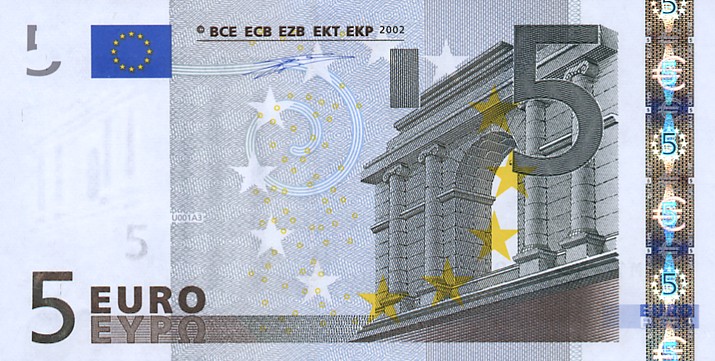
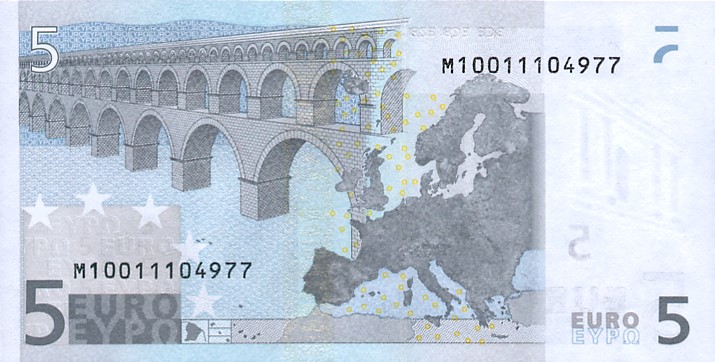
Portugal has developed into a diversified, service-oriented economy since joining the European Community in 1986. Successive governments have privatized many state-controlled firms and liberalized key sectors, including finance, telecommunications, and energy. The country qualified for the European Monetary Union and adopted the euro on 1 January 1999, with euro banknotes and coins entering circulation on 1 January 2002. Services now account for around three-quarters of GDP, with tourism, retail, and financial services among the most important contributors. Industry, including textiles, footwear, automotive components, machinery, and increasingly technology and renewable energy, remains a significant component of the economy.
Portugal endured a severe sovereign debt crisis in 2010-2014, prompting a 78 billion euro international bailout and a multi-year program of austerity and structural reform. Since exiting the bailout in 2014, the economy has returned to growth, supported by exports, a booming tourism sector, foreign investment, and the absorption of EU recovery and cohesion funds. GDP per capita has gradually converged with the EU average but still trails the bloc's wealthier members, standing at roughly 80% of the EU average in purchasing power terms.
Persistent challenges include relatively low productivity, an aging population, emigration of skilled workers, high public debt, and a housing affordability crisis driven in part by strong foreign demand. The government continues to pursue fiscal discipline within EU rules while investing in digital transformation, green energy, and innovation to strengthen long-term competitiveness.
Snapshot
- Currency Name and Code
- Euro (EUR)
- GDP — official exchange rate
- $170,300,000,000 (USD)
- GDP Real Growth Rate
- 0.3%
- Gini Index
- 38.5
Banknotes
Budget & Public Finance
- Fiscal Year
- calendar year
- Annual Budget
- $90,270,000,000 (USD)
- Public Debt (% of GDP)
- 69.4%
- External Debt
- $298,700,000,000 (USD)
- Investment (% of GDP)
- 21.7%
- Current Account Balance
- -$15,000,000,000 (USD)
- Reserves of Foreign Exchange
- $2,147,483,647 (USD)
Labor, Industry & Trade
- Labor Force by Occupation
- services 60%; industry 30%; agriculture 10%
- Household Income — highest 10%
- 28.4%
- Industries
- textiles and footwear; wood pulp, paper, and cork; metalworking; oil refining; chemicals; fish canning; wine; tourism
- Agriculture Products
- grain, potatoes, olives, grapes; sheep, cattle, goats, poultry, beef, dairy products
- Export Commodities
- clothing and footwear, machinery, chemicals, cork and paper products, hides
- Export Partners
- Spain 20.3%, Germany 18.4%, France 12.6%, UK 10.5%, US 5.8%, Italy 4.8%, Belgium 4.5%
- Import Commodities
- machinery and transport equipment, chemicals, petroleum, textiles, agricultural products
- Import Partners
- Spain 28.1%, Germany 15%, France 10.2%, Italy 6.5%, UK 5.2%, Netherlands 4.5%
Energy
- Oil Production
- 3,745 bbl/day
- Oil Consumption
- 326,500 bbl/day
- Oil Reserves
- 0 bbl/day
- Natural Gas Production
- 0 cu m
- Natural Gas Consumption
- 2,983,000,000 cu m
- Natural Gas Imports
- 2,553,000,000 cu m
- Natural Gas Exports
- 0 cu m
- Natural Gas Reserves
- 0 cu m
Communications
- Telephone System
- general assessment: Portugal's telephone system has a state-of-the-art network with broadband, high-speed capabilities domestic: integrated network of coaxial cables, open-wire, microwave radio relay, and domestic satellite earth stations international: country code - 351; a combination of submarine cables provide connectivity to Europe, North and East Africa, South Africa, the Middle East, Asia, and the US; satellite earth stations - 3 Intelsat (2 Atlantic Ocean and 1 Indian Ocean), NA Eutelsat; tropospheric scatter to Azores
- Internet Country Code
- .pt
News & Weather
News & Weather
Current Weather
Latest News
Portugal to buy three frigates built by Italy's Fincantieri - Reuters
Reuters · 13h ago
Europe turns to Africa to strengthen its power grid as Portugal and Morocco revive electricity link - Business Insider Africa
Business Insider Africa · 16h ago
Grainne Dillon killer challenges refusal to be transferred to Portugal - The Irish Times
The Irish Times · 12h ago
Portugal to purchase three frigates from Italy’s Fincantieri: Meloni - Breaking Defense
Breaking Defense · 14h ago
New Iberian rabbit species dated to 2 million years ago - Euronews.com
Euronews.com · 3d ago
Everyone’s Chasing Portugal. Smart American Retirees Are Quietly Moving Here Instead - 24/7 Wall St.
24/7 Wall St. · 2d ago
Heatwaves are returning to Portugal - The Portugal News
The Portugal News · 12h ago
Lamine Yamal completed ultimate World Cup journey by beating Cristiano Ronaldo’s Portugal, Kylian Mbappe’s ... - World Soccer Talk
World Soccer Talk · 10h ago
News via Google News
Climate Overview
Mainland Portugal experiences two distinct seasons. From late October to mid-May rain is frequent and sometimes heavy. Temperatures may drop into the low 30s at night during the coldest months, with daytime highs in the 50s and 60s. Annual variations in rainfall can be considerable, with years of flooding followed by years of drought. The remainder of the year is normally sunny with minimal rainfall. Days are pleasant, with temperatures seldom exceeding 95° F, except in the southern interior of the country. Afternoons and evenings are breezy, with nighttime temperatures in the 60s and low 70s. Spells of intense heat are infrequent and last only a few days.
The Tagus River, flowing west into the Atlantic at Lisbon divides mainland Portugal into two distinct climatic regions. The northern part is relatively cool and rainy. In the south the climate is drier and warmer, particularly in the interior.
The Azores climate tends to be moist and moderate throughout the year.
Videos
Videos
2 curated YouTube videos.
Source: YouTube
Source: YouTube
Frequently Asked Questions
Frequently Asked Questions
What is the population of Portugal?
How do people greet each other in Portugal?
What are the dining customs in Portugal?
What etiquette should I know when visiting a Portuguese home?
How should I dress in Portugal?
What gestures should I be aware of in Portugal?
What is family life like in Portugal?
What do people do for recreation in Portugal?
What is the capital of Portugal?
Where is Portugal located?
What countries border Portugal?
What is the main religion in Portugal?
What currency does Portugal use?
What language is spoken in Portugal?
What is the geography of Portugal like?
What is Portugal known for?
Last reviewed 2026