
 English
 Español
 中文
中文 हिन्दी
 Français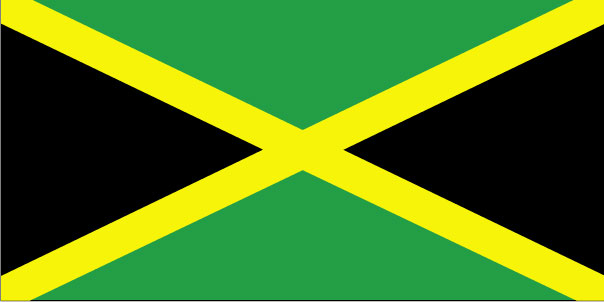
Jamaica
Declare Your Relationship to Jamaica
CountryReports Community
- Studying2
- From Jamaica0
- Jamaica heritage1
- Visited0
- Want to visit0
Customs and Culture
Customs and Culture
About the People
Jamaicans are generally outgoing and like to have animated conversations. Good table manners are considered an important social refinement. Jamaicans have a healthy distrust of those in authority and prefer to put their faith in those they know well, such as their extended family and close friends who are treated as if they were family.
Cultural Attributes
Jamaicans are generally outgoing and like to have animated conversations. Good table manners are considered an important social refinement. Jamaicans have a healthy distrust of those in authority and prefer to put their faith in those they know well, such as their extended family and close friends who are treated as if they were family.

Island of Reggae, Resilience, and Soul
Greetings, Gestures & Visiting
Jamaicans commonly use nicknames in casual conversations. They address people by their title (Mr., Mrs., or Miss) and their surname until a personal relationship has developed. Once a friendship has been established, women may hug and kiss on each cheek, starting with the right. Men often pat each other’s shoulder or arm during the greeting process or while conversing.
Diet
Ackee and Saltfish is the Jamaican national dish. The fruit of the ackee tree, poisonous until its outer casing has opened, is not consumed widely anywhere but Jamaica.

Family
Most Jamaican families are headed by women. Jamaicans adore children. About one-third of Jamaican women have their first child during adolescence. Women often raise children alone or in extended families; whatever the arrangement, relatives and neighbors are expected to help with child care in Jamaican communities. Most fathers contribute to the support of their children, but often play a smaller role in child-rearing
Recreation
Jamaica's sports are soccer and cricket and horse racing. Children enjoy watching television, playing electronic games and basketball. Adults like listening to sports broadcasts, music and watching television, and younger Jamaicans especially love dancing.
Dates of Interest
- Untitled date
How do people greet each other in Jamaica?
Jamaicans address people by their title (Mr., Mrs., or Miss) and surname until a personal relationship develops, and nicknames are common in casual conversation.
Do
- Use Mr., Mrs., or Miss with the surname until you know someone well
- Once friends, women may hug and kiss on each cheek, starting with the right
Good to know
- Men often pat each other's shoulder or arm while greeting or conversing
What are dining and food customs like in Jamaica?
Good table manners are highly valued and eating is Continental style, with dishes ranging from the national Ackee and Saltfish to hearty breakfasts, midday dinners, and substantial suppers.
Do
- Hold the fork in the left hand and knife in the right while eating
- Expect a large breakfast often starting with a hot beverage
- Try Ackee and Saltfish, the national dish, plus escovitch fish, rundown, and curries
Don’t
- Don't eat ackee fruit before its outer casing has opened, as it is poisonous
Good to know
- Midday meal is called dinner; supper is usually substantial
- Rice and peas often accompany main courses
What social etiquette should I know in Jamaica?
Jamaicans are outgoing and enjoy animated conversation, but tend to distrust authority and place their faith in family and close friends treated like family.
Good to know
- Building a personal relationship earns trust
How should I dress in Jamaica?
Jamaican fashion favors primary colors and cotton suited to the tropical climate, with Rastafarian gold, green, and red often seen.
Good to know
- Lightweight cotton clothing suits the tropical climate
Are there any gestures I should know in Jamaica?
To hail a taxi, keep your hand down and wave.
Do
- Keep the hand low and wave to hail a taxi
What is family life like in Jamaica?
Most Jamaican families are headed by women, children are adored, and relatives and neighbors are expected to help with child care.
Good to know
- Women often raise children alone or in extended families
- Some rural Jamaicans bury a newborn's placenta and umbilical cord and plant a 'navel-string' tree over the spot
What do people do for fun in Jamaica?
Popular sports include soccer, cricket, and horse racing, while adults enjoy music and television and younger Jamaicans especially love dancing.
Good to know
- Children enjoy television, electronic games, and basketball
Last updated: 2026-07-12 · Sources: CountryReports
Photos of Jamaica
Photos of Jamaica


Travel and Tourism
Travel and Tourism
- Travel Alert Status
- Level 3: Reconsider Travel
- Currency
- Jamaican dollar (JMD)
- Time Difference
- UTC-5 (same time as Washington, DC, during Standard Time)
- Climate
- Jamaica enjoys a favorable climate. Daily temperatures average 79°F, with an average maximum of 86.5°F and an average minimum of 71.5°F. Temperatures vary depending on elevation, however for all locations, the warmest months are June to August and the coolest months are December to February. Northeast trade winds help maintain a feeling of relative comfort. Elevation and the island's geography affect temperature and rainfall markedly. Rainfall varies from an annual average of 35 to 200 inches depending on location. Rainfall is generally heaviest during May-June and September-November, though these are not rainy seasons in the tropical sense. Mildew is a problem during these months. December-March are the driest months. Relative humidity in Kingston ranges from about 70-85%. Jamaica is in the earthquake and hurricane belts, but has not had a disastrous earthquake since 1907, though there are usually a few tremors every year. In September 2004, the island was struck by Hurricane Ivan, the first since Hurricane Gilbert devastated much of the island in 1988. The main force of the storm affected the entire island, especially the southern coastal areas, and caused widespread damage, mainly to crops and vegetation, coastal properties, utilities, and roofs. Jamaica has over 600 insect species as well as 250 bird species-25 of which belong only to Jamaica. About 120 species of butterflies, including the world's largest (with a 6 inch wingspan), are also found here. The island is especially noted for its fireflies, otherwise known as blinkies or peeny-waullies. A profusion of flowering shrubs, trees, and cactuses reflects Jamaica's great variation of climate and topography. Hundreds of imported plants are well established. Pimento, or allspice, is from an indigenous plant, and Jamaica is the world's largest producer. The ortanique, developed in Jamaica, is a cross between an orange and a tangerine. Jamaica also has over 220 species of native orchids, over 500 different ferns, more than 300 mosses, and many fungi.
- Airports
- 35
Read the full travel guide — health, safety, vaccinations, disease risk, sanitation, and transit details.
View full travel guideRecipes
Recipes
History
History
Historical Eras
Taíno Settlement
600 – 1494
Arawak-speaking Taíno peoples, migrating northward from South America, settled Jamaica and established a society of villages, agriculture, and ceremonial life. They called the island Xaymaca, meaning 'Land of Wood and Water.' By the time of European contact, the island supported a substantial Taíno population organized under local chieftains known as caciques.
Spanish Colony
1494 – 1655
Christopher Columbus arrived in 1494, and Spain established its first permanent settlement at Sevilla la Nueva in 1509. The Taíno population was rapidly annihilated through disease, forced labor, and warfare, and Spain began importing enslaved Africans from 1517 onward. Jamaica functioned primarily as a supply base for Spanish expeditions throughout the Americas rather than as a major colonial prize.
British Colonial Era
1655 – 1834
British forces seized Jamaica in 1655, and formal sovereignty was confirmed by the Treaty of Madrid in 1670. Sugar cultivation, powered by the mass importation of enslaved Africans, transformed Jamaica into one of the most profitable colonies in the world. Resistance was constant — the Maroon Wars of 1739–1740 forced the British to sign treaties with escaped-slave communities, and the Christmas Rebellion of 1831 accelerated the passage of the Abolition Act of 1833, which took effect in 1834.
Post-Emancipation Period
1834 – 1944
Emancipation brought an apprenticeship system that delayed full freedom until 1838, and the plantation economy declined sharply as formerly enslaved people withdrew their labor. Social unrest culminated in the Morant Bay Rebellion of 1865, after which Britain imposed direct Crown Colony rule. Labor uprisings in the late 1930s, led by figures such as Alexander Bustamante and Norman Manley, forced political reforms and culminated in Jamaica's first election under universal adult suffrage in 1944.
Path to Independence
1944 – 1962
Expanding self-governance through the 1940s and 1950s prepared Jamaica for full sovereignty. Jamaica joined the West Indies Federation in 1958 as part of a broader Caribbean political union, but Jamaican voters rejected continued membership in a 1961 referendum. Jamaica achieved full independence within the British Commonwealth on August 6, 1962, with the Jamaica Labour Party under Alexander Bustamante leading the new nation.
Independent Jamaica
1962 – present
Independence brought democratic governance alternating between the Jamaica Labour Party and the People's National Party, but economic difficulties in the 1970s under Prime Minister Michael Manley fueled social unrest and political violence. Tourism, bauxite export, and substantial remittances from large diaspora communities in the United States, United Kingdom, and Canada became the pillars of the economy. Jamaica also emerged as a major force in global culture, exporting reggae music and the Rastafari movement worldwide.
Overview
Arawaks from South America had settled in Jamaica prior to Christopher Columbus’ first arrival at the island in 1494. During Spain’s occupation of the island, starting in 1510, the Arawaks were exterminated by disease, slavery, and war. Spain brought the first African slaves to Jamaica in 1517. In 1655, British forces seized the island, and in 1670, Great Britain gained formal possession.
Timeline of Key Events
1494
Christopher Columbus arrived at the island of Jamaica on his second voyage.
Christopher Columbus arrived at the island of Jamaica on his second voyage.
1509
Jamaica occupied by the Spaniards
Jamaica occupied by the Spaniards under a license from Columbus’s son; much of the indigenous Arawak community dies off from exposure to European diseases; African slaves brought in to work on the sugar plantations.
1517
Spain brought the first slaves to Jamaica.
Spain brought the first slaves to Jamaica.
1555
Island attacked by French.
Island attacked by French.
1624
Britain begins colonizing the Caribbean.
Britain begins colonizing the Caribbean.
1640
Spanish crown took control of the colony.
Spanish crown took control of the colony.
1655
Jamaica is captured by the British.
Jamaica is captured by the British.
Read the full history profile — narrative overview, defining eras, and the complete timeline in one place.
View expanded historyInteresting Facts
Interesting Facts
When a child loses a tooth, at night the Rolling Calf comes rattleing chains to take the child and their tooth away. They put the tooth in a tin can and shake it hard. The noise keeps the Rolling Calf away.
The colours of Jamaica's flag are symbolic. Black signifies the strength and creativity of the people; gold, the natural wealth and beauty of sunlight; and green, hope and agricultural resources.
The most famous Jamaican bird is the national bird, the indigenous swallow tail hummingbird or “doctor bird.” The male has a distinctive tail that splits into two long sections, which stream behind as he flies.
The British imported the mongoose to help eradicate the cane rat in Jamaica. In the process, the mongoose also fed on snakes.
See every fact — trivia, oddities, and curious tidbits gathered from across the country.
View all interesting factsGeography and Environment
Geography and Environment
- Terrain
- mostly mountains, with narrow, discontinuous coastal plain
- Climate
- Jamaica enjoys a favorable climate. Daily temperatures average 79°F, with an average maximum of 86.5°F and an average minimum of 71.5°F. Temperatures vary depending on elevation, however for all locations, the warmest months are June to August and the coolest months are December to February. Northeast trade winds help maintain a feeling of relative comfort. Elevation and the island's geography affect temperature and rainfall markedly. Rainfall varies from an annual average of 35 to 200 inches depending on location. Rainfall is generally heaviest during May-June and September-November, though these are not rainy seasons in the tropical sense. Mildew is a problem during these months. December-March are the driest months. Relative humidity in Kingston ranges from about 70-85%. Jamaica is in the earthquake and hurricane belts, but has not had a disastrous earthquake since 1907, though there are usually a few tremors every year. In September 2004, the island was struck by Hurricane Ivan, the first since Hurricane Gilbert devastated much of the island in 1988. The main force of the storm affected the entire island, especially the southern coastal areas, and caused widespread damage, mainly to crops and vegetation, coastal properties, utilities, and roofs. Jamaica has over 600 insect species as well as 250 bird species-25 of which belong only to Jamaica. About 120 species of butterflies, including the world's largest (with a 6 inch wingspan), are also found here. The island is especially noted for its fireflies, otherwise known as blinkies or peeny-waullies. A profusion of flowering shrubs, trees, and cactuses reflects Jamaica's great variation of climate and topography. Hundreds of imported plants are well established. Pimento, or allspice, is from an indigenous plant, and Jamaica is the world's largest producer. The ortanique, developed in Jamaica, is a cross between an orange and a tangerine. Jamaica also has over 220 species of native orchids, over 500 different ferns, more than 300 mosses, and many fungi.
- Natural Hazards
- hurricanes (especially July to November)
- Current Environmental Issues
- heavy rates of deforestation; coastal waters polluted by industrial waste, sewage, and oil spills; damage to coral reefs; air pollution in Kingston results from vehicle emissions
Read the full geography and environment profile — terrain, climate, natural resources, hazards, land use, and international agreements.
View full geographyPeople & Demographics
People & Demographics
Religion
Languages Spoken
English, patois English
- English
Population
- Population
- 2,847,232
- Population in Major Urban Areas
- KINGSTON (capital) 571,000
- Nationality Noun
- Jamaican(s)
- Ethnic Groups
- black 90.9%, East Indian 1.3%, white 0.2%, Chinese 0.2%, mixed 7.3%, other 0.1%
Education
- Literacy Definition
- age 15 and over has ever attended school
Read the full people and society profile — demographics, health, education, religion, languages, and notable people.
View full people and societyGovernment & Politics
Government & Politics
Country Identity
- Country Name
- Jamaica
Government Structure
- Government Type
- constitutional parliamentary democracy
- Legal System
- based on English common law; has not accepted compulsory ICJ jurisdiction
- Executive Branch
- chief of state: Queen ELIZABETH II (since 6 February 1952), represented by Governor General Kenneth O. HALL (since 15 February 2006) head of government: Prime Minister Percival James PATTERSON (since 30 March 1992) cabinet: Cabinet appointed by the governor general on the advice of the prime minister elections: none; the monarch is hereditary; governor general appointed by the monarch on the recommendation of the prime minister; following legislative elections, the leader of the majority party or the leader of the majority coalition in the House of Representatives is appointed prime minister by the governor general; the deputy prime minister is recommended by the prime minister
- Legislative Branch
- bicameral Parliament consists of the Senate (a 21-member body appointed by the governor general on the recommendations of the prime minister and the leader of the opposition; ruling party is allocated 13 seats, and the opposition is allocated eight seats) and the House of Representatives (60 seats; members are elected by popular vote to serve five-year terms) elections: last held 16 October 2002 (next to be held in October 2007) election results: percent of vote by party - PNP 52%, JLP 47.3%; seats by party - PNP 34, JLP 26
- Judicial Branch
- Supreme Court (judges appointed by the governor general on the advice of the prime minister); Court of Appeal
- Suffrage
- 18 years of age; universal
- Constitution
- 6-Aug-62
- Independence
- 6 August 1962 (from UK)
- National Holiday
- Independence Day, first Monday in August (1962)
Capital City
- Capital Name
- Kingston
- Capital - geographic coordinate
- 18 00 N, 76 48 W
- Capital Time Difference
- UTC-5 (same time as Washington, DC, during Standard Time)
the name is a blending of the words "king's" and "town"; the English king at the time of the city's founding in 1692 was WILLIAM III (r. 1689-1702)
Military
Branches: Jamaica Defense Force: Ground Forces, Coast Guard, Air Wing
Embassy / Diplomatic Mission
U.S. Embassy Kingston
Consular Section
142 Old Hope Road
Kingston 6, Jamaica
Telephone: (876) 702-6000
Email: KingstonACS@state.gov
Web site: http://kingston.usembassy.gov/
U.S. Consular Agency in Montego Bay
Whitter Village, Unit EU-1, Ironshore (across from Burger King) Montego Bay, St. James
Tel: (876) 953-0620; Fax: (876) 953-3898
Public Hours are M-F, from 9:00 a.m.-12:30 p.m.
E-mail: MobayACS@state.gov
The U.S. Embassy in Kingston also has consular responsibility for the Cayman Islands, a British dependent territory.
U.S. Consular Agency Cayman Islands
Cayman Center Unit B-1, 118 Dorcy Drive
George Town, Grand Cayman Island
Public Hours are M-F, from 8:00 a.m.-1:00 p.m.
Telephone: (345) 945-8173; Fax (345) 945-8192
E-mail: CaymanACS@state.gov
Read the full government profile — flag symbolism, national anthem, and other national symbols.
View full government detailsEconomy
Economy
Jamaica's economy is heavily dependent on services, which account for more than 70% of GDP. The country derives most of its foreign exchange from tourism, remittances, and bauxite/alumina exports, with tourism alone contributing roughly one-third of GDP and employing a significant portion of the workforce. Remittances, primarily from the Jamaican diaspora in the United States, United Kingdom, and Canada, account for approximately 15-20% of GDP.
After years of sluggish growth, Jamaica entered a four-year Extended Fund Facility arrangement with the IMF in 2013, followed by additional precautionary agreements, which helped stabilize the economy, reduce public debt, and restore investor confidence. The debt-to-GDP ratio, once among the highest in the world at nearly 150%, has been reduced substantially to around 70-75%, reflecting one of the most successful debt-reduction efforts in the region.
The COVID-19 pandemic dealt a severe blow to the economy in 2020, with GDP contracting by nearly 10% as tourism collapsed. However, the economy has since rebounded strongly, supported by a recovery in tourist arrivals, which have surpassed pre-pandemic levels, and steady remittance inflows. Growth has returned to positive territory, and unemployment has fallen to historic lows of around 4-5%.
Despite these gains, Jamaica continues to face significant challenges, including vulnerability to external shocks and natural disasters, persistently high crime rates that deter investment, an aging infrastructure, and elevated inflation driven in part by global commodity prices. The Bank of Jamaica has tightened monetary policy in response, and inflation has gradually moderated toward the central bank's 4-6% target range. Long-term priorities include diversifying the economy beyond tourism and bauxite, expanding the digital and business process outsourcing sectors, and addressing security concerns to unlock stronger, more inclusive growth.
Snapshot
- Currency Name and Code
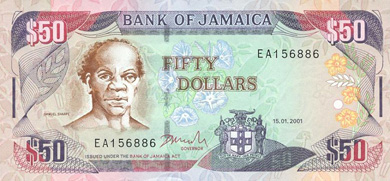
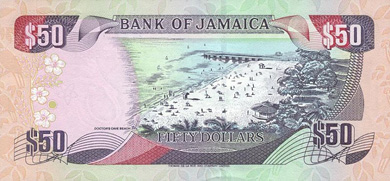
- Jamaican Dollar (JMD)
- GDP — official exchange rate
- $9,127,000,000 (USD)
- GDP Real Growth Rate
- 1.5%
- Gini Index
- 37.9
Banknotes
Budget & Public Finance
- Fiscal Year
- 1 April - 31 March
- Annual Budget
- $3,210,000,000 (USD)
- Public Debt (% of GDP)
- 135%
- External Debt
- $6,792,000,000 (USD)
- Investment (% of GDP)
- 32.4%
- Economic Aid
- $16,000,000 (USD)
- Current Account Balance
- -$509,000,000 (USD)
- Reserves of Foreign Exchange
- $1,900,000,000 (USD)
Labor, Industry & Trade
- Labor Force by Occupation
- services 60%; agriculture 21%; industry 19%
- Household Income — highest 10%
- 30.3%
- Industries
- tourism, bauxite/alumina, textiles, agro processing, wearing apparel, light manufactures, rum, cement, metal, paper, chemical products, telecommunications
- Agriculture Products
- sugarcane, bananas, coffee, citrus, yams, vegetables, poultry, goats, milk, crustaceans, and mollusks
- Export Commodities
- alumina, bauxite, sugar, bananas, rum, coffee, yams, beverages, chemicals, wearing apparel, mineral fuels
- Export Partners
- US 28.3%, Canada 14.1%, Netherlands 12.2%, UK 12.1%, Norway 8.4%
- Import Commodities
- food and other consumer goods, industrial supplies, fuel, parts and accessories of capital goods, machinery and transport equipment, construction materials
- Import Partners
- US 44%, Trinidad and Tobago 9.1%, Japan 5.9%, Venezuela 4%
Energy
- Oil Production
- 0 bbl/day
- Oil Consumption
- 69,000 bbl/day
- Oil Reserves
- 0 bbl/day
- Natural Gas Production
- 0 cu m
- Natural Gas Consumption
- 0 cu m
- Natural Gas Imports
- 0 cu m
- Natural Gas Exports
- 0 cu m
- Natural Gas Reserves
- 0 cu m
Communications
- Telephone System
- general assessment: fully automatic domestic telephone network domestic: the 1999 agreement to open the market for telecommunications services resulted in rapid growth in mobile-cellular telephone usage while the number of fixed-lines in use has declined; combined mobile-cellular teledensity exceeded 110 per 100 persons in 2011 international: country code - 1-876; the Fibralink submarine cable network provides enhanced delivery of business and broadband traffic and is linked to the Americas Region Caribbean Ring System (ARCOS-1) submarine cable in the Dominican Republic; the link to ARCOS-1 provides seamless connectivity to US, parts of the Caribbean, Central America, and South America; the ALBA-1 fiber-optic submarine cable links Jamaica, Cuba, and Venezuela; satellite earth stations - 2 Intelsat (Atlantic Ocean)
- Internet Country Code
- .jm
News & Weather
News & Weather
Current Weather
Latest News
Jamaica says 2 citizens deported by US to Eswatini rejected repatriation offers - AP News
AP News · 3d ago
Dennis A. Minott | Imagine a ‘billioneerer’ investing with Jamaica - Jamaica Gleaner
Jamaica Gleaner · 1d ago
Former Miss Universe Jamaica Finalist and Actress Dies at Age 35 - People.com
People.com · 3h ago
Jamaica's summer vibes campaign gives travelers more reasons to visit the island this season - Yahoo
Yahoo · 4h ago
Restaurant Ratings: Marco's Pizza, Jamaica Jamaica, Pete's Family Restaurant - WRAL
WRAL · 2d ago
United States Overtakes Peru, Brazil, Jamaica and More Countries in Securing Second Spot in the Ranking as the Best Food Destination in the Americas and Caribbean Region Through Authentic Culinary Tourism Experiences: New Update You Need to Kno - Travel And Tour World
Travel And Tour World · 1d ago
Let’s Talk Jamaica Plain Ice Cream History - Jamaica Plain News
Jamaica Plain News · 18h ago
Nickeria Smickle: Redefining success for the next generation of Caribbean women - Jamaica Observer
Jamaica Observer · 8h ago
News via Google News
Climate Overview
Jamaica enjoys a favorable climate. Daily temperatures average 79°F, with an average maximum of 86.5°F and an average minimum of 71.5°F. Temperatures vary depending on elevation, however for all locations, the warmest months are June to August and the coolest months are December to February. Northeast trade winds help maintain a feeling of relative comfort.
Elevation and the island's geography affect temperature and rainfall markedly. Rainfall varies from an annual average of 35 to 200 inches depending on location. Rainfall is generally heaviest during May-June and September-November, though these are not rainy seasons in the tropical sense. Mildew is a problem during these months. December-March are the driest months. Relative humidity in Kingston ranges from about 70-85%.
Jamaica is in the earthquake and hurricane belts, but has not had a disastrous earthquake since 1907, though there are usually a few tremors every year. In September 2004, the island was struck by Hurricane Ivan, the first since Hurricane Gilbert devastated much of the island in 1988. The main force of the storm affected the entire island, especially the southern coastal areas, and caused widespread damage, mainly to crops and vegetation, coastal properties, utilities, and roofs.
Jamaica has over 600 insect species as well as 250 bird species-25 of which belong only to Jamaica. About 120 species of butterflies, including the world's largest (with a 6 inch wingspan), are also found here. The island is especially noted for its fireflies, otherwise known as blinkies or peeny-waullies.
A profusion of flowering shrubs, trees, and cactuses reflects Jamaica's great variation of climate and topography. Hundreds of imported plants are well established. Pimento, or allspice, is from an indigenous plant, and Jamaica is the world's largest producer. The ortanique, developed in Jamaica, is a cross between an orange and a tangerine. Jamaica also has over 220 species of native orchids, over 500 different ferns, more than 300 mosses, and many fungi.
Videos
Videos
1 curated YouTube videos.
Source: YouTube
Frequently Asked Questions
Frequently Asked Questions
What is the population of Jamaica?
How do people greet each other in Jamaica?
What are dining and food customs like in Jamaica?
What social etiquette should I know in Jamaica?
How should I dress in Jamaica?
Are there any gestures I should know in Jamaica?
What is family life like in Jamaica?
What do people do for fun in Jamaica?
What is the capital of Jamaica?
Where is Jamaica located?
What are Jamaica's ocean and sea borders?
What religion is practiced in Jamaica?
What is the currency of Jamaica?
What language is spoken in Jamaica?
What is Jamaica known for?
What is the geography and terrain of Jamaica like?
Last reviewed 2026