
 English
 Español
 中文
中文 हिन्दी
 Français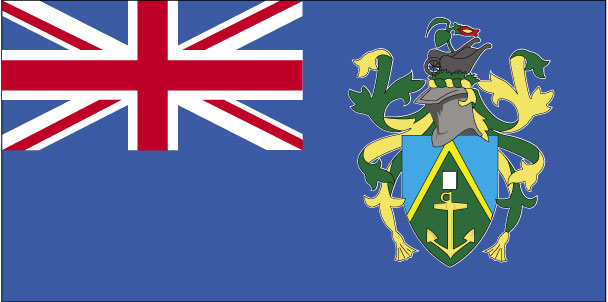
Pitcairn Islands
Declare Your Relationship to Pitcairn Islands
CountryReports Community
- Studying0
- From Pitcairn Islands0
- Pitcairn Islands heritage0
- Visited1
- Want to visit0
Customs and Culture
Customs and Culture
Cultural Attributes
The culture of the Pitcairn Islands is one of the most distinctive and historically rooted in the world, shaped almost entirely by the extraordinary origins of its small community. The islanders are predominantly descended from the Bounty mutineers — most notably Fletcher Christian and his followers — and the Tahitian men and women who accompanied them when they settled the island in 1790. This dual heritage of British and Polynesian ancestry is woven deeply into nearly every aspect of daily life. The community speaks Pitkern, a unique creole language that blends 18th-century English with elements of Tahitian. It is one of the world's rarest languages, spoken natively by fewer than 50 people. While English is used for official communications and correspondence, Pitkern remains the language of home and community, serving as a living symbol of the island's origins. Religion plays a central role in Pitcairn life. The entire community converted to Seventh-day Adventism in 1886 following the arrival of American pastor John Tay, and the faith continues to shape the weekly rhythm of island life. Saturday is observed as the Sabbath, with communal worship and rest, and alcohol is generally discouraged within the community. Life on Pitcairn is intensely communal. With a population of fewer than 50 residents, collective labor is essential for the island's survival. Large tasks such as unloading supply ships, road maintenance, and community projects are undertaken together in organized work parties. This strong cooperative ethic reflects both practical necessity and a deeply ingrained sense of shared identity. Traditional crafts form an important part of cultural expression and economic survival. Islanders are known for carving items from miro wood and decorating them with Bounty-related motifs, which are then sold to passing ships and online buyers. Basket weaving using pandanus leaves is another traditional skill passed down through generations. The annual celebration of Bounty Day, held on January 23rd, commemorates the burning of the HMS Bounty and remains the most significant cultural event on the island, reinforcing the community's unique sense of identity and historical memory.
Mutiny's Island in the South Pacific
Dates of Interest
- Untitled date
What language do people speak on the Pitcairn Islands?
Islanders speak Pitkern, a rare creole blending 18th-century English with Tahitian, spoken natively by fewer than 50 people, while English is used for official communications.
Good to know
- Pitkern is the language of home and community, a living symbol of the island's origins
- Use English for official communications and correspondence
What should travelers know about daily life and customs on the Pitcairn Islands?
Life is intensely communal with fewer than 50 residents, and collective labor through organized work parties is essential for the island's survival.
Do
- Expect to see collective effort on large tasks like unloading supply ships, road maintenance, and community projects
- Respect the strong cooperative ethic and shared sense of identity
What cultural traditions and events matter on the Pitcairn Islands?
Traditional crafts and the annual Bounty Day celebration are central to island culture and identity.
Do
- Look for items carved from miro wood decorated with Bounty-related motifs
- Note the tradition of basket weaving using pandanus leaves
Good to know
- Bounty Day, held January 23rd, commemorates the burning of the HMS Bounty and is the most significant cultural event
- Crafts are sold to passing ships and online buyers
What should I know about religion before visiting the Pitcairn Islands?
The entire community converted to Seventh-day Adventism in 1886, and the faith shapes the weekly rhythm of island life.
Do
- Recognize Saturday as the Sabbath, observed with communal worship and rest
Don’t
- Don't expect alcohol to be welcomed, as it is generally discouraged within the community
Last updated: 2026-07-12 · Sources: CountryReports
Travel and Tourism
Travel and Tourism
- Currency
- New Zealand dollar (NZD)
- Time Difference
- UTC-9 (4 hours behind Washington, DC, during Standard Time)
- Climate
- tropical; hot and humid; modified by southeast trade winds; rainy season (November to March)
Read the full travel guide — health, safety, vaccinations, disease risk, sanitation, and transit details.
View full travel guideHistory
History
Historical Eras
Polynesian Settlement
900 – 1400
Long before European contact, Pitcairn was inhabited by Polynesian peoples, most likely migrants from Mangareva some 490 km to the northwest. They left behind stone carvings, hewn idol figures, burial sites, earth ovens, and stone adzes. The island was subsequently abandoned, for reasons unknown, centuries before European discovery.
European Discovery
1767 – 1790
British Captain Philip Carteret of HMS Swallow sighted and named Pitcairn Island in July 1767, after young Midshipman Robert Pitcairn who first spotted it. Carteret was unable to land due to heavy surf, and the island remained uninhabited and largely overlooked by the wider world for over two decades following his report.
Mutineers' Settlement
1790 – 1838
On 15 January 1790, Fletcher Christian and eight fellow Bounty mutineers arrived with six Tahitian men and twelve Tahitian women, burning the Bounty in the bay to conceal their presence. The early settlement was marked by violent internal conflict that killed most of the men, leaving John Adams as the sole surviving mutineer by 1800. Adams transformed the community into a devout, orderly society, which was peacefully rediscovered by the American vessel Topaz in 1808.
British Crown Colony
1838 – 1937
In 1838 Pitcairn became the first Pacific island formally annexed as a British colony, receiving its first written constitution and law code under Captain Elliott of HMS Fly. The population grew steadily, prompting a controversial relocation to Norfolk Island in 1856, though many families returned by 1864. The community reached its historic peak population of 233 in 1937, sustaining itself through subsistence farming, fishing, and trade with passing ships.
Decline & Modern Era
1937 – present
Persistent outmigration, primarily to New Zealand, reduced Pitcairn's population from its 1937 peak of 233 to fewer than 50 today, raising existential questions about the island's long-term viability. The community made global headlines in 2004 when several men, including a mayor, were convicted of historical sexual offenses. Pitcairn remains a British Overseas Territory, the last such possession in the South Pacific, governed by an elected Island Council under a Governor based in New Zealand.
Overview
Who were the first settlers?
We do not know who first settled this small volcanic island about 9.6 km. round and 4 km. at its greatest length. But settlers there were, for early visitors from Europe found many relics of Polynesian civilization, probably from Mangareva some 490 km. to the north-west. There were roughly hewn stone gods still guarding sacred sites; carved in the cliff faces were representations of animals and men; burial sites yielding human skeletons; and there were earth ovens, stone adzes, gouges and other artifacts of Polynesian workmanship.
Discovery by Europeans: 1767
"It is so high that we saw it at a distance of more than fifteen leagues, and it having been discovered by a young gentleman, son to Major Pitcairn of the marines, we called it PITCAIRN’S ISLAND".
In these few words were recorded the first sight and naming of Pitcairn by a European. That was in July 1767, and the words are those of an Englishman, Captain Philip Carteret of H.M.S. Swallow, who was however, unable to land because of the surf "which at this season broke upon it with great violence".
No one except the determined Captain Cook was interested in Carteret’s report and his search for the island was deflected by an outbreak of scurvy. So Pitcairn might have become the home of ex-sailors with their Polynesian families and, like other islands in these latitudes, a casual stopover for whalers looking for land and fresh food. But its destiny was to be quite different.
The tale of the mutiny of His Majesty’s armed ship Bounty, which led to the founding of the Pitcairn community, is well known. All that needs to be told here is from Tahiti with a cargo of breadfruit trees for planting in the West Indies, the master’s mate, Fletcher Christian, and others of the crew mutinied. Casting adrift the Commander, Lieutenant William Bligh, and eighteen loyal officers in the ship’s boat, the mutineers sailed the Bounty back to Tahiti, then to Tubuai in the Austral Group.
There, relations with the inhabitants soon deteriorated and, spurred by the fear of discovery and arrest, eight of the mutineers set sail with Christian in search of an uninhabited island, secure from the outside world. To help them the men took with them six Tahitian men and, to look after them and be their consorts, twelve Tahitian women.
Settlement by the mutineers: 1790
For two months the men on the Bounty combed the Cooks, Tonga and the eastern islands of Fiji for a home; and it was almost in desperation that Christian, recalling or stumbling on Carteret’s account, sailed eastwards again for Pitcairn, which he reached on 15 January 1790. "With a joyful expression such as we had not seen on him for a long time past" Christian returned from the shore to report that the people who had once planted Pitcairn with coconut palms and breadfruit had either died or left it. The island was lonely and inaccessible, uninhabited, fertile and warm; it exceeded his highest hopes.
The Bounty was anchored in what is now called Bounty Bay and stripped of all her contents, including pigs, chickens, yams and sweet potatoes, which were laboriously hauled up the aptly named Hill of Difficulty to the Edge, a small, grassy platform over-looking the Bay. Then, fearing that if any European vessel sighted the ship retribution would inevitably follow, the mutineers ran the Bounty ashore and set her on fire so that no trace of her, or clue to their whereabouts, would remain visible from the sea.
Fletcher Christian, the man who had led the mutineers to this remote island, was a son of the Coroner of Cumberland and of Manx descent on his father’s side. He had been to school with the poet William Wordsworth, was well educated and, in the words of a friend, "mild, generous and sincere". Certainly his energy and cheerfulness drew both respect and affection from his fellows and, although he died a few years after landing at Pitcairn, he is still remembered as the founder and first leader of the settlement.
Of the other mutineers, Midshipman Edward Young was also well connected and was devoted to Christian, whom he succeeded as leader; "reckless Jack" Adams, later to become Patriarch of Pitcairn, was a Cockney orphan; Mills, Brown, Martin and Williams were killed within four years of arrival; and of the other two, the Scotsman William McCoy and the Cornishman Matthew Quintal little good can be said, except that they were neither better nor worse than the average seaman of the time.
On arrival the mutineers made themselves rough leaf-shelters where the village of Adamstown now stands, but the tiny community did not settle down without friction and, indeed, murder. The Tahitians were treated more as slaves than as fellow human beings and their revolt led to the slaying of some of the mutineers and, finally, to the
Timeline of Key Events
182
http://www.government.pn/Pitcairnshistory.htm
in 1828, another settler arrived. George Nobbs, alleged to be the illegitimate son of a marquis, was well educated and had served both in the British and Chilean Navies. He was a strong character and soon ousted Buffett from the role of schoolmaster and pastor. Then, on 5 March 1829, John Adams, venerable and corpulent, died at the age of 62. He left behind a community which, though it originated in mutiny and had suffered misery and murder, was to form the basis of countless Victorian sermons. The dramatic regeneration was virtually Adams' work alone, and he was mourned as 'Father', the name by which he had been known to every member of the community.
1767
http://www.government.pn/Pitcairnshistory.htm
“It is so high that we saw it at a distance of more than fifteen leagues, and it having been discovered by a young gentleman, son to Major Pitcairn of the marines, we called it PITCAIRN'S ISLAND”. In these few words were recorded the first sight and naming of Pitcairn by a European. That was in July 1767, and the words are those of an Englishman, Captain Philip Carteret of H.M.S. Swallow, who was however, unable to land because of the surf “which at this season broke upon it with great violence”. No one except the determined Captain Cook was interested in Carteret's report and his search for the island was deflected by an outbreak of scurvy. So Pitcairn might have become the home of ex-sailors with their Polynesian families and, like other islands in these latitudes, a casual stopover for whalers looking for land and fresh food. But its destiny was to be quite different. The tale of the mutiny of His Majesty's armed ship Bounty, which led to the founding of the Pitcairn community, is well known. All that needs to be told here is from Tahiti with a cargo of breadfruit trees for planting in the West Indies, the master's mate, Fletcher Christian, and others of the crew mutinied. Casting adrift the Commander, Lieutenant William Bligh, and eighteen loyal officers in the ship's boat, the mutineers sailed the Bounty back to Tahiti, then to Tubuai in the Austral Group. There, relations with the inhabitants soon deteriorated and, spurred by the fear of discovery and arrest, eight of the mutineers set sail with Christian in search of an uninhabited island, secure from the outside world. To help them the men took with them six Tahitian men and, to look after them and be their consorts, twelve Tahitian women.
1790
http://www.government.pn/Pitcairnshistory.htm
For two months the men on the Bounty combed the Cooks, Tonga and the eastern islands of Fiji for a home; and it was almost in desperation that Christian, recalling or stumbling on Carteret's account, sailed eastwards again for Pitcairn, which he reached on 15 January 1790. “With a joyful expression such as we had not seen on him for a long time past” Christian returned from the shore to report that the people who had once planted Pitcairn with coconut palms and breadfruit had either died or left it. The island was lonely and inaccessible, uninhabited, fertile and warm; it exceeded his highest hopes. The Bounty was anchored in what is now called Bounty Bay and stripped of all her contents, including pigs, chickens, yams and sweet potatoes, which were laboriously hauled up the aptly named Hill of Difficulty to the Edge, a small, grassy platform over-looking the Bay. Then, fearing that if any European vessel sighted the ship retribution would inevitably follow, the mutineers ran the Bounty ashore and set her on fire so that no trace of her, or clue to their whereabouts, would remain visible from the sea. Fletcher Christian, the man who had led the mutineers to this remote island, was a son of the Coroner of Cumberland and of Manx descent on his father's side. He had been to school with the poet William Wordsworth, was well educated and, in the words of a friend, “mild, generous and sincere”. Certainly his energy and cheerfulness drew both respect and affection from his fellows and, although he died a few years after landing at Pitcairn, he is still remembered as the founder and first leader of the settlement. Of the other mutineers, Midshipman Edward Young was also well connected and was devoted to Christian, whom he succeeded as leader; “reckless Jack” Adams, later to become Patriarch of Pitcairn, was a Cockney orphan; Mills, Brown, Martin and Williams were killed within four years of arrival; and of the other two, the Scotsman William McCoy and the Cornishman Matthew Quintal little good can be said, except that they were neither better nor worse than the average seaman of the time. On arrival the mutineers made themselves rough leaf-shelters where the village of Adamstown now stands, but the tiny community did not settle down without friction and, indeed, murder. The Tahitians were treated more as slaves than as fellow human beings and their revolt led to the slaying of some of the mutineers and, finally, to their own deaths. By 1794 only Young, Adams, Quintal and McCoy remained of the male settlers, leading households of ten women and children. The next four to five years were peaceful except for occasional outbreaks by the women, including an abortive attempt by some to leave the island. As Young recorded in his journal: “building their houses, fencing in and cultivating their grounds and catching birds and constructing pits for the purpose of entrapping hogs, which had become very numerous and wild, as well as injurious to the yam crops”, kept the settlers busy. Gradually the men and women grew reconciled to their lives and to each other, and all might have remained harmonious had not McCoy, who had once worked in a distillery, discovered how to brew a potent spirit from the roots of the ti plant (Cordyline terminalis). By 1799, Quintal had been killed by Young and Adams in self defence and McCoy had drowned himself. Then, in 1800, Young died of asthma, leaving John Adams as the sole male survivor of the party that had landed just ten years before.
1800
http://www.government.pn/Pitcairnshistory.htm
As leader of the community of ten Polynesian women and twenty-three children the former able seaman, John Adams, showed himself to be as capable, kind and honest as he had formerly been loyal and helpful to Christian and Young. Each family had its own house and most, but not all, of them were within the village, planned in English style around a common and fenced to keep the chickens in and the hogs out. Solidly built of local timber, some of them with bedrooms on a second floor, the island homes owed little to Polynesia except their thatched roofs. The women had brought their own utensils from Tahiti, which were handed down from mother to daughter, and the men landed tools and other implements from the Bounty and fashioned more as necessary. Food cooked in Polynesian stone-lined ovens, consisting mainly of yams, taro and bananas with coconut cream and an occasional pig, bird or goat was in Polynesian style, served twice a day, at noon and nightfall. Clothes were at first made out of sail cloth from the Bounty, but they were later replaced by loin cloths and skirts of tapa, the traditional Polynesian fibrecloth. In brief, European and Polynesian ways mingled in complete isolation from the rest of the world. John Adams was no scholar. He read with difficulty and could hardly write, but he was essentially a gentle man who humbly discharged his responsibility for the community he headed. Such was his manner that all took pleasure in obeying his example, which he patterned on virtue and piety and regulated by the Church of England's Book of Common Prayer, on Sunday services, family prayers and grace before and after every meal. And to ensure everybody's well-being, Adams saw to it that the young people cultivated the land, cared for the stock and were not allowed to marry until they could support a family.
1808
http://www.government.pn/Pitcairnshistory.htm
1808 and 1814 In 1808 the little colony was discovered by Captain Mayhew Folger, an American sealing captain, but his visit was brief and his report aroused little interest in an England pre-occupied with the Napoleonic wars. Six more years passed before H.M.S. Briton and Tagus rediscovered the settlement on 17 September 1814. Ignorant of the American's report the astonished British commanders were charmed by the physique, simplicity and piety of the islanders. Favorably impressed by Adams and the example he set, they agreed it would be “an act of great cruelty and inhumanity” to arrest him, and so began the long association between Pitcairn and the British Navy which was to influence its development over the next century. Twenty-five years of isolation were now ended. Increasing visits were paid by ships sailing from India and Australia to South America, or to England via the Horn. The reports they brought back stimulated an interest, not least in the English Missionary Societies, and gifts of Bibles, prayer books and spelling books were sent to the island, as well as such practical necessities as crockery, razors, tool and guns. In addition, nearly every visiting ship made generous gifts and bartered surplus stores for provisions, and it was at this time that the orange was introduced; that houses were improved with the aid of saws and planes; and clothes and living became more European in character.
1823
http://www.government.pn/Pitcairnshistory.htm
As he grew old, Adams worried about the future of his flock but his appeals to the British Government and missions for a successor to lead and educate them were not met, and it was to voluntary exiles that succession fell. The first was John Buffett, a shipwright from Bristol who landed with John Evans, a Welshman, in 1823. Both married island girls and founded families, and Buffett taught the children and took over the church services. The population had now risen to 66 from the 35 of 17 years earlier, and Adams, believing the land was yielding less, seeing the supply of timber decreasing and concerned that the erratic water supply would be insufficient for the growing population, sought the community's removal to Australia.
1828
http://www.government.pn/Pitcairnshistory.htm
in 1828, another settler arrived. George Nobbs, alleged to be the illegitimate son of a marquis, was well educated and had served both in the British and Chilean Navies. He was a strong character and soon ousted Buffett from the role of schoolmaster and pastor. Then, on 5 March 1829, John Adams, venerable and corpulent, died at the age of 62. He left behind a community which, though it originated in mutiny and had suffered misery and murder, was to form the basis of countless Victorian sermons. The dramatic regeneration was virtually Adams' work alone, and he was mourned as 'Father', the name by which he had been known to every member of the community.
Read the full history profile — narrative overview, defining eras, and the complete timeline in one place.
View expanded historyInteresting Facts
Interesting Facts
Pitcairn was settled in 1790 by British mutineers from the ship Bounty, commanded by Capt. William Bligh.
See every fact — trivia, oddities, and curious tidbits gathered from across the country.
View all interesting factsGeography and Environment
Geography and Environment
- Terrain
- rugged volcanic formation; rocky coastline with cliffs
- Climate
- tropical; hot and humid; modified by southeast trade winds; rainy season (November to March)
- Natural Hazards
- typhoons (especially November to March)
- Current Environmental Issues
- deforestation (only a small portion of the original forest remains because of burning and clearing for settlement)
Read the full geography and environment profile — terrain, climate, natural resources, hazards, land use, and international agreements.
View full geographyPeople & Demographics
People & Demographics
Religion
Languages Spoken
English (official), Pitcairnese (mixture of an 18th century English dialect and a Tahitian dialect)
- English
Population
- Population
- 48
- Nationality Noun
- Pitcairn Islander(s)
- Ethnic Groups
- descendants of the Bounty mutineers and their Tahitian wives
Read the full people and society profile — demographics, health, education, religion, languages, and notable people.
View full people and societyGovernment & Politics
Government & Politics
Country Identity
- Country Name
- PitcairnIslands
- Full Country Name
- Pitcairn, Henderson, Ducie, and Oeno Islands
Government Structure
- Government Type
- NA
- Legal System
- local island by-laws
- Executive Branch
- chief of state: King CHARLES III (since 8 September 2022), represented by UK High Commissioner to New Zealand, who also serves as Governor (nonresident) of the Pitcairn Islands; the Governor serves as the representative of the Crown and holds executive authority over the island head of government: Governor (nonresident) based in Wellington, New Zealand; Mayor Shawn CHRISTIAN serves as head of the Island Council and the primary on-island administrator cabinet: no formal cabinet; the Island Council functions as the primary governing body, consisting of elected and appointed members who handle local affairs elections: the monarchy is hereditary; the UK High Commissioner to New Zealand is appointed by the Crown and serves concurrently as Governor of Pitcairn Islands; the island mayor is elected by popular vote for a three-year term election results: Shawn CHRISTIAN has served as Mayor of Pitcairn Islands; Island Council elections are held periodically with all eligible residents of Pitcairn participating in the vote
- Legislative Branch
- unicameral Island Council (10 seats - 5 elected by popular vote, 1 nominated by the 5 elected members, 2 appointed by the governor including 1 seat for the Island Secretary, the Island Mayor, and a commissioner liaising between the governor and council; elected members serve one-year terms) elections: last held in 24 December 2005 (next to be held December 2006) election results: percent of vote - NA; seats - all independents
- Judicial Branch
- Magistrate's Court; Supreme Court; Court of Appeal; Judicial Officers are appointed by the Governor
- Suffrage
- 18 years of age; universal with three years residency
- Constitution
- 1838; reformed 1904 with additional reforms in 1940; further refined by the Local Government Ordinance of 1964
- Independence
- none (overseas territory of the UK)
- National Holiday
- Birthday of Queen ELIZABETH II, second Saturday in June (1926)
Capital City
- Capital Name
- Adamstown
- Capital - geographic coordinate
- 25 04 S, 130 05 W
- Capital Time Difference
- UTC-9 (4 hours behind Washington, DC, during Standard Time)
named after John ADAMS (1767–1829), the last survivor of the Bounty mutineers who settled on Pitcairn Island in January 1790
Read the full government profile — flag symbolism, national anthem, and other national symbols.
View full government detailsEconomy
Economy
The inhabitants of this tiny, isolated economy rely on fishing, subsistence farming, handicrafts, and the sale of postage stamps and commemorative coins. The fertile volcanic soil of the valleys yields a wide variety of fruits and vegetables, including citrus, sugarcane, watermelons, bananas, yams, sweet potatoes, and beans. Bartering remains an important part of daily life on the island. Major sources of revenue include the sale of postage stamps and coins to collectors worldwide, online sales of Pitcairn honey and handicrafts, and limited income from passing cruise ships and the small but growing tourism sector. The export of Pitcairn-branded honey, prized for its purity, has become an increasingly important contributor to the local economy. The territory also receives budgetary support from the United Kingdom to help fund essential services for its population of roughly 35 to 50 permanent residents.
Snapshot
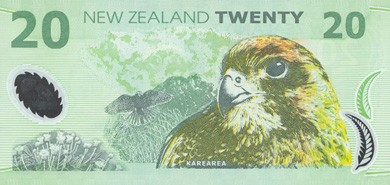
- Currency Name and Code
- New Zealand Dollar (NZD)
Banknotes

Budget & Public Finance
- Fiscal Year
- 1 April - 31 March
- Annual Budget
- $1,028,000 (USD)
Labor, Industry & Trade
- Labor Force by Occupation
- no business community in the usual sense; some public works; subsistence farming and fishing
- Industries
- postage stamps, handicrafts
- Agriculture Products
- wide variety of fruits and vegetables, goats, chickens
- Export Commodities
- fruits, vegetables, curios, stamps
- Import Commodities
- fuel oil, machinery, building materials, flour, sugar, other foodstuffs
Energy
- Oil Production
- 0 bbl/day
- Oil Consumption
- 0 bbl/day
- Oil Reserves
- 0 bbl/day
- Natural Gas Production
- 0 cu m
- Natural Gas Consumption
- 0 cu m
- Natural Gas Imports
- 0 cu m
- Natural Gas Exports
- 0 cu m
- Natural Gas Reserves
- 0 cu m
Communications
- Telephone System
- general assessment: satellite-based phone services domestic: local phone service with international connections via Internet international: country code - 872; satellite earth station - 1 (Inmarsat)
- Internet Country Code
- .pn
News & Weather
News & Weather
Current Weather
Latest News
Pitcairn Islands (PCN) Exports, Imports, and Trade Partners - The Observatory of Economic Complexity
The Observatory of Economic Complexity · 14d ago
Woman isolating on British island in South Pacific after hantavirus contact - BBC
BBC · 69d ago
‘It’s sacred to us’: register of Bounty mutineer’s descendants returns to South Pacific - The Guardian
The Guardian · 92d ago
Hantavirus Fear Comes to the Remotest Islands in the World - Reason Magazine
Reason Magazine · 69d ago
US puts up $750K to evacuate an American who was aboard hantavirus cruise ship from remote island - Boston Herald
Boston Herald · 40d ago
Possible Hantavirus Ship Contact Flew Out of US After Outbreak News Emerged - Newsweek
Newsweek · 67d ago
A record Bitcoin haul & crypto comes to the Pitcairn Islands - Coda Story
Coda Story · 272d ago
Isolated Island With Just 35 Residents on Edge as Traveler Spurs Hantavirus Scare - Fodors Travel Guide
Fodors Travel Guide · 69d ago
News via Google News
Climate Overview
tropical; hot and humid; modified by southeast trade winds; rainy season (November to March)
Frequently Asked Questions
Frequently Asked Questions
What is the population of Pitcairn Islands?
What language do people speak on the Pitcairn Islands?
What should travelers know about daily life and customs on the Pitcairn Islands?
What cultural traditions and events matter on the Pitcairn Islands?
What should I know about religion before visiting the Pitcairn Islands?
What is the capital of Pitcairn Islands?
Where is Pitcairn Islands located?
What ocean surrounds Pitcairn Islands?
What religion is practiced in Pitcairn Islands?
What currency is used in Pitcairn Islands?
What languages are spoken in Pitcairn Islands?
What is the geography of Pitcairn Islands like?
What is Pitcairn Islands known for?
Last reviewed 2026