
 English
 Español
 中文
中文 हिन्दी
 Français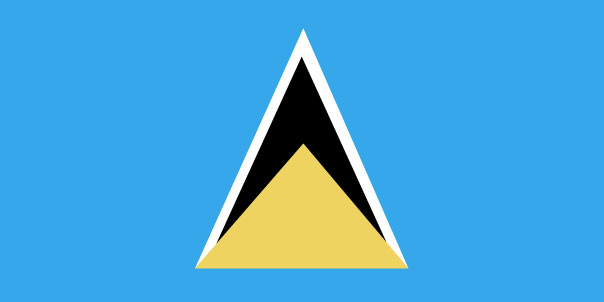
Saint Lucia
Declare Your Relationship to Saint Lucia
CountryReports Community
- Studying1
- From Saint Lucia0
- Saint Lucia heritage0
- Visited0
- Want to visit0
Customs and Culture
Customs and Culture
About the People
Social relations are important and are strongly influenced by the Catholic religion.
Cultural Attributes
Social relations are important and are strongly influenced by the Catholic religion.

Paradise of the Pitons
Greetings, Gestures & Visiting
English is the official language but it is influenced by French and West Africian Languages.
Modern Western style of clothing is worn. The traditional costume consists of a madras head-tie and skirt with large petticoats draped at the sides. The traditional costume is sometimes worn at festivals.
Diet
The national dish is saltfish and green figs. Other favorite dishes include fish shop, callaloo, (crabmeat stew) and plantains. Most food is spicy and is made from local produce and seafood.

Family
The traditional family is found among the upper classes. The Female as a single parent is more common at other levels of society. In rural areas men and women do the same type of farm work with the woman also maintaining the role of child-rearing and house-hold chores.
Recreation
Cricket is the most popular sport. Beach parties, and dances are popular recreational activities.
Holidays
Independence Day
2/22Independence Day
Dates of Interest
- February 22nd
What language do people speak in Saint Lucia?
English is the official language, though it is influenced by French and West African languages.
What is the food like in Saint Lucia?
The national dish is saltfish and green figs, and most food is spicy, made from local produce and seafood.
Good to know
- Try favorites like fish shop, callaloo (crabmeat stew), and plantains
- Expect spicy dishes based on local ingredients and seafood
How should I dress in Saint Lucia?
Modern Western style clothing is worn day to day, while the traditional costume of a madras head-tie and skirt with large petticoats is sometimes worn at festivals.
Good to know
- You may see traditional dress worn during festivals
What is family life like in Saint Lucia?
The traditional family is found among the upper classes, while female single-parent households are more common at other levels of society.
Good to know
- In rural areas, men and women do the same farm work, with women also handling child-rearing and household chores
What do people do for fun in Saint Lucia?
Cricket is the most popular sport, and beach parties and dances are popular recreational activities.
What should I know before visiting Saint Lucia?
Social relations are important and are strongly influenced by the Catholic religion.
Last updated: 2026-07-12 · Sources: CountryReports
Photos of Saint Lucia
Photos of Saint Lucia
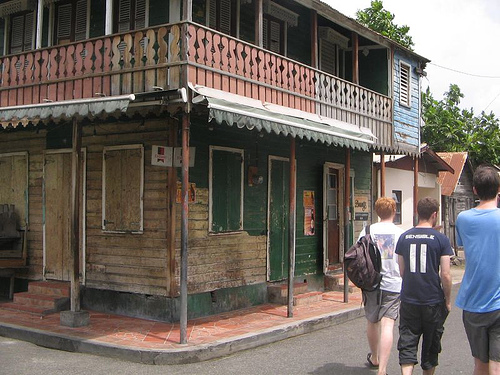
German pub in Gors Islet, St. Lucia
Lodging courtyard, St. Lucia
Saint Lucia
Les Piton, Saint Lucia
Sunset in the beach between the two Pitons, Saint Lucia
S V Mandalay part of the Windjammer Fleet
Tourist ship departs St. Lucia
Mountain coastline of St. Lucia
Scuba divers enjoys the tropical waters of St. Lucia.
Scuba divers enjoys the tropical waters of St. Lucia.
A nice relaxing beach in St. Lucia.
Coral Reef at St. Lucia.


Travel and Tourism
Travel and Tourism
- Travel Alert Status
- Level 1: Exercise Normal Precautions
- Currency
- East Caribbean dollar (XCD)
- Time Difference
- UTC-4 (1 hour ahead of Washington, DC, during Standard Time)
- Climate
- tropical, moderated by northeast trade winds; dry season from January to April, rainy season from May to August
- Airports
- 2
Read the full travel guide — health, safety, vaccinations, disease risk, sanitation, and transit details.
View full travel guideRecipes
Recipes
History
History
Historical Eras
Indigenous Peoples
200 – 1502
The island was first settled by Arawak peoples arriving from northern South America around 200–400 AD, who established well-developed communities evidenced by elaborate pottery found at numerous archaeological sites. Between 800 and 1000 AD, the more warlike Caribs gradually displaced the Arawaks and dominated the island at the time of European contact. Spanish explorers, likely including Columbus, made landfall on Saint Lucia around 1492–1502, marking the beginning of European awareness of the island.
Colonial Contest
1502 – 1814
The Dutch, English, and French all attempted to establish footholds on Saint Lucia during the 17th century, repeatedly repulsed by Carib resistance before the French successfully colonized the island in 1635 and signed a treaty with the Caribs in 1660. The island subsequently changed hands between Britain and France fourteen times, prized for its superb natural harbor at Castries and its sugar-producing potential after the industry developed in 1765. The prolonged Anglo-French rivalry was finally resolved when France permanently ceded Saint Lucia to Britain under the Treaty of Paris in 1814.
British Crown Colony
1814 – 1967
Under firm British administration, Saint Lucia was incorporated into the Windward Islands administration in 1838, with the economy long dependent on sugar and later bananas. The abolition of slavery in 1834 transformed the labor system, and incremental political reforms culminated in universal adult suffrage in 1951 and the introduction of ministerial government in 1956. Saint Lucia briefly joined the West Indies Federation from 1958 to 1962, and after its collapse pursued new regional arrangements as it moved steadily toward self-governance.
Associated Statehood
1967 – 1979
In 1967 Saint Lucia became an associated state of the United Kingdom, assuming full responsibility for internal self-government while Britain retained control over defense and foreign affairs. This novel constitutional arrangement provided a transitional framework shared with neighboring Windward and Leeward islands, allowing Saint Lucia to develop its own institutions and political identity. The period saw the consolidation of party politics, with the Saint Lucia Labour Party and the United Workers Party emerging as the dominant political forces.
Independence & Modern Era
1979 – present
Saint Lucia achieved full independence on February 22, 1979, retaining Queen Elizabeth II as head of state and maintaining active membership in the Commonwealth, CARICOM, and the Organisation of Eastern Caribbean States. The post-independence economy relied heavily on banana exports, but a sharp fall in banana prices in the 1990s triggered significant social unrest and forced a gradual diversification toward tourism and financial services. Saint Lucia has since earned international distinction as the birthplace of two Nobel laureates — economist Sir Arthur Lewis and poet Derek Walcott — and continues to navigate the challenges of small-island development.
Overview
Europeans first landed on the island in either 1492 or 1502 during Spain’s early exploration of the Caribbean. The Dutch, English, and French all tried to establish trading outposts on St. Lucia in the 17th century but faced opposition from hostile Caribs.
The English, with their headquarters in Barbados, and the French, centered on Martinique, found St. Lucia attractive after the sugar industry developed in 1765. Britain eventually triumphed, with France permanently ceding St. Lucia in 1815. In 1838, St. Lucia was incorporated into the British Windward Islands administration, headquartered in Barbados. This lasted until 1885, when the capital was moved to Grenada.
Increasing self-government has marked St. Lucia’s 20th-century history. A 1924 constitution gave the island its first form of representative government, with a minority of elected members in the previously all-nominated legislative council. Universal adult suffrage was introduced in 1951, and elected members became a majority of the council. Ministerial government was introduced in 1956, and in 1958 St. Lucia joined the short-lived West Indies Federation, a semi-autonomous dependency of the United Kingdom. When the federation collapsed in 1962, following Jamaica’s withdrawal, a smaller federation was briefly attempted. After the second failure, the United Kingdom and the six windward and leeward islands--Grenada, St. Vincent, Dominica, Antigua, St. Kitts-Nevis-Anguilla, and St. Lucia--developed a novel form of cooperation called associated statehood.
As an associated state of the United Kingdom from 1967 to 1979, St. Lucia had full responsibility for internal self-government but left its external affairs and defense responsibilities to the United Kingdom. This interim arrangement ended on February 22, 1979, when St. Lucia achieved full independence. St. Lucia continues to recognize Queen Elizabeth II as titular head of state and is an active member of the Commonwealth. The island continues to cooperate with its neighbors through the Caribbean community and common market (CARICOM), the East Caribbean Common Market (ECCM), and the Organization of Eastern Caribbean States (OECS).
Timeline of Key Events
1501
St Lucia sighted by Christopher Columbus.
St Lucia sighted by Christopher Columbus.
1635
The French establish a colony on St Lucia.
The French establish a colony on St Lucia.
1660
The French sign a treaty with the indigenous Carib people.
The French sign a treaty with the indigenous Carib people.
1814
France cedes St Lucia to Britain following the Treaty of Paris.
France cedes St Lucia to Britain following the Treaty of Paris. Britain proclaims the island a crown colony and brings in African slaves to work on the sugar cane plantations.
1834
Slavery abolished.
Slavery abolished.
1951
St Lucia granted universal adult suffrage.
St Lucia granted universal adult suffrage.
1958 – 1962
St Lucia granted universal adult suffrage.
St Lucia a member of the Federation of the West Indies.
Read the full history profile — narrative overview, defining eras, and the complete timeline in one place.
View expanded historyInteresting Facts
Interesting Facts
Most St Lucians are the descendants of African slaves, brought in by the British in the 19th century to work on sugar plantations.
See every fact — trivia, oddities, and curious tidbits gathered from across the country.
View all interesting factsGeography and Environment
Geography and Environment
- Terrain
- volcanic and mountainous with some broad, fertile valleys
- Climate
- tropical, moderated by northeast trade winds; dry season from January to April, rainy season from May to August
- Natural Hazards
- hurricanes and volcanic activity
- Current Environmental Issues
- deforestation; soil erosion, particularly in the northern region
Read the full geography and environment profile — terrain, climate, natural resources, hazards, land use, and international agreements.
View full geographyPeople & Demographics
People & Demographics
Religion
Languages Spoken
English (official), French patois
- English
- French patois
- Kwéyòl
Population
- Population
- 160,922
- Population in Major Urban Areas
- CASTRIES (capital) 21,000
- Nationality Noun
- Saint Lucian(s)
- Ethnic Groups
- black 90%, mixed 6%, East Indian 3%, white 1%
Education
- Literacy Definition
- age 15 and over has ever attended school
Read the full people and society profile — demographics, health, education, religion, languages, and notable people.
View full people and societyGovernment & Politics
Government & Politics
Country Identity
- Country Name
- SaintLucia
Government Structure
- Government Type
- Westminster-style parliamentary democracy
- Legal System
- based on English common law
- Executive Branch
- chief of state: King CHARLES III (since 8 September 2022), represented by Governor General Sir Cyril Errol CHARLES (since 11 November 2021) head of government: Prime Minister Philip J. PIERRE (since 28 July 2021) and Deputy Prime Minister Ernest HILAIRE (since 28 July 2021) cabinet: Cabinet appointed by the governor general on the advice of the prime minister elections: none; the monarch is hereditary; the governor general is appointed by the monarch; following legislative elections, the leader of the majority party or the leader of a majority coalition is usually appointed prime minister by the governor general; deputy prime minister appointed by the governor general
- Legislative Branch
- bicameral Parliament consists of the Senate (11 seats; 6 members appointed on the advice of the prime minister, 3 on the advice of the leader of the opposition, and 2 after consultation with religious, economic, and social groups) and the House of Assembly (17 seats; members are elected by popular vote from single-member constituencies to serve five-year terms) elections: House of Assembly - last held 3 December 2001 (next to be held in December 2006) election results: House of Assembly - percent of vote by party - SLP 55%, UWP 37%, NA 3.5%; seats by party - SLP 14, UWP 3
- Judicial Branch
- Eastern Caribbean Supreme Court (jurisdiction extends to Anguilla, Antigua and Barbuda, the British Virgin Islands, Dominica, Grenada, Montserrat, Saint Kitts and Nevis, Saint Lucia, and Saint Vincent and the Grenadines)
- Suffrage
- 18 years of age; universal
- Constitution
- 22-Feb-79
- Independence
- 22 February 1979 (from UK)
- National Holiday
- Independence Day, 22 February (1979)
Capital City
- Capital Name
- Castries
- Capital - geographic coordinate
- 14 00 N, 61 00 W
- Capital Time Difference
- UTC-4 (1 hour ahead of Washington, DC, during Standard Time)
in 1785, the village of Carenage was renamed Castries, after Charles Eugene Gabriel de La Croix de CASTRIES (1727-1801), who was then the French Minister of the Navy and Colonies
Military
Branches: no regular military forces; Royal Saint Lucia Police Force (includes Special Service Unit, Marine Unit)
Embassy / Diplomatic Mission
U.S. Embassy in Bridgetown
Wildey Business park
Wildey
St. Michael, Barbados
Telephone: (246) 227-4399
Emergency after-hours telephone: (246) 227-4000
Facsimile: (246) 431-0179
Email: BridgetownACS@state.gov
Hours of operation are 8:30 a.m. - 4:30 p.m. Monday through Friday, except Barbadian and U.S. holidays.
Read the full government profile — flag symbolism, national anthem, and other national symbols.
View full government detailsEconomy
Economy
Saint Lucia's economy has shifted significantly away from its historic reliance on bananas, with tourism now serving as the main source of revenue and foreign exchange, accounting for roughly 65 percent of GDP. The island nation has successfully attracted foreign investment in tourism, offshore banking, and information services, supported by a stable political climate and well-developed infrastructure. Manufacturing remains the most diversified in the Eastern Caribbean, producing electronic components, beverages, paper products, and assembled goods for export. Agriculture, though diminished, still contributes through bananas, cocoa, and other crops, and the government continues efforts to revitalize the banana sector while expanding niche agricultural exports. The economy was hit hard by the COVID-19 pandemic due to its tourism dependence but has since rebounded strongly, with GDP growth resuming and unemployment gradually declining. Challenges remain, including high public debt, vulnerability to natural disasters, and exposure to global economic fluctuations, but economic fundamentals are improving.
Snapshot
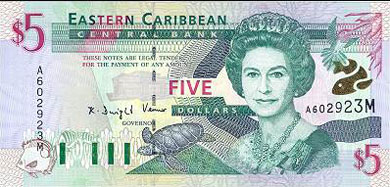
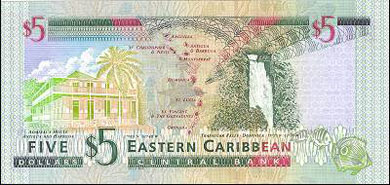
- Currency Name and Code
- East Caribbean Dollar (XCD)
- GDP Real Growth Rate
- 3.3%
Banknotes
Budget & Public Finance
- Fiscal Year
- 1 April - 31 March
- Annual Budget
- $146,700,000 (USD)
- External Debt
- $214,000,000 (USD)
- Economic Aid
- $51,800,000 (USD)
Labor, Industry & Trade
- Labor Force by Occupation
- agriculture 21.7%; services 53.6%; industry; commerce; and manufacturing 24.7%
- Industries
- clothing, assembly of electronic components, beverages, corrugated cardboard boxes, tourism, lime processing, coconut processing
- Agriculture Products
- bananas, coconuts, vegetables, citrus, root crops, cocoa
- Export Commodities
- bananas 41%, clothing, cocoa, vegetables, fruits, coconut oil
- Export Partners
- UK 48.5%, US 27.3%, Barbados 7.6%
- Import Commodities
- food 23%, manufactured goods 21%, machinery and transportation equipment 19%, chemicals, fuels
- Import Partners
- Brazil 46.1%, US 18.6%, Trinidad and Tobago 10.3%
Energy
- Oil Production
- 0 bbl/day
- Oil Consumption
- 2,520 bbl/day
- Oil Reserves
- 0 bbl/day
- Natural Gas Production
- 0 cu m
- Natural Gas Consumption
- 0 cu m
- Natural Gas Imports
- 0 cu m
- Natural Gas Exports
- 0 cu m
- Natural Gas Reserves
- 0 cu m
Communications
- Telephone System
- general assessment: an adequate system that is automatically switched domestic: fixed-line teledensity is 25 per 100 persons and mobile-cellular teledensity is roughly 130 per 100 persons international: country code - 1-758; the East Caribbean Fiber Optic System (ECFS) and Southern Caribbean fiber optic system (SCF) submarine cables, along with Intelsat from Martinique, carry calls internationally; direct microwave radio relay link with Martinique and Saint Vincent and the Grenadines; tropospheric scatter to Barbados
- Internet Country Code
- .lc
News & Weather
News & Weather
Current Weather
Latest News
Island Manager Keeps Saint Lucia Moving, One Shipment at a Time - Saltchuk
Saltchuk · 7h ago
#TSRWeGlobal: Yess! The girlies are out in St. Lucia shutting it down for carnival. 🔥 Check out how #KandiBurruss, #ChloeBailey and #AngelaSimmons are giving it up while on di road. 😍🇱🇨 (SWIPE)—(📸: @shamarmarcus, @travelsaintlucia) ✍🏾: #TSRStaffJ - instagram.com
instagram.com · 2h ago
Saint Lucia Population 2026 - World Population Review
World Population Review · 4d ago
Robberies, assaults and rapes spur new US travel warning for popular Caribbean getaway - Fox News
Fox News · 7d ago
US issues new travel warning for Saint Lucia - Newsweek
Newsweek · 6d ago
US issues travel warnings for tropical getaways - NewsNation
NewsNation · 4d ago
Saint Lucia travel warning: Why the US raised its advisory to Level 2 - FOX 32 Chicago
FOX 32 Chicago · 5d ago
US Increases Travel Warning For Popular Caribbean Destination: What To Know - DailyVoice.com
DailyVoice.com · 3d ago
News via Google News
Climate Overview
tropical, moderated by northeast trade winds; dry season from January to April, rainy season from May to August
Videos
Videos
1 curated YouTube videos.
Source: YouTube
Frequently Asked Questions
Frequently Asked Questions
What is the population of Saint Lucia?
What language do people speak in Saint Lucia?
What is the food like in Saint Lucia?
How should I dress in Saint Lucia?
What is family life like in Saint Lucia?
What do people do for fun in Saint Lucia?
What should I know before visiting Saint Lucia?
What is the capital of Saint Lucia?
Where is Saint Lucia located?
What bodies of water surround Saint Lucia?
What is the predominant religion in Saint Lucia?
What currency is used in Saint Lucia?
What languages are spoken in Saint Lucia?
What is Saint Lucia known for?
Who are the people of Saint Lucia and what shaped their heritage?
Last reviewed 2026