
 English
 Español
 中文
中文 हिन्दी
 Français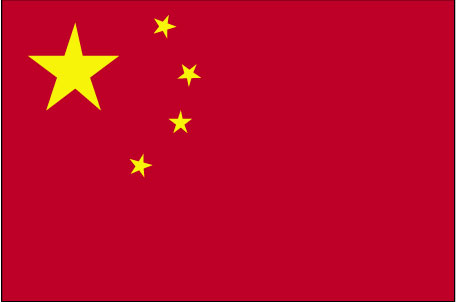
China
Zhong Guo
Declare Your Relationship to China
CountryReports Community
- Studying8
- From China3
- China heritage2
- Visited3
- Want to visit2
Customs and Culture
Customs and Culture
About the People
Confucianism has great influence on how the Chinese approach daily life. The elderly in China are respected. The Chinese people are known having good manners, hospitality, and are generally reserved in nature.
Keeping face means avoiding embarrassment, failure, defeat, or contradictions. Society is changing in China as economic opportunities expand. The goal of most families, for which they generally save for many years, is to build their own homes. Having a house is a symbol of a better life.
Most people also want their children to be well educated, attend a university, and to have greater prosperity than themselves. Foreign visitors should refrain from negative comments while visiting China.
Cultural Attributes
Confucianism has a great influence on how the Chinese approach daily life. The elderly in China are respected. The Chinese people are known to have good manners and hospitality and are generally reserved in nature.
The principle of "guanxi" creates bonds between friends and associates so that people commit to helping others when they come to them. Violation of guanxi causes a loss of reputation or honor, which is another important tenet in Chinese society. Keeping it means avoiding shame, failure, defeat, or contradiction.
As economic opportunities expand, society is in a process of evolution. The goal of most families is to build their own home, for which they usually save for several years. Having a home is a symbol of a better standard of living. Most people also want their children to get a good education, go to college, and be more prosperous than they are.
Overall, the Chinese people are very proud of the millennial history of the country and the achievements it has achieved. It is generally recommended that foreigners visiting the country respect these aspects and refrain from making negative comments about the country.
Standard Chinese (putonghua), which is based on Mandarin, is the national language and is spoken by more than 70 percent of the population. Other dialects such as Wu (in Shanghai), Min, Yue (Cantonese), and Kejja are also spoken. Each of the 55 minority groups speaks its own language or dialect. In some cases, for education and official business, the local language is used. The Chinese language does not have a phonetic alphabet; rather it uses characters to express words, thoughts, or principles. The Latin alphabet is used to teach Chinese in schools and for international communication matters. Of the 50,000 characters that exist, only about 8,000 are used. Basic literacy skills consist of learning 1,500 to 2,000 characters.

Land of the Dragon's Dynasties
Greetings, Gestures & Visiting
The Chinese nod or bow slightly when greeting another person. A handshake is acceptable to show respect, especially in formal situations. A greeting common to foreigners is "Ni hao ma?" (How do you do?). While many Chinese accept this term and use it, there are also various, more traditional terms. The Chinese tend to be formal in their introductions; they use the full titles of their guests but are less precise in identifying themselves.
Chinese names usually consist of a one-syllable family name, followed by a one or two-syllable given name. A person is either addressed by the full name or by a title and family name. In lieu of professional titles, the Chinese equivalents of Mr and Mrs are used. Thus, Wang Jian-Jun can also be called Mr. Wang, but never simply Wang and rarely ever Jian-Jun. In place of titles, the terms Lao (old) and Xiao (young) might be used between friends to show special respect.
Except in crowds where physical contact is unavoidable, the Chinese do not like to be touched by strangers. A smile is preferred over a pat on the back or a similar gesture. This is especially important when dealing with older people or people in important positions. The Chinese culture is rooted in the attitude of keeping one's feelings inside rather than displaying emotions openly and publicly. The Western custom of shaking a person's hand upon an introduction is becoming widespread throughout China. Personal space is very limited in China, especially while conversing.
The Chinese use their open hand to point rather than one finger. To beckon, all fingers wave with the palm of the hand facing down. In some regions, it is common for people to spit in public after clearing their throats. The government has tried to curb this behavior with fines, but because it is a custom necessitated by health conditions, it remains common.
It is common in China to show one's surprise or dismay by sucking air in quickly and loudly through the lips and teeth. Silence is respected in China.
When offering a gift, it is common to decline the gift several times before accepting it; as a matter of proper etiquette.
Seating arrangements are important. At a business meeting, the main guest is always seated at the "head of the room", facing the door, with the host having his or her back to the door. When dining, the guest of honor always sits to the left of the host.
Invitations are usually sent for formal occasions, but otherwise, it is common to visit someone unannounced. When invited, one is generally prompt. Being more than a few minutes late is impolite. Guests conduct themselves with restraint and refrain from loud, boisterous speech and actions. Valuable gifts are usually not accepted by strangers, but small gifts may be given by friends. In fact, friends often bring gifts such as tea, cigarettes, fruit, chocolates, cakes, or wine when they visit. Hosts rarely open wrapped gifts until visitors leave. People enjoy gathering for discussions, and playing card and table games.
The Chinese generally wear conservative clothing. In the past, the Chinese people mostly wore the same style of pantsuit because of government policy. Reforms in recent years, however, have led to a wider selection of clothing. Many women wear dresses. Bright colors, Western-style suits, jeans, and jackets are increasingly popular. Nevertheless, styles are not always as modern as in other nations, and Mao suits; are still common. Ethnic minorities wear traditional clothing reflecting their cultural past and the climate in which they live. Despite poor living conditions, the people keep their homes, streets, and towns clean and tidy.
Diet
Generally, there is not a wide variety of food available throughout the country, except where private enterprise is encouraged. What the people eat depends largely on what is produced in the region where they live. Chinese cuisine is internationally popular and recognized for its nutritional qualities. It is common to eat a mixture of noodles with a small piece of meat. Meat dumplings typify the hearty wholesome qualities of northern Chinese home-style cooking. In China fruit desserts are often flavored. Jiao Zi Pi (Dumpling skins) are used to make the traditional meat dumplings served in the Chinese countryside.
Chopsticks are used for all meals in China. When finished, a person places the chopsticks neatly on the table; they are not left in the rice bowl. Food which is placed at the center of the table may include more than one main dish to be eaten with rice. Some food is taken to be placed in the rice bowl, which is then held close to the mouth for eating. Bones and seeds are placed on the table or a dish, but never back in the rice bowl. At formal banquets, guests have a short, friendly speech prepared to respond to a host’s remarks. Tipping in restaurants is traditionally considered an insult-something a superior does for an inferior.
Generally, there is not a wide variety of food available throughout the country, except where private enterprise is encouraged. What the people eat depends largely on what is produced in the region where they live. Chinese cuisine is internationally popular and recognized for its nutritional qualities. It is common to eat a mixture of noodles with a small piece of meat. Meat dumplings typify the hearty wholesome qualities of northern Chinese home-style cooking. In China fruit desserts are often flavored. Jiao Zi Pi (Dumpling skins) are used to make the traditional meat dumplings served in the Chinese countryside.

Family
Historically loyalty to the family unit has always been important to the Chinese. During the Cultural Revolution, the state tried to shift loyalty to the government, and families were often split by work or study assignments. Family planning policies limited couples to one or two children, imposing fines or sterilization on violators. At the most recent census, there were 348.37 million (348,370,000) families which is an average of 3.44 persons per family. 37 percent of the people live in urban areas while 63 percent of the people live in rural areas.
Dating Customs
Chinese customs stress moral purity. Intimate relations and public displays of affection are discouraged. To help the family planning program succeed, young people are encouraged to marry late. In fact, college students are forbidden to marry until after graduation. The sanctioned age for marriage is 22 for men and 20 for women. Those who marry before that age are not eligible for some of the same benefits as those who wait.
Weddings are simple. A couple first seeks permission from the local governing unit. If granted, a legal contract is recorded without a wedding ceremony. The couple then joins family and friends in a marriage celebration. Wedding rings are traditionally not a part of marriage, but they are becoming more common. The woman retains her maiden name and does not take the family name of her husband.
Recreation
Table tennis, basketball, and soccer are the most popular sports in China. In warm weather, the Chinese like to relax outdoors by playing games, flying kites, reading, or practicing musical instruments. Mahjong, a game of skill played with small tiles, is making a comeback. Tiaoqi (Chinese checkers) uses marbles on a star-shaped board and is popular with children, whereas xian gi (Chinese chess) is widely played by adults. Many seniors keep birds as a hobby, and traveling has become common for retired urban dwellers with good pensions. Chinese operas are also much loved by the older generation. Young people in cities frequent discos with live bands playing Western music.
Student Life
School is a very serious thing in China, even for the younger students. If the school is not within walking distance, children will often live at the school in large dormitories—even in the early grades. Because school may begin as early as 6:30 a.m., children get up early for a light breakfast of rice porridge, chicken and noodle soup, or deep-fried pastries that taste something like doughnuts. This will be followed by exercises with their class, often based on a form of martial arts or tai-chi. Then it’s off to class, which will last longer than schools in most other countries.
Most students attending public schools do not have much money and live in large dormitories at the schools. They come home only on the weekends to work during the day and study at night. The majority of Chinese children will walk where they need to go or ride on packed commuter buses with adult workers. If they are fortunate and the family has a little money, they may be able to get a bicycle when they get a little older. Only the wealthy will get a ride to private school and back home with their parents, usually on their way to work in the morning and home in the evening.
Schools in China are an interesting mix of modern and very old thinking. The government is investing heavily in education, but many of the buildings are quite old. Sometimes there is no heating system in the school, even though the temperature might get close to freezing! Still, the students carry on in their disciplined way, determined to do their very best. Schools are beginning to have modern computers installed as the government has chosen to enter the modern world. In fact, the Chinese government even bought an entire division of IBM, the large computer company, which makes Lenovo laptop computers that are sold throughout the world. Though the subjects studied and the methods used to teach those subjects are becoming more open, old ways often persist. For example, teachers used to be the rulers of the classroom and were very strict. Now, many students consider them to be more like friends who are introducing them to a world of learning. But the students still have to memorize large amounts of material and do learning exercises over and over and over because that’s how the teachers learned to teach—and once were only allowed to teach in that way! At lunchtime, students will eat a light lunch of either egg rolls or pot stickers, which are dumplings stuffed with meat or shrimp. At some schools, students will take a nap around noon time for 30 minutes or so after eating. Then they are back in class until around 4:30 or 5:00 p.m.
Chinese students are traditionally very good at memorizing information and understanding how things work. Thus, they are often very good at mathematics, history, and the sciences. But creativity and open discussion can be challenging. The schools and the children’s parents are not used to having such freedom in how the children learn, so it is sometimes difficult to break old habits. Children in China study very hard. Class begins by 7:00 a.m., although some schools are experimenting with letting their students sleep an extra half hour or so and beginning later. It is also not unusual for schools to stay open until as late as 11:00 p.m. for some of the older grades so children can get extra help to learn their subjects better. And children begin early for school. In the 1990s, parents complained that from the age of 4 or 5 the children have no free time and suffer from sleeplessness and depression. Many were unable to tie their shoes or dress themselves, but 90% could play the piano and 70% could recite Tang Dynasty poetry. Some adjustments have been made, but they still feel the pressure to succeed in school. Another fact that students outside of China might find interesting is the strong sense of community that surrounds a school. The children not only study at the school, they also help to maintain it by helping to clean the floors and the desks in each classroom as well as other simple chores. To be a student means studying very hard, but it also means working hard to make sure there is a good place to study. Children begin school at the age of 6 or 7. Primary school lasts for six years, and the children study Chinese, geography, history, math, music, science, painting, physical fitness, and political education. Similar to schools in the United States, after elementary school, middle school will last another three years, in which they will study many of the same subjects they studied in elementary school plus biology, chemistry, physics, law, English, and perhaps another foreign language. Another three years are then spent in high school. The first nine years of school are now required for all Chinese children.
Although physical exercise has been a part of Chinese school tradition for many years, recently sports, in general, have been getting more emphasis among China’s school children. The summer Olympics were held there in 2008, and China wanted to be a good competitor as well as a good host. Standard sports that are played as part of the school curriculum include team sports such as soccer, basketball (Yao Ming of the NBA is a huge hero in China—in several ways!), swimming, and gymnastics. They can also participate in more individual sports, such as martial arts, table tennis, and badminton.
Free time is a rare thing in China, even for children. From the time a child is 4 or 5, he or she must begin preparing for school. Some parents will send their preschoolers to intense five-day-a-week programs from Monday through Friday, and then to another program on the weekends. From the time they are young, they learn the necessity of education to “get ahead” and leave their poor backgrounds behind. They are in school ten hours a day, and when they are not in school they either study or work, often alongside their parents. The same is true of weekends. Even play or athletics is with the goal of improvement and creating an opportunity to create a better way of life. Despite this background or heritage, as the Western culture begins to influence China more, the children are wanting to watch more television and play more games. Some parents find this to be healthy to not feel so much pressure when young. Others are not yet ready for such a change. One recent study found that 88% of elementary school parents and 50% of middle school parents assigned their children extra homework beyond what the school required in order to prepare the children for national exams that determine whether a student is allowed into a university.
Food varies somewhat according to the area of China that someone lives in. However, in most areas, certain foods form the basis of meals, such as fish, chicken, and vegetables, with rice and noodles. Spices can be used to change the flavor from very spicy to sweet. Dinner meals consist of vegetables with bits of meat or seafood, soup, and rice or noodles. Tea is the traditional beverage of China. Although restaurants are becoming more prevalent in the cities as the economy grows, most Chinese families still eat at home because they cannot afford otherwise. Children study in the evenings, often until they fall asleep over their schoolbooks from exhaustion. When they do relax, they play ball, watch television, or play other simple games. But this is not often, as students spend a minimum of 80% of their free time studying, and a good percentage of the remaining time on family responsibilities, such as cooking, cleaning, or helping with the family business.
China has more people than any other country in the world, so educating that many children can be very challenging. In former years, the government spent very little money on education. Even as recent as the year 2000, perhaps as many as two million children were unable to go to school. However, China’s economy, and to some extent the politics, are changing very rapidly and becoming more open to nontraditional ways of learning. In the past, the school system was very strict. The government told the teachers what to teach, and the teachers told the students what to learn. Although students worked very hard to get good grades, there were not many opportunities for educated people to get good jobs, and often the very educated were considered menaces to the very strict government. On the other hand, education was one of the only ways to change one’s life from being one of the millions of people forced to become communal farmers and rise above being so very poor. Gradually, China is seeing clearly that education is a way to improve life—not only for individuals and their families but for the entire nation. In the first years of the reform, local businesses who wanted to improve life for their community would finance most of a school’s expenses. As the government has also joined in big business and is making much more money than before, they are doing more to improve the schools and pay the teachers better. In turn, in their efforts to change the system, teachers are no longer forcing students to learn only what the government wants them to learn; instead, they are teaching the children to be creative, to solve problems, to choose what they want to study and then become the very best at it. But one thing has not changed: Chinese students are very competitive in school, and children study very hard to become the best in their class.
Holidays
Anniversary of the Founding of the People's Republic of China
10/1Independence
Chrismas
12/25Christmas
Christmas in China is called Sheng Dan Jieh and pronounced ‘shung dawn shee,’ which literally means ‘Holy Birth Festival.’ Christmas is celebrated in the cities of Shanghai, Beijing and Hong Kong. December 25th in China is not a legal holiday due to the fact that only one percent of Chinese are Christian.
Christmas in China is less celebrated than the Chinese New Year which occurs during the months of January and February, New Year is also called the Spring Festival since it ushers in the new season.
Known by the name Dun Che Lao Ren, pronounced ‘dwyn-chuh-lau-oh-run,’ Santa Clause in China is more popularly known as ‘Christmas Old Man. Santa Claus is also known as Lan Khoong, pronounced ‘lan coong,’ which means “Nice Old Father.” Children hang muslin stockings in the hope that Dun Che Lao Ren will pass by and fill them with presents. Stores have men dressed as Santa Claus handing out candy and waitresses with Santa hats fill the restaurants in China.
Christmas Trees, called ‘Trees of Light’ are put up a week before Christmas Eve and are decorated with paper chains with Chinese characters which spell ‘Christmas. The arrival of the season of Christmas is marked with a large and extravagant fireworks display.
Christmas trees are also adorned with paper flowers, paper lanterns and paper decorations that are rich and vibrant in color and figures. The art of paper cutting and décor-making signifies the culture of the Chinese, and are hung abundantly on the Christmas trees.
Homes are lit up with dazzling displays of Christmas lights and smell of mouth-watering Christmas recipes. Different sized Christmas tress adorned with decors and designs that shows the commercial aspect of the season. An exchange of beautifully wrapped gifts is also practiced by Chinese Christians. Gifts usually consist of clothes, gifts and toys. Gifts are usually opened on Christmas morning.
The Christmas spirit usually extends its presence until the Lunar New Year comes in or the Spring Festival. Though this festival is not part of the Christmas season, the spirit of giving is still in the air since the Chinese people tend to give gifts on this occasion as well.
Christmas Eve mass is featured in the Christian Churches of China where the nativity scene is played out. Traditional Christmas carols are sung by church choirs, translated in Chinese. Midnight Mass in China has recently shown a growth in attendance as the Chinese Christian population has grown. After mass, Chinese families enjoy a family Christmas dinner together.
Special dishes to celebrate the season are prepared by Chinese families. Though many families spend Christmas day eating buffet dinners and lunches in big hotels and restaurants, many still opt for a cozy family dinner in their own homes. Restaurants anticipate this, however, and prepare traditional Chinese dishes of turkey, roasts, hot rolls and vegetables.
Christmas dinner in Chinese homes consist of Peking Duck, Cantonese Roast Duck, Kung Pao Chicken, cookies, five-spice peanuts, sesame seed balls and spring rolls.
The Christmas season ends the day after the birth of Christ. Christmas day celebrations are usually more subdued and relaxed as it is mostly spent with their families The Taoist festival of Ta Chiu also takes place during this season on December 27th. This festival is usually associated with maintaining inner peace and renewing your mind by making offers to the saints and listing down and reading the names of the residents in the area and burning them afterwards as a sign of good luck.
Dates of Interest
- May 1st
Youth Day serves to motivate Chinese children to study hard at school and make worthwhile contributions to China.
How do people greet each other in China?
The Chinese nod or bow slightly when greeting, and a handshake is acceptable to show respect, especially in formal situations.
Do
- Use full titles when introducing guests
- Address someone by full name or by a title plus family name, e.g., Mr. Wang
- Consider using "Ni hao ma?" (How do you do?) as a common greeting
Don’t
- Don't call someone by only their family name (e.g., just "Wang")
- Don't address people by their given name alone
Good to know
- Chinese names put the one-syllable family name first, followed by a one- or two-syllable given name
- In place of titles, the Chinese equivalents of Mr and Mrs are used
- Among friends, Lao (old) and Xiao (young) may be used to show special respect
What are the dining customs in China?
Chopsticks are used for all meals, and shared dishes are placed at the center of the table to be eaten with rice.
Do
- Take food to your rice bowl and hold the bowl close to your mouth to eat
- Place bones and seeds on the table or a dish
- Prepare a short, friendly speech to respond to the host at formal banquets
Don’t
- Don't leave chopsticks in the rice bowl; place them neatly on the table when finished
- Don't put bones or seeds back in the rice bowl
- Don't tip in restaurants; it is traditionally considered an insult
Good to know
- Chinese cuisine is recognized for its nutritional qualities
- Noodles with a small piece of meat and meat dumplings are common; food often depends on what is produced regionally
What etiquette should I know when visiting China?
The Chinese are reserved and value good manners, hospitality, and "keeping face" by avoiding embarrassment or contradiction.
Do
- Be prompt when invited; being more than a few minutes late is impolite
- Conduct yourself with restraint and avoid loud, boisterous speech
- Bring small gifts such as tea, fruit, chocolates, cakes, or wine when visiting friends
- Decline a gift several times before accepting it, as proper etiquette
Don’t
- Don't make negative comments about the country
- Don't expect hosts to open wrapped gifts in front of you; they rarely do until visitors leave
- Strangers usually shouldn't offer valuable gifts
Good to know
- Confucianism strongly influences daily life and the elderly are respected
- Seating matters: at a business meeting the main guest faces the door; when dining the guest of honor sits to the host's left
- Guanxi creates bonds obligating people to help friends and associates
How should I dress in China?
The Chinese generally wear conservative clothing, though Western-style suits, jeans, and jackets are increasingly popular.
Good to know
- Many women wear dresses
- Mao suits are still common and styles are not always as modern as in other nations
- Ethnic minorities wear traditional clothing reflecting their culture and climate
What gestures and body language should I be aware of in China?
The Chinese tend to keep feelings private and generally dislike being touched by strangers, preferring a smile to a pat on the back.
Do
- Point with an open hand rather than one finger
- Beckon with all fingers waving and the palm facing down
- Respect silence, which is valued in China
Don’t
- Don't touch strangers, especially older people or those in important positions
- Don't openly display strong emotions in public
Good to know
- Personal space is very limited, especially during conversation
- Sucking air in quickly through the lips and teeth shows surprise or dismay
- Public spitting after clearing the throat remains common in some regions despite fines
What is family life like in China?
Loyalty to the family unit has historically been very important, and families average about 3.44 persons.
Good to know
- Family planning policies limited couples to one or two children
- Most families save for years to build their own home as a symbol of a better standard of living
- Most people want their children to be well educated and more prosperous than themselves
- About 63 percent of people live in rural areas and 37 percent in urban areas
What do people do for recreation in China?
Table tennis, basketball, and soccer are the most popular sports, and people enjoy relaxing outdoors and playing games.
Good to know
- In warm weather people fly kites, read, or practice musical instruments
- Mahjong, Chinese checkers (tiaoqi), and Chinese chess (xiangqi) are popular games
- Many seniors keep birds, enjoy Chinese operas, and travel if they have good pensions
- Young people in cities frequent discos with live bands playing Western music
Last updated: 2026-07-12 · Sources: CountryReports
Photos of China
Photos of China


Travel and Tourism
Travel and Tourism
- Travel Alert Status
- Level 3: Reconsider Travel
- Currency
- 6.626
- Time Difference
- UTC+8 (13 hours ahead of Washington, DC, during Standard Time) time zone note: China is the largest country (in terms of area) with just one time zone; before 1949 it was divided into five
- Climate
- The country lies almost entirely in the temperate zone. Only Hainan Province and the southernmost portions of Yunnan and Guangdong Provinces and the Zhuang Autonomous Region of Guangxi lie within the tropics. A monsoon climate is a major influence in the south. The north and west have a typical continental climate, although winters are extremely dry and summers quite rainy. During summer, warm, moist, maritime air masses bring heavy rains to eastern China, and hot, humid, summer weather is typical. Winter offers a sharp contrast when cold, dry Siberian air masses dominate and often reach the southern provinces. Little precipitation falls during the colder months; clear days with low humidity and low temperatures are the norm.
- Airports
- 497
Read the full travel guide — health, safety, vaccinations, disease risk, sanitation, and transit details.
View full travel guideRecipes
Recipes
Hong Shao Doufu Red-fried Tofu
Main Dish
Main Dish
Szechuan Beef With Broccoli
Main Dish
Spicy Seafood Wontons
Main Dish
Tofu with Vegetables
Main Dish
Lo Mein Beef and Chinese Egg Noodles
Main Dish
Sweet and Sour Prawns
Main Dish
Pork and Bamboo Shoots
Main Dish
PremiumPork and Chinese Preserved Vegetables on Vermicelli Noodles
Main Dish
PremiumJiao Zi (Dumplings)
Main Dish
PremiumXian Xia (Eel Meat)
History
History
Historical Eras
Ancient & Classical China
2000 BCE – 221 BCE
From the legendary Xia dynasty through the Shang and Zhou dynasties, Chinese civilization developed its foundational written language, bronze metallurgy, Confucian and Daoist philosophy, and feudal political order. The turbulent Spring and Autumn and Warring States periods produced intense intellectual and military competition among rival kingdoms, culminating in the philosophical flowering known as the Hundred Schools of Thought.
Imperial Unification
221 BCE – 220
Qin Shi Huang unified China in 221 BCE, standardizing weights, measures, and script across a centralized empire for the first time. The succeeding Han dynasty consolidated imperial rule, expanded territory into Central Asia, opened the Silk Road, and established Confucianism as state orthodoxy, creating the bureaucratic and cultural template that would define Chinese governance for two millennia.
Division & Reunification
220 – 618
Following the Han collapse, China fractured into the Three Kingdoms and endured centuries of fragmentation through the Jin, Northern, and Southern Dynasties periods, during which Buddhism spread widely and transformed Chinese culture and art. The short-lived Sui dynasty violently reunified the empire, constructing the Grand Canal and laying the groundwork for the prosperous Tang era that followed.
Tang, Song & Mongol Rule
618 – 1368
The Tang dynasty presided over a cosmopolitan golden age of poetry, trade, and territorial expansion, while the Song dynasty advanced printing, gunpowder, and maritime commerce. In 1279, Kublai Khan's Mongol Yuan dynasty became the first alien power to conquer all of China, integrating the empire into a vast Eurasian network before native Chinese rule was restored under the Ming.
Late Imperial China
1368 – 1912
The Ming dynasty rebuilt the Great Wall, launched Zheng He's epic maritime expeditions, and fostered a sophisticated commercial economy before the Manchu Qing dynasty conquered China in 1644. The Qing empire reached its greatest territorial extent under the Qianlong Emperor but succumbed to internal rebellions, devastating foreign military defeats in the Opium Wars, and the unequal treaties that stripped China of sovereignty and territory.
Republic & Civil War
1912 – 1949
The 1911 Xinhai Revolution ended two millennia of imperial rule, establishing the Republic of China under Sun Yat-sen, but political authority quickly fragmented among warlords. Japan's brutal invasion from 1937 devastated the country, and after Allied victory in 1945 a resuming civil war between Chiang Kai-shek's Nationalists and Mao Zedong's Communists ended with Communist victory and the Nationalist retreat to Taiwan.
People's Republic
1949 – present
Mao Zedong's proclamation of the People's Republic in 1949 imposed single-party rule; campaigns including the Great Leap Forward and the Cultural Revolution caused tens of millions of deaths. After Mao's death, Deng Xiaoping's market-oriented reforms from 1978 onward transformed China into the world's second-largest economy, though the Communist Party maintains strict political control while overseeing China's emergence as a dominant global power.
Overview
Timeline of Key Events
2000 BCE – 1600 BCE
Xia Dynasty
Xia Dynasty. The first prehistoric dynasty is said to be Xia, from about the twenty-first to the sixteenth century BC. The Xia Dynasty is traditionallly supposed to have begun with the reign of Yu the Great and ended with the fall of Jie, lasting for more than 400 years. There were altogether seventeen kings in fourteen generations. According to an ancient version of history, however, it was not Yu, but his son Qi, who founded the dynasty.
1600 BCE – 1046 BCE
Shang
Shang Dynasty. The Shang dynasty becomes first dynasty to leave historical records.
1046 BCE – 770 BCE
Western Zhou
Western Zhou. Western Zhou period covered twelve emperors lasting for about 275 years.
770 BCE – 476 BCE
Spring and Autumn period.
Spring and Autumn period. Ch’un-ch’iu (Spring and Autumn) period of the Chou dynasty. Chou royal line is broken, feudal system in decline.
770 BCE – 256 BCE
Eastern Zhou
Eastern Zhou.
475 BCE – 221 BCE
Warring States period
Warring States period.
221 BCE – 207 BCE
Qin
Qin. Ch’in ruling house survives Ch’un-ch’iu power struggle and initiates the first imperial dynasty, the Ch’in. Shih huang-ti unifies China and becomes first Chinese emperor. Defensive walls in north of China are connected and strengthened into what will become the Great Wall of China.
Read the full history profile — narrative overview, defining eras, and the complete timeline in one place.
View expanded historyInteresting Facts
Interesting Facts
When a child loses a tooth they put their upper tooth at the foot of their bed and the bottom tooth on the roof. Their parents say that it will make their new tooth grow in faster.
When a child loses a tooth they put their upper tooth on the ground and their lower tooth on the roof. Their new tooth will be pulled in the opposite direction and will grow in quickly.
More people live in China than in any other country in Asia. This continent has the most people, the most land and the highest mountains.
In the wild, Pandas only live in China in places where bamboo forests grow. Rice is the main food eaten in Asia. Farmers often grow it on step like fields called terraces. These fields are cut into steep hillsides.
The Great Wall was originally built in the Spring, Autumn, and Warring States Periods as a defensive fortification by the three states: Yan, Zhao and Qin. The Great Wall went through constant extensions and repairs in later dynasties. In fact, it began as independent walls for different states when it was first built, and did not become the “Great” wall until the Qin Dynasty. Emperor Qin Shihuang succeeded in his effort to have the walls joined together to fend off the invasions from the Huns in the north after the unification of China. Since then, the Great Wall has served as a monument of the Chinese nation throughout history. The construction of the Great Wall, drew heavily on the local resources for construction materials, was carried out in line with the local conditions under the management of contract and responsibility system. A great army of manpower, composed of soldiers, prisoners, and local people, built the wall. The construction result demonstrates the manifestation of the wisdom and tenacity of the Chinese people.
The world's deadliest flood happened in the Huang He River (also called the Yellow River), August of 1931. It killed an estimated 3.7 Million people. The river is 3,000 miles long. It has flooded the surrounding areas more than 1,500 times in the last 1,800 years.
See every fact — trivia, oddities, and curious tidbits gathered from across the country.
View all interesting factsGeography and Environment
Geography and Environment
- Terrain
- mostly mountains, high plateaus, deserts in west; plains, deltas, and hills in east
- Climate
- The country lies almost entirely in the temperate zone. Only Hainan Province and the southernmost portions of Yunnan and Guangdong Provinces and the Zhuang Autonomous Region of Guangi lie within the tropics. A monsoon climate is a major influence in the south, but the north and west have a typical continental climate, although winters are extremely dry and summers quite rainy. During summer, warm, moist, maritime air masses bring heavy rains to eastern China, and hot, humid, summer weather is typical. Winter offers a sharp contrast, when cold, dry Siberian air masses dominate and often reach the southern provinces. Little precipitation falls during the colder months; clear days with low humidity and low temperatures are the norm.
- Natural Hazards
- frequent typhoons (about five per year along southern and eastern coasts); damaging floods; tsunamis; earthquakes; droughts; land subsidence
- Current Environmental Issues
- air pollution (greenhouse gases, sulfur dioxide particulates) from reliance on coal produces acid rain; water shortages, particularly in the north; water pollution from untreated wastes; deforestation; estimated loss of one-fifth of agricultural land since 1949 to soil erosion and economic development; desertification; trade in endangered species
Read the full geography and environment profile — terrain, climate, natural resources, hazards, land use, and international agreements.
View full geographyPeople & Demographics
People & Demographics
Religion
Languages Spoken
Standard Chinese or Mandarin (Putonghua, based on the Beijing dialect), Yue (Cantonese), Wu (Shanghainese), Minbei (Fuzhou), Minnan (Hokkien-Taiwanese), Xiang, Gan, Hakka dialects, minority languages
Note: Mongolian is official in Nei Mongol, Uighur is official in Xinjiang Uygur, and Tibetan is official in Xizang (Tibet)
- Cantonese
- Mandarin
Population
- Population
- 1,330,141,295
- Population: Male/Female
- male: 722,201,504 female: 693,841,766
- Population Distribution
- overwhelming majority of the population is found in the eastern half of the country; the west, with its vast mountainous and desert areas, remains sparsely populated; though ranked first in the world in total population, overall density is less than that of many other countries in Asia and Europe; high population density is found along the Yangtze and Yellow River valleys, the Xi Jiang River delta, the Sichuan Basin (around Chengdu), in and around Beijing, and the industrial area around Shenyang
- Urban Population
- urban population: 64.6% of total population rate of urbanization: 1.78% annual rate of change note: data do not include Hong Kong and Macau
- Population in Major Urban Areas
- 29.211 million Shanghai, 21.766 million BEIJING (capital), 17.341 million Chongqing, 14.284 million Guangzhou, 14.239 million Tianjin, 13.073 million Shenzhen
- Nationality Noun
- noun: Chinese (singular and plural) adjective: Chinese
- Ethnic Groups
- Han Chinese 91.1%, ethnic minorities 8.9% (includes Zhang, Hui, Manchu, Uighur, Miao, Yi, Tujia, Tibetan, Mongol, Dong, Buyei, Yao, Bai, Korean, Hani, Li, Kazakh, Dai, and other nationalities)
- Language Note
- Standard Chinese or Mandarin (official; Putonghua, based on the Beijing dialect), Yue (Cantonese), Wu (Shanghainese), Minbei (Fuzhou), Minnan (Hokkien-Taiwanese), Xiang, Gan, Hakka dialects, minority languages (see Ethnic groups entry); note - Zhuang is official in Guangxi Zhuang, Yue is official in Guangdong, Mongolian is official in Nei Mongol, Uyghur is official in Xinjiang Uygur, Kyrgyz is official in Xinjiang Uyghur, and Tibetan is official in Xizang (Tibet)
Education
- Literacy Definition
- age 15 and over can read and write
Schools in China are an interesting mix of modern and very old thinking. The government is investing heavily in education, but many of the buildings are quite old. Sometimes there is no heating system in the school, even though the temperature might get close to freezing! Still, the students carry on in their disciplined way, determined to do their very best.
Schools are beginning to have modern computers installed as the government has chosen to enter the modern world. In fact, the Chinese government even bought an entire division of IBM, the large computer company, which makes Lenovo laptop computers that are sold throughout the world.
Though the subjects studied and the methods used to teach those subjects are becoming more open, old ways often persist. For example, teachers used to be the rulers of the classroom and were very strict. Now, many students consider them to be more like friends who are introducing them to a world of learning. But the students still have to memorize large amounts of material and do learning exercises over and over and over because that’s how the teachers learned to teach—and once were only allowed to teach in that way!
At lunchtime, students will eat a light lunch of either egg rolls or pot stickers, which are dumplings stuffed with meat or shrimp. At some schools, students will take a nap around noon time for 30 minutes or so after eating. Then they are back in class until around 4:30 or 5:00 p.m.
Health Information
- Life Expectancy at Birth
- total population: 78.7 years male: 76 years female: 81.7 years
- Major Infectious Diseases — degree of risk
- degree of risk: high food or waterborne diseases: bacterial diarrhea, hepatitis A, and typhoid fever vectorborne diseases: Crimean-Congo hemorrhagic fever, dengue fever, Japanese encephalitis, severe fever thrombocytopenia syndrome (SFTS) soil contact diseases: hantaviral hemorrhagic fever with renal syndrome (HFRS)
- Alcohol consumption per capita
- total: 4.48 liters of pure alcohol beer: 1.66 liters of pure alcohol wine: 0.18 liters of pure alcohol spirits: 2.63 liters of pure alcohol other alcohols: 0 liters of pure alcohol
- Tobacco Use
- total: 25.6% male: 49.4% female: 1.7%
- Child Marriage
- women married by age 15: 0.1% women married by age 18: 2.8% men married by age 18: 0.7%
- Infant Mortality Rate
- total: 6.2 deaths/1,000 live births male: 6.7 deaths/1,000 live births female: 5.7 deaths/1,000 live births
Life Expectancy
- Life Expectancy at Birth
- total population: 78.7 years male: 76 years female: 81.7 years
- Median Age
- total: 40.2 years male: 39 years female: 41.5 years
- Age Structure
- 0-14 years: 16.3% (male 122,644,111/female 107,926,176) 15-64 years: 69.3% (male 505,412,555/female 476,599,793) 65 years and over: 14.4% (male 94,144,838/female 109,315,797)
- Infant Mortality Rate
- total: 6.2 deaths/1,000 live births male: 6.7 deaths/1,000 live births female: 5.7 deaths/1,000 live births
Read the full people and society profile — demographics, health, education, religion, languages, and notable people.
View full people and societyGovernment & Politics
Government & Politics
Country Identity
- Country Name
- China
- Full Country Name
- People's Republic of China
- Local - Long
- Zhonghua Renmin Gongheguo
- Local - Short
- Zhong Guo
Government Structure
- Government Type
- Communist state
- Legal System
- a complex amalgam of custom and statute, largely criminal law; rudimentary civil code in effect since 1 January 1987; new legal codes in effect since 1 January 1980; continuing efforts are being made to improve civil, administrative, criminal, and commercial law
- Executive Branch
- chief of state: President XI Jinping (since 14 March 2013) and Vice President HAN Zheng (since 10 March 2023) head of government: Premier LI Qiang (since 11 March 2023); Executive Vice Premier DING Xuexiang (since 11 March 2023), and Vice Premiers LIU Guozhong, MA Xingrui, and ZHANG Guoqing (all since 11 March 2023) cabinet: State Council appointed by the National People's Congress (NPC) elections: president and vice president elected by the National People's Congress for five-year terms; elections last held 10 March 2023 (next to be held March 2028); premier nominated by the president, confirmed by the National People's Congress election results: XI Jinping reelected president by the 14th National People's Congress with a total of 2,952 votes (no delegates voted against him, none abstained); HAN Zheng elected vice president by the 14th National People's Congress; LI Qiang confirmed as premier with 2,936 votes in favor and three abstentions
- Legislative Branch
- unicameral National People's Congress or Quanguo Renmin Daibiao Dahui (2,985 seats; members elected by municipal, regional, and provincial people's congresses to serve five-year terms) elections: last held December 2002-February 2003 (next to be held late 2007-February 2008) election results: percent of vote - NA; seats - NA
- Judicial Branch
- Supreme People's Court (judges appointed by the National People's Congress); Local Peoples Courts (comprise higher, intermediate, and local courts); Special Peoples Courts (primarily military, maritime, and railway transport courts)
- Suffrage
- 18 years of age; universal
- Constitution
- most recent promulgation 4 December 1982
- Independence
- 221 BC (unification under the Qin or Ch'in Dynasty 221 BC; Qing or Ch'ing Dynasty replaced by the Republic on 12 February 1912; People's Republic established 1 October 1949)
- National Holiday
- Anniversary of the Founding of the People's Republic of China, 1 October (1949)
Capital City
- Capital Name
- Beijing
- Capital - geographic coordinate
- 39 55 N, 116 23 E
- Capital Time Difference
- UTC+8 (13 hours ahead of Washington, DC, during Standard Time) time zone note: China is the largest country (in terms of area) with just one time zone; before 1949 it was divided into five
the Chinese meaning is "Northern Capital"
Military
Branches: People's Liberation Army (PLA): Ground Forces, Navy (PLAN; includes marines and naval aviation), Air Force (Zhongguo Renmin Jiefangjun Kongjun, PLAAF; includes Airborne Forces), and Second Artillery Corps (strategic missile force); People's Armed Police (Renmin Wuzhuang Jingcha Budui, PAP); PLA Reserve Force
Embassy / Diplomatic Mission
The U.S. Embassy in Beijing China
No. 55 An Jia Lou Road
Chaoyang District, Beijing 100600
Telephone: (86) (10) 8531-4000
Emergency after-hours telephone: (86) (10) 8531-4000
The Embassy consular district includes the municipalities of Beijing and Tianjin and the provinces/autonomous regions of Gansu, Hebei, Henan, Hubei, Hunan, Inner Mongolia, Jiangxi, Ningxia, Qinghai, Shaanxi, Shandong, Shanxi, and Xinjiang.
The U.S. Consulate General in Chengdu
Number 4, Lingshiguan Road, Section 4, Renmin Nanlu,
Chengdu 610041.
Telephone: (86)(28) 8558-3992
Emergency after-hours telephone: (86) (10) 8531-4000
This consular district includes the provinces/autonomous regions of Guizhou, Sichuan, Xizang (Tibet), and Yunnan, as well as the municipality of Chongqing.
The U.S. Consulate General in Guangzhou
43 Huajiu Road, Zhujiang New Town, Tianhe District,
Guangzhou, China
Telephone: (86) (20) 3814-5775
Emergency after-hours telephone: (86) (10) 8531-4000
This consular district includes the provinces/autonomous regions of Guangdong, Guangxi, Hainan, and Fujian.
The U.S. Consulate General in Shanghai
Westgate Mall, 8th Floor, 1038 Nanjing Xi Lu,
Shanghai 200031
Telephone: (86)(21) 3217-4650
Emergency after-hours telephone: (86) (21) 3217-4650
This consular district includes Shanghai municipality and the provinces of Anhui, Jiangsu and Zhejiang.
The U.S. Consulate General in Shenyang
No. 52, 14th Wei Road, Heping District,
Shenyang 110003
Telephone: (86)(24) 2322-1198
Emergency after-hours telephone: (86) (10) 8531-4000
This consular district includes the provinces of Heilongjiang, Jilin, and Liaoning.
The U.S. Consulate General in Wuhan
New World International Trade Tower I
No. 568, Jianshe Avenue
Hankou, Wuhan 430022
Telephone: (86) (027) 8555-7791
Emergency after-hours telephone: (86) (10) 8531-4000
[Please note that consular services are provided only during quarterly outreaches in Wuhan. Contact the Embassy in Beijing for other consular and emergency services.]
Read the full government profile — flag symbolism, national anthem, and other national symbols.
View full government detailsEconomy
Economy
Since late 1978, the Chinese leadership has transformed the economy from a sluggish, inefficient, Soviet-style centrally planned system into a more market-oriented one, while retaining strict Communist political control. Over the decades, the economic influence of non-state organizations and private citizens has steadily expanded. Early reforms introduced household and village responsibility in agriculture, increased the authority of local officials and plant managers in industry, permitted a wide variety of small-scale enterprises in services and light manufacturing, and opened the economy to foreign trade and investment. The result has been one of the most dramatic economic expansions in modern history, with GDP increasing more than sixtyfold since reforms began.
Measured on a purchasing power parity (PPP) basis, China surpassed the United States to become the world's largest economy in 2017, though in per capita terms it remains a middle-income country. In nominal terms, China is the world's second-largest economy, with GDP exceeding $17 trillion. Industry, services, and high-technology manufacturing have posted major gains, particularly in coastal regions such as the Pearl River Delta, the Yangtze River Delta, and around Beijing-Tianjin, where domestic investment and global supply chain integration have driven output of both consumer goods and advanced products including electronics, electric vehicles, solar panels, and telecommunications equipment.
The leadership continues to grapple with structural challenges inherent in its hybrid model, including bureaucratic inefficiency, widening income disparities between coastal and interior regions, regulatory unpredictability, and rising local government debt. Periodic tightening of central controls has accompanied reform pushes, particularly under President Xi Jinping, whose administration has emphasized state direction of strategic industries, anti-corruption campaigns, and "common prosperity" initiatives aimed at reducing inequality.
Key economic concerns include sustaining adequate employment for college graduates and migrant workers, addressing a severe property-sector slowdown led by the troubles of major developers, managing high local government and corporate debt levels, and reducing reliance on real estate and infrastructure investment as growth drivers. Youth unemployment has emerged as a persistent challenge, while consumer demand has been slower to recover than authorities hoped following the lifting of strict COVID-19 controls in late 2022.
Demographic headwinds now pose a significant long-term constraint. China's population began declining in 2022 for the first time in decades, the working-age population is shrinking, and rapid aging is straining pension and healthcare systems. The earlier one-child policy has been replaced by a three-child policy, but birth rates remain low. Environmental pressures also persist, including air and water pollution, soil degradation, water scarcity in the north, and loss of arable land, though Beijing has invested heavily in renewable energy and is now the world's largest producer of solar, wind, and hydroelectric power.
The government is steering policy toward what it calls "high-quality development," prioritizing advanced manufacturing, semiconductors, artificial intelligence, green technology, and self-sufficiency in strategic sectors. Tensions with the United States and other Western economies over trade, technology transfer, export controls, and security concerns have prompted both decoupling pressures and Chinese efforts to diversify markets through initiatives such as the Belt and Road and the Regional Comprehensive Economic Partnership. Foreign direct investment, while still substantial, has slowed amid geopolitical friction and regulatory uncertainty, and Chinese authorities face the dual challenge of stimulating growth while managing financial risk in an increasingly complex global environment.
Snapshot
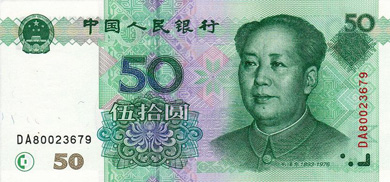
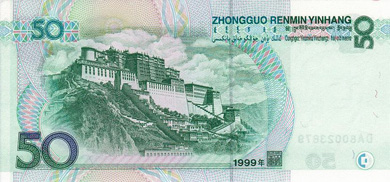
- Currency Name and Code
- Renminbi yuan (RMB)
- GDP — official exchange rate
- $2,225,000,000,000 (USD)
- GDP Real Growth Rate
- 9.9%
- Gini Index
- 44
Banknotes
Budget & Public Finance
- Fiscal Year
- calendar year
- Annual Budget
- $424,300,000,000 (USD)
- Public Debt (% of GDP)
- 28.8%
- External Debt
- $242,000,000,000 (USD)
- Investment (% of GDP)
- 43.6%
- Current Account Balance
- $129,100,000,000 (USD)
- Reserves of Foreign Exchange
- $2,147,483,647 (USD)
Labor, Industry & Trade
- Labor Force by Occupation
- agriculture 50%; industry 22%; services 28%
- Household Income — highest 10%
- 30.4%
- Industries
- iron and steel, coal, machine building, armaments, textiles and apparel, petroleum, cement, chemical fertilizers, footwear, toys, food processing, automobiles, consumer electronics, telecommunications
- Agriculture Products
- rice, wheat, potatoes, sorghum, peanuts, tea, millet, barley, cotton, oilseed, pork, fish
- Export Commodities
- machinery and equipment, textiles and clothing, footwear, toys and sporting goods, mineral fuels
- Export Partners
- US 21.5%, Hong Kong 18%, Japan 14.9%, South Korea 4.8%
- Import Commodities
- machinery and equipment, mineral fuels, plastics, iron and steel, chemicals
- Import Partners
- Japan 18.1%, Taiwan 12.8%, South Korea 9.7%, US 9.2%, Germany 5.6%
Energy
- Oil Production
- 3,504,000 bbl/day
- Oil Consumption
- 6,391,000 bbl/day
- Oil Reserves
- 182,600,000 bbl/day
- Natural Gas Production
- 35,020,000,000 cu m
- Natural Gas Consumption
- 33,440,000,000 cu m
- Natural Gas Imports
- 0 cu m
- Natural Gas Exports
- 2,790,000,000 cu m
- Natural Gas Reserves
- 2,530,000,000,000 cu m
Communications
- Telephone System
- General Assessment: domestic and international services are increasingly available for private use; unevenly distributed domestic system serves principal cities, industrial centers, and many towns; China continues to develop its telecommunications infrastructure; China in the summer of 2008 began a major restructuring of its telecommunications industry, resulting in the consolidation of its six telecom service operators to three, China Telecom, China Mobile and China Unicom, each providing both fixed-line and mobile services Domestic: interprovincial fiber-optic trunk lines and cellular telephone systems have been installed; mobile-cellular subscribership is increasing rapidly; the number of Internet users exceeded 564 million by the end of 2012; a domestic satellite system with several earth stations is in place International: country code - 86; a number of submarine cables provide connectivity to Asia, the Middle East, Europe, and the US; satellite earth stations - 7 (5 Intelsat - 4 Pacific Ocean and 1 Indian Ocean; 1 Intersputnik - Indian Ocean region; and 1 Inmarsat - Pacific and Indian Ocean regions)
- Internet Country Code
- .cn
News & Weather
News & Weather
Current Weather
Latest News
China weighs tighter export controls on AI models and chips - Financial Times
Financial Times · 3h ago
Japan protests Chinese live-fire drill in nearby waters - Reuters
Reuters · 7h ago
Japan raises safety concern over Chinese destroyer's live-fire drills - Yahoo
Yahoo · 1h ago
Chinese warship holds live-fire drills inside Japan’s economic waters for first time - The Guardian
The Guardian · 3h ago
Hungary investigates deal with China’s BYD carmaker after ex-foreign minister takes job there - NBC News
NBC News · 51m ago
Indian steelmakers pivot home as Europe tightens imports, China squeezes margins - Reuters
Reuters · 43m ago
U.S. condemns China's 'dangerous and aggressive' acts after Philippine sailor injured at disputed shoal - CNBC
CNBC · 5h ago
China doesn’t need the World Cup. It has the ‘Village Super League’ - CNN
CNN · 7h ago
News via Google News
Climate Overview
The country lies almost entirely in the temperate zone. Only Hainan Province and the southernmost portions of Yunnan and Guangdong Provinces and the Zhuang Autonomous Region of Guangxi lie within the tropics. A monsoon climate is a major influence in the south. The north and west have a typical continental climate, although winters are extremely dry and summers quite rainy.
During summer, warm, moist, maritime air masses bring heavy rains to eastern China, and hot, humid, summer weather is typical. Winter offers a sharp contrast when cold, dry Siberian air masses dominate and often reach the southern provinces. Little precipitation falls during the colder months; clear days with low humidity and low temperatures are the norm.
Videos
Videos
2 curated YouTube videos.
Source: YouTube
Source: YouTube
Frequently Asked Questions
Frequently Asked Questions
What is the population of China?
How do people greet each other in China?
What are the dining customs in China?
What etiquette should I know when visiting China?
How should I dress in China?
What gestures and body language should I be aware of in China?
What is family life like in China?
What do people do for recreation in China?
What is the capital of China?
Where is China located?
What countries border China?
What religions are practiced in China?
What is the currency of China?
What language is spoken in China?
What is China known for?
What are some distinctive cultural traditions of China?
Last reviewed 2026