
 English
 Español
 中文
中文 हिन्दी
 Français
West Bank
Declare Your Relationship to West Bank
CountryReports Community
- Studying0
- From West Bank0
- West Bank heritage0
- Visited0
- Want to visit0
Customs and Culture
Customs and Culture
Cultural Attributes
Music and dance are an integral part of the cultural heritage of the West Bank. Folkloric dances, such as the dabke, are performed at weddings, festivals, and other social events. The dabke is a line dance that is usually performed by men and women holding hands and dancing in a circle. Traditional Palestinian music is also popular, with instruments such as the oud, the qanun, and the darbuka used to create rhythmic and melodic compositions.
Artistic expression is an important part of Palestinian culture. Art forms such as calligraphy, embroidery, and pottery have been passed down through generations and are still practiced today. Palestinian embroidery, in particular, is highly valued for its intricate designs and vibrant colors. Many Palestinian artists also use their work to express their political and social views.

Land of Ancient Springs and Olive Roots
Greetings, Gestures & Visiting
Greetings in the West Bank are an important part of social interactions and reflect the region's culture and traditions. Here are some common ways that people greet each other in the West Bank:
Salaam Alaykum: This is the most common greeting in the West Bank, and it means "peace be upon you." The response to this greeting is "Wa alaykum salaam," which means "and peace be upon you."
Marhaba: This is another common greeting in the West Bank, and it means "hello." It is a more informal greeting that is often used between friends and acquaintances.
Ahlan wa sahlan: This is an Arabic phrase that means "welcome" or "hello." It is often used to greet guests or visitors.
Sabah al-khair: This is a morning greeting that means "good morning." It is often used in formal settings or with people you don't know very well.
Masa' al-khair: This is an evening greeting that means "good evening." It is also used in formal settings or with people you don't know very well.
In addition to these verbal greetings, it is common in the West Bank to greet someone with a handshake, particularly in formal settings or when meeting someone for the first time. It is also common for people to exchange kisses on the cheeks, particularly among family and close friends.
Muslim Dress:
The majority of people in the West Bank are Muslim, and traditional Muslim dress for men includes loose-fitting pants and a long shirt, while women often wear a long dress or abaya, which covers the entire body except for the hands, feet, and face. Many women also wear a headscarf, or hijab, which covers their hair.
Christian Dress:
Christians in the West Bank tend to dress more similarly to Westerners. Men often wear pants and a shirt, while women wear skirts or dresses, and many do not cover their hair.
Traditional Dress:
Many people in the West Bank also wear traditional Palestinian dress for special occasions, such as weddings and religious festivals. Traditional dress for men includes a thobe, a long robe made of cotton or wool, often embroidered with intricate designs. Women wear a dress called a thobe, which is also embroidered with patterns and designs.
Western Dress:
In urban areas, many people in the West Bank also wear Western-style clothing, such as jeans, t-shirts, and dresses. This is particularly common among younger generations, who often mix traditional and Western styles to create a unique look.
Overall, the dress code in the West Bank is diverse and reflects the region's cultural and religious diversity. While traditional dress is still common for special occasions, many people in the West Bank also wear Western-style clothing in their daily lives.

Family
Family is the cornerstone of society in the West Bank. Family ties are strong, and the extended family is highly valued. It is common for several generations to live together under the same roof, and the family plays a crucial role in providing support and care for its members. Hospitality is also an essential part of the culture, and visitors are always welcomed with warmth and generosity.
Recreation
Popular recreational activities in the West Bank:
Hiking and Trekking: The West Bank is home to several hiking trails, including the Masar Ibrahim al-Khalil trail, which stretches from Jenin in the north to Hebron in the south. The trail takes visitors through picturesque villages, hills, and valleys, offering a unique perspective of the region's natural beauty.
Cultural and Historical Tours: The West Bank is steeped in history, and visitors can take cultural and historical tours to explore the region's rich heritage. Popular sites to visit include the ancient city of Jericho, the historic town of Bethlehem, and the old city of Hebron.
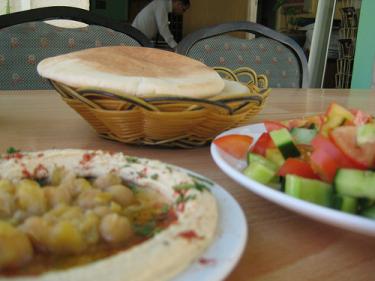
Food and Wine Tours: The West Bank is known for its delicious food and wine, and visitors can take food and wine tours to sample local cuisine and wine varieties. Popular dishes include maqluba, a rice dish with meat and vegetables, and musakhan, a chicken and bread dish.
Shopping: The West Bank is home to several markets and bazaars, where visitors can buy local handicrafts, souvenirs, and other goods. Popular markets include the Old City Market in Nablus and the Bethlehem Market.
Religious Tours: The West Bank is home to several religious sites, including the Church of the Nativity in Bethlehem, the Al-Aqsa Mosque in Jerusalem, and the Tomb of the Patriarchs in Hebron. Visitors can take religious tours to explore these sites and learn more about the region's religious heritage.
Sports and Recreation: The West Bank offers a range of sports and recreational activities, including football, basketball, and swimming. There are several sports clubs and facilities throughout the region, including the Al-Faisal Club in Nablus and the Hebron Sports Club.
Dates of Interest
- Untitled date
How do people greet each other in WestBank?
The most common greeting is "Salaam Alaykum" (peace be upon you), answered with "Wa alaykum salaam." Handshakes are common in formal settings, and cheek kisses are exchanged among family and close friends.
Do
- Respond to "Salaam Alaykum" with "Wa alaykum salaam"
- Use "Marhaba" (hello) with friends and acquaintances
- Say "Ahlan wa sahlan" to welcome guests or visitors
- Shake hands when meeting someone for the first time
Good to know
- Use "Sabah al-khair" (good morning) and "Masa' al-khair" (good evening) in formal settings or with people you don't know well
- Cheek kisses are reserved for family and close friends
What should I wear in WestBank?
Dress is diverse and reflects religious and cultural diversity. Traditional Muslim dress, Christian Western-style dress, and modern Western clothing all coexist, especially among younger generations.
Do
- Wear traditional Palestinian dress like the embroidered thobe for special occasions such as weddings and festivals
- Expect Western-style clothing like jeans and t-shirts in urban areas
Good to know
- Muslim women often wear a long dress or abaya and a hijab covering the hair
- Christian women tend to dress more like Westerners and many do not cover their hair
- Younger generations often mix traditional and Western styles
What is family life like in WestBank?
Family is the cornerstone of society, with strong ties and highly valued extended families. Several generations often live together, and hospitality toward visitors is central to the culture.
Good to know
- Expect to be welcomed with warmth and generosity as a visitor
- Family provides support and care for its members
What do people do for fun in WestBank?
Popular activities include hiking, cultural, historical and religious tours, food and wine tours, shopping in markets, and sports like football, basketball and swimming.
Do
- Hike the Masar Ibrahim al-Khalil trail from Jenin to Hebron
- Visit historic sites like Jericho, Bethlehem, and the old city of Hebron
- Try local dishes such as maqluba (rice with meat and vegetables) and musakhan (chicken and bread)
- Shop at markets like the Old City Market in Nablus and the Bethlehem Market
Good to know
- Religious sites include the Church of the Nativity in Bethlehem and the Tomb of the Patriarchs in Hebron
- Sports facilities include the Al-Faisal Club in Nablus and the Hebron Sports Club
Last updated: 2026-07-12 · Sources: CountryReports
Photos of West Bank
Photos of West Bank


Travel and Tourism
Travel and Tourism
- Travel Alert Status
- Level 3: Reconsider Travel
- Currency
- new Israeli shekel (ILS); Jordanian dinar (JOD)
- Climate
- temperate; temperature and precipitation vary with altitude, warm to hot summers, cool to mild winters
- Airports
- 3
Read the full travel guide — health, safety, vaccinations, disease risk, sanitation, and transit details.
View full travel guideRecipes
Recipes
Date With Bananas
Side Dish
Main Dish
Ma'aluba (Chicken or Lamb with Eggplant or Cauliflower)
Main Dish
Ma'aluba (Chicken or Lamb with Eggplant or Cauliflower)
Main Dish
Musakhan (Bread with Fried Onions and Chicken on Top)
Main Dish
Musakhan (Bread with Fried Onions and Chicken on Top)
Main Dish
Squid with Tomatoes
Main Dish
Squid with Tomatoes
Main Dish
PremiumWaraq Dawalee (Stuffed Grape Leaves)
Main Dish
PremiumWaraq Dawalee (Stuffed Grape Leaves)
Side Dish
PremiumSalatet Malfoof (Cabbage Salad)
History
History
Historical Eras
Ancient & Medieval
3000 BCE – 1517
The land of Canaan and later Palestine served as a crossroads of ancient civilizations, inhabited by Canaanites, Israelites, and later conquered by Assyrians, Babylonians, Romans, and Byzantines. Arab Muslim forces brought Islam to the region in the 7th century CE, establishing a lasting cultural and religious transformation. The Crusader interlude (1099–1187) was ended by Saladin, after which Mamluk sultans governed the region until the Ottoman conquest.
Ottoman Rule
1517 – 1920
The Ottoman Empire incorporated Palestine into its administrative structure for four centuries, governing the region as part of the provinces of Syria and later the Vilayet of Beirut and the Sanjak of Jerusalem. The late Ottoman period saw the rise of Arab nationalist sentiment and the beginnings of Zionist immigration, creating early demographic and political tensions. Ottoman defeat in World War I ended this era and opened Palestine to European mandatory control.
British Mandate
1920 – 1948
Britain administered Palestine under a League of Nations mandate, having made conflicting promises of a homeland to both Arab and Jewish communities. Accelerating Jewish immigration, encouraged by the Zionist movement, intensified intercommunal violence through the 1930s and 1940s. Unable to resolve competing national claims, Britain handed the question to the United Nations in 1947, which proposed a partition plan that sparked the 1948 war.
Jordanian Administration
1948 – 1967
The 1948 Arab-Israeli War, known to Palestinians as the Nakba, resulted in over 700,000 Palestinian refugees and the West Bank coming under Jordanian control, formally annexed in 1949. Jordan extended citizenship to West Bank Palestinians while suppressing independent Palestinian political organization. East Jerusalem, including the Old City and its holy sites, remained under Jordanian administration throughout this period.
Israeli Occupation
1967 – 1993
Israel's victory in the June 1967 Six-Day War brought the West Bank, East Jerusalem, and Gaza Strip under Israeli military occupation, prompting UN Security Council Resolution 242 calling for Israeli withdrawal. Israel systematically established Jewish settlements on occupied land, displacing additional Palestinian populations. Decades of occupation, land confiscation, and restricted movement culminated in the First Intifada, which began in December 1987 and reshaped international pressure toward a negotiated solution.
Palestinian Authority Era
1993 – present
The Oslo Accords, signed on 13 September 1993, established the Palestinian Authority and granted limited self-governance over designated areas of the West Bank and Gaza, with subsequent agreements—including the 1995 Interim Agreement and 1998 Wye River Memorandum—extending PA jurisdiction incrementally. The first Palestinian legislative elections were held in January 1996, and Yasser Arafat served as president until his death in 2004. The Second Intifada (2000–2005), Israel's 2002 siege of Arafat's Ramallah compound, and Gaza's separation under Hamas from 2007 onward have kept final-status negotiations unresolved.
Overview
Islam was brought to the area in the 7th century AD and this area remained under Muslim control except for during the Crusades, until the fall of the Ottoman Empire after WW1.
The British Mandate then controlled Palestine until 1948. During this time the British authority made conflicting offers of a homeland for the Hews and Arabs in Palestine. All the while Jewish immigration to Palestine, which was encouraged by the Zionist movement whose intention was the creation of a Jewish state in Palestine, occurred at a steady pace. Subsequently, during the 1930’s tensions rose between the newly arrived immigrants and indigenous Palestinians. Sporadic violence erupted as the competing sides were at odds with one another and with the British authority. In 1947 Great Britain handed the ’question of Palestine’ over to the United Nations after being unable to resolve the issue.
The years of the Second World War brought incredible suffering on the European Jewry in the Holocaust. At this time the world community and the United Nations hoped to alleviate some of that suffering. The United Nations proposed a partition plan in which 56% of historic Palestine was to comprise the Jewish state and 42% was to become a Palestinian state and 2% an international protectorate for the Holy places. The Jewish side accepted the offer while the Palestinians rejected the offer as disproportionate because, as they saw it, they owned and lived on a majority of the land.
In 1948 a war broke our resulting in the establishment of Israel on 77% of historic Palestine. For Palestinians, this event is known as the Nakba (great catastrophe). Over 700,000 Palestinians were made refugees. The West Bank fell under the control of Jordan and the Gaza Strip under Egypt.
In 1967 Israel occupied the West Bank and East Jerusalem and the Gaza Strip. The United Nations passed Security Council Resolution 242 calling for Israel’s withdrawal from territories it had conquered in the 1967 war. Israel began its policy of building Jewish settlements on occupied Palestinian land. Since 1967 another mass Palestinian refugee problem was created by displacing persons within the West Bank and Gaza Strip and sending refugees to neighboring Arab countries as well as throughout the world.
Year under Israel occupation culminated in the first intifada (uprising) that began in December 1987. By the early 90’s the suffering in Gaza and the West Bank and changing international political dynamics led to the Oslo Peace Process which handed over autonomous areas to Palestinians and provided a framework for final status negotiations of issues such as Palestinian statehood and other outstanding issues.
The Israel-PLO Declaration of Principles on Interim Self-Government Arrangements (the DOP), signed in Washington on 13 September 1993, provided for a transitional period not exceeding five years of Palestinian interim self-government in the Gaza Strip and the West Bank. Under the DOP, Israel agreed to transfer certain powers and responsibilities to the Palestinian Authority (PA) as part of the interim self-governing arrangements in the West Bank and Gaza Strip. A transfer of powers and responsibilities for the Gaza Strip and Jericho took place pursuant to the Israel-PLO 4 May 1994 Cairo Agreement on the Gaza Strip and the Jericho Area and in additional areas of the West Bank pursuant to the Israel-PLO 28 September 1995 Interim Agreement, the Israel-PLO 15 January 1997 Protocol Concerning Redeployment in Hebron, the Israel-PLO 23 October 1998 Wye River Memorandum, and the 4 September 1999 Sharm el-Sheikh Agreement. The DOP provided that Israel would retain responsibility during the transitional period for external and internal security and for public order of settlements and Israeli citizens. Direct negotiations to determine the permanent status of Gaza and West Bank began in September 1999 after a three-year hiatus, but were derailed by a second intifada that broke out in September 2000. In April 2003 the Quartet (US, EU, UN, and Russia) presented a roadmap to a final settlement of the conflict by 2005 based on reciprocal steps by the two parties leading to two states, Israel and a democratic Palestine. The proposed date for a permanent status agreement has been postponed indefinitely due to violence and accusations that both sides have not followed through on their commitments. Longtime Palestinian leader Yasir ARAFAT died in November 2004 and Mahmud ABBAS was elected PA President in January 2005, bringing hope of a turning p
Timeline of Key Events
1949
The West Bank was declared part of Jordanian territory.
The West Bank was declared part of Jordanian territory after Israel and Jordan signed armistice agreements in 1949.
1993
Negotiations in Norway culminate in the signing of the Declaration of Principles.
Negotiations in Norway culminate in the signing of the Declaration of Principles between Israeli Prime Minister Yitzhak Rabin and Palestinian leader Yasser Arafat. The Palestinians consent to recognizing Israel. In return, Israel would gradually dismantle its occupation of the West Bank and Gaza and transfer authority to an interim Palestinian Authority (PA), initiated by a 1994 agreement.
1996
The country’s first national elections.
In the country’s first national elections, Palestinians elect Yasser Arafat as the PA’s chairman as well as members of the Palestinian Authority legislative body, the Palestinian Legislative Council (PLC).
1998
Under the Wye River Memorandum, Israel agrees to further withdrawals from the West Bank.
Under the Wye River Memorandum, Israel agrees to further withdrawals from the West Bank.
2002
Israeli forces besiege Yasser Arafat’s Ramallah compound.
Israeli forces besiege Yasser Arafat’s Ramallah compound and reoccupy almost all of the West Bank. Arafat signs the Palestinian Authority Basic Law, which provides the legal foundation for the PA.
2004
The PA holds municipal elections in 26 West Bank localities.
The PA holds municipal elections in 26 West Bank localities for the first time in almost three decades.
2005
Israel evacuates its settlers and withdraws troops from Gaza.
Israel evacuates its settlers and withdraws troops from Gaza, ending almost 40 years of military occupation.
Read the full history profile — narrative overview, defining eras, and the complete timeline in one place.
View expanded historyInteresting Facts
Interesting Facts
Prior to the First World War, the area now known as the West Bank was under Ottoman rule as part of the province of Syria.
The region did not have a separate existence until 1948–1949, when it was defined by the Armistice Agreement of April 1949 between Israel and Jordan (until then known as Transjordan).
See every fact — trivia, oddities, and curious tidbits gathered from across the country.
View all interesting factsGeography and Environment
Geography and Environment
- Terrain
- mostly rugged dissected upland, some vegetation in west, but barren in east
- Climate
- temperate; temperature and precipitation vary with altitude, warm to hot summers, cool to mild winters
- Natural Hazards
- droughts
- Current Environmental Issues
- adequacy of fresh water supply; sewage treatment
Read the full geography and environment profile — terrain, climate, natural resources, hazards, land use, and international agreements.
View full geographyPeople & Demographics
People & Demographics
Religion
Languages Spoken
Arabic, Hebrew (spoken by Israeli settlers and many Palestinians), English (widely understood)
- Arabic
- Hebrew
Population
- Population
- 2,514,845
- Nationality Noun
- NA
- Ethnic Groups
- Palestinian Arab and other 83%, Jewish 17%
- Language Note
- Arabic is the most commonly spoken language in the West Bank, and it is the official language of the Palestinian Authority. Most Palestinians in the West Bank speak Palestinian Arabic, which is a dialect of Arabic that has evolved over centuries and has its own unique vocabulary and grammar. In addition to Arabic, many Palestinians in the West Bank also speak Hebrew, which is the official language of Israel. Hebrew is taught in Palestinian schools as a second language, and many Palestinians who work or interact with Israelis are fluent in Hebrew. English is also widely spoken in the West Bank, particularly in urban areas and among younger generations. English is taught as a second language in Palestinian schools, and many Palestinians who work in international organizations or do business with foreigners are proficient in English. Other languages that are spoken by smaller segments of the population include French, Spanish, and Russian, among others. However, Arabic remains the dominant language in the West Bank, and proficiency in Arabic is essential for communication with the local population.
Education
- Literacy Definition
- NA
Read the full people and society profile — demographics, health, education, religion, languages, and notable people.
View full people and societyGovernment & Politics
Government & Politics
Country Identity
- Country Name
- WestBank
Government Structure
- Executive Branch
- The executive branch of the West Bank operates under the framework established by the Oslo Accords of the 1990s, which created the Palestinian Authority (PA) as the governing body for Palestinian-administered territories. The political structure is complex, reflecting the unresolved status of the West Bank as a territory under Israeli military occupation while simultaneously being subject to Palestinian self-governance in designated areas. The President of the Palestinian Authority serves as the head of state and exercises significant executive authority. Mahmoud Abbas, also known by his nom de guerre Abu Mazen, has held the presidency since January 2005, following the death of Yasser Arafat. Abbas leads Fatah, the dominant secular nationalist movement within Palestinian politics. His presidential term officially expired in 2009, but elections have been repeatedly delayed due to political divisions, legal disputes, and security concerns, leaving his continued tenure a subject of ongoing controversy. The Prime Minister serves as head of government and is responsible for managing day-to-day administrative functions. The Prime Minister is appointed by the President and oversees the Council of Ministers, which acts as the cabinet and coordinates policy across various governmental portfolios including finance, education, health, and infrastructure. Executive authority in the West Bank is further complicated by the political split between Fatah, which controls the PA in the West Bank, and Hamas, which seized control of the Gaza Strip in 2007. This division has prevented unified Palestinian governance and stalled efforts toward reconciliation. Various unity agreement attempts between the two factions have largely failed to produce a lasting, functioning joint administration. The Palestinian Authority's executive power is also constrained in practice by the presence of Israeli military and civil administration, particularly in Area C, which comprises approximately 60 percent of the West Bank and remains under full Israeli control. This limits the PA's effective territorial jurisdiction primarily to Areas A and B, where it exercises varying degrees of civil and security authority.
- Independence
- Palestinian Arab and other 83%, Jewish 17%
Read the full government profile — flag symbolism, national anthem, and other national symbols.
View full government detailsEconomy
Economy
The economy of the West Bank has been shaped for decades by political instability, restricted movement, and dependence on Israel and international donor support. Real per capita GDP for the West Bank and Gaza Strip declined sharply during the 1990s due to falling aggregate incomes and rapid population growth, with downturns largely driven by Israeli closure policies imposed in response to security incidents. Unemployment, which had been under 5% during the 1980s, rose above 20% by the mid-1990s and has remained elevated ever since.
A brief recovery in 1998–1999 was reversed by the outbreak of the Second Intifada in late 2000, which triggered tight Israeli restrictions on Palestinian areas and severely disrupted trade and labor flows. Israeli military operations in 2001–2002 destroyed significant capital infrastructure and administrative capacity, and only substantial international aid prevented a complete economic collapse.
In the years that followed, the West Bank economy performed somewhat better than Gaza, benefiting from relative stability, Palestinian Authority institutional reforms, and donor inflows. Between 2007 and 2013, the West Bank experienced moderate growth, with real GDP expanding at rates of 5–8% annually in some years. However, growth slowed considerably in the second half of the 2010s due to declining donor support, persistent restrictions on movement, access, and trade, limited Palestinian control over Area C (which comprises about 60% of the West Bank), and ongoing expansion of Israeli settlements.
The economy contracted sharply during the COVID-19 pandemic in 2020, before rebounding in 2021 and 2022. Conditions deteriorated dramatically following the outbreak of the Israel-Hamas war in October 2023. Israel suspended work permits for tens of thousands of Palestinian laborers, withheld portions of the clearance revenues it collects on behalf of the Palestinian Authority, and intensified movement restrictions across the West Bank. As a result, the West Bank economy contracted by an estimated 19% in 2024, unemployment surged to roughly 35%, and poverty rates rose significantly. The Palestinian Authority faces a severe fiscal crisis, and the World Bank and IMF have warned that the Palestinian economy is at risk of collapse without major donor intervention and a restoration of clearance revenue transfers.
Key structural challenges include limited access to natural resources and agricultural land, weak industrial capacity, high dependence on Israeli markets and labor opportunities, and a fragmented territory that constrains private sector development. Services, construction, and public administration dominate economic output, while the manufacturing and agricultural sectors remain underdeveloped.
Snapshot
- Currency Name and Code
- ILS; JOD
- GDP Real Growth Rate
- 6.2%
Banknotes


Budget & Public Finance
- Fiscal Year
- calendar year
- Annual Budget
- $1,340,000,000 (USD)
- Economic Aid
- $2,000,000,000 (USD)
Labor, Industry & Trade
- Labor Force by Occupation
- services 66%; industry 21%; agriculture 13%
- Industries
- generally small family businesses that produce cement, textiles, soap, olive-wood carvings, and mother-of-pearl souvenirs; the Israelis have established some small-scale, modern industries in the settlements and industrial centers
- Agriculture Products
- olives, citrus, vegetables; beef, dairy products
- Export Commodities
- olives, fruit, vegetables, limestone
- Export Partners
- Israel, Jordan, Gaza Strip
- Import Commodities
- food, consumer goods, construction materials
- Import Partners
- Israel, Jordan, Gaza Strip
Energy
- Oil Production
- 0 bbl/day
- Oil Consumption
- 0 bbl/day
- Oil Reserves
- 0 bbl/day
- Natural Gas Production
- 0 cu m
- Natural Gas Consumption
- 0 cu m
- Natural Gas Imports
- 0 cu m
- Natural Gas Exports
- 0 cu m
- Natural Gas Reserves
- 0 cu m
Communications
- Telephone System
- general assessment: continuing political and economic instability has impeded significant liberalization of the telecommunications industry domestic: Israeli company BEZEK and the Palestinian company PALTEL are responsible for fixed line services; PALTEL plans to establish a fiber-optic connection to Jordan to route domestic mobile calls; the Palestinian JAWWAL company and WATANIYA PALESTINE provide cellular services international: country code - 970; 1 international switch in Ramallah
- Internet Country Code
- N/A
News & Weather
News & Weather
Latest News
Occupied West Bank World Cup screening halted for funeral - Al Jazeera
Al Jazeera · 21h ago
On Sebastia’s hilltop, Israelis and Palestinians are fighting over who owns the past and controls the present - CNN
CNN · 3h ago
‘Israeli settlers are in partnership with the army,’ say Palestinians after two shot dead in West Bank - The Guardian
The Guardian · 6h ago
Dozens of Israeli Settlers Storm Palestinian Village in Occupied West Bank - Democracy Now!
Democracy Now! · 17h ago
Settlers besiege, trap Palestinian family in West Bank home for over two weeks - Haaretz
Haaretz · 1d ago
‘Economic warfare?’ In the West Bank, too much cash is breaking the Palestinian economy - The Times of Israel
The Times of Israel · 12h ago
'Point of no return': Belgium becomes fourth European country to ban imports from West Bank - The Jerusalem Post
The Jerusalem Post · 1d ago
Israeli ministers announce plans for new illegal settlements in Gaza and West Bank - The Guardian
The Guardian · 2d ago
News via Google News
Climate Overview
temperate; temperature and precipitation vary with altitude, warm to hot summers, cool to mild winters
Videos
Videos
1 curated YouTube videos.
Source: YouTube
Frequently Asked Questions
Frequently Asked Questions
What is the population of West Bank?
How do people greet each other in WestBank?
What should I wear in WestBank?
What is family life like in WestBank?
What do people do for fun in WestBank?
What is the administrative center of the West Bank?
Where is the West Bank located?
What countries or territories border the West Bank?
What religion is practiced in the West Bank?
What currency is used in the West Bank?
What language is spoken in the West Bank?
What is the West Bank known for?
What is the historical origin of the West Bank as a defined territory?
Last reviewed 2026