
 English
 Español
 中文
中文 हिन्दी
 Français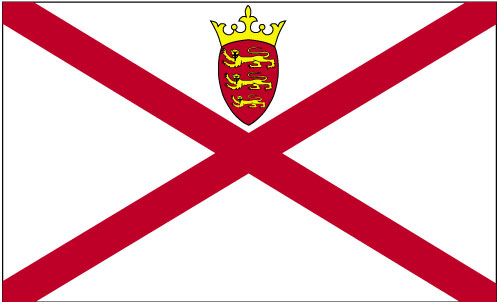
Jersey
Declare Your Relationship to Jersey
CountryReports Community
- Studying0
- From Jersey0
- Jersey heritage0
- Visited0
- Want to visit0
Customs and Culture
Customs and Culture
Cultural Attributes
Jersey, a self-governing Crown Dependency located in the English Channel off the coast of Normandy, possesses a cultural identity shaped by centuries of dual Norman and British influence. This blending of French and English heritage is visible in nearly every aspect of daily life, from place names and architecture to food traditions and local customs. The island's native language, Jèrriais, is a form of Norman French that has been spoken on Jersey for over a thousand years. Though fluent speakers now number only a few hundred, there has been a sustained revival effort led by organizations such as L'Assembliée d'Jèrriais, which promotes the language through education and community events. Many parishes, roads, and fields across the island still carry Jèrriais names, preserving linguistic heritage in the landscape itself. Jersey is divided into twelve parishes, each with its own Constable and a strong sense of local identity. Parish life forms a cornerstone of the island's social fabric, with community celebrations, agricultural shows, and parish assemblies remaining important civic traditions. The annual Jersey Battle of Flowers, first held in 1902, is one of the most celebrated cultural events on the island, drawing visitors from across Europe to watch elaborately decorated floral floats parade through St. Helier. Cuisine on Jersey reflects its geographical position between England and France. The island is renowned for Jersey Royal potatoes, a protected designation of origin product grown in the island's uniquely fertile cliff-side fields known as côtils. Fresh seafood, including locally caught crab and lobster, is also central to the culinary identity. Jersey cream and butter, derived from the distinctive Jersey cattle breed, are celebrated products recognized internationally. Art and heritage are supported by institutions such as Jersey Heritage, which maintains a network of museums and historic sites including Mont Orgueil Castle, dating to the thirteenth century. The island also has a thriving contemporary arts scene, supported by venues such as the Jersey Arts Centre in St. Helier. Religious tradition, primarily Anglican and Roman Catholic, continues to play a visible role in community life, with historic granite churches serving as landmarks throughout the island's parishes.

Island of Norman Legacy and Resilient Grace

Holidays
Liberation Day
5/9Independence
On May 9th every year Jersey celebrates the anniversary of the
Liberation of the island from the German occupation forces of World War
II.
Dates of Interest
- May 9th
On May 9th every year Jersey celebrates the anniversary of the Liberation of the island from the German occupation forces of World War II.
What food is Jersey known for?
Jersey's cuisine blends English and French influences, featuring famous local products like Jersey Royal potatoes and fresh seafood.
Good to know
- Try Jersey Royal potatoes, a protected designation of origin product grown in cliff-side fields called côtils
- Sample locally caught crab and lobster, central to the island's culinary identity
- Look for internationally recognized Jersey cream and butter from the distinctive Jersey cattle breed
What cultural events and attractions can travelers enjoy in Jersey?
Jersey offers vibrant parish celebrations, floral festivals, historic sites, and a thriving arts scene.
Good to know
- Attend the annual Jersey Battle of Flowers, first held in 1902, with decorated floral floats parading through St. Helier
- Visit Mont Orgueil Castle, dating to the thirteenth century
- Explore museums and historic sites maintained by Jersey Heritage
- Check out the contemporary arts scene at venues like the Jersey Arts Centre in St. Helier
What should travelers know about Jersey's culture and identity before visiting?
Jersey is a self-governing Crown Dependency with a dual Norman and British heritage, divided into twelve parishes each with a strong local identity.
Good to know
- Learn that Jèrriais, a form of Norman French, is the island's native language, now spoken by a few hundred and undergoing revival
- Notice Jèrriais names preserved in parishes, roads, and fields across the island
- Respect the importance of parish life, community celebrations, agricultural shows, and parish assemblies
- Be aware that Anglican and Roman Catholic traditions remain visible in community life, with historic granite churches as parish landmarks
Last updated: 2026-07-12 · Sources: CountryReports
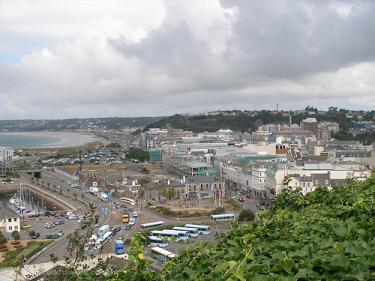
Photos of Jersey
Photos of Jersey

Travel and Tourism
Travel and Tourism
- Currency
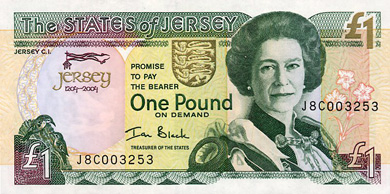
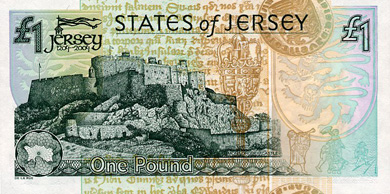
- British pound (GBP); note - there is also a Jersey pound
- Time Difference
- UTC 0 (5 hours ahead of Washington, DC, during Standard Time)
- Climate
- temperate; mild winters and cool summers
- Airports
- 1
Read the full travel guide — health, safety, vaccinations, disease risk, sanitation, and transit details.
View full travel guideRecipes
Recipes
History
History
Historical Eras
Prehistoric Jersey
250000 BCE – 933
Jersey's earliest human presence dates to at least 250,000 BCE, with the La Cotte de St Brelade cave yielding significant Neanderthal remains and Palaeolithic tools. Neolithic and Bronze Age peoples left dolmens and burial mounds across the island. Jersey was absorbed into the Frankish realm and subsequently became part of the Duchy of Normandy following Rollo's grant from the French crown in 933.
Norman Duchy Era
933 – 1204
As part of the Duchy of Normandy, Jersey's fate became intertwined with England following William the Conqueror's invasion of 1066. The island shared in the cross-Channel dominion of the Norman and then Angevin kings, developing its distinctive Norman-French legal customs and parish structure. This period laid the cultural and linguistic foundations of Jersey's unique identity, rooted firmly in the Norman tradition.
English Crown Dependency
1204 – 1483
When King John lost continental Normandy to Philippe-Auguste of France in 1204, Jersey chose allegiance to the English Crown in exchange for royal charters guaranteeing self-governance under its own laws. The island's Royal Court, comprising a Bailiff and 12 Jurats, was established, forming the constitutional bedrock still recognisable today. Repeated French attacks, including major raids from 1213 onward, made Jersey a contested frontier outpost requiring constant fortification.
Neutrality & Reformation
1483 – 1700
The 1483 Papal Bull of Neutrality granted Jersey protection from the perpetual Anglo-French conflicts, permitting the island to trade with both kingdoms during wartime. Edward III's 1341 charter had already confirmed Jersey's independent status, and further royal charters reinforced its autonomous governance. The Reformation transformed the island's religious landscape toward Calvinism, and in 1565 Jersey colonised the neighbouring island of Sark, extending its sphere of influence.
Georgian & Revolutionary Period
1700 – 1815
Jersey prospered through privateering, the cod trade with Newfoundland, and smuggling during the 18th century. The Battle of Jersey in 1781 saw a French invasion force defeated largely through the heroism of Major Francis Peirson, cementing British control. The French Revolution brought an influx of royalist refugees from 1790, profoundly shaping the island's society, while the Napoleonic Wars stimulated further fortification of the coastline.
Modern Jersey
1815 – present
The 19th century brought significant population growth, tourism, and agricultural exports including Jersey cattle and potatoes, alongside major constitutional reforms in 1856 and 1948 that modernised the States assembly. The most traumatic chapter was the German Occupation of 1940–1945, during which Jersey was the only British territory held by Nazi forces, with 1,186 English-born residents deported to Germany in 1942. Liberation in May 1945 marked a new era of self-governance, and Jersey today functions as a prosperous Crown dependency with a globally significant financial services sector.
Overview
Among the privileges which the King granted islanders was the right to be governed by their own laws and he instructed them to select their 12 best men as Jurats who, sitting with the Bailiff, became the Island’s Royal Court. A Warden, later to become Governor, was appointed by the King to organise the defence of the Island. The constitutional position which Jersey enjoys today is founded on these links with the English Crown confirmed in Royal Charters by subsequent monarchs. Over a period of time, the Royal Court began to consult with the people through the Constables (or Connétables) of the Parishes and with the Church through the Rectors. This consultation with the three estates of Court, People and Church was eventually formalised into what we now know as the States of Jersey. Significant constitutional changes in 1856 and 1948 saw the introduction of Deputies and Senators into the States and the removal of the Jurats and the Rectors. However, the 12 Jurats remain the lay members of the Royal Court and are today chosen by an electoral college comprising members of the Court and the States.
Jersey’s cultural heritage is also evident in its customs and traditions, in its language (Jèrriais) and in its range of architecture.
Timeline of Key Events
1204
Start of hostilities between Jersey and France.
King John lost Normandy to the French King. Start of hostilities between Jersey and France. Duke of Normandy takes control of Channel Islands.
1213
First of several major attacks on Jersey by French.
First of several major attacks on Jersey by French, leading to the building of Mont Orgueil and Grosnez Castle.
1341
Edward III issued a Royal Charter, confirming independent status.
Edward III issued a Royal Charter, confirming independent status.
1483
Act of Neutrality issued.
Act of Neutrality issued.
1565
Colonization of Sark.
Colonization of Sark.
1781
Battle of Jersey.
Battle of Jersey.
1790
Influx of French refugees from the Revolution.
Influx of French refugees from the Revolution.
Read the full history profile — narrative overview, defining eras, and the complete timeline in one place.
View expanded historyInteresting Facts
Interesting Facts
The island of Jersey and the other Channel Islands represent the last remnants of the medieval Dukedom of Normandy that held sway in both France and England. These islands were the only British soil occupied by German troops in World War II.
The Queen of Spain visits Jersey every year.
The Jersey Battle of Flowers is now over 100 years old and was first staged in 1902 to celebrate the coronation of King Edward VII.
The Island of Jersey covers a compact 45 square miles (116 square kms), much of it unspoiled countryside.
Located some 100 miles (160 kms) south of mainland Britain, Jersey is the most southerly island of the British Isles. In fact, it’s much closer to France, lying just 14 miles (22 kms) from its coast.
The relationship between the Island and the American state of New Jersey can be traced back to the English Civil War. King Charles II twice took refuge in Jersey, first as Prince of Wales and then as exiled King of England. The Island’s loyalty was rewarded when King Charles gave Smith’s Island and some neighbouring islets off Virginia to Sir George Carteret with permission to settle. Sir George renamed them New Jersey. The original venture failed but a grant from the Duke of York in 1664 gave Carteret, Lord of the Manor of St Ouen, joint ownership of the territory now known as New Jersey.
See every fact — trivia, oddities, and curious tidbits gathered from across the country.
View all interesting factsGeography and Environment
Geography and Environment
- Terrain
- gently rolling plain with low, rugged hills along north coast
- Climate
- temperate; mild winters and cool summers
- Natural Hazards
- NA
- Current Environmental Issues
- NA
Read the full geography and environment profile — terrain, climate, natural resources, hazards, land use, and international agreements.
View full geographyPeople & Demographics
People & Demographics
Languages Spoken
English (official), French (official), Norman-French dialect spoken in country districts
- English
- French
Population
- Population
- 91,812
- Nationality Noun
- Channel Islander(s)
- Ethnic Groups
- UK and Norman-French descent
Education
- Literacy Definition
- NA
Read the full people and society profile — demographics, health, education, religion, languages, and notable people.
View full people and societyGovernment & Politics
Government & Politics
Country Identity
- Country Name
- Jersey
- Full Country Name
- Bailiwick of Jersey
Government Structure
- Government Type
- NA
- Legal System
- English law and local statute; justice is administered by the Royal Court
- Executive Branch
- chief of state: King CHARLES III (since 8 September 2022), represented locally by the Lieutenant Governor head of government: Lieutenant Governor Jerry KYD (since 8 October 2022); Bailiff Timothy John Le COCQ (since 2019) cabinet: committees appointed by the Assembly of the States elections: none; the monarch is hereditary; the lieutenant governor and bailiff are appointed by the monarch
- Legislative Branch
- unicameral Assembly of the States (55 voting members - 12 senators (elected for six-year terms), 12 constables or heads of parishes (elected for three-year terms), 29 deputies (elected for three-year terms); the bailiff and the deputy bailiff; and three non-voting members - the Dean of Jersey, the Attorney General, and the Solicitor General all appointed by the monarch) elections: last held NA (next to be held NA); note - on 23 November 2005, 29 deputies, independents, were elected election results: percent of vote - NA; seats - independents 55
- Judicial Branch
- Royal Court (judges elected by an electoral college and the bailiff)
- Suffrage
- NA years of age; universal adult
- Constitution
- unwritten; partly statutes, partly common law and practice
- Independence
- none (British crown dependency)
- National Holiday
- Liberation Day, 9 May (1945)
Capital City
- Capital Name
- Saint Helier
- Capital - geographic coordinate
- 49 11 N, 2 06 W
- Capital Time Difference
- UTC 0 (5 hours ahead of Washington, DC, during Standard Time)
named after Saint HELIER, the patron saint of Jersey, who was reputedly martyred on the island in A.D. 555
Read the full government profile — flag symbolism, national anthem, and other national symbols.
View full government detailsEconomy
Economy
Jersey's economy is dominated by international financial services, which remain the cornerstone of the island's prosperity. The finance sector accounts for approximately 40% of Jersey's economic output and roughly a quarter of total employment, encompassing banking, fund management, trust services, and legal advisory work. Jersey has positioned itself as a leading international finance center, with substantial deposits held in its banks and significant assets under administration.
Agriculture, while a much smaller share of GDP today, retains cultural and export importance. Jersey Royal potatoes are the island's signature crop and a protected designation product, with the United Kingdom serving as the principal market. The world-renowned Jersey breed of dairy cattle continues to contribute to exports of milk, cream, and breeding stock. Other crops include tomatoes, flowers, and seasonal produce.
Tourism remains a meaningful pillar of the economy, supported by the island's coastline, heritage sites, and proximity to both Britain and France, though its share of GDP has declined considerably from previous decades. The digital and creative sector has expanded notably, with e-commerce, fintech, and information technology businesses growing alongside more traditional light manufacturing.
Jersey imports nearly all of its raw materials, energy, and a large portion of its food. Low personal and corporate tax rates, the absence of capital gains and inheritance taxes, and a stable regulatory environment continue to make Jersey attractive to international businesses and high-net-worth individuals, though the jurisdiction has aligned with global transparency and anti-money-laundering standards in recent years.
Snapshot
- Currency Name and Code
- Pound Sterling (GBP)
Banknotes
Budget & Public Finance
- Fiscal Year
- 1 April - 31 March
- Annual Budget
- $588,000,000 (USD)
Labor, Industry & Trade
- Industries
- tourism, banking and finance, dairy
- Agriculture Products
- potatoes, cauliflower, tomatoes; beef, dairy products
- Export Commodities
- light industrial and electrical goods, foodstuffs, textiles
- Export Partners
- UK
- Import Commodities
- machinery and transport equipment, manufactured goods, foodstuffs, mineral fuels, chemicals
- Import Partners
- UK
Energy
- Oil Production
- 0 bbl/day
- Oil Consumption
- 0 bbl/day
- Oil Reserves
- 0 bbl/day
- Natural Gas Production
- 0 cu m
- Natural Gas Consumption
- 0 cu m
- Natural Gas Imports
- 0 cu m
- Natural Gas Exports
- 0 cu m
- Natural Gas Reserves
- 0 cu m
Communications
- Telephone System
- general assessment: increasingly modern system, with broadband access domestic: digital telephone system launch announced in 2006 now implemented; fixed-line and mobile-cellular services widely available; combined fixed and mobile-cellular density exceeds 100 per 100 persons international: country code - 44; submarine cable connectivity to Guernsey, the UK, and France
- Internet Country Code
- .je
News & Weather
News & Weather
Current Weather
Latest News
Will New York, New Jersey do sports together ever again? - Politico
Politico · 1d ago
Donald Trump booed at World Cup final in New Jersey as he presents trophy to Spain - NJ.com
NJ.com · 20h ago
Gangs of New Jersey: how the World Cup final descended into ugly scenes between Argentina and Spain - The Guardian
The Guardian · 9h ago
Iconic candymaker to lay off hundreds, move US headquarters out of New Jersey - Fox Business
Fox Business · 13h ago
The New Jersey Financier Behind Trump Media’s Pivot Into Nuclear Energy - WSJ
WSJ · 7h ago
F-16s intercept planes, deploy flares in restricted airspace over Bedminster and East Rutherford, New Jersey - CBS News
CBS News · 18h ago
NORAD F-16s intercept multiple aircraft violating temporary flight restrictions over New Jersey - Fox News
Fox News · 1d ago
Norad fighter jets intercept multiple aircraft during World Cup final in New Jersey - CTV News
CTV News · 18h ago
News via Google News
Climate Overview
temperate; mild winters and cool summers
Frequently Asked Questions
Frequently Asked Questions
What is the population of Jersey?
What food is Jersey known for?
What cultural events and attractions can travelers enjoy in Jersey?
What should travelers know about Jersey's culture and identity before visiting?
What is the capital of Jersey?
Where is Jersey located?
What surrounds Jersey, as it is an island?
What currency is used in Jersey?
What languages are spoken in Jersey?
What is the historical significance of Jersey?
What is Jersey known for?
Last reviewed 2026