
 English
 Español
 中文
中文 हिन्दी
 Français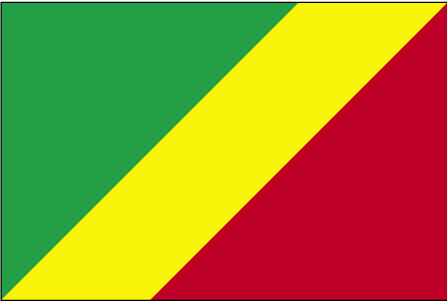
Republic of the Congo
Declare Your Relationship to Republic of the Congo
CountryReports Community
- Studying0
- From Republic of the Congo0
- Republic of the Congo heritage0
- Visited0
- Want to visit0
Customs and Culture
Customs and Culture
About the People
Public recognitions of social hierarchy is important. Agreement with an elder or anyone of higher status is valued above directness.
Cultural Attributes
Public recognitions of social hierarchy is important. Agreement with an elder or anyone of higher status is valued above directness.

Land of the Congo River's Flow
Greetings, Gestures & Visiting
Congo greetings are expressed in many ways. Among some groups close friends are greeted with a bear hug. Others greet with a two handed shake. Among all groups meetings begin by inquiring into the persons well being and the well being of the family.
Congolese take care in their dress. Bous-Bous (colorful strips of cloth) are worn around the waist or as head wraps. Urban people dress in Western style clothing.
Diet
Common foods are bananas, cassava, peanuts, cocoa, taro, and pineapples. About 90% of the countries meat is imported. Congolese culture has many food taboos relating to totemic beliefs. It is strictly forbidden to eat meat from an animal that is part of a persons totem.

Family
Women do most of the work to run the family and care for the household. Men are responsible for hunting, clearing the forests for gardening or in the city being a wage labor.
Recreation
Soccer is the most important sport, followed by basketball, volleyball and handball. Fishing is considered recreational as well as work.
Dates of Interest
- Untitled date
How do people greet each other in RepublicOfTheCongo?
Greetings vary by group and always begin by asking about a person's well-being and the well-being of their family.
Do
- Ask about the person's and their family's well-being when meeting
- Greet close friends with a bear hug among some groups
- Use a two-handed shake as some groups do
What are the dining customs in RepublicOfTheCongo?
Common foods include bananas, cassava, peanuts, cocoa, taro, and pineapples, and there are strong food taboos tied to totemic beliefs.
Don’t
- Never eat meat from an animal that is part of a person's totem
Good to know
- About 90% of the country's meat is imported
What social etiquette should I know in RepublicOfTheCongo?
Public recognition of social hierarchy is important, and agreement with elders or those of higher status is valued over directness.
Do
- Show respect for social hierarchy
- Defer to and agree with elders or people of higher status rather than being blunt
How should I dress in RepublicOfTheCongo?
Congolese take care in their dress; traditional Bous-Bous cloth strips are worn while urban people favor Western-style clothing.
Good to know
- Bous-Bous (colorful cloth strips) are worn around the waist or as head wraps
- Western-style clothing is common in urban areas
What are family roles like in RepublicOfTheCongo?
Women do most of the work running the family and household, while men handle hunting, clearing forests for gardening, or wage labor in the city.
Good to know
- Women manage most household and family care
- Men are responsible for hunting, forest clearing, or city wage labor
What do people do for recreation in RepublicOfTheCongo?
Soccer is the most important sport, followed by basketball, volleyball, and handball, and fishing serves as both recreation and work.
Good to know
- Soccer is the top sport
- Fishing is enjoyed recreationally as well as for work
Last updated: 2026-07-12 · Sources: CountryReports
Photos of Republic of the Congo
Photos of Republic of the Congo


Travel and Tourism
Travel and Tourism
- Travel Alert Status
- Level 2: Exercise Increased Caution
- Currency
- 589.4
- Time Difference
- UTC+1 (6 hours ahead of Washington, DC during Standard Time)
- Climate
- The climate is tropical, with the rainy season lasting from October to April and the dry season from June to September. Humidity is high during the rainy season, and temperatures can climb to 31°C. Humidity and temperatures are lower during the dry season, ranging from 25°C to 28°C.
- Airports
- 32
- Recommended Vaccinations
- How important is it to do your research about vaccinations? It might just save your life! Make yourself aware of the different types of vaccinations and which ones you may need to travel to your destination. Schedule an appointment with your doctor at least four to six weeks before you travel to ensure you receive all important shots. Be sure that you and your family are up to date on your routine vaccinations. Which vaccinations you need will depend on a number of factors including your destination, whether you will be spending time in rural areas, the season of the year you are traveling, your age, health status, and previous immunizations.
Read the full travel guide — health, safety, vaccinations, disease risk, sanitation, and transit details.
View full travel guideRecipes
Recipes
History
History
Historical Eras
Pre-Colonial Kingdoms
1400 – 1880
Bantu-speaking peoples, including the Kongo, Loango, and Teke kingdoms, established sophisticated trade networks reaching deep into the Congo River basin. Portuguese navigator Diogo Cão made first European contact in 1482, initiating commercial relations that quickly became dominated by the transatlantic slave trade. The coastal regions served as a major slave-exporting zone until the early 19th century, after which the weakening of that trade eroded the power of the established Bantu kingdoms.
French Colonial Era
1880 – 1960
Pierre Savorgnan de Brazza secured treaties with local rulers in the 1880s, placing the right bank of the Congo River under French protection and founding Brazzaville as a colonial capital. In 1908, Middle Congo became part of French Equatorial Africa alongside Gabon, Chad, and Oubangui-Chari. The construction of the Congo-Ocean Railway (1924–34) opened the interior, and during World War II Brazzaville served as the symbolic capital of Free France under de Gaulle.
Independence & Early Republic
1960 – 1969
The Republic of the Congo gained formal independence in August 1960 under President Fulbert Youlou, a former Catholic priest whose tenure was marked by ethnic tensions and political rivalry. A popular three-day uprising in August 1963 known as Les Trois Glorieuses ousted Youlou and brought Alphonse Massamba-Débat to power. The period was characterized by instability, culminating in a military coup by Captain Marien Ngouabi in 1968.
Marxist Single-Party State
1969 – 1990
President Marien Ngouabi proclaimed the People's Republic of the Congo in 1969, establishing Africa's first avowed Marxist-Leninist state under the Congolese Party of Labour. Ngouabi was assassinated in 1977, and after a succession of leaders, Denis Sassou-Nguesso consolidated power in 1979, signing a treaty of friendship with the Soviet Union in 1981. Economic mismanagement and the collapse of Soviet patronage eroded the Marxist experiment, prompting its formal abandonment in 1990.
Democratic Transition & Civil War
1990 – 2003
A new democratic constitution was adopted and multiparty elections held in 1992 brought Pascal Lissouba to the presidency, but ethnic and political rivalries quickly destabilized the government, producing bloody fighting between armed factions in 1993–94. In 1997 a brief but destructive civil war returned Sassou-Nguesso to power with the backing of Angolan troops. Southern rebel groups, the Ninja militias of the Pool region, continued sporadic conflict until a final peace accord was signed in March 2003.
Sassou-Nguesso Era
2003 – present
With peace restored, Denis Sassou-Nguesso consolidated authoritarian rule while presiding over an oil-driven economic expansion that made the Republic of the Congo one of sub-Saharan Africa's significant petroleum producers. Constitutional reforms, including a controversial 2015 referendum removing presidential term limits, entrenched Sassou-Nguesso's hold on power into a fourth decade. Governance challenges, corruption, and overdependence on oil revenues have continued to hinder equitable development and democratic progress.
Overview
The area came under French sovereignty in the 1880s. Pierre Savorgnon de Brazza, a French empire builder, competed with agents of Belgian King Leopold’s International Congo Association (later Zaire) for control of the Congo River basin. Between 1882 and 1891, treaties were secured with all the main local rulers on the river’s right bank, placing their lands under French protection. In 1908, France organized French Equatorial Africa (AEF), comprising its colonies of Middle Congo (modern Congo), Gabon, Chad, and Oubangui-Chari (modern Central African Republic). Brazzaville was selected as the federal capital.
Economic development during the first 50 years of colonial rule in Congo centered on natural resource extraction by private companies. In 1924-34, the Congo-Ocean Railway (CFCO) was built at a considerable human and financial cost, opening the way for growth of the ocean port of Pointe-Noire and towns along its route.
During World War II, the AEF administration sided with Charles DeGaulle, and Brazzaville became the symbolic capital of Free France during 1940-43. The Brazzaville Conference of 1944 heralded a period of major reform in French colonial policy, including the abolition of forced labor, granting of French citizenship to colonial subjects, decentralization of certain powers, and election of local advisory assemblies. Congo benefited from the postwar expansion of colonial administrative and infrastructure spending as a result of its central geographic location within AEF and the federal capital at Brazzaville.
The Loi Cadre (framework law) of 1956 ended dual voting roles and provided for partial self-government for the individual overseas territories. Ethnic rivalries then produced sharp struggles among the emerging Congolese political parties and sparked severe riots in Brazzaville in 1959. After the September 1958 referendum approving the new French Constitution, AEF was dissolved. Its four territories became autonomous members of the French Community, and Middle Congo was renamed the Congo Republic. Formal independence was granted in August 1960.
Congo’s first President was Fulbert Youlou, a former Catholic priest from the Pool region in the southeast. He rose to political prominence after 1956, and was narrowly elected President by the National Assembly at independence. Youlou’s 3 years in power were marked by ethnic tensions and political rivalry. In August 1963, Youlou was overthrown in a 3-day popular uprising (Les Trois Glorieuses) led by labor elements and joined by rival political parties. All members of the Youlou government were arrested or removed from office. The Congolese military took charge of the country briefly and installed a civilian provisional government headed by Alphonse Massamba-Debat. Under the 1963 constitution, Massamba-Debat was elected President for a 5-year term and named Pascal Lissouba to serve as Prime Minister. However, President Massamba-Debat’s term ended abruptly in August 1968, when Capt. Marien Ngouabi and other army officers toppled the government in a coup. After a period of consolidation under the newly formed National Revolutionary Council, Major Ngouabi assumed the presidency on December 31, 1968. One year later, President Ngouabi proclaimed Congo to be Africa’s first "people’s republic" and announced the decision of the National Revolutionary Movement to change its name to the Congolese Labor Party (PCT).
On March 18, 1977, President Ngouabi was assassinated. Although the persons accused of shooting Ngouabi were tried and some of them executed, the motivation behind the assassination is still not clear. An 11-member Military Committee of the Party (CMP) was named to head an interim government with Colonel (later General) Joachim Yhomby-Opango to serve as President of the Republic. Accused of corruption and deviation from party directives, Yhomby-Opango was removed from office on February 5, 1979, by the Central Committee of the PCT, which then simultaneously designated Vice President and Defense Minister Col. Denis Sassou-Nguesso as interim President. The Central Committee directed Sassou-Nguesso to take charge of preparations for the Third Extraordinary Congress o
Timeline of Key Events
1400
Bakongo, Bateke and Sanga ethnic groups arrive in what is now the Republic of Congo.
Bakongo, Bateke and Sanga ethnic groups arrive in what is now the Republic of Congo.
1482
Portuguese navigator Diogo Cao explores the coastal areas.
Portuguese navigator Diogo Cao explores the coastal areas.
1910
Middle Congo, as it was known then, becomes a colony of French Equatorial Africa.
Middle Congo, as it was known then, becomes a colony of French Equatorial Africa.
1960
Congo becomes independent with Fulbert Youlou as president.
Congo becomes independent with Fulbert Youlou as president.
1981
Congo signs treaty of friendship and cooperation with the Soviet Union.
Congo signs treaty of friendship and cooperation with the Soviet Union.
1993
Bloody fighting between government and opposition forces.
Bloody fighting between government and opposition forces over disputed parliamentary elections.
1994
Ceasefire between government and opposition established.
Ceasefire between government and opposition established. The opposition given government posts.
Read the full history profile — narrative overview, defining eras, and the complete timeline in one place.
View expanded historyInteresting Facts
Interesting Facts
In precolonial times, the region now called the Republic of Congo was dominated by three kingdoms: Kongo (originating about 1000), the Loango (flourishing in the 17th century), and Tio. After the Portuguese located the Congo River in 1482, commerce was carried on with the tribes, especially the slave trade.
See every fact — trivia, oddities, and curious tidbits gathered from across the country.
View all interesting factsGeography and Environment
Geography and Environment
- Terrain
- coastal plain, southern basin, central plateau, northern basin
- Climate
- The climate is tropical, with the rainy season lasting from October to April and the dry season from June to September. Humidity is high during the rainy season, and temperatures can climb to 31°C. Humidity and temperatures are lower during the dry season, ranging from 25°C to 28°C.
- Natural Hazards
- seasonal flooding
- Current Environmental Issues
- air pollution from vehicle emissions; water pollution from the dumping of raw sewage; tap water is not potable; deforestation
Read the full geography and environment profile — terrain, climate, natural resources, hazards, land use, and international agreements.
View full geographyPeople & Demographics
People & Demographics
Religion
Languages Spoken
French (official), Lingala and Monokutuba (lingua franca trade languages), many local languages and dialects (of which Kikongo is the most widespread)
- French
Population
- Population
- 4,125,916
- Population in Major Urban Areas
- BRAZZAVILLE (capital) 1.611 million; Pointe-Noire 834,000
- Nationality Noun
- Congolese
- Ethnic Groups
- Kongo 48%, Sangha 20%, M'Bochi 12%, Teke 17%, Europeans and other 3% Note: Europeans estimated at 8,500, mostly French, before the 1997 civil war; may be half that in 1998, following the widespread destruction of foreign businesses in 1997
Education
- Literacy Definition
- age 15 and over can read and write
Health Information
- Major Infectious Diseases — degree of risk
- very high
Read the full people and society profile — demographics, health, education, religion, languages, and notable people.
View full people and societyGovernment & Politics
Government & Politics
Country Identity
- Country Name
- RepublicOfTheCongo
- Full Country Name
- Republic of the Congo
- Local - Long
- Republique du Congo
- Former Name
- Middle Congo, Congo/Brazzaville, Congo
Government Structure
- Executive Branch
- The Republic of the Congo operates under a presidential republic system, in which the president serves as both head of state and head of government, wielding considerable executive authority. Denis Sassou Nguesso has dominated the country's political landscape for decades, having first served as president from 1979 to 1992 and returning to power in 1997 following a civil war. He has held the presidency continuously since that return, making him one of the longest-serving leaders in Africa. Sassou Nguesso's Congolese Party of Labour (Parti Congolais du Travail, or PCT) has remained the dominant political force throughout his tenure. A constitutional referendum held in 2015 replaced the existing constitution with a new one that reset presidential term limits, effectively allowing Sassou Nguesso to extend his rule. Under this constitution, the president is elected by popular vote to a five-year term and may serve a maximum of two terms, though critics have argued that the 2015 changes were designed specifically to benefit the incumbent. The president holds broad powers, including the authority to appoint the prime minister, cabinet ministers, and other senior government officials. The Council of Ministers, led by the prime minister, assists in implementing executive policy, though real decision-making authority rests firmly with the presidency. The prime minister position has at times been used to manage day-to-day governmental affairs, while the president sets overall national direction, particularly in areas such as oil policy, national security, and foreign relations. The country's executive branch has faced persistent criticism from international human rights organizations and opposition groups regarding democratic backsliding, suppression of political opposition, and limits on civil freedoms. Elections have been held on schedule but have been disputed by opposition parties and questioned by independent international observers. Anatole Collinet Makosso has served as Prime Minister since May 2021, appointed by Sassou Nguesso following the presidential election held that same year, in which Sassou Nguesso was officially declared the winner with approximately 88 percent of the vote amid opposition boycotts and allegations of irregularities.
Capital City
- Capital Name
- Brazzaville
- Capital - geographic coordinate
- 4 15 S, 15 17 E
- Capital Time Difference
- UTC+1 (6 hours ahead of Washington, DC during Standard Time)
Military
Branches: Congolese Armed Forces (Forces Armees Congolaises, FAC): Army (Armee de Terre), Navy, Congolese Air Force (Armee de l'Air Congolaise); Gendarmerie; Special Presidential Security Guard (GSSP)
Embassy / Diplomatic Mission
U.S. Embassy Brazzaville
Boulevard Denis Sassou Nguesso (across from Blanche Gomez Maternity Hospital)
Brazzaville
Republic of the Congo
Telephone: 242 06 612-2000
Emergency after-hours telephone: 242 04 444-0013
Email: BrazzavilleACS@state.gov
Read the full government profile — flag symbolism, national anthem, and other national symbols.
View full government detailsEconomy
Economy
The economy of the Republic of the Congo is a mixture of subsistence agriculture, an industrial sector based largely on oil and mining, support services, and a government plagued by chronic budget problems, debt, and overstaffing. Petroleum extraction has long supplanted forestry as the mainstay of the economy, accounting for roughly 60% of GDP, around 80% of government revenues, and the vast majority of exports. This heavy dependence on hydrocarbons leaves the country highly vulnerable to global oil price fluctuations, as demonstrated by the severe recession that followed the 2014 oil price collapse and the further shock of the COVID-19 pandemic in 2020.
In the early 1980s, rapidly rising oil revenues enabled the government to finance large-scale development projects, with GDP growth averaging 5% annually, one of the highest rates in Africa at the time. However, successive governments mortgaged substantial portions of future oil earnings, contributing to persistent revenue shortages and a heavy debt burden. The 1994 devaluation of the CFA franc by 50% triggered inflation of 61% that year, though price pressures later subsided. Economic reform efforts advanced with the support of international organizations, notably the World Bank and the IMF, but were repeatedly interrupted by civil conflict in the late 1990s.
Denis Sassou-Nguesso, who returned to power at the end of the 1997 civil war and remains president, has periodically pursued economic reforms, privatization, and renewed cooperation with international financial institutions. In 2019, the IMF approved a three-year Extended Credit Facility to help restore macroeconomic stability and restructure the country's large external debt, much of it owed to China and to oil traders. Despite the country's upper-middle-income classification by some measures, more than 40% of the population lives below the poverty line, unemployment is high, and human development indicators remain weak. The government continues to face the challenges of diversifying the economy beyond oil, improving governance and transparency, managing debt sustainability, and reducing widespread poverty.
Snapshot
- Currency Name and Code
- Cooperation Financiere en Afrique Centrale francs (XAF)
- GDP — official exchange rate
- $4,694,000,000 (USD)
- GDP Real Growth Rate
- 8%
Banknotes


Budget & Public Finance
- Fiscal Year
- calendar year
- Annual Budget
- $1,065,000,000 (USD)
- External Debt
- $5,000,000,000 (USD)
- Investment (% of GDP)
- 28.9%
- Current Account Balance
- $195,600,000 (USD)
- Reserves of Foreign Exchange
- $102,200,000 (USD)
Labor, Industry & Trade
- Industries
- petroleum extraction, cement, lumber, brewing, sugar, palm oil, soap, flour, cigarettes
- Export Commodities
- petroleum, lumber, plywood, sugar, cocoa, coffee, diamonds
- Export Partners
- China 27.1%, South Korea 21.4%, US 15.2%, Taiwan 14.4%
- Import Commodities
- capital equipment, construction materials, foodstuffs
- Import Partners
- France 22.4%, US 6.9%, Italy 6.3%, China 5.2%, Belgium 4.7%, India 4.4%
Energy
- Oil Production
- 267,100 bbl/day
- Oil Consumption
- 5,200 bbl/day
- Oil Reserves
- 93,500,000 bbl/day
- Natural Gas Production
- 0 cu m
- Natural Gas Consumption
- 0 cu m
- Natural Gas Imports
- 0 cu m
- Natural Gas Exports
- 0 cu m
- Natural Gas Reserves
- 90,610,000,000 cu m
Communications
- Telephone System
- General Assessment: The primary network consists of microwave radio relay and coaxial cable with services barely adequate for government use; key exchanges are in Brazzaville, Pointe-Noire, and Loubomo; intercity lines are frequently out of order Domestic: Fixed-line infrastructure is inadequate providing less than 1 connection per 100 persons; in the absence of an adequate fixed-line infrastructure, mobile-cellular subscribership has surged to 90 per 100 persons International: Country code - 242; satellite earth station - 1 Intelsat (Atlantic Ocean)
- Internet Country Code
- .cg
News & Weather
News & Weather
Current Weather
Latest News
Health Alert: U.S. Embassy Kinshasa, Democratic Republic of the Congo (July 15, 2026) - cd.usembassy.gov
cd.usembassy.gov · 5d ago
Ebola Outbreak: Current Situation - Centers for Disease Control and Prevention | CDC (.gov)
Centers for Disease Control and Prevention | CDC (.gov) · 4d ago
Today's top news: Democratic Republic of the Congo, Burundi, Sudan, Occupied Palestinian Territory, Ukraine - OCHA
OCHA · 14h ago
The African Development Bank Group to provide $13 million to bolster Ebola response-outbreak in Democratic Republic of the Congo, South Sudan and Uganda - African Development Bank Group
African Development Bank Group · 21h ago
WHO warns DR Congo Ebola outbreak is outpacing response as Uganda reaches milestone - UN News
UN News · 4d ago
Communities help drive progress against Ebola in the Democratic Republic of the Congo - WHO | Regional Office for Africa
WHO | Regional Office for Africa · 5d ago
Scientists Identify New Primate Species in the Democratic Republic of the Congo - Rainforest Trust
Rainforest Trust · 3d ago
Ebola death toll in DRC surges to at least 930 as outbreak continues spread - Al Jazeera
Al Jazeera · 16h ago
News via Google News
Climate Overview
The climate is tropical, with the rainy season lasting from October to April and the dry season from June to September. Humidity is high during the rainy season, and temperatures can climb to 31°C. Humidity and temperatures are lower during the dry season, ranging from 25°C to 28°C.
Videos
Videos
2 curated YouTube videos.
Source: YouTube
Source: YouTube
Frequently Asked Questions
Frequently Asked Questions
What is the population of Republic of the Congo?
How do people greet each other in RepublicOfTheCongo?
What are the dining customs in RepublicOfTheCongo?
What social etiquette should I know in RepublicOfTheCongo?
How should I dress in RepublicOfTheCongo?
What are family roles like in RepublicOfTheCongo?
What do people do for recreation in RepublicOfTheCongo?
What is the capital of the Republic of the Congo?
Where is the Republic of the Congo located?
What countries border the Republic of the Congo?
What is the predominant religion in the Republic of the Congo?
What currency is used in the Republic of the Congo?
What languages are spoken in the Republic of the Congo?
What is the Republic of the Congo known for?
What form of government does the Republic of the Congo have?
Last reviewed 2026