English
 Español
 中文
中文 हिन्दी
 Français
Government and Politics
Government and Politics of Republic of the Congo
Government structure, leadership, capital, military, and national symbols of Republic of the Congo.
Government Structure
Constitutional foundations, branches, parties, and leadership.
- Citizenship
- Citizenship by descent only: At least one parent must be a citizen of the Republic of the Congo Dual citizenship recognized: No Residency requirement for naturalization: 10 years
- Executive Branch
- The Republic of the Congo operates under a presidential republic system, in which the president serves as both head of state and head of government, wielding considerable executive authority. Denis Sassou Nguesso has dominated the country's political landscape for decades, having first served as president from 1979 to 1992 and returning to power in 1997 following a civil war. He has held the presidency continuously since that return, making him one of the longest-serving leaders in Africa. Sassou Nguesso's Congolese Party of Labour (Parti Congolais du Travail, or PCT) has remained the dominant political force throughout his tenure. A constitutional referendum held in 2015 replaced the existing constitution with a new one that reset presidential term limits, effectively allowing Sassou Nguesso to extend his rule. Under this constitution, the president is elected by popular vote to a five-year term and may serve a maximum of two terms, though critics have argued that the 2015 changes were designed specifically to benefit the incumbent. The president holds broad powers, including the authority to appoint the prime minister, cabinet ministers, and other senior government officials. The Council of Ministers, led by the prime minister, assists in implementing executive policy, though real decision-making authority rests firmly with the presidency. The prime minister position has at times been used to manage day-to-day governmental affairs, while the president sets overall national direction, particularly in areas such as oil policy, national security, and foreign relations. The country's executive branch has faced persistent criticism from international human rights organizations and opposition groups regarding democratic backsliding, suppression of political opposition, and limits on civil freedoms. Elections have been held on schedule but have been disputed by opposition parties and questioned by independent international observers. Anatole Collinet Makosso has served as Prime Minister since May 2021, appointed by Sassou Nguesso following the presidential election held that same year, in which Sassou Nguesso was officially declared the winner with approximately 88 percent of the vote amid opposition boycotts and allegations of irregularities.
- Head of State
- President Joseph Denis Sassou-Nguesso
- Head of Government
- President Joseph Denis Sassou-Nguesso. The position of Prime Minister was abolished in 2009
- Cabinet
- Ministers of State appointed by the president
- Elections
- president elected by popular vote for a seven-year term (eligible for a second term); election last held on 12 July 2009 (next to be held in 2016)
- Election Results
- Denis SASSOU-NGUESSO reelected president; percent of vote - Denis SASSOU-NGUESSO 78.6%, Joseph Kignoumbi Kia MBOUNGOU 7.5%, Nicephore Fylla de SAINT-EUDES 7%
Capital City
Seat of government and political history.
- Capital City
- Brazzaville
- Location
- 4 15 S, 15 17 E
- Time Difference
- UTC+1 (6 hours ahead of Washington, DC during Standard Time)
Embassy and Diplomatic Representation
Embassy location and contact details.
U.S. Embassy Brazzaville Boulevard Denis Sassou Nguesso (across from Blanche Gomez Maternity Hospital) Brazzaville Republic of the Congo Telephone: 242 06 612-2000 Emergency after-hours telephone: 242 04 444-0013 Email: BrazzavilleACS@state.gov
Military
Branches, service obligations, expenditures, and manpower.
- Military Branches
- Congolese Armed Forces (Forces Armees Congolaises, FAC): Army (Armee de Terre), Navy, Congolese Air Force (Armee de l'Air Congolaise); Gendarmerie; Special Presidential Security Guard (GSSP)
- Service Age and Obligation
- 18 years of age for voluntary military service; women can serve in the Armed Forces
National Symbols
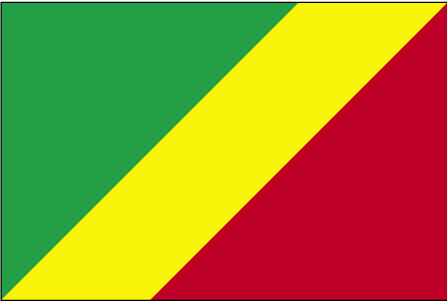
Flag, anthem, and other symbols of national identity.