
 English
 Español
 中文
中文 हिन्दी
 Français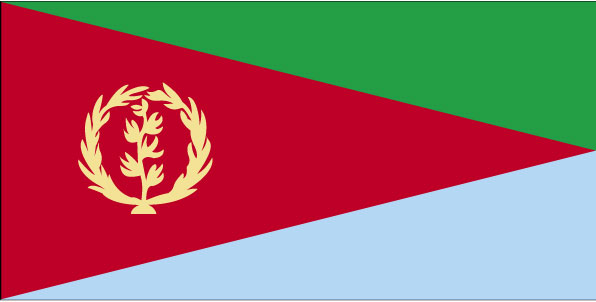
Eritrea
Ertra
Declare Your Relationship to Eritrea
CountryReports Community
- Studying1
- From Eritrea1
- Eritrea heritage1
- Visited0
- Want to visit1
Customs and Culture
Customs and Culture
About the People
Attitudes Eritreans can be optimistic, hard-working, committed people who love their country and their independence dearly. One reason why resolution was difficult to achieve in the recent war is the strength of national pride. Violent crime is rare in Eritrea. They believe in cooperation and friendliness. Self-sufficiency is also valued.
Cultural Attributes
Eritreans believe in cooperation and friendliness. Self-sufficiency is also valued. Love of country is important.

The Red Sea's Resilient Shore
Greetings, Gestures & Visiting
The forms of greeting vary by region and ethnic groups. Highlanders greet with a handshake. Nudging right shoulders during a handshake is a custom for villagers. Urban dwellers shake hands and 'kiss the air' while touching cheeks three times. Verbal greetings always involve inquiring about one's well being. A general greeting is Salaam. Muslims grasp and kiss each other's right hands, asking Kefelhal? While friends use nicknames, Eritreans call people by surname. The use of second-person plural shows respect. Boys and men often hold hands in friendship.
Eritreans use the right hand for gesturing and eating. When beckoning, one waves all fingers with palm facing out. Pointing at people is considered impolite. Young girls keep their knees together uncrossed, elbows on their knees to show respect. A hand held high is a greeting, while a hand waved back and forth is a negative signal. If one is in agreement with another they may snap their fingers.
Visiting among friends and relatives is common without invitation. Guest are often asked to join the family in a meal. Guests are always served tea or coffee. Eritreans enjoy the prolonged conversation offered by the tea and coffee ceremony. When visiting on special occasions, townspeople often take villagers a gift of tea or coffee. Villagers take gifts of local produce or firewood. For some events, men and women socialize separately. A heavy, barley porridge ga'at is served at gatherings to welcome new babies. When someone dies, friends and relatives gather for the burial, and cook for the grieving family for twenty one days.
Eritreans wear Western-style clothing. Pants are worn by women and girls. Highland Christian women often wear white cotton dresses, or embroidery on the bodice and skirt, with a matching shawl.
Hair is often braided in narrow rows up front, but hanging free behind. Highland men wear a long-sleeved knee-length white shirt over white pants. Work clothing is less decorated, made of heavy duty off-white cotton.
Muslim men wear long gowns and caps. Women cover their dresses with black or colorful cloth called luiet.
Diet
The Eritrean diet is traditionally varied. However, the war affected availability of certain foods. The preferred meal is meat (chicken, goat, mutton, or beef) cooked with onion, garlic and pepper, spices and butter. Shuro is a typical meal of garbanzo bean flour and spices. Lentils and other vegetables are spiced, and eaten for lunch or dinner. Breakfast may be tea served with unleavened bread k'itcha and honey. Orthodox Christians eat no animal products on Wednesdays and Fridays. Ingera, also know as taitah, is used to accompany spicy dishes
In the highlanders, children and adults eat separately. Other Eritrean families eat together, though when guests are present, children may eat separately. The hostess serves the guests and eats later with the children. Before the meal begins, the oldest man takes a piece of bread, blesses it and offers some to each person. Diners eat at a low table from a communal tray, taking only the portion in front of them, and using the right hand.
The Eritrean diet is traditionally varied. However, the war affected availability of certain foods. The preferred meal is meat (chicken, goat, mutton, or beef) cooked with onion, garlic and pepper, spices and butter. Shuro is a typical meal of garbanzo bean flour and spices. Lentils and other vegetables are spiced, and eaten for lunch or dinner. Breakfast may be tea served with unleavened bread k'itcha and honey. Orthodox Christians eat no animal products on Wednesdays and Fridays. Ingera, also know as taitah, is used to accompany spicy dishes

Family
A family includes grand-parents, parents and four or more children. After marrying, a son and his wife generally live with his parents for a couple of years. The family is regarded as more important than any of the individuals within it. Family members will sacrifice for the good of the group or future generations.
Nomadic people have portable homes, while villagers have stone, mud or cement homes with thatched or metal roofs. The homes are always kept clean and neat.
Dating Customs
In Eritrea, almost all marriages are arranged. The couple however, usually makes the final decision whether to marry or not. In the cities, the bride will have normally completed secondary school before marrying. The bride in rural areas are often much younger than the groom.
The practice of multiple wives is declining. Among Muslims, wedding tradition include the bride's arrival by camel, and guests sit on mats to eat from bowls.
Recreation
Urban kids have more recreation time than rural farm children and some spend their evenings dancing at clubs while rural people listen to folktales and sing and dance. Among those who have time for sports, soccer is the most popular, volleyball is also liked by a proportion of Eritrean children. Eritrean children in rural areas mostly practice sports on streets in their neighborhood. However, urban children can have access to many clubs where they can practice their favorite sport. Children and adolescents love their national football (soccer) team and whenever they’re playing, they gather by thousands in Asmaraa Stadium to support their beloved team.
A traditional game among the Afar, is Kwosso. The object of the game is to keep a ball made of goatskins away from the opposing team. Feres gugs is another game which is played on horseback and involves striking one another with sticks and avoiding getting hit. Gabata is a board game that uses seeds for pieces and has rules about the capture of the seeds.
Most Eritrean games are simple and make use of materials that are cheap and accessible to poor children. “Arimando” is liked by most Eritrean children. “Arimando” is a traditional marble race that is adored by most children in the countryside. “Inkil” is another game that is liked by many Eritrean children. “Inkil” is a game that is played using old car tires. However, many parents ban their children from playing “Inkil” as they consider it an unsophisticated game. Moreover, Eitrean children like playing many traditional games such as blabburo, cucinetti and kib-kib.
Student Life
Most Eritrean children would eat breakfast before going to school. Meals include milk, cheese, eggs and beans. In rural areas, kids’ favorite breakfast is Rama. Rama is a famous Eritrean food that is a mixture of kitcha, Eritrean bread and a hot spice named berbere. Most Eritrean children usually sit at the table for breakfast with all their family members.
Some Eritrean children go to their schools on foot, while others ride local buses to their schools. Cycling is a common sport in Eritrea and some students ride their bikes to school. A smaller percentage of Eritrean parents drive their children to school; however, this is uncommon as most Eritrean families can’t afford buying a car.
Ten years after the independence of Eritrea, the government started investing enormously in the educational sector. Recent surveys have concluded that school enrollment in Eritrea has increased to more than 200% as compared to the rate of enrollment 5 years ago. Although many schools in the countryside are below average level, most urban schools are of modern architecture and provide students with reasonable environments for learning. However, most Eritrean schools lack modern scientific laboratories and other experimental tools that are the cornerstone of a successful education process. Moreover, a high percentage of Eritrean schools don’t have adequate computers to serve their students’ needs. A few schools across Eritrea offer their students Internet access on campus. Eritrean students have to wear school uniforms that differ according to the level of education.
Education in Eritrea is divided into Pre-Primary, Primary, Middle and Secondary sectors. Starting from grade 5, all subjects are studied in the English language. Education programs accept children at the age of five and start with two years of behavioral and social adjustment that are usually preparing for the upcoming years of elementary education. During the 5 year period of elementary education, students study mathematics, history, geography, biography, music, art and physical education. Thereafter, students will attend 2 years of middle school during which they will study the same elementary school subjects, but in more details. Finally, students will have to go secondary school for 4 years. During secondary school, Eritrean students study English, Physics, Chemistry, Mathematics, Civics, Biology, History and Geography. Although boys and girls got to schools in Eritrea, boys usually receive more care than girls do. Most girls don’t finish their secondary education as they are usually married before they reach the age of 15.
Most Eritrean children who go to school do some after-school work for their families. Boys are supposed to help their fathers especially those who are farmers. Girls, however, are assigned to domestic indoor activities such as washing, cooking, cleaning and babysitting their younger brothers and sisters.
Most children who go to school would spend most of the time at home studying; otherwise they would prefer playing outdoors with their peers. Most kids study alone at home. However, some Eritrean parents would help their children with their studies. Moreover, some Eritrean children would prefer to study in groups at one of their peer’s home. Most Eritreans love Bollywood movies. If an Indian movie is on the television, usually all members of an Eritrean family would gather around it for an enjoyable evening.
Holidays
Independence Day
5/24Independence Day
Dates of Interest
- September 1st
How do people greet each other in Eritrea?
Greetings vary by region and ethnic group, but generally involve a handshake and always inquiring about one's well-being.
Do
- Shake hands (highlanders and urban dwellers)
- Ask about the other person's well-being when greeting
- Use a general greeting like 'Salaam'
- Call people by their surname; use second-person plural to show respect
Good to know
- Villagers may nudge right shoulders during a handshake
- Urban dwellers shake hands and 'kiss the air' while touching cheeks three times
- Muslims grasp and kiss each other's right hands, asking 'Kefelhal?'
- Boys and men often hold hands in friendship
What are the dining customs in Eritrea?
Diners eat from a communal tray at a low table, using only the right hand and taking the portion in front of them; guests are always served tea or coffee.
Do
- Eat with your right hand
- Take only the portion of food in front of you
- Accept the tea or coffee always offered to guests
Don’t
- Don't expect everyone to eat together—in highland families children and adults eat separately
Good to know
- Before the meal, the oldest man blesses a piece of bread and offers some to each person
- The hostess serves guests and eats later with the children
- Ingera (also called taitah) accompanies spicy dishes
- Orthodox Christians eat no animal products on Wednesdays and Fridays
What should I know about etiquette and visiting in Eritrea?
Eritreans value cooperation and friendliness; visiting among friends and relatives is common without invitation, and guests are usually invited to share a meal.
Do
- Bring a gift when visiting on special occasions—townspeople take tea or coffee, villagers bring local produce or firewood
- Enjoy the prolonged conversation of the tea and coffee ceremony
Good to know
- For some events, men and women socialize separately
- A heavy barley porridge, ga'at, is served to welcome new babies
- When someone dies, friends and relatives cook for the grieving family for twenty-one days
How should I dress in Eritrea?
Eritreans wear Western-style clothing, though traditional dress remains common among highlanders and Muslims.
Good to know
- Highland Christian women often wear white cotton dresses with embroidery and a matching shawl
- Highland men wear a long-sleeved knee-length white shirt over white pants
- Muslim men wear long gowns and caps; women cover their dresses with cloth called luiet
- Women and girls do wear pants
What gestures should I use or avoid in Eritrea?
The right hand is used for gesturing and eating, and pointing at people is considered impolite.
Do
- Use your right hand for gesturing
- Beckon by waving all fingers with palm facing out
- Snap your fingers to show agreement
- Raise a hand high as a greeting
Don’t
- Don't point at people
- Don't wave a hand back and forth—it is a negative signal
Good to know
- Young girls keep knees together and uncrossed, with elbows on knees, to show respect
What is family life like in Eritrea?
The family—often including grandparents, parents, and four or more children—is regarded as more important than any individual within it.
Good to know
- A son and his wife generally live with his parents for a couple of years after marrying
- Almost all marriages are arranged, though the couple usually makes the final decision
- Homes are always kept clean and neat
What do people do for fun and sport in Eritrea?
Soccer is the most popular sport, and traditional games are widely played, especially by children in rural areas.
Good to know
- Fans gather by the thousands at Asmara Stadium to support the national football team
- Volleyball is also liked by many
- Traditional games include Kwosso (Afar goatskin ball game), Feres gugs (on horseback), and the board game Gabata
- Children enjoy games like Arimando (marble race), Inkil (played with old car tires), blabburo, cucinetti, and kib-kib
Last updated: 2026-07-12 · Sources: CountryReports
Photos of Eritrea
Photos of Eritrea


Travel and Tourism
Travel and Tourism
- Travel Alert Status
- Level 2: Exercise Increased Caution
- Currency
- 15.38
- Time Difference
- UTC+3 (8 hours ahead of Washington, DC, during Standard Time)
- Climate
- The climate in the central highlands, including Asmara, is near perfection, usually in the 70”™s or 80”™s during the day, cooling off to the 50”™s at night. There is little humidity and it seldom rains except during the July/August rainy season when daily afternoon showers are the norm. Asmara receives about 21 inches of rain each year. April, May and June are the warmest months on the plateau, with the cooler season stretching from November to March. Temperatures in the lowlands can be scorchingly hot, typically ranging from 105°F to 120°F, sometimes more, in August. Along the coast, including in the port cities of Massawa and Assab, high humidity often accompanies the heat. Winter highs here are around 90, with evening temperatures in the 70s.
- Airports
- 18
Read the full travel guide — health, safety, vaccinations, disease risk, sanitation, and transit details.
View full travel guideRecipes
Recipes
History
History
Historical Eras
Ancient & Medieval Eritrea
300 – 1500
Eritrea formed a core part of the powerful Aksumite Kingdom, one of the ancient world's great trading empires, centered on the Red Sea coast. Following Aksum's decline, Arab merchants introduced Islam to the coastal lowlands from the 7th century onward, reshaping the region's religious and commercial character. Successive local sultanates and competing regional powers contested control of the strategically vital Red Sea littoral.
Ottoman & Pre-Colonial Era
1500 – 1885
The Ottoman Empire annexed Eritrea's coastal territories in the 16th century, establishing Massawa as a key Red Sea port and administrative hub. Ottoman influence gradually waned, and Egyptian khedival forces occupied parts of the region in the 19th century. This era was defined by shifting suzerainties among Ottoman, Egyptian, and local Tigrinya and lowland powers, leaving no unified political entity prior to European colonization.
Italian Colonialism
1885 – 1941
Italy established the colony of Eritrea in 1885–1890, creating the country's modern borders and naming it after the Latin term for the Red Sea. Italian authorities developed infrastructure, ports, and the capital Asmara, while subjugating the population under a racially stratified colonial system. In 1896, Italy launched its catastrophic invasion of Ethiopia from Eritrean territory, suffering decisive defeat at the Battle of Adwa.
British Administration
1941 – 1952
British forces expelled the Italians from Eritrea in 1941 during World War II and administered the territory first as a military occupation and then as a UN trust territory. Postwar deliberations over Eritrea's fate became intensely contested, with Eritrean political parties divided between independence and union with Ethiopia. A 1950 UN resolution ultimately imposed federation with Ethiopia over widespread Eritrean objections.
Federation, Annexation & Liberation War
1952 – 1991
The UN-brokered federation with Ethiopia quickly eroded as Emperor Haile Selassie curtailed Eritrean autonomy, and his 1962 outright annexation ignited a decades-long armed independence struggle. The Eritrean Liberation Front (ELF) and later the Eritrean People's Liberation Front (EPLF), led by Isaias Afwerki, fought successive Ethiopian governments, including the Soviet-backed Marxist Derg regime. The EPLF achieved final military victory in May 1991 after the collapse of Soviet support for Mengistu Haile Miriam's government.
Independence & Modern Eritrea
1991 – present
Eritrea formally declared independence following a 1993 referendum in which over 99% voted for sovereignty, with Isaias Afwerki becoming the first president. A devastating border war with Ethiopia from 1998 to 2000 killed approximately 70,000 people before a UN-brokered ceasefire established a monitored buffer zone, though final border demarcation remained unresolved for years. Domestically, the government consolidated single-party rule under the People's Front for Democracy and Justice, drawing sustained international criticism for authoritarian governance and indefinite military conscription.
Overview
In 1962, Emperor Haile Sellassie unilaterally dissolved the Eritrean parliament and annexed the country, sparking the Eritrean fight for independence from Ethiopia that continued after Haile Sellassie was ousted in a coup in 1974. The new Ethiopian Government, called the Derg, was a Marxist military junta led by strongman Mengistu Haile Miriam.
During the 1960s, the Eritrean independence struggle was led by the Eritrean Liberation Front (ELF). In 1970, members of the group had a falling out, and a group broke away from the ELF and formed the Eritrean People’s Liberation Front (EPLF). By the late 1970s, the EPLF had become the dominant armed Eritrean group fighting against the Ethiopian Government, and Isaias Afwerki had emerged as its leader. Much of the materiel used to combat Ethiopia was captured from the Ethiopian Army.
By 1977 the EPLF was poised to drive the Ethiopians out of Eritrea. That same year, however, a massive airlift of Soviet arms to Ethiopia enabled the Ethiopian Army to regain the initiative and forced the EPLF to retreat to the bush. Between 1978 and 1986, the Derg launched eight major offensives against the independence movement--all failed. In 1988, the EPLF captured Afabet, headquarters of the Ethiopian Army in northeastern Eritrea, prompting the Ethiopian Army to withdraw from its garrisons in Eritrea’s western lowlands. EPLF fighters then moved into position around Keren, Eritrea’s second-largest city. Meanwhile, other dissident movements were making headway throughout Ethiopia. At the end of the 1980s, the Soviet Union informed Mengistu that it would not be renewing its defense and cooperation agreement. With the withdrawal of Soviet support and supplies, the Ethiopian Army’s morale plummeted, and the EPLF--along with other Ethiopian rebel forces--began to advance on Ethiopian positions.
The United States played a facilitative role in the peace talks in Washington during the months leading up to the May 1991 fall of the Mengistu regime. In mid-May, Mengistu resigned as head of the Ethiopian Government and went into exile in Zimbabwe, leaving a caretaker government in Addis Ababa. Later that month, the United States chaired talks in London to formalize the end of the war. These talks were attended by the four major combatant groups, including the EPLF.
Having defeated the Ethiopian forces in Eritrea, EPLF troops took control of their homeland. In May 1991, the EPLF established the Provisional Government of Eritrea (PGE) to administer Eritrean affairs until a referendum could be held on independence and a permanent government established. EPLF leader Isaias became the head of the PGE, and the EPLF Central Committee served as its legislative body.
A high-level U.S. delegation was present in Addis Ababa for the July 1-5, 1991 conference that established a transitional government in Ethiopia. The EPLF attended the July conference as an observer and held talks with the new transitional government regarding Eritrea’s relationship to Ethiopia. The outcome of those talks was an agreement in which the Ethiopians recognized the right of the Eritreans to hold a referendum on independence.
Although some EPLF cadres at one time espoused a Marxist ideology, Soviet support for Mengistu cooled their ardor. The fall of communist regimes in the former Soviet Union and the Eastern Bloc convinced them it was a failed system. The EPLF (and later its successor, the PFDJ) expressed its commitment to establishing a democratic form of government and a free-market economy in Eritrea. The United States agreed to provide assistance to both Ethiopia and Eritrea, conditional on continued progress toward democracy and human rights.
On April 23-25, 1993, Eritreans voted overwhelmingly for independence from Ethiopia in a UN-monitored free and fair referendum. The Eritrean authorities declared Eritrea an independent state on April 27, and Eritrea officially celebrated its independence on May 24, 1993.
Timeline of Key Events
300 – 600
Eritrea part of the Ethiopian kingdom of Aksum.
Eritrea part of the Ethiopian kingdom of Aksum.
600
Arabs introduce Islam to coastal areas.
Arabs introduce Islam to coastal areas.
1500
Ottoman Empire annexes Eritrea.
Ottoman Empire annexes Eritrea.
1891 – 1941
Eritrea was occupied by the Italians for almost 50 years.
Eritrea was occupied by the Italians for almost 50 years.
1941
The British seized Eritrea from the Italians.
The British seized Eritrea from the Italians.
1949
Britain administers Eritrea as a United Nations trust territory.
Britain administers Eritrea as a United Nations trust territory.
1952
UN decides to make Eritrea a federal component of Ethiopia.
UN decides to make Eritrea a federal component of Ethiopia.
Read the full history profile — narrative overview, defining eras, and the complete timeline in one place.
View expanded historyInteresting Facts
Interesting Facts
The name Eritrea comes from the Greek word erythrea, meaning red. The word is referred to in a famous shipping manual called Periplus of the Erythrean Sea. The name Erythrean or Red Sea refers to the way that the water's turquoise colour changes to scarlet when algae form at certain times.
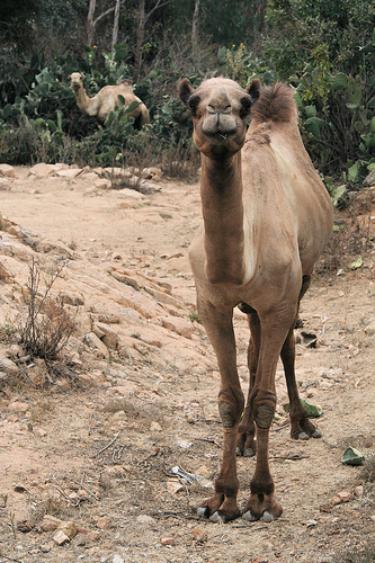
The camel is the national emblem of Eritrea. During Eritrea's war of independence from Ethiopia, the camel was the main mode of transportation for moving food supplies, arms, ammunition and people across the country.
The Red Sea is a unique body of water. Because no rivers flow into it, the sea has a higher salt content than most oceans. Volcanic activity beneath the surface causes water temperatures to be generally high. Over 1,000 species and subspecies of marine life live in the sea, approximately 15% of which are unique to this area.
In 1995, one of the oldest human fossils ever found was discovered in Eritrea, leading experts to speculate that Eritrea may well be the cradle of our species. The fossil is estimated to be over one million years old.
Most Eritreans are known by their first name, followed by their father's first name.
The Kunama are the only matrilineal group among the Eritreans. Kunaman women head families, and only people from a mother's side of the family are considered relatives.
See every fact — trivia, oddities, and curious tidbits gathered from across the country.
View all interesting factsGeography and Environment
Geography and Environment
- Terrain
- dominated by extension of Ethiopian north-south trending highlands, descending on the east to a coastal desert plain, on the northwest to hilly terrain and on the southwest to flat-to-rolling plains
- Climate
- The climate in the central highlands, including Asmara, is near perfection, usually in the 70’s or 80’s during the day, cooling off to the 50’s at night. There is little humidity and it seldom rains except during the July/August rainy season when daily afternoon showers are the norm. Asmara receives about 21 inches of rain each year. April, May and June are the warmest months on the plateau, with the cooler season stretching from November to March. Temperatures in the lowlands can be scorchingly hot, typically ranging from 105ºF to 120ºF, sometimes more, in August. Along the coast, including in the port cities of Massawa and Assab, high humidity often accompanies the heat. Winter highs here are around 90, with evening temperatures in the 70s.
- Natural Hazards
- frequent droughts; locust swarms
- Current Environmental Issues
- deforestation; desertification; soil erosion; overgrazing; loss of infrastructure from civil warfare
Read the full geography and environment profile — terrain, climate, natural resources, hazards, land use, and international agreements.
View full geographyPeople & Demographics
People & Demographics
Religion
Languages Spoken
Afar, Arabic, Tigre and Kunama, Tigrinya, other Cushitic languages
- Arabic
- Tigrinya
Population
- Population
- 5,792,984
- Population in Major Urban Areas
- ASMARA (capital) 712,000
- Nationality Noun
- Eritrean(s)
- Ethnic Groups
- Ethnic Tigrinya 50%, Tigre and Kunama 40%, Afar 4%, Saho (Red Sea coast dwellers) 3%, other 3%
- Language Note
- Eritrea has no official language. Tigrinya, Arabic and English are all government, working languages. Tigrinya is spoken by highlanders, and is related to Tigre, spoken by people in the western and eastern lowlands. They use an ancient Ge'ez script. Like Arabic, they are both Semitic tongues. Arabic is widely used in commerce.
Education
- Literacy Definition
- NA
Ten years after the independence of Eritrea, the government started investing enormously in the educational sector. Recent surveys have concluded that school enrollment in Eritrea has increased to more than 200% as compared to the rate of enrollment 5 years ago. Although many schools in the countryside are below average level, most urban schools are of modern architecture and provide students with reasonable environments for learning. However, most Eritrean schools lack modern scientific laboratories and other experimental tools that are the cornerstone of a successful education process. Moreover, a high percentage of Eritrean schools don’t have adequate computers to serve their students’ needs. A few schools across Eritrea offer their students Internet access on campus. Eritrean students have to wear school uniforms that differ according to the level of education.
Health Information
- Major Infectious Diseases — degree of risk
- High
Read the full people and society profile — demographics, health, education, religion, languages, and notable people.
View full people and societyGovernment & Politics
Government & Politics
Country Identity
- Country Name
- Eritrea
- Full Country Name
- State of Eritrea
- Local - Long
- Hagere Ertra
- Local - Short
- Ertra
- Former Name
- Eritrea Autonomous Region in Ethiopia
Government Structure
- Government Type
- transitional government
- Legal System
- primary basis is the Ethiopian legal code of 1957, with revisions; new civil, commercial, and penal codes have not yet been promulgated; also relies on customary and post-independence-enacted laws and, for civil cases involving Muslims, Sharia law
- Executive Branch
- chief of state: President ISAIAS Afwerki (since 8 June 1993); note - the president is both the chief of state and head of government and serves as head of the State Council and National Assembly head of government: President ISAIAS Afwerki (since 8 June 1993); note - the president is both the chief of state and head of government and serves as head of the State Council and National Assembly cabinet: State Council is the collective executive authority; members appointed by the president elections: the president is elected by the National Assembly; the last election was held on 8 June 1993, when Eritrea gained independence; no subsequent presidential elections have been held, and the National Assembly has been suspended since 2002, leaving ISAIAS Afwerki as the country's sole leader without a renewed electoral mandate election results: ISAIAS Afwerki elected president; percent of National Assembly vote - ISAIAS Afwerki 95%
- Legislative Branch
- unicameral National Assembly (150 seats; term limits not established) elections: in May 1997, following the adoption of the new constitution, 75 members of the PFDJ Central Committee (the old Central Committee of the EPLF), 60 members of the 527-member Constituent Assembly, that had been established in 1997 to discuss and ratify the new constitution, and 15 representatives of Eritreans living abroad were formed into a Transitional National Assembly to serve as the country's legislative body until countrywide elections to a National Assembly were held; although only 75 of 150 members of the Transitional National Assembly were elected, the constitution stipulates that once past the transition stage, all members of the National Assembly will be elected by secret ballot of all eligible voters; National Assembly elections scheduled for December 2001 were postponed indefinitely
- Judicial Branch
- High Court - regional, subregional, and village courts; also have military and special courts
- Suffrage
- 18 years of age; universal
- Constitution
- the transitional constitution, decreed on 19 May 1993, was replaced by a new constitution adopted on 23 May 1997, but not yet implemented
- Independence
- 24 May 1993
- National Holiday
- Independence Day, 24 May (1993)
Capital City
- Capital Name
- Asmara
- Capital - geographic coordinate
- 15 20 N, 38 56 E
- Capital Time Difference
- UTC+3 (8 hours ahead of Washington, DC, during Standard Time)
The name means "they [women] made them unite," which according to Tigrinya oral tradition refers to the women of the four clans in the Asmara area who persuaded their menfolk to unite and defeat their common enemy; the name has also been translated as "live in peace"
Military
Branches: Eritrean Armed Forces: Eritrean Ground Forces, Eritrean Navy, Eritrean Air Force (includes Air Defense Force)
Embassy / Diplomatic Mission
U.S. Embassy Eritrea
179 Alaa Street, PO Box 211, Asmara
Telephone: (291-1) 12-00-04
Facsimile: (291-1) 124-255 and (291-1) 127-584
Read the full government profile — flag symbolism, national anthem, and other national symbols.
View full government detailsEconomy
Economy
Since independence from Ethiopia on 24 May 1993, Eritrea has faced the economic challenges of a small, low-income country. Like many African nations, its economy remains largely based on subsistence agriculture, with the majority of the population engaged in farming and herding. The 1998–2000 border war with Ethiopia severely damaged Eritrea's economy, causing an estimated $600 million in property losses and disrupting agricultural production in the country's most productive regions. The peace agreement signed with Ethiopia in July 2018 ended two decades of hostility and briefly raised hopes for greater regional trade integration and economic revival, though those gains have since been undermined by renewed regional instability, including Eritrea's involvement in the Tigray conflict that began in late 2020.
The government maintains tight control over the economy, with the ruling party and the military operating many of the country's largest enterprises. The private sector remains small, and strict currency controls, limited access to foreign exchange, and an unpredictable regulatory environment continue to discourage investment. Mining has emerged as a critical sector, with gold, copper, zinc, and potash projects—most notably the Bisha and Zara mines—providing a significant share of export earnings and government revenue. Remittances from the large Eritrean diaspora also play an important role in supporting households and foreign currency inflows.
Agriculture remains vulnerable to erratic rainfall, recurrent drought, and the lingering effects of mandatory national service, which draws labor away from farms. Food insecurity is persistent, and the country relies heavily on imports for grain and other essentials. Eritrea's economic future depends on its ability to address chronic challenges including unemployment, skills shortages, infrastructure gaps, and limited integration with regional and global markets. Opening the economy to private enterprise and leveraging diaspora capital and expertise would be central to sustained growth, but meaningful reform has been slow to materialize.
Snapshot
- Currency Name and Code
- nakfa (ERN)
- GDP — official exchange rate
- $1,244,000,000 (USD)
- GDP Real Growth Rate
- 2%
- GDP by Sector
- agriculture: 12.4% industry: 25.3% services: 62.4%
Banknotes
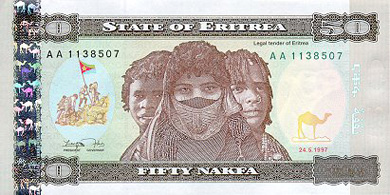
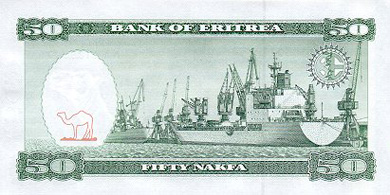
Budget & Public Finance
- Fiscal Year
- calendar year
- Annual Budget
- $409,400,000 (USD)
- External Debt
- $311,000,000 (USD)
- Investment (% of GDP)
- 26.8%
- Current Account Balance
- -$278,700,000 (USD)
Labor, Industry & Trade
- Labor Force by Occupation
- agriculture 80%; industry and services 20%
- Industries
- food processing, beverages, clothing and textiles
- Agriculture Products
- sorghum, lentils, vegetables, corn, cotton, tobacco, coffee, sisal; livestock, goats; fish
- Export Partners
- Malaysia 65.7%, Italy 10.5%, France 4.4%, Canada 12.7%
- Import Commodities
- machinery, petroleum products, food, manufactured goods
- Import Partners
- US 42.3%, Italy 20.4%, Turkey 7.2%, Russia 5.7%, France 5.1%
Energy
- Oil Production
- 0 bbl/day
- Oil Consumption
- 4,600 bbl/day
- Oil Reserves
- 0 bbl/day
- Natural Gas Production
- 0 cu m
- Natural Gas Consumption
- 0 cu m
- Natural Gas Imports
- 0 cu m
- Natural Gas Exports
- 0 cu m
- Natural Gas Reserves
- 0 cu m
Communications
- Telephone System
- General assessment: inadequate; most fixed-line telephones are in Asmara; government is seeking international tenders to improve the system; cell phones in increasing use throughout the country Domestic: combined fixed-line and mobile-cellular subscribership is less than 5 per 100 persons International: country code - 291
- Internet Country Code
- er
News & Weather
News & Weather
Current Weather
Latest News
Who is driving diplomacy in the Horn of Africa and the Red Sea, and why? - Al Jazeera
Al Jazeera · 5h ago
Burhan’s Trip to Eritrea, in Context - horn review
horn review · 1d ago
Eritrea strengthens national capacity to safeguard its living heritage - UNESCO
UNESCO · 4d ago
Egypt, Eritrea reject outside role in Red Sea security - The Arab Weekly
The Arab Weekly · 23h ago
Genomic sequencing strengthens public health in Eritrea - WHO | Regional Office for Africa
WHO | Regional Office for Africa · 3d ago
A Journey of Duty: From Calgary to Sawa – Eritrea Ministry Of Information - Eritrea Ministry Of Information
Eritrea Ministry Of Information · 19h ago
Atrocity Alert No. 488: Eritrea, Central African Republic and Children and Armed Conflict - Global Centre for the Responsibility to Protect
Global Centre for the Responsibility to Protect · 27d ago
A New Generation of Eritreans Enters Indefinite Service - Human Rights Watch
Human Rights Watch · 5d ago
News via Google News
Climate Overview
The climate in the central highlands, including Asmara, is near perfection, usually in the 70”™s or 80”™s during the day, cooling off to the 50”™s at night. There is little humidity and it seldom rains except during the July/August rainy season when daily afternoon showers are the norm. Asmara receives about 21 inches of rain each year. April, May and June are the warmest months on the plateau, with the cooler season stretching from November to March.
Temperatures in the lowlands can be scorchingly hot, typically ranging from 105°F to 120°F, sometimes more, in August. Along the coast, including in the port cities of Massawa and Assab, high humidity often accompanies the heat. Winter highs here are around 90, with evening temperatures in the 70s.
Frequently Asked Questions
Frequently Asked Questions
What is the population of Eritrea?
How do people greet each other in Eritrea?
What are the dining customs in Eritrea?
What should I know about etiquette and visiting in Eritrea?
How should I dress in Eritrea?
What gestures should I use or avoid in Eritrea?
What is family life like in Eritrea?
What do people do for fun and sport in Eritrea?
What is the capital of Eritrea?
Where is Eritrea located?
What countries border Eritrea?
What religions are practiced in Eritrea?
What is the currency of Eritrea?
What languages are spoken in Eritrea?
What is the geography of Eritrea like?
What is Eritrea known for?
Last reviewed 2026