
 English
 Español
 中文
中文 हिन्दी
 Français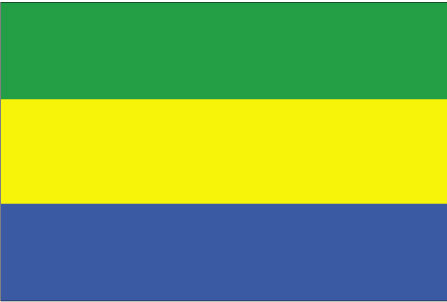
Gabon
Gabon
Declare Your Relationship to Gabon
CountryReports Community
- Studying1
- From Gabon0
- Gabon heritage2
- Visited0
- Want to visit0
Customs and Culture
Customs and Culture
Cultural Attributes
Gabon's cultural identity is shaped by the convergence of more than 40 distinct ethnic groups, each contributing unique traditions, languages, and artistic expressions to the national fabric. The Fang people of the north constitute the largest single ethnic group, while the Myene, Nzebi, Bapounou, and Eschira peoples, among others, contribute to a rich mosaic of traditions across the country's provinces. Traditional music and dance occupy a central place in Gabonese cultural life. The mbira, a thumb piano-like instrument, and the ngombi, a harp used in spiritual ceremonies, are among the instruments that accompany rituals and communal gatherings. The Bwiti spiritual practice, observed primarily by the Fang and Mitsogo peoples, is one of the most distinctive cultural expressions in Gabon. Incorporating the use of iboga, a psychoactive plant derived from the Tabernanthe iboga shrub, Bwiti ceremonies involve elaborate multi-day rituals of music, dance, and visionary experience aimed at spiritual initiation and healing. UNESCO recognized Bwiti as an Intangible Cultural Heritage of Humanity in 2022. French remains the official language and the primary medium of education, government, and formal commerce, a legacy of French colonial rule that lasted from the mid-19th century until independence in 1960. However, Fang, Punu, and other Bantu languages are widely spoken in homes and communities throughout the country. Christianity is the predominant religion, practiced by roughly 80 percent of the population, with Roman Catholicism being especially widespread due to the influence of French missionaries. Traditional animist beliefs are frequently observed alongside Christian practice, reflecting a syncretic approach to spirituality common across Central Africa. Oral tradition remains a vital cultural institution. Griots and community elders serve as living repositories of history, genealogy, and moral teaching, passing knowledge from generation to generation through storytelling and song. Carved wooden masks and sculptures, particularly those associated with the Fang and Kota peoples, are internationally recognized and have influenced modernist art movements in Europe since the early 20th century.

Land of the Equatorial Forest
Greetings, Gestures & Visiting
There are many local languages in Gabon but French is the official language which means many you people are not learning the language of their parents or grandparents. Greetings between strangers are reserved with a quick handshake for most formal occasions. Friends greet each other with kisses on the cheek. Among older people men and women stay in separate groups when socializing.
Western style clothing is worn in the urban areas with women wearing modern dresses and skirts in traditional African colors. The traditional clothing is the boubou, a top that is knee or floor length. Men wear them loose-fitting with matching pants, women wear them with a double wrapped pagnes (a colorful strip of African cloth).
Diet
Manioc root and plantains are the staple foods. Meats include monkey,, pangolin and gazelle. Rural household also have chickens. They eat the largest meal in the middle of the day and leftovers are usually served in the evening.

Family
Families are large with women having five or more children.
Recreation
Soccer is the national sport and the most common form of entertainment is visiting with family and friends. Checkers is a common game played with board pieces made from many different items such as bottle caps.
Holidays
Founding of the Gabonese Democratic Party (PDG)
3/12Independence
Dates of Interest
- March 12th
How do people greet each other in Gabon?
Greetings between strangers are reserved, typically a quick handshake on formal occasions, while friends greet each other with kisses on the cheek.
Do
- Use a quick handshake with strangers in formal situations
- Exchange cheek kisses with friends
Good to know
- French is the official language, though many local Bantu languages like Fang and Punu are spoken at home
- Among older people, men and women tend to socialize in separate groups
What are the dining customs in Gabon?
Manioc root and plantains are the staple foods, and the largest meal is eaten in the middle of the day, with leftovers often served in the evening.
Good to know
- Meats can include monkey, pangolin, and gazelle
- Rural households often keep chickens
- Expect the main meal at midday
What should I wear in Gabon?
Western-style clothing is common in urban areas, while the traditional garment is the boubou, a knee- or floor-length top.
Good to know
- Men wear the boubou loose-fitting with matching pants
- Women pair the boubou with a double-wrapped pagne, a colorful strip of African cloth
- Women in cities wear modern dresses and skirts in traditional African colors
What is family life like in Gabon?
Families tend to be large, with women often having five or more children.
What do people do for fun in Gabon?
Soccer is the national sport, and the most common form of entertainment is visiting with family and friends.
Good to know
- Checkers is a popular game, often played with pieces made from items like bottle caps
Last updated: 2026-07-12 · Sources: CountryReports
Photos of Gabon
Photos of Gabon


Travel and Tourism
Travel and Tourism
- Travel Alert Status
- Level 2: Exercise Increased Caution
- Time Difference
- UTC+1 (6 hours ahead of Washington, DC, during Standard Time)
- Climate
- The climate is hot and humid during most of the year and is typically equatorial. High temperatures range from 75°F to 82°F in the dry seasons and from 86°F to 93°F in the rainy seasons. Four distinguishable seasons are evident, although they vary somewhat each year: the long dry season from late May until mid-September; the short rainy season from mid-September until mid-December; the short dry season from mid-December through January; and the long rainy season from February until late May. Rainfall in Libreville is about 115 inches a year (the U.S. average is about 40 inches); the largest amounts fall in October, November, March, and April. The humidity is always high. The summer months, as in the southern hemisphere, are the coolest time of the year.
- Airports
- 56
Read the full travel guide — health, safety, vaccinations, disease risk, sanitation, and transit details.
View full travel guideRecipes
Recipes
History
History
Historical Eras
Pre-European Bantu Era
1300 – 1470
Over the course of several centuries, Bantu-speaking peoples migrated into the dense equatorial forests of present-day Gabon from multiple directions, establishing distinct ethnic communities including the Fang, Mpongwe, and Myene peoples. Though written records are scarce, tribal art and oral traditions attest to rich cultural and spiritual heritages. These societies developed complex trade networks and governance structures long before European contact.
European Contact & Slave Trade
1470 – 1839
Portuguese traders arriving around 1470 gave the region its name, derived from 'gabão,' referencing the shape of the Komo River estuary. Dutch, British, and French traders followed in the 16th century, and the Gabonese coast became a significant node in the Atlantic slave trade. European commercial and missionary interests gradually intensified, laying the groundwork for formal colonial claims.
French Protectorate & Colonization
1839 – 1960
France formalized its presence through treaties with Mpongwe coastal chiefs in 1839 and 1841, and founded Libreville in 1849 after freeing captives from a seized slave ship. Explorers such as Savorgnan de Brazza pushed into the interior between 1862 and 1887, and France fully occupied Gabon by 1885. In 1910 Gabon was incorporated into French Equatorial Africa, remaining under French administration until independence.
First Republic & M'Ba Years
1960 – 1967
Gabon achieved independence on August 17, 1960, with Léon M'Ba emerging as the country's first president under a new presidential system established in 1961. Political consolidation proved turbulent: in February 1964 the military briefly overthrew M'Ba, though French troops restored him to power within a day. Elections continued under a dominant single-party trajectory, and a constitutional revision in 1966 set the stage for Vice President Omar Bongo's automatic succession.
Bongo One-Party State
1967 – 1991
Omar Bongo assumed the presidency upon M'Ba's death in 1967 and in 1968 dissolved all parties to create the single-party Parti Démocratique Gabonais (PDG), which he used to suppress regional and ethnic rivalries while consolidating personal power. Oil revenues from the 1970s boom transformed Gabon into one of sub-Saharan Africa's more prosperous economies, funding infrastructure and social programs. Bongo was re-elected in 1975, 1979, and 1986, governing with few meaningful political checks.
Multiparty & Modern Gabon
1991 – present
Popular pressure and strikes compelled Bongo to introduce a new multiparty constitution in 1991, though elections were repeatedly marred by low turnout and allegations of fraud, leaving the PDG dominant. Gabon leveraged its oil wealth and a small population to maintain relative stability, signing major export deals such as the 2004 Total-China oil agreement. The death of Omar Bongo in 2009 and a subsequent coup in 2023 led by his son Ali Bongo's ouster marked the country's continuing struggle to define its post-authoritarian political identity.
Overview
At the time of Gabon’s independence in 1960, two principal political parties existed: the Bloc Democratique Gabonais (BDG), led by Leon M’Ba, and the Union Democratique et Sociale Gabonaise (UDSG), led by J.H. Aubame. In the first post-independence election, held under a parliamentary system, neither party was able to win a majority. The BDG obtained support from three of the four independent legislative deputies, and M’Ba was named Prime Minister. Soon after concluding that Gabon had an insufficient number of people for a two-party system, the two party leaders agreed on a single list of candidates. In the February 1961 election, held under the new presidential system, M’Ba became President and Aubame became Foreign Minister.
This one-party system appeared to work until February 1963, when the larger BDG element forced the UDSG members to choose between a merger of the parties or resignation. The UDSG cabinet ministers resigned, and M’Ba called an election for February 1964 and a reduced number of National Assembly deputies (from 67 to 47). The UDSG failed to muster a list of candidates able to meet the requirements of the electoral decrees. When the BDG appeared likely to win the election by default, the Gabonese military toppled M’Ba in a bloodless coup on February 18, 1964. French troops re-established his government the next day. Elections were held in April 1964 with many opposition participants. BDG-supported candidates won 31 seats and the opposition 16. Late in 1966, the constitution was revised to provide for automatic succession of the vice president should the president die in office. In March 1967, Leon M’Ba and Omar Bongo (then Albert Bongo) were elected President and Vice President. M’Ba died later that year, and Omar Bongo became President.
In March 1968, Bongo declared Gabon a one-party state by dissolving the BDG and establishing a new party--the Parti Democratique Gabonais (PDG). He invited all Gabonese, regardless of previous political affiliation, to participate. Bongo was elected President in February 1975; in April 1975, the office of vice president was abolished and replaced by the office of prime minister, who had no right to automatic succession. Bongo was re-elected President in December 1979 and November 1986 to 7-year terms. Using the PDG as a tool to submerge the regional and tribal rivalries that divided Gabonese politics in the past, Bongo sought to forge a single national movement in support of the government’s development policies.
Economic discontent and a desire for political liberalization provoked violent demonstrations and strikes by students and workers in early 1990. In response to grievances by workers, Bongo negotiated with them on a sector-by-sector basis, making significant wage concessions. In addition, he promised to open up the PDG and to organize a national political conference in March-April 1990 to discuss Gabon’s future political system. The PDG and 74 political organizations attended the conference. Participants essentially divided into two loose coalitions, the ruling PDG and its allies, and the United Front of Opposition Associations and Parties, consisting of the breakaway Morena Fundamental and the Gabonese Progress Party.
The April 1990 conference approved sweeping political reforms, including creation of a national Senat
Timeline of Key Events
1470
Portuguese arrive in what is now Gabon.
Portuguese arrive in what is now Gabon.
1839
Local Mpongwe ruler signs away sovereignty to the French.
Local Mpongwe ruler signs away sovereignty to the French.
1910
Gabon becomes part of French Equatorial Africa.
Gabon becomes part of French Equatorial Africa.
1960
Gabon becomes independent.
Gabon becomes independent.
1991
Parliament adopts a new constitution that formalizes the multi-party system.
Parliament adopts a new constitution that formalizes the multi-party system.
2004
French oil firm Total signs deal to export Gabonese oil to China.
French oil firm Total signs deal to export Gabonese oil to China. Agreement signed with Chinese company to exploit around one billion tonnes of iron ore.
2006
Gabon and Equatorial Guinea agree to start talks over disputed islands.
Gabon and Equatorial Guinea agree to start talks over disputed islands in potentially oil-rich waters in the Gulf of Guinea.
Read the full history profile — narrative overview, defining eras, and the complete timeline in one place.
View expanded historyInteresting Facts
Interesting Facts
Gabon gained independence from France 17 August 1960.
Gabon gained independence from France 17 August 1960.
See every fact — trivia, oddities, and curious tidbits gathered from across the country.
View all interesting factsGeography and Environment
Geography and Environment
- Terrain
- narrow coastal plain; hilly interior; savanna in east and south
- Climate
- The climate is hot and humid during most of the year and is typically equatorial. High temperatures range from 75°F to 82°F in the dry seasons and from 86°F to 93°F in the rainy seasons. Four distinguishable seasons are evident, although they vary somewhat each year: the long dry season from late May until mid-September; the short rainy season from mid-September until mid-December; the short dry season from mid-December through January; and the long rainy season from February until late May. Rainfall in Libreville is about 115 inches a year (the U.S. average is about 40 inches); the largest amounts fall in October, November, March, and April. The humidity is always high. The summer months, as in the southern hemisphere, are the coolest time of the year.
- Natural Hazards
- NA
- Current Environmental Issues
- deforestation; poaching
Read the full geography and environment profile — terrain, climate, natural resources, hazards, land use, and international agreements.
View full geographyPeople & Demographics
People & Demographics
Religion
Languages Spoken
French (official), Fang, Myene, Nzebi, Bapounou/Eschira, Bandjabi
- French
Population
- Population
- 1,545,255
- Population in Major Urban Areas
- LIBREVILLE (capital) 686,000
- Nationality Noun
- Gabonese (singular and plural)
- Ethnic Groups
- Bantu tribes including four major tribal groupings (Fang, Bapounou, Nzebi, Obamba), other Africans and Europeans 154,000, including 10,700 French and 11,000 persons of dual nationality
Education
- Literacy Definition
- Age 15 and over can read and write
Health Information
- Major Infectious Diseases — degree of risk
- Very high
Read the full people and society profile — demographics, health, education, religion, languages, and notable people.
View full people and societyGovernment & Politics
Government & Politics
Country Identity
- Country Name
- Gabon
- Full Country Name
- Gabonese Republic
- Local - Long
- Republique Gabonaise
- Local - Short
- Gabon
Government Structure
- Government Type
- republic; multiparty presidential regime (opposition parties legalized in 1990)
- Legal System
- based on French civil law system and customary law; judicial review of legislative acts in Constitutional Chamber of the Supreme Court; has not accepted compulsory ICJ jurisdiction
- Executive Branch
- chief of state: President Brice Clotaire OLIGUI NGUEMA (since 30 August 2023, following a military coup that ousted President Ali BONGO Ondimba) head of government: Prime Minister Raymond NDONG SIMA (since 7 September 2023) cabinet: Transitional Council of Ministers appointed by the president following the dissolution of previous governmental structures after the August 2023 coup elections: Prior to the coup, the president was elected by popular vote for a seven-year term; the most recent presidential election was held on 26 August 2023, the results of which were disputed and led directly to the military intervention; future electoral arrangements are to be determined during the ongoing transitional period election results: The August 2023 election was annulled following the coup; the military-led Transition Committee for the Restoration of Institutions (CTRI) subsequently appointed Oligui Nguema as transitional president, suspending the constitution and dissolving existing governmental institutions
- Legislative Branch
- bicameral legislature consists of the Senate (91 seats; members elected by members of municipal councils and departmental assemblies) and the National Assembly or Assemblee Nationale (120 seats; members are elected by direct, popular vote to serve five-year terms) elections: Senate - last held 26 January and 9 February 2003 (next to be held by January 2009); National Assembly - last held 9 and 23 December 2001 (next to be held December 2006) election results: Senate - percent of vote by party - NA; seats by party - PDG 53, RNB 20, PGP 4, ADERE 3, RDP 1, CLR 1, independents 9; National Assembly - percent of vote by party - NA; seats by party - PDG 86, RNB-RPG 8, PGP 3, ADERE 3, CLR 2, PUP 1, PSD 1, independents 13, others 3
- Judicial Branch
- Supreme Court or Cour Supreme consisting of three chambers - Judicial, Administrative, and Accounts; Constitutional Court; Courts of Appeal; Court of State Security; County Courts
- Suffrage
- 21 years of age; universal
- Constitution
- adopted 14 March 1991
- Independence
- 17 August 1960 (from France)
- National Holiday
- Founding of the Gabonese Democratic Party (PDG), 12 March (1968)
Capital City
- Capital Name
- Libreville
- Capital - geographic coordinate
- 0 23 N, 9 27 E
- Capital Time Difference
- UTC+1 (6 hours ahead of Washington, DC, during Standard Time)
Original site settled by freed slaves and the name means "free town" in French; named in imitation of Freetown, the capital of Sierra Leone
Military
Branches: Gabonese Defense Forces (Forces de Defense Gabonaise): Land Force (Force Terrestre), Gabonese Navy (Marine Gabonaise), Gabonese Air Forces (Forces Aerienne Gabonaises, FAG)
Embassy / Diplomatic Mission
U.S. Embassy Libreville
BP 4000
Sabliere Neighborhood
Libreville, Gabon
Telephone: 241-01-45-71-00
Emergency after-hours telephone: 241-07-38-01-71
Facsimile: 241-01-45-71-05
Email: LibrevilleACS@state.gov
Read the full government profile — flag symbolism, national anthem, and other national symbols.
View full government detailsEconomy
Economy
Gabon enjoys a per capita income several times that of most sub-Saharan African nations, placing it among the region's upper-middle-income countries. Despite this relative wealth, high income inequality means a significant portion of the population—roughly one-third—lives in poverty. Historically dependent on timber and manganese, Gabon's economy was transformed by the discovery of offshore oil in the early 1970s. The oil sector remains the backbone of the economy, accounting for approximately 38-40% of GDP and around 70% of export earnings, though its share has gradually declined as the government pursues diversification.
Gabon continues to face vulnerability to fluctuating global prices for its oil, timber, and manganese exports. The country is the world's second-largest producer of manganese and a major exporter of tropical hardwoods, particularly following a 2010 ban on raw log exports designed to develop a domestic wood-processing industry. Despite abundant natural wealth, persistent challenges include weak fiscal management, an over-reliance on commodities, high unemployment—especially among youth—and significant infrastructure gaps.
Successive governments have pursued diversification under initiatives such as the Plan Stratégique Gabon Émergent, aimed at developing agriculture, ecotourism, mining, and value-added wood processing. The economy was hit hard by the 2014-2016 oil price collapse, prompting Gabon to enter a three-year Extended Fund Facility arrangement with the IMF in 2017 to support fiscal consolidation and structural reforms. The COVID-19 pandemic and subsequent global commodity shocks further strained public finances, though a rebound in oil and manganese prices in 2022 supported a return to growth.
In August 2023, a military coup ended over five decades of rule by the Bongo family, introducing political uncertainty but also prompting transitional authorities to pledge economic reforms, anti-corruption measures, and renewed efforts at diversification. Short- and medium-term prospects depend on global commodity demand, the success of diversification policies, improved governance, and continued engagement with international financial institutions.
Snapshot
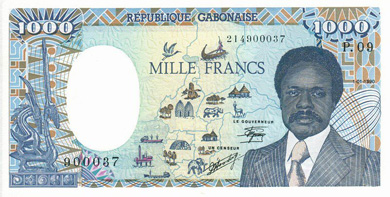
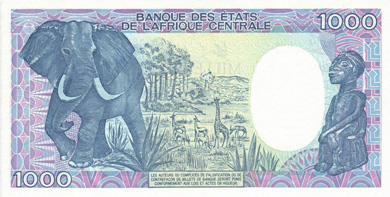
- Currency Name and Code
- CFA Franc BEAC (XAF)
- GDP — official exchange rate
- $6,697,000,000 (USD)
- GDP Real Growth Rate
- 2.1%
Banknotes
Budget & Public Finance
- Fiscal Year
- calendar year
- Annual Budget
- $1,618,000,000 (USD)
- Public Debt (% of GDP)
- 29.5%
- External Debt
- $3,857,000,000 (USD)
- Investment (% of GDP)
- 24.5%
- Economic Aid
- $331,000,000 (USD)
- Reserves of Foreign Exchange
- $525,000,000 (USD)
Labor, Industry & Trade
- Labor Force by Occupation
- agriculture 60%; services 25%; industry 15%
- Industries
- petroleum extraction and refining; manganese, and gold mining; chemicals; ship repair; food and beverage; textile; lumbering and plywood; cement
- Agriculture Products
- cocoa, coffee, sugar, palm oil, rubber; cattle; okoume (a tropical softwood); fish
- Export Commodities
- crude oil 77%, timber, manganese, uranium
- Export Partners
- US 50.9%, France 12.7%, China 7.1%
- Import Commodities
- machinery and equipment, foodstuffs, chemicals, construction materials
- Import Partners
- France 51%, US 6.3%, Netherlands 3.7%
Energy
- Oil Production
- 268,900 bbl/day
- Oil Consumption
- 12,250 bbl/day
- Oil Reserves
- 1,921,000,000 bbl/day
- Natural Gas Production
- 90,000,000 cu m
- Natural Gas Consumption
- 90,000,000 cu m
- Natural Gas Imports
- 0 cu m
- Natural Gas Exports
- 0 cu m
- Natural Gas Reserves
- 33,980,000,000 cu m
Communications
- Telephone System
- General assessment: Adequate system of cable, microwave radio relay, tropospheric scatter, radiotelephone communication stations, and a domestic satellite system with 12 earth stations Domestic: A growing mobile-cellular network with multiple providers is making telephone service more widely available with mobile-cellular teledensity exceeding 100 per 100 persons International: Country code - 241; landing point for the SAT-3/WASC fiber-optic submarine cable that provides connectivity to Europe and Asia; satellite earth stations - 3 Intelsat (Atlantic Ocean)
- Internet Country Code
- .ga
News & Weather
News & Weather
Current Weather
Latest News
France welcomes Gabon's Oligui as mineral and military ties defy wider rift in Africa - RFI
RFI · 18h ago
Eramet signs MoU with Gabon on manganese ore processing - Mining Weekly
Mining Weekly · 1h ago
Congo/Gabon • Commismpex dispute pits Hojeij family against Bongo's son in new twist - Africa Intelligence
Africa Intelligence · 3h ago
HOW MOROCCO ALLEGEDLY SPIES ON AN AFRICAN ALLY - Forbidden Stories
Forbidden Stories · 5d ago
France, Gabon strengthen ties during Oligui visit to Paris - Anadolu Ajansı
Anadolu Ajansı · 12h ago
France faces calls to raise detention of Gabon opposition figure during Nguema visit - africanews.com
africanews.com · 19h ago
Air quality in Gabon - IQAir
IQAir · 1d ago
France Gabon - GazetteXtra
GazetteXtra · 14h ago
News via Google News
Climate Overview
The climate is hot and humid during most of the year and is typically equatorial. High temperatures range from 75°F to 82°F in the dry seasons and from 86°F to 93°F in the rainy seasons. Four distinguishable seasons are evident, although they vary somewhat each year: the long dry season from late May until mid-September; the short rainy season from mid-September until mid-December; the short dry season from mid-December through January; and the long rainy season from February until late May. Rainfall in Libreville is about 115 inches a year (the U.S. average is about 40 inches); the largest amounts fall in October, November, March, and April. The humidity is always high. The summer months, as in the southern hemisphere, are the coolest time of the year.
Videos
Videos
1 curated YouTube videos.
Source: YouTube
Frequently Asked Questions
Frequently Asked Questions
What is the population of Gabon?
How do people greet each other in Gabon?
What are the dining customs in Gabon?
What should I wear in Gabon?
What is family life like in Gabon?
What do people do for fun in Gabon?
What is the capital of Gabon?
Where is Gabon located?
What countries border Gabon?
What religion is practiced in Gabon?
What is the currency of Gabon?
What language is spoken in Gabon?
What is Gabon known for?
Last reviewed 2026