
 English
 Español
 中文
中文 हिन्दी
 Français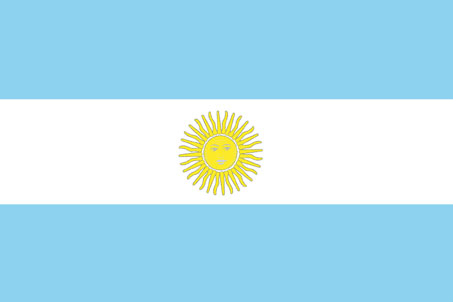
Argentina
Argentina
Declare Your Relationship to Argentina
CountryReports Community
- Studying1
- From Argentina1
- Argentina heritage1
- Visited0
- Want to visit1
Customs and Culture
Customs and Culture
About the People
Prosperity, family, education, and personal relationships are important values to Argentines.
Urban Argentines tend to be cosmopolitan, progressive, and outgoing. Those who live in rural areas are more conservative and traditional. Throughout the country, it is important to show respect to the elderly and to honor friendships.
Cultural Attributes
Prosperity, family, education, and personal relationships are important values to Argentines.
Urban Argentines tend to be cosmopolitan, progressive, and outgoing.
Those who live in rural areas are more conservative and traditional. Throughout the country, it is important to show respect to the elderly and to honor friendships.

Passion, Tango, and the Roof of the Americas
Greetings, Gestures & Visiting
It is customary to address people by a title (Señor, Señora, Doctor, among others) when being introduced. A handshake and slight nod show respect. Women are most likely to kiss each other, but a man and woman may greet in this manner if well acquainted. When approaching someone such as a police officer or a customs official for information, one should always greet the official before asking any questions.
Traditionally, it has been improper for a man and a woman to show affection in public--although these customs are not observed as much in large urban areas. During conversation personal spaces tend to be less than in some cultures, and people might touch each other or stand close when speaking. It is impolite to yawn without covering one's mouth. Eye contact is considered important in conversation. Hats are removed in buildings, houses, elevators, and in the presence of women.
Visitors introduce each person individually rather than in a single group introduction. If invited to dinner, one should bring a small gift such as flowers or candy for their hosts. Guests will not offend hosts if they arrive late. Guests are not seated until the head of the household directs them to do so. It is considered good manners to compliment the home or meal. When leaving, a guest should say goodbye to each person.
Most people wear modern fashions, especially in urban areas. Clothing that one finds in Europe or North America is readily available in Argentine cities. Traditional costumes representing a region's heritage may be worn on special occasions or holidays but not on a daily basis. Older people tend to wear more conservative styles and colors.
Diet
Beef has long been the staple of the Argentine diet. A favorite way to entertain is the weekend "asado" (barbecue). At such an event, friends and relatives will gather to eat grilled meat, sharing side dishes and spending hours relaxing. Other popular dishes include baked stuffed beef and "empanadas" (meat or vegetable pies). A preferred winter stew is "locro" (with meat, corn, and potatoes). More people are incorporating salads and other fresh produce into their diets.
The evening meal is lighter than the lunchtime meal. Dinner is frequently served later in the evening, even after 9:00 p.m.. Argentines use the continental style of eating, meaning they hold a knife in their right hand and a fork in the left--using both utensils to eat. Hands should always be above the table, not in the lap.
Beef has long been the staple of the Argentine diet. A favorite way to entertain is the weekend "asado" (barbecue). At such an event, friends and relatives will gather to eat grilled meat, sharing side dishes and spending hours relaxing. Other popular dishes include baked stuffed beef and "empanadas" (meat or vegetable pies). A preferred winter stew is "locro" (with meat, corn, and potatoes). More people are incorporating salads and other fresh produce into their diets.

Family
The responsibility of raising children lies with the mother. Women working outside the home comprise less than thirty percent of the Argentine work force. Men are often occupied with work, even in the evening. Families are smaller than in other countries, with on average just two children. A good education is important to Argentines and families sacrifice to make it possible for their children. Divorce used to be illegal in Argentina Now the family structure is changing and leading to more single-parent households.
Dating Customs
Group dating between young men and young women often begins at age fifteen. The fifteenth birthday is the girls' most important birthday as it marks the end of their childhood. Young couples' favorite activity is dancing. Going to the movies or eating at cafes are also popular dating activities.
Recreation
Recreation in Argentina: Argentina's national game is "futbol" (soccer), which was introduced in the 1860s by British soldiers. In the streets of Buenos Aires, as elsewhere, important matches are often the topic of discussion--even among strangers.
Families often go to the Atlantic coast in summer. Mar del Plata, southeast of Buenos Aires, is a popular destination for the summer holidays. In winter, many Argentinians enjoy Andinismo, which means hiking, mountain-climbing, or alpine or cross-country skiing in the Andes mountains.
Pato (duck) is a special Argentinian sport, first played by the Gauchos (cowboys). Pato was originally played by two teams on horseback using a duck in a leather pouch with handles. Two players would grab the handles and pull until one let go. The winning team would ride away, while the opposing team tried to stop them and grab the pato. The sport became dangerous and was banned in 1882. In the late 1930s, it was revived with new rules. Now two teams of four men on horseback attempt to throw the modern pato, a leather ball with six handles, into one of two baskets at either end of a large field.
Horse racing is another popular spectator sport. Races are held throughout the year. The two most important events are the Argentine Republic Prize, held in April, and the Grand National in November.
Tennis was once a sport reserved for the wealthy until the Argentinian Guillermo Vilas did well in international competitions. Now it is played by young people throughout the country. Gabriela Sabatini, also of Argentina, was ranked as one of the world's top women's tennis players during her teenage years.
Student Life
Although there is some variety when school begins, most children must get up between 7:00 and 7:30 to get ready for school. Breakfast in Argentina usually consists of hard rolls (or toast) and jam with tea or coffee. A favorite drink for young children is called "submarino" which is milk with chocolate syrup added.
There are no public school buses, so kids will usually walk or ride a public transportation bus to school, depending on the local circumstances. They will catch their bus in time to arrive at school around 8:00. Wealthier parents often drive their children to school. In the country or rural areas, some children will even go to school on horseback. Argentina is home to many large cattle ranches, and children who grow up on such ranches are very comfortable riding horses from the time they are very young. Larger ranches may even have their own one-room school for the children on the ranch to attend.
In order to create a sense of equality among students, regardless of economic background, students wear standard uniforms consisting of knee-length white smocks over their everyday clothes: the boys' smocks button down the front, and the girls' button down the back. The smocks resemble white laboratory coats. Students must buy their own books and uniforms. Private schools are conducted by churches and other organizations, but they of course charge tuition. Separate programs are available for special needs children. Schools have varying schedules, but many will have split sessions, with half of the students attending in the morning and half in the afternoon. School sessions provide three 10-minute breaks during each morning and afternoon session.
One of Latin America's most frequent problems with education is the number of malnourished children who attend school hungry. Argentina is one of the best countries on the continent for ensuring that its children are fed properly. Certainly, a small percentage of poor families cannot provide their children with sufficient nourishment, but only 2% of children under the age of five are considered underweight because of a lack of food. Furthermore, almost three-fourths of the entire population has ready access to safe drinking water and proper sanitation facilities. Recently, Argentina's educators have teamed up with some wealthy businessmen to improve the technological part of education. Over 50,000 personal computers have been installed in schools around the country, and the plan is to install another 50,000 before 2008. This is a tremendous asset for educators and provides children with a background that will allow them to get higher-paying jobs because of their familiarity with computers and the Internet. Spanish is the national language, though it is spoken in many accents, including a significant Italian influence in much of the country. Other languages are spoken in the country including German and French. When students are 14 years old, they take exams that dictate which type of secondary school they can enter. Some schools are for those who plan to attend college, others train children for vocations (business, industries, or trades), and yet others prepare students for teaching primary school.
Sports in Argentina are usually organized by leagues rather than schools. Most youth will pick a sport when they are quite young and stick with that sport throughout their school-age days. Competition between schools does still happen, however, but they are focused on other areas, such as dance and music. Thus extracurricular activities, when they are offered, involve art, academic clubs, music, dance, and similar activities.
The most popular sport in Argentina is soccer, as in most of Latin America and Europe. However, Argentines also enjoy basketball, rugby, and auto and horse racing. People are friendly and will encourage fun and openness.
Cultural backgrounds are so diverse in Argentina that it is difficult to describe a "typical"Â Argentinian family. In the primary city of Buenos Aires, in which about one-third of the entire population of the country lives, there is a saying that a citizen there speaks Spanish, eats Italian, dresses like a Frenchman, and thinks he is an Englishman. Fathers are considered the head of the family, while mothers are in charge of the home, although in recent years women have become more active in business and affairs outside of the home. Grandparents will often live with extended families and help care for the younger children while parents work, and newlywed couples usually live with parents until they are financially able to move out on their own. Argentinians usually eat four meals per day: a light breakfast, lunch, a small dish of cheeses or snacks following work, and dinner in the evening. The late afternoon light meal probably comes from a British influence of having afternoon tea. Empanadas, which are little pies filled with meats, seafood, or vegetables are a popular snack, one which children often take with them to school and which can be easily purchased from street vendors, along with warm peanuts, sweet popcorn, fruit, and similar fast foods. Traditional evening meals are eaten after nine in the evening. Argentina is known throughout the world for its superb beef, and many evening meals include pasta and beef, accompanied by mate, a native tea-like beverage.
Most citizens of Argentina aged 15 or older can read and write. The country has one of the better-educated populations in Latin America. Indeed, education is prized as one of the most important assets people can have. The government provides free public education for children ages 5-14, covering elementary and high school. There are also many privately-funded schools that charge tuition for their schools. Children attend school from March, which is Fall in South America, until late November. Summer vacation occurs when it is hottest, during December, January, and February. The length of the school day can vary, especially among private schools, but in general, the day begins at approximately 8:00 in the morning and will conclude in the early afternoon. School is finished each day by 4:30 in the afternoon. For younger children, the school session either runs from 8:00 until noon or from 1:00 until 5:00. Subjects for children in elementary school include math, science, history, geography, Spanish, English, music, belief systems, technology, and physical education. Until the age of nine, a child must study English for at least two hours a day.
Holidays
Revolution Day
5/25Independence
Christmas
12/25Christmas
Home decoration consist of presebres (Nativity scenes), and red and white garlands with Father Christmas’s boots placed at the door. Although Santa Clause and Christmas trees are becoming increasingly popular it is still customary for families to visit the presebres of friends and relatives as well as the presebres in the local cathedral. Traditionally the manger remains empty until midnight on Christmas Eve when a family member at home or church leader at the cathedral adds the Christ child signifying the Christ child is born.
Many Children are starting to receive gifts on Christmas eve as well as on Epiphany when they place their shoes on a window sill and the Three Kings fill them with treats by morning.
The Christmas season includes The Feast of the Immaculate Conception held on December 8th, Midnight Mass held on Christmas Eve, Holy Innocents Day -- December 28th, New Years Day --January 1st and the Epiphany or the Day of the Kings on January 6th. Because the holiday season falls during the summer, beach activities with fireworks are common.
Christmas dinner, usually after Midnight Mass, may consist of roast lechon (baby pig between the ages of 2-6 weeks) niños envueltos (peices of steak rolled and seasoned with minced meat, hard-boiled eggs, and spices), sidra (apple juice with liquor), pan dulce (sweet Christmas bread with dried fruit) and turron de mani (Christmas candy)
Dates of Interest
- July 20
Argentinians celebrate a Day of Friendship or Friend's Day every July 20th. Although not an official holiday, many Argentines participate by going out, getting together, and giving presents. The amount of calling and texting often leads to temporary breakdowns of the mobile network and people have to book seats in advance in restaurants, bars, and pubs if they want to gather with friends.
How do people greet each other in Argentina?
Use a title (Señor, Señora, Doctor) when introduced, along with a handshake and slight nod to show respect. Women commonly kiss each other, and a man and woman may greet this way if well acquainted.
Do
- Address people by their title when introduced
- Offer a handshake with a slight nod
- Greet an official (like a police officer or customs officer) before asking any questions
Good to know
- A kiss greeting between a man and woman is used only among the well acquainted
What are dining customs like in Argentina?
Beef is the staple, and the weekend 'asado' (barbecue) is a favorite way to gather with friends and relatives over grilled meat and shared side dishes. Dinner is lighter than lunch and often served after 9:00 p.m.
Do
- Eat continental style: knife in the right hand, fork in the left
- Keep your hands above the table, not in your lap
- Try dishes like empanadas, baked stuffed beef, and the winter stew locro
Don’t
- Don't expect a heavy evening meal or an early dinner
Good to know
- An asado is a relaxed, hours-long social event
What etiquette should I follow when visiting an Argentine home?
Bring a small gift such as flowers or candy, and let the host direct you where to sit. Compliment the home or meal, and say goodbye to each person when leaving.
Do
- Bring flowers or candy for your hosts
- Introduce each person individually rather than as a group
- Wait for the head of the household to direct you to your seat
- Compliment the home or the meal
Good to know
- Arriving late will not offend your hosts
How should I dress in Argentina?
Most people wear modern fashions, especially in urban areas, with European and North American clothing readily available in cities. Older people tend to favor more conservative styles and colors.
Good to know
- Traditional regional costumes appear on special occasions or holidays, not daily
What gestures and body language should I be aware of?
Personal space is closer than in some cultures, and people may touch or stand close while speaking; eye contact is important in conversation.
Do
- Maintain eye contact during conversation
- Cover your mouth when yawning
- Remove hats in buildings, houses, elevators, and in the presence of women
Don’t
- Avoid public displays of affection, especially outside large urban areas
What is family life like in Argentina?
Family, education, and respect for the elderly are highly valued, and families are relatively small, averaging two children. Families sacrifice to give their children a good education.
Good to know
- The family structure is changing, with more single-parent households
- A girl's fifteenth birthday marks the end of childhood and is her most important
What do people do for recreation in Argentina?
Soccer ('futbol') is the national game and a common topic of conversation even among strangers. Families head to the Atlantic coast in summer, while winter brings Andinismo (hiking, climbing, and skiing in the Andes).
Good to know
- Pato, played on horseback, is a distinctive Argentine sport
- Horse racing and tennis are also popular
- Mar del Plata is a popular summer holiday destination
Last updated: 2026-07-12 · Sources: CountryReports
Photos of Argentina
Photos of Argentina
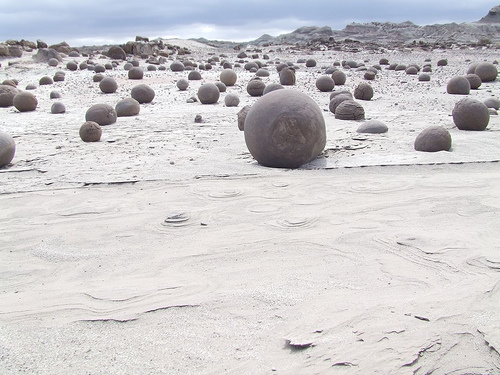
Valle de la luna, Argentina
Valle de la luna, Argentina
Valle de la luna, Argentina. Wild Juanacas similar to Llama
Rock formation in Valle de la luna, Argentina.
Valle de la luna, Argentina
Las Grutas beach , Argentina
Huerta Grande, the living room of a rural house. Bedroom i
Huerta Grande, the kitchen of a rural house.
Huerta Grande, the outside of a rural house.
Asado is meat which is cooked over a fire either at home or
A typical way of cooking called A Disco.
A common sight in Argentina. A tea drink called Mate.


Travel and Tourism
Travel and Tourism
- Travel Alert Status
- Level 1: Exercise Normal Precautions
- Currency
- 14.92
- Time Difference
- UTC-3 (2 hours ahead of Washington, DC, during Standard Time)
- Climate
- The vast Pampa region fanning out 500 miles from Buenos Aires has an average annual rainfall range of 20 inches in the west to 40 inches in the east. The Andean region extends from the dry north to the heavily glaciated and ice-covered mountains of Patagonia. Its trajectory includes the dry mountains and desert west of Cordoba and south of Tucuman and embraces the irrigated valleys on the eastern slopes and foothills of the Andes. Annual precipitation ranges from 4 to 24 inches in the arid regions and 20 to 120 inches in the heaviest rainfall areas. Patagonia is a region of arid, windswept plateaus, covering about 300,000 square miles. Except for some irrigated valleys, this is poor, scattered pastureland. Far south, the weather is continuously cold and stormy; the region has no summer, and winters can be severe. The alluvial plain of the Chaco in the north has a subtropical climate with dry winters and humid summers. Rainfall decreases from 60 to 20 inches, and temperatures reach 120 °F. The Argentine Mesopotamia, which consists of the provinces between the Uruguay and Parana Rivers, is made up of floodplains and gently rolling grassy hills The greatest precipitation falls in the extreme north of Misiones Province, where it amounts to about 80 inches yearly. Buenos Aires, located on the southern bank of the Rio de la Plata, borders the vast Pampa. The terrain within the city varies from low flatland only inches above the high tide line to slightly rolling countryside with a maximum elevation of 129 feet. The average rainfall in Buenos Aires is 39 inches, distributed evenly throughout the year. Humidity is high year-round (the yearly mean is 76%). High humidity makes winters seem colder and summers hotter. Abrupt temperature changes are experienced throughout the year, bringing relief from summer's heat and winter's cold.
- Airports
- 1,149
- Recommended Vaccinations
- How important is it to do your research about vaccinations? It might just save your life! Make yourself aware of the different types of vaccinations and which ones you may need to travel to your destination. Schedule an appointment with your doctor at least four to six weeks before you travel to ensure you receive all important shots. Be sure that you and your family are up to date on your routine vaccinations. Which vaccinations you need will depend on a number of factors including your destination, whether you will be spending time in rural areas, the season of the year you are traveling, your age, health status, and previous immunizations.
Read the full travel guide — health, safety, vaccinations, disease risk, sanitation, and transit details.
View full travel guideRecipes
Recipes
Argentina Fritters
Dessert
Main Dish
Potato and Beef Empanadas
Main Dish
Crillo De Pollo
Main Dish
Carbonada Criolla (Veal and Vegetable Stew)
Main Dish
Tortilla Campesina (Potato Pudding)
Main Dish
Argentine Stew in a Pumpkin Shell
Main Dish
Jugosas Empanadas Criollas Argentinas (Juicy Argentine Creole Empanadas)
Dessert
PremiumGnoquis de Semola a la Romana
Dessert
PremiumAlfajores Danubio (Sweet Layered Pastries)
Dessert
PremiumDulce the Leche (Milk Jam)
History
History
Historical Eras
Pre-Colonial & Exploration
10000 BCE – 1580
Indigenous peoples including the Mapuche, Guaraní, and Diaguita inhabited the region for millennia before European contact. Amerigo Vespucci reached the area in 1502, and Juan Díaz de Solís entered the Río de la Plata in 1516. Early Spanish attempts at settlement were resisted, delaying permanent European presence in the region.
Spanish Colonial Era
1580 – 1816
Spain established a permanent settlement at Buenos Aires in 1580, and the city grew into a vital commercial hub following the creation of the Viceroyalty of the Río de la Plata in 1776. Colonial society was structured around Spanish-born elites, criollos, and a large mestizo and indigenous labor force. Enlightenment ideas and Napoleonic disruptions in Europe gradually fueled independence sentiment among the criollo class.
Independence & Nation-Building
1816 – 1880
Argentina formally declared independence on July 9, 1816, with General José de San Martín leading military campaigns that expelled Spanish forces from the southern cone. Decades of violent conflict followed between centralist Unitarios and federalist Caudillos, including the dictatorship of Juan Manuel de Rosas. A federal constitution adopted in 1853 and the final unification of Buenos Aires with the Argentine confederation by 1880 established the modern republic.
Oligarchic Republic & Growth
1880 – 1930
Argentina emerged as one of the world's ten wealthiest nations, driven by agricultural exports, British investment in railroads and ports, and massive waves of European immigration. Conservative landowning elites dominated politics until the Radical Civic Union under Hipólito Yrigoyen won the presidency in 1916, opening government to the growing middle class. A military coup in 1930 ended this democratic experiment and returned conservative factions to power.
Peronism & Military Cycles
1930 – 1983
Decades of instability culminated in Juan Domingo Perón's rise to the presidency in 1946, backed by organized labor and his charismatic wife Eva Duarte de Perón. Perón's populist-nationalist model reshaped Argentine society but was interrupted by military exile in 1955; he returned briefly to power in 1973 before his death in 1974. A brutal military junta ruling from 1976 to 1983 waged a "Dirty War" responsible for the forced disappearance of an estimated 30,000 people.
Democratic Consolidation
1983 – present
The return of democracy under President Raúl Alfonsín in 1983 marked a decisive break from military rule, and trials of junta leaders set a regional precedent for accountability. Argentina weathered severe economic crises, including the 2001 collapse that triggered sovereign default and widespread social unrest, yet democratic institutions endured successive transfers of power. Ongoing challenges include chronic inflation, poverty, and political polarization between Peronist and non-Peronist coalitions.
Overview
Timeline of Key Events
1516
Juan Diaz de Solis became the first European to enter Argentina in search of gold
Juan Diaz de Solis became the first European to enter Argentina in search of gold. Many of the indigenous population of Argentina were killed by the diseases brought over by the Europeans.
1580
Buenos Aires was established.
Buenos Aires was established.
1680
The Portuguese established a trading post across the Rio de la Plata from Buenos Aires .
The Portuguese established a trading post across the Rio de la Plata from Buenos Aires.
1776
Spain encompassed all of its territories in south-east South America
Spain encompassed all of its territories in south-east South America to create one large colony called the Viceroyalty of the Rio de la Plata.
1810
Overthrow of the king of Spain by Napoleon
Overthrow of the king of Spain by Napoleon.
1812
Jose de San Martin led the Argentina fight against Spain for Independence.
Jose de San Martin led the Argentina fight against Spain for Independence.
1816
Argentina declares its independence from Spain
Argentina declares its independence from Spain. José de San Martín defeats Spanish forces in Chile.
Read the full history profile — narrative overview, defining eras, and the complete timeline in one place.
View expanded historyInteresting Facts
Interesting Facts
When Argentine children lose a baby tooth, they will put it under their pillow at night. During the night, a little mouse called "El Ratón Perez" will come and take the tooth, and leave some coins.
Llamas are good at climbing mountains. People in the Andes use them to carry things. They also make warm blankets and ponchos from the llama's wool. Llama meat is also common in many dishes in the Northern Andean region of the country.
The highest mountain peak in the Americas is Mount Aconcagua in the Andes Mountains, rising more than 6,900 metres.
The soil brought down by the rivers flowing into the Río de la Plata has created landfill over the centuries that has allowed Buenos Aires, the capital city of Argentina, to advance several miles into the large river mouth.
One of Argentina's greatest military leaders was General José Francisco de San Martín, who led an army across the Andes. He was a professional soldier. This national hero helped lead the revolutions against Spanish rule in Argentina (1812), Chile (1818) and Perú (1821).
Approximately 2,890,151 people live in Buenos Aires with upwards of 11 million including surrounding suburbs. A huge amount of people commute to Buenos Aires every day. There is a saying that a Porteño speaks Spanish, eats Italian, dresses like a Frenchman and thinks he is an Englishman.
See every fact — trivia, oddities, and curious tidbits gathered from across the country.
View all interesting factsGeography and Environment
Geography and Environment
- Terrain
- rich plains of the Pampas in northern half, flat to rolling plateau of Patagonia in south, rugged Andes along western border
- Climate
- The vast Pampa region fanning out 500 miles from Buenos Aires has an average annual rainfall ranges from 20 inches in the west to 40 inches in the east. The Andean region extends from the dry north to the heavily glaciated and ice covered mountains of Patagonia. Its trajectory includes the dry mountains and desert west of Cordoba and south of Tucuman and embraces the irrigated valleys on the eastern slopes and foothills of the Andes. Annual precipitation ranges from 4 to 24 inches in the arid regions and 20 to 120 inches in the heaviest rainfall areas. Patagonia is a region of arid, windswept plateaus, covering about 300,000 square miles. Except for some irrigated valleys, this is poor, scattered pastureland. Far south, the weather is continuously cold and stormy; the region has no summer, and winters can be severe. The alluvial plain of the Chaco in the north has a subtropical climate with dry winters and humid summers. Rainfall decreases from 60 to 20 inches, and temperatures reach 120°F. The Argentine Mesopotamia, which consists of the provinces between the Uruguay and Parana Rivers, is made up of floodplains and gently rolling grassy hills The greatest precipitation falls in the extreme north of Misiones Province, where it amounts to about 80 inches yearly. Buenos Aires, located on the southern bank of the Rio de la Plata, borders on the vast Pampa. The terrain within the city varies from low flatland only inches above the high tide line to slightly rolling countryside with a maximum elevation of 129 feet. Average rainfall in Buenos Aires is 39 inches, distributed evenly throughout the year. Humidity is high year round (the yearly mean is 76%). High humidity makes winters seem colder and summers hotter. Abrupt temperature changes are experienced throughout the year, bringing relief from summer’s heat and winter’s cold.
- Natural Hazards
- San Miguel de Tucuman and Mendoza areas in the Andes subject to earthquakes; pamperos are violent windstorms that can strike the pampas and northeast; heavy flooding
- Current Environmental Issues
- environmental problems (urban and rural) typical of an industrializing economy such as deforestation, soil degradation, desertification, air pollution, and water pollution
Read the full geography and environment profile — terrain, climate, natural resources, hazards, land use, and international agreements.
View full geographyPeople & Demographics
People & Demographics
Religion
Languages Spoken
Spanish (official), Italian, English, German, French, indigenous (Mapudungun, Quechua)
- Spanish
Population
- Population
- 41,343,201
- Population: Male/Female
- male: 23,274,794 female: 23,719,590
- Population Distribution
- one-third of the population lives in Buenos Aires; pockets of agglomeration occur throughout the northern and central parts of the country; Patagonia to the south remains sparsely populated
- Urban Population
- urban population: 92.5% of total population rate of urbanization: 0.97% annual rate of change
- Population in Major Urban Areas
- 15.490 million BUENOS AIRES (capital), 1.612 million Córdoba, 1.594 million Rosario, 1.226 million Mendoza, 1.027 million San Miguel de Tucumán, 914,000 La Plata
- Nationality Noun
- noun: Argentine(s) adjective: Argentine
- Ethnic Groups
- European (mostly Spanish and Italian descent) and Mestizo (mixed European and Indigenous ancestry) 97.2%, Indigenous 2.4%, African descent 0.4%
- Language Note
- Spanish (official), Italian, English, German, French, indigenous (Quechua, Guarani, Mapudungun)
Demographic Profile
Argentina's population continues to grow but at a slower rate because of its steadily declining birth rate. Argentina's fertility decline began earlier than in the rest of Latin America, occurring most rapidly between the early 20th century and the 1950s, and then becoming more gradual. Life expectancy has been improving, most notably among the young and the poor. While the population under age 15 is shrinking, the youth cohort - ages 15-24 - is the largest in Argentina's history and will continue to bolster the working-age population. If this large working-age population is well-educated and gainfully employed, Argentina is likely to experience an economic boost and possibly higher per capita savings and investment. Although literacy and primary school enrollment are nearly universal, grade repetition is problematic and secondary school completion is low. Both of these issues vary widely by region and socioeconomic group.
Argentina has been primarily a country of immigration for most of its history, welcoming European immigrants (often providing needed low-skilled labor) after its independence in the 19th century and attracting especially large numbers from Spain and Italy. More than 7 million European immigrants are estimated to have arrived in Argentina between 1880 and 1930, when it adopted a more restrictive immigration policy. European immigration also began to wane in the 1930s because of the global depression. The inflow rebounded temporarily following WWII and resumed its decline in the 1950s when Argentina's military dictators tightened immigration rules and European economies rebounded. Regional migration increased, however, supplying low-skilled workers escaping economic and political instability in their home countries. As of 2015, immigrants made up almost 5% of Argentina's population, the largest share in South America. Migration from neighboring countries accounted for approximately 80% of Argentina's immigrant population in 2015.
The first waves of highly skilled Argentine emigrant workers headed mainly to the United States and Spain in the 1960s and 1970s, driven by economic decline and repressive military dictatorships. The 2008 European economic crisis drove the return migration of some Argentinean and other Latin American nationals, as well as the immigration of Europeans to South America, where Argentina was a key recipient. In 2015, Argentina received the highest number of legal migrants in Latin America and the Caribbean. The majority of its migrant inflow came from Paraguay and Bolivia.
Education
- Literacy Definition
- age 15 and over can read and write
In order to create a sense of equality among students, regardless of economic background, students wear standard uniforms consisting of knee-length white smocks over their everyday clothes: the boys' smocks button down the front, and the girls' button down the back. The smocks resemble white laboratory coats. Students must buy their own books and uniforms.
Private schools are conducted by churches and other organizations, but they of course charge tuition. Separate programs are available for special needs children.
Schools have varying schedules, but many will have split sessions, with half of the students attending in the morning and half in the afternoon. School sessions provide three 10-minute breaks during each morning and afternoon session.
Health Information
- Life Expectancy at Birth
- total population: 78.8 years male: 75.8 years female: 82 years
- Alcohol consumption per capita
- total: 7.95 liters of pure alcohol beer: 3.62 liters of pure alcohol wine: 2.88 liters of pure alcohol spirits: 0.72 liters of pure alcohol other alcohols: 0.72 liters of pure alcohol
- Tobacco Use
- total: 24.5% male: 29.4% female: 19.6%
- Child Marriage
- women married by age 15: 2.4% women married by age 18: 15.5%
- Infant Mortality Rate
- total: 9 deaths/1,000 live births male: 9.9 deaths/1,000 live births female: 7.9 deaths/1,000 live births
Life Expectancy
- Life Expectancy at Birth
- total population: 78.8 years male: 75.8 years female: 82 years
- Median Age
- total: 33.3 years male: 32.1 years female: 34.6 years
- Age Structure
- 0-14 years: 23.3% (male 5,632,983/female 5,301,778) 15-64 years: 63.9% (male 15,071,215/female 14,956,069) 65 years and over: 12.8% (male 2,570,596/female 3,461,743)
- Infant Mortality Rate
- total: 9 deaths/1,000 live births male: 9.9 deaths/1,000 live births female: 7.9 deaths/1,000 live births
Read the full people and society profile — demographics, health, education, religion, languages, and notable people.
View full people and societyGovernment & Politics
Government & Politics
Country Identity
- Country Name
- Argentina
- Full Country Name
- Argentine Republic
- Local - Long
- Republica Argentina
- Local - Short
- Argentina
Government Structure
- Government Type
- republic
- Legal System
- mixture of US and West European legal systems; has not accepted compulsory ICJ jurisdiction
- Executive Branch
- chief of state: President Javier MILEI (since 10 December 2023); Vice President Victoria VILLARRUEL (since 10 December 2023); note - the president is both the chief of state and head of government head of government: President Javier MILEI (since 10 December 2023); Vice President Victoria VILLARRUEL (since 10 December 2023); note - the president is both the chief of state and head of government cabinet: Cabinet appointed by the president elections: president and vice president elected on the same ticket by popular vote for four-year terms; election last held 22 October 2023, with a runoff held on 19 November 2023 (next election to be held in 2027) election results: results of the first-round presidential election of 22 October 2023: Sergio MASSA 36.7%, Javier MILEI 30.0%, Patricia BULLRICH 23.8%, Juan SCHIARETTI 6.8%, Myriam BREGMAN 2.7%; runoff election held 19 November 2023: Javier MILEI 55.7%, Sergio MASSA 44.3%; MILEI elected president
- Legislative Branch
- bicameral National Congress or Congreso Nacional consists of the Senate (72 seats; members are elected by direct vote; presently one-third of the members elected every two years to a six-year term) and the Chamber of Deputies (257 seats; members are elected by direct vote; one-half of the members elected every two years to a four-year term) elections: Senate - last held 23 October 2005 (next to be held in 2007); Chamber of Deputies - last held last held 23 October 2005 (next to be held in 2007) election results: Senate - percent of vote by bloc or party - FV 45.1%, FJ 17.2%, UCR 7.5%, other 30.2%; seats by bloc or party - FV 14, FJ 3, UCR 2, other 5; Chamber of Deputies - percent of vote by bloc or party - FV 29.9%, UCR 8.9%, ARI 7.2%, PJ 6.7%, PRO 6.2%, FJ 3.9%, other 37.2%; seats by bloc or party - FV 50, UCR 10, ARI 8, PJ 9, PRO 9, FJ 7, other 34
- Judicial Branch
- Supreme Court or Corte Suprema (the nine Supreme Court judges are appointed by the president with approval by the Senate)
- Suffrage
- 18 years of age; universal and mandatory
- Constitution
- 1 May 1853; revised August 1994
- Independence
- 9 July 1816 (from Spain)
- National Holiday
- Revolution Day, 25 May (1810)
Capital City
- Capital Name
- Buenos Aires
- Capital - geographic coordinate
- 34 36 S, 58 22 W
- Capital Time Difference
- UTC-3 (2 hours ahead of Washington, DC, during Standard Time)
the name translates as "fair winds" in Spanish and derives from the original designation of the settlement that would become the present-day city, "Santa Maria del Buen Aire" (Saint Mary of the Fair Winds)
Military
Branches: Argentine Army (Ejercito Argentino), Navy of the Argentine Republic (Armada Republica; includes naval aviation and naval infantry), Argentine Air Force (Fuerza Aerea Argentina, FAA)
Embassy / Diplomatic Mission
U.S. Embassy Buenos Aires, Argentina
Avenida Colombia 4300, Palermo
Telephone: (54) (11) 5777-4533
Emergency after-hours telephone: (54) (11) 5777-4873
Facsimile: (54) (11) 5777-4250
Read the full government profile — flag symbolism, national anthem, and other national symbols.
View full government detailsEconomy
Economy
Argentina possesses abundant natural resources, a highly literate population, an export-oriented agricultural sector, and a diversified industrial base. Despite these advantages, the country has endured decades of recurring economic challenges, including persistent high inflation, sovereign debt crises, capital flight, currency volatility, and chronic budget deficits.
After defaulting on its sovereign debt multiple times in recent decades, Argentina entered another severe economic crisis in the early 2020s, marked by triple-digit inflation, a depreciating peso, and dwindling foreign currency reserves. In late 2023, libertarian economist Javier Milei was elected president on a platform of radical economic reform. His administration has implemented sweeping austerity measures, including sharp cuts to public spending, deregulation, currency devaluation, and the elimination of numerous government ministries, with the stated goals of achieving fiscal balance and dismantling currency controls.
These shock-therapy policies have produced a fiscal surplus for the first time in over a decade and slowed monthly inflation, though annual inflation remained among the highest in the world and poverty levels rose sharply in the short term. Argentina continues to negotiate with the International Monetary Fund, its largest creditor, while seeking to restore investor confidence, attract foreign investment—particularly in lithium, shale energy from the Vaca Muerta formation, and agriculture—and return to sustainable growth.
Snapshot
- Currency Name and Code
- Argentine Peso (ARS)
- GDP — official exchange rate
- $182,000,000,000 (USD)
- GDP Real Growth Rate
- 8.7%
- GDP by Sector
- agriculture: 5% industry: 28% services: 67%
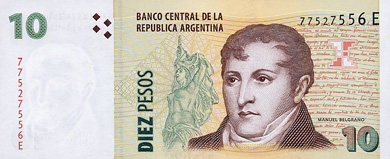
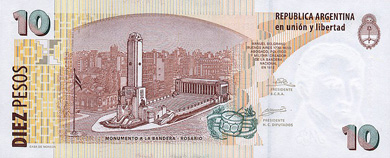
Banknotes
Budget & Public Finance
- Fiscal Year
- calendar year
- Annual Budget
- $39,980,000,000 (USD)
- Public Debt (% of GDP)
- 69%
- External Debt
- $119,000,000,000 (USD)
- Investment (% of GDP)
- 19.4%
- Economic Aid
- $10,000,000,000 (USD)
- Current Account Balance
- $3,900,000,000 (USD)
- Reserves of Foreign Exchange
- $2,147,483,647 (USD)
Labor, Industry & Trade
- Labor Force by Occupation
- agriculture NA%; industry NA%; services NA%
- Industries
- food processing, motor vehicles, consumer durables, textiles, chemicals and petrochemicals, printing, metallurgy, steel
- Agriculture Products
- sunflower seeds, lemons, soybeans, grapes, corn, tobacco, peanuts, tea, wheat; livestock
- Export Commodities
- edible oils, fuels and energy, cereals, feed, motor vehicles
- Export Partners
- Brazil 18.8%, Chile 11.5%, US 11.5%, Spain 4.5%, China 4.2%, Netherlands 4.1%
- Import Commodities
- machinery and equipment, motor vehicles, chemicals, metal manufactures, plastics
- Import Partners
- Brazil 28.1%, US 20.1%, Germany 6.2%
Energy
- Oil Production
- 745,000 bbl/day
- Oil Consumption
- 450,000 bbl/day
- Oil Reserves
- 0 bbl/day
- Natural Gas Production
- 37,150,000,000 cu m
- Natural Gas Consumption
- 31,100,000,000 cu m
- Natural Gas Imports
- 0 cu m
- Natural Gas Exports
- 6,050,000,000 cu m
- Natural Gas Reserves
- 2,950,000,000 cu m
Communications
- Telephone System
- General Assessment: In 1998 Argentina opened its telecommunications market to competition and foreign investment encouraging the growth of modern telecommunications technology; fiber-optic cable trunk lines are being installed between all major cities; major networks are entirely digital and the availability of telephone service is improving Domestic: Microwave radio relay, fiber-optic cable, and a domestic satellite system with 40 earth stations serve the trunk network; fixed-line teledensity is increasing gradually and mobile-cellular subscribership is increasing rapidly; broadband Internet services are gaining ground International: Country code - 54; landing point for the Atlantis-2, UNISUR, South America-1, and South American Crossing/Latin American Nautilus submarine cable systems that provide links to Europe, Africa, South and Central America, and US; satellite earth stations - 112; 2 international gateways near Buenos Aires
- Internet Country Code
- .ar
News & Weather
News & Weather
Current Weather
Latest News
FIFA to investigate violent clash between Spain and Argentina after World Cup final - ESPN
ESPN · 12h ago
World Cup 2026: Fifa opens investigation into Argentina post-final trouble - BBC
BBC · 15h ago
Another controversy! Cristiano Ronaldo likes Instagram post claiming FIFA helped Argentina reach World Cup final - The Times of India
The Times of India · 1h ago
Spain vs Argentina Highlights 🌎🏆 2026 FIFA World Cup™ | Final - FOX Sports
FOX Sports · 1d ago
Lionel Messi thanks Argentina fans: ‘Wound will take time to heal’ - Al Jazeera
Al Jazeera · 1h ago
Argentina champions? Pilot trolls hermanos, sparks party on plane 😅 - Yahoo Sports
Yahoo Sports · 14h ago
Argentina disgraced themselves, and the World Cup final, with their charmless petulance - The Athletic - The New York Times
The New York Times · 19h ago
Gangs of New Jersey: how the World Cup final descended into ugly scenes between Argentina and Spain - The Guardian
The Guardian · 9h ago
News via Google News
Climate Overview
The vast Pampa region fanning out 500 miles from Buenos Aires has an average annual rainfall range of 20 inches in the west to 40 inches in the east.
The Andean region extends from the dry north to the heavily glaciated and ice-covered mountains of Patagonia. Its trajectory includes the dry mountains and desert west of Cordoba and south of Tucuman and embraces the irrigated valleys on the eastern slopes and foothills of the Andes. Annual precipitation ranges from 4 to 24 inches in the arid regions and 20 to 120 inches in the heaviest rainfall areas.
Patagonia is a region of arid, windswept plateaus, covering about 300,000 square miles. Except for some irrigated valleys, this is poor, scattered pastureland. Far south, the weather is continuously cold and stormy; the region has no summer, and winters can be severe.
The alluvial plain of the Chaco in the north has a subtropical climate with dry winters and humid summers. Rainfall decreases from 60 to 20 inches, and temperatures reach 120 °F.
The Argentine Mesopotamia, which consists of the provinces between the Uruguay and Parana Rivers, is made up of floodplains and gently rolling grassy hills The greatest precipitation falls in the extreme north of Misiones Province, where it amounts to about 80 inches yearly.
Buenos Aires, located on the southern bank of the Rio de la Plata, borders the vast Pampa. The terrain within the city varies from low flatland only inches above the high tide line to slightly rolling countryside with a maximum elevation of 129 feet. The average rainfall in Buenos Aires is 39 inches, distributed evenly throughout the year. Humidity is high year-round (the yearly mean is 76%). High humidity makes winters seem colder and summers hotter. Abrupt temperature changes are experienced throughout the year, bringing relief from summer's heat and winter's cold.
Videos
Videos
2 curated YouTube videos.
Source: YouTube
Source: YouTube
Frequently Asked Questions
Frequently Asked Questions
What is the population of Argentina?
How do people greet each other in Argentina?
What are dining customs like in Argentina?
What etiquette should I follow when visiting an Argentine home?
How should I dress in Argentina?
What gestures and body language should I be aware of?
What is family life like in Argentina?
What do people do for recreation in Argentina?
What is the capital of Argentina?
Where is Argentina located?
What countries border Argentina?
What is the predominant religion in Argentina?
What currency does Argentina use?
What language is spoken in Argentina?
What is Argentina's geography like?
What is Argentina known for?
Last reviewed 2026