
 English
 Español
 中文
中文 हिन्दी
 Français
Finland
Suomi
Declare Your Relationship to Finland
CountryReports Community
- Studying4
- From Finland1
- Finland heritage1
- Visited1
- Want to visit1
Customs and Culture
Customs and Culture
About the People
Finns adopt a high ideal of loyalty and reliability, honoring their promises and agreements. Sisu (SEE-soo) a Finnish word that means independent, courageous, and strong defines the ideal Finn. People are generally reserved, they speak quietly and value punctuality and their privacy. They rarely show affection in public. Because Finns value privacy, many of them have second homes or summer cottages in areas away from the cities or near one of the country's many lakes. They are proud of their cultural heritage, especially in the light of the national identity having survived centuries of foreign domination. In 1917, Finland was finally declared an independent Republic. Finns are also proud of their clean natural environment. Women are expected to participate in careers, political life and the social arena as well as the family. Although many Finns are bilingual they continue to be proud of their language. Because of their winter's harshness, Finland's people make the most of their summer months. Some Finns spend all or part of their summer living in waterfront family cabins.
Cultural Attributes
Sisu (SEE-soo) a Finnish word that means independent, courageous, and strong defines the ideal Finn. People are generally reserved, they speak quietly and value punctuality and their privacy. They rarely show affection in public. Because Finns value privacy, many of them have second homes or summer cottages in areas away from the cities or near one of the country's many lakes. They are proud of their cultural heritage, especially in the light of the national identity having survived centuries of foreign domination.
In 1917, Finland was finally declared an independent Republic. Finns are also proud of their clean natural environment. Women are expected to participate in careers, political life and the social arena as well as the family. Although many Finns are bilingual they continue to be proud of their language. Because of their winter's harshness, Finland's people make the most of their summer months. Some Finns spend all or part of their summer living in waterfront family cabins.

Land of Sisu and a Thousand Lakes
Greetings, Gestures & Visiting
It is unusual to embrace when greeting people. Often one simply nods and says "hei" or "terve". To say goodbye, one says "hei heir" or "nakemiin". During introductions, the first name is used if it is informal, the surname if it is a more formal setting. Formal titles are reserved for formal events.
Formal dress is worn on special occasions, and colorful native costumes are sometimes seen at festivals and weddings. They often involve a striped, layered dress, with apron, bonnet and cap for women. The men wear a peaked cap, woolen cap or felt hat. Casual dress is however, the norm.
Diet
Finnish cuisine has been influenced by many cultures, from French to Russian. It also maintains a variety of Finnish specialties. Because of Finland's dependence on nature some dishes are seasonal as well as regional.
These are based on seafood, wild game and vegetables. Reindeer is on the menu, especially further north, along with salmon. Wild berries are commonly used in desserts and liqueurs.
Winter with its cold weather is a perfect time for thick soups made from vegetables such as turnips and rutabagas. Fish is often incorporated into the soup as well. A favorite soup lohikeitto (LOH-i-KAY-toh), is made from salmon prepared with potatoes, dill and milk. Mati (MATT-ee) , another popular winter dish is roe (fish eggs) taken from freshwater fish. Known as Finnish caviar and is delicious when served with sour cream.
The smorgasbord or Finnish buffet is called poronkaristys. Open-faced sandwiches on rye bread are often eaten for breakfast and snacks. Milk and coffee are the most popular drinks. Pastries are plentiful and bread is a staple in Finnish homes. A sweetbread called pulla comes in many forms, flavored with cardamon. Makkara (sausage) is roasted over a fire or sauna heater.
Porridge with mike and butter is a traditional breakfast but today most Finns prefer cereal, yogurt or rye bread with cheese and sausage. Lunch is the biggest meal of the day it includes salad, bread, a main course of fish, chicken or meat with sauce and a side dish of boiled rice, potatoes or pasta.
On formal occasions, visitors are shown their seats for dinner. Table conversation may span many topics. Finns eat in continental style, with a fork in the left hand, knife in the right hand. When going out to restaurants, one dresses conservatively.
Finnish cuisine has been influenced by many cultures, from French to Russian. It also maintains a variety of Finnish specialties. Because of Finland's dependence on nature some dishes are seasonal as well as regional. These are based on seafood, wild game and vegetables. Reindeer is on the menu, especially further north, along with salmon. Wild berries are commonly used in desserts and liqueurs. Winter with its cold weather is a perfect time for thick soups made from vegetables such as turnips and rutabagas. Fish is often incorporated into the soup as well. A favorite soup lohikeitto (LOH-i-KAY-toh), is made from salmon prepared with potatoes, dill and milk. Mati (MATT-ee) , another popular winter dish is roe (fish eggs) taken from freshwater fish. Known as Finnish caviar and is delicious when served with sour cream. The smorgasbord or Finnish buffet is called poronkaristys. Open-faced sandwiches on rye bread are often eaten for breakfast and snacks. Milk and coffee are the most popular drinks. Pastries are plentiful and bread is a staple in Finnish homes. A sweetbread called pulla comes in many forms, flavored with cardamon. Makkara (sausage) is roasted over a fire or sauna heater. Porridge with mike and butter is a traditional breakfast but today most Finns prefer cereal, yogurt or rye bread with cheese and sausage. Lunch is the biggest meal of the day it includes salad, bread, a main course of fish, chicken or meat with sauce and a side dish of boiled rice, potatoes or pasta.

Family
An average Finnish family has up to two children. Often both parents have jobs and they make most family decisions together. Women receive up to 11 months maternity leave, with the option for some paternity leave. A newborn baby gets a lot of attention with family and friends coming to visit and bring food, clothes, and other gifts to celebrate the birth. Young people become independent early, moving out with the aid of housing subsidies. In farming areas, however most men and women still have traditional roles. Men work in the fields, women cook and clean and raise the children. Finnish women have equal status and are equally well-educated. They make up about half of the work force.
Dating Customs
Dating begins in groups at about age 15, when individuals may go to movies or dances. Sometimes marriage takes place when children arrive. The children may bear either the father or mother's surname, if both parents have kept their original surnames. It is possible, though uncommon, for a man to take his wife's surname at marriage.
Recreation
All kinds of outdoor activities are popular in Finland. Finland has twenty-nine nature reserves covering nearly one-third of their country. Finland's national sport "pesapallo" (pay-SAH-PARL-loh), is a summer sport played in rural areas and small towns. It is played like American baseball. Many Finns also play soccer. During the long winters many Finns enjoy sports such as snowboarding, skiing and ski jumping. Ice skating, Ice fishing, and driving snowmobiles are also popular. Large groups of Finns ski together and thousands take part in the 75 kilometer Finlandia cross-country ski race. Ice hockey is a favorite winter team sport. Young Finns enjoy many indoor activates during winter including playing video games, watching television and surfing the internet. Reindeer races are popular in Lapland where reindeer are raised as livestock.
Finns embrace their climate and have fun in the snow and example of this would be Yukigassen. Yukigassen (a Japanese word when translated means "snow battle") is a game which originated in Japan but popular in Finland. The rules are simple
Two opposing teams throw snowballs at each other.
Each team has 90 snowballs for each set
When a player is stuck by a snowball the player is declared out by a sideline judge and must leave the field of play.
Each team has a pennant that it is protecting from capture by the opposing team
A match between teams consists of three 180 second "sets" and the winner of two sets wins the match.
A set is won by outright capture of the opposing team's pennant, or on the basis of points. Points for each set are determined by the number of players remaining on the field for each team when the time has expired. If that determination is a draw, then the number of snow balls remaining are counted and the team with the most wins.
There are eight members to each team, of which number, at least three of the on-field members must be female.
Both sidelines have two line judges and one sideline has the head referee positioned at the centerline of the field. Their job is to observe the "hits" and to "flag" players out.
There is also a time keeper and a record keeper for each match.
The field of play:
Measures 10 meters wide and 40 meters long.
Is divided into two halves
Each half is divided into a middle and back field
There are snow shield walls placed on the field
The players wear special helmets with face shields
The helmets are red for one team and blue for the other team
The players wear numbered bibs: Zero through Seven
Zero is reserved for the team captain who roams the sideline up to the centerline and shouts instructions to their team.
Each team captain is on the opposite sideline.
The numbers 5, 6, and 7 are red and are reserved for the "go-fers" who are the only team members allowed to go into the backfield where the crate of snowballs is stashed.
Student Life
Education in Finland is free, and all children between the ages of seven and sixteen attend comprehensive school. Parents may enroll their children in either a Finnish-language or a Swedish language school. Languages, especially English, Russian, French, and German are important in the country's educational system. Children study three foreign languages in comprehensive school. Schools run from 8 a.m. to 2 p.m. Lunch is free, and some schools serve breakfast, too. After nine years of comprehensive school, students attend high school for three years or vocational school for two or three years. Students in vocational schools learn trade skills. All public schools provide religious and/or philosophical instruction. Students who did not wish to receive religious instruction may choose to study philosophy instead. High school graduates who pass an entrance exam may continue their education by studying at one of Finland's universities. On the last Saturday in May Finnish high school graduates receive certificates. All graduates wear white caps, and the young women also carry roses.
Education in Finland is free.
Holidays
Independence Day
12/6Independence Day
Independence day is usually celebrated at home where Finns ligh candles to honor the heroes of independence.
Vappu
5/1Other
Vappu is also known as May Day.
Christmas
12/25Christmas
Joulua (Christmas) season begins with the Advent season. Decorations in the shops include Advent candles, Advent wreaths, Advent calendars and additional lights helping to fill the long winter nights with light. Finland celebrates St Lucia’s Day on December 13th, a tradition they learned from Sweden.
Christmas trees are put up a few days before Christmas Eve and are decorated with candles, miniatures of the national flag, himmeli (straw mobiles), and paper and wood ornaments.
Christmas Eve officially starts with the “Peace of Christmas” a ceremony that is televised throughout Finland and Sweden at Noon on Christmas Eve Day. The broadcast originates from Turku, Finland’s former capital which is also referred to as Finland’s Christmas city. From the balcony of Brinkkala Mansion in the Old Great Square, a public official reads a medieval document which orders all citizens to maintain peace during the Christmas season or face criminal charges. At sundown families place candles and wreathes on the graves of ancestors. Children also receive gifts from Joulupukki (Father Christmas) who arrives dressed similar to Santa Claus and asks “Are there any good children here?” Father Christmas lives with wife, reindeer, and his elves atop Mount Korvatunturi in the eastern region of Finland.
The Christmas Eve meal follows the distribution of gifts and includes salmon, ham, herring, lutefisk (codfish), assorted casseroles, liver pâté, mixed fruit soup with cinnamon, joululeipä (Christmas Bread), joulutortut (Christmas Fruit Pastry), piparkakut (ginger cookies), korvapuustit (cinnamon buns), glögg (a warmed spiced drink composed of red wine, sugar, raisins, cinnamon, cloves, orange pealing and almonds), and the traditional holiday dish of rice porridge with one almond in the batch. The person who receives the almond in their serving will have good luck in the coming year.
Christmas Day is devoted to attending church services with family and enjoying family time at home.
Dates of Interest
- December 25th
Joulua (Christmas) season begins with the Advent season. Decorations in the shops include Advent candles, Advent wreaths, Advent calendars and additional lights helping to fill the long winter nights with light. Finland celebrates St Lucia's Day on December 13th, a tradition they learned from Sweden. Christmas trees are put up a few days before Christmas Eve and are decorated with candles, miniatures of the national flag, himmeli (straw mobiles), and paper and wood ornaments. Christmas Eve officially starts with the "Peace of Christmas," a ceremony that is televised throughout Finland and Sweden at Noon on Christmas Eve Day. The broadcast originates from Turku, Finland's former capital which is also referred to as Finland's Christmas city. From the balcony of Brinkkala Mansion in the Old Great Square, a public official reads a medieval document which orders all citizens to maintain peace during the Christmas season.
How do people greet each other in Finland?
Finns typically greet with a simple nod and a quiet "hei" or "terve"; embracing when greeting is unusual.
Do
- Nod and say "hei" or "terve" when greeting
- Say "hei hei" or "nakemiin" to say goodbye
- Use first names in informal settings, surnames in formal ones
Don’t
- Don't embrace people when greeting
- Don't use formal titles except at formal events
What are dining customs like in Finland?
Finns eat continental style and enjoy meals ranging from open-faced rye sandwiches to hearty fish soups, with lunch being the biggest meal of the day.
Do
- Eat continental style: fork in the left hand, knife in the right
- Dress conservatively when dining out at restaurants
- Wait to be shown your seat on formal occasions
Good to know
- Lunch is the largest meal, often fish, chicken or meat with a side of rice, potatoes or pasta
- Try local specialties like lohikeitto (salmon soup), mati (Finnish caviar) and reindeer
- Milk and coffee are the most popular drinks
- Table conversation may span many topics
What should I know about Finnish etiquette and attitudes?
Finns are generally reserved, speak quietly, and highly value punctuality and privacy.
Do
- Be punctual
- Honor your promises and agreements
- Respect people's privacy
Don’t
- Don't show affection in public
Good to know
- The ideal of "sisu"—independent, courageous and strong—defines Finnish character
- Finns are proud of their language, cultural heritage and clean natural environment
How should I dress in Finland?
Casual dress is the norm, with formal dress reserved for special occasions.
Good to know
- Colorful native costumes may appear at festivals and weddings
- Women's costumes include a striped, layered dress with apron, bonnet and cap; men wear a peaked cap, woolen cap or felt hat
What is family life like in Finland?
An average Finnish family has up to two children, both parents often work, and family decisions are usually made together.
Good to know
- Women have equal status, are well-educated, and make up about half the workforce
- Young people become independent early with the aid of housing subsidies
- In farming areas, more traditional gender roles often remain
- A newborn is celebrated with visits and gifts of food and clothes
What do people do for fun in Finland?
Finns embrace the outdoors year-round, enjoying summer sports like pesapallo and soccer and winter activities like skiing, ice hockey and snowmobiling.
Good to know
- Pesapallo is the national sport, played like American baseball
- Winter favorites include snowboarding, skiing, ski jumping, ice skating, ice fishing and ice hockey
- Thousands take part in the 75 km Finlandia cross-country ski race
- Yukigassen (organized snowball fighting) is popular; reindeer races feature in Lapland
Last updated: 2026-07-12 · Sources: CountryReports
Photos of Finland
Photos of Finland
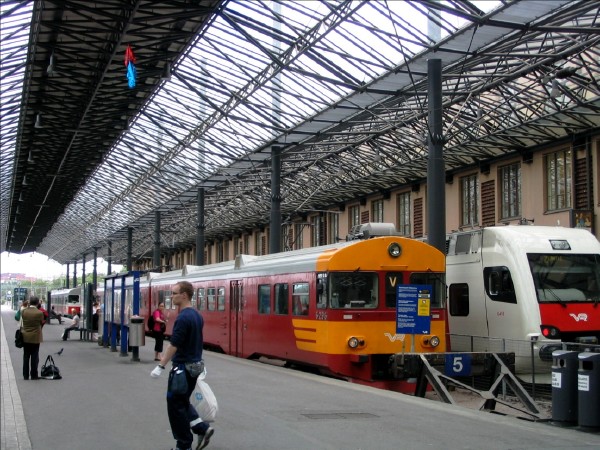
Helsinki Central Railway Station in Helsinki
Nokia HQ Helsinki
Finland Creche
Helsinki Transportation
Helsinki City
Eduskuntatalo - House of Parliament in Helsinki
Olympic Stadium in Helsinki
Flowers at Hakaniemi Market in Helsinki
Hakaniemi Market in Helsinki
Hakaniemi Market in Helsinki
Hakaniemi Market in Helsinki
The Round House at Hakaniemi in Helsinki


Travel and Tourism
Travel and Tourism
- Travel Alert Status
- Level 1: Exercise Normal Precautions
- Currency
- .885
- Time Difference
- UTC+2 (7 hours ahead of Washington, DC, during Standard Time)
- Climate
- Virtually all of Finland lies between latitudes 60°N and 70°N, but the Gulf Stream and the prevalence of warm westerly winds make the climate several degrees warmer than elsewhere at the same latitude. Summers are short and mild, and the days are long. In June and July only a 2-3 hour period of twilight separates sunset from sunrise. In the extreme north the sun does not set for 73 days during the mid-summer period. Precipitation, averaging 63cm (25 inches) annually, is distributed over all seasons. Winters are long and cold. Snow is possible from October through April, with January through March having the heaviest accumulations. Temperatures may vary from north to south, as does the snow coverage from one winter to the next. Despite Helsinki”™s location on the Gulf of Finland, the humidity is low. The city”™s average temperature is +5°C (42°F). February and July mean temperatures are -5°C (23°F) and +17°C (63°F) respectively. Average temperatures in Lapland are -12°C (10°F) in January and +17°C (63°F) in July.
- Airports
- 148
Read the full travel guide — health, safety, vaccinations, disease risk, sanitation, and transit details.
View full travel guideRecipes
Recipes
Karjalanpiirakat (Karelian Rice Pasties)
Bread
Main Dish
Kaalikaaryleet (Cabbage Rolls)
Main Dish
Graavilohi (Freshly-Salted Salmon)
Bread
Karjalanpiirakat (Karelian Rice Pasties)
Dessert
Finnish Curd Cake
Dessert
Mustikkapiirakka (Blueberry Pie)
Dessert
Raparperikiisseli (Rhubarb Pudding)
History
History
Historical Eras
Prehistoric Finland
8000 BCE – 1150
Following the retreat of glaciers, hunter-gatherer peoples gradually settled the Finnish peninsula. Between 100 and 400 AD, migrations from the southern Baltic brought ancestral Finnic peoples who established the linguistic and cultural foundations of Finnish identity. The Viking Age (800–1100) connected Finland's coastal regions to Norse trade networks, though Finland remained a stateless, tribal society without centralized political authority.
Swedish Rule
1150 – 1809
Beginning with Swedish-led crusades converting southwestern Finland to Christianity around 1150, Finland was progressively incorporated into the Kingdom of Sweden through three crusades concluded by 1293. The Peace of Pähkinäsaari (1323) formalized the border between Swedish and Russian spheres of influence. Over six centuries, Sweden integrated Finland into Western European religion, law, and culture, founding Helsinki in 1550, though Finland repeatedly served as a brutal battleground in Russo-Swedish wars.
Russian Grand Duchy
1809 – 1917
Following Napoleon's alliance with Tsar Alexander I, Russia invaded and Sweden ceded Finland in 1809, making it an autonomous Grand Duchy within the Russian Empire. Helsinki became the capital in 1812 and grew into a significant administrative city. A Finnish national awakening flourished through the nineteenth century, fueled by the epic Kalevala and growing linguistic nationalism, until the February Manifesto of 1899 sharply curtailed Finnish autonomy and inflamed independence sentiment.
Independence & Civil War
1917 – 1939
Finland declared independence on December 6, 1917, following the Russian Revolution. A brutal civil war erupted in 1918 between socialist Reds and bourgeois Whites, ending in a White victory that left deep class divisions scarring Finnish political life for decades. The interwar period saw Finland consolidate its democratic institutions while navigating the competing pressures of communism and far-right movements, gradually stabilizing into a functioning parliamentary republic.
World War II Era
1939 – 1944
The Soviet Union invaded Finland in November 1939, launching the Winter War in which Finnish forces under Marshal Carl Gustaf Emil Mannerheim mounted a celebrated resistance before ceding territory in March 1940. Finland subsequently entered the Continuation War (1941–1944) alongside Germany to reclaim lost lands, ultimately signing the Moscow Armistice with the Soviets. The wars cost Finland roughly eleven percent of its territory but preserved its sovereignty and independence.
Modern Finland
1944 – present
Post-war Finland pursued a carefully calibrated policy of neutrality and reconciliation with the Soviet Union, encapsulated in the Paasikivi–Kekkonen doctrine, which preserved independence at the cost of certain foreign policy constraints. Rapid industrialization and the construction of a comprehensive welfare state transformed Finnish society by the late twentieth century. Finland joined the European Union in 1995 and, following Russia's invasion of Ukraine, acceded to NATO in 2023, marking a historic realignment of its security policy.
Overview
Timeline of Key Events
100 – 400
Migrations to Finland from southern Baltic .
Migrations to Finland from southern Baltic.
800 – 1100
The Viking Age
Swedish Vikings established trade ties with Russia via Finland.
1150
Swedish led crusades to southwestern Finland; converted Finns to Christianity .
Swedish led crusades to southwestern Finland; converted Finns to Christianity.
1155 – 1809
Finland incorporated into Kingdom of Sweden
Finland incorporated into Kingdom of Sweden .
1238 – 1249
Second crusade to Tavasita by Swedes
Second crusade to Tavasita by Swedes.
1293
Third Crusade by Swedes to eastern Finland
Third Crusade by Swedes to eastern Finland; established dividing line between Catholic West and Orthodox East.
1323
Peace treaty of Pähkinäsaari signed.
Peace treaty of Pähkinäsaari signed. Territory of present-day Finland becomes part of the Swedish realm
Read the full history profile — narrative overview, defining eras, and the complete timeline in one place.
View expanded historyInteresting Facts
Interesting Facts
This country consumes the most coffee averaging 24 pounds per year (that's about 4.5 cups of coffee a day.) The world average is more than 400 billion cups which are consumed each year.
See every fact — trivia, oddities, and curious tidbits gathered from across the country.
View all interesting factsGeography and Environment
Geography and Environment
- Terrain
- mostly low, flat to rolling plains interspersed with lakes and low hills
- Climate
- Virtually all of Finland lies between latitudes 60°N and 70°N, but the Gulf Stream and the prevalence of warm westerly winds make the climate several degrees warmer than elsewhere at the same latitude. Summers are short and mild, and the days are long. In June and July only a 2–3 hour period of twilight separates sunset from sunrise. In the extreme north the sun does not set for 73 days during the mid-summer period. Precipitation, averaging 63cm (25 inches) annually, is distributed over all seasons. Winters are long and cold. Snow is possible from October through April, with January through March having the heaviest accumulations. Temperatures may vary from north to south, as does the snow coverage from one winter to the next. Despite Helsinki’s location on the Gulf of Finland, the humidity is low. The city’s average temperature is +5°C (42°F). February and July mean temperatures are -5°C (23°F) and +17°C (63°F) respectively. Average temperatures in Lapland are -12°C (10°F) in January and +17°C (63°F) in July.
- Natural Hazards
- NA
- Current Environmental Issues
- air pollution from manufacturing and power plants contributing to acid rain; water pollution from industrial wastes, agricultural chemicals; habitat loss threatens wildlife populations
Read the full geography and environment profile — terrain, climate, natural resources, hazards, land use, and international agreements.
View full geographyPeople & Demographics
People & Demographics
Religion
Languages Spoken
Finnish 93.4% (official), Swedish 5.9% (official), small Sami- and Russian-speaking minorities
- Finnish
- Swedish
Population
- Population
- 5,255,068
- Population in Major Urban Areas
- HELSINKI (capital) 1.134 million
- Nationality Noun
- Finn(s)
- Ethnic Groups
- Finn 93%, Swede 6%, Sami 0.11%, Roma 0.12%, Tatar 0.02%
- Language Note
- The Finnish people take great pride in their language. Through the years they have resisted other nation's attempts to impose their language on them. Over 93% of the population speaks Finnish, a Finnish-Ugric language coming from a language family different from Scandinavian languages. It is closely related to Estonian. Finland recognizes Sami, the tongue of the indigenous minority Sami. English is popular as a second language. Swedish is the second official language, spoken by 6% of the population. Finnish is a hard language to learn because the same word is used for "he" and "she" and the articles "a" and "the" are rarely used.
Education
- Literacy Definition
- Age 15 and over can read and write
Read the full people and society profile — demographics, health, education, religion, languages, and notable people.
View full people and societyGovernment & Politics
Government & Politics
Country Identity
- Country Name
- Finland
- Full Country Name
- Republic of Finland
- Local - Long
- Suomen Tasavalta
- Local - Short
- Suomi
Government Structure
- Government Type
- republic
- Legal System
- civil law system based on Swedish law; Supreme Court may request legislation interpreting or modifying laws; accepts compulsory ICJ jurisdiction, with reservations
- Executive Branch
- chief of state: President Alexander STUBB (since 1 March 2024) head of government: Prime Minister Petteri ORPO (since 20 June 2023) and Deputy Prime Minister Riikka PURRA (since 20 June 2023) cabinet: Council of State or Valtioneuvosto appointed by the president, responsible to parliament elections: president elected by popular vote for a six-year term; election last held 28 January 2024, with a runoff on 11 February 2024 (next to be held in 2030); the president appoints the prime minister from the majority party or majority coalition following parliamentary elections, subject to approval by parliament election results: percent of vote in first round - Alexander STUBB (Kok) 27.2%, Pekka HAAVISTO (Vihr) 25.8%, Jussi HALLA-AHO (PS) 19.0%, Olli REHN (Kesk) 15.3%; runoff held 11 February 2024 - STUBB 51.6%, HAAVISTO 48.4% note: government coalition - Kok, PS, RKP/SFP, and KD
- Legislative Branch
- unicameral Parliament or Eduskunta (200 seats; members are elected by popular vote on a proportional basis to serve four-year terms) elections: last held 16 March 2003 (next to be held March 2007) election results: percent of vote by party - Kesk 24.7%, SDP 24.5%, Kok 18.5%, VAS 9.9%, VIHR 8%, KD 5.3%, SFP 4.6%; seats by party - Kesk 55, SDP 53, Kok 40, VAS 19, VIHR 14, KD 7, SFP 8, other 4
- Judicial Branch
- Supreme Court or Korkein Oikeus (judges appointed by the president)
- Suffrage
- 18 years of age; universal
- Constitution
- 1-Mar-00
- Independence
- 6 December 1917 (from Russia)
- National Holiday
- Independence Day, 6 December (1917)
Capital City
- Capital Name
- Helsinki
- Capital - geographic coordinate
- 60 10 N, 24 56 E
- Capital Time Difference
- UTC+2 (7 hours ahead of Washington, DC, during Standard Time)
The name may derive from the Swedish helsing, an archaic name for "neck" (hals), and which may refer to a narrowing of the Vantaa River that flows into the Gulf of Finland at Helsinki; fors refers to "rapids," so helsing fors meaning becomes "the narrows' rapids"
Military
Branches: Finnish Defense Forces (FDF): Army (Puolustusvoimat), Navy (Merivoimat; includes Coastal Defense Forces), Air Force (Ilmavoimat)
Embassy / Diplomatic Mission
U.S. Embassy Helsinki
Itäinen Puistotie 14B
Hours: Mon – Fri, 0830 - 1700
Tel: 358-9-616-250 (24 hour switchboard number)
Fax: 358-9-612-3003
e-mail: HelsinkiACS@state.gov
Read the full government profile — flag symbolism, national anthem, and other national symbols.
View full government detailsEconomy
Economy
Finland operates a highly developed, mixed economy that combines a competitive private sector with a comprehensive Nordic welfare state. With a nominal GDP of approximately 300 billion euros and a population of about 5.6 million, the country ranks among the wealthiest in the European Union on a per capita basis, with GDP per capita exceeding 50,000 US dollars. The economy is closely integrated with European and global markets, and Finland adopted the euro as its currency in 2002.
Services account for roughly 70 percent of GDP, followed by industry at around 25 percent, while agriculture and forestry contribute a smaller but strategically important share. Finland's industrial base is anchored in machinery, electronics, metals, chemicals, and shipbuilding, with major firms such as Nokia, Kone, Wärtsilä, and Neste playing significant global roles. The forestry sector remains a cornerstone of the export economy, with companies like UPM-Kymmene and Stora Enso producing pulp, paper, and engineered wood products. Forests cover about three-quarters of Finland's land area, making it one of the most heavily forested countries in Europe.
Exports represent roughly 40 percent of GDP, with Germany, Sweden, the United States, the Netherlands, and China among the leading trade partners. Key export categories include refined petroleum products, paper, machinery, electrical equipment, and telecommunications technology. Finland is also recognized for its strong information and communications technology sector, gaming industry, and clean technology innovation.
The Finnish economy is supported by high investment in research and development, typically around 3 percent of GDP, and by a well-educated workforce. The labor force numbers approximately 2.7 million, with unemployment generally fluctuating between 6 and 8 percent. Challenges include an aging population, which places pressure on public finances and pension systems, slow productivity growth, and exposure to economic conditions in neighboring Russia and the broader eurozone. Following geopolitical shifts in 2022, Finland significantly reduced its energy and trade dependence on Russia, accelerating investments in renewable energy, nuclear power, and alternative supply chains.
Snapshot
- Currency Name and Code
- Euro (EUR)
- GDP — official exchange rate
- $184,200,000,000 (USD)
- GDP Real Growth Rate
- 2.2%
- Gini Index
- 26.9
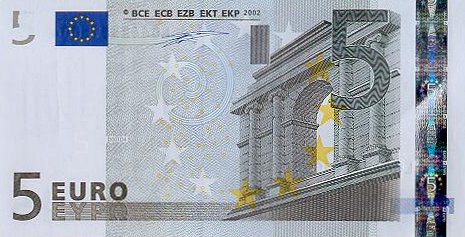
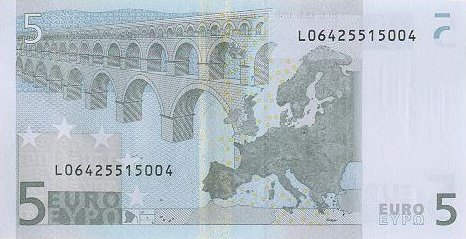
Banknotes
Budget & Public Finance
- Fiscal Year
- calendar year
- Annual Budget
- $97,140,000,000 (USD)
- Public Debt (% of GDP)
- 42%
- External Debt
- $211,700,000,000 (USD)
- Investment (% of GDP)
- 19.4%
- Current Account Balance
- $5,858,000,000 (USD)
- Reserves of Foreign Exchange
- $2,147,483,647 (USD)
Labor, Industry & Trade
- Labor Force by Occupation
- public services 32%; industry 22%; commerce 14%; finance; insurance; and business services 10%; agriculture and forestry 8%; transport and communications 8%; construction 6%
- Household Income — highest 10%
- 21.6%
- Industries
- metal products, electronics, shipbuilding, pulp and paper, copper refining, foodstuffs, chemicals, textiles, clothing
- Agriculture Products
- barley, wheat, sugar beets, potatoes; dairy cattle; fish
- Export Commodities
- machinery and equipment, chemicals, metals; timber, paper, pulp
- Export Partners
- Germany 11.8%, UK 9.6%, US 9%, Sweden 8.5%, Russia 6.6%, Netherlands 4.6%, France 4.5%
- Import Commodities
- foodstuffs, petroleum and petroleum products, chemicals, transport equipment, iron and steel, machinery, textile yarn and fabrics, grains (1999)
- Import Partners
- Germany 14.5%, Sweden 10.9%, Russia 9.9%, UK 5.7%, France 4.3%, Denmark 4.2%
Energy
- Oil Production
- 9,013 bbl/day
- Oil Consumption
- 219,700 bbl/day
- Oil Reserves
- 0 bbl/day
- Natural Gas Production
- 0 cu m
- Natural Gas Consumption
- 5,028,000,000 cu m
- Natural Gas Imports
- 4,567,000,000 cu m
- Natural Gas Exports
- 0 cu m
- Natural Gas Reserves
- 0 cu m
Communications
- Telephone System
- General assessment: Modern system with excellent service Domestic: A digital fiber-optic fixed-line network and an extensive mobile-cellular network provide domestic needs International: country code - 358; submarine cables provide links to Estonia and Sweden; satellite earth stations - access to Intelsat transmission service via a Swedish satellite earth station, 1 Inmarsat (Atlantic and Indian Ocean regions); note - Finland shares the Inmarsat earth station with the other Nordic countries (Denmark, Iceland, Norway, and Sweden)
- Internet Country Code
- .fi
News & Weather
News & Weather
Current Weather
Latest News
Finland’s Grocery Store ‘Single Baskets’ Are The Boldest Dating Move I’ve Seen - Delish
Delish · 2d ago
Chrissy Teigen and Her 4 Kids Visit Finland as They Support John Legend on Tour - People.com
People.com · 20h ago
Aho, Barkov, Saros lead 1st projected Finland roster for 2027 All-Star Game - NHL.com
NHL.com · 1d ago
Neuville enters extra event ahead of Rally Finland - DirtFish
DirtFish · 18h ago
Finland Restricts Maritime and Air Traffic in Gulf of Finland Over Drone Threat - Kyiv Post
Kyiv Post · 2d ago
Democratic congresswoman calls out Pete Hegseth’s ‘intense, homoerotic feelings towards men’ - Advocate.com
Advocate.com · 4d ago
Finland’s foreign minister says Ukraine ‘is now holding the cards’ as Russia signals talks - Fox News
Fox News · 43d ago
The World's First Nuclear Waste Tomb Is Nearly Ready to Open - ScienceAlert
ScienceAlert · 49d ago
News via Google News
Climate Overview
Virtually all of Finland lies between latitudes 60°N and 70°N, but the Gulf Stream and the prevalence of warm westerly winds make the climate several degrees warmer than elsewhere at the same latitude. Summers are short and mild, and the days are long. In June and July only a 2-3 hour period of twilight separates sunset from sunrise. In the extreme north the sun does not set for 73 days during the mid-summer period. Precipitation, averaging 63cm (25 inches) annually, is distributed over all seasons. Winters are long and cold. Snow is possible from October through April, with January through March having the heaviest accumulations. Temperatures may vary from north to south, as does the snow coverage from one winter to the next.
Despite Helsinki”™s location on the Gulf of Finland, the humidity is low. The city”™s average temperature is +5°C (42°F). February and July mean temperatures are -5°C (23°F) and +17°C (63°F) respectively. Average temperatures in Lapland are -12°C (10°F) in January and +17°C (63°F) in July.
Videos
Videos
2 curated YouTube videos.
Source: YouTube
Source: YouTube
Frequently Asked Questions
Frequently Asked Questions
What is the population of Finland?
How do people greet each other in Finland?
What are dining customs like in Finland?
What should I know about Finnish etiquette and attitudes?
How should I dress in Finland?
What is family life like in Finland?
What do people do for fun in Finland?
What is the capital of Finland?
Where is Finland located?
What countries border Finland?
What is the main religion practiced in Finland?
What currency does Finland use?
What languages are spoken in Finland?
What is the geography of Finland like?
What is Finland known for?
Last reviewed 2026