
 English
 Español
 中文
中文 हिन्दी
 Français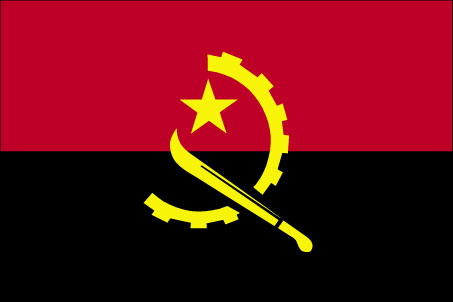
Angola
Republic of Angola
Declare Your Relationship to Angola
CountryReports Community
- Studying1
- From Angola0
- Angola heritage1
- Visited0
- Want to visit0
Customs and Culture
Customs and Culture
About the People
In Angola , a regional or tribal sense of identity is often more important that the national sense. Angola's people are divided into many ethnic groups, but the majority fit into four major groups, The Bakongo, the Mbundu, the Ovimbundu, and the Lunda-Chokwe. The largest group is the Ovimbundu. They live in the west central part of the country.
While western medical was introduced by the Europeans traditional healing or treating people with herbs, is also practiced, and often the two are combined. Western music is heard throughout Angola. Teenagers know the names of groups that are popular in Europe and America. Western films are also well known. Angola has many popular music groups and singers of its own.
Only a small percentage of the population is literate therefore most people get their news and information from the television. The lifestyle of most Angolans is dedicated to the constant struggle to find food and forage a livelihood. Aspects of life taken for granted by many other societies such as food, fuel, water and electricity are often difficult challenges for Angolans every day.
The Komba (“KUM-ba”) or funeral is organized by close friends and relatives and the cost of food and drink that is served at the Komba is covered by them. It is believed that the deceased will be happy if everyone celebrates.
Cultural Attributes
In Angola, a regional or tribal sense of identity is often more important than the national sense. Angola's people are divided into many ethnic groups, but the majority fit into four major groups, The Bakongo, the Mbundu, the Ovimbundu, and the Lunda-Chokwe. The largest group is the Ovimbundu. They live in the west-central part of the country.
While Western medicine was introduced by the Europeans, traditional healing or treating people with herbs is also practiced, and often the two are combined. Western music is heard throughout Angola. Teenagers know the names of groups that are popular in Europe and America. Western films are also well known. Angola has many popular music groups and singers of its own.
Only a small percentage of the population is literate therefore most people get their news and information from the television. The lifestyle of most Angolans is dedicated to the constant struggle to find food and forage a livelihood. Aspects of life taken for granted by many other societies such as food, fuel, water, and electricity are often difficult challenges for Angolans every day.
The Komba (“KUM-ba”) or funeral is organized by close friends and relatives and the cost of food and drink that is served at the Komba is covered by them. It is believed that the deceased will be happy if everyone celebrates.

Land of Atlantic Currents and Ancient Kingdoms
Greetings, Gestures & Visiting
Portuguese is the official language spoken in Angola therefore Ola (OH-lah) or hello is the most common greeting. You might also hear Bom Dia (bone JEE-ah) Good Morning, Boa tarde (bow-ah TAR-day) Good Afternoon, or Boa noite (bow-ah NWAH-tay) Good Night.
Shaking hands is common. Pointing is considered rude. Kissing on the cheek is an acceptable greeting among close friends.
When visiting Angola and interacting with the local people, it's helpful to keep the following points in mind to ensure a respectful and positive experience:
Greetings: Greet people with a handshake and a smile. In more formal settings, it is customary to use titles and surnames when addressing people until you are invited to use their first names.
Respect for Elders: Show respect for older individuals by addressing them with deference and allowing them to initiate conversations.
Punctuality: While punctuality is valued in formal settings, it's common for social gatherings and events to start later than the specified time. Being flexible and patient is appreciated.
Dress Code: Angola has a generally conservative dress code, particularly in more rural and traditional areas. It is advisable to dress modestly and avoid revealing clothing to show respect for local customs.
Social Etiquette: Angolan culture places importance on politeness, humility, and hospitality. Maintain a polite and friendly demeanor, and be attentive to local customs and traditions. Avoid confrontational or aggressive behavior.
Language: The official language of Angola is Portuguese, so learning a few basic Portuguese phrases can be helpful. However, many Angolans also speak local languages such as Umbundu, Kimbundu, and Kikongo, depending on the region.
Food and Dining: If invited to someone's home, it is customary to bring a small gift, such as chocolates, flowers, or a bottle of wine. When dining, it's polite to try a bit of everything offered and express appreciation for the food. Using your right hand for eating is the norm.
Photography: Always ask for permission before taking someone's photograph. Some people may not be comfortable being photographed, particularly in rural areas.
Safety and Security: As with any foreign destination, it's advisable to be aware of your surroundings and take necessary precautions to ensure personal safety. Consult travel advisories and follow the guidance of local authorities.
Cultural Sensitivity: Be sensitive to cultural norms and avoid discussing sensitive topics such as politics, religion, and ethnic tensions unless the person you're speaking with initiates the conversation.
Angolans express their artistic sense by creating beautiful hairstyles and headdresses. Western-style of clothing is common although in the villages you still see traditional dress. For women this is panos, or African wraparound batik garments. Kids like casual jeans and tee shirts.
Diet
Cassava is the most important food in Angola. It can be made into flour, bread, tapioca or even alcohol. Fuba ("Foo-bar") is another popular dish made from Cassava. The raw Cassava root is poisonous and requires careful preparation before eaten. The leaves of the Cassava plant are removed and used to make Kizaka ("kiz-AH-ka") a vegetable dish. Besides Cassava, Millet and corn is staple foods.
Fish is also an important source of food. A typical family does not eat meat because it cannot afford it. Only on special occasions is a family owned chicken or duck is killed and eaten. Breakfast usually consist of funje ("PHON-jee") or bread, and a porridge made from cassava. Coffee is a popular drink. Lunch is often quick and informal and may consist of bread and cheese.
The evening meal is the main meal and is usually later when everyone has returned home from work. In the rural areas a popular bread is pao burro ("pow BORE-o") or donkey bread.

Family
Most of the people in Angola live in simple wooden or clay houses. In the towns and villages, modern buildings often Portuguese-built stand in sharp contrast to the everyday house structure. The term "shantytown" -- known as musseque in Luanda describes a poor part of town where people live in crudely built shacks. The term musseque comes from the words mu(place) and seke(sand) The name is derived from the red sand found in coastal Luanda that forms the floor of the compounds that make up a musseque.
For those women living in a Musseque, the day's work starts by boiling water for coffee and breakfast. Clothes that have been left out to dry need to be taken down and put away. The washing of clothes is a daily activity and clean garments are folded and kept in plastic bags. Water is always needed and this involves a trip on foot with buckets to the nearest standpipe. The family washes each morning using cold water. Most young people travel to the nearest large town hoping to find a better life. However, jobs are scarce, and freshwater is a constant problem. Poor families live on fish because this is the cheapest way to feed themselves. Street children who have been left to fend for themselves are a common sight. They survive by begging for food.
In rural areas, Angolans live in village communities. The typical family is an extended one with grandparents and others living with the parents and their children. Most children will only spend their younger years in the family home because the lure of the city is a powerful one. Angolans who live in the countryside depend on their farms for a livelihood. The planting and harvesting of beans and cassava sustain many small farms.
In the rural areas, there are more women than men and often this results in a family being headed by a woman who takes on the responsibilities of looking after the family. Men are more likely to take charge of the family's cattle. Another means for rural families to earn extra cash is by working in traditional crafts such as the making of household items.
Christmas is celebrated with a special meal. For Angolans Christmas is more of a family occasion than a religious event.
Dating Customs
In the countryside, it is not uncommon for Angolan parents to suggest a possible partner for their son or daughter. However, in urban areas, this practice is declining. However, once the marriage is arrived at, compulsory registration in a government office takes place.
The wedding celebration usually consists of a special meal where drinks will be available and a party atmosphere with singing and dancing accompanying the marriage ceremony. For a few more wealthy Angolans, there may be a church ceremony where the bride will wear white and the groom will wear a dress and tie.
Recreation
The most popular sport in Angola is soccer. Boys of all ages play soccer in the streets, often with a ball they made themselves out of fabric. Since few Angolans attend high school they rarely participate on school teams. Basketball, swimming, and volleyball are also popular.
Weekends at the sandy beach outside of Luanda with a picnic are a favorite pastime for those from the city. While gathering around an open fire with stores and talking are the norm in rural areas.
Musical instruments include drums known as bongos or tam-tams are popular instruments for accompanying dancing. In the past, musical instruments were used to send messages. Saxi (Sar-Ki) or maracas are a typical instrument made from the dried fruit known as maboque (MA-boo-ker) and are filled with dried seeds or glass beads. Sagaya (sar-Ga-ya) of the Humbi people is an ordinary hunting bow fitted with a mouth brace. The player breathes through the brace while stroking the bow's strings with a fine strip of leather. Hungu (HUNG-go) is a small stick and bow. The stick is held in the right hand and plays the bow which is held at stomach level.
Student Life
In times past all students were taught in Portuguese. This put a burden on many students since few of them lived where they heard people speaking Portuguese. Currently, more education is taught in local languages. The prolonged civil conflict left the Angolan educational sector in a state of disarray consequently Angola has a low literacy rate. Additional causes include a lack of adequate school infrastructures, including poor water and sanitation facilities; a lack of teachers, in particular in remote and rural areas; overcrowded and multi-age classroom groups. Education is now being firmly endorsed as the engine for restoration and renewal. Recently the head of the Education department in Bailundo district, some 80 kilometers to the north of Huambo city (central Angola), appealed to local teachers to provide an education of quality as the only guarantee for the country's future. In addition to government schools, there are also schools run by missions. Many of the Angolans who go on to secondary education obtain scholarships abroad after studying at a mission-run school. Primary education is for four years and secondary for seven years. Education for children roughly between the ages of 7 and 15 years is compulsory and free but only for four years and less than 50 percent of the youth attend. Most children will not attend school after the fourth grade unless they live in one of the larger towns. Schools can have up to three sessions a day with the first one starting at 7 am, the second one starting at 11 am and the third one starting at 3 pm. The third session is usually for adults and goes till 7 pm. Education between 7 and 15 years of age is provided free of charge by the government. Youth make up a large percentage of Angola’s population. Around 50 percent of Angolans are under the age of 13. Angola has signed and ratified the "Convention on the Rights of the Child" and has affirmed its commitment and intention to achieve the Education for All (EFA) goal that states that by 2015 all children will “have access to and complete free compulsory primary education of good quality”
Holidays
Independence Day
8/19Independence Day
Dates of Interest
- November 11th
Held in October, this festival celebrates the diverse cultural heritage of Angola through music, dance, arts, crafts, and traditional performances.
How do people greet each other in Angola?
Portuguese is the official language, so "Ola" (hello) is the most common greeting, along with a handshake and a smile.
Do
- Say "Ola" (hello), or "Bom Dia" (good morning), "Boa tarde" (good afternoon), "Boa noite" (good night)
- Greet people with a handshake and a smile
- Use titles and surnames in formal settings until invited to use first names
- Show respect for elders and let them initiate conversations
Good to know
- Kissing on the cheek is acceptable among close friends
- Learning a few basic Portuguese phrases is helpful; many also speak Umbundu, Kimbundu, or Kikongo depending on region
What are the dining customs in Angola?
Cassava is the most important food, and the evening meal is the main meal, eaten later when everyone has returned home. Use your right hand for eating.
Do
- Eat with your right hand
- Try a bit of everything offered and express appreciation for the food
- Bring a small gift such as chocolates, flowers, or a bottle of wine if invited to a home
Good to know
- Staple foods include cassava, millet, and corn, plus fish
- Fuba and Kizaka are popular cassava-based dishes
- Coffee is a popular drink; breakfast is often bread or cassava porridge
- Meat is typically reserved for special occasions
What etiquette should I know when visiting Angola?
Angolan culture values politeness, humility, and hospitality; maintain a friendly, respectful demeanor and be patient with flexible timing.
Do
- Be polite, humble, and friendly
- Be flexible and patient, as social events often start later than stated
- Always ask permission before photographing someone
Don’t
- Avoid confrontational or aggressive behavior
- Avoid discussing sensitive topics like politics, religion, and ethnic tensions unless the other person raises them
Good to know
- Punctuality is valued in formal settings but relaxed for social gatherings
- Be aware of your surroundings and follow local safety guidance
How should I dress in Angola?
Angola has a generally conservative dress code, especially in rural and traditional areas, though Western-style clothing is common.
Do
- Dress modestly to show respect for local customs
Don’t
- Avoid revealing clothing, particularly in rural areas
Good to know
- Western-style clothing is common; traditional dress like panos (wraparound batik garments) is still seen in villages
What gestures are important in Angola?
Handshakes are common, and cheek kissing is acceptable among close friends, but pointing is considered rude.
Don’t
- Don't point at people, as it is considered rude
Good to know
- Kissing on the cheek is an acceptable greeting among close friends
What is family life like in Angola?
In rural areas the typical family is extended, with grandparents and others living with parents and children; many rural families are headed by women.
Good to know
- Most people live in simple wooden or clay houses
- In cities, poor areas known as musseques (shantytowns) are common
- Christmas is celebrated with a special meal as a family occasion more than a religious one
What do people do for recreation in Angola?
Soccer is the most popular sport, played by boys of all ages in the streets, with basketball, swimming, and volleyball also popular.
Good to know
- Weekend beach picnics outside Luanda are a favorite city pastime
- In rural areas, gathering around an open fire to share stories is common
- Traditional instruments include bongos/tam-tams, saxi (maracas), sagaya, and hungu
Last updated: 2026-07-12 · Sources: CountryReports
Photos of Angola
Photos of Angola


Travel and Tourism
Travel and Tourism
- Travel Alert Status
- Level 1: Exercise Normal Precautions
- Currency
- 172
- Time Difference
- UTC+1 (6 hours ahead of Washington, DC during Standard Time)
- Climate
- The climate is semiarid in the south and along the coast of Luanda. The north has a cool dry season (May to October) and a hot rainy season (November to April). Natural hazards are locally heavy rainfall, which causes periodic flooding. In Luanda during the January to April hot season, the temperature is often in the upper 90s; the sun is quite intense, and the humidity is very high. During the winter months, June through September, the days are pleasant, with high temperatures around 80°F, with mild evenings. Skies are often hazy, a condition called "cacimbo." Generally, there are light rains during November and December, with heavy rains falling in March and April.
- Airports
- 244
- Recommended Vaccinations
- How important is it to do your research about vaccinations? It might just save your life! Make yourself aware of the different types of vaccinations and which ones you may need to travel to your destination. Schedule an appointment with your doctor at least four to six weeks before you travel to ensure you receive all important shots. Be sure that you and your family are up to date on your routine vaccinations. Which vaccinations you need will depend on a number of factors including your destination, whether you will be spending time in rural areas, the season of the year you are traveling, your age, health status, and previous immunizations.
Read the full travel guide — health, safety, vaccinations, disease risk, sanitation, and transit details.
View full travel guideRecipes
Recipes
History
History
Historical Eras
Pre-Colonial Kingdoms
1000 – 1483
The territory of modern Angola was home to several powerful Bantu-speaking kingdoms, most notably the Kingdom of the Congo, whose capital Mbanza Congo held some 50,000 inhabitants, and the Kingdom of Ndongo, ruled by the ngola — the title from which Angola takes its name. These states maintained complex political structures, long-distance trade networks, and vibrant cultural traditions well before European contact.
Portuguese Colonial Era
1483 – 1910
Portuguese mariners arrived in 1483 and gradually extended control through treaties and military conquest, founding Luanda in 1575 and defeating the Congo and Ndongo states by 1671. Angola became the largest source of enslaved people for the Americas, and later a forced-labor plantation and mining economy. Full administrative control of the interior was not consolidated until the early 20th century.
High Colonial Period
1910 – 1961
Under the Estado Novo dictatorship of Salazar and later Caetano, Portugal intensified white settlement in Angola — especially after 1950 — and reclassified it as an overseas province in 1951, rejecting decolonization. Forced labor underpinned the plantation and mining economy until outlawed in 1961 following bloody coffee-plantation riots that left approximately 50,000 dead and ignited open armed resistance.
Independence Struggle
1961 – 1975
Three rival liberation movements — the MPLA under Agostinho Neto, the FNLA under Holden Roberto, and UNITA under Jonas Savimbi — waged guerrilla war against Portuguese rule throughout the 1960s and early 1970s. A military coup in Lisbon in 1974 ended the colonial war, and the Alvor Accords committed Portugal to transferring power to a coalition of the three movements by November 1975.
Civil War Era
1975 – 2002
The MPLA declared independence on November 11, 1975, but immediately faced a devastating civil war as UNITA and the FNLA, backed respectively by apartheid South Africa and Zaire, contested control of the country. Cuban troops and Soviet support sustained the MPLA government while the conflict, repeatedly reignited after failed peace accords including the 1994 Lusaka Protocol, claimed up to 1.5 million lives. The war finally ended with a ceasefire following the death of Jonas Savimbi in February 2002.
Post-War Modern Angola
2002 – present
The 2002 ceasefire between the MPLA government and UNITA ushered in a period of political stabilization and rapid economic growth driven by substantial offshore oil revenues. The MPLA, under long-serving President José Eduardo dos Santos and later João Lourenço, consolidated political dominance while undertaking reconstruction of infrastructure devastated by nearly three decades of war. Challenges of inequality, corruption, and diversifying the oil-dependent economy remain central to Angola's ongoing development.
Overview
Timeline of Key Events
1483
Portuguese arrive.
Portuguese arrive.
1575
Portuguese found Luanda.
Portuguese found Luanda.
1580 – 1836
Portuguese begin slave trade in Angola.
Portuguese begin slave trade in Angola. Over a million slaves are shipped toBrazil between 1580 and 1680.
1951
Angola becomes a province.
Angola’s status changes from colony to overseas province.
1961
Forced labor ends after riots on coffee plantations leave 50,000 dead.
Forced labor abolished after revolts on coffee plantations leave 50,000 dead. The fight for independence is bolstered.
1975
Angola gains independence
Angola gains independence but power struggle ensues between MPLA (People’s Movement for the Liberation of Angola ), backed by Cuba, and the FNLA plus Unita, backed by South Africa and the USA.
1987
South African forces enter Angola to support Unita.
South African forces enter Angola to support Unita.
Read the full history profile — narrative overview, defining eras, and the complete timeline in one place.
View expanded historyInteresting Facts
Interesting Facts
Angola is the seventh largest country in Africa.
Sportfishing once flourished off the coast of Angola.
See every fact — trivia, oddities, and curious tidbits gathered from across the country.
View all interesting factsGeography and Environment
Geography and Environment
- Terrain
- narrow coastal plain rises abruptly to vast interior plateau
- Climate
- The climate is semiarid in the south and along the coast to Luanda. The north has a cool dry season (May to October) and a hot rainy season (November to April). Natural hazards are locally heavy rainfall, which causes periodic flooding. In Luanda during the January to April hot season, the temperature is often in the upper 90s; the sun is quite intense; and the humidity is very high. During the winter months, June through September, the days are pleasant, with high temperatures around 80ºF, with mild evenings. Skies are often hazy, a condition called "cacimbo." Generally, there are light rains during November and December, with heavy rains falling in March and April.
- Natural Hazards
- locally heavy rainfall causes periodic flooding on the plateau
- Current Environmental Issues
- overuse of pastures and subsequent soil erosion attributable to population pressures; desertification; deforestation of tropical rain forest, in response to both international demand for tropical timber and to domestic use as fuel, resulting in loss of biodiversity; soil erosion contributing to water pollution and siltation of rivers and dams; inadequate supplies of potable water
Read the full geography and environment profile — terrain, climate, natural resources, hazards, land use, and international agreements.
View full geographyPeople & Demographics
People & Demographics
Religion
Languages Spoken
Portuguese (official), Bantu and other African languages
- Bantu
- Portuguese
Population
- Population
- 13,068,161
- Population: Male/Female
- male: 18,196,058 female: 19,006,003
- Population Distribution
- most people live in the western half of the country; urban areas account for the highest concentrations of people, particularly the capital of Luanda
- Urban Population
- urban population: 68.7% of total population rate of urbanization: 4.04% annual rate of change
- Population in Major Urban Areas
- 9.292 million LUANDA (capital), 959,000 Lubango, 905,000 Cabinda, 809,000 Benguela, 783,000 Malanje
- Nationality Noun
- noun: Angolan(s) adjective: Angolan
- Ethnic Groups
- Ovimbundu 37%, Kimbundu 25%, Bakongo 13%, Mestico (mixed European and native African) 2%, European 1%, other 22%
- Language Note
- Portuguese 71.2% (official), Umbundu 23%, Kikongo 8.2%, Kimbundu 7.8%, Chokwe 6.5%, Nhaneca 3.4%, Nganguela 3.1%, Fiote 2.4%, Kwanhama 2.3%, Muhumbi 2.1%, Luvale 1%, other 3.6%; note - data represent most widely spoken languages; shares sum to more than 100% because some respondents gave more than one answer on the census
Demographic Profile
More than two decades after the end of Angola's 27-year civil war, the country still faces a variety of socioeconomic problems, including poverty, high maternal and child mortality, and illiteracy. Despite the country's rapid post-war economic growth based on oil production, about 30 percent of Angolans live below the poverty line and unemployment is widespread, especially among the large young-adult population. Only about 70% of the population is literate, and the rate drops to around 60% for women. The youthful population - about 48% are under the age of 15 as of 2022 - is expected to continue growing rapidly with a fertility rate of more than 5 children per woman and a low rate of contraceptive use. Fewer than half of women deliver their babies with the assistance of trained health care personnel, which contributes to Angola's high maternal mortality rate.
Of the estimated 550,000 Angolans who fled their homeland during its civil war, most have returned home since 2002. In 2012, the UN assessed that conditions in Angola had been stable for several years and invoked a cessation of refugee status for Angolans. Following the cessation clause, some of those still in exile returned home voluntarily through UN repatriation programs, and others integrated into host countries.
Education
- Literacy Definition
- age 15 and over can read and write
Health Information
- Life Expectancy at Birth
- total population: 62.9 years male: 60.8 years female: 65.1 years
- Major Infectious Diseases — degree of risk
- degree of risk: very high food or waterborne diseases: bacterial and protozoal diarrhea, hepatitis A, typhoid fever vectorborne diseases: dengue fever, malaria water contact diseases: schistosomiasis animal contact diseases: rabies
- Alcohol consumption per capita
- total: 5.84 liters of pure alcohol beer: 3.78 liters of pure alcohol wine: 0.72 liters of pure alcohol spirits: 1.27 liters of pure alcohol other alcohols: 0.08 liters of pure alcohol
- Child Marriage
- women married by age 15: 7.9% women married by age 18: 30.3% men married by age 18: 6%
- Infant Mortality Rate
- total: 55.6 deaths/1,000 live births male: 60.7 deaths/1,000 live births female: 50.3 deaths/1,000 live births
Life Expectancy
- Life Expectancy at Birth
- total population: 62.9 years male: 60.8 years female: 65.1 years
- Median Age
- total: 16.3 years male: 15.8 years female: 16.8 years
- Age Structure
- 0-14 years: 46.9% (male 8,752,419/female 8,701,422) 15-64 years: 50.7% (male 9,076,080/female 9,795,035) 65 years and over: 2.4% (2024 est.) (male 367,559/female 509,546)
- Infant Mortality Rate
- total: 55.6 deaths/1,000 live births male: 60.7 deaths/1,000 live births female: 50.3 deaths/1,000 live births
Read the full people and society profile — demographics, health, education, religion, languages, and notable people.
View full people and societyGovernment & Politics
Government & Politics
Country Identity
- Country Name
- Angola
- Full Country Name
- Republic of Angola
- Local - Long
- Republica de Angola
- Local - Short
- Republic of Angola
- Former Name
- People's Republic of Angola
Government Structure
- Government Type
- republic, nominally a multiparty democracy with a strong presidential system
- Legal System
- based on Portuguese civil law system and customary law; recently modified to accommodate political pluralism and increased use of free markets
- Executive Branch
- chief of state: President João Manuel GONÇALVES LOURENÇO (since 26 September 2017); note - the president is both chief of state and head of government head of government: President João Manuel GONÇALVES LOURENÇO (since 26 September 2017); note - the position of prime minister was abolished under the 2010 constitution, consolidating executive authority in the presidency cabinet: Council of Ministers appointed by the president elections: under the 2010 constitution, the president is no longer directly elected; instead, the leader of the party winning the most seats in the National Assembly automatically becomes president; the most recent legislative elections were held on 24 August 2022, in which the ruling People's Movement for the Liberation of Angola (MPLA) won a majority, allowing GONÇALVES LOURENÇO to begin a second five-year term election results: in the August 2022 elections, the MPLA received approximately 51.2% of the vote, followed by UNITA with approximately 43.9%; GONÇALVES LOURENÇO was subsequently confirmed for a second term as president; he had first assumed the presidency following the 2017 elections, succeeding José Eduardo DOS SANTOS, who had held power since 1979
- Legislative Branch
- unicameral National Assembly or Assembleia Nacional (220 seats; members elected by proportional vote to serve four-year terms) elections: last held 29-30 September 1992 (next to be held September 2006) election results: percent of vote by party - MPLA 54%, UNITA 34%, other 12%; seats by party - MPLA 129, UNITA 70, PRS 6, FNLA 5, PLD 3, other 7
- Judicial Branch
- Supreme Court and separate provincial courts (judges are appointed by the president)
- Suffrage
- 18 years of age; universal
- Constitution
- 11 November 1975; revised 7 January 1978, 11 August 1980, 6 March 1991, and 26 August 1992; note - new constitution has not yet been approved
- Independence
- 11 November 1975 (from Portugal)
- National Holiday
- Independence Day, 11 November (1975)
Capital City
- Capital Name
- Luanda
- Capital - geographic coordinate
- 8 50 S, 13 13 E
- Capital Time Difference
- UTC+1 (6 hours ahead of Washington, DC during Standard Time)
originally named "Sao Paulo da Assuncao de Loanda" (Saint Paul of the Assumption of Loanda), which over time was shortened and corrupted to just Luanda
Military
Branches: Angolan Armed Forces (Forcas Armadas Angolanas, FAA): Army, Navy (Marinha de Guerra Angola, MGA), Angolan National Air Force (Forca Aerea Nacional Angolana, FANA; under operational control of the Army)
Read the full government profile — flag symbolism, national anthem, and other national symbols.
View full government detailsEconomy
Economy
Angola's economy has undergone a significant transformation since the end of its devastating civil war in 2002, though substantial challenges remain. The country shifted from a conflict-driven subsistence economy to one heavily shaped by oil revenues, but overdependence on hydrocarbons continues to expose it to global price volatility. Oil production remains the cornerstone of the economy, accounting for roughly 90–95% of exports and around 60% of government revenues, making fiscal stability highly sensitive to fluctuations in global crude prices and production levels, which have declined from peaks of nearly 2 million barrels per day in the late 2000s to around 1.1 million barrels per day in recent years.
Subsistence agriculture still supports a large share of the rural population, and food insecurity persists in many regions, with a significant portion of the country's food requirements met through imports. Angola possesses considerable untapped natural wealth, including diamonds, gold, iron ore, timber, and rich Atlantic fisheries, but translating these resources into broad-based economic growth has proven difficult due to structural inefficiencies, weak infrastructure, and governance shortcomings.
Inflation, once catastrophically high at over 300% in the early 2000s, has been brought down considerably, though it has remained stubbornly elevated, climbing back above 20% in 2024 amid currency depreciation and food price pressures. The government has pursued economic diversification efforts and implemented reforms under International Monetary Fund guidance, including a 2018 Extended Fund Facility agreement that concluded in 2021 and helped stabilize the currency, restructure external debt, and rebuild foreign exchange reserves. President João Lourenço, who came to power in 2017 and was re-elected in 2022, has pursued an anti-corruption agenda and sought to attract foreign investment, yielding mixed but notable results, including the partial privatization of state enterprises and a flagship rehabilitation of the Lobito Corridor rail project linking Angola to mineral-rich regions of the Democratic Republic of the Congo and Zambia.
GDP growth has been uneven, with the economy experiencing contraction during the 2015–2020 period of low oil prices and pandemic-related disruptions, before returning to modest positive growth of around 1–3% in recent years. Reducing poverty, expanding non-oil sectors such as agriculture, mining, and manufacturing, deepening regional trade integration, and improving institutional transparency remain central long-term priorities for sustainable development.
Snapshot
- Currency Name and Code
- Angola Kwanza (AOA)
- GDP — official exchange rate
- $24,350,000,000 (USD)
- GDP Real Growth Rate
- 19.1%
- GDP by Sector
- agriculture: 8% industry: 67% services: 25%
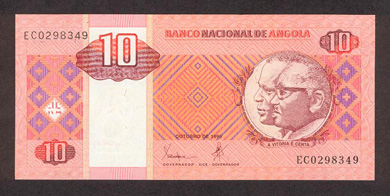
Banknotes
Budget & Public Finance
- Fiscal Year
- calendar year
- Annual Budget
- $10,000,000,000 (USD)
- Public Debt (% of GDP)
- 40.9%
- Investment (% of GDP)
- 30.6%
- Economic Aid
- $383,500,000 (USD)
- Current Account Balance
- $4,484,000,000 (USD)
- Reserves of Foreign Exchange
- $2,147,483,647 (USD)
Labor, Industry & Trade
- Labor Force by Occupation
- agriculture 85%; industry and services 15%
- Industries
- petroleum; diamonds, iron ore, phosphates, feldspar, bauxite, uranium, and gold; cement; basic metal products; fish processing; food processing; brewing; tobacco products; sugar; textiles
- Agriculture Products
- bananas, sugarcane, coffee, sisal, corn, cotton, manioc (tapioca), tobacco, vegetables, plantains; livestock; forest products; fish
- Export Commodities
- crude oil, diamonds, refined petroleum products, gas, coffee, sisal, fish and fish products, timber, cotton
- Export Partners
- US 41%, China 13.6%, France 7.9%, Taiwan 7.5%, Belgium 6.2%, Japan 4.9%, Spain 4.3%
- Import Commodities
- machinery and electrical equipment, vehicles and spare parts; medicines, food, textiles, military goods
- Import Partners
- Portugal 19.2%, South Africa 14.7%, US 13.2%, Brazil 7.1%, France 6.4%, Belgium 5%
Energy
- Oil Production
- 1,600,000 bbl/day
- Oil Consumption
- 46,000 bbl/day
- Oil Reserves
- 25,000,000,000 bbl/day
- Natural Gas Production
- 720,000,000 cu m
- Natural Gas Consumption
- 720,000,000 cu m
- Natural Gas Imports
- 0 cu m
- Natural Gas Exports
- 0 cu m
- Natural Gas Reserves
- 45,870,000,000 cu m
Communications
- Telephone System
- General Assessment: limited system; state-owned telecom had a monopoly for fixed-lines until 2005; demand outstripped capacity, prices were high, and services poor; Telecom Namibia, through an Angolan company, became the first private licensed operator in Angola's fixed-line telephone network; by 2010, the number of fixed-line providers had expanded to 5; Angola Telecom established mobile-cellular service in Luanda in 1993 and the network has been extended to larger towns; a privately owned, mobile-cellular service provider began operations in 2001 Domestic: only about two fixed-lines per 100 persons; mobile-cellular teledensity about 50 telephones per 100 persons in 2011 International: country code - 244; landing point for the SAT-3/WASC fiber-optic submarine cable that provides connectivity to Europe and Asia; satellite earth stations - 29
- Internet Country Code
- .ao
News & Weather
News & Weather
Current Weather
Latest News
Crash on Thruway results in fatality for Buffalo man - New York State Police (.gov)
New York State Police (.gov) · 15h ago
Angola Signs $900 Million Port Deals With Chinese Firms - Bloomberg.com
Bloomberg.com · 16h ago
Chinese tuna firm Pingtai Rong plans USD 77 million Angola investment - SeafoodSource
SeafoodSource · 22h ago
Trafigura backs out of Angola transmission line project sources say - Reuters
Reuters · 5d ago
‘Music from the Big House’ frees blues, soul and gospel from the walls of Angola prison - Louisiana Illuminator
Louisiana Illuminator · 1d ago
W.Africa Crude - Angola to hold September loadings steady - TradingView
TradingView · 15h ago
Building opportunity in Angola: ExxonMobil strengthens STEM pathways and community impact - Exxon Mobil Corporation
Exxon Mobil Corporation · 5d ago
Angola touts a post-oil economy, even as high crude prices power its rebound - CNBC Africa
CNBC Africa · 19h ago
News via Google News
Climate Overview
The climate is semiarid in the south and along the coast of Luanda. The north has a cool dry season (May to October) and a hot rainy season (November to April). Natural hazards are locally heavy rainfall, which causes periodic flooding.
In Luanda during the January to April hot season, the temperature is often in the upper 90s; the sun is quite intense, and the humidity is very high. During the winter months, June through September, the days are pleasant, with high temperatures around 80°F, with mild evenings. Skies are often hazy, a condition called "cacimbo." Generally, there are light rains during November and December, with heavy rains falling in March and April.
Videos
Videos
2 curated YouTube videos.
Source: YouTube
Source: YouTube
Frequently Asked Questions
Frequently Asked Questions
What is the population of Angola?
How do people greet each other in Angola?
What are the dining customs in Angola?
What etiquette should I know when visiting Angola?
How should I dress in Angola?
What gestures are important in Angola?
What is family life like in Angola?
What do people do for recreation in Angola?
What is the capital of Angola?
Where is Angola located?
What countries border Angola?
What religion is practiced in Angola?
What is the currency of Angola?
What language is spoken in Angola?
What is the geography of Angola like?
What is Angola known for?
Last reviewed 2026