
 English
 Español
 中文
中文 हिन्दी
 Français
Bulgaria
Declare Your Relationship to Bulgaria
CountryReports Community
- Studying2
- From Bulgaria0
- Bulgaria heritage0
- Visited0
- Want to visit0
Customs and Culture
Customs and Culture
About the People
Bulgarians are generally optimistic, good humored, and loyal to family and friends. Generally most people in Bulgaria are working to put food on the table. The dream of most parents is to be able to send their children to a higher level of education. A person who owns a business is considered wealthy.
One of the poorest groups of people is the retired elderly persons. They can not afford buying medicines or paying for some surgery. Most of them depend on their sons and daughters. Many families possess a flat (apartment) in the city and share a family house in a village. Those people are not rich. Most of them can not afford to go on holiday. In the village many of them grow vegetables or livestock to prepare food for the winter.
Renting an apartment is expensive, it usually occurs when young people study or work in another city before they marry and they share a flat.
Cultural Attributes
Bulgarians are generally optimistic, good-humored, and loyal to family and friends. Generally, most people in Bulgaria are working to put food on the table. The dream of most parents is to be able to send their children to a higher level of education. A person who owns a business is considered wealthy.
One of the poorest groups of people is the retired elderly persons. They can not afford to buy medicines or pay for some surgeries. Most of them depend on their sons and daughters. Many families possess a flat (apartment) in the city and share a family house in a village. Those people are not rich. Most of them can not afford to go on holiday. In the village, many of them grow vegetables or livestock to prepare food for the winter.
Renting an apartment is expensive, it usually occurs when young people study or work in another city before they marry and they share a flat.

Land of Thracian Echoes and Stork-Blessed Hearths
Greetings, Gestures & Visiting
A person usually greets another person during the day with a smiling face and a simple hello (Zdrasti), and sometimes one will extend their hand for a handshake. One might also say "Good morning!" (Dobro utro!) , "Good afternoon!" (Dobro utro!) or "Good evening!" (Dobar vecher!). Hand-slaps and hugs are popular among young people; a kiss between close female friends is also common.
When talking to another person you should be close enough to hear each other. Eye contact is advisable for best communication. Physical contact is not an appropriate way to communicate. It is suitable only for close friends and lovers. There are no rules for hand placement, it’s just more polite if your hands stand still and you do not accompany your speech with hand movements.
Yes is indicated by shaking the head from side to side, and “no” is expressed with one or two nods of the head. Bulgarians often touch while conversing, and female friends might walk arm in arm down the street.
It is impolite to point with the index finger. It is also impolite for men to cross an ankle over the knee.
Typically people socialize in public by having a drink in a café or in a restaurant. Some people gather at their homes, discussing their personal problems. Invited guests often bring flowers for the hostess, a bottle of alcohol for the host, and candy for the children. In many homes, guests remove their shoes upon entering the home.
If one visits impromptu, the host is not obligated to accept the visitor – They could hold them at the door and talk to him there until they understand that it is not an appropriate time for a visit.
When visiting, it is considered polite if the guest greets everyone in the room beginning with the elderly, especially the hosts. When leaving the host accompanies the guest to the door and according to the relationship between them, they may hug or kiss each other.
American and European fashions are popular; at home, people wear T-shirts, jeans, skirts, and blouses. At school young people do the same – most teenagers like jeans, tennis shoes and clothes with logos on them. At work adults wear more formal clothing – Men wear suits, ties, and pants. Women wear pants and pullovers, jackets, suits, and sometimes dresses and high heels. During the winter hats, gloves, scarves, and sometimes fur coats are worn.
Traditional clothes from the last centuries are rich in embroidery and decorations. They are worn by dancers and singers of Bulgarian famous folk groups during performances. Traditional clothes are sometimes worn by very old people in the villages.
Diet
Bulgarians usually have breakfast at 8-9 o’clock. A typical breakfast is small and may consist of a pastry and coffee Lunchtime is at 12 o’clock it may include kebapcheta (grilled minced beef, pork or veal rolled into sausages), kavarma (individual casseroles of pork, veal, onions and mushrooms), or sarmi (vine or cabbage leaves stuffed with rice or meat). These dishes are accompanied by kartofi (potatoes), vegetables and bread. Dinner is usually at 7 to 8 pm. Meals are usually eaten at home, especially in the evening. Sometimes children have one meal at school and workers – at some restaurant nearby. Fish is popular along the Black Sea coast. Fish may be grilled, fried or prepared in a soup or stew. Tsatsa, a small white fish, is deep-fried in a batter and served with fried potatoes. Skumriya na keremidi is mackerel baked in an earthenware container with a rich tomato sauce. Bulgarians enjoy Turkish and Middle Eastern desserts such as baklava (flaky pastry stuffed with pistachio nuts coated in sweet syrup) and kadayif (shredded wheat stuffed with nuts in syrup). Bulgarians also enjoy a great variety of torta (cakes) filled with maslena (butter cream), frukti (fruit), or shokoladova (chocolate) as well as sladoled (ice cream). Bulgarians drink their coffee very strong. Herbal teas are also popular. Bulgarians enjoy local wines such as Melnik, a red wine from the southwestern region. Bulgarians spirits include slivova rakiya, which is made from plums, pliska, a type of cognac, and vodka. Bulgarians also make beer: two of the most popular brands are Zagorka and Astika.
In addition to three meals a day, Bulgarians might have a mid-morning snack and afternoon coffee. The continental style of eating is most common. Conversation is expected and everyone waits for all to finish before leaving the table. Napkins are placed on the table, not in the lap. Most Bulgarians eat together during the days when people are at home or at least for dinner during the work days. ????
Bulgarians usually have breakfast at 8-9 o’clock. A typical breakfast is small and may consist of a pastry and coffee Lunchtime is at 12 o’clock it may include kebapcheta (grilled minced beef, pork or veal rolled into sausages), kavarma (individual casseroles of pork, veal, onions and mushrooms), or sarmi (vine or cabbage leaves stuffed with rice or meat). These dishes are accompanied by kartofi (potatoes), vegetables and bread. Dinner is usually at 7 to 8 pm. Meals are usually eaten at home, especially in the evening. Sometimes children have one meal at school and workers – at some restaurant nearby. Fish is popular along the Black Sea coast. Fish may be grilled, fried or prepared in a soup or stew. Tsatsa, a small white fish, is deep-fried in a batter and served with fried potatoes. Skumriya na keremidi is mackerel baked in an earthenware container with a rich tomato sauce. Bulgarians enjoy Turkish and Middle Eastern desserts such as baklava (flaky pastry stuffed with pistachio nuts coated in sweet syrup) and kadayif (shredded wheat stuffed with nuts in syrup). Bulgarians also enjoy a great variety of torta (cakes) filled with maslena (butter cream), frukti (fruit), or shokoladova (chocolate) as well as sladoled (ice cream). Bulgarians drink their coffee very strong. Herbal teas are also popular. Bulgarians enjoy local wines such as Melnik, a red wine from the southwestern region. Bulgarians spirits include slivova rakiya, which is made from plums, pliska, a type of cognac, and vodka. Bulgarians also make beer: two of the most popular brands are Zagorka and Astika.

Family
Bulgarians usually marry in their late teens or early twenties. Bulgarian families are smaller than in generations past, with an average of three children however, family ties remain strong and the family unite is supportive of its members. The elderly are often cared for by their adult children and It is common for children to stay with grandparents when their parents are at work. Young couples often live with parents until they are able to afford housing for themselves. Godparents are adults chosen by the family at a child's baptism to act as counselors and guardians. Godparents keep close ties with godchildren throughout their lives.
Dating Customs
The youth associate in groups at first. One-on-one dating does not usually occur until people are in their twenties. Favorite activities involve getting together at a cafe to drink and talk, going to a movie, dancing at discos, or relaxing in the park. Most Bulgarians expect to marry and have children. The average age for women to marry is between 18 and 25. Rural men marry in their twenties and urban men in their thirties. A legal civil ceremony is often followed by a church wedding.
Recreation
Boys are interested mainly in soccer. Wrestling for competition is also popular among boys. Girls like gymnastics. Roller blades are popular. Unfortunately, most sports require expensive facilities and most children can not afford them. Most schools do not have sports facilities. Additionally, at school there are not enough hours for physical education, and sports at school just give a major idea, so that children could recognize different types of games.
Student Life
The Bulgarian child starts their day when their parents wake them up at 6.30 -7.00 a.m. Brushing the teeth and showering are rituals, which every child does in the morning. Children usually eat breakfast at home with their parents, but in recent years there a trend where children eat breakfast at school. At home, a typical Bulgarian breakfast is called banitza with a cup of yogurt. Banitaz is a meal of pasta and cheese. Bulgarian children often have pets to take care of in the morning. A child’s duty is to feed the cat or dog before school. Children wear school uniforms.
According to the Bulgarian educational system, more than half the students use public transport if they are aged over 10 years. If they are under that age, their parents escort them to school in their own car or public bus. In recent years, school buses are also an option.
Most school buildings in Bulgaria are old but well repaired. However, there are schools whose buildings are 70 years old. In a typical school, the number of students is from 200 to 400 children depending on the location. In big cities, especially in the capital, Sofia, schools are difficult to access because there the population is bigger than in the country. The typical classroom in Bulgaria contains 30 desks, a blackboard, and portraits of national heroes such as Vasil Levski and Hristo Botev (heroes, who helped in the liberation from Ottoman slavery). In the early grades, the rooms have toys and puzzles. However, in Bulgarian schools, there is a serious lack of technologies such as computers, especially in small towns, where there are almost no computers. If there are computers they are usually outdated machines. The good news is that students can practice at home, where almost every Bulgarian family has a PC. Bulgarian schools supply free breakfast for students in recent years. The school breakfast is fruit and drink in order to maintain the good health of students. There are also special tuck shops where children can buy everything, but breakfast is free.
Bulgarian school students greet with the typical Dobro utro (Good morning) and the start of the first hour at school is indicated by the school bell at exactly 7.45 a.m. Primary education in the Bulgarian school system for students from 7 to 11 years is from 1st till 4th grade. Basic education which is compulsory lasts from 11 years old to 15 years old and it is from 5th to 8th grade. Secondary education, which lasts from 8th to 12th class, is not mandatory, but nearly 70 percent of Bulgarians have a secondary education. Higher education for a bachelor's degree lasts 4 years and it is recognized in Europe and America. In the primary grades there are 6 school hours per day, school hours last 45 minutes, and the breaks between classes are between 5-10 minutes. The lunch break is 15 minutes, there is lunch provided in every school and the food is served in the school canteen. The lunch is usually free and it is provided by the school. Lunch includes typical Bulgarian dishes with vegetables. There are three meals- salad, soup, and meat dishes, as well as a fruit dessert or sweet yogurt. The essential subjects that children learn in school are mathematics, literature, Bulgarian language, history, geography, biology, physics, chemistry, art, sports, informational training (computer and technology) and optional subjects are second language starting from primary grades. The most widespread second language is English, followed by German and Russian. For every teacher there are nearly 14 pupils in primary education, and for secondary education there are about 11 students per teacher. The headmaster of the school class - who is usually their main teacher - is responsible for the discipline, and informs the parents of their child's discipline and learning. Every month there is a parent meeting that discusses key issues of education for their children. Bulgarian students are learning in a rigorous system and the role of the creative process is not very tolerated. This includes project work, debate, essay writing on topics of interest to students, and creating a product.
After school Bulgarian children return home to do their homework. Often, children practice sports like volleyball, football, handball, and others. Sports are compulsory for every child. Some sports are organized by schools and others are on a community basis. One of the unique games of Bulgarian students is "hide and seek". Recently, students have been taking lessons in karate and other Eastern martial fight disciplines.
In their free time, the children often spend time on Internet gaming. Lately, parents have been restricting their children's time spent on the internet to encourage their children to read more books. Most Bulgarian parents are trying to reduce time on the Internet to only 1-2 hours. Dinner at home is served between 7 and 8 p.m. The dinner includes typical Bulgarian dishes, but most kids say pizza is their favorite food. A Bulgarian child from primary school goes to bed at 10 p.m. after a bath and brushing of the teeth, which is required. According to the law in Bulgaria after 8 p.m., a student shall be out only with an escort.
Education plays a central role in the life of every child and is extremely valued in Bulgaria. Recently, parents have invested a lot of time and money into the education of their children to obtain the best possible future for their children.
Holidays
Liberation Day
3/3Independence
Christmas
12/25Christmas
Bulgaria has celebrated Christmas since 865 when Boris I (ruled 852-899) embraced the Eastern Orthodox Church. The principal celebration is Koleduvane (Christmas eve). Often the head of the house cuts a large oak or peach log which burns through the night a symbol of Christ who will be resurrected. Upon entering the home with the log the man proclaims "Do you glorify the young God? whereupon the people in the house respond by saying "Yes, we do, welcome"
Many Christian Bulgarians observe a 40 day fast prior to Christmas by abstaining from all animal products in remembrance of Christ’s 40 days in the wilderness following his baptism. In memory of Christ’s 12 apostles the Christmas eve dinner consist of 12 meatless dishes eaten on a table covered with straw. When someone sees the first star of the night, which represents the star of Bethlehem, the dinner begins. Just prior to the beginning of the meal the host proclaims "Christ is born", and the family members and guest respond with "He is Born, indeed."
At midnight Koledars (groups of single men) visit homes to sing Koledari (Christmas carols) to bear wishes of good luck and health.
In the more rural areas, on Christmas eve, the head of the household strikes the yule log and with each blow pronounces a wish of good health to the land, the livestock and a bountiful harvest.
Dates of Interest
- December 25th
Bulgaria has celebrated Christmas since 865 when Boris I (ruled 852-899) embraced the Eastern Orthodox Church. The principal celebration is Koleduvane (Christmas eve). Often the head of the house cuts a large oak or peach log which burns through the night as a symbol of Christ who will be resurrected. Upon entering the home with the log the man proclaims "Do you glorify the young God? whereupon the people in the house respond by saying "Yes, we do, welcome" Many Christian Bulgarians observe a 40-day fast prior to Christmas by abstaining from all animal products in remembrance of Christ’s 40 days in the wilderness following his baptism. In memory of Christ’s 12 apostles, the Christmas eve dinner consists of 12 meatless dishes eaten on a table covered with straw. When someone sees the first star of the night, which represents the star of Bethlehem, the dinner begins.
How do people greet each other in Bulgaria?
People greet with a smile and a simple hello (Zdrasti), often extending a hand for a handshake, and use time-of-day greetings like Dobro utro (good morning) and Dobar vecher (good evening).
Do
- Offer a handshake when greeting
- Use time-of-day greetings like Dobro utro or Dobar vecher
Good to know
- Hand-slaps and hugs are popular among young people
- A kiss between close female friends is common
What are dining and eating customs like in Bulgaria?
Bulgarians eat three meals a day, usually at home, with breakfast at 8-9, lunch at noon, and dinner at 7-8 pm; the continental style of eating is most common.
Do
- Take part in conversation during the meal
- Wait for everyone to finish before leaving the table
- Place your napkin on the table
Don’t
- Don't put your napkin in your lap
Good to know
- Expect strong coffee and herbal teas
- Try dishes like kebapcheta, kavarma, and sarmi, plus desserts like baklava and torta
- Along the Black Sea coast, fish such as tsatsa and skumriya na keremidi is popular
- Local drinks include Melnik wine, slivova rakiya, and beers Zagorka and Astika
What is the etiquette for visiting a Bulgarian home?
People socialize in cafés or restaurants, or gather at homes; invited guests bring gifts and greet everyone in the room, starting with the elderly.
Do
- Bring flowers for the hostess, a bottle of alcohol for the host, and candy for the children
- Remove your shoes when entering many homes
- Greet everyone in the room, beginning with the elderly, especially the hosts
Don’t
- Don't show up impromptu expecting to be received; the host may talk to you at the door instead
Good to know
- When you leave, the host may accompany you to the door and hug or kiss you depending on your relationship
How do people dress in Bulgaria?
American and European fashions are popular; casual clothes like T-shirts and jeans are worn at home, while adults dress more formally for work.
Do
- Wear casual clothes such as T-shirts, jeans, skirts, and blouses at home
- Wear more formal clothing at work, such as suits and ties for men
Good to know
- In winter, hats, gloves, scarves, and sometimes fur coats are worn
- Traditional embroidered clothing is worn by folk performers and sometimes very old villagers
What should I know about gestures and body language in Bulgaria?
Stand close enough to hear each other and maintain eye contact; note that Bulgarians shake the head side to side for yes and nod for no.
Do
- Maintain eye contact for good communication
- Keep your hands still rather than gesturing while speaking
Don’t
- Don't point with your index finger
- Men should not cross an ankle over the knee
- Avoid physical contact except with close friends or lovers
Good to know
- Yes is shown by shaking the head side to side; no is one or two nods
- Female friends might walk arm in arm
What is family life like in Bulgaria?
Family ties are strong and supportive, with an average of three children; elderly parents are often cared for by their adult children.
Good to know
- Children often stay with grandparents while parents work
- Young couples often live with parents until they can afford their own housing
- Godparents, chosen at baptism, keep close lifelong ties with godchildren
- People usually marry in their late teens or early twenties
What do people do for recreation in Bulgaria?
Boys mainly play soccer and wrestle, girls like gymnastics, and roller blades are popular, though many sports require expensive facilities that most children can't afford.
Good to know
- Most schools lack sports facilities and have limited physical education hours
- Young people also enjoy meeting at cafés, going to movies, dancing at discos, and relaxing in parks
Last updated: 2026-07-12 · Sources: CountryReports
Photos of Bulgaria
Photos of Bulgaria


Travel and Tourism
Travel and Tourism
- Travel Alert Status
- Level 1: Exercise Normal Precautions
- Currency
- 1.802
- Time Difference
- UTC+2 (7 hours ahead of Washington, DC during Standard Time)
- Climate
- The climate is usually designated as "continental, with many micro-climates." From May to November, the climate is pleasantly warm and sunny. Sofia is on the same latitude as Rome, but is 1,500 feet higher in elevation and has a climate similar to the Intermountain West of the United States. Plants, flowers, and fruits common to Britain and France grow well here, but the climate is too cold for citrus. November through April are snowy and cold, with temperatures ranging between -5°F to 50°F in Sofia. Summer temperatures may reach 105°F on occasion but tend to hover around 70°-75°F, and humidity is moderate to low. During July, the mean temperature is 68.7°F (20.4°C); during January, 30.6°F (8°C). Mildew and insects are not significant factors. Sofia's main climatic problem is winter smog, which is caused by industrial air pollution, soft-coal smoke, vehicle exhaust emissions, fog, and surrounding mountains that keep winds from blowing the smog away. Gray-brown dirt or coal dust and sand are scattered on Sofia's snow-covered streets in winter. Winters may often be gray but are quite beautiful in the nearby mountains. Mount Vitosha (altitude 2,290 m.), with its ski resorts and runs and walking paths, overlooks the city. Trees and flowers make Sofia a more colorful city the rest of the year. Rainfall is moderate, averaging 25 inches a year.
- Airports
- 212
- Recommended Vaccinations
- How important is it to do your research about vaccinations? It might just save your life! Make yourself aware of the different types of vaccinations and which ones you may need to travel to your destination. Schedule an appointment with your doctor at least four to six weeks before you travel to ensure you receive all important shots. Be sure that you and your family are up to date on your routine vaccinations. Which vaccinations you need will depend on a number of factors including your destination, whether you will be spending time in rural areas, the season of the year you are traveling, your age, health status, and previous immunizations.
Read the full travel guide — health, safety, vaccinations, disease risk, sanitation, and transit details.
View full travel guideRecipes
Recipes
History
History
Historical Eras
Antiquity & Early Peoples
1000 BCE – 681
Thracian tribes inhabited the region for millennia before Greek colonization and later Roman conquest integrated the area into classical Mediterranean civilization. The Romans organized the territory into the provinces of Moesia and Thrace, leaving enduring urban and infrastructural legacies. In the 6th and 7th centuries, Slavic peoples migrated into the Balkans, laying the demographic foundation upon which the Bulgarian state would be built.
First Bulgarian Empire
681 – 1018
Khan Asparuh led the Bulgar tribes across the Danube and compelled the Byzantine Empire to recognize the First Bulgarian Empire in 681. Tsar Boris I's adoption of Eastern Orthodox Christianity in 870 and the creation of the Cyrillic alphabet under Saints Cyril and Methodius defined Bulgarian cultural identity. Tsar Simeon I expanded the empire to its greatest extent in the early 10th century, but Byzantine pressure ultimately led to full conquest by Emperor Basil II in 1018.
Second Bulgarian Empire
1185 – 1396
The brothers Asen and Peter led a successful uprising against Byzantine rule in 1185, establishing the Second Bulgarian Empire with Veliko Tarnovo as its capital. Under Ivan Asen II (1218–1241) the empire reached its territorial zenith, controlling much of the Balkan Peninsula and becoming a major regional power. Internal fragmentation and mounting pressure from the Mongols and Ottomans eroded Bulgarian strength, and Sofia fell to the Ottoman Turks in 1385, with the empire extinguished by 1396.
Ottoman Rule
1396 – 1878
For nearly five centuries, Bulgaria existed under Ottoman administration, with Bulgarian political institutions suppressed and the Orthodox Church subjected to the Greek Patriarchate. By the 18th century a Bulgarian National Revival (Vuzrazhdane) took root, driven by figures such as Paisii Hilendarski, whose 1762 Slavo-Bulgarian History rekindled national consciousness. The April Uprising of 1876 was brutally crushed, provoking international outrage and ultimately Russia's intervention in the Russo-Turkish War of 1877–78, which ended Ottoman rule.
Third Bulgarian State
1878 – 1946
The Treaty of Berlin (1878) established an autonomous Bulgarian principality, and full independence was declared under Tsar Ferdinand in 1908. Bulgaria fought in the Balkan Wars (1912–13) and both World Wars in pursuit of territorial ambitions rooted in the unresolved grievances of the Berlin settlement, each time ending on the losing side. Political instability, agrarian unrest, authoritarian rule under Tsar Boris III, and wartime alliance with Nazi Germany set the stage for the communist takeover of 1944–46.
Communist & Modern Era
1946 – present
The People's Republic of Bulgaria, dominated by Todor Zhivkov from 1954 to 1989, aligned closely with the Soviet Union and undertook forced collectivization, industrialization, and the suppression of political dissent. The fall of communism in November 1989 opened a turbulent transition to multiparty democracy and a market economy, complicated by inflation, corruption, and organized crime. Bulgaria joined NATO in 2004 and the European Union in 2007, anchoring its post-communist orientation firmly within Western institutions.
Overview
Timeline of Key Events
630
First federation of Bulgar tribes formed.
First federation of Bulgar tribes formed.
681
Byzantine Empire recognizes first Bulgarian state.
Byzantine Empire recognizes first Bulgarian state.
811
First Bulgarian Empire defeats Byzantine Empire, begins expanding.
First Bulgarian Empire defeats Byzantine Empire, begins expanding.
870
Tsar Boris I accepts Christianity (Eastern Rite Orthodox) for Bulgaria.
Tsar Boris I accepts Christianity (Eastern Rite Orthodox) for Bulgaria.
924
Simeon defeated by Byzantines; first empire begins decline.
Simeon defeated by Byzantines; first empire begins decline.
1018 – 1185
Bulgaria is part of Byzantine empire.
Bulgaria is part of Byzantine empire.
1202
Tsar Kaloian makes peace with Byzantine Empire
Tsar Kaloian makes peace with Byzantine Empire, achieves full independence, and begins Second Bulgarian Empire.
Read the full history profile — narrative overview, defining eras, and the complete timeline in one place.
View expanded historyInteresting Facts
Interesting Facts
Storks are a common sight in Bulgaria. They build untidy nests on roofs and on the top of telephone poles. Storks are considered to bring good luck.
There are about 2,000 explored and unexplored caves in Bulgaria. The Magoura Cave contains unique wall paintings that date back to a prehistoric culture.
A century ago, respect for the male head of the family meant standing up whenever he entered a room. At meals, the family started eating only when the head of the family started, and when he finished eating, they stopped too.
About 70% of the world's attar of roses (a perfume ingredient) comes from Bulgaria. It is a component of the world's most expensive perfumes. Two thousand petals are needed to make a single gram of attar of roses.
Norair Nurikian, a weightlifter, won gold medals at the Olympics in Munich and Montreal, and is the coach of the Bulgarian weightlifting team.
Neshka Robeva, coach of Bulgaria's rhythmic gymnastics team, is regarded as an innovative leader in the sport. Under her leadership, Bulgarians dominated the sport for 10 years. During her athletic career, she won a total of 9 medals at European and World championships.
See every fact — trivia, oddities, and curious tidbits gathered from across the country.
View all interesting factsGeography and Environment
Geography and Environment
- Terrain
- mostly mountains with lowlands in north and southeast
- Climate
- The climate is usually designated as “continental, with many micro-climates.” From May to November, the climate is pleasantly warm and sunny. Sofia is on the same latitude as Rome, but is 1,500 feet higher in elevation and has a climate similar to the Intermountain West of the United States. Plants, flowers, and fruits common to Britain and France grow well here, but the climate is too cold for citrus. November through April are snowy and cold, with temperatures ranging between -5°F to 50°F in Sofia. Summer temperatures may reach 105°F on occasion but tend to hover around 70–75°F, and humidity is moderate to low. During July, the mean temperature is 68.7°F (20.4°C); during January, 30.6°F (8°C). Mildew and insects are not significant factors. Sofia’s main climatic problem is winter smog, which is caused by industrial air pollution, soft-coal smoke, vehicle exhaust emissions, fog, and surrounding mountains that keep winds from blowing the smog away. Gray-brown dirt or coal dust and sand are scattered on Sofia’s snow-covered streets in winter. Winters may often be gray but are quite beautiful in the nearby mountains. Mount Vitosha (altitude 2,290 m.), with its ski resorts and runs and walking paths, overlook the city. Trees and flowers make Sofia a more colorful city the rest of the year. Rainfall is moderate, averaging 25 inches a year.
- Natural Hazards
- earthquakes, landslides
- Current Environmental Issues
- air pollution from industrial emissions; rivers polluted from raw sewage, heavy metals, detergents; deforestation; forest damage from air pollution and resulting acid rain; soil contamination from heavy metals from metallurgical plants and industrial wastes
Read the full geography and environment profile — terrain, climate, natural resources, hazards, land use, and international agreements.
View full geographyPeople & Demographics
People & Demographics
Religion
Languages Spoken
Bulgarian
- Bulgarian
Population
- Population
- 7,148,785
- Population in Major Urban Areas
- SOFIA (capital) 1.174 million
- Nationality Noun
- Bulgarian(s)
- Ethnic Groups
- Bulgarian 83.9%, Turk 9.4%, Roma 4.7%, other 2% (including Macedonian, Armenian, Tatar, Circassian)
- Language Note
- The official language is Bulgarian, and nearly all inhabitants speak it. About half of the Turkish population speaks Turkish as its mother tongue. Bulgarian is a Slavic language that uses an alphabet first developed in the ninth century by Cyril and Methodise. English is now the most popular language for children to study, followed by German and French.
Education
- Literacy Definition
- Age 15 and over can read and write
Most school buildings in Bulgaria are old but well repaired. However, there are schools whose buildings are 70 years old. In a typical school, the number of students is from 200 to 400 children depending on the location. In big cities, especially in the capital, Sofia, schools are difficult to access because there the population is bigger than in the country. The typical classroom in Bulgaria contains 30 desks, a blackboard, and portraits of national heroes such as Vasil Levski and Hristo Botev (heroes, who helped in the liberation from Ottoman slavery). In the early grades, the rooms have toys and puzzles. However, in Bulgarian schools, there is a serious lack of technologies such as computers, especially in small towns, where there are almost no computers. If there are computers they are usually outdated machines. The good news is that students can practice at home, where almost every Bulgarian family has a PC.
Bulgarian schools supply free breakfast for students in recent years. The school breakfast is fruit and drink in order to maintain the good health of students. There are also special tuck shops where children can buy everything, but breakfast is free.
Read the full people and society profile — demographics, health, education, religion, languages, and notable people.
View full people and societyGovernment & Politics
Government & Politics
Country Identity
- Country Name
- Bulgaria
- Full Country Name
- Republic of Bulgaria
Government Structure
- Government Type
- parliamentary democracy
- Legal System
- civil law and criminal law based on Roman law; accepts compulsory ICJ jurisdiction
- Executive Branch
- chief of state: President Rumen RADEV (since 22 January 2017; reelected for a second term beginning 22 January 2022); Vice President Iliana IOTOVA (since 22 January 2017; reelected alongside RADEV) head of government: Prime Minister Rossen JELIAZKOV (since 6 April 2024); Deputy Prime Ministers Atanas ZAFIROV, Krasimir KARAKACHANOV, and Tomislav DONCHEV (since April 2024) cabinet: Council of Ministers nominated by the prime minister and elected by the National Assembly elections: president and vice president elected on the same ticket by popular vote for five-year terms; election last held 14 and 21 November 2021 (next to be held in November 2026); chairman of the Council of Ministers (prime minister) nominated by the president and elected by the National Assembly; deputy prime ministers nominated by the prime minister and elected by the National Assembly election results: Rumen RADEV reelected president in runoff; percent of vote - Rumen RADEV 66.7%, Anastas GERDZHIKOV 31.8%; Rossen JELIAZKOV elected prime minister following parliamentary approval in April 2024 after a prolonged period of political instability that saw multiple caretaker governments
- Legislative Branch
- unicameral National Assembly or Narodno Sobranie (240 seats; members elected by popular vote to serve four-year terms) elections: last held 25 June 2005 (next to be held June 2009) election results: percent of vote by party - CfB 31.1%, NMS2 19.9%, MRF 12.7%, ATAKA 8.2%, UDF 7.7%, DSB 6.5%, BPU 5.2%; seats by party - CfB 83, NMS2 53, MRF 33, UDF 20, ATAKA 17, DSB 17, BPU 13, independents 4
- Judicial Branch
- Supreme Administrative Court; Supreme Court of Cassation; Constitutional Court (12 justices appointed or elected for nine-year terms); Supreme Judicial Council (consists of the chairmen of the two Supreme Courts, the Chief Prosecutor, and 22 other members; responsible for appointing the justices, prosecutors, and investigating magistrates in the justice system; members of the Supreme Judicial Council elected for five-year terms, 11 elected by the National Assembly and 11 by bodies of the judiciary)
- Suffrage
- 18 years of age; universal
- Constitution
- adopted 12 July 1991
- Independence
- 3 March 1878 (from Ottoman Empire)
- National Holiday
- Liberation Day, 3 March (1878)
Capital City
- Capital Name
- Sofia
- Capital - geographic coordinate
- 42 41 N, 23 19 E
- Capital Time Difference
- UTC+2 (7 hours ahead of Washington, DC during Standard Time)
named after the Saint Sofia Church in the city, parts of which date back to the 4th century A.D.
Military
Branches: Bulgarian Armed Forces: Ground Forces, Naval Forces, Bulgarian Air Forces (Bulgarski Voennovazdyshni Sily, BVVS)
Embassy / Diplomatic Mission
U.S. Embassy Sofia
16, Kozyak St., Sofia 1408;
Telephone: ( 359 2) 937-5100;
Fax: ( 359 2) 937-5209;
Non-immigrant Visa Matters: NIV_Sofia@state.gov
Immigrant Visa Matters: IV_Sofia@gov
American Citizen Services Matters: ACS_Sofia@state.gov
Read the full government profile — flag symbolism, national anthem, and other national symbols.
View full government detailsEconomy
Economy
Bulgaria, a member of the European Union since 2007 and NATO since 2004, has transformed from a centrally planned economy into an upper-middle-income market economy. Following the severe financial crisis of 1996–1997, the country adopted a currency board arrangement pegging the lev first to the German mark and later to the euro, which has anchored macroeconomic stability for more than two decades. The economy is driven by services, industry, and a growing information technology sector, with key exports including refined petroleum products, copper, machinery, pharmaceuticals, and agricultural goods.
Bulgaria joined the EU's exchange rate mechanism (ERM II) in 2020 and is on track to adopt the euro on January 1, 2026, after receiving formal approval from EU institutions in 2025. GDP growth has remained resilient in recent years, averaging around 2–3 percent, while unemployment has fallen to historic lows near 4–5 percent. Nevertheless, Bulgaria remains the EU's lowest-income member state per capita, and persistent challenges include demographic decline, corruption, regional inequality, and a continued reliance on energy-intensive industries.
Snapshot
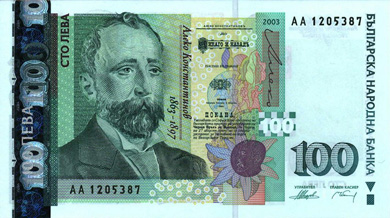
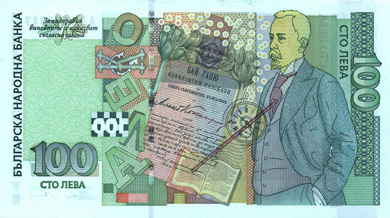
- Currency Name and Code
- Bulgarian Lev (BGN)
- GDP — official exchange rate
- $25,790,000,000 (USD)
- GDP Real Growth Rate
- 5.5%
- Gini Index
- 31.9
Banknotes
Budget & Public Finance
- Fiscal Year
- calendar year
- Annual Budget
- $10,900,000,000 (USD)
- Public Debt (% of GDP)
- 32.4%
- External Debt
- $15,460,000,000 (USD)
- Investment (% of GDP)
- 22.1%
- Economic Aid
- $300,000,000 (USD)
- Current Account Balance
- -$2,741,000,000 (USD)
- Reserves of Foreign Exchange
- $2,147,483,647 (USD)
Labor, Industry & Trade
- Labor Force by Occupation
- agriculture 11%, industry 32.7%, services 56.3%
- Household Income — highest 10%
- 22.8%
- Industries
- electricity, gas and water; food, beverages and tobacco; machinery and equipment, base metals, chemical products, coke, refined petroleum, nuclear fuel
- Agriculture Products
- vegetables, fruits, tobacco, livestock, wine, wheat, barley, sunflowers, sugar beets
- Export Commodities
- clothing, footwear, iron and steel, machinery and equipment, fuels
- Export Partners
- Italy 13.1%, Germany 11.6%, Turkey 9.3%, Belgium 6.1%, Greece 5.6%, US 5.3%, France 4.9%
- Import Commodities
- fuels, minerals, and raw materials; machinery and equipment; metals and ores; chemicals and plastics; food, textiles
- Import Partners
- Germany 15.1%, Italy 10.2%, Russia 7.9%, Greece 7.5%, Turkey 6.9%, France 4.4%
Energy
- Oil Production
- 2,908 bbl/day
- Oil Consumption
- 107,000 bbl/day
- Oil Reserves
- 8,100,000 bbl/day
- Natural Gas Production
- 1,000,000 cu m
- Natural Gas Consumption
- 5,401,000,000 cu m
- Natural Gas Imports
- 5,800,000,000 cu m
- Natural Gas Exports
- 0 cu m
- Natural Gas Reserves
- 5,947,000,000 cu m
Communications
- Telephone System
- General Assessment: inherited an extensive but antiquated telecommunications network from the Soviet era; quality has improved with a modern digital trunk line now connecting switching centers in most of the regions; remaining areas are connected by digital microwave radio relay Domestic: the Bulgaria Telecommunications Company's fixed-line monopoly terminated in 2005 in an effort to upgrade fixed-line services; mobile-cellular teledensity, fostered by multiple service providers, has reached 150 telephones per 100 persons International: country code - 359; submarine cable provides connectivity to Ukraine and Russia; a combination submarine cable and land fiber-optic system provides connectivity to Italy, Albania, and Macedonia; satellite earth stations - 3 (1 Intersputnik in the Atlantic Ocean region, 2 Intelsat in the Atlantic and Indian Ocean regions)
- Internet Country Code
- .bg
News & Weather
News & Weather
Current Weather
Latest News
Bulgaria to ask parliament to allow US tanker aircraft to be stationed at military base - Yahoo
Yahoo · 21h ago
U.S. Men Drop Four-Setter to Bulgaria at 2026 VNL Week Three - USA Volleyball
USA Volleyball · 2d ago
Bulgaria's planned AP1000s 'strategic bilateral priority' - World Nuclear News
World Nuclear News · 14h ago
Bulgaria vs Hungary - Class. Game 7-8 - FIBA U20 EuroBasket 2026, Division B - FIBA Basketball
FIBA Basketball · 2d ago
India, Croatia, Bulgaria, Cyprus, Malta and Fifty Four More Countries Enter Thailand New Visa Era as Bangkok Approves Thirty Day Visa Free Access to Simplify Entry and Accelerate International Tourism - Travel And Tour World
Travel And Tour World · 1d ago
Bosnia Herzegovina v Bulgaria - Bronze Final - Rugby Europe
Rugby Europe · 2d ago
Bulgaria’s New Government to Stop Supplying Weapons to Ukraine - Bloomberg.com
Bloomberg.com · 42d ago
EU fails again to sanction Patriarch Kirill as Bulgaria slaps veto - Euronews.com
Euronews.com · 7d ago
News via Google News
Climate Overview
The climate is usually designated as "continental, with many micro-climates." From May to November, the climate is pleasantly warm and sunny. Sofia is on the same latitude as Rome, but is 1,500 feet higher in elevation and has a climate similar to the Intermountain West of the United States. Plants, flowers, and fruits common to Britain and France grow well here, but the climate is too cold for citrus. November through April are snowy and cold, with temperatures ranging between -5°F to 50°F in Sofia. Summer temperatures may reach 105°F on occasion but tend to hover around 70°-75°F, and humidity is moderate to low. During July, the mean temperature is 68.7°F (20.4°C); during January, 30.6°F (8°C). Mildew and insects are not significant factors.
Sofia's main climatic problem is winter smog, which is caused by industrial air pollution, soft-coal smoke, vehicle exhaust emissions, fog, and surrounding mountains that keep winds from blowing the smog away. Gray-brown dirt or coal dust and sand are scattered on Sofia's snow-covered streets in winter.
Winters may often be gray but are quite beautiful in the nearby mountains. Mount Vitosha (altitude 2,290 m.), with its ski resorts and runs and walking paths, overlooks the city. Trees and flowers make Sofia a more colorful city the rest of the year. Rainfall is moderate, averaging 25 inches a year.
Videos
Videos
1 curated YouTube videos.
Source: YouTube
Frequently Asked Questions
Frequently Asked Questions
What is the population of Bulgaria?
How do people greet each other in Bulgaria?
What are dining and eating customs like in Bulgaria?
What is the etiquette for visiting a Bulgarian home?
How do people dress in Bulgaria?
What should I know about gestures and body language in Bulgaria?
What is family life like in Bulgaria?
What do people do for recreation in Bulgaria?
What is the capital of Bulgaria?
Where is Bulgaria located?
What countries border Bulgaria?
What is the predominant religion in Bulgaria?
What currency does Bulgaria use?
What language is spoken in Bulgaria?
What is Bulgaria known for?
What is the geography of Bulgaria like?
Last reviewed 2026