
 English
 Español
 中文
中文 हिन्दी
 Français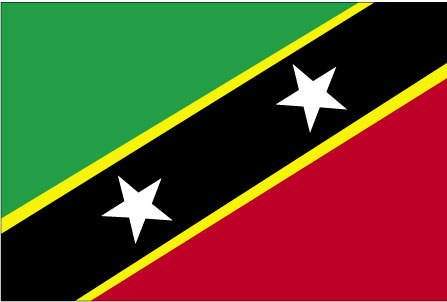
Saint Kitts and Nevis
Declare Your Relationship to Saint Kitts and Nevis
CountryReports Community
- Studying0
- From Saint Kitts and Nevis0
- Saint Kitts and Nevis heritage0
- Visited0
- Want to visit0
Customs and Culture
Customs and Culture
About the People
The people are very relaxed and easygoing. Liming is a popular term used to describe the easygoing lifestyle where people just relax and socialize.
Cultural Attributes
The people are very relaxed and easygoing. Liming is a popular term used to describe the easygoing lifestyle where people just relax and socialize.
Island Rhythms, Timeless Ease
Greetings, Gestures & Visiting
Most residents speak an English-baised Creole with some influence from French and West African languages. For example the word "de" is often used instead of the English word "The".
Western style of clothing is worn. People take pride in their clothing and are fashion conscious. Even on the weekends many people will dress up. Many school children wear uniforms.
Diet
Yams, plantains, rice and peas are staples. Sweet cassava bread is a popular dessert. Soups are also popular. Lime juice is a common seasoning.
Family
Family loyalty is important and in many households more than one generation live together.
Recreation
Cricket is the national sport. Other sports include soccer and horse racing. Music especially reggae music is a popular form of entertainment.
Holidays
Independence Day
9/19Independence Day
Dates of Interest
- September 19th
How do people communicate in Saint Kitts and Nevis?
Most residents speak an English-based Creole with some influence from French and West African languages.
Good to know
- The word "de" is often used instead of the English word "the"
What should I know about food and eating customs in Saint Kitts and Nevis?
Staples include yams, plantains, rice and peas, and soups are also popular.
Good to know
- Sweet cassava bread is a popular dessert
- Lime juice is a common seasoning
How should I dress in Saint Kitts and Nevis?
Western-style clothing is worn, and people take pride in their appearance and are fashion conscious.
Do
- Consider dressing up, as many people dress up even on weekends
Good to know
- Many school children wear uniforms
What is family life like in Saint Kitts and Nevis?
Family loyalty is important, and in many households more than one generation lives together.
What do people do for recreation in Saint Kitts and Nevis?
Cricket is the national sport, and music—especially reggae—is a popular form of entertainment.
Good to know
- Other popular sports include soccer and horse racing
What should I know about the general attitude in Saint Kitts and Nevis?
People are very relaxed and easygoing.
Good to know
- "Liming" describes the easygoing lifestyle of relaxing and socializing
Last updated: 2026-07-12 · Sources: CountryReports
Travel and Tourism
Travel and Tourism
- Travel Alert Status
- Level 1: Exercise Normal Precautions
- Currency
- East Caribbean dollar (XCD)
- Time Difference
- UTC-4 (1 hour ahead of Washington, DC, during Standard Time)
- Climate
- tropical tempered by constant sea breezes; little seasonal temperature variation; rainy season (May to November)
- Airports
- 2
Read the full travel guide — health, safety, vaccinations, disease risk, sanitation, and transit details.
View full travel guideRecipes
Recipes
History
History
Historical Eras
Pre-Columbian Era
3000 BCE – 1493
The islands were inhabited by successive Amerindian peoples, culminating in the Kalinago (Carib) who dominated at the time of European contact. These communities sustained themselves through fishing, agriculture, and inter-island trade across the Lesser Antilles. Their population would be rapidly decimated following the arrival of European colonizers in the early 17th century.
Early Colonization
1493 – 1713
Christopher Columbus encountered both islands in 1493, naming the larger St. Christopher and the smaller Nevis. English settlers under Thomas Warner established the first British Caribbean colony on St. Kitts in 1623, followed by French settlers in 1624. The two powers held the island jointly until 1713, enduring repeated violent conflicts, including the 1626 massacre of the Kalinago at Bloody Point, while developing sugar-based plantation economies reliant on enslaved African labor.
British Colonial Period
1713 – 1967
The Treaty of Utrecht (1713) formally ceded St. Kitts to Britain, consolidating British dominance, though France briefly seized both islands in 1782 before the Treaty of Paris (1783) restored British control. Sugar production drove the colonial economy for two centuries, underpinned by slavery until emancipation in 1834. From 1871 to 1956 the islands formed part of the Leeward Islands colony, then briefly joined the West Indies Federation (1958–1962) before its dissolution.
Associated Statehood
1967 – 1983
In 1967, St. Kitts, Nevis, and Anguilla together became a self-governing state in free association with Britain, gaining full internal autonomy while Britain retained responsibility for defense and foreign affairs. Anguilla promptly rebelled against governance from St. Kitts, ultimately securing its formal separation in 1971 and remaining a British dependency. This transitional period saw the islands develop their own governmental institutions in preparation for full sovereignty.
Independence & Modern Era
1983 – present
The Federation of Saint Kitts and Nevis achieved full independence on September 19, 1983, becoming one of the smallest sovereign states in the Western Hemisphere. Tensions between the two islands have persisted; a 1998 referendum on Nevisian secession secured a majority but fell short of the required two-thirds threshold. The nation has since diversified its economy away from sugar, which was formally ended as an industry in 2005, toward tourism and offshore financial services.
Overview
The English and French held St. Kitts jointly from 1628 to1713. During the 17th century, intermittent warfare between French and English settlers ravaged the island’s economy. Meanwhile Nevis, settled by English settlers in 1628, grew prosperous under English rule. St. Kitts was ceded to Great Britain by the Treaty of Utrecht in 1713. The French seized both St. Kitts and Nevis in 1782.
The Treaty of Paris in 1783 definitively awarded both islands to Britain. They were part of the colony of the Leeward Islands from 1871-1956, and of the West Indies Federation from 1958-62. In 1967, together with Anguilla, they became a self-governing state in association with Great Britain; Anguilla seceded late that year and remains a British dependency. The Federation of St. Kitts and Nevis attained full independence on September 19, 1983.
Timeline of Key Events
1493
Christopher Columbus lands on the islands and names St Kitts after his patron saint, Christopher.
Christopher Columbus lands on the islands and names St Kitts after his patron saint, Christopher.
1623
The British establish their first Caribbean colony on St Kitts.
The British establish their first Caribbean colony on St Kitts.
1783
France relinquishes claims on St Kitts in the Treaty of Versailles.
France relinquishes claims on St Kitts in the Treaty of Versailles.
1871
St Kitts, Nevis and Anguilla united as a British dependency.
St Kitts, Nevis and Anguilla united as a British dependency.
1967
Becomes an internally self-governing member of the West Indies Associated States.
St Kitts, Nevis and Anguilla become an internally self-governing member of the West Indies Associated States with Labor Party leader Robert Bradshaw as prime minister.
1983
St Kitts and Nevis jointly attain independence within the British Commonwealth.
St Kitts and Nevis jointly attain independence within the British Commonwealth with Kennedy Simmonds as prime minister.
1993
Anti-government demonstrations take place following an inconclusive general election.
Anti-government demonstrations take place following an inconclusive general election.
Read the full history profile — narrative overview, defining eras, and the complete timeline in one place.
View expanded historyInteresting Facts
Interesting Facts
The island of St Kitts is also known as St Christopher
See every fact — trivia, oddities, and curious tidbits gathered from across the country.
View all interesting factsGeography and Environment
Geography and Environment
- Terrain
- volcanic with mountainous interiors
- Climate
- tropical tempered by constant sea breezes; little seasonal temperature variation; rainy season (May to November)
- Natural Hazards
- hurricanes (July to October)
- Current Environmental Issues
- NA
Read the full geography and environment profile — terrain, climate, natural resources, hazards, land use, and international agreements.
View full geographyPeople & Demographics
People & Demographics
Religion
Languages Spoken
English
- English
Population
- Population
- 49,898
- Population in Major Urban Areas
- BASSETERRE (capital) 12,000
- Nationality Noun
- Kittitian(s), Nevisian(s)
- Ethnic Groups
- predominantly black; some British, Portuguese, and Lebanese
Education
- Literacy Definition
- age 15 and over has ever attended school
Read the full people and society profile — demographics, health, education, religion, languages, and notable people.
View full people and societyGovernment & Politics
Government & Politics
Country Identity
- Country Name
- SaintKittsandNevis
- Full Country Name
- Federation of Saint Kitts and Nevis
- Former Name
- Federation of Saint Christopher and Nevis
Government Structure
- Government Type
- constitutional monarchy with Westminster-style parliament
- Legal System
- based on English common law
- Executive Branch
- chief of state: King CHARLES III (since 8 September 2022), represented by Governor General Marcella LIBURD (since 1 January 2023) head of government: Prime Minister Dr. Terrance DREW (since 6 August 2022) and Deputy Prime Minister Dr. Geoffrey HANLEY (since 6 August 2022) cabinet: Cabinet appointed by the governor general in consultation with the prime minister elections: none; the monarch is hereditary; the governor general is appointed by the monarch; following legislative elections, the leader of the majority party or leader of a majority coalition is usually appointed prime minister by the governor general; deputy prime minister appointed by the governor general
- Legislative Branch
- unicameral National Assembly (14 seats, 3 appointed and 11 popularly elected from single-member constituencies; members serve five-year terms) elections: last held 25 October 2004 (next to be held by 2009) election results: percent of vote by party - NA%; seats by party - SKNLP 7, CCM 2, NRP 1, PAM 1
- Judicial Branch
- Eastern Caribbean Supreme Court (based on Saint Lucia; one judge of the Supreme Court resides in Saint Kitts and Nevis)
- Suffrage
- 18 years of age; universal
- Constitution
- 19-Sep-83
- Independence
- 19 September 1983 (from UK)
- National Holiday
- Independence Day, 19 September (1983)
Capital City
- Capital Name
- Basseterre
- Capital - geographic coordinate
- 17 18 N, 62 43 W
- Capital Time Difference
- UTC-4 (1 hour ahead of Washington, DC, during Standard Time)
the French name translates as "low land" in English; the reference is to the city's low-lying location within a valley, as well as to the fact that the city is on the leeward (downwind) part of the island, and is thus a safe anchorage
Military
Branches: Ministry of Foreign Affairs, National Security, Labour, Immigration, and Social Security: Royal Saint Kitts and Nevis Defense Force (includes Coast Guard), Royal Saint Kitts and Nevis Police Force
Embassy / Diplomatic Mission
U.S. Embassy in Bridgetown
Wildey Business Park
Wildey
St. Michael, Barbados
Telephone: (246) 227-4399
Emergency after-hours telephone: (246) 227-4000
Facsimile: (246) 431-0179
Email: BridgetownACS@state.gov
Hours of operation are 8:30 a.m. – 4:30 p.m. Monday through Friday, except Barbadian and U.S. holidays.
Read the full government profile — flag symbolism, national anthem, and other national symbols.
View full government detailsEconomy
Economy
Sugar was the traditional backbone of the Saint Kitts and Nevis economy for centuries, but the state-owned sugar industry was shut down in 2005 after decades of losses. Since then, the country has successfully diversified its economy, with tourism, financial services, and light manufacturing emerging as the primary drivers of growth. Tourism is now the leading source of foreign exchange, supported by cruise arrivals, stopover visitors, and a growing luxury resort sector that includes properties such as the Park Hyatt and the St. Kitts Marriott Resort.
The Citizenship by Investment (CBI) program, established in 1984 and among the oldest in the world, has become a major revenue stream for the government, helping to finance public investment and reduce national debt. Agriculture now plays a minor role, focused on small-scale production of vegetables, tropical fruits, and livestock for local consumption.
The economy is highly dependent on external conditions and proved vulnerable to global shocks, most notably the COVID-19 pandemic, which caused a sharp contraction in 2020 due to the collapse in tourism. Recovery has since been steady, supported by rebounding visitor numbers and strong CBI inflows. The government continues to pursue initiatives aimed at renewable energy development, climate resilience, and positioning Saint Kitts and Nevis as the world's first sustainable island state.
Snapshot
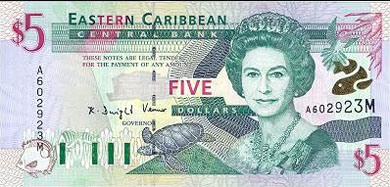
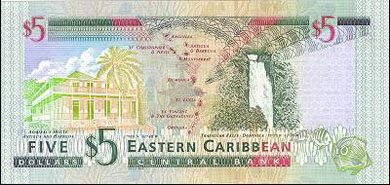
- Currency Name and Code
- East Caribbean Dollar (XCD)
- GDP Real Growth Rate
- -1.9%
Banknotes
Budget & Public Finance
- Fiscal Year
- calendar year
- Annual Budget
- $128,200,000 (USD)
- External Debt
- $171,000,000 (USD)
- Economic Aid
- $8,000,000 (USD)
Labor, Industry & Trade
- Labor Force by Occupation
- NA
- Industries
- sugar processing, tourism, cotton, salt, copra, clothing, footwear, beverages
- Agriculture Products
- sugarcane, rice, yams, vegetables, bananas; fish
- Export Commodities
- machinery, food, electronics, beverages, tobacco
- Export Partners
- US 65.7%, Canada 7.1%, UK 7.1%, Portugal 5.7%
- Import Commodities
- machinery, manufactures, food, fuels
- Import Partners
- US 39%, Trinidad and Tobago 15.4%, Canada 9.2%, UK 6.7%, Denmark 6.2%
Energy
- Oil Production
- 0 bbl/day
- Oil Consumption
- 700 bbl/day
- Oil Reserves
- 0 bbl/day
- Natural Gas Production
- 0 cu m
- Natural Gas Consumption
- 0 cu m
- Natural Gas Imports
- 0 cu m
- Natural Gas Exports
- 0 cu m
- Natural Gas Reserves
- 0 cu m
Communications
- Telephone System
- general assessment: good interisland and international connections domestic: interisland links via Eastern Caribbean Fiber Optic cable; construction of enhanced wireless infrastructure launched in November 2004; fixed-line teledensity about 40 per 100 persons; mobile-cellular teledensity is roughly 170 per 100 persons international: country code - 1-869; connected internationally by the East Caribbean Fiber Optic System (ECFS) and Southern Caribbean fiber optic system (SCF) submarine cables
- Internet Country Code
- .kn
News & Weather
News & Weather
Current Weather
Latest News
PM of St. Kitts-Nevis Outlines Policy Regarding Acceptance of Refugees From the United States - Caribbean Today
Caribbean Today · 16h ago
The American Society of Travel Advisors Is Bringing Its 2026 Caribbean Showcase to St. Kitts, With Advisor Meetings, Island Experiences, and a Nevis Component - Caribbean Journal
Caribbean Journal · 8h ago
St. Kitts and Nevis launches national digital health platform covering 51,000 citizens - MarketScale
MarketScale · 1d ago
St. Kitts and Nevis Opens Washington DC Biometric Collection Centre as US Enrolment Goes Live - Yahoo Finance
Yahoo Finance · 5d ago
News - U.S., Saint Kitts and Nevis conclude LAMAT 2026 medical mission - DVIDS
DVIDS · 17d ago
If not Destiny, then what? - The St Kitts Nevis Observer
The St Kitts Nevis Observer · 18h ago
Embassy Supports “Saint Kitts and Nevis Diaspora Heritage Emergence Programme” - ROC-Taiwan.org
ROC-Taiwan.org · 14d ago
E.U. tells Caribbean nations: Stop selling citizenship or we’ll require visas - The Washington Post
The Washington Post · 2d ago
News via Google News
Climate Overview
tropical tempered by constant sea breezes; little seasonal temperature variation; rainy season (May to November)
Frequently Asked Questions
Frequently Asked Questions
What is the population of Saint Kitts and Nevis?
How do people communicate in Saint Kitts and Nevis?
What should I know about food and eating customs in Saint Kitts and Nevis?
How should I dress in Saint Kitts and Nevis?
What is family life like in Saint Kitts and Nevis?
What do people do for recreation in Saint Kitts and Nevis?
What should I know about the general attitude in Saint Kitts and Nevis?
What is the capital of Saint Kitts and Nevis?
Where is Saint Kitts and Nevis located?
What religion is practiced in Saint Kitts and Nevis?
What currency is used in Saint Kitts and Nevis?
What language is spoken in Saint Kitts and Nevis?
What is the geography of Saint Kitts and Nevis like?
What is Saint Kitts and Nevis known for?
What is the political history of Saint Kitts and Nevis?
Last reviewed 2026