
 English
 Español
 中文
中文 हिन्दी
 Français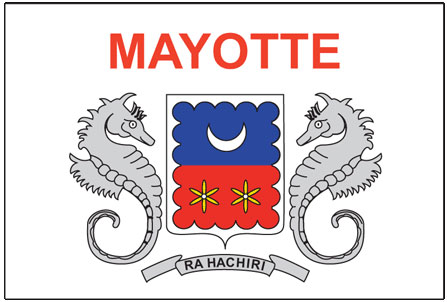
Mayotte
Declare Your Relationship to Mayotte
CountryReports Community
- Studying0
- From Mayotte0
- Mayotte heritage1
- Visited0
- Want to visit0
Customs and Culture
Customs and Culture
Cultural Attributes
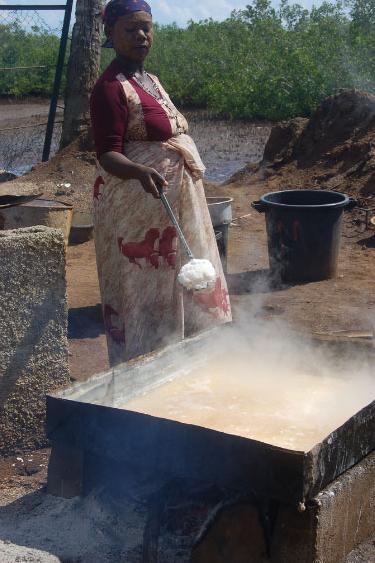
Mayotte is a French overseas department and region located in the Indian Ocean, situated between Madagascar and the northern coast of Mozambique. Its cultural identity is a rich and layered blend of African, Arab, and French influences, shaped by centuries of trade, migration, and colonial history. The majority of the population is of Mahorais origin, a people closely related to the Comorian ethnic groups of the surrounding archipelago. Islam is the dominant religion, practiced by roughly 97 percent of the population, and it plays a central role in daily life, community organization, and social customs. Mosques are prominent features of most villages, and Islamic observances such as Ramadan and Eid are widely celebrated. Religious instruction in Arabic is common alongside formal French-language schooling. The official language is French, which is used in government, education, and formal business. However, Shimaore, a Bantu language closely related to Comorian, serves as the most widely spoken mother tongue. Kibushi, a language with Malagasy roots, is also spoken by a significant portion of the population, particularly in the south and northwest of the island. Traditional Mahorais society is largely matrilineal, meaning that property, lineage, and social identity are often traced through the mother's side. This matrilineal structure distinguishes Mahorais culture from many other Muslim-majority societies and has historically given women important roles in land ownership and community decision-making, though gender dynamics continue to evolve. Traditional dress reflects the island's Islamic heritage. Women commonly wear the salouva, a brightly colored wraparound garment, and many apply msindzano, a paste made from ground coral and sandalwood, to their faces as both a cosmetic and sun-protective treatment. This practice is considered a distinctive cultural hallmark of the island. Music, dance, and oral storytelling remain important cultural expressions. The twarab, a style of music with Arab and Swahili influences, is popular at celebrations and social gatherings. Weddings, in particular, are elaborate multi-day affairs that showcase traditional music, dance, and communal feasting.

Perfumed Islands of the Indian Ocean

Holidays
Bastille Day
7/14Other
Dates of Interest
- July 14th
What do people wear in Mayotte?
Traditional dress reflects the island's Islamic heritage, with women commonly wearing brightly colored wraparound garments.
Do
- Recognize the salouva, a brightly colored wraparound garment worn by women
Good to know
- Many women apply msindzano, a paste of ground coral and sandalwood, to their faces as a cosmetic and sun-protective treatment—a distinctive cultural hallmark
How is family and society structured in Mayotte?
Traditional Mahorais society is largely matrilineal, so property, lineage, and social identity are often traced through the mother's side.
Good to know
- This matrilineal structure has historically given women important roles in land ownership and community decision-making
- Gender dynamics continue to evolve
What music and celebrations are important in Mayotte?
Music, dance, and oral storytelling are important cultural expressions, with twarab music popular at celebrations and gatherings.
Good to know
- Twarab is a style of music with Arab and Swahili influences
- Weddings are elaborate multi-day affairs featuring traditional music, dance, and communal feasting
What should I know before visiting Mayotte?
Mayotte is a French overseas department in the Indian Ocean with a cultural identity blending African, Arab, and French influences, and Islam is practiced by roughly 97 percent of the population.
Good to know
- French is the official language used in government, education, and formal business
- Shimaore, a Bantu language, is the most widely spoken mother tongue
- Kibushi, with Malagasy roots, is spoken particularly in the south and northwest
- Islam plays a central role in daily life; observances like Ramadan and Eid are widely celebrated
Last updated: 2026-07-12 · Sources: CountryReports
Photos of Mayotte
Photos of Mayotte


Travel and Tourism
Travel and Tourism
- Currency
- euro (EUR)
- Climate
- tropical; marine; hot, humid, rainy season during northeastern monsoon (November to May); dry season is cooler (May to November)
- Airports
- 1
Read the full travel guide — health, safety, vaccinations, disease risk, sanitation, and transit details.
View full travel guideHistory
History
Historical Eras
Early Settlement
800 – 1500
Arab and Swahili traders established settlements on Mayotte, integrating the island into Indian Ocean trade networks. The population adopted Islam, which became the dominant faith and cultural foundation. Local sultanates began to form, shaping the island's political and social structure for centuries to come.
Sultanate Era
1500 – 1841
Mayotte was ruled by a succession of local sultans who competed and negotiated with neighboring Comorian islands and coastal African powers. The island's strategic position in the Mozambique Channel made it a point of interest for Portuguese, Omani, and later French navigators. Internal rivalries among sultans eventually made the island vulnerable to foreign acquisition.
French Acquisition
1841 – 1946
In 1841, Sultan Andriantsouly sold Mayotte to France, and formal cession followed in 1843, making it France's first foothold in the Comoros archipelago. The island served as a colonial administrative base and was grouped administratively with the broader Comoros territory. French plantation agriculture and administrative structures gradually transformed the island's economy and governance.
Comoros Territory
1946 – 1974
Mayotte became part of the French overseas territory of the Comoros following the postwar reorganization of French colonial possessions. Pressure for independence grew across the archipelago during the 1960s and early 1970s, aligned with broader African decolonization movements. Mayotte's population, however, developed a distinct pro-French political identity that set it apart from the other islands.
Territorial Collectivity
1974 – 2011
In the 1974 referendum on Comorian independence, Mayotte uniquely voted to remain tied to France, a position reaffirmed in a 1976 follow-up vote. The island held the ambiguous status of a French territorial collectivity for decades, navigating tensions with the newly independent Comoros and a growing influx of undocumented migrants from the archipelago. A 2009 referendum saw 95.2% of voters approve full departmental status.
French Department
2011 – present
Mayotte became France's 101st département in 2011, bringing full integration into French legal, administrative, and social frameworks. Islamic personal law, polygamy, and customary practices were phased out in alignment with French civil law. The island continues to face significant demographic pressures, with large-scale irregular migration from the Comoros driving ongoing social and political challenges.
Overview
Timeline of Key Events
1841
Sultan Sakalva Andriantsouly sold the island of Mayotte to the French.
Sultan Sakalva Andriantsouly sold the island of Mayotte to the French. Having established a foothold in Mayotte, the French sought to gain control of the other three islands.
1843
Mayotte was ceded to France along with the other Comoros.
Mayotte was ceded to France along with the other Comoros.
1974
Mayotte, votes to stay with France.
Three of the islands making up the Comoros vote for independence, but a fourth island, Mayotte, votes to stay with France.
Read the full history profile — narrative overview, defining eras, and the complete timeline in one place.
View expanded historyInteresting Facts
Interesting Facts
Mayotte was ceded to France along with the other islands of the Comoros group in 1843
See every fact — trivia, oddities, and curious tidbits gathered from across the country.
View all interesting factsGeography and Environment
Geography and Environment
- Terrain
- generally undulating, with deep ravines and ancient volcanic peaks
- Climate
- tropical; marine; hot, humid, rainy season during northeastern monsoon (November to May); dry season is cooler (May to November)
- Natural Hazards
- cyclones during rainy season
- Current Environmental Issues
- NA
Read the full geography and environment profile — terrain, climate, natural resources, hazards, land use, and international agreements.
View full geographyPeople & Demographics
People & Demographics
Religion
Languages Spoken
Mahorian (a Swahili dialect), French (official language) spoken by 35% of the population
- French
Population
- Population
- 231,139
- Nationality Noun
- Mahorais (singular and plural)
- Ethnic Groups
- NA
Education
- Literacy Definition
- NA
Read the full people and society profile — demographics, health, education, religion, languages, and notable people.
View full people and societyGovernment & Politics
Government & Politics
Country Identity
- Country Name
- Mayotte
- Full Country Name
- Territorial Collectivity of Mayotte
Government Structure
- Government Type
- NA
- Legal System
- French law
- Executive Branch
- chief of state: President Emmanuel MACRON of France (since 14 May 2017), represented by Prefect Thierry SUQUET (since 2023) head of government: President of the Departmental Council Ben ISSA OUSSENI (since 2021) cabinet: NA elections: French president elected by popular vote for a five-year term; prefect appointed by the French president on the advice of the French Ministry of the Interior; president of the Departmental Council elected by the members of the Departmental Council; Mayotte became France's 101st department in 2011, replacing the former General Council structure with a Departmental Council
- Legislative Branch
- unicameral General Council or Conseil General (19 seats; members are elected by popular vote to serve three-year terms) elections: last held 21 and 28 March 2004 (next to be held in 2007) election results: percent of vote by party - MDM 23.3%, UMP 22.8%, PS 10.2%, MRC 8.9%, FRAP 6.5%, MPM 1.2%; seats by party - MDM 6, UMP 9, MRC 2, MPM 1, diverse left 1 note: Mayotte elects one member of the French Senate; elections last held 24 September 2001 (next to be held September 2007); results - percent of vote by party - NA; seats by party - NA; Mayotte also elects one member to the French National Assembly; elections last held 16 June 2002 (next to be held in 2007); results - percent of vote by party - UMP-RPR 55.08%, UDF 44.92%; seats by party - UMP-RPR 1
- Judicial Branch
- Supreme Court or Tribunal Superieur d'Appel
- Suffrage
- 18 years of age; universal
- Constitution
- 28 September 1958 (French Constitution)
- Independence
- none (territorial collectivity of France)
- National Holiday
- Bastille Day, 14 July (1789)
Capital City
- Capital Name
- Mamoutzou
Read the full government profile — flag symbolism, national anthem, and other national symbols.
View full government detailsEconomy
Economy
Mayotte's economy remains heavily dependent on France, which provides substantial financial assistance that is essential to the island's GDP and development. While agriculture, including fishing and livestock raising, has traditionally formed the backbone of economic activity, the sector now accounts for only a small share of GDP, with the services sector—particularly public administration—dominating the economy. Since becoming France's 101st department in 2011 and an outermost region of the European Union in 2014, Mayotte has benefited from increased public investment, though it remains the poorest department in France, with high unemployment and significant income inequality. The island is not self-sufficient and imports the majority of its food and consumer goods, primarily from mainland France. Mayotte's remote location in the Indian Ocean, combined with limited infrastructure, continues to constrain the development of tourism and private enterprise. Rapid population growth, driven in part by immigration from neighboring Comoros, places additional pressure on public services and the labor market.
Snapshot
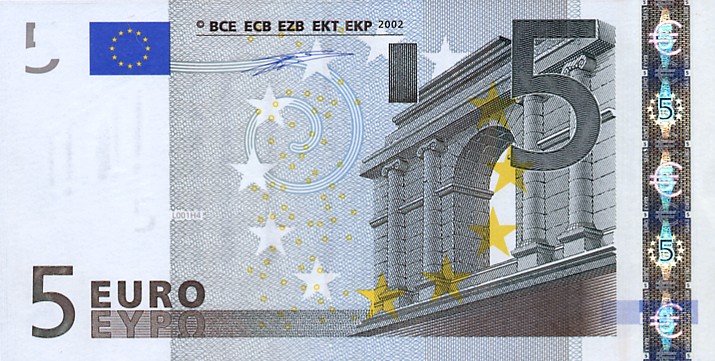
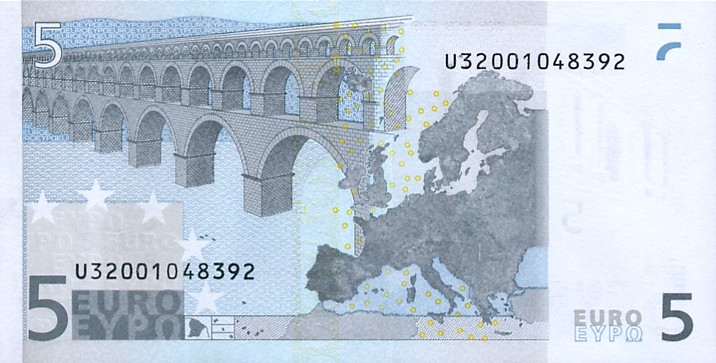
- Currency Name and Code
- Euro (EUR)
Banknotes
Budget & Public Finance
- Fiscal Year
- calendar year
- Annual Budget
- $73,000,000 (USD)
- Economic Aid
- $107,700,000 (USD)
Labor, Industry & Trade
- Industries
- newly created lobster and shrimp industry, construction
- Agriculture Products
- vanilla, ylang-ylang (perfume essence), coffee, copra
- Export Commodities
- ylang-ylang (perfume essence), vanilla, copra, coconuts, coffee, cinnamon
- Export Partners
- France 80%, Comoros 15%, Reunion
- Import Commodities
- food, machinery and equipment, transportation equipment, metals, chemicals
- Import Partners
- France 66%, Africa 14%, Southeast Asia 11%
Energy
- Oil Production
- 0 bbl/day
- Oil Consumption
- 0 bbl/day
- Oil Reserves
- 0 bbl/day
- Natural Gas Production
- 0 cu m
- Natural Gas Consumption
- 0 cu m
- Natural Gas Imports
- 0 cu m
- Natural Gas Exports
- 0 cu m
- Natural Gas Reserves
- 0 cu m
Communications
- Internet Country Code
- .yt
News & Weather
News & Weather
Current Weather
Latest News
Kara Region, France’s Mayotte Sign Cooperation Agreement - Togo First
Togo First · 18h ago
Today's Hourly Weather Forecast - Dzaoudzi / Pamanzi Mayotte, Mayotte, YT - WeatherBug
WeatherBug · 4d ago
Linda Mayotte Obituary (1939 - 2026) - Saratoga Springs, NY - Post-Star - Legacy | Obituary Search
Legacy | Obituary Search · 26d ago
Mayotte Air Quality Index (AQI) and France Air Pollution - IQAir
IQAir · 27d ago
seeps and hydrate field on the seafloor offshore Mayotte Island - Nature
Nature · 39d ago
Mayotte reports significant resurgence of malaria, CDC issues travel notice - Outbreak News Today
Outbreak News Today · 46d ago
Christopher J Mayotte Obituary Feb 11, 2026 - Cotter Funeral Home
Cotter Funeral Home · 160d ago
A groundbreaking partnership in Mayotte to support the lagoon and coastal communities and ecosystems | AFD - AFD - Agence Française de Développement
AFD - Agence Française de Développement · 43d ago
News via Google News
Climate Overview
tropical; marine; hot, humid, rainy season during northeastern monsoon (November to May); dry season is cooler (May to November)
Frequently Asked Questions
Frequently Asked Questions
What is the population of Mayotte?
What do people wear in Mayotte?
How is family and society structured in Mayotte?
What music and celebrations are important in Mayotte?
What should I know before visiting Mayotte?
What is the capital of Mayotte?
Where is Mayotte located?
What are the ocean borders of Mayotte?
What religion is practiced in Mayotte?
What currency does Mayotte use?
What language is spoken in Mayotte?
What is the geography of Mayotte like?
What is Mayotte known for?
Last reviewed 2026