
 English
 Español
 中文
中文 हिन्दी
 Français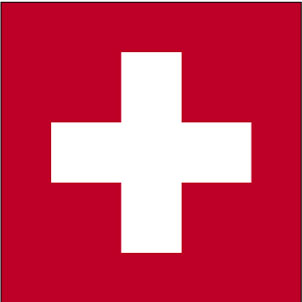
Switzerland
Schweiz (German), Suisse (French), Svizzera (Italian)
Declare Your Relationship to Switzerland
CountryReports Community
- Studying3
- From Switzerland0
- Switzerland heritage2
- Visited0
- Want to visit3
Customs and Culture
Customs and Culture
About the People
The Swiss are known for their skill, integrity and punctuality. They pride themselves on honoring their contracts, working hard and doing their job with efficiency and a deep sense of responsibility. Absenteeism in the workplace is low. Switzerland has fairly long work hours, but employees enjoy a minimum of four weeks vacation every year.
An important feature of the Swiss economy is a long-standing agreement between employers and employees to settle differences by negotiation. Strikes are rare. The views of trade unions and professional associations often influence economic policies.
More than half of employed women work part-time, compared to 8% of working men. Women, on average, earn a third less than their male counterparts. With the rapidly rising cost of living in the cities, many women are choosing to work to help support the household. In Switzerland it is difficult to buy land if you are not among the wealthy. Most people work to pay rent, health insurance, taxes and purchase food. Most people work for relatively small firms. Most Swiss companies have 50 or fewer employees.
The Swiss take great pride in their homes and gardens. Many Swiss homes are adorned with window boxes of geraniums and other flowers. Their yards are fenced and look neat and orderly.
Cultural Attributes
The Swiss are known for their skill, integrity, and punctuality. They pride themselves on honoring their contracts, working hard, and doing their job with efficiency and a deep sense of responsibility. Absenteeism in the workplace is low. Switzerland has fairly long work hours, but employees enjoy at least four weeks' vacation every year.
An important feature of the Swiss economy is a long-standing agreement between employers and employees to negotiate differences. Strikes are rare. The views of trade unions and professional associations often influence economic policies.
More than half of employed women work part-time, compared to 8% of working men. Women, on average, earn a third less than their male counterparts. With the rapidly rising cost of living in the cities, many women are choosing to work to help support the household. In Switzerland, it is difficult to buy land if you are not among the wealthy. Most people work to pay rent, health insurance, taxes, and purchase food. Most people work for relatively small firms. Most Swiss companies have 50 or fewer employees.
The Swiss take great pride in their homes and gardens. Many Swiss homes are adorned with window boxes of geraniums and other flowers. Their yards are fenced and look neat and orderly.

Precision, Chocolate, and Alpine Peaks
Greetings, Gestures & Visiting
In Switzerland, greetings can vary depending on the region and language spoken. Switzerland has four official languages: German, French, Italian, and Romansh. The greetings used in each language differ slightly. Here are some common greetings in Switzerland:
German:
"Guten Tag" (Good day)
"Grüezi" or "Grüezi mitenand" (Hello or Hello everyone; commonly used in German-speaking regions like Zurich and Bern)
"Hallo" (Hello; less formal)
French:
"Bonjour" (Hello; commonly used in French-speaking regions like Geneva and Lausanne)
"Salut" (Hi; less formal)
Italian:
"Buongiorno" (Good day; commonly used in Italian-speaking regions like Ticino)
"Ciao" (Hello/Hi; less formal)
Romansh:
"Bun di" (Good day; commonly used in the Romansh-speaking region of Graubünden)
"Allegra" (Hello; less formal)
It's important to note that the specific greeting used can also depend on the context and level of formality. In more formal situations, it's customary to use the respective language's formal greetings, such as "Guten Tag" in German or "Bonjour" in French. In informal settings or among friends, less formal greetings like "Hallo" or "Ciao" are more common.
Additionally, a handshake is a common form of greeting in Switzerland, especially in formal situations. However, it's always a good idea to follow the lead of the person you are greeting and observe the local customs and norms.
In German-speaking Switzerland, one uses the courtesy title "Herr" to address a man and "Frau" to address a woman; in French-speaking areas, use "Monsieur" and "Madame"; in Italian-speaking areas, use "Signore" and "Signora".
Fidgeting, moving hands, and making sweeping gestures are generally considered rude. To point your index finger to your head it is regarded as an insult. Poor posture is frowned upon. It is considered rude to slouch, stretch, or yawn in public.
The Swiss are known for using polite formalities at social functions or in business transactions. They greet friends and say goodbye by gently kissing cheek-to-cheek three times. With business associates and new acquaintances, they shake hands upon meeting and again upon leaving.
Most Swiss go to bed early, so it is discourteous to overstay your visit if you are invited to somebody’s home. Telephoning anyone after about 9 PM is rude. Swiss do not do a lot of “entertaining” at home but become active with their friends and associates through activities (sports, clubs, courses, excursions) outside their homes. Acceptable gifts for a host or hostess include chocolate, wine, or flowers.
Conservative casual clothes are the norm for people in Switzerland outside of the office. When in the office businessmen wear a traditional suit. Cleanliness and neatness are highly valued in dress. French-speaking Swiss take most of their fashion from French-European styles. Many youths feel it is popular to place English phrases on clothing.
Diet
Cooking in Switzerland reflects the country's various ethnic traditions. For example, fondue and raclette (melted cheese dishes) come from the French part of Switzerland. Sausages, roasts and rösti (fried potatoes) originated in the German regions. Foods such as bündnerfleisch (sliced air-dried beef) come from the Graubünden region. In the southern regions, traditional Italian dishes are common. Most cantons have their own special dishes.
Switzerland is famous for its dairy products, such as milk, yogurt, butter and cheese. Gruyere and Emmenthal are the best-known types of cheese. Sausages are popular, and many different varieties are available in butcher's shops. Veal and pork chops are also widely enjoyed. Zurcher Geschnetzeltes is a popular veal dish. Many people also enjoy fish from Switzerland's lakes. Favorite sweets include sugar buns and spiced honey cakes, basler läckerli (gingerbread), zuger kirschtorte (layer cake), as well as the world-famous Swiss chocolate.
A typical Swiss breakfast consists of bread, butter, marmalade or honey, perhaps some cheese or cereal, with milk, tea, coffee or hot chocolate. Most Swiss have a small lunch with soup or a sandwich, although some families eat a complete meal at midday. Another typical midday meal is bircher müesli (a mixture of grains and yogurt). The evening meal may be a full dinner or a simple supper of bread, cheese and cold cuts.
There are many places to eat out in Switzerland, from fast food restaurants to family restaurants to gourmet establishments, including Japanese, Chinese, Vietnamese, Thai and Mexican restaurants.
Cooking in Switzerland reflects the country's various ethnic traditions. For example, fondue and raclette (melted cheese dishes) come from the French part of Switzerland. Sausages, roasts and rösti (fried potatoes) originated in the German regions. Foods such as bündnerfleisch (sliced air-dried beef) come from the Graubünden region. In the southern regions, traditional Italian dishes are common. Most cantons have their own special dishes.
Switzerland is famous for its dairy products, such as milk, yogurt, butter and cheese. Gruyere and Emmenthal are the best-known types of cheese. Sausages are popular, and many different varieties are available in butcher's shops. Veal and pork chops are also widely enjoyed. Zurcher Geschnetzeltes is a popular veal dish. Many people also enjoy fish from Switzerland's lakes. Favorite sweets include sugar buns and spiced honey cakes, basler läckerli (gingerbread), zuger kirschtorte (layer cake), as well as the world-famous Swiss chocolate.
A typical Swiss breakfast consists of bread, butter, marmalade or honey, perhaps some cheese or cereal, with milk, tea, coffee or hot chocolate. Most Swiss have a small lunch with soup or a sandwich, although some families eat a complete meal at midday. Another typical midday meal is bircher müesli (a mixture of grains and yogurt). The evening meal may be a full dinner or a simple supper of bread, cheese and cold cuts.
There are many places to eat out in Switzerland, from fast food restaurants to family restaurants to gourmet establishments, including Japanese, Chinese, Vietnamese, Thai and Mexican restaurants.

Family
The Swiss who live in urban areas tend to have small families; one or two children are the norm. Multi-generational households are more common in rural areas. Parents are expected to assist their children financially until they have completed their studies. Although most Swiss live as traditional families, the number of unmarried people living alone or in common-law relationships is growing. More young people are postponing marriage and children.
Nearly 70% of all Swiss live in urban areas. Some cities have a shortage of affordable housing. It is common for several young people to live together in cities where costs are high. Many women today are still not active in the labor market. Only one in three women work outside the home.
Recreation
Hiking is one of the most popular leisure activities in the country, and there are more than 50,000 kilometers of designated footpaths
Two sports that are unique to Switzerland are hornussen and schwingen. Hornussen is played by two teams, the ”offense“ and the ”defense.“ The offense uses long metal rods with wooden handles to knock a disc called the hornuss as far as possible down a field. The defense uses a wooden shield to prevent the disc from getting very far down the field. The defense loses a point if the disc lands on the field without being intercepted. If the defense knocks it down, they gain a point.
Schwingen is a type of Swiss wrestling. The wrestlers wear unique pants. Each wrestler grabs the waistband of his opponent with his right hand and a band on his opponent's leg with his left hand. Then he tries to lift his opponent, throw him down and hold his back to the ground. When a wrestler loses both hands holds or when his shoulder blades touch the ground, he is defeated. Although this has traditionally been a man's sport, women are now starting to compete. At the Swiss Alpine Herdsmen's Festival in Interlaken every August, men engage in schwingen and boulder throwing. In the boulder-throwing contests, the competitor who throws an 83.5-kilogram granite stone the farthest is the winner.
A popular Swiss card game is called Jass (pronounced Yas), played with 36 cards in 4 suits. These cards have Swiss suits of bells, shields, acorns, and flowers, the cards in each suit being ace, king, ober, under, banner, nine, eight, seven, six.
Student Life
Switzerland divides its education system into primary, secondary and tertiary levels. The primary and first secondary levels are the stages of compulsory schooling, which lasts for nine years. The second secondary level or gymnasia is the post-compulsory stage. More than 50% of young people chose a practical vocational training, which lasts up to four years. The tertiary stage covers universities and higher vocational training. Switzerland has universities providing general education and universities of applied sciences • Higher vocational training is provided by higher technical schools and technical schools, leading to vocational certificates and higher vocational diplomas. A good knowledge of the language of instruction is a prerequisite. The academic year usually starts in October in Switzerland.
Holidays
Founding of the Swiss Confederation
8/1Independence day
Christmas
12/25xmas
Dates of Interest
- March 1st
Basel Carnival is one of Switzerland's most famous and oldest carnival celebrations, dating back centuries. It begins at 4 a.m. on the Monday following Ash Wednesday and lasts for three days. Participants wear elaborate masks and costumes, play musical instruments, and engage in parades and street performances.
How do people greet each other in Switzerland?
Greetings vary by region and language across Switzerland's four official languages (German, French, Italian, Romansh), and a handshake is common, especially in formal situations.
Do
- Use 'Grüezi' or 'Guten Tag' in German-speaking areas like Zurich and Bern
- Use 'Bonjour' in French-speaking areas like Geneva and Lausanne
- Use 'Buongiorno' in Italian-speaking Ticino, and 'Bun di' in Romansh-speaking Graubünden
- Shake hands upon meeting and again upon leaving with business associates
Good to know
- Use formal greetings in formal situations and less formal ones ('Hallo', 'Ciao') among friends
- Follow the lead of the person you are greeting and observe local customs
- Friends greet by gently kissing cheek-to-cheek three times
What is the food and eating culture like in Switzerland?
Swiss cooking reflects the country's ethnic regions, with famous dishes like fondue, raclette, rösti, and world-renowned cheeses and chocolate.
Do
- Try regional specialties like fondue and raclette (French part), rösti (German regions), and bündnerfleisch (Graubünden)
- Sample famous cheeses such as Gruyere and Emmenthal
- Enjoy sweets like basler läckerli, zuger kirschtorte, and Swiss chocolate
Good to know
- A typical breakfast is bread, butter, marmalade or honey, cheese or cereal, with milk, tea, coffee or hot chocolate
- Lunch is often small (soup or sandwich), though some families eat a full midday meal
- The evening meal may be a full dinner or a simple supper of bread, cheese, and cold cuts
- Dining out ranges from fast food to gourmet, including Japanese, Chinese, Vietnamese, Thai, and Mexican restaurants
What etiquette should I know when visiting Swiss people?
The Swiss value punctuality, politeness, and formality, and appreciate small host gifts when invited to a home.
Do
- Bring chocolate, wine, or flowers for a host or hostess
- Use polite formalities at social and business functions
Don’t
- Don't overstay your visit, as most Swiss go to bed early
- Don't telephone anyone after about 9 PM
Good to know
- The Swiss socialize more through outside activities (sports, clubs, courses, excursions) than home entertaining
How should I dress in Switzerland?
Conservative casual clothes are the norm outside the office, and cleanliness and neatness in dress are highly valued.
Do
- Wear conservative casual clothes in everyday settings
- Businessmen wear a traditional suit in the office
- Keep clothing clean and neat
Good to know
- French-speaking Swiss draw fashion from French-European styles
- Some youths like to place English phrases on clothing
What gestures and titles matter in Switzerland?
Use the appropriate regional courtesy titles and maintain composed, restrained body language, as poor posture and excessive gestures are frowned upon.
Do
- Address people with 'Herr'/'Frau' (German), 'Monsieur'/'Madame' (French), or 'Signore'/'Signora' (Italian)
- Maintain good posture
Don’t
- Don't fidget, move your hands a lot, or make sweeping gestures
- Don't point your index finger to your head, as it is an insult
- Don't slouch, stretch, or yawn in public
What is family life like in Switzerland?
Urban Swiss families tend to be small (one or two children), while multi-generational households are more common in rural areas.
Good to know
- Parents are expected to assist children financially until they finish their studies
- Nearly 70% of Swiss live in urban areas, and shared housing is common where costs are high
- More young people are postponing marriage and children
What do people do for recreation in Switzerland?
Hiking is one of the most popular activities, with over 50,000 kilometers of designated footpaths, alongside uniquely Swiss sports and games.
Good to know
- Explore the extensive network of designated footpaths for hiking
- Look out for uniquely Swiss sports like hornussen and schwingen (Swiss wrestling)
- The Swiss Alpine Herdsmen's Festival in Interlaken each August features schwingen and boulder throwing
- Try the popular Swiss card game Jass, played with 36 cards in suits of bells, shields, acorns, and flowers
Last updated: 2026-07-12 · Sources: CountryReports
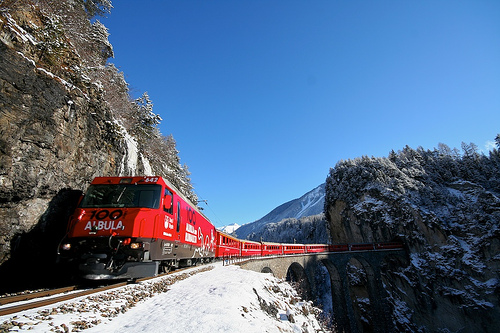
Photos of Switzerland
Photos of Switzerland


Travel and Tourism
Travel and Tourism
- Travel Alert Status
- Level 1: Exercise Normal Precautions
- Currency
- Swiss franc (CHF)
- Time Difference
- UTC+1 (6 hours ahead of Washington, DC, during Standard Time)
- Climate
- Because of the varied topography (from an altitude of 633 feet above sea level in the Ticino Canton to 15,203 feet — the Monte Rosa peak — in the Alps), climate and vegetation vary from Mediterranean to arctic. Bern does not have great extremes of hot or cold weather. Rain is common in summer as well as winter, with snowfalls in Bern occurring with more regularity in recent years. Humidity is high during spring and fall. Winter brings some warm spells, and all-day fog and cloudy weather are common. Often a 30-minute drive will get you out of the clouds and into sunshine. The Föhn, a dry south wind that passes over the Alps changing the air pressure, has an enervating and otherwise unpleasant effect on some people. The average high temperature in July is 30°C (86°F), and the average low for that month is 6.1°C (43°F). In February, the thermometer reaches 5.4°C (42°F) and dips to about -10°C (14°F).
- Airports
- 65
Read the full travel guide — health, safety, vaccinations, disease risk, sanitation, and transit details.
View full travel guideRecipes
Recipes
Zurcher Geschnetzeltes
Main Dish
Main Dish
Fondue Neuchateloise — Basic Fondue
Main Dish
Roesti — Swiss-style Potato Cake
Main Dish
Salm nach Basler Art — Salmon Basel Style
Main Dish
Zurcher Geschnetzeltes
Side Dish
Capretto Alla Locarnese — Potroasted Kid, Locarno Style
Side Dish
Zeughauskeller — Potato Salad
Side Dish
PremiumMaluns — long fried potatoes
Soup
PremiumBasler Mehlsuppa — Basil Soup
Soup
PremiumEngadiner Gerstensuppe — Engadine Barley Soup
History
History
Historical Eras
Helvetian & Roman Era
58 BCE – 400
The Celtic Helvetians inhabited the Swiss plateau until Julius Caesar halted their westward migration in 58 BCE, incorporating the region into the Roman Empire. Under Roman rule, thriving urban centers such as Geneva, Basel, and Zurich emerged, connected by military and trade roads linking Rome to the northern territories. The region enjoyed significant commercial prosperity until the decline of imperial authority in the 4th century.
Early Medieval Period
400 – 1291
Germanic tribes, including the Alemanni in central and northeastern Switzerland and the Burgundians in the west, filled the power vacuum left by Rome. The territory was absorbed into Charlemagne's empire in 800 and subsequently passed under the dominion of the Holy Roman Empire as a patchwork of ecclesiastical and temporal lordships. Duke Berthold V of Zähringen founded Berne in 1191, and Alpine trade routes grew increasingly strategic for imperial interests.
Swiss Confederation
1291 – 1648
On August 1, 1291, the forest cantons of Uri, Schwyz, and Unterwalden signed a mutual defense charter, the founding act of the Swiss Confederation. Between 1315 and 1388, Swiss forces inflicted three decisive defeats on the Habsburgs, and the Confederation expanded to thirteen cantons, gaining formal independence from the Holy Roman Empire in 1499. The Reformation introduced deep religious divisions between Zwinglian and Calvinist Protestants and Catholics, producing two centuries of internal tension without dissolving the union.
Neutrality & Westphalia
1648 – 1798
The Treaty of Westphalia formally recognized Swiss independence and neutrality in international law, codifying a status the Confederation had maintained through deliberate abstention from European dynastic conflicts. Switzerland functioned as a loose confederacy of sovereign cantons, its cohesion sustained by shared administration of subject territories and a lucrative trade in mercenary soldiers. Swiss Guards serving foreign courts, most notably the Papal Guard in Rome, exemplified this martial tradition.
Revolution & Federal State
1798 – 1848
Napoleon invaded and replaced the old confederation with the centralized Helvetic Republic in 1798, provoking sustained resistance until its collapse in 1803. The Congress of Vienna in 1815 restored the confederation of sovereign cantons and enshrined permanent armed neutrality in international law. After a brief civil war between Protestant liberals and Catholic conservatives, Switzerland adopted a Federal Constitution in 1848, modeled partly on the American system, establishing a bicameral parliament, cantonal autonomy, and broad civic liberties.
Modern Switzerland
1848 – present
Switzerland became one of Europe's earliest industrialized nations and expanded constitutional federalism through major revisions in 1874, which introduced direct democracy via referendum. The country maintained armed neutrality through both World Wars, organizing Red Cross relief — an institution founded in Geneva by Henry Dunant in 1863. Switzerland joined the United Nations only in 2002, reflecting its longstanding commitment to sovereignty and neutrality even as deeper integration with European institutions has strengthened ties with its neighbors.
Overview
After the decline of the Roman Empire, Switzerland was invaded by Germanic tribes from the north and west. Some tribes, such as the Alemanni in central and northeastern Switzerland, and the Burgundians, who ruled western Switzerland, settled there. In 800, the country became part of Charlemagne’s empire. It later passed under the dominion of the Holy Roman emperors in the form of small ecclesiastic and temporal holdings subject to imperial sovereignty.
With the opening of a new important north-south trade route across the Alps in the early 13th century, the Empire’s rulers began to attach more importance to the remote Swiss mountain valleys, which were granted some degree of autonomy under direct imperial rule. Fearful of the popular disturbances flaring up following the death of the Holy Roman Emperor in 1291, the ruling families from Uri, Schwyz, and Unterwalden signed a charter to keep public peace and pledging mutual support in upholding autonomous administrative and judicial rule. The anniversary of the charter’s signature (August 1, 1291) today is celebrated as Switzerland’s National Day.
Between 1315 and 1388 the Swiss Confederates inflicted three crushing defeats on the Habsburgs, whose aspiration to regional dominion clashed with Swiss self-determination. During that period, five other localities (cantons in modern-day parlance) joined the original three in the Swiss Confederation. Buoyed by their feats, the Swiss Confederates continuously expanded their borders by military means and gained formal independence from the Holy Roman Empire in 1499. Routed by the French and Venetians near Milan in 1515, they renounced expansionist policies. By then the Swiss Confederation had become a union of 13 localities with a regularly convening diet administering the subject territories. Swiss mercenaries continued for centuries to serve in other armies; the Swiss Guard of the Pope is a vestige of this tradition.
The Reformation led to a division between the Protestant followers of Zwingli and Calvin in the German and French parts of the country respectively, and the Catholics. Despite two centuries of civil strife, the common interest in the joint subject territories kept the Swiss Confederation from falling apart. The traffic in mercenaries as well as the alienation between the predominantly Protestant Swiss and their Catholic neighbors kept the Swiss Confederation out of the wars of the European powers, which formally recognized Swiss neutrality in the Treaty of Westphalia in 1648. The Swiss remained neutral during the War of the First Coalition against revolutionary France, but Napoleon, nonetheless, invaded and annexed much of the country in 1797-98, replacing the loose confederation with a centrally governed unitary state.
The Congress of Vienna in 1815 re-established the old confederation of sovereign states and enshrined Switzerland’s status of permanent armed neutrality in international law. In 1848, after a brief civil war between Protestant liberals seeking a centralized national state and Catholic conservatives clinging on to the old order, the majority of Swiss Cantons opted for a Federal State, modeled in part on the U.S. Constitution. The Swiss Constitution established a range of civic liberties and made far-reaching provisions to maintain cantonal autonomy to placate the vanquished Catholic minority. The Swiss amended their Constitution extensively in 1874, establishing federal responsibility for defense, trade, and legal matters, as well as introducing direct democracy by popular referendum. To this day, cantonal autonomy and referendum democracy remain trademarks of the Swiss polity.
Switzerland industrialized rapidly during the 19th century and by 1850 had become the second most industrialized country in Europe after Great Britain. During World War I serious tension developed between the German, French, and Italian-speaking parts of the country, and Switzerland came close to violating its neutrality but managed to stay out of hostilities. Labor unrest culminating in a general strike in 1918 marked the interwar period, but in 1937 employers and the largest trade union concluded a formal agreement to settle disputes peacefully, which governs workplace relations to the present day. During World War II, Switzerland came under heavy pressure from the fascist powers, which after the fall of France in 1940 completely surrounded the country. Some politic
Timeline of Key Events
58 BCE – 400
Helvetians stopped by roman commander C. Julius Cesar.
Helvetians stopped by roman commander C. Julius Cesar when trying to move towards Southern France. Switzerland occupied by roman troops, beginning of written history in this region.
400 – 1500
Germanic tribes set an end to the Roman Empire and build new states and empires in Europe.
Germanic tribes set an end to the Roman Empire and build new states and empires in Europe. Feudal system. Monasteries keep up roman and Greek heritage (reading and writing) and develop new agricultural methods.
1191
Duke Berthold V of Zähringen founds the city of Berne in today’s Switzerland.
Duke Berthold V of Zähringen founds the city of Berne in today’s Switzerland.
1260
War breaks out in the Valais (today in Switzerland).
War breaks out in the Valais (today in Switzerland) as the Bishopry of Sion defends against an invasion by the County of Savoy.
1291 – 1515
Three valleys in Central Switzerland unite against the counts of Habsburg and fight for autonomy.
Three valleys in Central Switzerland unite against the counts of Habsburg and fight for autonomy. Cities join the confederacy. They conquer territories in northern and southern Switzerland.
1315
Decisive Battle against the counts of Habsburg.
Decisive Battle against the counts of Habsburg.
1499
Swiss forces defeated the forces of the Holy Roman Empire.
Swiss forces defeated the forces of the Holy Roman Empire. Switzerland won its complete independence from the empire.
Read the full history profile — narrative overview, defining eras, and the complete timeline in one place.
View expanded historyInteresting Facts
Interesting Facts
This country holds the world record for eating the most chocolate. Citizens consume 19 pounds on average per person per year.
The name “Switzerland” comes from Schwyz, one of the three cantons (provinces) that originally formed the Swiss Confederation. The country is also known as Helvetica, because the original inhabitants were called Helvetians.
During the winter, a warm wind called the Fohn sometimes blows, melting the ice and causing avalanches. This wind can increase the risk of forest fires, so during the time of the Fohn, some Swiss mountain villages forbid smoking.
Because of its policy of neutrality, Switzerland has not been directly involved in foreign wars, but many Swiss have served as mercenaries in other countries over the centuries. The Swiss Guards, who serve in the Vatican, are the only remaining Swiss mercenary force.
The Swiss are leaders in recycling everything from cans, glass and plastic bottles, to newspapers, furniture, batteries and clothing. The Swiss must pay for each bag of garbage that is picked up and they must place their garbage in special bags purchased from the cantons.
The Swiss take great pride in their homes and gardens. Many Swiss homes are adorned with window boxes of geraniums and other flowers. Their yards are fenced and look neat and orderly.
See every fact — trivia, oddities, and curious tidbits gathered from across the country.
View all interesting factsGeography and Environment
Geography and Environment
- Terrain
- mostly mountains (Alps in south, Jura in northwest) with a central plateau of rolling hills, plains, and large lakes
- Climate
- Because of the varied topography (from an altitude of 633 feet above sea level in the Ticino Canton to 15,203 feet — the Monte Rosa peak — in the Alps), climate and vegetation vary from Mediterranean to arctic. Bern does not have great extremes of hot or cold weather. Rain is common in summer as well as winter, with snowfalls in Bern occurring with more regularity in recent years. Humidity is high during spring and fall. Winter brings some warm spells, and all-day fog and cloudy weather are common. Often a 30-minute drive will get you out of the clouds and into sunshine. The Föhn, a dry south wind that passes over the Alps changing the air pressure, has an enervating and otherwise unpleasant effect on some people. The average high temperature in July is 30°C (86°F), and the average low for that month is 6.1°C (43°F). In February, the thermometer reaches 5.4°C (42°F) and dips to about -10°C (14°F).
- Natural Hazards
- avalanches, landslides, flash floods
- Current Environmental Issues
- air pollution from vehicle emissions and open-air burning; acid rain; water pollution from increased use of agricultural fertilizers; loss of biodiversity
Read the full geography and environment profile — terrain, climate, natural resources, hazards, land use, and international agreements.
View full geographyPeople & Demographics
People & Demographics
Religion
Languages Spoken
German (official) 63.7%, French (official) 19.2%, Italian (official) 7.6%, Romansch (official) 0.6%, other 8.9%
- German
- French
- Italian
- Romansch
Population
- Population
- 7,623,438
- Population in Major Urban Areas
- Zurich 1.194 million; BERN (capital) 353,000
- Nationality Noun
- Swiss (singular and plural)
- Ethnic Groups
- German 65%, French 18%, Italian 10%, Romansch 1%, other 6%
Education
- Literacy Definition
- age 15 and over can read and write
Read the full people and society profile — demographics, health, education, religion, languages, and notable people.
View full people and societyGovernment & Politics
Government & Politics
Country Identity
- Country Name
- Switzerland
- Full Country Name
- Swiss Confederation
- Local - Long
- Schweizerische Eidgenossenschaft (German), Confederation Suisse (French), Confederazione Svizzera (Italian)
- Local - Short
- Schweiz (German), Suisse (French), Svizzera (Italian)
Government Structure
- Government Type
- federal republic
- Legal System
- civil law system influenced by customary law; judicial review of legislative acts, except with respect to federal decrees of general obligatory character; accepts compulsory ICJ jurisdiction, with reservations
- Executive Branch
- chief of state: President Karin KELLER-SUTTER (since 1 January 2025); Vice President Guy PARMELIN (since 1 January 2025); note - the president is both the chief of state and head of government head of government: President Karin KELLER-SUTTER (since 1 January 2025); Vice President Guy PARMELIN (since 1 January 2025); note - the president is both the chief of state and head of government cabinet: Federal Council or Bundesrat (in German), Conseil Federal (in French), Consiglio Federale (in Italian) elected by the Federal Assembly usually from among its own members for a four-year term elections: president and vice president elected by the Federal Assembly from among the members of the Federal Council for one-year terms that run concurrently; election last held 11 December 2024 (next to be held December 2025) election results: Karin KELLER-SUTTER elected president; percent of Federal Assembly vote - NA; Guy PARMELIN elected vice president; percent of Federal Assembly vote - NA
- Legislative Branch
- bicameral Federal Assembly or Bundesversammlung (in German), Assemblee Federale (in French), Assemblea Federale (in Italian) consists of the Council of States or Standerat (in German), Conseil des Etats (in French), Consiglio degli Stati (in Italian) (46 seats - consists of two representatives from each canton and one from each half canton; members serve four-year terms) and the National Council or Nationalrat (in German), Conseil National (in French), Consiglio Nazionale (in Italian) (200 seats - members are elected by popular vote on the basis of proportional representation to serve four-year terms) elections: Council of States - last held in most cantons 19 October 2003 (each canton determines when the next election will be held); National Council - last held 19 October 2003 (next to be held October 2007) election results: Council of States - percent of vote by party - NA%; seats by party - CVP 15, FDP 14, SVP 8, SPS 6, other 3; National Council - percent of vote by party - SVP 26.6%, SPS 23.3%, FDP 17.3%, CVP 14.4%, Greens 7.4%, other small parties all under 5%; seats by party - SVP 55, SPS 54, FDP 36, CVP 28, Green Party 13, other small parties 14
- Judicial Branch
- Federal Supreme Court (judges elected for six-year terms by the Federal Assembly)
- Suffrage
- 18 years of age; universal
- Constitution
- revision of Constitution of 1874 approved by the Federal Parliament 18 December 1998; adopted by referendum 18 April 1999; officially entered into force 1 January 2000
- Independence
- 1 August 1291 (Founding of the Swiss Confederation)
- National Holiday
- Founding of the Swiss Confederation, 1 August (1291)
Capital City
- Capital Name
- Bern
- Capital - geographic coordinate
- 46 55 N, 7 28 E
- Capital Time Difference
- UTC+1 (6 hours ahead of Washington, DC, during Standard Time)
origin of the name is uncertain but may derive from a 2nd century B.C. Celtic place name, possibly "berna" meaning "cleft," that was subsequently adopted by a Roman settlement
Military
Branches: Swiss Armed Forces: Land Forces, Swiss Air Force (Schweizer Luftwaffe)
Embassy / Diplomatic Mission
United States Embassy Bern
Sulgeneckstrasse 19, 3007 Bern
Telephone: (41) (31) 357-7011 (2 p.m. – 4 p.m.)
Emergency phone: after-hours/weekends – (41) (31) 357-7777
Facsimile: (41) (31) 357-7280
United States Consular Agency, Zurich,
Zurich America Center, Dufourstrasse 101, 8008 Zurich
Telephone: (41) (43) 499-2960 (10 a.m. – 1 p.m.)
Facsimile: (41) (43) 499-2961
Email: zurich-ca@state.gov
United States Consular Agency, Geneva
rue Versonnex 7, 1207 Geneva
Telephone: (41) (22) 840-5160 (10 a.m. – 1 p.m.)
Facsimile: (41) (22) 840-5162.
Email: Geneva-CA@state.gov
Read the full government profile — flag symbolism, national anthem, and other national symbols.
View full government detailsEconomy
Economy
Switzerland is a prosperous and stable modern market economy with low unemployment, a highly skilled labor force, and one of the highest per capita GDPs in the world, surpassing that of the major Western European economies. The Swiss economy is heavily service-oriented, with financial services, pharmaceuticals, precision instruments, machinery, and tourism serving as key pillars. Over the past two decades, Switzerland has aligned many of its economic and regulatory practices with those of the European Union to enhance international competitiveness, while remaining outside the bloc.
Switzerland continues to be regarded as a safe haven for investors, supported by political stability, sound public finances, a strong currency, and a robust banking sector. However, longstanding bank secrecy laws have been significantly eased in recent years following international pressure and the adoption of automatic exchange of tax information with partner countries.
The Swiss franc remains one of the world's strongest currencies, and the Swiss National Bank has periodically intervened in foreign exchange markets to prevent excessive appreciation that could harm exports. GDP growth has been modest but resilient, averaging around 1–2% annually in recent years. After contracting in 2020 due to the COVID-19 pandemic, the economy rebounded strongly in 2021, and growth has since moderated amid global inflationary pressures, weaker external demand from key European trading partners, and tighter monetary conditions. Inflation in Switzerland has remained notably lower than in most advanced economies, and unemployment continues to hover near historic lows.
Snapshot
- Currency Name and Code
- Swiss Franc (CHF)
- GDP — official exchange rate
- $367,000,000 (USD)
- GDP Real Growth Rate
- 1.8%
- Gini Index
- 33.1
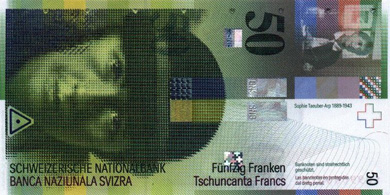
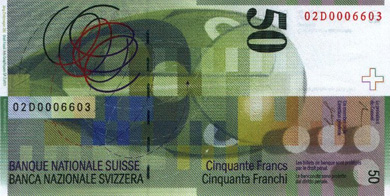
Banknotes
Budget & Public Finance
- Fiscal Year
- calendar year
- Annual Budget
- $143,600,000,000 (USD)
- Public Debt (% of GDP)
- 53.3%
- External Debt
- $856,000,000,000 (USD)
- Investment (% of GDP)
- 21.2%
- Current Account Balance
- $49,660,000,000 (USD)
- Reserves of Foreign Exchange
- $2,147,483,647 (USD)
Labor, Industry & Trade
- Labor Force by Occupation
- services 69.1%; industry 26.3%; agriculture 4.6%
- Household Income — highest 10%
- 25.2%
- Industries
- machinery, chemicals, watches, textiles, precision instruments
- Agriculture Products
- grains, fruits, vegetables; meat, eggs
- Export Commodities
- machinery, chemicals, metals, watches, agricultural products
- Export Partners
- Germany 20.4%, US 11.9%, France 9.1%, Italy 8.2%, UK 5.1%
- Import Commodities
- machinery, chemicals, vehicles, metals; agricultural products, textiles
- Import Partners
- Germany 31.4%, Italy 10.3%, France 10%, US 6.6%, Netherlands 5.1%, UK 4.9%, Austria 4.1%
Energy
- Oil Production
- 1,950 bbl/day
- Oil Consumption
- 258,900 bbl/day
- Oil Reserves
- 0 bbl/day
- Natural Gas Production
- 0 cu m
- Natural Gas Consumption
- 3,209,000,000 cu m
- Natural Gas Imports
- 3,093,000,000 cu m
- Natural Gas Exports
- 0 cu m
- Natural Gas Reserves
- 0 cu m
Communications
- Telephone System
- general assessment: highly developed telecommunications infrastructure with excellent domestic and international services domestic: ranked among leading countries for fixed-line teledensity and infrastructure; mobile-cellular subscribership roughly 125 per 100 persons; extensive cable and microwave radio relay networks international: country code - 41; satellite earth stations - 2 Intelsat (Atlantic Ocean and Indian Ocean)
- Internet Country Code
- .ch
News & Weather
News & Weather
Current Weather
Latest News
Samsung Biologics makes $1.8 billion all-cash offer for Switzerland's PolyPeptide Group - CNBC
CNBC · 1d ago
Family identifies man found dead in Switzerland County shooting - WLWT
WLWT · 1d ago
10 Best Places To Live In Switzerland In 2026 - WorldAtlas
WorldAtlas · 2d ago
Switzerland Links With Germany, Netherlands, Austria And More European Countries In Suffering From Hotel Revenue Drop Of More Than Two Percent As Rising Operating Costs, Travel Price Pressure, Short-Term Rental Growth And Changing Traveller Beh - Travel And Tour World
Travel And Tour World · 14h ago
Switzerland’s first ‘child-free’ campsite fully booked despite criticism - SWI swissinfo.ch
SWI swissinfo.ch · 1d ago
Are you sure the US should follow Swiss health care model? | Letter - Milwaukee Journal Sentinel
Milwaukee Journal Sentinel · 21h ago
Switzerland Athletics - Chronicle-Tribune
Chronicle-Tribune · 11h ago
Switzerland's Solar Railway Breakthrough Might Be Coming To Several New Countries - bgr.com
bgr.com · 2d ago
News via Google News
Climate Overview
Because of the varied topography (from an altitude of 633 feet above sea level in the Ticino Canton to 15,203 feet — the Monte Rosa peak — in the Alps), climate and vegetation vary from Mediterranean to arctic. Bern does not have great extremes of hot or cold weather. Rain is common in summer as well as winter, with snowfalls in Bern occurring with more regularity in recent years. Humidity is high during spring and fall. Winter brings some warm spells, and all-day fog and cloudy weather are common. Often a 30-minute drive will get you out of the clouds and into sunshine. The Föhn, a dry south wind that passes over the Alps changing the air pressure, has an enervating and otherwise unpleasant effect on some people. The average high temperature in July is 30°C (86°F), and the average low for that month is 6.1°C (43°F). In February, the thermometer reaches 5.4°C (42°F) and dips to about -10°C (14°F).
Videos
Videos
2 curated YouTube videos.
Source: YouTube
Source: YouTube
Frequently Asked Questions
Frequently Asked Questions
What is the population of Switzerland?
How do people greet each other in Switzerland?
What is the food and eating culture like in Switzerland?
What etiquette should I know when visiting Swiss people?
How should I dress in Switzerland?
What gestures and titles matter in Switzerland?
What is family life like in Switzerland?
What do people do for recreation in Switzerland?
What is the capital of Switzerland?
Where is Switzerland located?
What countries border Switzerland?
What is the main religion in Switzerland?
What currency does Switzerland use?
What languages are spoken in Switzerland?
What is Switzerland's terrain like?
What is Switzerland known for?
Last reviewed 2026