
 English
 Español
 中文
中文 हिन्दी
 Français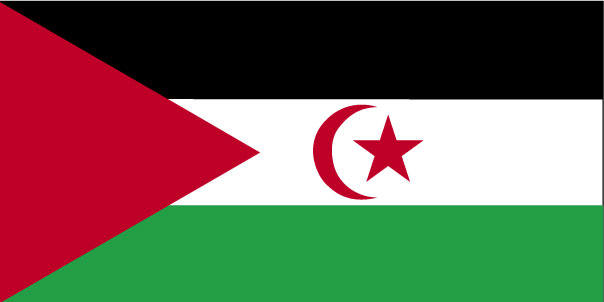
Western Sahara
Declare Your Relationship to Western Sahara
CountryReports Community
- Studying0
- From Western Sahara1
- Western Sahara heritage0
- Visited0
- Want to visit0
Customs and Culture
Customs and Culture
Cultural Attributes
The culture of Western Sahara is deeply rooted in the traditions of the Sahrawi people, a predominantly Arab-Berber ethnic group whose identity has been shaped by centuries of nomadic life across the Sahara Desert. The Sahrawi way of life historically revolved around camel herding, trade caravans, and seasonal migration across vast stretches of desert, and many of these traditions persist today in both the territory itself and in the refugee camps around Tindouf, Algeria, where a significant portion of the Sahrawi population has lived since the mid-1970s. Islam is the central pillar of Sahrawi cultural life, with virtually the entire population practicing Sunni Islam of the Maliki school. Religious observance shapes daily routines, social customs, and community gatherings. Ramadan, Eid al-Fitr, and Eid al-Adha are observed with particular significance and communal celebration. The Hassaniya dialect of Arabic is the primary language spoken by the Sahrawi people and serves as a marker of shared cultural identity. Oral poetry and music hold an especially important place in Sahrawi culture. Griots, known locally as iggawen, have traditionally served as praise singers, historians, and cultural custodians, preserving genealogies and community memory through song and verse. The tidinit, a traditional stringed instrument, often accompanies these performances. Tea ceremonies are a cornerstone of Sahrawi hospitality and social interaction. The ritual preparation and serving of three successive glasses of sweet mint tea — each with a distinct flavor profile — is considered an expression of friendship and welcome, and guests are expected to accept all three glasses. Dress is another expression of cultural identity. Sahrawi men traditionally wear the darraa, a long flowing robe, while women don the melhfa, a colorful wraparound garment that also serves as a veil. The vivid colors of the melhfa are often indicative of regional or tribal affiliation. Despite decades of displacement and political conflict, the Sahrawi people have maintained a strong sense of cultural cohesion, and efforts to document and preserve their heritage through festivals, poetry contests, and educational programs continue both in the territory and in exile.

Land of the Phosphate Sands

Dates of Interest
- Untitled date
How do people communicate in Western Sahara?
The Sahrawi people primarily speak the Hassaniya dialect of Arabic, which serves as a marker of shared cultural identity.
Good to know
- Hassaniya Arabic is central to Sahrawi cultural identity
- Oral poetry and music are highly valued, with griots (iggawen) serving as praise singers and historians
What are dining and hospitality customs in Western Sahara?
Tea ceremonies are a cornerstone of Sahrawi hospitality, involving three successive glasses of sweet mint tea, each with a distinct flavor.
Do
- Accept all three glasses of tea when offered, as this expresses friendship and welcome
Good to know
- The ritual preparation and serving of tea is an important social interaction
How should you dress in Western Sahara?
Traditional dress is an expression of cultural identity: men wear the darraa, a long flowing robe, while women wear the melhfa, a colorful wraparound garment that also serves as a veil.
Good to know
- The vivid colors of the melhfa often indicate regional or tribal affiliation
What should travelers know before visiting Western Sahara?
Islam is the central pillar of Sahrawi life, with virtually the entire population practicing Sunni Islam of the Maliki school, shaping daily routines and social customs.
Good to know
- Ramadan, Eid al-Fitr, and Eid al-Adha are observed with particular significance
- Sahrawi culture is rooted in nomadic desert traditions, including camel herding and trade caravans
- Traditional music often features the tidinit, a stringed instrument
Last updated: 2026-07-12 · Sources: CountryReports
Photos of Western Sahara
Photos of Western Sahara


Travel and Tourism
Travel and Tourism
- Currency
- Moroccan dirham (MAD)
- Time Difference
- UTC 0 (5 hours ahead of Washington, DC, during Standard Time)
- Climate
- hot, dry desert; rain is rare; cold offshore air currents produce fog and heavy dew
- Airports
- 11
Read the full travel guide — health, safety, vaccinations, disease risk, sanitation, and transit details.
View full travel guideHistory
History
Historical Eras
Ancient Berber Era
1000 BCE – 700
Sanhaja Berber peoples migrated into the Western Sahara region, establishing nomadic communities adapted to the harsh desert environment. These groups formed the foundational ethnic and cultural fabric of the territory. Tribal confederations controlled trans-Saharan caravan routes, facilitating trade in gold, salt, and other commodities across North and West Africa.
Medieval Tribal Period
700 – 1500
Zenata Berbers assumed control of the northwestern Saharan fringes, gradually displacing or absorbing earlier Sanhaja populations. The region became integrated into wider Islamic North African networks following the Arab conquests. The Almoravid movement, which emerged partly from Sanhaja confederations in this region, briefly united the western Sahara under a single militant Islamic polity before fragmenting.
Early European Contact
1500 – 1884
European maritime powers, including Portugal, the Netherlands, England, and France, competed for influence along the Atlantic coast, drawn by the gold trade, ostrich feathers, and gum arabic. The island of Arguin changed hands repeatedly — Dutch, English, and finally French — reflecting broader colonial rivalries. Spain also negotiated treaties with Moroccan sultans, including the 1727 Marrakesh and 1799 Meknes agreements, establishing early diplomatic frameworks over the territory.
Spanish Colonization
1884 – 1975
Spain formally colonized the territory in 1884, establishing administrative headquarters at Laayoune and designating the region Spanish Sahara. The colonial period saw limited economic development centered on phosphate extraction at Bou Craa, one of the world's largest deposits. Resistance among the indigenous Sahrawi population intensified through the mid-twentieth century, culminating in the founding of the Polisario Front in 1973 to fight for self-determination.
Annexation & Conflict
1975 – 1991
In 1975, despite the International Court of Justice rejecting territorial sovereignty claims by Morocco and Mauritania, King Hassan II organized the Green March, sending 350,000 civilians into Western Sahara to assert Moroccan control. Spain withdrew in 1976, and Morocco annexed the northern two-thirds of the territory while Mauritania claimed the south. A prolonged guerrilla war between Morocco and the Polisario Front — backed by Algeria — devastated the Sahrawi population until a UN-brokered ceasefire in 1991.
Unresolved Status
1991 – present
Following the 1991 ceasefire, the United Nations Mission for the Referendum in Western Sahara (MINURSO) was established to oversee a promised self-determination vote, which has never been held. Morocco administers the majority of the territory behind a fortified sand wall known as the berm, while the Polisario Front governs Sahrawi refugee camps in Tindouf, Algeria. The territory remains one of the world's longest-standing and most intractable decolonization disputes.
Timeline of Key Events
1000 BCE
Beginning of Sanhaja Berber migrations into Western Sahara
Beginning of Berber migrations into Western Sahara
700
Zenata berbers assume control of the north-western fringes of the Sahara
Zenata berbers assume control of the north-western fringes of the Sahara
1500
Portugal and other countries were interested in the region: gold trade, ostrich feathers and gum ara
Portugal and other countries were interested in the region: gold trade, ostrich feathers and gum arabic.
1638
The Dutch seized the Island of Arguin , which the English temporarily controlled in 1665.
The Dutch seized the Island of Arguin , which the English temporarily controlled in 1665.
1727
By the Treaty of Hague, The Dutch ceded Arguin to France
By the Treaty of Hague, The Dutch ceded Arguin to France
1727
Marrakesh Treaty signed between Spain and Sultan Sidi Mohamed Ben Abdallah of Morocco.
Marrakesh Treaty signed between Spain and Sultan Sidi Mohamed Ben Abdallah of Morocco.
1799
.Meknes Treaty: A treaty signed between Spain and Sultan Sidi Moulay Souleiman of Morocco.
Meknes Treaty signed between Spain and Sultan Sidi Moulay Souleiman of Morocco.
Read the full history profile — narrative overview, defining eras, and the complete timeline in one place.
View expanded historyInteresting Facts
Interesting Facts
Western Sahara fell under Spanish rule in 1884, becoming a Spanish province in 1934.
See every fact — trivia, oddities, and curious tidbits gathered from across the country.
View all interesting factsGeography and Environment
Geography and Environment
- Terrain
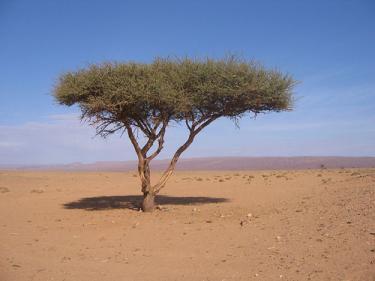
- mostly low, flat desert with large areas of rocky or sandy surfaces rising to small mountains in south and northeast
- Climate
- hot, dry desert; rain is rare; cold offshore air currents produce fog and heavy dew
- Natural Hazards
- hot, dry, dust/sand-laden sirocco wind can occur during winter and spring; widespread harmattan haze exists 60% of time, often severely restricting visibility
- Current Environmental Issues
- sparse water and lack of arable land
Read the full geography and environment profile — terrain, climate, natural resources, hazards, land use, and international agreements.
View full geographyPeople & Demographics
People & Demographics
Languages Spoken
Hassaniya Arabic, Moroccan Arabic
- Arabic
Population
- Population
- 491,519
- Population in Major Urban Areas
- Laayoune 237,000
- Nationality Noun
- Sahrawi(s), Sahraoui(s)
- Ethnic Groups
- Arab, Berber
Education
- Literacy Definition
- NA
Read the full people and society profile — demographics, health, education, religion, languages, and notable people.
View full people and societyGovernment & Politics
Government & Politics
Country Identity
- Country Name
- WesternSahara
- Former Name
- Spanish Sahara
Government Structure
- Government Type
- legal status of territory and issue of sovereignty unresolved; territory contested by Morocco and Polisario Front (Popular Front for the Liberation of the Saguia el Hamra and Rio de Oro), which in February 1976 formally proclaimed a government-in-exile of
- Executive Branch
- The executive branch of Western Sahara is a subject of considerable complexity, as the territory remains one of the world's last major unresolved colonial disputes. Sovereignty is contested between the Kingdom of Morocco, which administers approximately 80 percent of the territory, and the Sahrawi Arab Democratic Republic (SADR), a government-in-exile recognized by numerous African and Latin American states but not by the United Nations or the United States. Morocco governs its administered portion of Western Sahara through a centralized structure that mirrors its domestic system. The Moroccan king, currently King Mohammed VI, exercises ultimate executive authority over the territory. Day-to-day administration is carried out through royal-appointed officials and regional governance bodies. Morocco formally designated Western Sahara as its "Southern Provinces" and has implemented a regionalization plan that includes the Laâyoune-Sakia El Hamra and Dakhla-Oued Ed-Dahab regions, each overseen by a wali (governor) appointed by Rabat. The SADR, headquartered in the Tindouf refugee camps of southwestern Algeria, operates a parallel government structure with its own executive leadership. The SADR president serves as head of state and also holds the position of Secretary-General of the Polisario Front, the political and military movement that has led the Sahrawi independence cause since 1973. Brahim Ghali has served as SADR president since 2016. The SADR also maintains a prime minister and a Council of Ministers responsible for overseeing administrative functions within the refugee camp communities and in the small liberated territories east of the Moroccan-built sand wall known as the Berm. The United Nations has sought a negotiated political solution through its Mission for the Referendum in Western Sahara (MINURSO), established in 1991. However, a binding referendum on the territory's final status has never been held, leaving the executive governance of Western Sahara effectively divided between two competing authorities with no internationally agreed resolution in sight.
- Suffrage
- none; a UN-sponsored voter identification campaign not yet completed
- Independence
- Arab, Berber
Capital City
- Capital Name
- Laayoune (administrative center)
- Capital Time Difference
- UTC 0 (5 hours ahead of Washington, DC, during Standard Time)
Read the full government profile — flag symbolism, national anthem, and other national symbols.
View full government detailsEconomy
Economy
Western Sahara's economy relies primarily on fishing, phosphate mining, pastoral nomadism, and remittances, supplemented by substantial Moroccan government subsidies. The territory lacks sufficient rainfall to support large-scale agriculture, and most food for the urban population must be imported. Trade and economic activity in the Moroccan-controlled portion of the territory, which encompasses the majority of the region and its productive resources, are administered by the Moroccan government. The Bou Craa phosphate mine remains one of the world's largest deposits, while the rich Atlantic fisheries off the coast continue to be a significant source of revenue, exploited largely under agreements between Morocco and foreign partners such as the European Union and Russia.
Offshore oil and gas exploration, first launched by Moroccan authorities in 2001 through contracts with foreign firms, has continued intermittently and remains a point of contention with the Polisario Front, which disputes Morocco's authority to license resource extraction in the territory. International legal rulings, including decisions by the European Court of Justice, have repeatedly challenged the inclusion of Western Sahara in trade and fisheries agreements without the consent of the Sahrawi people.
Incomes and living standards in Western Sahara generally remain below those in Morocco proper, although Moroccan investment in infrastructure, housing, and public services has increased significantly in the main urban centers such as Laayoune and Dakhla. Unemployment is high, particularly among Sahrawi youth, and the economy remains heavily dependent on subsidies and external transfers.
Snapshot
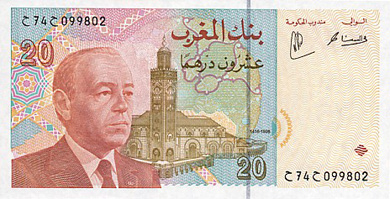
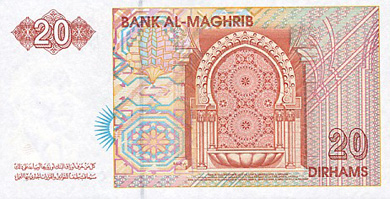
- Currency Name and Code
- Moroccan Dirham (MAD)
Banknotes
Budget & Public Finance
- Fiscal Year
- calendar year
Labor, Industry & Trade
- Labor Force by Occupation
- animal husbandry and subsistence farming 50%
- Industries
- phosphate mining, handicrafts
- Agriculture Products
- fruits and vegetables (grown in the few oases); camels, sheep, goats (kept by nomads)
- Export Commodities
- phosphates 62%
- Export Partners
- Morocco claims and administers Western Sahara, so trade partners are included in overall Moroccan accounts
- Import Commodities
- fuel for fishing fleet, foodstuffs
- Import Partners
- Morocco claims and administers Western Sahara, so trade partners are included in overall Moroccan accounts
Energy
- Oil Production
- 0 bbl/day
- Oil Consumption
- 1,750 bbl/day
- Oil Reserves
- 0 bbl/day
- Natural Gas Production
- 0 cu m
- Natural Gas Consumption
- 0 cu m
- Natural Gas Imports
- 0 cu m
- Natural Gas Exports
- 0 cu m
- Natural Gas Reserves
- 0 cu m
Communications
- Telephone System
- general assessment: sparse and limited system domestic: NA international: country code - 212; tied into Morocco's system by microwave radio relay, tropospheric scatter, and satellite; satellite earth stations - 2 Intelsat (Atlantic Ocean) linked to Rabat, Morocco
- Internet Country Code
- .eh
News & Weather
News & Weather
Current Weather
Latest News
Filmed in Western Sahara, The Odyssey Endorses Colonialism - Jacobin
Jacobin · 5d ago
‘The Odyssey’ Wades Into a 50-Year Land Feud in Western Sahara - Bloomberg.com
Bloomberg.com · 4d ago
Christopher Nolan’s Odyssey used occupied land as a film set. That feels like a betrayal | Mohamed Sleiman Labat - The Guardian
The Guardian · 3d ago
Spain, Algeria agree to boost ties after Western Sahara dispute - Muslim Network TV
Muslim Network TV · 6h ago
Calls Grow to Boycott 'The Odyssey,' Filmed in Moroccan-Occupied Western Sahara - Common Dreams
Common Dreams · 5d ago
'Cultural parasites': Calls for boycott of The Odyssey over filming in occupied Western Sahara - Middle East Eye
Middle East Eye · 5d ago
Christopher Nolan’s “The Odyssey” Faces Boycott Calls over Filming in Occupied Western Sahara - Democracy Now!
Democracy Now! · 3d ago
Western Sahara Population 2026 - World Population Review
World Population Review · 4d ago
News via Google News
Climate Overview
hot, dry desert; rain is rare; cold offshore air currents produce fog and heavy dew
Frequently Asked Questions
Frequently Asked Questions
What is the capital of Western Sahara?
What is the population of Western Sahara?
How do people communicate in Western Sahara?
What are dining and hospitality customs in Western Sahara?
How should you dress in Western Sahara?
What should travelers know before visiting Western Sahara?
What is the administrative center of Western Sahara?
Where is Western Sahara located?
What countries border Western Sahara?
What is the currency used in Western Sahara?
What languages are spoken in Western Sahara?
What is the political status of Western Sahara?
What is the geography and terrain of Western Sahara like?
What is Western Sahara known for?
Last reviewed 2026