
 English
 Español
 中文
中文 हिन्दी
 Français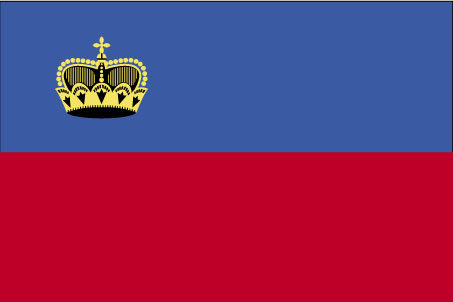
Liechtenstein
Liechtenstein
Declare Your Relationship to Liechtenstein
CountryReports Community
- Studying1
- From Liechtenstein0
- Liechtenstein heritage1
- Visited0
- Want to visit4
Customs and Culture
Customs and Culture
About the People
Liechtensteiners have a strong musical tradition. Brass bands and vocal ensembles are common in rural ares while the cities have operetta companies. Liechtenstein has a high literacy rate. Both primary and secondary education are administered by the central government and children must attend until the age of 16. Students then either receive vocational training or prepare for the Matura or university entrance exam.
Cultural Attributes
Liechtensteiners have a strong musical tradition. Brass bands and vocal ensembles are common in rural ares while the cities have operetta companies. Liechtenstein has a high literacy rate. Both primary and secondary education are administered by the central government and children must attend until the age of 16. Students then either receive vocational training or prepare for the Matura or university entrance exam.

Alpine Crown Between Two Giants
Greetings, Gestures & Visiting
Lechtensteiners greet each other by shaking hands. Hoi! is a popular informal greeting. Gruezi and Grüss Gott are also common greetings.
Neat, conservative, Western style clothing is common. Trachten the the traditional costumes are only worn for festivals or special occasions. The women's costume has a gathered waist and full length skirt and an apron. The men's costume is knee-length breeches, a flat black hat and a loden (woolen) jacket.
Diet
For breakfast zmorga or breakfast coffee with bread and jam are commonly eaten. Zmittag or the midday meal is the main meal of the day and typically includes a soup, salad, a main dish, and dessert. Znacht is the evening time meal and is usually a lighter meal consisting of an open-faced sandwich made with various kinds of meals. Käsknöfle is a favorite meal which consists of noodles made by squeezing a mixture of flour, water and eggs through a perforated board. The noodles are then baked with grated cheese and a layer of fried onions. The noodles are then served with applesauce or a salad. Other favorites include Hafaläb and Törkarebl. Hafaläb is made with corn and wheat flour dough formed into small loves, boiled and left out to dry, sliced and then fried. Törkarebl is a porridge that is fried to create a dumpling like dish served with elderberry jam.

Family
Most Liechtensteiners marry in their late twenties preferring to complete their schooling before marriage. The average family has two children. Many married women work outside the home.
Recreation
Over a third of the population belongs to the National Sports Union and many Liechtensteiners enjoy sports such as nighttime skiing in the winter and soccer, hiking and bicycling in the summer. Other recreation takes the form of cultural pursuits such as bands and choirs.
Holidays
Assumption Day
8/15Religious
Dates of Interest
- August 15th
How do people greet each other in Liechtenstein?
Liechtensteiners typically greet each other with a handshake, along with common spoken greetings.
Do
- Shake hands when greeting
- Use "Gruezi" or "Grüss Gott" as common greetings
- Use "Hoi!" as an informal greeting
What are dining customs like in Liechtenstein?
The midday meal (Zmittag) is the main meal of the day, while breakfast (Zmorga) and the evening meal (Znacht) are lighter.
Good to know
- Breakfast (Zmorga) is coffee with bread and jam
- Zmittag typically includes soup, salad, a main dish, and dessert
- Znacht is usually a light open-faced sandwich with meats
- Try Käsknöfle: noodles baked with grated cheese and fried onions, served with applesauce or salad
- Other favorites include Hafaläb and Törkarebl
How should travelers dress in Liechtenstein?
Neat, conservative, Western-style clothing is common, with traditional Trachten costumes reserved for festivals and special occasions.
Do
- Wear neat, conservative Western-style clothing
Good to know
- Traditional costumes (Trachten) are only worn for festivals or special occasions
- Women's costume: gathered waist, full-length skirt, and apron
- Men's costume: knee-length breeches, flat black hat, and a loden woolen jacket
What is family life like in Liechtenstein?
Most Liechtensteiners marry in their late twenties after completing their schooling, and the average family has two children.
Good to know
- Many people finish schooling before marrying
- The average family has two children
- Many married women work outside the home
What do people do for fun in Liechtenstein?
Sports are hugely popular, with over a third of the population belonging to the National Sports Union, alongside cultural pursuits like bands and choirs.
Good to know
- Winter: nighttime skiing
- Summer: soccer, hiking, and bicycling
- Cultural activities include brass bands, vocal ensembles, and choirs
- Cities host operetta companies
Last updated: 2026-07-12 · Sources: CountryReports
Photos of Liechtenstein
Photos of Liechtenstein


Travel and Tourism
Travel and Tourism
- Travel Alert Status
- Level 1: Exercise Normal Precautions
- Currency
- Swiss franc (CHF)
- Time Difference
- UTC+1 (6 hours ahead of Washington, DC, during Standard Time)
- Climate
- continental; cold, cloudy winters with frequent snow or rain; cool to moderately warm, cloudy, humid summers
Read the full travel guide — health, safety, vaccinations, disease risk, sanitation, and transit details.
View full travel guideRecipes
Recipes
History
History
Historical Eras
Early Feudal Roots
1342 – 1719
The County of Vaduz and the Lordship of Schellenberg, the two fiefs that would form Liechtenstein, existed as minor territories within the Holy Roman Empire. The Austrian House of Liechtenstein acquired Schellenberg in 1699 and Vaduz in 1712, consolidating holdings that enabled the family to attain the status of an imperial prince. This period laid the dynastic and territorial foundations for the principality.
Holy Roman Principality
1719 – 1815
Emperor Charles VI elevated the united territories to the Imperial Principality of Liechtenstein in 1719, granting the Liechtenstein dynasty a seat in the Imperial Diet. Napoleonic France occupied the territory briefly in the early nineteenth century, dissolving the Holy Roman Empire in 1806 and making Liechtenstein formally sovereign. The Congress of Vienna in 1815 then incorporated the principality into the German Confederation.
German Confederation Era
1815 – 1866
As a member of the German Confederation, Liechtenstein navigated the tensions of German nationalism and the rivalry between Austria and Prussia. The principality maintained a token army of 80 men and remained closely aligned with Austrian interests. When the Confederation dissolved following the Austro-Prussian War of 1866, Liechtenstein seized the opportunity to declare full independence and permanent neutrality, disbanding its military entirely.
Neutrality & Swiss Alignment
1866 – 1945
Following independence, Liechtenstein pursued a policy of strict neutrality, respected by all belligerents in both World Wars. Economic devastation after World War I severed longstanding ties with Austria, prompting a customs and monetary union with Switzerland in 1923 and the entrustment of foreign affairs to Bern in 1919. Women remained without the vote until 1984, reflecting the principality's slow pace of democratic reform during this period.
Financial Center & Integration
1945 – 1990
Post-war Liechtenstein leveraged low corporate taxes and favorable banking laws to transform itself into one of Europe's wealthiest states per capita. The principality joined the Council of Europe in 1978, signaling greater engagement with European institutions. Concerns over banking secrecy and money laundering began to emerge alongside the remarkable economic prosperity, setting the stage for later regulatory reforms.
Modern Liechtenstein
1990 – present
Liechtenstein joined the United Nations in 1990, EFTA in 1991, and the European Economic Area and WTO in 1995, fully integrating into the global order while retaining its non-EU status. Prince Hans-Adam II, who ascended in 1989, pursued constitutional reforms that expanded princely powers in 2003, and transferred day-to-day governance to Crown Prince Alois in 2004. The country has since strengthened anti-money-laundering legislation and concluded legal assistance treaties, modernizing its financial sector.
Overview
In 1919, Liechtenstein entrusted its external relations to neutral Switzerland. After World War II, Liechtenstein became increasingly important as a financial center, and the country became more prosperous. In 1989, Prince Hans Adam II succeeded his father to the throne and in 1996 settled a long-running dispute with Russia over the Liechtenstein family’s archives, which had been confiscated during the Soviet occupation of Vienna in 1945 and later moved to Moscow. In 1978, Liechtenstein became a member of the Council of Europe and then joined the UN in 1990, the European Free Trade Association (EFTA) in 1991, and both the European Economic Area (EEA) and World Trade Organization (WTO) in 1995.
Timeline of Key Events
1719
Principality of Liechtenstein was created within the Holy Roman Empire.
Principality of Liechtenstein was created within the Holy Roman Empire.
1815
Liechtenstein becomes a member of the German Confederation until 1866.
Liechtenstein becomes a member of the German Confederation until 1866.
1866
Liechtenstein becomes fully independent.
Liechtenstein becomes fully independent.
1939 – 1945
Outbreak of World War II. Liechtenstein remains neutral.
Outbreak of World War II. Liechtenstein remains neutral.
1984
In Lichtenstein women gained the right to vote.
In Lichtenstein women gained the right to vote.
1990
Liechtenstein joins the United Nations.
Liechtenstein joins the United Nations.
2004
Crown Prince Hans-Adam hands over day-to-day running of Liechtenstein to his son Prince Alois.
Crown Prince Hans-Adam hands over day-to-day running of Liechtenstein to his son Prince Alois while remaining head of state.
Read the full history profile — narrative overview, defining eras, and the complete timeline in one place.
View expanded historyInteresting Facts
Interesting Facts
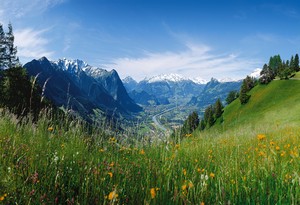
Liechtenstein lies on the east bank of the Rhine River south of Lake Constance between Austria and Switzerland. It consists of low valley land and Alpine peaks.
Liechtenstein is situated in the Upper Rhine valley of the European Alps.
See every fact — trivia, oddities, and curious tidbits gathered from across the country.
View all interesting factsGeography and Environment
Geography and Environment
- Terrain
- mostly mountainous (Alps) with Rhine Valley in western third
- Climate
- continental; cold, cloudy winters with frequent snow or rain; cool to moderately warm, cloudy, humid summers
- Natural Hazards
- NA
- Current Environmental Issues
- NA
Read the full geography and environment profile — terrain, climate, natural resources, hazards, land use, and international agreements.
View full geographyPeople & Demographics
People & Demographics
Religion
Languages Spoken
German (official), Alemannic dialect
- German
Population
- Population
- 35,002
- Population in Major Urban Areas
- VADUZ (capital) 5,000
- Nationality Noun
- Liechtensteiner(s)
- Ethnic Groups
- Alemannic 86%, Italian, Turkish, and other 14%
Education
- Literacy Definition
- age 10 and over can read and write
Read the full people and society profile — demographics, health, education, religion, languages, and notable people.
View full people and societyGovernment & Politics
Government & Politics
Country Identity
- Country Name
- Liechtenstein
- Full Country Name
- Principality of Liechtenstein
- Local - Long
- Fuerstentum Liechtenstein
- Local - Short
- Liechtenstein
Government Structure
- Government Type
- hereditary constitutional monarchy on a democratic and parliamentary basis
- Legal System
- local civil and penal codes; accepts compulsory ICJ jurisdiction, with reservations
- Executive Branch
- chief of state: Prince HANS-ADAM II (since 13 November 1989, assumed executive powers 26 August 1984); Heir Apparent Prince ALOIS (born 11 June 1968); note - on 15 August 2004, HANS-ADAM II transferred the day-to-day official duties of the ruling prince to ALOIS, but HANS-ADAM II retains the status of chief of state head of government: Head of Government Daniel RISCH (since 25 March 2021) and Deputy Head of Government Sabine MONAUNI (since 25 March 2021) cabinet: Cabinet elected by the Parliament (Landtag), confirmed by the monarch elections: none; the monarch is hereditary; following legislative elections, the leader of the majority party in the Landtag is usually appointed head of government by the monarch, and the leader of the largest minority party in the Landtag is usually appointed deputy head of government by the monarch
- Legislative Branch
- unicameral Parliament or Landtag (25 seats; members are elected by direct, popular vote under proportional representation to serve four-year terms) elections: last held 11 and 13 March 2005 (next to be held by NA 2009) election results: percent of vote by party - FBP 48.7%, VU 38.2%, FL 13%; seats by party - FBP 12, VU 10, FL 3
- Judicial Branch
- Supreme Court or Oberster Gerichtshof; Court of Appeal or Obergericht
- Suffrage
- 18 years of age; universal
- Constitution
- 5-Oct-21
- Independence
- 23 January 1719 Imperial Principality of Liechtenstein established; 12 July 1806 established independence from the Holy Roman Empire
- National Holiday
- Assumption Day, 15 August
Capital City
- Capital Name
- Vaduz
- Capital - geographic coordinate
- 47 08 N, 9 31 E
- Capital Time Difference
- UTC+1 (6 hours ahead of Washington, DC, during Standard Time)
may be a conflation from the Latin vallis (valley) and the High German diutisk (meaning "German") to produce Valdutsch ("German valley"), which over time simplified and came to refer specifically to Vaduz, the town
Military
Branches: no regular military forces; National Police maintains close relations with neighboring forces
Embassy / Diplomatic Mission
United States Embassy Bern
Sulgeneckstrasse 19, 3007 Bern, Switzerland
Telephone: (41) (31) 357-7011 (2 p.m. – 4 p.m.)
Emergency phone: after-hours/weekends: (41) (31) 357-7777
Facsimile: (41) (31) 357-7280
United States Consular Agency Zurich
Dufourstrasse 101, 8008 Zurich, Switzerland
Telephone: (41) (43) 499-2960 (10 a.m. – 1 p.m.)
Facsimile: (41) (43) 499-2961
Email: zurich-ca@state.gov
United States Consular Agency Geneva
Rue Versonnex 7, 1207 Geneva, Switzerland
Telephone: (41) (22) 840 -5160 (10 a.m. – 1 p.m.)
Facsimile: (41) (22) 840-5162.
Email: geneva-CA@state.gov
Mailing address: U.S. Consular Agency, c/o U.S. Mission, 11, Rte.de Pregny, 1292 Chambesy, Switzerland
Read the full government profile — flag symbolism, national anthem, and other national symbols.
View full government detailsEconomy
Economy
Despite its small size and limited natural resources, Liechtenstein has developed into a prosperous, highly industrialized, free-enterprise economy with a vital financial services sector and living standards on a par with its large European neighbors. The economy is widely diversified, with a strong manufacturing base and a large number of small and medium-sized enterprises. Low business taxes—the corporate income tax rate is a flat 12.5%—and straightforward incorporation rules have attracted numerous holding companies and international firms to establish offices in Liechtenstein, contributing significantly to state revenues. The country participates in a customs union with Switzerland and uses the Swiss franc as its national currency. It imports the majority of its energy requirements. Liechtenstein has been a member of the European Economic Area, which serves as a bridge between the European Free Trade Association (EFTA) and the EU, since May 1995. In recent years, the government has worked to align its financial regulations with international standards on transparency and tax cooperation, signing agreements with the OECD and EU member states to address concerns about banking secrecy. The industrial sector, led by precision instruments, dental products, machinery, and food products, remains a major driver of exports, while the financial services industry continues to play a central role in the national economy.
Snapshot
- Currency Name and Code
- Swiss Franc (CHF)
- GDP Real Growth Rate
- 11%
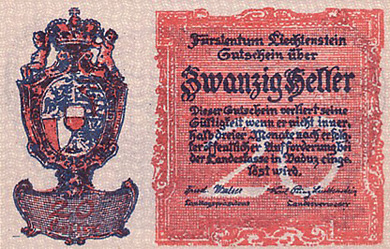
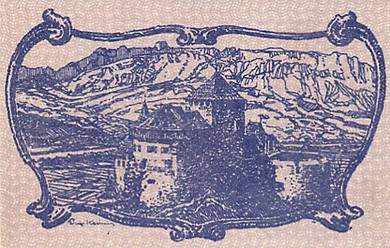
Banknotes
Budget & Public Finance
- Fiscal Year
- calendar year
- Annual Budget
- $414,100,000 (USD)
Labor, Industry & Trade
- Labor Force by Occupation
- industry 47.4%; services 51.3%; agriculture 1.3%
- Industries
- electronics, metal manufacturing, dental products, ceramics, pharmaceuticals, food products, precision instruments, tourism, optical instruments
- Agriculture Products
- wheat, barley, corn, potatoes; livestock, dairy products
- Export Commodities
- small specialty machinery, connectors for audio and video, parts for motor vehicles, dental products, hardware, prepared foodstuffs, electronic equipment, optical products
- Export Partners
- EU 62.6% (Germany 24.3%, Austria 9.5%, France 8.9%, Italy 6.6%, UK 4.6%), US 18.9%, Switzerland 15.7%
- Import Commodities
- agricultural products, raw materials, machinery, metal goods, textiles, foodstuffs, motor vehicles
- Import Partners
- EU, Switzerland
Energy
- Oil Production
- 0 bbl/day
- Oil Consumption
- 0 bbl/day
- Oil Reserves
- 0 bbl/day
- Natural Gas Production
- 0 cu m
- Natural Gas Consumption
- 0 cu m
- Natural Gas Imports
- 0 cu m
- Natural Gas Exports
- 0 cu m
- Natural Gas Reserves
- 0 cu m
Communications
- Telephone System
- general assessment: automatic telephone system domestic: fixed-line and mobile-cellular services widely available; combined telephone service subscribership exceeds 150 per 100 persons international: country code - 423; linked to Swiss networks by cable and microwave radio relay
- Internet Country Code
- .li
News & Weather
News & Weather
Current Weather
Latest News
Liechtenstein vs. Gibraltar (Oct 5, 2026) Live Score - ESPN
ESPN · 3d ago
Gibraltar vs Liechtenstein Box Score - October 05, 2026 - The Athletic - The New York Times
The New York Times · 3d ago
Liechtenstein casinos suffers 59% revenue fall - gamingintelligence.com
gamingintelligence.com · 23h ago
Polsat Plus succession dispute ends - Broadband TV News
Broadband TV News · 21h ago
Liechtenstein National Library, Liechtenstein - MSN
MSN · 4d ago
Testimony from Another Catholic Monarch: Prince of Liechtenstein Says He Will Veto Pro-Abortion Law - ZENIT - English
ZENIT - English · 12d ago
Tibetan Community of Switzerland and Liechtenstein Celebrate His Holiness the Dalai Lama's 91st Birthday in Bülach - Central Tibetan Administration
Central Tibetan Administration · 7d ago
Valentino: a Foundation in Liechtenstein Inherits the Founder’s Fortune - Luxury Tribune
Luxury Tribune · 13d ago
News via Google News
Climate Overview
continental; cold, cloudy winters with frequent snow or rain; cool to moderately warm, cloudy, humid summers
Frequently Asked Questions
Frequently Asked Questions
What is the population of Liechtenstein?
How do people greet each other in Liechtenstein?
What are dining customs like in Liechtenstein?
How should travelers dress in Liechtenstein?
What is family life like in Liechtenstein?
What do people do for fun in Liechtenstein?
What is the capital of Liechtenstein?
Where is Liechtenstein located?
What countries border Liechtenstein?
What is the religion of Liechtenstein?
What currency is used in Liechtenstein?
What language is spoken in Liechtenstein?
What is the geography of Liechtenstein like?
What is Liechtenstein known for?
Last reviewed 2026