
 English
 Español
 中文
中文 हिन्दी
 Français
United Kingdom
Declare Your Relationship to United Kingdom
CountryReports Community
- Studying4
- From United Kingdom0
- United Kingdom heritage2
- Visited1
- Want to visit2
Customs and Culture
Customs and Culture
About the People
People mostly work for leisure opportunities. Food will always be available even if it is paid for by the government. Most children are expected to go on to higher education and most families are able to afford the cost of higher education.
Wealth is best defined by ownership of property. If people have cash they will rarely keep it in cash form. Instead they will invest it in property to rent-off or sell at a higher price. The poorest members of society mostly wish for a "foot on the housing ladder", Money to provide the luxury of entertainment in its many forms is also important.
Individuals are concerned with and prepare themselves financially for old age by working and investing for retirement. The government helps students obtain a higher education by giving students loans to pay for their education, with the expectation that they repay the country when they are in a viable position to do so.
Body language is very easily read in the United Kingdom. If British people feel secure in their lives, then they walk with their head high. British people have an uncanny ability to describe, in vivid detail, a recent operation or accident to anyone who cares to listen. They revel in minutiae and gossip about everyone. The greatest attribute is that they can see humor in almost everything. Because of this unique ability, it makes them a stronger and prouder nation. When such pride is tested to the limit, (war, for example), then the British public is as one family.
Cultural Attributes
People mostly work for leisure opportunities. Food will always be available even if it is paid for by the government. Most children are expected to go on to higher education and most families are able to afford the cost of higher education.
Wealth is best defined by ownership of property. If people have cash they will rarely keep it in cash form. Instead, they will invest it in property to rent off or sell at a higher price. The poorest members of society mostly wish for a "foot on the housing ladder", Money to provide the luxury of entertainment in its many forms is also important.
Individuals are concerned with and prepare themselves financially for old age by working and investing for retirement. The government helps students obtain a higher education by giving students loans to pay for their education, with the expectation that they repay the country when they are in a viable position to do so.
Body language is very easily read in the United Kingdom. If British people feel secure in their lives, then they walk with their heads high. British people have an uncanny ability to describe, in vivid detail, a recent operation or accident to anyone who cares to listen. They revel in minutiae and gossip about everyone. The greatest attribute is that they can see the humor in almost everything. Because of this unique ability, makes them a stronger and prouder nation. When such pride is tested to the limit, (war, for example), then the British public is as one family.

Land of Parliament and Pageantry
Greetings, Gestures & Visiting
Most people greet each other by saying “hello”. To a senior person or a person in an important position, one would say “good (morning, evening, or afternoon)” In a formal situation this would be accompanied by a handshake (from a male to another male or a woman of a higher position in society) in a less formal situation or among friends a hug (From a man or woman to a woman in an equal or lower position in society).
To call someone over you would politely say “Excuse me!” or “Sorry, I wonder if you could help me?” A raising of the hand is often used when there is a significant distance between individuals.
Unless one is very friendly with a person it is a good idea to leave a 'person-sized' space between them. It is rude not to look at a person while in conversation. One should not touch a person that they are not very good friends with. Hands should be left in one's lap or placed on a table. Crossed arms can be considered patronizing.
Handshakes are common in business/formal situations for men and women alike. Sometimes a woman-to-another-woman greeting would use a single raised hand. Hugs are used only for close friends and predominantly among women. Friends do not hug all the time if they see each other regularly. Families do not hug regularly.
To get someone's attention one would say “excuse me” or “excuse me please” Never would one click one's fingers. Using sir is fairly common such as “excuse me sir”, using madam is rarely used.
Upon leaving one would give a handshake/hug and a wave as they depart. Upper and upper-middle-class people would give a single kiss on the cheek. It is common to say goodbye to everyone in a room generally rather than individually.
Typically, people socialize in public over a drink in a public house or bar. Villagers meet at the town hall to discuss community matters. If someone arrives at one's house without a prior invitation the host is obliged to accept the visit.
Typically, men wear a suit and tie or smarter pants and shirts. A woman wears a jacket and skirt/pants, although it is increasingly common for employers to encourage more comfortable working conditions, which affects personal attire. Young people (men and women) tend to wear jeans and T-shirts.
Diet
A typical family will eat three main meals per day. Breakfast will usually take place at 7 AM. Lunch at 1PM. Dinner/Tea at 6 PM.
Breakfast is usually eaten at home before departure for work/school. Children will mostly eat at school except senior pupils who may be allowed out to a restaurant or cafe. Workers will usually lunch at a cafe near to their place of work unless the company provides food itself. Dinner is only eaten out as a treat although the young generation eat out more often as do students.
The Senior member of the family will usually sit at the head of the table. One's hands should usually be kept above the table not because it would be rude not to, just because it's easier to communicate at the table if one's hand are in sight. Elbows should not be on the table but it is common to rest one's wrists on the edge of the table.

Family
Most English families are small, with one or two children. About 80% of families with children are two-parent families and in about 60% of this group, both parents are employed. Single-parent families include families divided by divorce or never-married women with children. Modern English society is multicultural. Following the Second World War, many refugees arrived from Europe. In the 1960s, immigrants came from the Caribbean and Asia. Today, immigrants come from around the world. Most settle in large cities. Multiculturalism and a changing economy are gradually eroding the English class system, although features of the system remain. Once, people were categorized as upper class, which implied inherited titles, lands, and social privileges; middle class, including industrialists, professionals, business people, and shop owners; and lower class, mostly agricultural, mine, and factory workers. The class structure is evident in differences in education, career opportunities, and political power among the different groups. Although these differences are fading and movement between groups is possible, the English may still categorize people by their speech, behavior, or lifestyle as belonging to one group or another.
The English prefer to live in houses rather than apartments. Many of the houses in cities are narrow, joined in rows or terraces, with only a small yard in the back. Houses in the countryside or villages may be encircled by a garden. Local governments provide low-cost housing known as "Council housing" for those with restricted incomes. Tenants may eventually buy these houses if they can afford to. Relatives, neighbors, and local authorities help older people who want to remain in their own homes. Social-service workers and volunteers called "home help" bring hot meals to housebound elderly people and help them with domestic tasks.
Recreation
Boys start playing Rugby at an early age. It is usually played in school or on a community basis because it requires organization and special clothing. Some girls also play organized Soccer. Many boys can also be found playing playground soccer in the streets. Cricket is also played.
Cricket is England's national game. Teams, called sides, are made up of 11 players each. They play with a ball slightly smaller than a baseball and a bat shaped like a paddle. Two batters stand in front of wickets, set about 20 meters apart. Each wicket consists of three wooden rods (stumps) pushed into the ground, with two small pieces of wood (bails) balanced on top. A member of the opposing team (the bowler) throws the ball toward one of the batters, who must hit the ball so that it does not knock a bail off the wicket. If the ball travels far enough, the two batters run back and forth between the wickets while the fielders on the opposing team try to catch the ball. The game is scored according to the number of runs, which is the number of times the batters exchange places.
English also enjoy soccer, known as football. The highlight of the English soccer year is the FA (Football Association) Cup Final each May. Rugby, another popular sport, is similar to soccer but played with an oval ball. Players can carry the ball and tackle each other. Horse racing and greyhound racing are popular spectator sports. People can place bets on the races at legal off-track betting shops. Motor racing is equally popular. The world's best tennis players come to England to compete at Wimbledon, known for its grass courts. Water sports include sailing and rowing. Every year, a rowing race between teams from the universities of Oxford and Cambridge is held at Henley on the River Thames.
The English also love to walk in the countryside. Footpaths crisscross England, many of them centuries old. According to tradition, walkers have the right to use historic paths that cross private property, provided that the path is regularly used. In pubs and clubs, people enjoy playing snooker (a game similar to billiards) and darts. Fox hunting is popular in some rural areas. The sport is traditionally associated with the aristocracy. Riders in "pink" (scarlet) jackets and their hounds chase a fox over fields and through forests. Animal rights organizations want the practice banned.
Student Life
Children usually arise by 7:00 a.m. After showering and dressing, they have a light breakfast, which typically consists of juice, toast, and jam, or perhaps a bowl of cold cereal or muesli. Muesli is a light breakfast that originated in Switzerland. It is made of rolled oats, dried fruit, nuts, and sometimes seeds. Muesli is often mixed with milk or yogurt and fresh fruit and is known for being a very healthy breakfast. Sometimes they prefer a warm breakfast of fried sausages, eggs, bacon, and an English muffin.
Primary school begins at 9:00 a.m., so students gather shortly before then to ensure they are on time. Students up to age 8 must walk to school if they live within two miles of the school. Students aged 8 and older must walk if they live within three miles of the school. If a child lives more than this distance from a suitable school, he or she is entitled to free transportation on a bus. Bicycles are also an option for getting to school. Some wealthier families may send their children to school by car. After school, students return home the same way they came.
The state school system is free to students in the United Kingdom. Even all writing materials, textbooks, and other needs are provided for the students, unlike most countries that claim to provide free education but actually charge for a range of things, such as textbooks and other similar learning materials. The condition of the schools depends mostly on the community they are in. Schools in older areas with high unemployment and lower family incomes are often quite rundown. In schools filled with students from high-income families, the buildings and grounds are nicely maintained. Although all classrooms have at least one computer, additional computers are more likely to be found in schools in upscale neighborhoods. The classrooms themselves are decorated by the teachers and can be quite colorful if the teacher is particularly creative. In primary school, the class size is normally kept to about 30 students in each class. Because teachers do a fair amount of small group learning activities, it is quite normal for the students to sit around tables rather than at desks, with five or six students at each group table. As students get older, and subjects are taught by different teachers, the students change classrooms to attend the right teacher’s class. Because of shootings in several schools a few years ago, all doors in primary schools and all classrooms in secondary schools are locked during school hours. This is true throughout the United Kingdom.
Both state and public school students wear uniforms, but the uniform might consist of a sweatshirt with the school name and logo on it, accompanied by conservative pants or skirts. Wealthier public schools with high standards may require more formal uniforms, including blazers and ties for boys, and white blouses and conservative blouses for girls. Since 1988, the government has dictated a national curriculum for teachers to follow, with standard books and course materials for all students. School generally begins at 9:00 a.m. The day begins with a daily assembly. Two subjects are taught in the morning, with a playtime break at about 10:30, and then lunch comes at noon. Students often bring a packed lunch from home, and they have an hour’s break for eating and playing. For students who choose to eat at school in the “canteen,” each meal usually has a meat, chicken, or fish portion, at least two portions of fruits and vegetables, and a bread, potato, or cereal. Parents usually pay a modest fee for lunch, although they can pay less or nothing if they qualify for low-income assistance. At about 1:00, school begins again, with two more subjects in the afternoon. At 3:15 the school day is over. Computers are introduced to students from the beginning, including four- and five-year-olds. Language classes are required beginning at age 11, the most common being French and German. Because there are high numbers of immigrant families in the >United Kingdom, English is required for those who are not native to the U.K. Primary schools teach English, math, science, technology, history, geography, art and design, music, and physical education. Schools also have to teach religious education, although parents have the right to pull their children from a religious class if they want. The courses taught in secondary schools will vary according to the emphasis each school has on either particular vocations or academic pursuits.
Secondary schools, especially privately operated secondary schools, often offer a very rich assortment of extracurricular activities. These activities most often take place after school hours, but they may also happen during lunchtime or even on weekends. Sports-centered activities include soccer, cricket, basketball, netball, hockey, volleyball, and swimming, among others. The performing arts often sponsor choirs, orchestras, and theater, with regular performances and recitals. However, this is not all, for a student might also be able to sign up for a dance club, a language club, or even an applied computer technology club, such as web development. Even primary schools have a robust offering in most areas. For example, during the first two years of school, a student might be able to learn beginning gymnastics. By the third year, the offerings might expand to include soccer, netball, cricket, and swimming. These same years often also include recorder clubs, orchestra, and choir, also with regular recitals. Communities and parents are very important in supporting these programs, and they are usually involved with training, transportation, scheduling, and general organization. Some schools might even offer exchanges with other countries, such as Germany, France, and Japan. Parents must bear the costs of such exchanges, but such activities can go far in enriching any student’s educational experience.
Children in the United Kingdom are much like children throughout Europe in that they love to play sports, especially soccer, cricket, netball, and others. Afterschool sports programs are quite popular and are offered by most schools. Children also enjoy watching the “telly” (television) and playing video or computer games.
Families usually eat together in the evening, which provides a chance for everyone to share what they did during the day. So after students come home from school, they might relax a bit before dinner. When parents return home from work, typically by about 6:00, they fix dinner and eat soon after. A favorite meal in much of the United Kingdom is fish and chips, although there are also many traditional beef, pork, and other meat dishes, along with faster meals such as pizza. Fast-food chains such as Mcdonald's are favorites for children when they can talk their parents into it. After dinner, many families enjoy watching television together. Soap operas and game shows from the United Kingdom are well known for their entertainment qualities.
Although each division of the United Kingdom has its own system of state education, run by its own department of education, they are all being increasingly guided by national curriculum guidelines. (Scotland’s educational system is independent of those in the rest of the United Kingdom.) By law, children aged 5 through 11 attend elementary school (in Northern Ireland, children begin at 4 years of age). From 12 to 16, they attend secondary school, and then all students must take and pass a general test called the General Certificate of Secondary Education, or GCSE. After passing the test, those students who want to continue their education may take an additional two years of secondary school, which prepares them for higher education. Most state-run schools are free. About 95% of all schoolchildren will attend the state school system. The remainder attend independent schools funded by parents or private gifts of money. These independent boarding schools emphasize discipline, character, and scholarship, and have developed very impressive reputations (for example, Eton, Harrow, and Winchester). Although it sounds odd to American readers, the schools funded and supported by the government are known as “state” schools, whereas the independent schools are called “public” schools. Some primary schools also offer nursery schools for children three and four years of age. Others may offer such classes for ages four and five-year-old preschool children. The school year is broken into three “semesters.” The first begins in early September and ends in mid-December, with a one-week break in late October. The second semester begins in early January and ends in late March, with a one-week break in mid-February. The third begins in mid-April and ends in late July, with a one-week break in late May or early June. The breaks are called “holidays.” Students total 190 days in school each year, and it is not normally acceptable for families to take their children out of school for personal vacations when school is in session. No discussion of schools in the United Kingdom would be complete without mentioning boarding schools. Students attending these schools live at the school while classes are in session. Students will usually go home during the holiday, although it is also common for students to invite their classmates home to spend the holiday with them. For those students whose families are unavailable (because of personal travel or distance from the school), arrangements can be made for them to stay at the school or travel to a local “host” family. Boarding schools provide a good breakfast each day, a healthy lunch (such as a salad buffet or a fish, pork, or chicken meal), and a good dinner in the evening. Saturday mornings will bring classes, but that afternoon is often filled with sports activities, and Sundays are free for relaxing all day.
Holidays
Birthdate - Prince William Arthur Philip Louis Windsor
6/21Birthday
Birth date - Prince William Arthur Philip Louis Windsor, son of and Prince Charles and Princess Diana of Great Britain. He was born in London, England on June 21, 1982. He is heir to the throne of Britain.
Birth date - Charles Dickens
2/7Birthday
Birth date - Charles Dickens, English author, was born Feb. 7, 1812 in Portsea, England.
Birth date - Edward Lear
5/12Birthday
Birth date - Edward Lear, English poet, was born in London, England on May 12, 1812.
Birth date - Robert Browning
5/7Birthday
Birth date - Robert Browning, English poet, was born in Camberwell, England on May 5, 1812.
Birth date - Charles Lutwidge Dodgson (Lewis Carroll)
1/27Birthday
Birth date - Charles Lutwidge Dodgson (Lewis Carroll), English author, was born in Daresbury, Cheshire, England on Jan. 27, 1832.
Birth date - Alexander Graham Bell,
3/3Birthday
Birth date - Alexander Graham Bell, inventor of the telephone was born in Edinburgh, Scotland on March 3.1847.
Birth date - Randolph Caldecott
3/22Birthday
Birth date - Randolph Caldecott, English artist, was born in Chester, U.K. on March 22, 1846.
Birth date - William Shakespeare
4/23Birthday
Birth date - William Shakespeare, English playwright and poet, was born in Stratford-Upon-Avon, England on April 23, 1564.
Birth date - Sir James Matthew Barrie
5/9Birthday
Birth date - Sir James Matthew Barrie, author of Peter Pan, was born in Scotland on May 9, 1860.
Birth date - Edward Jenner
5/17Birthday
Birth date - Edward Jenner, discovered scientific basis of vaccination, was born in Berkeley, Gloucestershire, England on May 17, 1749.
Birth date - Margot Fonteyn (Margaret Hookham)
5/18Birthday
Birth date - Margot Fonteyn (Margaret Hookham), British ballerina, was born in Reigate, Surrey, England on May 18, 1919.
Birth date - Elizabeth Alexandra Mary Windsor
4/21Birthday
Birth date - Elizabeth Alexandra Mary Windsor, The Queen of Great Britain, was born on April 21, 1926 in London, England. Elizabeth II has been the United Kingdom’s reigning monarch since 1952. She was proclaimed queen on 6 February 1952 following the death of her father, George VI; she was formally crowned the next year, on 2 June 1953.
Birth date - Prince Charles Philip Arthur George Windsor
11/14Birthday
Birth date - Prince Charles Philip Arthur George Windsor, heir to the throne of Britain, was born in London, England on Nov. 14, 1948.
Birth date - Prince Henry Charles Albert David Windsor
9/15Birthday
Birth date - Prince Henry Charles Albert David Windsor, son of and Prince Charles and Princess Diana of Great Britain, was born in London, England on Sept. 15, 1984.
Birth date - Princess Diana Frances Spencer
7/1Birthday
Birth date - Princess Diana Frances Spencer, was born in Norfolk, England on July 1, 1961.
Birth date - Prince Philip Mountbatten
6/10Birthday
Birth date - Prince Philip Mountbatten , was born in June 10, 1921 in Isle of Corfu, Greece. He is the husband of Queen Elizabeth II.
Birth date - Beatrix Potter
7/28Birthday
Birth date - Beatrix Potter, English artist and author of the Tales of Peter Rabbit, was born in London, England on July 28, 1866.
Birth date - Joanne Kathleen (J.K.) Rowling
7/31Birthday
Birth date - Joanne Kathleen (J.K.) Rowling, English author of Harry Potter series, was born in Chipping Sodbury, England on July 31, 1965.
Birth date - Percy Bysshe Shelley
8/4Birthday
Birth date - Percy Bysshe Shelley, English poet, was born new Sussex, England on Aug. 4, 1792.
Birth date - Alfred, Lord Tennyson
8/6Birthday
Birth date - Alfred, Lord Tennyson, English poet, was born in Somersby, Lincolnshire on Aug. 6, 1809.
Birth date - Sir Walter Scott
8/15Birthday
Birth date - Sir Walter Scott, Scottish author of Ivanhoe, was born in Edinburgh, Scotland on Aug. 15, 1771.
Birth date - Mary Wollstonecraft Godwin Shelley
8/30Birthday
Birth date - Mary Wollstonecraft Godwin Shelley, English author of Frankenstein, was born on Aug. 30, 1797 in London, England.
Birth date - Roald Dahl
9/13Birthday
Birth date - Roald Dahl, English author, was born in Llandaff, Wales, UK on Sept. 13, 1916.
Birth date - Arthur Rackham
9/19Birthday
Birth date - Arthur Rackham, English illustrator, was born in London, England on Sept. 19, 1867.
Birth date - David Robert Joseph Beckham
5/25Birthday
Birth date - David Robert Joseph Beckham, soccer great, was born in Leytonstone, London, England on May 25, 1975.
Birth date - Geoffrey Chaucer
10/25Birthday
Birth date - Geoffrey Chaucer, English poet and author of The Canterbury Tales, was born in London, England on Oct. 25, 1328.
Birth date - Edmund Halley
11/8Birthday
Birth date - Edmund Halley, English astronomer, was born in Haggerston, Shoreditch, London, England on Nov.8, 1656.
Birth date - Robert Lewis Balfour Stevenson
11/13Birthday
Birth date - Robert Lewis Balfour Stevenson, Scottish author and poet, was born in Edinburgh, Scotland on Nov. 13, 1850.
Birth date - William Blake
11/28Birthday
Birth date - William Blake, English poet, was born on Nov. 28, 1757 in Golden Square, Soho, London, England.
Christmas
12/25Christmas
Dates of Interest
- Last Monday in August
Summer Bank Holiday celebrates the end of the summer season.
How do people greet each other in the United Kingdom?
Most people say "hello," while a senior person or someone in an important position is greeted with "good morning/afternoon/evening." Formal situations call for a handshake, while friends may hug.
Do
- Use a handshake in formal situations, for men and between women
- Reserve hugs for close friends, predominantly among women
- Say "good morning/afternoon/evening" to seniors or important people
- Say "Excuse me!" or "Sorry, I wonder if you could help me?" to call someone over
Good to know
- Raise your hand when there is a significant distance between you and the other person
- A single raised hand can serve as a woman-to-woman greeting
What are the dining customs in the United Kingdom?
Families typically eat three meals a day: breakfast around 7 AM, lunch at 1 PM, and dinner/tea at 6 PM. Breakfast is usually eaten at home, and dinner out is generally a treat.
Do
- Keep your hands above the table so it's easier to communicate
- Rest your wrists on the edge of the table
- Let the senior member of the family sit at the head of the table
Don’t
- Don't put your elbows on the table
Good to know
- Workers often lunch at a cafe near their workplace unless the company provides food
- Younger people and students eat out more often
What etiquette should I know when visiting the United Kingdom?
People often socialize in public over a drink at a pub or bar, and hosts are obliged to accept even uninvited visitors. Departures involve handshakes, hugs, or waves.
Do
- Give a handshake/hug and a wave when leaving
- Say goodbye to everyone in a room generally rather than individually
Good to know
- Upper and upper-middle-class people may give a single kiss on the cheek when leaving
- Villagers meet at the town hall to discuss community matters
How should I dress in the United Kingdom?
Men typically wear a suit and tie or smart pants and shirts, while women wear a jacket with a skirt or pants, though more comfortable workplace attire is increasingly common.
Good to know
- Young men and women tend to wear jeans and T-shirts
What gestures and body language should I be aware of in the United Kingdom?
Maintain a 'person-sized' space unless you're close friends, and make eye contact during conversation. Say "excuse me" to get someone's attention.
Do
- Look at a person while in conversation
- Keep your hands in your lap or on a table
- Say "excuse me" or "excuse me please" to get attention
- Use "sir" fairly commonly, as in "excuse me sir"
Don’t
- Don't touch someone you aren't very good friends with
- Don't cross your arms, as it can be considered patronizing
- Never click your fingers to get attention
- Rarely use "madam"
Good to know
- Body language is very easily read in the UK
What is family life like in the United Kingdom?
Most English families are small with one or two children, and about 80% of families with children are two-parent families. Modern English society is multicultural, and the traditional class system is gradually eroding.
Good to know
- The English prefer to live in houses rather than apartments
- Council housing provides low-cost homes for those with restricted incomes
- Relatives, neighbors, and "home help" volunteers support elderly people who wish to stay in their own homes
- People may still categorize others by speech, behavior, or lifestyle
What do people do for recreation in the United Kingdom?
Cricket is England's national game, and soccer (football), rugby, and walking in the countryside are all popular. Spectator sports include horse racing, greyhound racing, motor racing, and tennis at Wimbledon.
Good to know
- The FA Cup Final each May is the highlight of the soccer year
- Walkers may use historic footpaths that cross private property if the path is regularly used
- In pubs and clubs, people enjoy snooker and darts
- The Oxford-Cambridge rowing race is held at Henley on the Thames each year
Last updated: 2026-07-12 · Sources: CountryReports
Photos of United Kingdom
Photos of United Kingdom


Travel and Tourism
Travel and Tourism
- Travel Alert Status
- Level 2: Exercise Increased Caution
- Currency
- British pound (GBP)
- Time Difference
- UTC 0 (5 hours ahead of Washington, DC, during Standard Time) time zone note: the time statements apply to the United Kingdom proper, not to its crown dependencies or overseas territories
- Climate
- Prevailing southwesterly winds, influenced by the Gulf Stream, make Britain's climate temperate and equable year round. Weather patterns frequently change, but few temperature extremes occur. Temperatures range from a mean of 40°F in winter to about 60°F in summer. A low of 20°F sometimes occurs in winter, and a high of 90°F may rarely occur in summer. Average annual rainfall is 30-50 inches, usually distributed evenly throughout the year. Cloud cover is persistent, however, limiting sunshine to an average of about 6-7 hours a day in summer and 1-2 hours a day in winter.
- Airports
- 462
Read the full travel guide — health, safety, vaccinations, disease risk, sanitation, and transit details.
View full travel guideRecipes
Recipes
History
History
Historical Eras
Roman & Early Medieval
55 BCE – 1066
Julius Caesar's expeditions of 55–54 BC and the Claudian conquest of 43 AD brought most of Britain into the Roman Empire, introducing roads, towns, and Latin culture. Rome's withdrawal in the early 5th century left Britain vulnerable to waves of Anglo-Saxon and Viking incursions. These migrations reshaped the island's language, culture, and political geography, producing a patchwork of competing kingdoms that would eventually coalesce into England and Scotland.
Medieval England
1066 – 1485
William the Conqueror's victory at Hastings in 1066 transformed English governance, introducing Norman feudalism, the Tower of London, and closer ties to continental Europe. Key institutions emerged during this era: Magna Carta (1215) limited royal power, Parliament took shape, and common law developed. The period was also marked by the Hundred Years' War with France, the Black Death (1349–51), and the English conquest of Wales under Edward I.
Tudor & Stuart Era
1485 – 1707
The Tudor dynasty under Henry VII, Henry VIII, and Elizabeth I brought the English Reformation, the defeat of the Spanish Armada (1588), and the foundations of English sea power and overseas trade. The Stuart period saw England, Scotland, and Ireland convulsed by civil war, the execution of Charles I (1649), and the Glorious Revolution of 1688, which enshrined constitutional monarchy. The Acts of Union 1707 united England and Scotland into the Kingdom of Great Britain under a single Parliament.
Empire & Industry
1707 – 1914
Britain emerged from the Napoleonic Wars (ended 1815) as the world's foremost naval and commercial power, embarking on an era of unprecedented industrial and imperial expansion. The Industrial Revolution transformed society, making Britain the workshop of the world, while the British Empire at its Victorian zenith encompassed roughly one-quarter of the globe. Parliamentary reform, the abolition of slavery, and the expansion of suffrage marked significant domestic progress alongside this global dominance.
World Wars & Decline
1914 – 1945
Britain suffered enormous human and financial losses in both World Wars, with nearly a million dead in the First World War and sustained aerial bombardment and global conflict in the Second. Winston Churchill's wartime leadership proved decisive in resisting Nazi Germany, but the wars left Britain economically exhausted and politically diminished. The Anglo-Irish Treaty of 1921 partitioned Ireland, and the foundations of Empire began visibly to crack as independence movements gained momentum across Asia and Africa.
Post-War Modern UK
1945 – present
The postwar Labour government established the National Health Service (1948) and the modern welfare state, while the British Empire was systematically dismantled into the Commonwealth of Nations. Britain became a founding member of NATO and a permanent UN Security Council member, but relative economic decline prompted entry into the European Economic Community in 1973. Devolution in 1999 created the Scottish Parliament and Welsh Assembly, and the 2016 Brexit referendum set Britain on a course to leave the European Union, reshaping its global role once again.
Overview
Union
Both Wales and Scotland were independent kingdoms that resisted English rule. The English conquest of Wales succeeded in 1282 under Edward I, and the Statute of Rhuddlan established English rule 2 years later. To appease the Welsh, Edward’s son (later Edward II), who had been born in Wales, was made Prince of Wales in 1301. The tradition of bestowing this title on the eldest son of the British Monarch continues today. An act of 1536 completed the political and administrative union of England and Wales.
While maintaining separate parliaments, England and Scotland were ruled under one crown beginning in 1603, when James VI of Scotland succeeded his cousin Elizabeth I as James I of England. In the ensuing 100 years, strong religious and political differences divided the kingdoms. Finally, in 1707, England and Scotland were unified as Great Britain, sharing a single Parliament at Westminster.
Ireland’s invasion by the Anglo-Normans in 1170 led to centuries of strife. Successive English kings sought to conquer Ireland. In the early 17th century, large-scale settlement of the north from Scotland and England began. After its defeat, Ireland was subjected, with varying degrees of success, to control and regulation by Britain.
The legislative union of Great Britain and Ireland was completed on January 1, 1801, under the name of the United Kingdom. However, armed struggle for independence continued sporadically into the 20th century. The Anglo-Irish Treaty of 1921 established the Irish Free State, which subsequently left the Commonwealth and became a republic after World War II. Six northern, predominantly Protestant, Irish counties have remained part of the United Kingdom.
British Expansion and Empire
Begun initially to support William the Conqueror’s (c. 1029-1087) holdings in France, Britain’s policy of active involvement in continental European affairs endured for several hundred years. By the end of the 14th century, foreign trade, originally based on wool exports to Europe, had emerged as a cornerstone of national policy.
The foundations of sea power were gradually laid to protect English trade and open up new routes. Defeat of the Spanish Armada in 1588 firmly established England as a major sea power. Thereafter, its interests outside Europe grew steadily. Attracted by the spice trade, English mercantile interests spread first to the Far East. In search of an alternate route to the Spice Islands, John Cabot reached the North American continent in 1498. Sir Walter Raleigh organized the first, short-lived colony in Virginia in 1584, and permanent English settlement began in 1607 at Jamestown, Virginia. During the next two centuries, Britain extended its influence abroad and consolidated its political development at home.
Great Britain’s industrial revolution greatly strengthened its ability to oppose Napoleonic France. By the end of the Napoleonic Wars in 1815, the United Kingdom was the foremost European power, and its navy ruled the seas. Peace in Europe allowed the British to focus their interests on more remote parts of the world, and, during this period, the British Empire reached its zenith. British colonial expansion reached its height largely during the reign of Queen Victoria (1837-1901). Queen Victoria’s reign witnessed the spread of British technology, commerce, language, and government throughout the British Empire, which, at its greatest extent, encompassed roughly one-fifth to one-quarter of the world’s area and population. British colonies contributed to the United Kingdom’s extraordinary economic growth and strengthened its voice in world affairs. Even as the United Kingdom extended its imperial reach overseas, it continued to develop and broaden its democratic institutions at home.
20th Century
By the time of Queen Victoria’s death in 1901, other nations, including the United States and Germany, had developed their own industries; the United Kingdom’s comparative economic advantage had lessened, and the ambitions of its rivals had grown. The losses and destruction of World War I, t
Timeline of Key Events
604
St Paul’s Cathedral in London founded.
St Paul’s Cathedral in London founded.
1010
London Bridge torn down by Vikings with grappling irons.
London Bridge torn down by Vikings with grappling irons.
1045 – 1050
Building of Westminster Abbey; consecrated 28 Dec 1065.
Building of Westminster Abbey; consecrated 28 Dec 1065.
1081
Building of Tower of London starts.
Building of Tower of London starts.
1100
First record of football in England.
The first written evidence of a football match came in about 1170, when William Fitzstephen wrote of his visit to London.
1231
Cambridge University organized and granted Royal Charter.
Cambridge University organized and granted Royal Charter.
1296
Annexation of Scotland by England.
Annexation of Scotland by England.
Read the full history profile — narrative overview, defining eras, and the complete timeline in one place.
View expanded historyInteresting Facts
Interesting Facts
When a child loses a tooth they put their tooth under their pillow and wait for the Tooth Fairy to come.
Big Ben is a thirteen ton bell housed in a famous clock tower in London, England. The four dials of the clock are 23 feet square, the minute hand is 14 feet long and the figures are 2 feet high. Minutely regulated with a stack of coins placed on the huge pendulum, Big Ben is an excellent timekeeper, which has rarely stopped. The bell was named after the first commissioner or works, Sir Benjamin Hall. This bell came originally from the old Palace of Westminster, it was given to the Dean of St. Paul's by William III. Before returning to Westminster to hang in its present home, it was refashioned in Whitechapel in 1858. The BBC first broadcast the chimes on the 31st December 1923 - there is a microphone in the turret connected to Broadcasting House. During the second world war in 1941, an incendiary bomb destroyed the Commons chamber of the Houses of Parliament, but the clock tower remained intact and Big Ben continued to keep time and strike away the hours, its unique sound was broadcast to the nation and around the world, a welcome reassurance of hope to all who heard it. There are even cells within the clock tower where Members of Parliament can be imprisoned for a breach of parliamentary privilege, though this is rare; the last recorded case was in 1880.
Stonehenge is widely consdiered to be Britain's greatest national icon, symbolizing mystery, power and endurance. Its original purpose is unclear, but some have speculated that it was a temple made for the worship of ancient earth deities. It has been called an astronomical observatory for marking significant events on the prehistoric calendar. Others claim that it was a sacred site for the burial of high-ranking citizens from the societies of long ago. It was not constructed for a casual purpose. Only something very important to the ancients would have been worth the effort and investment that it took to construct Stonehenge.
In its day, the construction of Stonehenge was an impressive engineering feat, requiring commitment, time and vast amounts of manual labor. In its first phase, Stonehenge was a large earthwork; a bank and ditch arrangement called a henge, constructed approximately 5,000 years ago. It is believed that the ditch was dug with tools made from the antlers of red deer and, possibly, wood. The underlying chalk was loosened with picks and shoveled with the shoulderblades of cattle. It was then loaded into baskets and carried away. Modern experiments have shown that these tools were more than equal to the great task of earth digging and moving.
Stonehenge- The stones we see today represent Stonehenge in ruin. Many of the original stones have fallen or been removed by previous generations for home construction or road repair. There has been serious damage to some of the smaller bluestones resulting from close visitor contact (prohibited since 1978) and the prehistoric carvings on the larger "sarsen" stones show signs of significant wear.
There are about 8,500 Indian restaurants in the UK.
See every fact — trivia, oddities, and curious tidbits gathered from across the country.
View all interesting factsGeography and Environment
Geography and Environment
- Terrain
- mostly rugged hills and low mountains; level to rolling plains in east and southeast
- Climate
- Prevailing southwesterly winds, influenced by the Gulf Stream, make Britain's climate temperate and equable year round. Weather patterns frequently change, but few temperature extremes occur. Temperatures range from a mean of 40°F in winter to about 60°F in summer. A low of 20°F sometimes occurs in winter, and a high of 90°F may rarely occur in summer. Average annual rainfall is 30-50 inches, usually distributed evenly throughout the year. Cloud cover is persistent, however, limiting sunshine to an average of about 6-7 hours a day in summer and 1-2 hours a day in winter.
- Natural Hazards
- winter windstorms; floods
- Current Environmental Issues
- continues to reduce greenhouse gas emissions (has met Kyoto Protocol target of a 12.5% reduction from 1990 levels and intends to meet the legally binding target and move towards a domestic goal of a 20% cut in emissions by 2010); by 2005 the government aims to reduce the amount of industrial and commercial waste disposed of in landfill sites to 85% of 1998 levels and to recycle or compost at least 25% of household waste, increasing to 33% by 2015; between 1998-99 and 1999-2000, household recycling increased from 8.8% to 10.3%
Read the full geography and environment profile — terrain, climate, natural resources, hazards, land use, and international agreements.
View full geographyPeople & Demographics
People & Demographics
Religion
Languages Spoken
English
note: the following are recognized regional languages: Scots (about 30% of the population of Scotland), Scottish Gaelic (about 60,000 in Scotland), Welsh (about 20% of the population of Wales), Irish (about 10% of the population of Northern Ireland), Cornish (some 2,000 to 3,000 in Cornwall)
- English
- scottish
- Welsh
Population
- Population
- 61,274,806
- Population: Male/Female
- male: 34,005,445 female: 34,453,610
- Population Distribution
- the core of the population lies in and around London, with significant clusters found in central Britain around Manchester and Liverpool, in the Scottish lowlands between Edinburgh and Glasgow, southern Wales in and around Cardiff, and far eastern Northern Ireland centered on Belfast
- Urban Population
- urban population: 84.6% of total population rate of urbanization: 0.8% annual rate of change
- Population in Major Urban Areas
- 9.648 million LONDON (capital), 2.791 million Manchester, 2.665 million Birmingham, 1.929 million West Yorkshire, 1.698 million Glasgow, 952,000 Southampton/Portsmouth
- Nationality Noun
- noun: Briton(s), British (collective plural) adjective: British
- Ethnic Groups
- White 87.2%, Black/African/Caribbean/black British 3%, Asian/Asian British: Indian 2.3%, Asian/Asian British: Pakistani 1.9%, mixed 2%, other 3.7%
- Language Note
- English
Education
- Literacy Definition
- age 15 and over has completed five or more years of schooling
The state school system is free to students in the United Kingdom. Even all writing materials, textbooks, and other needs are provided for the students, unlike most countries that claim to provide free education but actually charge for a range of things, such as textbooks and other similar learning materials.
The condition of the schools depends mostly on the community they are in. Schools in older areas with high unemployment and lower family incomes are often quite rundown. In schools filled with students from high-income families, the buildings and grounds are nicely maintained. Although all classrooms have at least one computer, additional computers are more likely to be found in schools in upscale neighborhoods. The classrooms themselves are decorated by the teachers and can be quite colorful if the teacher is particularly creative. In primary school, the class size is normally kept to about 30 students in each class. Because teachers do a fair amount of small group learning activities, it is quite normal for the students to sit around tables rather than at desks, with five or six students at each group table.
As students get older, and subjects are taught by different teachers, the students change classrooms to attend the right teacher’s class.
Because of shootings in several schools a few years ago, all doors in primary schools and all classrooms in secondary schools are locked during school hours. This is true throughout the United Kingdom.
Health Information
- Life Expectancy at Birth
- total population: 82.2 years male: 80.1 years female: 84.4 years
- Major Infectious Diseases — degree of risk
- note: on 31 August 2023, the US Centers for Disease Control and Prevention (CDC) issued an updated Travel Alert for polio in Europe; the United Kingdom is currently considered a high risk to travelers for circulating vaccine-derived polioviruses (cVDPV); vaccine-derived poliovirus (VDPV) is a strain of the weakened poliovirus that was initially included in oral polio vaccine (OPV) and that has changed over time and behaves more like the wild or naturally occurring virus; this means it can be spread more easily to people who are unvaccinated against polio and who come in contact with the stool or respiratory secretions, such as from a sneeze, of an “infected” person who received oral polio vaccine; the CDC recommends that before any international travel, anyone unvaccinated, incompletely vaccinated, or with an unknown polio vaccination status should complete the routine polio vaccine series; before travel to any high-risk destination, the CDC recommends that adults who previously completed the full, routine polio vaccine series receive a single, lifetime booster dose of polio vaccine
- Alcohol consumption per capita
- total: 9.8 liters of pure alcohol beer: 3.53 liters of pure alcohol wine: 3.3 liters of pure alcohol spirits: 2.35 liters of pure alcohol other alcohols: 0.61 liters of pure alcohol
- Tobacco Use
- total: 15.4% male: 17.3% female: 13.5%
- Child Marriage
- 50.7
- Infant Mortality Rate
- total: 3.8 deaths/1,000 live births male: 4.2 deaths/1,000 live births female: 3.3 deaths/1,000 live births
Life Expectancy
- Life Expectancy at Birth
- total population: 82.2 years male: 80.1 years female: 84.4 years
- Median Age
- total: 40.8 years male: 40.1 years female: 41.5 years
- Age Structure
- 0-14 years: 16.7% (male 5,872,937/female 5,592,665) 15-64 years: 63.9% (male 22,062,643/female 21,702,401) 65 years and over: 19.3% (male 6,069,865/female 7,158,544)
- Infant Mortality Rate
- total: 3.8 deaths/1,000 live births male: 4.2 deaths/1,000 live births female: 3.3 deaths/1,000 live births
Read the full people and society profile — demographics, health, education, religion, languages, and notable people.
View full people and societyGovernment & Politics
Government & Politics
Country Identity
- Country Name
- UnitedKingdom
- Full Country Name
- United Kingdom of Great Britain and Northern Ireland
Government Structure
- Government Type
- constitutional monarchy
- Legal System
- common law tradition with early Roman and modern continental influences; has judicial review of Acts of Parliament under the Human Rights Act of 1998; accepts compulsory ICJ jurisdiction, with reservations
- Executive Branch
- chief of state: King CHARLES III (since 8 September 2022); Heir Apparent Prince WILLIAM (Prince of Wales, born 21 June 1982) head of government: Prime Minister Keir STARMER (since 5 July 2024) cabinet: Cabinet of Ministers appointed by the prime minister elections: none; the monarchy is hereditary; following legislative elections, the leader of the majority party or the leader of the majority coalition is usually the prime minister
- Legislative Branch
- bicameral Parliament comprised of House of Lords (consists of approximately 500 life peers, 92 hereditary peers and 26 clergy) and House of Commons (646 seats since 2005 elections; members are elected by popular vote to serve five-year terms unless the House is dissolved earlier) elections: House of Lords - no elections (note - in 1999, as provided by the House of Lords Act, elections were held in the House of Lords to determine the 92 hereditary peers who would remain there; pending further reforms, elections are held only as vacancies in the hereditary peerage arise); House of Commons - last held 5 May 2005 (next to be held by May 2010) election results: House of Commons - percent of vote by party - Labor 35.2%, Conservative 32.3%, Liberal Democrats 22%, other 10.5%; seats by party - Labor 356, Conservative 197, Liberal Democrat 62, other 31; note - as of 30 September 2005 the seats by party - Labor 354, Conservative 196, Liberal Democrat 62, other 34 note: in 1998 elections were held for a Northern Ireland Assembly (because of unresolved disputes among existing parties, the transfer of power from London to Northern Ireland came only at the end of 1999 and has been suspended four times the latest occurring in October 2002); in 1999 there were elections for a new Scottish Parliament and a new Welsh Assembly
- Judicial Branch
- House of Lords (highest court of appeal; several Lords of Appeal in Ordinary are appointed by the monarch for life); Supreme Courts of England, Wales, and Northern Ireland (comprising the Courts of Appeal, the High Courts of Justice, and the Crown Courts); Scotland's Court of Session and Court of the Justiciary
- Suffrage
- 18 years of age; universal
- Constitution
- unwritten; partly statutes, partly common law and practice
- Independence
- England has existed as a unified entity since the 10th century; the union between England and Wales, begun in 1284 with the Statute of Rhuddlan, was not formalized until 1536 with an Act of Union; in another Act of Union in 1707, England and Scotland
- National Holiday
- the UK does not celebrate one particular national holiday
Capital City
- Capital Name
- London
- Capital - geographic coordinate
- 51 30 N, 0 05 W
- Capital Time Difference
- UTC 0 (5 hours ahead of Washington, DC, during Standard Time) time zone note: the time statements apply to the United Kingdom proper, not to its crown dependencies or overseas territories
the name derives from the Roman settlement of Londinium, established on the current site of London around A.D. 43; the original meaning of the name is uncertain
Military
Branches: Army, Royal Navy (includes Royal Marines), Royal Air Force
Embassy / Diplomatic Mission
U.S. Embassy London
24 Grosvenor Square, London W1K 6AH
Telephone: 020-7499-9000
Telephone from the United States: 011-44-20-7499-9000 (24 hours)
Consular fax: 020-7495-5012
Consular fax from the United States: 011-44-20-7495-5012
U.S. Consulate General Edinburgh, Scotland
3 Regent Terrace, Edinburgh EH7 5BW
Telephone: 013-1556-8315
Telephone from the United States: 011-44-13-1556-8315
Emergency after-hours telephone: 020-7499-9000
Emergency after-hours telephone from the United States: 011-44-20-7499-9000
Fax: 0131-557-6023
Fax from the United States: 011-44-131-557-6023
U.S. Consulate General Belfast, Northern Ireland
Danesfort House, 223 Stranmillis Road, Belfast BT9 5GR
Telephone: 028-9038-6100
Telephone from the United States: 011-44-28-9038-6100
Emergency after-hours telephone: 01253 501106
Emergency after-hours telephone from the United States: 011-44-1253 501106
Fax: 028-9068-1301
Fax from the United States: 011-44-28-9068-1301
There is no U.S. consular representation in Gibraltar. You should direct passport questions from there to the U.S. Embassy in Madrid, located at Serrano 75, Madrid, Spain; telephone: 34-91-587-2200 and fax: 34-91-587-2303. You should direct all other inquiries to the U.S. Embassy in London.
Read the full government profile — flag symbolism, national anthem, and other national symbols.
View full government detailsEconomy
Economy
The United Kingdom is a leading trading power and financial center, and one of the largest economies in Europe. Services, particularly banking, insurance, and business services, dominate the economy, accounting for around 80% of GDP, with London remaining one of the world's foremost global financial hubs. Manufacturing has continued its long-term decline in relative importance, though aerospace, pharmaceuticals, and automotive production remain significant.
Agriculture is intensive, highly mechanized, and efficient by European standards, producing about 60% of the country's food needs with less than 2% of the labor force. The UK retains oil and natural gas reserves in the North Sea, but production has declined substantially from its peak, and the country is now a net energy importer. Energy policy has shifted markedly toward renewables, with wind power—especially offshore wind—now generating a major share of electricity, alongside continuing investment in nuclear power and a legally binding target to reach net-zero greenhouse gas emissions by 2050.
The UK formally left the European Union on 31 January 2020, with a transition period ending on 31 December 2020, after which the Trade and Cooperation Agreement governing future relations took effect. Brexit has reshaped trade patterns, introduced new customs and regulatory barriers with the EU, and contributed to weaker business investment and trade volumes compared with pre-2016 trends.
The economy was hit hard by the COVID-19 pandemic in 2020, recording one of its sharpest contractions in modern history, before rebounding in 2021 and 2022. Growth has since been sluggish, weighed down by high energy prices following Russia's invasion of Ukraine, a cost-of-living crisis, persistent labor shortages, and elevated inflation that peaked above 11% in late 2022 before gradually easing. The Bank of England raised interest rates sharply in response, and although inflation has since moderated closer to its 2% target, interest rates remain well above the historic lows seen during the 2010s.
Unemployment has stayed relatively low by historical standards, but productivity growth, real wage growth, and public finances remain key challenges. The government continues to face pressure to invest in the National Health Service, transport infrastructure, and education while managing high public debt levels that rose sharply following the pandemic and energy support measures.
Snapshot
- Currency Name and Code
- Pound Sterling (GBP)
- GDP — official exchange rate
- $2,228,000,000,000 (USD)
- GDP Real Growth Rate
- 1.8%
- Gini Index
- 36.8
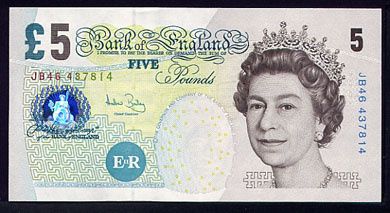
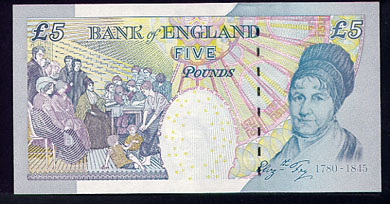
Banknotes
Budget & Public Finance
- Fiscal Year
- 6 April - 5 April
- Annual Budget
- $951,000,000,000 (USD)
- Public Debt (% of GDP)
- 42.2%
- External Debt
- $7,107,000,000,000 (USD)
- Investment (% of GDP)
- 16.3%
- Current Account Balance
- -$38,400,000,000 (USD)
- Reserves of Foreign Exchange
- $2,147,483,647 (USD)
Labor, Industry & Trade
- Labor Force by Occupation
- agriculture 1%; industry 25%; services 74%
- Household Income — highest 10%
- 28.5%
- Industries
- machine tools, electric power equipment, automation equipment, railroad equipment, shipbuilding, aircraft, motor vehicles and parts, electronics and communications equipment, metals, chemicals, coal, petroleum, paper and paper products, food processing, textiles, clothing, and other consumer goods
- Agriculture Products
- cereals, oilseed, potatoes, vegetables; cattle, sheep, poultry; fish
- Export Commodities
- manufactured goods, fuels, chemicals; food, beverages, tobacco
- Export Partners
- US 15.5%, Germany 11.2%, France 9.4%, Ireland 8%, Netherlands 7.1%, Belgium 5.2%, Italy 4.4%, Spain 4.3%
- Import Commodities
- manufactured goods, machinery, fuels; foodstuffs
- Import Partners
- Germany 12.9%, US 11.9%, France 7.8%, Netherlands 6.3%, Belgium 5%, Italy 4.4%
Energy
- Oil Production
- 2,393,000 bbl/day
- Oil Consumption
- 1,722,000 bbl/day
- Oil Reserves
- 4,500,000,000 bbl/day
- Natural Gas Production
- 102,800,000,000 cu m
- Natural Gas Consumption
- 95,150,000,000 cu m
- Natural Gas Imports
- 2,700,000,000 cu m
- Natural Gas Exports
- 15,750,000,000 cu m
- Natural Gas Reserves
- 628,600,000,000 cu m
Communications
- Telephone System
- general assessment: technologically advanced domestic and international system domestic: equal mix of buried cables, microwave radio relay, and fiber-optic systems international: country code - 44; numerous submarine cables provide links throughout Europe, Asia, Australia, the Middle East, and US; satellite earth stations - 10 Intelsat (7 Atlantic Ocean and 3 Indian Ocean), 1 Inmarsat (Atlantic Ocean region), and 1 Eutelsat; at least 8 large international switching centers
- Internet Country Code
- .uk
News & Weather
News & Weather
Current Weather
Latest News
Powerball ticket sales begin Tuesday in the United Kingdom - NPR
NPR · 2h ago
‘King of the North’ Andy Burnham becomes 7th British prime minister in a decade - NBC News
NBC News · 9h ago
Andy Burnham pledges to end instability after becoming UK’s seventh prime minister in a decade - CNN
CNN · 15h ago
Suspect charged in fatal attack on UK politician Ann Widdecombe - Al Jazeera
Al Jazeera · 8h ago
Trump says first call with new UK PM Burnham went 'very well,' pledges US support - Fox News
Fox News · 6h ago
UK's Andy Burnham becomes PM as Trump slams Britain as 'Poverty Stricken Disaster' - CNBC
CNBC · 21h ago
On the day Andy Burnham becomes UK PM, a northern city loses trains to London - Reuters
Reuters · 15h ago
Healey made chancellor, Miliband named foreign secretary and Yvette Cooper becomes health secretary as Burnham picks cabinet – UK politics as it happened - The Guardian
The Guardian · 1d ago
News via Google News
Climate Overview
Prevailing southwesterly winds, influenced by the Gulf Stream, make Britain's climate temperate and equable year round. Weather patterns frequently change, but few temperature extremes occur. Temperatures range from a mean of 40°F in winter to about 60°F in summer. A low of 20°F sometimes occurs in winter, and a high of 90°F may rarely occur in summer. Average annual rainfall is 30-50 inches, usually distributed evenly throughout the year. Cloud cover is persistent, however, limiting sunshine to an average of about 6-7 hours a day in summer and 1-2 hours a day in winter.
Videos
Videos
1 curated YouTube videos.
Source: YouTube
Frequently Asked Questions
Frequently Asked Questions
What is the population of United Kingdom?
How do people greet each other in the United Kingdom?
What are the dining customs in the United Kingdom?
What etiquette should I know when visiting the United Kingdom?
How should I dress in the United Kingdom?
What gestures and body language should I be aware of in the United Kingdom?
What is family life like in the United Kingdom?
What do people do for recreation in the United Kingdom?
What is the capital of the United Kingdom?
Where is the United Kingdom located?
What are the sea and island borders of the United Kingdom?
What is the religion of the United Kingdom?
What currency is used in the United Kingdom?
What language is spoken in the United Kingdom?
What is the United Kingdom known for?
What form of government does the United Kingdom have?
Last reviewed 2026