
 English
 Español
 中文
中文 हिन्दी
 Français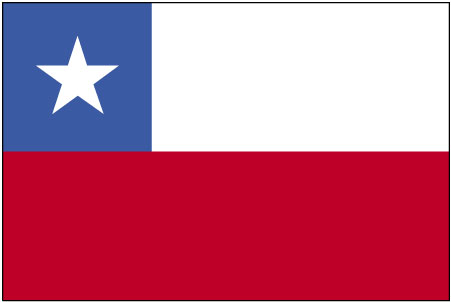
Chile
Chile
Declare Your Relationship to Chile
CountryReports Community
- Studying2
- From Chile1
- Chile heritage0
- Visited0
- Want to visit0
Customs and Culture
Customs and Culture
About the People
The Chilean people are friendly, both among themselves and with strangers. The people are known for having a witty sense of humor. Chileans take pride in their literacy, their nation and their heritage. Chileans respect the elderly.
Cultural Attributes
The Chilean people are friendly, both among themselves and with strangers. The people are known for having a witty sense of humor, for which, together with their cultural and educational refinement, they have been awarded the distinction of being called the "British of South America". Chileans take pride in their literacy, their nation, and their heritage. If a person is asked what he thinks of the future of the country, he will generally express confidence and optimism. In the country there is a strong middle class and education allows many poor people to improve themselves and aspire to a better life. Chileans respect the elderly.
Close to 85% of the population is concentrated in urban areas, of which 40% resides in Greater Santiago. The majority of the population is of Spanish descent, and people are sometimes classified as "mestizos" when they are a mix of indigenous and European. During the colonial era, small but very prominent Irish and English groups arrived in Chile. German immigration began in 1848 and appeared 90 years; the southern provinces of Valdivia, Llanquihue, and Osorno show a marked German influence. Other important groups of immigrants are the Italians, the Croats, the French, and those from the Middle East. Many Native Americans reside in the south-central region, most of whom belong to the Mapuche tribe.
Spanish, or Castilian, is the official language of Chile. However, as in all Latin American countries, some terms that are common in Chile elsewhere do not have the same meaning. English is taught in schools. A few small minorities speak German, Italian, or Mapuche, which is an indigenous dialect.
Chileans very often omit the letter "s" and sometimes do not pronounce the last syllable of long words. They also make clever use of the suffixes "ita" and "ito" although it is more to indicate familiarity with something and yet that something is small.

Land of the Endless Sky
Greetings, Gestures & Visiting
Greetings in Chile are very important because they emphasize the welcome given to a person and the recognition they receive. The most common greeting between friends and parents is the "abrazo". It consists of a handshake and a hug that is sometimes complemented by a kiss on the right cheek with women or relatives.
When you meet someone for the first time, the most appropriate thing to do is to shake hands. Eye contact is very important when greeting someone. The men stand up to greet a woman who enters the room.
Chileans show a lot of affection to their friends and relatives. The hug is repeated with each person when someone says goodbye to a gathering of friends or family. It is important to address people by their titles. To express appreciation for food to a host, Chileans say: "¡que rico!"
When conversing keeping eye contact and correct posture are important. Excessive hand gestures should be avoided. When yawning it is polite to conceal it with one's hand. One does not beckon people with hand gestures. Items, including money, are handed, not tossed to other people. Respect and courtesy are important to Chileans.
Contrary to some areas in South America, guests wait outside the door of a home until invited inside by the host. Dinner guests often bring flowers, wine, or bread for the host. It is appropriate to greet the head of the family first.
Fashions follow European styles. Appearance is quite important to individuals; even in rural areas, it is important to be neatly and cleanly dressed. Sloppy or tattered clothing is considered in poor taste by many Chileans.
Diet
Many national dishes are prepared with fish, seafood, chicken, beef, beans, eggs and corn. A common meal is soup or cazuela made with meat, beans, corn, pumpkin and potato. The main meal is eaten at midday. A lighter meal is eaten between 8.00 and 10.00 pm. During the afternoon it is customary to have teatime.
Hands are kept above the table at all times. It is impolite to ask for second helpings. Even if they are offered, the guest is expected to decline. It used to be considered bad manners to eat food, except for ice cream, while walking in public. It is impolite to promptly leave after a meal is completed; guests should stay and visit for a length of time.
Many national dishes are prepared with fish, seafood, chicken, beef, beans, eggs and corn. A common meal is soup or cazuela made with meat, beans, corn, pumpkin and potato. The main meal is eaten at midday. A lighter meal is eaten between 8.00 and 10.00 pm. During the afternoon it is customary to have teatime.

Family
The family is important in Chile, including the extended family. While men have tended to dominate private and public life in the past, recent years have seen a change in the attitudes to women in the home and professional world. Approximately 30 percent of the labor force is female. While the father takes the lead in the family, the mother has considerable influence on decisions. The relationship between the husband and wife is characterized by reciprocity, with the man performing courtesies for the woman and vice versa. It is customary for a child to bear two family names; the last name is the mother’s family name and the second last name is the father’s family name. People either use their full name or go by their father’s family name, which is the official surname.
Dating Customs
Young people begin dating by the time they are 16. Group dating is emphasized early on. Men marry from age 22 onward and women between 18 and 23. Couples often date from one to three years before getting engaged. Divorce is not recognized by the Catholic Church but legal means of canceling or nullifying a marriage are available.
Recreation
The most popular spectator sport in Chile is fútbol, or soccer. Many consider it Chile's national sport. Major soccer events attract as many as 80,000 people to Santiago's National Stadium. Some of the most popular soccer teams in Chile include Colo Colo, Universidad Católica, and Universidad de Chile.
Chileans love flying kites. Catholic monks brought the first kites to Chile in the 18th century. Today, people of all ages fly kites for sport and amusement in spring and summer. Every weekend, thousands of Santiago residents fly their kites in public parks. Kites have even been honored in Chilean literature as a national treasure.
Rayuela is a Chilean game enjoyed by people of all ages and particularly by men. It involves throwing heavy metal disks called tejos toward a string stretched across damp ground in an attempt to have them land on the string. Children play a similar game using coins rather than the heavy tejos.
The Chilean rodeo is known as the la fiesta huasa. Rodeo teams often travel from village to village and rodeo competitions take place in arenas called media lunas (half moons). Huasos, Chilean cowboys, dress in colorful ponchos, fringed leggings, flat-topped hats, high-heeled boots, and large spurs. The object of the competition is for a two-man team to control a steer by making it stop in a certain place without using a lasso.
A traditional Indian team game is called chueca, which means curved stick. A hole marks the center of the field and a goal line is drawn across each end of the field. The game starts at the hole. Each team tries to knock a small rubber ball into it using a curved stick. The first player to succeed then drives the ball across the opposing team's goal line to score a point. Chueca was created by Indians long before the Spanish arrived in the area known today as Chile.
Chileans enjoy group activities and most people belong to a team, club, or organization. Some take part in a variety of sports including tennis, fishing, golf, volleyball, polo, rugby, basketball, skiing, water-skiing, fishing, scuba diving, horseback riding, and jogging.
Student Life
Breakfast is light and often consists of bread topped with jelly or manjar, a yummy caramel-like topping. Parents will drink tea or coffee with their breakfast bread, which they buy daily from a local bakery.
School generally begins at 8:00 in the morning and is done at around 4:00 in the afternoon. Kids will usually walk or ride a public transportation bus to school, depending on how far from the school they live. The public buses offer reduced fares to students, who wear badges that identify with the school they attend. Some schools provide lunch for the students, while others (in rural areas or certain private schools) allow students to go home for lunch.
Children wear uniforms that have a badge to school. The badge identifies which school the student attends. High school students wear black and white uniforms and are sometimes known by the nickname “penguins.” It is not unusual for a school to be an open-air building (especially in northern regions, which means that classes can be quite chilly in the winter. However, because it rarely rains in such areas, there is no need to provide protection against bad weather. Open schools usually have a large open courtyard that serves as a theater, playground, and assembly hall. Around the courtyard are hallways that lead to classrooms, offices, and bathrooms. Like students in many Asian schools, students stay in the same classroom all day—except when they have a class that requires different classroom equipment, such as a computer class. Until the mid-1990s, school was conducted in two shifts, morning and afternoon. This has now changed to a longer school day. The previous two-shift schedule was used in part to keep a low student-teacher ratio. Since the change, the national Ministry of Education has set a maximum ratio of no more than 45 students for every teacher. Most classes have about 40 students.
Children study between 10 and 13 subjects during each school week, and they stay with the same group of classmates all day long. Children are required to attend elementary school for eight years (ages 6-13), with optional attendance in effect for four years of high school (ages 14-17). All classes are taught in Spanish, the national language. Subjects include math, science, history, geography, Spanish, English, music, belief systems, technology, and physical education. In some areas with high populations of native peoples, their local language is also taught in school. These tend to be in rural areas removed from cities and larger towns. General basic education (EGB) is compulsory and lasts for eight years, divided into two cycles of four years each. Secondary education (Educación media) lasts for four years. Students choose to specialize either in humanistic-scientific education (EMHC) or technical-professional education (EMTP). The humanistic-scientific branch, offered in liceos, is a preparation for higher education. Students are awarded the Licencia de Educación Media at the end. Technical-professional education offers a two-year common course and two years of specialization divided into five branches: industrial, technical, agricultural, commercial, and maritime. Students who successfully complete their secondary education obtain the Licencia de Educación Media or the title of Técnico de Nivel Medio.
Sports in Chile are usually organized by leagues rather than schools, so schools offer very few sports or similar extracurricular activities. Private schools are more likely to provide clubs for the arts, media, or perhaps even sports.
Because schools offer very few sports or social activities after school, most youth will simply gather at someone’s home to visit or have other social gatherings. They also often meet at recreational centers. Regardless of where they gather, young Chileans are friendly and outgoing. They enjoy social experiences. Because they have the same classmates all day, they become very good friends, especially when they hang out together after school too.
Families are very important to the Chilean lifestyle. It is very common for extended families to stay close to each other and see each other often, so cousins know their grandparents, aunts and uncles, and cousins quite well. Adult friends of the parents are even called “aunt” or “uncle” as a sign of affection and respect. Sometimes children will live with a relative in order to attend a better school or for other reasons. Such extended families provide great support when any given family is struggling in some way, and they provide great fun at family gatherings and holidays! At about 5:00 in the afternoon, families have a sort of “second breakfast” called Once (pronounced own-say). The main fare is bread and sandwich toppings with tea and coffee. This meal helps everyone get through the hours until it is time for dinner, which comes in the late evening and is about the same size as a traditional lunch. Common foods served at this meal include stew, shepherd's pie, or a variety of bean dishes.
Although, as in most Latin American countries, has only in recent years encouraged girls to gain as much education as boys, the country also has a tradition of providing education to women who wanted higher levels of education. For example, Chile was the first country in Latin America to graduate female lawyers and physicians—in the 1880s from the University of Chile! As women have access to more and more education, the number of women in the workforce, including the professional workforce, is increasing. This means that extended family members often help to raise little children while their mothers are working during the day. Chile is similar to many Latin American countries in that most children (approximately 90%) attend elementary school. However, only slightly over half will attend preschool, and slightly less than half will remain in high school. Impressively, nearly 20% of the national government budget goes to education. Despite this, many Chileans feel that the educational system has some serious problems and does not do a very good job of educating their children. The school year begins in late February or early March and finishes in December so that the children do not attend during the hottest months. There are two major breaks of two weeks each in the school year—one in June or July and another in September. Approximately 70 percent of the schools in Chile are privately owned. Many students do not attend school after they finish elementary school. They are often required to begin working to support their family. Most high school students come from upper-middle-class or upper-class families.
Holidays
Independence Day
9/18Independence Day
Christmas
12/25Christmas
The principle gift bearer in Chile is Viejo Pascuero (Christmas Old Man), who closely resembles Santa Claus and even rides in a reindeer sleigh, despite the summer weather.
Children place their shoes in window sills or in the corridors on Christmas Eve for Christmas Old Man to fill with treats.
Christmas dinner is usually on Christmas Eve when families congregate for gift exchanges, have dinner, and to enjoy each others company. The dinner may consists of turkey, seafood, azuela de ave (chicken soup with potatoes and onions), pan de pasqua (Christmas bread filled with candied fruit), fruits, cakes, and rompon (eggnog with liquor). The Christmas day dinner consists of leftovers plus choclo (corn cake) and chirimoya alegre (a sweet fruit dish).
Epiphany is called La Pascua de Los Negros (Holiday of the Black Ones) paying tribute to one of the Three Kings who in Chilean tradition came from Ethiopia.
Dates of Interest
- December 25th
The principal gift bearer in Chile is Viejo Pascuero (Christmas Old Man), who closely resembles Santa Claus and even rides in a reindeer sleigh, despite the summer weather. Children place their shoes on window sills or in the corridors on Christmas Eve for Christmas Old Man to fill with treats. Christmas dinner is usually on Christmas Eve when families congregate for gift exchanges, have dinner, and enjoy each other's company. The dinner may consists of turkey, seafood, azuela de ave (chicken soup with potatoes and onions), pan de pasqua (Christmas bread filled with candied fruit), fruits, cakes, and rompon (eggnog with liquor). The Christmas day dinner consists of leftovers plus choclo (corn cake) and chirimoya alegre (a sweet fruit dish).
How do people greet each other in Chile?
Greetings are very important in Chile as they emphasize welcome and recognition. Friends and family exchange an "abrazo"—a handshake and hug, sometimes with a kiss on the right cheek—while a handshake is appropriate when meeting someone for the first time.
Do
- Maintain eye contact when greeting someone
- Shake hands when meeting someone for the first time
- Address people by their titles
- Stand up (men) to greet a woman entering the room
Good to know
- The hug is repeated with each person when saying goodbye to a group
- Greet the head of the family first
What are the dining customs in Chile?
The main meal is eaten at midday and a lighter meal between 8:00 and 10:00 pm, with teatime customary in the afternoon. Common foods include fish, seafood, chicken, beef, beans, eggs, corn, and dishes like cazuela.
Do
- Keep your hands above the table at all times
- Stay and visit for a while after a meal
- Say "¡que rico!" to express appreciation for the food
Don’t
- Don't ask for second helpings
- Don't accept extra helpings even if offered—decline politely
- Don't leave promptly after a meal ends
What etiquette should visitors know in Chile?
Respect and courtesy are highly valued, and appearances and good manners matter. Guests should observe polite customs when visiting homes.
Do
- Wait outside the door until invited inside by the host
- Bring flowers, wine, or bread as a dinner guest
- Show respect to the elderly
How should I dress in Chile?
Fashions follow European styles and appearance is quite important, so being neatly and cleanly dressed is expected even in rural areas.
Don’t
- Don't wear sloppy or tattered clothing—it's considered poor taste
What gestures are important in Chile?
Chileans value correct posture, eye contact, and courteous body language during conversation.
Do
- Maintain eye contact and good posture when conversing
- Conceal a yawn with your hand
- Hand items, including money, directly to people
Don’t
- Don't use excessive hand gestures
- Don't beckon people with hand gestures
- Don't toss items or money to others
What is family life like in Chile?
Family, including the extended family, is important. The father takes the lead while the mother has considerable influence, and the husband-wife relationship is marked by reciprocity.
Good to know
- A child bears two family names: the mother's family name last and the father's second-to-last
- The father's family name is the official surname
- Attitudes toward women at home and work have been changing
What do people do for fun in Chile?
Soccer (fútbol) is the most popular spectator sport and considered the national sport, and Chileans enjoy many group activities and clubs. Traditional pastimes include kite flying, rayuela, the Chilean rodeo, and chueca.
Good to know
- Popular soccer teams include Colo Colo, Universidad Católica, and Universidad de Chile
- People fly kites in public parks in spring and summer
- Rayuela involves throwing metal disks (tejos) toward a string on the ground
- The Chilean rodeo, la fiesta huasa, features huasos (cowboys) in colorful dress
- Sports enjoyed include tennis, golf, volleyball, skiing, and horseback riding
Last updated: 2026-07-12 · Sources: CountryReports
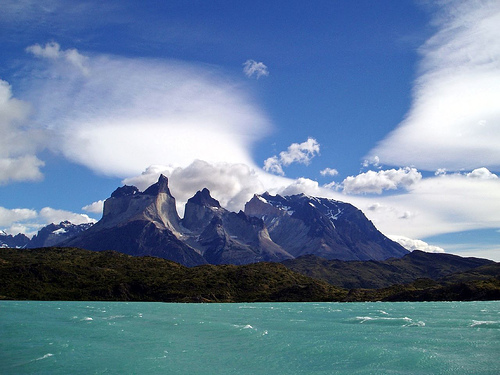
Photos of Chile
Photos of Chile
Lago Peho and Cuernos del Paine I, Torres del Paine National
Torres del Paine, Chile
Seno Ultima Esperanza sound, Chile
Torres del Paine, Chile
Seno Reloncavi, Chile
Valle Frances, Chile
Laog and Glacier Grey, Chile
Cuernos Del Paine. Chile
Balmaceda Glacier, Chile
Mountain in Chile
Houses on the island of Chiloe, Chile
Houses in Valparaiso, Chile


Travel and Tourism
Travel and Tourism
- Travel Alert Status
- Level 2: Exercise Increased Caution
- Currency
- 673.2
- Time Difference
- UTC-3 (2 hours ahead of Washington, DC, during Standard Time)
- Climate
- Chile's climate is as varied as its geography. Despite lying in the tropics, northern Chile is characterized by warm summers and mild winters, due to the moderating influence of the cool Humboldt Current. In the central region, where Santiago is located, summers (December to March) are dry, with warm days reaching into the high 80s or low 90s, but cooler nights. Winter (June to September) is generally cold, foggy, and rainy (rainfall averages 14 inches a year); temperatures climb into the 50s and 60s during the day and usually drop to the 40s at night, with occasional frost. The southern Lake District has cooler average temperatures and is wetter than the central region, with annual rainfall reaching 100 inches. In the far south, the climate is colder still, with gale force winds much of the year. Rainfall in this region also averages 100 inches annually, except in the Patagonian steppes, where it drops to an average of 20 inches a year.
- Airports
- 476
- Recommended Vaccinations
- How important is it to do your research about vaccinations? It might just save your life! Make yourself aware of the different types of vaccinations and which ones you may need to travel to your destination. Schedule an appointment with your doctor at least four to six weeks before you travel to ensure you receive all important shots. Be sure that you and your family are up to date on your routine vaccinations. Which vaccinations you need will depend on a number of factors including your destination, whether you will be spending time in rural areas, the season of the year you are traveling, your age, health status, and previous immunizations.
Read the full travel guide — health, safety, vaccinations, disease risk, sanitation, and transit details.
View full travel guideRecipes
Recipes
Pan de Pascua (Christmas Bread)
Bread
Main Dish
Pastel de Choclo (Chilean Corn and Meat Pie)
Main Dish
Charquicán (Mashed Vegetables with Hamburger Meat)
Main Dish
Porotos Con Riendos (Spaghetti with Beans)
Main Dish
Escabeche De Gallina (Marinated Chicken)
Main Dish
Terrina de Centolla y Ostiones del Cabo del Horno (Cape Horn King Crab and Scallop Terrine)
Main Dish
Chuletas de Cordero Lechon de la Pampa Magallanica con Salteado de Papas (Pampa Lamb Cutlets with sautéed Potatoes)
Side Dish
PremiumEmpanadas
Side Dish
PremiumConsome (Chicken Soup)
Side Dish
PremiumEnsalada Chilena (Chilean Salad)
History
History
Historical Eras
Indigenous & Pre-Colonial
10000 BCE – 1520
Before European contact, Chile's territory was home to diverse peoples including the Mapuche, Atacameño, Aymara, and Diaguita. The Mapuche in particular developed a resilient, decentralized society in the central and southern regions. The Inca Empire extended its reach into northern Chile around the late 15th century but never subdued the Mapuche heartland.
Spanish Colonial Era
1520 – 1810
Ferdinand Magellan sighted Chilean shores in 1520, and Diego de Almagro led the first major Spanish expedition in 1535–37. Pedro de Valdivia founded Santiago in 1541, launching a prolonged conquest marked by fierce Mapuche resistance — the Arauco War — which endured for over two centuries. Chile remained a peripheral but strategically significant outpost of the Spanish Empire, reliant on silver, gold, and coerced indigenous labor.
Independence & Republic
1810 – 1830
Criollo leaders in Santiago declared autonomy in 1810, igniting a struggle known as the Patria Vieja. Spanish royalist forces reimposed control during La Reconquista (1814–17), but Bernardo O'Higgins and José de San Martín defeated them at the Battle of Chacabuco in 1817. Formal independence was declared on February 12, 1818, and O'Higgins served as the first Supreme Director before being forced into exile in 1823.
Liberal & Parliamentary Era
1830 – 1925
Chile established one of Latin America's most durable constitutional systems under the conservative Constitution of 1833, consolidating civilian rule and strong presidential authority. The War of the Pacific (1879–84) against Peru and Bolivia brought Chile vast nitrate-rich northern territories and regional dominance. A civil war in 1891 shifted power toward a parliamentary-style oligarchy, while nitrate wealth both funded the state and fueled harsh labor exploitation that sparked violent social conflicts.
Reform & Political Crisis
1925 – 1973
A new constitution in 1925 reasserted presidential authority and began incorporating middle and working classes into political life. Chile sustained one of the hemisphere's most stable multiparty democracies from 1932 to 1973, navigating the rise of socialist, communist, Christian democratic, and conservative parties. Salvador Allende's election in 1970 as the world's first democratically elected Marxist head of state culminated in acute political polarization, economic turmoil, and a U.S.-backed military coup on September 11, 1973.
Pinochet & Democratic Restoration
1973 – present
General Augusto Pinochet's military regime (1973–90) dismantled political parties, suppressed unions, and oversaw widespread human rights abuses while imposing radical free-market economic reforms. A 1988 plebiscite rejected continued military rule, and democratic elections in 1989 returned Chile to civilian government. Since 1990, Chile has maintained consistent economic growth and democratic stability, emerging as one of Latin America's most prosperous and institutionally robust nations, though debates over inequality and the Pinochet-era constitution have driven significant social and political renegotiation.
Overview
Timeline of Key Events
1520
Ferdinand Magellan first European to sight (but not identify) Chilean shores.
Ferdinand Magellan first European to sight (but not identify) Chilean shores.
1535 – 1537
Diego de Almagro leads first Spanish expedition to explore Chile.
Diego de Almagro leads first Spanish expedition to explore Chile.
1540
Period of military rule under General Pinochet.
Pedro de Valdivia conquers Chile.
1541
Valdivia founds Santiago.
Valdivia founds Santiago.
1553 – 1558
Indigenous Araucanian uprising.
Indigenous Araucanian uprising.
1557
Mapuche rebel chief Lautaro defeated.
Mapuche rebel chief Lautaro defeated.
1603
First army-like force, or militia, established in Chile.
First army-like force, or militia, established in Chile.
Read the full history profile — narrative overview, defining eras, and the complete timeline in one place.
View expanded historyInteresting Facts
Interesting Facts
When a child loses a tooth they give their tooth to their mother. She will have it made into a charm, set in gold or silver, so the child can wear it as a necklace or an earring.
The driest place on earth is the Atacama Desert, where no rain has fallen in the last 400 years.
Well-known Chilean-Canadian writers include Jorge Etcheverry, Naín Noméz, and José Leandro Urbina.
The name Chile may come from a Peruvian Indian word that means “ snow,” or from an Inca word that means “ land's end.” Some people believe it comes from the call of a local bird, “ cheele-cheele.”
The Atacama Desert is one of the driest place on earth. It has had periods of more than 20 years during which not a single drop of rain fell.
Adult friends of the family are often called tio or tia (uncle or aunt) as a mark of respect and affection.
See every fact — trivia, oddities, and curious tidbits gathered from across the country.
View all interesting factsGeography and Environment
Geography and Environment
- Terrain
- low coastal mountains; fertile central valley; rugged Andes in east
- Climate
- Chile’s climate is as varied as its geography. Despite lying in the tropics, northern Chile is characterized by warm summers and mild winters, due to the moderating influence of the cool Humboldt Current. In the central region, where Santiago is located, summers (December to March) are dry, with warm days reaching into the high 80s or low 90s, but cooler nights. Winter (June to September) is generally cold, foggy and rainy (rainfall averages 14 inches a year); temperatures climb into the 50s and 60s during the day and usually drop to the 40s at night, with occasional frost. The southern Lake District has cooler average temperatures and is wetter than the central region, with annual rainfall reaching 100 inches. In the far south, the climate is colder still, with gale force winds much of the year. Rainfall in this region also averages 100 inches annually, except in the Patagonian steppes, where it drops to an average of 20 inches a year.
- Natural Hazards
- severe earthquakes; active volcanism; tsunamis
- Current Environmental Issues
- widespread deforestation and mining threaten natural resources; air pollution from industrial and vehicle emissions; water pollution from raw sewage
Read the full geography and environment profile — terrain, climate, natural resources, hazards, land use, and international agreements.
View full geographyPeople & Demographics
People & Demographics
Religion
Languages Spoken
Spanish (official), Mapudungun, German, English
- Spanish
Population
- Population
- 16,746,491
- Population: Male/Female
- male: 9,169,736 female: 9,494,916
- Population Distribution
- 90% of the population is located in the middle third of the country around the capital of Santiago; the far north (anchored by the Atacama Desert) and the extreme south are relatively underpopulated
- Urban Population
- urban population: 88% of total population rate of urbanization: 0.78% annual rate of change
- Population in Major Urban Areas
- 6.903 million SANTIAGO (capital), 1.009 million Valparaiso, 912,000 Concepcion
- Nationality Noun
- noun: Chilean(s) adjective: Chilean
- Ethnic Groups
- White and non-Indigenous 88.9%, Mapuche 9.1%, Aymara 0.7%, other Indigenous groups 1% (includes Rapa Nui, Likan Antai, Quechua, Colla, Diaguita, Kawesqar, Yagan or Yamana), unspecified 0.3%
- Language Note
- Spanish 99.5% (official), English 10.2%, Indigenous 1% (includes Mapudungun, Aymara, Quechua, Rapa Nui), other 2.3%, unspecified 0.2%; note - shares sum to more than 100% because some respondents gave more than one answer on the census
Demographic Profile
Chile is in the advanced stages of demographic transition and is becoming an aging society - with fertility below replacement level, low mortality rates, and life expectancy on par with developed countries. Nevertheless, with its dependency ratio nearing its low point, Chile could benefit from its favorable age structure. It will need to keep its large working-age population productively employed, while preparing to provide for the needs of its growing proportion of elderly people, especially as women - the traditional caregivers - increasingly enter the workforce. Over the last two decades, Chile has made great strides in reducing its poverty rate, which is now lower than most Latin American countries. However, its severe income inequality ranks as the worst among members of the Organization for Economic Cooperation and Development. Unequal access to quality education perpetuates this uneven income distribution.
Chile has historically been a country of emigration but has slowly become more attractive to immigrants since transitioning to democracy in 1990 and improving its economic stability (other regional destinations have concurrently experienced deteriorating economic and political conditions). Most of Chile's small but growing foreign-born population consists of transplants from other Latin American countries, especially Peru.
Education
- Literacy Definition
- age 15 and over can read and write
Children wear uniforms that have a badge to school. The badge identifies which school the student attends. High school students wear black and white uniforms and are sometimes known by the nickname “penguins.”
It is not unusual for a school to be an open-air building (especially in northern regions, which means that classes can be quite chilly in the winter. However, because it rarely rains in such areas, there is no need to provide protection against bad weather. Open schools usually have a large open courtyard that serves as a theater, playground, and assembly hall. Around the courtyard are hallways that lead to classrooms, offices, and bathrooms. Like students in many Asian schools, students stay in the same classroom all day—except when they have a class that requires different classroom equipment, such as a computer class.
Until the mid-1990s, school was conducted in two shifts, morning and afternoon. This has now changed to a longer school day. The previous two-shift schedule was used in part to keep a low student-teacher ratio. Since the change, the national Ministry of Education has set a maximum ratio of no more than 45 students for every teacher. Most classes have about 40 students.
Health Information
- Life Expectancy at Birth
- total population: 80.3 years male: 77.3 years female: 83.3 years
- Alcohol consumption per capita
- total: 7.8 liters of pure alcohol beer: 2.76 liters of pure alcohol wine: 2.61 liters of pure alcohol spirits: 2.43 liters of pure alcohol other alcohols: 0 liters of pure alcohol
- Tobacco Use
- total: 29.2% male: 31.6% female: 26.8%
- Infant Mortality Rate
- total: 6.3 deaths/1,000 live births male: 6.9 deaths/1,000 live births female: 5.7 deaths/1,000 live births
Life Expectancy
- Life Expectancy at Birth
- total population: 80.3 years male: 77.3 years female: 83.3 years
- Median Age
- total: 36.9 years male: 35.8 years female: 38.2 years
- Age Structure
- 0-14 years: 19.2% (male 1,822,908/female 1,751,528) 15-64 years: 67.3% (male 6,274,620/female 6,278,467) 65 years and over: 13.6%
- Infant Mortality Rate
- total: 6.3 deaths/1,000 live births male: 6.9 deaths/1,000 live births female: 5.7 deaths/1,000 live births
Read the full people and society profile — demographics, health, education, religion, languages, and notable people.
View full people and societyGovernment & Politics
Government & Politics
Country Identity
- Country Name
- Chile
- Full Country Name
- Republic of Chile
- Local - Long
- Republica de Chile
- Local - Short
- Chile
Government Structure
- Government Type
- republic
- Legal System
- based on Code of 1857 derived from Spanish law and subsequent codes influenced by French and Austrian law; judicial review of legislative acts in the Supreme Court; has not accepted compulsory ICJ jurisdiction
- Executive Branch
- chief of state: President Gabriel BORIC Font (since 11 March 2022); note - the president is both the chief of state and head of government head of government: President Gabriel BORIC Font (since 11 March 2022); note - the president is both the chief of state and head of government cabinet: Cabinet appointed by the president elections: president elected by popular vote for a four-year term; election last held 21 November 2021, with runoff election held 19 December 2021 (next to be held in November 2025) election results: Gabriel BORIC Font elected president in runoff; percent of vote - Gabriel BORIC Font 55.9%; José Antonio KAST Rist 44.1%
- Legislative Branch
- bicameral National Congress or Congreso Nacional consists of the Senate or Senado (38 seats elected by popular vote; members serve eight-year terms - one-half elected every four years) and the Chamber of Deputies or Camara de Diputados (120 seats; members are elected by popular vote to serve four-year terms) elections: Senate - last held 11 December 2005 (next to be held December 2009); Chamber of Deputies - last held 11 December 2005 (next to be held December 2009) election results: Senate - percent of vote by party - NA; seats by party - CPD 20 (PDC 6, PS 8, PPD 3, PRSD 3), APC 17 (UDI 9, RN 8), independent 1; Chamber of Deputies - percent of vote by party - NA; seats by party - CPD 65 (PDC 21, PPD 22, PS 15, PRSD 7), APC 54 (UDI 34, RN 20), independent 1
- Judicial Branch
- Supreme Court or Corte Suprema (judges are appointed by the president and ratified by the Senate from lists of candidates provided by the court itself; the president of the Supreme Court is elected every three years by the 20-member court); Constitutional Tribunal
- Suffrage
- 18 years of age; universal and compulsory
- Constitution
- 11 September 1980, effective 11 March 1981, amended 30 July 1989, 1993, and 1997
- Independence
- 18 September 1810 (from Spain)
- National Holiday
- Independence Day, 18 September (1810)
Capital City
- Capital Name
- Santiago; note - Valparaiso is the seat of the national legislature
- Capital - geographic coordinate
- 33 27 S, 70 40 W
- Capital Time Difference
- UTC-3 (2 hours ahead of Washington, DC, during Standard Time)
Santiago is named after the biblical figure Saint James (ca. A.D. 3-44), patron saint of Spain, but especially revered in Galicia; "Santiago" derives from the local Galician evolution of the Vulgar Latin "Sanctu Iacobu"; Valparaiso derives from the Spanish "Valle Paraiso" meaning "Paradise Valley"
Military
Branches: Army of the Nation, Chilean Navy (Armada de Chile, includes Naval Aviation, Marine Corps, and Maritime Territory and Merchant Marine Directorate (Directemar)), Chilean Air Force (Fuerza Aerea de Chile, FACh), Carabineros Corps (Cuerpo de Carabineros)
Embassy / Diplomatic Mission
U.S. Embassy Santiago
Address: Avenida Andres Bello 2800, Las Condes, Santiago
Telephone switchboard: 56-2-2330-3000
Telephone from the United States: 011-56-2-2330-3000
Emergency after-hours telephone: 56-2-2330-3000
Consular Section fax number: 56-2-2330-3710
E-mail address for U.S. citizens: santiagoamcit@state.gov
Internet address for hours and general information: http://chile.usembassy.gov
Read the full government profile — flag symbolism, national anthem, and other national symbols.
View full government detailsEconomy
Economy
Chile has a market-oriented economy characterized by a high level of foreign trade and a reputation for strong financial institutions and sound policy that have given it one of the strongest sovereign bond ratings in South America. Copper remains the backbone of the economy, accounting for roughly half of all exports, and Chile is the world's largest producer of the metal as well as a leading producer of lithium, a critical input for global battery and electric vehicle supply chains.
Following decades of economic reform initiated under the military government and deepened by successive democratic administrations beginning in 1990, Chile achieved sustained growth that lifted it to high-income status and earned it membership in the Organisation for Economic Co-operation and Development in 2010. Real GDP growth averaged close to 5% in the 2000s before slowing in the 2010s amid lower commodity prices and weaker investment.
The economy contracted sharply by around 6% in 2020 due to the COVID-19 pandemic but rebounded strongly with growth of nearly 12% in 2021, fueled by large fiscal stimulus, pension fund withdrawals, and a recovery in copper prices. Growth moderated to about 2.4% in 2022 and was essentially flat in 2023 as the central bank tightened monetary policy aggressively to combat inflation, which peaked above 14% in 2022 before easing toward the 3% target range. The economy returned to modest growth of around 2.5% in 2024, supported by recovering domestic demand and higher copper and lithium revenues.
Chile maintains an extensive network of free trade agreements covering most of its trading partners, including the United States, the European Union, China, and members of the Pacific Alliance and the Comprehensive and Progressive Agreement for Trans-Pacific Partnership. China is now Chile's largest single trading partner. Persistent challenges include high income inequality, dependence on commodity exports, water scarcity affecting mining and agriculture, and ongoing debate over tax, pension, and constitutional reforms aimed at addressing social demands that erupted during the 2019 protests. Unemployment has hovered around 8–9% in recent years, and successive governments have faced pressure to broaden social spending while preserving fiscal discipline.
Snapshot
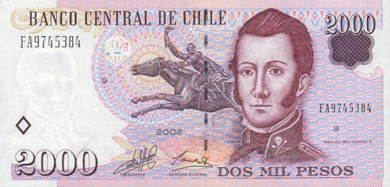
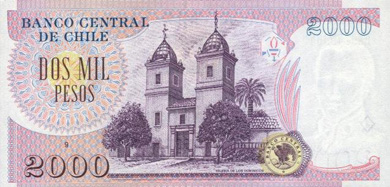
- Currency Name and Code
- Chilean pesos (CLP)
- GDP — official exchange rate
- $115,600,000,000 (USD)
- GDP Real Growth Rate
- 6%
- Gini Index
- 57.1
Banknotes
Budget & Public Finance
- Fiscal Year
- calendar year
- Annual Budget
- $24,750,000,000 (USD)
- Public Debt (% of GDP)
- 8.1%
- External Debt
- $44,800,000,000 (USD)
- Investment (% of GDP)
- 23.2%
- Economic Aid
- $40,000,000 (USD)
- Current Account Balance
- $309,000,000 (USD)
- Reserves of Foreign Exchange
- $2,147,483,647 (USD)
Labor, Industry & Trade
- Labor Force by Occupation
- agriculture 13.6%; industry 23.4%; services 63% (2003 est.)
- Household Income — highest 10%
- 47%
- Industries
- copper, other minerals, foodstuffs, fish processing, iron and steel, wood and wood products, transport equipment, cement, textiles
- Agriculture Products
- grapes, apples, pears, onions, wheat, corn, oats, peaches, garlic, asparagus, beans, beef, poultry, wool; fish; timber
- Export Commodities
- copper, fish, fruits, paper and pulp, chemicals, wine
- Export Partners
- US 19.1%, Japan 10.5%, China 6.7%, Mexico 5%, Italy 4.7%, UK 4.4%
- Import Commodities
- consumer goods, chemicals, motor vehicles, fuels, electrical machinery, heavy industrial machinery, food
- Import Partners
- Argentina 18%, US 14.9%, Brazil 9.5%, China 6.5%, Germany 4.3%
Energy
- Oil Production
- 4,000 bbl/day
- Oil Consumption
- 228,000 bbl/day
- Oil Reserves
- 150,000,000 bbl/day
- Natural Gas Production
- 1,000,000,000 cu m
- Natural Gas Consumption
- 7,060,000,000 cu m
- Natural Gas Imports
- 5,337,000,000 cu m
- Natural Gas Exports
- 0 cu m
- Natural Gas Reserves
- 97,980,000,000 cu m
Communications
- Telephone System
- General assessment: privatization began in 1988; most advanced telecommunications infrastructure in South America; a modern system based on extensive microwave radio relay facilities; domestic satellite system with 3 earth stations Domestic: number of fixed-line connections has stagnated in recent years as mobile-cellular usage continues to increase, reaching 130 telephones per 100 persons International: country code - 56; landing points for the Pan American, South America-1, and South American Crossing/Latin America Nautilus submarine cables providing links to the US and to Central and South America; satellite earth stations - 2 Intelsat (Atlantic Ocean)
- Internet Country Code
- .cl
News & Weather
News & Weather
Current Weather
Latest News
Chile declares state of catastrophe after deadly floods - Yahoo News Singapore
Yahoo News Singapore · 16m ago
12 Feet of Snow and Counting: South American Ski Resorts Slammed by Intense Winter Storm - POWDER Magazine
POWDER Magazine · 14h ago
Copper price rises as key China gauge hits one-year high, Chile output losses mount - Mining.com
Mining.com · 13h ago
Construction crane collapses onto homes during storm in Chile - AccuWeather
AccuWeather · 2d ago
Crane in Chile collapses on five houses during strong winds - Sky News
Sky News · 2d ago
[PHOTOS] With Over 15 Feet of New Snow in the Past 7 Days, It Just Keeps Snowing In Chile - SnowBrains
SnowBrains · 10h ago
'Miss World Chile 2025' IGNACIA FERNÁNDEZ Explains How She Became A Death Metal Singer - BLABBERMOUTH.NET
BLABBERMOUTH.NET · 1d ago
Culpeo Minerals expands Chile landholding by 45% with new licences - Yahoo Finance
Yahoo Finance · 18h ago
News via Google News
Climate Overview
Chile's climate is as varied as its geography. Despite lying in the tropics, northern Chile is characterized by warm summers and mild winters, due to the moderating influence of the cool Humboldt Current. In the central region, where Santiago is located, summers (December to March) are dry, with warm days reaching into the high 80s or low 90s, but cooler nights. Winter (June to September) is generally cold, foggy, and rainy (rainfall averages 14 inches a year); temperatures climb into the 50s and 60s during the day and usually drop to the 40s at night, with occasional frost. The southern Lake District has cooler average temperatures and is wetter than the central region, with annual rainfall reaching 100 inches. In the far south, the climate is colder still, with gale force winds much of the year. Rainfall in this region also averages 100 inches annually, except in the Patagonian steppes, where it drops to an average of 20 inches a year.
Videos
Videos
1 curated YouTube videos.
Source: YouTube
Frequently Asked Questions
Frequently Asked Questions
What is the population of Chile?
How do people greet each other in Chile?
What are the dining customs in Chile?
What etiquette should visitors know in Chile?
How should I dress in Chile?
What gestures are important in Chile?
What is family life like in Chile?
What do people do for fun in Chile?
What is the capital of Chile?
Where is Chile located?
What countries border Chile?
What is the predominant religion in Chile?
What currency does Chile use?
What language is spoken in Chile?
What is Chile known for?
What is the geography of Chile like?
Last reviewed 2026