
 English
 Español
 中文
中文 हिन्दी
 Français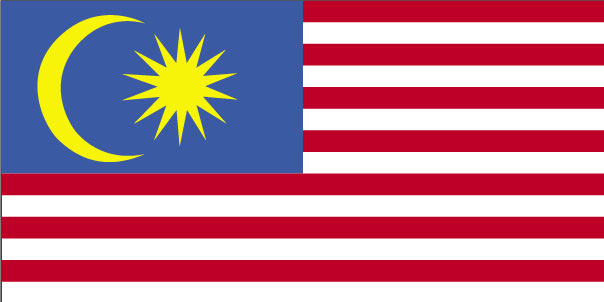
Malaysia
Declare Your Relationship to Malaysia
CountryReports Community
- Studying3
- From Malaysia4
- Malaysia heritage2
- Visited3
- Want to visit3
Customs and Culture
Customs and Culture
About the People
A person’s ancestral background is often important to social status and future opportunities. Many Malaysian are fatalistic; they believe successes, failures, opportunities, and misfortunes result from fate or the will of God. Although the people are proud of their country and generally loyal to the Malaysian state, they often identify first with their ethnic group, island, or region.
Cultural Attributes
A person's ancestral background is often important to social status and future opportunities.

Fireflies of the Equator
Greetings, Gestures & Visiting
A handshake is used between men. A slight bow or nod of the head is common when greeting an older person. Women and elderly persons seldom shake hands, but may offer verbal greetings. When greeting close male friends, men use both hands to grasp the hand of the other. Business cards are often exchanged after an introduction.
There are three distinct ethnic cultures represented in Malaysia: Malay, Chinese and Indian. Thus, each culture has its own customs.
Beckoning is done by waving all fingers with the palm facing down. Individual fingers are not used for gesturing. Objects should not be moved with the feet. The sole of a person's foot should not be pointed at another person. Objects are generally not passed with the left hand. When yawning or using a toothpick, the mouth is covered. A slight bow when leaving, entering, or passing by a group of people is a nonverbal "excuse me". When a person stands with their hands on their hips, this is a sign of anger.
If you see a prayer rug in a Muslim's office or home, do not stand on it or touch it with your feet.
Visiting one's relatives and friends is important, especially when one does not share a house with the extended family. Dropping by without prior arrangement is common. Shoes are removed when entering a home. When invited, persons are generally not expected to arrive on time. Punctuality is not important in Malaysia.
Most people wear Western-style clothing. However, traditional clothing, or a combination of Western and traditional clothing, is also worn. Special headdresses, wraparound skirts, jackets, tunics and sashes vary between regions and ethnic groups. Many traditional costumes have intricate designs.
Diet
Due to Malaysia’s cultural diversity, a wide variety of foods are eaten. Rice is the dietary staple and fish is the main source of protein. Spiced foods such as hot peppers (chillies) are also widely eaten.
Eating customs differ among ethnic groups. Malays and Indians eat with their hands and with spoons. Some cultural groups refrain from eating certain foods. For example, Muslims do not eat pork or drink alcoholic beverages. Hindus and some Buddhists do not eat beef. Tipping in not generally expected in restaurants because service in usually included in the bill.
Due to Malaysia’s cultural diversity, a wide variety of foods are eaten. Rice is the dietary staple and fish is the main source of protein. Spiced foods such as hot peppers (chillies) are also widely eaten.

Family
Traditionally, the family system is the most important social unit in Malaysia. It is common for two or more generations to live together in the same house. Young people respect their elders. Modernization and urbanization have affected the family structure in some areas. In urban areas, nuclear families are common, with members of extended families living in the same city or neighborhood, but not the same house.
Dating Customs
Dating and marriage practices in urban areas are similar to those in other Westernized countries. Attitudes are more liberal. Families stress that dating should wait until after one's education is complete. Despite this, dating often occurs around age seventeen. In rural areas, dating habits are conservation. Some marriages there are still arranged by families. Customs and ceremonies are also affected by the different religions.
Recreation
Silat is the Malay art of self-defense, which is performed in such a stylized way, with controlled yet fluid movements, that it resembles a dance. Silat may be accompanied by drumming. It has been practiced in the Malay Archipelago for hundreds of years. Silat is closely associated with the Islamic religion and practitioners are believed to develop spiritual strength. Both men and women are drawn to the art. Silat competitions are held throughout the year.
Sepak Takraw is one of Malaysia's most popular sports. Players must keep a small rattan ball in the air, using their feet, legs, shoulders and heads - everything but their hands.
Wayang Kulit or “shadow play” is performed by puppets. The puppets are back lit so that their shadows fall on a screen. Puppets are made of buffalo hide, which is dried and carved. They are jointed at the elbows and shoulders and manipulated with rods. The characters are taken from the Hindu epics the Ramayana or Mahabharatta.
Holidays
Independence Day/Malaysia Day
8/31Independence
Christmas
12/25Christmas
In traditional Malay language, the greeting for the season is “Selamathari natal,” pronounced “se-lah-mat ha-ri nut-all. Santa Claus is a prominent figure when celebrating Christmas. To the local Malay children he is called Sinterklas, pronounced ‘sin-tur-class’or in some cases where he is known as Grandfather Frost he is called kakekembunbeku, pronounced ‘ka-kekem-bun be-coo.” Little children believe that when Santa passes by their homes on Christmas Eve and notices how good they have been, he would leave a toy or chocolate in their stockings. The presence of Santa Claus tries to diminish the holiday to a secular rather than religious holiday so people of different religions can celebrate it.
Christmas usually starts with the traditional four week before Christmas Advent masses. These are usually traditional masses wherein a priest lights up a candle for every week preceding the Christmas Eve celebrations. The tradition is set to prepare the Christian followers for the coming of Christ the King. The local retail stores also take this time to decorate their windows and shelves with. The festivities end when the New Year celebrations come to a close.
During the Advent wreath ceremonies, wherein each candle lighted represents Hope, Peace, Joy and Love. The final candle which is in the middle is lighted on Christmas Eve to bring the ceremony to a climax. Christmas Eve traditions include the midnight masses that are attended by the Christian followers. Tradition also includes a Nativity play that is held before the mass to portray the scenes of Christ’s birth.
Christmas carols and hymns are heard everywhere as they celebrate the birth of Christ. During Christmas Day the celebrations are more solemn and usually begin with a morning mass. After which the family would gather and prepare a feast that is similar to the Malay concept of ‘rumahterbuka’ or open house. The feast would include dishes of roast pork, roast turkey, apple pies, meat dishes, fruit cakes and the local delicacy known as Beef Rendang.
Most Christmas carols are written and sung in English which is a language that is widely used in the country. Christmas tree traditions are also part of the festival with trees made of plastic and decorated with ornaments such as candy canes and little Santa figurines that are either made of ceramic or cloth.
Dates of Interest
- July - August
Ramadan, the greatest religious observance in Islam, is an annual month of fasting. The exact dates of Islamic holidays cannot be determined in advance, due to the nature of the Islamic lunar calender. Estimates are based on expected visibility of the hilal (waxing crescent moon following a new moon) and may vary according to location.
How do people greet each other in Malaysia?
A handshake is used between men, while women and elderly people seldom shake hands but may offer verbal greetings.
Do
- Give a slight bow or nod when greeting an older person
- Use both hands to grasp a close male friend's hand
- Exchange business cards after an introduction
Good to know
- Malaysia has Malay, Chinese, and Indian cultures, each with its own customs
What are the dining customs in Malaysia?
Eating customs differ among ethnic groups; Malays and Indians eat with their hands and with spoons, and a wide variety of foods are eaten due to Malaysia's cultural diversity.
Do
- Expect rice as the staple and fish as the main protein
- Be prepared for spiced foods such as hot peppers (chillies)
Don’t
- Do not offer pork or alcohol to Muslims
- Do not offer beef to Hindus or some Buddhists
Good to know
- Tipping is not generally expected in restaurants because service is usually included in the bill
What should I know about visiting and hospitality etiquette in Malaysia?
Visiting relatives and friends is important, and dropping by without prior arrangement is common.
Do
- Remove your shoes when entering a home
Good to know
- When invited, you are generally not expected to arrive on time; punctuality is not important
How should I dress in Malaysia?
Most people wear Western-style clothing, though traditional clothing or a combination of Western and traditional styles is also worn.
Good to know
- Traditional costumes such as headdresses, wraparound skirts, jackets, tunics, and sashes vary by region and ethnic group, often with intricate designs
Which gestures matter in Malaysia?
Gestures carry specific meanings, and several actions involving the feet and left hand should be avoided.
Do
- Beckon by waving all fingers with the palm facing down
- Cover your mouth when yawning or using a toothpick
- Give a slight bow when leaving, entering, or passing a group as a nonverbal 'excuse me'
Don’t
- Do not use individual fingers for gesturing
- Do not move objects with your feet or point the sole of your foot at another person
- Do not pass objects with your left hand
- Do not stand on or touch a Muslim's prayer rug with your feet
Good to know
- Standing with your hands on your hips is a sign of anger
What is family life like in Malaysia?
The family system is traditionally the most important social unit, and it is common for two or more generations to live together.
Good to know
- Young people respect their elders
- In urban areas, nuclear families are common, with extended family living nearby but not in the same house
What do people do for recreation in Malaysia?
Popular activities include Silat (Malay martial art), Sepak Takraw, and Wayang Kulit shadow play.
Good to know
- Silat is a stylized self-defense art resembling a dance, often accompanied by drumming and associated with Islam
- Sepak Takraw players keep a rattan ball in the air using feet, legs, shoulders, and heads but not hands
- Wayang Kulit uses back-lit buffalo-hide puppets depicting characters from the Ramayana or Mahabharatta
Last updated: 2026-07-12 · Sources: CountryReports
Photos of Malaysia
Photos of Malaysia
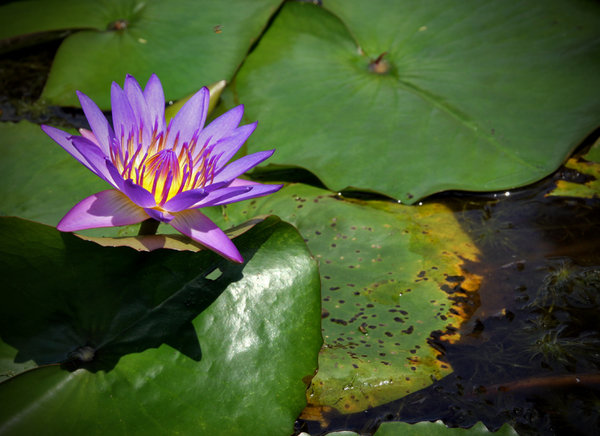
Flower petal grows in Kuala Lumpur
Skyscraper in Kuala Lumpur
City view of Kuala Lumpur
Subway system in Kuala Lumpur
Train station in Kuala Lumpur
Hotel Heritage in Kuala Lumpur
Peacock in Kuala Lumpur
Malaysian women at central market, Kota Baru, Malaysia
Dried fish for sale
Georgetown
Kek Lok Si in Georgetown
Sepak takraw


Travel and Tourism
Travel and Tourism
- Travel Alert Status
- Level 1: Exercise Normal Precautions
- Currency
- ringgit (MYR)
- Time Difference
- UTC+8 (13 hours ahead of Washington, DC, during Standard Time)
- Climate
- The weather in Kuala Lumpur varies little throughout the year. Daily minimum and maximum temperatures remain fairly constant averaging 27°C (80°F) and 38°C (100°F). With the heat, there is high humidity as the average annual rainfall is 250 centimeters. Although Kuala Lumpur is not subject to typhoons or cyclones, brief rainy seasons occur each year and bring scattered flooding. About 1-2 months of relatively dry weather usually precede the rainy seasons, although afternoon and evening thundershowers occur regularly throughout the year. The east coast and East Malaysia experience longer rainy seasons, and more widespread flooding as a result.
- Airports
- 117
Read the full travel guide — health, safety, vaccinations, disease risk, sanitation, and transit details.
View full travel guideRecipes
Recipes
Satay
Main Dish
Main Dish
Aromatic Chicken with Rice
Main Dish
Malaysian Curry Seafood Laksa
Main Dish
Satay
Side Dish
Rojak (Malaysian Salad)
Dessert
Pulut Durian (Glutinous/Sticky Rice With Durian)
Dessert
Roti Canai (Puffed Bread Served Hot with Curry or Dhal)
Main Dish
PremiumSatay
History
History
Historical Eras
Early Kingdoms
700 – 1400
The Buddhist maritime empire of Srivijaya, centered at Palembang in Sumatra, dominated the Malay Peninsula from roughly the 9th to 13th centuries, controlling vital trade straits and spreading Indianized culture. The Hindu Javanese empire of Majapahit subsequently extended its influence over the peninsula in the 14th century. Islam began penetrating the region during this transitional period, laying the groundwork for a new political order.
Malacca Sultanate
1400 – 1511
The founding of Malacca around 1400 by Parameswara, a Sumatran exile, inaugurated the most celebrated era of indigenous Malay statecraft. Malacca became one of Asia's foremost entrepôts, drawing Chinese, Arab, Indian, and Malay merchants, and its rulers formally adopted Islam, making it the primary conduit for the religion's spread across the archipelago. At its height, the Sultanate's influence extended across much of the peninsula and parts of Sumatra.
European Colonial Era
1511 – 1824
Portugal's conquest of Malacca in 1511 inaugurated over three centuries of successive European competition for control of the peninsula's lucrative trade. The Dutch ousted the Portuguese in 1641, only to cede Malacca to Britain in 1824 via the Anglo-Dutch Treaty. Britain had already acquired Penang in 1786 and established Singapore in 1819, positioning itself as the dominant power in the region.
British Malaya
1824 – 1942
Britain consolidated its hold through the Straits Settlements (1826) and progressively extended protectorates over the Malay sultanates, formalizing four of them as the Federated Malay States in 1895. Colonial administration developed large-scale rubber and tin industries, transforming the economy and drawing significant Chinese and Indian immigrant labor. This era also saw rising nationalist consciousness, though formal British dominance remained intact until World War II.
Japanese Occupation
1942 – 1945
Imperial Japan swept through Malaya with stunning speed in late 1941 and early 1942, capturing Singapore in February 1942 in what Churchill called the worst British military disaster in history. The occupation lasted until Japan's defeat in August 1945 and was marked by harsh repression, particularly against the Chinese community. The experience severely undermined British colonial prestige and dramatically accelerated popular demands for self-governance.
Independence & Modern Malaysia
1945 – present
Following the return of British rule, a communist insurgency and the 1948 Emergency challenged stability even as Malaya negotiated independence in 1957 under Tunku Abdul Rahman. Malaysia was formed on September 16, 1963, uniting Malaya, Singapore, Sarawak, and Sabah, though Singapore separated in 1965. The nation subsequently navigated racial tensions, rapid industrialization, and sustained economic growth to emerge as one of Southeast Asia's most developed states.
Overview
In 1826, the British settlements of Malacca, Penang, and Singapore were combined to form the Colony of the Straits Settlements. From these strongholds, in the 19th and early 20th centuries the British established protectorates over the Malay sultanates on the peninsula. Four of these states were consolidated in 1895 as the Federated Malay States.
During British control, a well-ordered system of public administration was established, public services were extended, and large-scale rubber and tin production was developed. This control was interrupted by the Japanese invasion and occupation from 1941 to 1945 during World War II.
Popular sentiment for independence swelled during and after the war and, in 1957, the Federation of Malaya, established from the British-ruled territories of peninsular Malaysia in 1948, negotiated independence from the United Kingdom under the leadership of Tunku Abdul Rahman, who became the first prime minister. The British colonies of Singapore, Sarawak, and Sabah (called North Borneo) joined together with the Federation to form Malaysia on September 16, 1963.
Singapore left the Federation on August 9, 1965, and became an independent republic. Neighboring Indonesia objected to the formation of Malaysia and pursued a program of economic, political, diplomatic, and military "confrontation" against the new country, which ended only after the fall of Indonesia’s President Sukarno in 1966.
Following World War II, local communists, nearly all Chinese, launched a long, bitter insurgency, prompting the imposition of a state of emergency in 1948 (lifted in 1960). Small bands of guerrillas remained in bases along the rugged border with southern Thailand, occasionally entering northern Malaysia. These guerrillas finally signed a peace accord with the Malaysian Government in December 1989. A separate, small-scale communist insurgency that began in the mid-1960s in Sarawak also ended with the signing of a peace accord in October 1990.
Timeline of Key Events
1400
Founding of Malacca by Parameswara, an exiled prince from Sumatra, Indonesia
Founding of Malacca by Parameswara, an exiled prince from Sumatra, Indonesia.
1400 – 1450
Foundation of the Sultanate of Brunei.
Foundation of the Sultanate of Brunei.
1446
Malacca becomes a Sultanate.
Malacca becomes a Sultanate.
1509
The first Portuguese arrive at Malacca.
The first Portuguese arrive at Malacca.
1511
Malacca is invaded and falls to the Portuguese.
Malacca is invaded and falls to the Portuguese.
1641
Dutch invade Malacca and take control from the Portuguese.
Dutch invade Malacca and take control from the Portuguese.
1786
Sir Francis Light lands in Penang. British acquire Penang from Sultan of Kedah.
Sir Francis Light lands in Penang. British acquire Penang from Sultan of Kedah.
Read the full history profile — narrative overview, defining eras, and the complete timeline in one place.
View expanded historyInteresting Facts
Interesting Facts
When a child loses a tooth they bury their tooth because it is a part of their body and needs to be returned to the earth.
The world's tallest habitable building is the Petronas Towers which is 1,483 feet tall. There are two 88 story towers with a 191 foot long sky bridge which connects them.
Of the many thousand species of insects found in Malaysia, one of the most interesting is the firefly. Along the Selangor River near Kuala Lumpur, thousands of fireflies flash at the same time, on and off like Christmas lights. Scientists cannot explain this phenomenon. Villagers used to put fireflies in bottles to serve as lamps.
In 1842, a British adventurer called James Brooke helped the Sultan of Brunei suppress a rebellion on the island of Borneo. The sultan rewarded Brooke by naming him the Rajah of Sarawak. James's successor as Rajah, Charles, had a son by a local woman. The son came to Canada in the 1880s and lived in Ontario until his death in 1953.
Malaysians are usually addressed by their given names, preceded by Mr., Mrs. or Miss.
Malaysians usually celebrate a child's birth when a child is one month old by shaving the child's head.
See every fact — trivia, oddities, and curious tidbits gathered from across the country.
View all interesting factsGeography and Environment
Geography and Environment
- Terrain
- coastal plains rising to hills and mountains
- Climate
- The weather in Kuala Lumpur varies little throughout the year. Daily minimum and maximum temperatures remain fairly constant averaging 27° C (80° F) and 38° C (100° F). With the heat, there is high humidity as the average annual rainfall is 250 centimeters. Although Kuala Lumpur is not subject to typhoons or cyclones, brief rainy seasons occur each year and bring scattered flooding. About 1-2 months of relatively dry weather usually precede the rainy seasons, although afternoon and evening thundershowers occur regularly throughout the year. The east coast and East Malaysia experience longer rainy seasons, and more widespread flooding as a result.
- Natural Hazards
- flooding, landslides, forest fires
- Current Environmental Issues
- air pollution from industrial and vehicular emissions; water pollution from raw sewage; deforestation; smoke/haze from Indonesian forest fires
Read the full geography and environment profile — terrain, climate, natural resources, hazards, land use, and international agreements.
View full geographyPeople & Demographics
People & Demographics
Religion
Languages Spoken
Bahasa Melayu (official), English, Chinese dialects (Cantonese, Mandarin, Hokkien, Hakka, Hainan, Foochow), Tamil, Telugu, Malayalam, Panjabi, Thai
- Bahasa
- Bahasa Melayu
- Cantonese
- Iban
- Kadazan
- Malayalam
- Mandarin
- Panjabi
- Tamil
- Telugu
- Thai
Population
- Population
- 26,160,256
- Population in Major Urban Areas
- KUALA LUMPUR (capital) 1.556 million; Klang 1.19 million; Johor Bahru 1.045 million
- Nationality Noun
- Malaysian(s)
- Ethnic Groups
- Malay and other indigenous 58%, Chinese 24%, Indian 8%, others 10%
Education
- Literacy Definition
- age 15 and over can read and write
Health Information
- Major Infectious Diseases — degree of risk
- intermediate
Read the full people and society profile — demographics, health, education, religion, languages, and notable people.
View full people and societyGovernment & Politics
Government & Politics
Country Identity
- Country Name
- Malaysia
- Former Name
- Federation of Malaysia
Government Structure
- Government Type
- constitutional monarchy
- Legal System
- based on English common law; judicial review of legislative acts in the Supreme Court at request of supreme head of the federation; has not accepted compulsory ICJ jurisdiction
- Executive Branch
- chief of state: Paramount Ruler (Yang di-Pertuan Agong) King Sultan IBRAHIM ibni Sultan Iskandar, the Sultan of Johor (since 31 January 2024) head of government: Prime Minister ANWAR Ibrahim (since 24 November 2022) cabinet: Cabinet appointed by the prime minister from among the members of Parliament with consent of the paramount ruler elections: paramount ruler elected by and from the hereditary rulers of nine of the states for five-year terms; prime minister designated from among the members of the House of Representatives; following legislative elections, the leader of the party or coalition that commands a majority in the House of Representatives becomes prime minister election results: Sultan IBRAHIM ibni Sultan Iskandar elected as the 17th Yang di-Pertuan Agong, taking the oath of office on 31 January 2024; ANWAR Ibrahim appointed prime minister following the November 2022 general election after his Pakatan Harapan-led coalition secured enough support to form a unity government
- Legislative Branch
- bicameral Parliament or Parlimen consists of the Senate or Dewan Negara (70 seats; 44 appointed by the paramount ruler, 26 appointed by the state legislatures) and the House of Representatives or Dewan Rakyat (219 seats; members elected by popular vote to serve five-year terms) elections: House of Representatives - last held 21 March 2004 (next must be held by 2009) election results: House of Representatives - percent of vote by party - BN 91%, DAP 5%, PAS 3%, other 1%; seats by party - BN 199, DAP 12, PAS 6, PKR 1, independent 1
- Judicial Branch
- Federal Court (judges appointed by the paramount ruler on the advice of the prime minister)
- Suffrage
- 21 years of age; universal
- Constitution
- 31 August 1957, amended 16 September 1963
- Independence
- 31 August 1957 (from UK)
- National Holiday
- Independence Day/Malaysia Day, 31 August (1957)
Capital City
- Capital Name
- Kuala Lumpur; note - nearby Putrajaya is referred to as a federal government administrative center but not the capital; Parliament meets in Kuala Lumpur
- Capital - geographic coordinate
- 3 10 N, 101 42 E
- Capital Time Difference
- UTC+8 (13 hours ahead of Washington, DC, during Standard Time)
the Malay word for "river junction or estuary" is kuala and lumpur means "mud"; together the words render the meaning of "muddy confluence"
Military
Branches: Malaysian Armed Forces (Angkatan Tentera Malaysia, ATM): Malaysian Army (Tentera Darat Malaysia), Royal Malaysian Navy (Tentera Laut Diraja Malaysia, TLDM), Royal Malaysian Air Force (Tentera Udara Diraja Malaysia, TUDM)
Embassy / Diplomatic Mission
U.S. Embassy Kuala Lumpur
376 Jalan Tun Razak 50400, Kuala Lumpur.
P.O. Box No. 10035, 50700 Kuala Lumpur.
Emergency after-hours telephone: (60-3) 2168-5000 (after business hours, please press 1 at the recording).
The American Citizen services unit's telephone number: (60-3) 2168-4997/4979
Consular section's fax number: (60-3) 2148-5801.
General fax number: (60-3) 2142-2207.
E-mail - klacs@state.gov.
Read the full government profile — flag symbolism, national anthem, and other national symbols.
View full government detailsEconomy
Economy
Malaysia, an upper-middle-income country, has transformed itself since the 1970s from a producer of raw materials into a diversified, multi-sector economy and is now one of Southeast Asia's largest economies. Growth has historically been driven by exports, particularly electronics, electrical products, palm oil, and liquefied natural gas, with Malaysia ranking among the world's top exporters of semiconductors and palm oil. The country's GDP reached approximately US $400 billion in 2023, with growth of around 3.7%, following a strong post-pandemic rebound of 8.7% in 2022.
The economy continues to benefit from a robust manufacturing sector, a growing services industry, and significant foreign direct investment, particularly in semiconductors, where global firms have expanded operations as part of supply chain diversification away from China. Tourism, which contributes meaningfully to GDP, has been recovering steadily since the lifting of pandemic-era restrictions.
Nevertheless, Malaysia remains vulnerable to external shocks, including fluctuations in global commodity prices, slowdowns in key trading partners such as China, the United States, Singapore, and Japan, and shifts in global semiconductor demand. The Malaysian ringgit, which was unpegged from the US dollar in 2005 and now operates under a managed float, has faced periods of depreciation pressure amid rising US interest rates and capital outflows.
The government's MADANI Economy framework and the New Industrial Master Plan 2030, launched under Prime Minister Anwar Ibrahim, aim to raise Malaysia's economic complexity, strengthen high-value sectors, and position the country as a regional hub for digital and green economy investments. Persistent challenges include public debt levels, fuel and food subsidy reform, household debt, and the need to boost productivity and wages to achieve high-income status.
Snapshot
- Currency Name and Code
- Malaysian Ringgit (MYR)
- GDP — official exchange rate
- $122,000,000,000 (USD)
- GDP Real Growth Rate
- 5.3%
- Gini Index
- 49.2
Banknotes
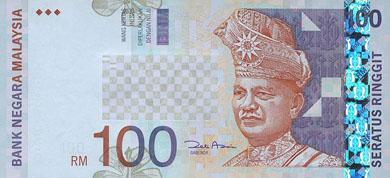
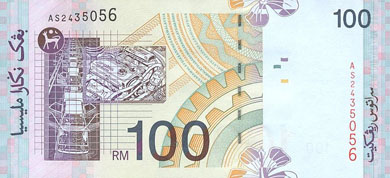
Budget & Public Finance
- Fiscal Year
- calendar year
- Annual Budget
- $34,620,000,000 (USD)
- Public Debt (% of GDP)
- 48.3%
- External Debt
- $56,720,000,000 (USD)
- Investment (% of GDP)
- 20.3%
- Current Account Balance
- $15,350,000,000 (USD)
- Reserves of Foreign Exchange
- $2,147,483,647 (USD)
Labor, Industry & Trade
- Labor Force by Occupation
- agriculture 14.5%; industry 36%; services 49.5%
- Household Income — highest 10%
- 39.2%
- Industries
- Peninsular Malaysia - rubber and oil palm processing and manufacturing, light manufacturing industry, electronics, tin mining and smelting, logging and processing timber; Sabah - logging, petroleum production; Sarawak - agriculture processing, petroleum production and refining, logging
- Agriculture Products
- Peninsular Malaysia - rubber, palm oil, cocoa, rice; Sabah - subsistence crops, rubber, timber, coconuts, rice; Sarawak - rubber, pepper; timber
- Export Commodities
- electronic equipment, petroleum and liquefied natural gas, wood and wood products, palm oil, rubber, textiles, chemicals
- Export Partners
- US 20.2%, Singapore 17.1%, Japan 11.3%, Hong Kong 5.7%, China 5.6%, Thailand 4.3%
- Import Commodities
- electronics, machinery, petroleum products, plastics, vehicles, iron and steel products, chemicals
- Import Partners
- Japan 17.8%, US 16.5%, Singapore 12%, China 7.7%, Taiwan 5.6%, South Korea 5.3%, Thailand 4%
Energy
- Oil Production
- 770,000 bbl/day
- Oil Consumption
- 510,000 bbl/day
- Oil Reserves
- 3,100,000,000 bbl/day
- Natural Gas Production
- 53,500,000,000 cu m
- Natural Gas Consumption
- 28,530,000,000 cu m
- Natural Gas Imports
- 0 cu m
- Natural Gas Exports
- 22,410,000,000 cu m
- Natural Gas Reserves
- 2,124,000,000,000 cu m
Communications
- Telephone System
- general assessment: modern system featuring good intercity service on Peninsular Malaysia provided mainly by microwave radio relay and an adequate intercity microwave radio relay network between Sabah and Sarawak via Brunei; international service excellent domestic: domestic satellite system with 2 earth stations; combined fixed-line and mobile-cellular teledensity roughly 140 per 100 persons international: country code - 60; landing point for several major international submarine cable networks that provide connectivity to Asia, Middle East, and Europe; satellite earth stations - 2 Intelsat (1 Indian Ocean, 1 Pacific Ocean)
- Internet Country Code
- .my
News & Weather
News & Weather
Current Weather
Latest News
Malaysia’s US$500m warship, Philippines’ Pax Silica AI hub: 7 Asia highlights - South China Morning Post
South China Morning Post · 1h ago
'Super' El Nino to bring record temperatures in Malaysia next year, weather agency says - Reuters
Reuters · 1d ago
US ties to Israel rattle rare earth deal in Malaysia - DW.com
DW.com · 13h ago
Silver Hill Duck arrives in Malaysia, bringing Ireland’s finest to the table - Prestige Online - Singapore
Prestige Online - Singapore · 1d ago
Malaysia’s 2026 TIV forecast revised up to 800,000 units on stronger demand - The Star
The Star · 1h ago
The Malaysian lawyer at the heart of the ICC crisis - Free Malaysia Today
Free Malaysia Today · 1d ago
Malaysian businesses risk people & culture neglect amid AI advancements - Malaysiakini
Malaysiakini · 5h ago
Rights groups flag rising disinformation targeting Rohingya in Malaysia - Malay Mail
Malay Mail · 2h ago
News via Google News
Climate Overview
The weather in Kuala Lumpur varies little throughout the year. Daily minimum and maximum temperatures remain fairly constant averaging 27°C (80°F) and 38°C (100°F). With the heat, there is high humidity as the average annual rainfall is 250 centimeters.
Although Kuala Lumpur is not subject to typhoons or cyclones, brief rainy seasons occur each year and bring scattered flooding. About 1-2 months of relatively dry weather usually precede the rainy seasons, although afternoon and evening thundershowers occur regularly throughout the year. The east coast and East Malaysia experience longer rainy seasons, and more widespread flooding as a result.
Videos
Videos
1 curated YouTube videos.
Source: YouTube
Frequently Asked Questions
Frequently Asked Questions
What is the population of Malaysia?
How do people greet each other in Malaysia?
What are the dining customs in Malaysia?
What should I know about visiting and hospitality etiquette in Malaysia?
How should I dress in Malaysia?
Which gestures matter in Malaysia?
What is family life like in Malaysia?
What do people do for recreation in Malaysia?
What is the capital of Malaysia?
Where is Malaysia located?
What countries border Malaysia?
What is the main religion practiced in Malaysia?
What is the currency of Malaysia?
What languages are spoken in Malaysia?
What is Malaysia known for?
What type of government does Malaysia have?
Last reviewed 2026