
 English
 Español
 中文
中文 हिन्दी
 Français
Cocos (Keeling) Islands
Declare Your Relationship to Cocos (Keeling) Islands
CountryReports Community
- Studying0
- From Cocos (Keeling) Islands0
- Cocos (Keeling) Islands heritage0
- Visited0
- Want to visit0
Quick Look Factsheet
A multi-page overview of Cocos (Keeling) Islands.
Cocos (Keeling) Islands FactsheetCustoms and Culture
Customs and Culture
Cultural Attributes
The Cocos (Keeling) Islands harbor a distinctly dual cultural identity shaped by two very different communities living side by side across the atoll. On Home Island, the Cocos Malay people form the heart of local culture, descended from laborers and settlers brought to the islands primarily from the Dutch East Indies and other parts of Southeast Asia in the early 19th century by Scottish mariner John Clunies-Ross. This community maintains a rich cultural heritage rooted in Malay traditions, speaking Cocos Malay, a creole dialect closely related to the Malay spoken in Malaysia and Indonesia, rather than standard English. Islam is the dominant religion among the Cocos Malay community, shaping daily life through prayer schedules, dietary practices, and observances of major Islamic festivals such as Eid al-Fitr, which is celebrated communally with traditional foods, music, and gatherings. On West Island, the culture more closely mirrors mainland Australian norms, as this is where Australian government workers and their families primarily reside. English is the predominant language here, and the lifestyle reflects broader Australian customs. Traditional Cocos Malay culture places strong emphasis on community cohesion, and the art of Zapin, a traditional Malay dance accompanied by gambus (a lute-like instrument) and frame drums, remains culturally significant. Handcrafted goods, particularly woven items made from coconut palm materials, reflect both practical heritage and artistic expression rooted in the islands' natural resources. The coconut palm is not merely an economic resource but a cultural symbol woven into the history and daily life of the Cocos Malay people. Historically, the Clunies-Ross family controlled virtually every aspect of island life, even issuing their own currency called the Cocos rupee. This unusual colonial history has left a lasting imprint on the community's sense of identity and resilience. Since formally integrating with Australia in 1984 and the transfer of land to the Cocos Malay community that followed, the islanders have worked to preserve their language, religion, and customs while navigating modern Australian governance and the influences of a globalized world.
Jewels of the Indian Ocean
Holidays
Australia Day
1/26Independence
Dates of Interest
- January 26th
What languages are spoken in the Cocos (Keeling) Islands?
The islands have a dual culture: on Home Island the Cocos Malay community speaks Cocos Malay, a creole dialect related to Malaysian and Indonesian Malay, while on West Island English predominates among Australian government workers and their families.
Good to know
- Expect Cocos Malay on Home Island and English on West Island
What should I know about religion and local customs?
Islam is the dominant religion among the Cocos Malay community on Home Island, shaping daily life through prayer schedules, dietary practices, and Islamic festivals such as Eid al-Fitr, which is celebrated communally with traditional foods, music, and gatherings.
Good to know
- Community cohesion is strongly valued in Cocos Malay culture
- Islamic prayer schedules and observances shape daily life on Home Island
What cultural traditions and arts can I experience?
The traditional Malay dance Zapin, accompanied by the gambus (a lute-like instrument) and frame drums, remains culturally significant, and handcrafted woven goods made from coconut palm materials reflect local heritage and artistry.
Good to know
- Look for handcrafted woven items made from coconut palm materials
- The coconut palm is a cultural symbol woven into island life
What background should I know before visiting?
The islands have a distinctive dual identity: Cocos Malay heritage on Home Island (descended from Southeast Asian settlers brought in the early 19th century) and mainland Australian norms on West Island, following formal integration with Australia in 1984.
Good to know
- The Clunies-Ross family historically controlled island life and even issued their own Cocos rupee currency
- Islanders work to preserve their language, religion, and customs within modern Australian governance
Last updated: 2026-07-12 · Sources: CountryReports
Travel and Tourism
Travel and Tourism
- Currency
- 1.352
- Time Difference
- UTC+6.5 (11.5 hours ahead of Washington, DC, during Standard Time)
- Climate
- tropical with high humidity, moderated by the southeast trade winds for about nine months of the year
- Airports
- 1
- Recommended Vaccinations
- How important is it to do your research about vaccinations? It might just save your life! Make yourself aware of the different types of vaccinations and which ones you may need to travel to your destination. Schedule an appointment with your doctor at least four to six weeks before you travel to ensure you receive all important shots. Be sure that you and your family are up to date on your routine vaccinations. Which vaccinations you need will depend on a number of factors including your destination, whether you will be spending time in rural areas, the season of the year you are traveling, your age, health status, and previous immunizations.
Read the full travel guide — health, safety, vaccinations, disease risk, sanitation, and transit details.
View full travel guideHistory
History
Historical Eras
Discovery & Uninhabited
1609 – 1826
Captain William Keeling of the English East India Company sighted the islands in 1609, making them known to European navigators, yet no permanent settlement was established for over two centuries. The islands served occasionally as a waypoint for passing ships but remained largely untouched wilderness of coral and coconut palm.
Clunies-Ross Settlement
1826 – 1857
Scottish mariner John Clunies-Ross arrived in 1826 and established the first permanent settlement, bringing Malay laborers to work copra plantations on Home Island. The Clunies-Ross family built a self-sufficient feudal community, effectively ruling the islands as a private fiefdom and laying the demographic foundation for the islands' distinct Malay and European communities.
British Crown Rule
1857 – 1955
Britain formally annexed the Cocos (Keeling) Islands in 1857 under Queen Victoria, though the Clunies-Ross family retained de facto control over the population and land. During World War I, HMAS Sydney destroyed the German cruiser SMS Emden near the islands in 1914, and a Japanese naval raid struck in 1942, underscoring the archipelago's strategic position in the Indian Ocean.
Australian Territory
1955 – 1984
The United Kingdom transferred administration of the islands to Australia on 23 November 1955 under the Cocos (Keeling) Islands Act. The Clunies-Ross family continued to dominate economic life, but Australia progressively expanded welfare and governance services to the Malay community, creating growing tension between the family's paternalistic authority and residents' emerging civil rights.
Self-Determination & Integration
1984 – present
In a 1984 UN-supervised act of self-determination, islanders voted to integrate fully with Australia, prompting the Australian government to compulsorily acquire the Clunies-Ross land holdings and dissolve the family's centuries-long dominion. The islands today operate as an Australian external territory with two inhabited islands — West Island and Home Island — governed under Australian law with local services administered through a shire council.
Read the full history profile — narrative overview, defining eras, and the complete timeline in one place.
View expanded historyInteresting Facts
Interesting Facts
Discovered in 1609 by Capt. William Keeling of the East India Company, the Cocos were settled in 1826 by Alexander Hare, an Englishman. A second settlement was founded in 1827 by John Clunies-Ross, a Scottish seaman, who landed with a boatload of Malay sailors.
See every fact — trivia, oddities, and curious tidbits gathered from across the country.
View all interesting factsGeography and Environment
Geography and Environment
- Terrain
- flat, low-lying coral atolls
- Climate
- tropical with high humidity, moderated by the southeast trade winds for about nine months of the year
- Natural Hazards
- cyclone season is October to April
- Current Environmental Issues
- fresh water resources are limited to rainwater accumulations in natural underground reservoirs
Read the full geography and environment profile — terrain, climate, natural resources, hazards, land use, and international agreements.
View full geographyPeople & Demographics
People & Demographics
Religion
Languages Spoken
Malay (Cocos dialect), English
- English
- Malay
Population
- Population
- 596
- Nationality Noun
- Cocos Islander(s)
- Ethnic Groups
- Europeans, Cocos Malays
Read the full people and society profile — demographics, health, education, religion, languages, and notable people.
View full people and societyGovernment & Politics
Government & Politics
Country Identity
- Country Name
- CocosKeelingIslands
- Full Country Name
- Territory of Cocos (Keeling) Islands
Government Structure
- Government Type
- NA
- Legal System
- based upon the laws of Australia and local laws
- Executive Branch
- chief of state: King CHARLES III (since 8 September 2022), represented by the Governor-General of Australia head of government: Administrator (nonresident) Farzian ZAINAL (since 2023) cabinet: NA elections: none; the monarch is hereditary; the Administrator is appointed by the Governor-General of Australia and serves as the representative of both the monarch and the Australian government on the islands
- Legislative Branch
- unicameral Cocos (Keeling) Islands Shire Council (7 seats) elections: held every two years with half the members standing for election; last held in May 2005 (next to be held in May 2007)
- Judicial Branch
- Supreme Court; Magistrate's Court
- Suffrage
- NA
- Constitution
- Cocos (Keeling) Islands Act of 1955
- Independence
- none (territory of Australia)
- National Holiday
- Australia Day, 26 January (1788)
Capital City
- Capital Name
- West Island
- Capital - geographic coordinate
- 12 10 S, 96 50 E
- Capital Time Difference
- UTC+6.5 (11.5 hours ahead of Washington, DC, during Standard Time)
Read the full government profile — flag symbolism, national anthem, and other national symbols.
View full government detailsEconomy
Economy
Coconuts, grown throughout the islands, remain the sole cash crop. Small local gardens and fishing contribute to the food supply, but most food and other necessities must be imported from Australia. Tourism, though modest, plays an increasingly important role in the local economy, with visitors drawn to the islands' diving, snorkeling, and pristine lagoon environments. Employment is largely tied to the Australian government and the local Shire Council, which together account for a significant share of jobs on the islands.
Snapshot
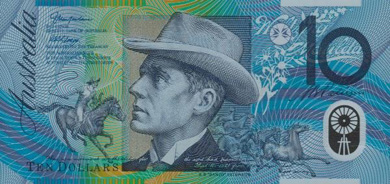
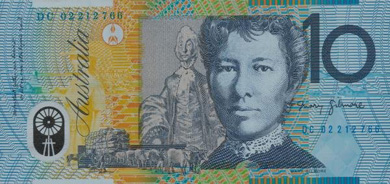
- Currency Name and Code
- Australian dollars (AUD)
Banknotes
Budget & Public Finance
- Fiscal Year
- 1 July - 30 June
Labor, Industry & Trade
- Labor Force by Occupation
- the Cocos Islands Cooperative Society Ltd. employs construction workers; stevedores; and lighterage workers; tourism employs others
- Industries
- copra products and tourism
- Agriculture Products
- vegetables, bananas, pawpaws, coconuts
- Export Commodities
- copra
- Export Partners
- Australia
- Import Commodities
- foodstuffs
- Import Partners
- Australia
Energy
- Oil Production
- 0 bbl/day
- Natural Gas Reserves
- 0 cu m
Communications
- Telephone System
- General Assessment: telephone service is part of the Australian network; an operational local mobile-cellular network available; wireless Internet connectivity available Domestic: NA International: country code - 61; telephone, telex, and facsimile communications with Australia and elsewhere via satellite; satellite earth station - 1 (Intelsat)
- Internet Country Code
- .cc
News & Weather
News & Weather
Current Weather
Latest News
Cocos (Keeling) Islands (CCK) Exports, Imports, and Trade Partners - The Observatory of Economic Complexity
The Observatory of Economic Complexity · 13d ago
Nova Systems successfully commissions Cocos (Keeling) Islands Ground Station supporting India's Gaganyaan Human Spaceflight Program - Australian Industry and Defence Network
Australian Industry and Defence Network · 4d ago
'Australia to set up space tracking terminal in Cocos Keeling for Gaganyaan mission': Albanese - Firstpost
Firstpost · 12d ago
Explore the Cocos Keeling Islands: A Hidden Indian Ocean Gem - Travel And Tour World
Travel And Tour World · 10d ago
Will set up temporary space tracking terminal on Cocos Keeling to support India’s Gaganyaan: Aus PM - The Times of India
The Times of India · 11d ago
12 Reasons to Visit the Cocos (Keeling) Islands in 2026 | Travel Insider - Qantas
Qantas · 67d ago
Plans to move residents off Cocos Islands walked back after backlash - ABC News & Headlines – Australian Broadcasting Corporation
ABC News & Headlines – Australian Broadcasting Corporation · 102d ago
You can now fly direct to Australia’s most remote tropical islands – saving two hours flying time - Time Out Worldwide
Time Out Worldwide · 84d ago
News via Google News
Climate Overview
tropical with high humidity, moderated by the southeast trade winds for about nine months of the year
Videos
Videos
2 curated YouTube videos.
Source: YouTube
Source: YouTube
Frequently Asked Questions
Frequently Asked Questions
What is the population of Cocos (Keeling) Islands?
What languages are spoken in the Cocos (Keeling) Islands?
What should I know about religion and local customs?
What cultural traditions and arts can I experience?
What background should I know before visiting?
What is the capital of the Cocos (Keeling) Islands?
Where are the Cocos (Keeling) Islands located?
What ocean and seas border the Cocos (Keeling) Islands?
What religion is practiced in the Cocos (Keeling) Islands?
What currency is used in the Cocos (Keeling) Islands?
What languages are spoken in the Cocos (Keeling) Islands?
What is the geography of the Cocos (Keeling) Islands like?
What is the Cocos (Keeling) Islands known for?
Last reviewed 2026