
 English
 Español
 中文
中文 हिन्दी
 Français
Oceania
14 Countries
Select a Country
Australia
View Report →
Fiji
View Report →
Kiribati
View Report →
Marshall Islands
View Report →
Micronesia
View Report →
Nauru
View Report →
New Zealand
View Report →
Palau
View Report →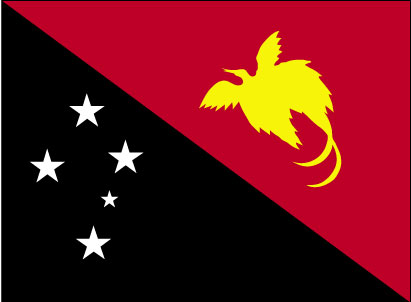
Papua New Guinea
View Report →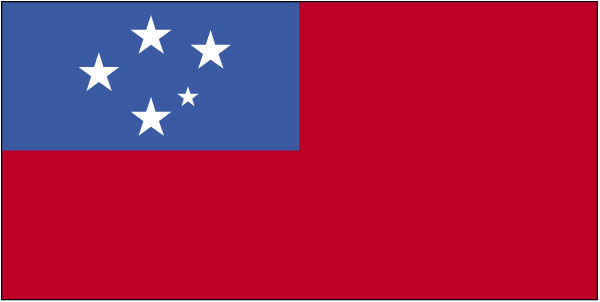
Samoa
View Report →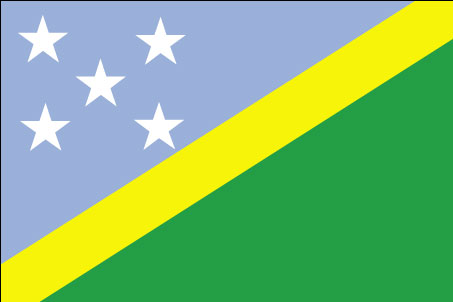
Solomon Islands
View Report →
Tonga
View Report →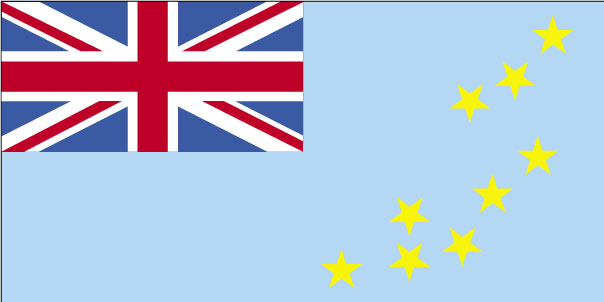
Tuvalu
View Report →
Vanuatu
View Report →Select a Territory
American Samoa
View Report →
Christmas Island
View Report →
Clipperton Island
View Report →
Cocos (Keeling) Islands
View Report →
Cook Islands
View Report →Coral Sea Islands
View Report →
French Polynesia
View Report →
Guam
View Report →
New Caledonia
View Report →
Niue
View Report →
Norfolk Island
View Report →
Northern Mariana Islands
View Report →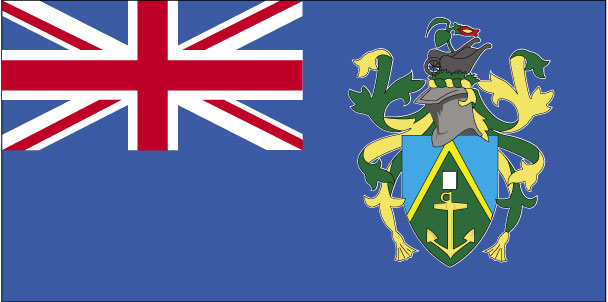
Pitcairn Islands
View Report →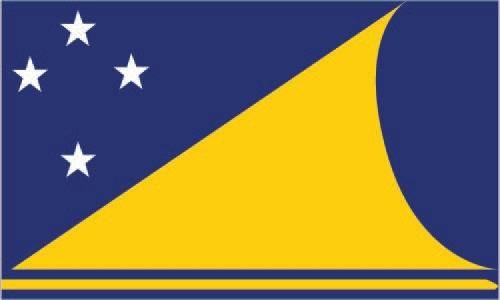
Tokelau
View Report →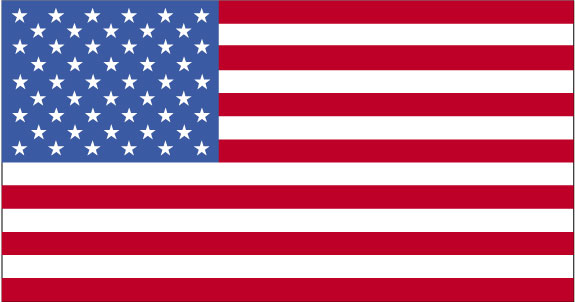
Wake Island
View Report →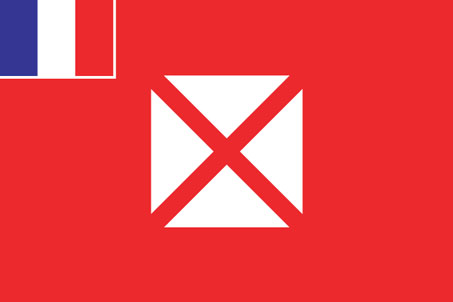
Wallis and Futuna
View Report →Overview and Geography of Oceania
Oceania is the vast region of the Pacific Ocean encompassing Australia, New Zealand, and thousands of islands spread across the world's largest ocean. Covering approximately 8.5 million square kilometers of land, but spanning an oceanic area of nearly 70 million square kilometers, Oceania is home to some of the most ancient human cultures on Earth, extraordinary biodiversity found nowhere else, and landscapes of haunting beauty ranging from the red deserts of Australia's interior to the coral atolls of Micronesia and the volcanic peaks of Papua New Guinea.
The term Oceania generally encompasses four sub-regions: Australia and New Zealand, Melanesia (the island arc stretching from New Guinea to Fiji), Micronesia (the scattered island nations of the northwest Pacific), and Polynesia (the vast triangle of the central and eastern Pacific bounded by Hawaii, New Zealand, and Easter Island). Together these regions contain 14 sovereign nations, dozens of territories belonging to other countries, and a combined population of approximately 44 million people, the majority of whom live in Australia.
Australia, the continent-country that forms the heart of Oceania, is the world's sixth largest country and the largest country in the region by a vast margin. It covers approximately 7.7 million square kilometers and sits between the Indian and Pacific Oceans. The Australian landscape is dominated by ancient, eroded terrain: the vast interior is largely arid or semi-arid, with the Great Victoria Desert, the Gibson Desert, the Simpson Desert, and the Nullarbor Plain forming a great central dryness. The eastern coast is more temperate and fertile, and the Great Dividing Range runs along much of the eastern seaboard. The continent's most iconic landform is Uluru, a massive sandstone monolith rising 348 meters from the flat desert of the Northern Territory, sacred to the Anangu Aboriginal people.
New Zealand, lying approximately 2,000 kilometers southeast of Australia, consists of two main islands, the North Island and the South Island, plus numerous smaller islands. It is one of the most geologically active countries on Earth, lying on the boundary of the Pacific and Australian tectonic plates. The South Island's Southern Alps run the length of the island and include Aoraki Mount Cook at 3,724 meters. The North Island has an active volcanic plateau and geothermal activity.
Melanesia encompasses the islands of New Guinea, the Bismarck Archipelago, the Solomon Islands, Vanuatu, Fiji, and New Caledonia. The terrain is typically rugged and mountainous, with dense tropical forests. Micronesia includes the Federated States of Micronesia, Palau, the Marshall Islands, Kiribati, Nauru, and the Mariana Islands. Many Micronesian islands are low-lying coral atolls, making them acutely vulnerable to rising sea levels. Polynesia encompasses Samoa, Tonga, Tuvalu, and numerous territories including French Polynesia and the Cook Islands.
History of Oceania
The history of human settlement in Oceania is one of the most remarkable stories of maritime migration in human experience. Australia was first settled by people migrating from Africa and Southeast Asia at least 65,000 years ago, and possibly as long as 75,000 years ago, making Aboriginal Australians the oldest continuous civilization on Earth. The ancestors of the Melanesian peoples arrived in New Guinea and surrounding islands approximately 40,000 to 50,000 years ago.
The settlement of the more remote Pacific islands was accomplished by the Austronesian people, a maritime culture that originated in Taiwan approximately 5,000 years ago and gradually spread southward through the Philippines and Indonesia, reaching Melanesia and then pushing eastward into the previously uninhabited Pacific. The Lapita culture, identified by its distinctive pottery, spread across Melanesia and into western Polynesia between approximately 3,500 and 2,500 years ago.
The settlement of eastern Polynesia, including Hawaii, New Zealand, and Easter Island, occurred later and represents one of the most astonishing achievements of navigation in human history. Polynesian navigators, using stars, ocean swells, bird behavior, and other natural signs rather than instruments, crossed thousands of kilometers of open ocean in double-hulled canoes to discover and settle islands spread across millions of square kilometers of ocean. New Zealand, the last major landmass on Earth to be settled by humans, was reached by Polynesian voyagers, the ancestors of the Maori people, approximately 700 to 800 years ago. Easter Island, one of the most isolated inhabited places on Earth, was settled around the same period.
European contact with Oceania began in the sixteenth century. Ferdinand Magellan crossed the Pacific in 1521. Spanish, Portuguese, Dutch, French, and British explorers gradually mapped the Pacific over the following two centuries. James Cook's three voyages of exploration between 1768 and 1779 were particularly significant, charting the coastlines of Australia, New Zealand, and dozens of Pacific islands and making their geography known to the European world.
European colonization had catastrophic consequences for indigenous peoples throughout Oceania. In Australia, British colonization began in 1788 with the establishment of a convict settlement at Port Jackson, now Sydney. Aboriginal Australians, who numbered perhaps 750,000 at the time of first contact, were displaced from their lands, subjected to massacres and forced removal, and devastated by introduced diseases. By the early twentieth century their population had fallen to approximately 100,000. The stolen generations policy, through which Aboriginal and Torres Strait Islander children were forcibly removed from their families and placed in institutions or with white families, continued until the 1970s.
In New Zealand, the Treaty of Waitangi signed in 1840 between the British Crown and many Maori chiefs established British sovereignty while guaranteeing Maori rights to their lands and resources. The interpretation and application of the treaty have been debated and contested ever since, and it remains the founding constitutional document of New Zealand.
In the Pacific islands, European and American colonization brought missionaries, traders, planters, and ultimately colonial governments. The introduction of diseases killed enormous proportions of island populations. The labor trade known as blackbirding, which involved the kidnapping or deception of Pacific islanders for forced labor on plantations, particularly in Queensland, Australia, and Fiji, was a significant atrocity of the nineteenth century.
The twentieth century brought decolonization to most of the region. Australia and New Zealand had effective self-governance by the early twentieth century and full independence by mid-century. Most Pacific island nations achieved independence in the 1960s, 1970s, and 1980s.
Cultural Attributes
The cultures of Oceania are extraordinarily diverse, reflecting tens of thousands of years of independent development across hundreds of islands separated by vast distances of ocean.
Aboriginal Australian culture is one of the oldest and most complex in the world. The Dreaming, or Dreamtime, is the foundational spiritual framework of Aboriginal culture, describing the time of creation when ancestral beings shaped the land and established the laws and customs that govern life. Aboriginal art, including the intricate dot painting tradition of central Australia and the bark painting tradition of Arnhem Land, is one of the world's most distinctive artistic forms and has achieved international recognition. Aboriginal peoples speak hundreds of distinct languages, though many are endangered.
Maori culture in New Zealand is characterized by a strong oral tradition, elaborate wood carving and weaving, and the haka, a powerful ceremonial dance performed with vigorous body movements and chanting. The ta moko, or traditional tattoo, is a form of cultural identity closely tied to ancestry and tribal affiliation. Maori culture has experienced a significant revival since the 1970s, and te reo Maori, the Maori language, is an official language of New Zealand.
Melanesian cultures are extraordinarily diverse. Papua New Guinea alone has approximately 840 languages, more than any other country on Earth, a legacy of the geographic isolation of mountain valleys and island communities over thousands of years. Elaborate mask-making traditions, elaborate ceremonial exchange systems, and intricate body decoration are features of many Melanesian cultures.
Polynesian culture has a strong tradition of oral poetry, music, and dance. The hula of Hawaii, the Tahitian ori Tahiti, and the Samoan siva are among the most recognized Pacific dance forms. Polynesian navigation knowledge, nearly lost during the colonial period, has experienced a significant revival in recent decades through the voyaging movement, which has reconstructed traditional canoes and navigation techniques.
Pacific cuisine reflects the bounty of the ocean and the tropical environment: fresh fish, coconut, taro, sweet potato, breadfruit, and tropical fruits form the basis of diets across the region. The Polynesian hangi, an earth oven in which food is cooked on heated stones underground, is one of the most distinctive cooking traditions.
Languages of Oceania
Oceania has extraordinary linguistic diversity. Australia has approximately 250 indigenous language families, though many are now critically endangered or extinct. Of the remaining indigenous languages, only a handful have more than a few hundred speakers. English is the dominant language of daily life in Australia.
New Zealand has two official languages: English and te reo Maori. Maori is spoken by approximately 185,000 people and is the subject of significant revitalization efforts including immersion schooling programs called kohanga reo.
Papua New Guinea has approximately 840 living languages, making it the most linguistically diverse country on Earth. Tok Pisin, an English-based creole, serves as the national lingua franca alongside English and Hiri Motu, the country's three official languages.
Throughout Micronesia and Polynesia, the indigenous Austronesian languages of each island group are spoken alongside English, French (in French Polynesia and New Caledonia), and in some cases other colonial languages. Samoan, Tongan, Fijian, and the languages of the various Micronesian nations are all distinct languages with their own grammatical structures and vocabularies.
Famous Tourist Attractions
The Great Barrier Reef off the coast of Queensland, Australia, is the world's largest coral reef system, stretching for approximately 2,300 kilometers and encompassing over 2,900 individual reefs. It is the world's largest living structure and visible from space. The reef supports extraordinary biodiversity, including 1,500 species of fish, 4,000 types of mollusk, and 240 bird species. It has been listed as a UNESCO World Heritage Site but faces significant threats from climate change, ocean acidification, and agricultural runoff.
Uluru in the Northern Territory of Australia is one of the world's most recognizable natural landmarks. The massive sandstone monolith changes color dramatically at sunrise and sunset and has profound spiritual significance to the Anangu people, its traditional custodians. It was returned to Aboriginal ownership in 1985 and is now jointly managed by the Anangu and the Australian government.
Fiordland National Park in New Zealand's South Island contains some of the most dramatic scenery in the world. Milford Sound, a fiord carved by glaciers and surrounded by sheer cliffs and waterfalls, is one of the most visited natural attractions in New Zealand. The park is also home to the kiwi, the flightless bird that serves as New Zealand's national symbol.
The Daintree Rainforest in Queensland is the world's oldest surviving tropical rainforest, with parts dating back at least 135 million years. It sits alongside the Great Barrier Reef, making this corner of Australia one of the most biodiverse regions on Earth.
The Bora Bora lagoon in French Polynesia, with its iconic overwater bungalows and crystal-clear turquoise waters, is one of the most recognized island images in the world. The volcanic island and its surrounding reef have become synonymous with tropical paradise.
Frequently Asked Questions About Oceania
Answers to common questions about countries, culture, travel, and history.