English
 Español
 中文
中文 हिन्दी
 Français
Government and Politics
Government and Politics of Monaco
Government structure, leadership, capital, military, and national symbols of Monaco.
Government Structure
Constitutional foundations, branches, parties, and leadership.
- Government Type
- constitutional monarchy
- Administrative Divisions
- none; there are no first-order administrative divisions as defined by the US Government, but there are four quarters (quartiers, singular - quartier); Fontvieille, La Condamine, Monaco-Ville, Monte-Carlo
- Legal System
- based on French law; has not accepted compulsory ICJ jurisdiction
- Suffrage
- 21 years of age; universal
- Citizenship
- citizenship by birth: no citizenship by descent only: the father must be a citizen of Monaco; in the case of a child born out of wedlock, the mother must be a citizen and father unknown dual citizenship recognized: no residency requirement for naturalization: 10 years
- Executive Branch
- chief of state: Prince ALBERT II (since 6 April 2005) head of government: Minister of State Didier Guillaume (since 5 September 2024) cabinet: Council of Government is under the authority of the monarch elections: none; the monarchy is hereditary; the Minister of State is appointed by the monarch from a list of three French national candidates presented by the French Government
- Legislative Branch
- unicameral National Council or Conseil National (24 seats; 16 members elected by list majority system, 8 by proportional representation; to serve five-year terms) elections: last held 9 February 2003 (next to be held February 2008) election results: percent of vote by party - NA%; seats by party - UNAM 21, UND 3
- Judicial Branch
- Supreme Court or Tribunal Supreme (judges appointed by the monarch on the basis of nominations by the National Council)
- Political Parties
- National and Democratic Union or UND [Jean-Louis CAMPORA]; Union for Monaco or UPM (including National Union for the Future of Monaco or UNAM) [leader NA]
- Head of State
- Prince ALBERT II
- Head of Government
- Minister of State Michel Roger
- Cabinet
- Council of Government is under the authority of the monarch
- Elections
- the monarchy is hereditary; minister of state appointed by the monarch from a list of three French national candidates presented by the French Government
- Constitution
- 17-Dec-62
- Independence
- 1419 (beginning of the rule by the House of Grimaldi)
- National Holiday
- National Day (Prince of Monaco Holiday), 19 November
- International Organization Participation
- ACCT, FAO, IAEA, ICAO, ICC, ICCt (signatory), ICRM, IFRCS, IHO, IMO, Interpol, IOC, ITU, OPCW, OSCE, UN, UNCTAD, UNESCO, UNIDO, UNITAR, UPU, WHO, WIPO, WMO, WToO
- Diplomatic Representation in the U.S.
- Monaco does not have an embassy in the US consulate(s) general: New York
- U.S. Diplomatic Representation
- the US does not have an embassy in Monaco; the US Consul General in Marseille (France) is accredited to Monaco
Capital City
Seat of government and political history.
- Capital City
- Monaco
- Location
- 43 44 N, 7 25 E
- Time Difference
- UTC+1 (6 hours ahead of Washington, DC, during Standard Time)
- History
- founded as a Greek colony in the 6th century B.C., the name derives from two Greek words monos (single, alone) and oikos (house) to convey the sense of a people "living apart" or in a "single habitation"
Embassy and Diplomatic Representation
Embassy location and contact details.
The local point of contact for U.S. citizens in Monaco is the U.S. Consular Agency in Nice. U.S. Consular Agency Nice 7, Avenue Gustave V 3rd floor Tel. 33 (4) 93 88 89 55 Fax 33 (4) 93 87 07 38 Website: http://marseille.usconsulate.gov/nice.html
Military
Branches, service obligations, expenditures, and manpower.
- Military Branches
- no regular military forces; Directorate of Public Security
National Symbols
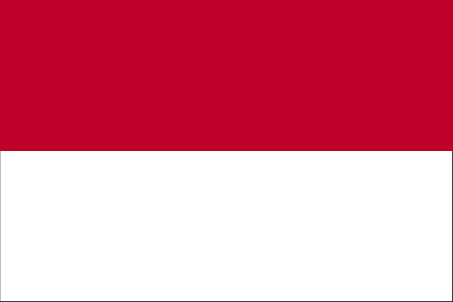
Flag, anthem, and other symbols of national identity.