English
 Español
 中文
中文 हिन्दी
 Français
Government and Politics
Government and Politics of Vietnam
Government structure, leadership, capital, military, and national symbols of Vietnam.
Government Structure
Constitutional foundations, branches, parties, and leadership.
- Government Type
- Communist state
- Administrative Divisions
- 58 provinces (tinh, singular and plural), and 3 municipalities* (thu do, singular and plural); An Giang, Bac Giang, Bac Kan, Bac Lieu, Bac Ninh, Ba Ria-Vung Tau, Ben Tre, Binh Dinh, Binh Duong, Binh Phuoc, Binh Thuan, Ca Mau, Can Tho, Cao Bang, Dac Lak, Da Nang, Dong Nai, Dong Thap, Gia Lai, Ha Giang, Hai Duong, Hai Phong*, Ha Nam, Ha Noi*, Ha Tay, Ha Tinh, Hoa Binh, Ho Chi Minh*, Hung Yen, Khanh Hoa, Kien Giang, Kon Tum, Lai Chau, Lam Dong, Lang Son, Lao Cai, Long An, Nam Dinh, Nghe An, Ninh Binh, Ninh Thuan, Phu Tho, Phu Yen, Quang Binh, Quang Nam, Quang Ngai, Quang Ninh, Quang Tri, Soc Trang, Son La, Tay Ninh, Thai Binh, Thai Nguyen, Thanh Hoa, Thua Thien-Hue, Tien Giang, Tra Vinh, Tuyen Quang, Vinh Long, Vinh Phuc, Yen Bai
- Legal System
- based on communist legal theory and French civil law system
- Suffrage
- 18 years of age; universal
- Citizenship
- citizenship by birth: no citizenship by descent only: at least one parent must be a citizen of Vietnam dual citizenship recognized: no residency requirement for naturalization: 5 years
- Executive Branch
- chief of state: President Tran Duc LUONG (since 24 September 1997) head of government: Prime Minister Phan Van KHAI (since 25 September 1997); First Deputy Prime Minister Nguyen Tan DUNG (since 29 September 1997); Deputy Prime Ministers Vu KHOAN (8 August 2002) and Pham Gia KHIEM (since 29 September 1997) cabinet: Cabinet appointed by president based on proposal of prime minister and ratification of National Assembly elections: president elected by the National Assembly from among its members for a five-year term; election last held 25 July 2002 (next to be held when National Assembly meets following legislative elections in 2007); prime minister appointed by the president from among the members of the National Assembly; deputy prime ministers appointed by the prime minister election results: Tran Duc LUONG elected president; percent of National Assembly vote - NA%
- Legislative Branch
- unicameral National Assembly or Quoc-Hoi (498 seats; members elected by popular vote to serve five-year terms) elections: last held 19 May 2002 (next to be held 2007) election results: percent of vote by party - CPV 90%, other 10% (the 10% are not CPV members but are approved by the CPV to stand for election); seats by party - CPV 447, CPV-approved 51
- Judicial Branch
- Supreme People's Court (chief justice is elected for a five-year term by the National Assembly on the recommendation of the president)
- Political Parties
- only party - Communist Party of Vietnam or CPV [Nong Duc MANH, general secretary]
- Head of State
- Nguyen Minh TRIET
- Head of Government
- Nguyen Tan DUNG
- Cabinet
- Cabinet appointed by president based on proposal of prime minister and confirmed by National Assembly
- Elections
- president elected by the National Assembly from among its members for five-year term; last held 27 June 2006 (next to be held in 2011); prime minister appointed by the president from among the members of the National Assembly; deputy prime ministers appointed by the prime minister; appointment of prime minister and deputy prime ministers confirmed by National Assembly
- Election Results
- Nguyen Minh TRIET elected president; percent of National Assembly vote - 94%; Nguyen Tan DUNG elected prime minister; percent of National Assembly vote - 92%
- Constitution
- 15-Apr-92
- Independence
- 2 September 1945 (from France)
- National Holiday
- Independence Day, 2 September (1945)
- International Organization Participation
- ACCT, APEC, ARF, AsDB, ASEAN, CP, FAO, G-77, IAEA, IBRD, ICAO, ICRM, IDA, IFAD, IFC, IFRCS, ILO, IMF, IMO, Interpol, IOC, IOM (observer), ISO, ITU, NAM, OPCW, UN, UNCTAD, UNESCO, UNIDO, UPU, WCL, WCO, WFTU, WHO, WIPO, WMO, WToO, WTrO (observer)
- Diplomatic Representation in the U.S.
- chief of mission: Ambassador Nguyen Tam CHIEN chancery: 1233 20th Street NW, Suite 400, Washington, DC 20036 telephone: [1] (202) 861-0737 FAX: [1] (202) 861-0917 consulate(s) general: San Francisco
- U.S. Diplomatic Representation
- chief of mission: Ambassador Michael W. MARINE embassy: 7 Lang Ha Street, Ba Dinh District, Hanoi mailing address: PSC 461, Box 400, FPO AP 96521-0002 telephone: [84] (4) 772-1500 FAX: [84] (4) 772-1510 consulate(s) general: Ho Chi Minh City
Capital City
Seat of government and political history.
- Capital City
- Hanoi (Ha Noi)
- Location
- 21 02 N, 105 51 E
- Time Difference
- UTC+7 (12 hours ahead of Washington, DC, during Standard Time)
- History
- the city has had many names in its history going back to A.D. 1010 when it first became the capital of imperial Vietnam; in 1831, it received its current name of Ha Noi, meaning "between the rivers," which refers to its geographic location
Embassy and Diplomatic Representation
Embassy location and contact details.
U.S. Embassy in Hanoi 170 Ngoc Khanh Ba Dinh District Hanoi, Vietnam 24 hour telephone number: (84-4) 3850-5000 Fax: (84-4) 3850-5010 U.S. Consulate General in Ho Chi Minh City 4 Le Duan, District 1 Ho Chi Minh City, Vietnam 24 hour telephone number: (84-8) 3520-4200 Fax: (84-8) 3520-4244
Military
Branches, service obligations, expenditures, and manpower.
- Military Branches
- People's Armed Forces: People's Army of Vietnam (PAVN; includes Vietnam People's Navy (with Naval Infantry), Vietnam People's Air and Air Defense Force, Border Defense Command, Coast Guard)
- Service Age and Obligation
- 18-25 years of age for male compulsory and voluntary military service; females may volunteer for active duty military service; conscription typically takes place twice annually and service obligation is 18 months (Army, Air Defense), 2 years (Navy and Air Force); 18-45 years of age (male) or 18-40 years of age (female) for Militia Force or Self Defense Force service; males may enroll in military schools at age 17
National Symbols
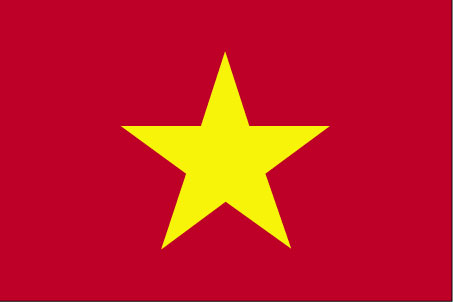
Flag, anthem, and other symbols of national identity.