
 English
 Español
 中文
中文 हिन्दी
 Français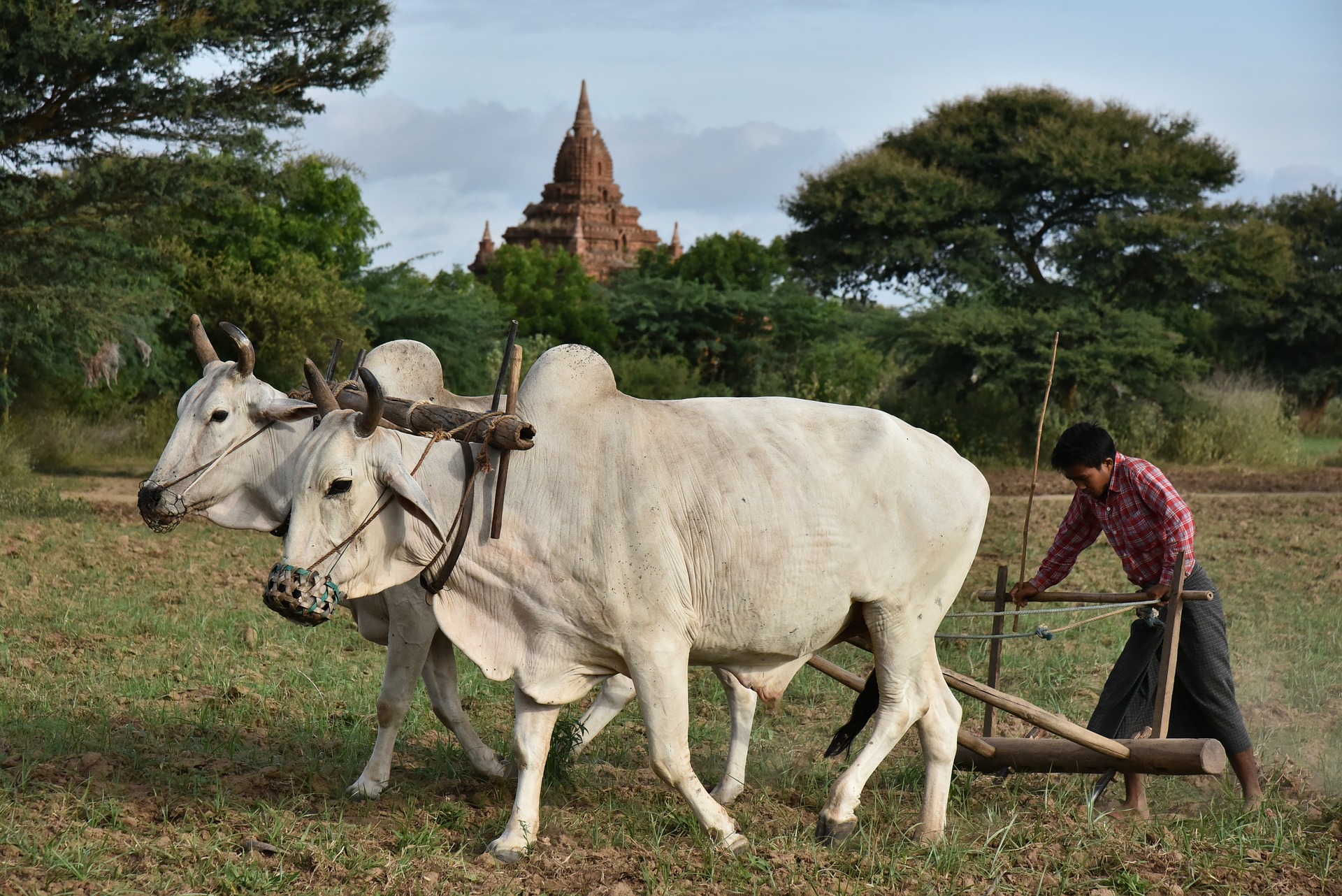
Animal and Human Power: The Original Engines of Civilization
For the overwhelming majority of human history, the only sources of mechanical energy available were the muscles of human beings and the animals they domesticated and put to work. Every civilization that built temples, plowed fields, moved armies, constructed roads, and transported goods did so on the strength of biological muscle power — the conversion of food energy into mechanical work through the biochemistry of animal tissue. The great monuments of antiquity — the Egyptian pyramids, the Roman aqueducts, the Great Wall of China, the cathedrals of medieval Europe — are monuments as much to the organization and application of human and animal muscle as to the engineering genius of their designers.
The transition away from biological muscle power to inanimate energy sources — waterwheels, windmills, steam engines, and ultimately electric motors — is one of the most profound transformations in human history, freeing populations from the relentless physical labor that had defined human existence for ten thousand years and enabling the explosion of productivity that characterizes modern civilization. Yet even today, after two centuries of industrialization, animal and human power remain the primary energy source for hundreds of millions of people in developing countries, and animal traction in agriculture supports a substantial portion of global food production. The humble ox pulling a plow or the farmer carrying water from a well are not historical curiosities — they are present realities for a significant fraction of humanity.
The story of animal and human power is also the story of biology's limits and ingenuity's responses to them. The maximum sustained power output of a healthy human adult is approximately seventy to one hundred watts — roughly the output of a large incandescent light bulb. A horse can sustain approximately seven hundred to eight hundred watts (approximately one horsepower, the unit that James Watt defined in reference to draft horses). These biological limits shaped the scale of every pre-industrial civilization, determined the maximum size of buildings and ships, constrained the speed of communication and transport, and defined the ceiling of agricultural productivity. Understanding animal and human power means understanding the material constraints within which all pre-industrial societies operated.
The Physical Basis of Biological Muscle Power
Animal and human muscle power is ultimately solar energy — the sun's radiation captured by plants through photosynthesis, stored as chemical energy in carbohydrates and fats, consumed as food, and converted by muscle tissue into mechanical work through the biochemical processes of cellular respiration and actomyosin contraction.
The efficiency of this energy conversion chain is modest. Agricultural crops typically convert approximately one to two percent of incident solar radiation into harvestable plant matter. Humans consuming plant foods convert approximately twenty-five to thirty percent of food energy into useful mechanical work (with the remainder dissipated as heat, maintaining body temperature, and supporting metabolic functions). Horses and other large herbivores have similar food-to-work efficiencies. The net result is that supporting one draft horse requires approximately four to five hectares of land to grow the fodder needed to fuel it — a significant land cost that shaped how many work animals pre-industrial economies could maintain.
Human power output varies enormously with fitness, body size, task type, and duration. Elite athletes in sustained effort events such as cycling can produce approximately three hundred to four hundred watts for an hour (Tour de France professional cyclists average approximately four hundred watts over multi-hour stages). Ordinary working adults can sustain approximately seventy to one hundred watts in productive work over a working day, and can produce brief peak outputs of several hundred watts for short bursts. The measurement of human power output was not systematized until the late nineteenth and twentieth centuries, but the practical experience of slave-owners, employers, and military commanders throughout history gave them intuitive estimates of how much work a person could do.
The comparative power of large animals established the hierarchy of work capabilities that determined which animals were most valuable for what tasks. A healthy draft horse can sustain approximately seven hundred to eight hundred watts of power output (one horsepower, as standardized by James Watt in 1782, was approximately 745.7 watts). A strong ox can sustain approximately five hundred to six hundred watts but can maintain effort for longer periods than a horse and requires less specialized care. A donkey can sustain approximately one hundred and fifty to two hundred and fifty watts — significantly less than a horse, but sufficient for many tasks and far more economical to maintain. A camel can sustain approximately three hundred to four hundred watts in load-carrying tasks, and has the extraordinary advantage of operating effectively in arid environments where horses and oxen cannot work.
The Domestication of Draft Animals
The domestication of animals for their labor — rather than primarily for food or fiber — transformed human societies far more profoundly than is generally appreciated. Each major draft animal domestication created new possibilities for agriculture, transportation, warfare, and construction that were qualitatively different from what had been possible with human labor alone.
The ox — the castrated male of domestic cattle (Bos taurus) — was probably the first large animal domesticated primarily for draft work, with evidence of ox-drawn plows appearing in the archaeological record of Mesopotamia and Egypt by approximately 4000 BCE. Cattle domestication for food dates back to approximately 8000-9000 BCE, but the systematic use of oxen for pulling plows represents a key technological transition. The ox-drawn plow dramatically expanded the area of land that could be cultivated and the depth to which soil could be broken, enabling the agricultural intensification that supported the first urban civilizations. Oxen remained the dominant draft animal in many parts of Europe, Africa, and Asia through the medieval period and into the early modern era, valued for their strength (greater than that of horses in sustained pulling work), their docility, and their relatively low dietary requirements.
The domestic horse (Equus caballus) was domesticated on the Eurasian steppe approximately five thousand five hundred years ago (approximately 3500 BCE), probably in the region of what is now Kazakhstan. The earliest horses were kept primarily for meat and milk, but by approximately 2000 BCE, horses were being ridden and used to draw light two-wheeled chariots. The chariot, developed in the Near East and spreading rapidly across Eurasia, transformed warfare — providing speed, shock power, and elevation advantages that fundamentally altered military tactics for approximately fifteen hundred years. The Hyksos, who used horse-drawn chariots to conquer Egypt around 1650 BCE, demonstrated the military potential of equine power. The subsequent introduction of cavalry — soldiers fighting from horseback — added a further dimension of mobility and striking power that would remain central to warfare for three thousand years.
The donkey (Equus asinus) was domesticated from the African wild ass in northeastern Africa approximately five thousand years ago, probably in the region of Egypt and Sudan. Donkeys became the primary pack animal of the ancient Near East and Mediterranean, valued for their surefootedness on rough terrain, their ability to work in hot, arid conditions where horses struggled, and their modest fodder requirements. Donkey caravans linked the agricultural heartlands of the ancient world to mining regions, mountain communities, and desert oases.
The domestic Bactrian camel (Camelus bactrianus) was domesticated in Central Asia approximately four thousand five hundred years ago, and the dromedary (Camelus dromedarius) in Arabia approximately three thousand years ago. Camels' extraordinary ability to survive for days without water, to carry heavy loads across desert terrain that would kill horses, and to subsist on sparse desert vegetation made them indispensable for trans-desert trade across the Sahara and the Central Asian steppes. The camel caravans that linked the Mediterranean world with China along the Silk Road, and the sub-Saharan gold and salt trade across the Sahara, were among the most consequential trade networks in human history, and camels were the essential technology that made them possible.
The elephant — never fully domesticated in the sense of being bred in captivity, but trained and used as a work animal from approximately four thousand years ago in the Indus Valley — provided extraordinary power for tasks beyond the capability of any other animal: lifting and moving massive timber and stone, clearing jungle, and (in warfare) serving as shock troops against cavalry and infantry. Working elephants in the logging industries of Burma, Thailand, and Sri Lanka have used elephants for forest clearing and log transport for millennia, continuing into the modern era. The war elephants of Carthage, the Seleucid Empire, and the Maurya Empire (which at its peak under Chandragupta Maurya maintained approximately nine thousand war elephants) shaped the military history of three continents.
The Horse Collar and the Agricultural Revolution
The most important single technological improvement in the harnessing of animal power before the industrial revolution was not the domestication of the horse, nor the invention of the wheel, nor the development of the chariot — it was the invention of the horse collar. This seemingly modest piece of leather equipment, developed in China approximately in the fifth century CE and reaching Europe by the ninth to tenth century, roughly tripled the pulling power that a horse could effectively apply to a load, and thereby transformed the productive capacity of European agriculture.
The problem with earlier harness designs was anatomical. The ancient throat-and-girth harness, used throughout the classical world of Greece and Rome, passed a band across the horse's throat. When the horse pulled against a heavy load, the throat band pressed against the horse's trachea (windpipe) and jugular veins, partially strangling the animal — limiting the force it could apply before suffocation became a concern. Ancient sources suggest that two horses harnessed in this fashion could pull approximately five hundred kilograms, compared to the approximately one and a half tonnes that two properly harnessed horses can pull using a collar harness.
The horse collar works on a fundamentally different principle: a padded collar fits around the horse's neck and shoulders, with the traces (the connections to the load) attached at the bottom of the collar on either side of the horse's chest. The pulling force is now transmitted through the shoulders and chest — the strongest parts of the horse's body — rather than the throat, allowing the horse to lean into the load with its full weight and strength without any restriction to breathing. With the collar harness, horses could be used to pull plows as effectively as oxen, and with the advantage of greater speed — a horse walks and works approximately thirty to fifty percent faster than an ox, allowing substantially more ground to be plowed in a day.
The diffusion of the horse collar across medieval Europe between approximately 850 and 1100 CE coincided with a significant expansion of cultivated area, improvement in agricultural yields, and the gradual replacement of ox teams with horse teams in regions where horses could be affordably maintained. Medieval European agricultural productivity increased substantially between the ninth and thirteenth centuries, and while many factors contributed (including the three-field rotation system and improved plow designs), the horse collar and improved harnessing were among the key enabling technologies.
The related development of horseshoes — iron shoes nailed to the horse's hooves to protect them on hard roads and rocky terrain — also contributed significantly to equine work capacity. Unshod horses are limited in the terrain and surfaces they can work on; shod horses can work effectively on cobbled roads, stony fields, and rough terrain. Horseshoes appeared in Europe by approximately the ninth century CE, further expanding the range of conditions in which horses could be productively employed.
Animal Power in Agriculture: Plowing, Threshing, and Milling
Agricultural applications consumed the majority of draft animal work throughout history, with plowing, threshing, milling, and irrigation lifting among the most labor-intensive and economically vital tasks.
Plowing — breaking and turning soil to prepare seedbeds — was the most demanding agricultural draft task, requiring sustained heavy pulling over long distances. The development of the moldboard plow (which not only broke the soil but turned it over, burying weeds and aerating the ground) in medieval Europe, combined with horse collars and heavier horses, allowed the cultivation of the heavy, clay-rich soils of northern Europe that lighter scratch plows and lighter animals could not effectively turn. The heavy moldboard plow pulled by a team of four to eight horses or oxen became the standard implement for northern European grain cultivation from approximately the tenth century onward, enabling the agricultural expansion that supported medieval population growth.
A team of two heavy draft horses could plow approximately one to two acres (0.4 to 0.8 hectares) per day, depending on soil conditions — a rate of land preparation that defined the scale of the family farm and the rhythm of agricultural seasons. In England, the "hide" (approximately 120 acres) was traditionally defined as the amount of land one team of eight oxen could plow in a year — a unit of agricultural land that reflected the practical limits of animal traction.
Threshing — separating grain from straw by beating the harvested sheaves — was another major consumer of both human and animal labor. Traditional hand threshing with wooden flails was extremely labor-intensive, requiring approximately one person-day of work per bushel of grain threshed. Horse-powered threshing machines, developed in the late eighteenth and early nineteenth centuries, used a horse walking in a circular path to drive a gear mechanism connected to a threshing drum — dramatically reducing the labor required. The horse-walk (a circular track on which horses walked to power machinery through a central gear) was a common feature of farm buildings throughout the nineteenth century.
Grinding grain into flour was among the most important and continuously necessary applications of animal power. Roman and medieval mills used donkeys and horses walking in circles to turn millstones — the "donkey mill" (or mola asinaria) was the standard milling technology in Roman cities before the widespread adoption of watermill and windmill technology. A single donkey-powered mill of the Roman type could grind approximately seven kilograms of flour per hour — sufficient to supply bread for approximately thirty to forty people per day. Large Roman bakeries might have had ten or more mills, each powered by a single animal walking in a continuous circle. The ruins of Roman Pompeii preserve numerous examples of donkey mills with their characteristic hourglass-shaped upper stones, attesting to the scale of animal-powered grain milling in ancient urban economies.
Irrigation — lifting water from wells, rivers, or canals to fields — was another major application of animal power in dry regions. The Persian wheel (or sakia), a chain of pots attached to a wheel turned by a blindfolded ox walking in a circle, was the dominant irrigation technology of the ancient Middle East and remains in use in parts of Egypt, India, Pakistan, and Sudan today. A single ox driving a Persian wheel can lift approximately ten to fifteen cubic meters of water per hour from depths of up to five to ten meters — enough to irrigate approximately one to two hectares of cropland. The extensive irrigated agriculture of ancient Mesopotamia, the Nile Delta, the Indus Valley, and the Punjab region was sustained by millions of animal-powered irrigation devices operating continuously during the growing season.
The shaduf — a counterweighted lever for lifting water — is one of the oldest lifting devices known, depicted in Mesopotamian reliefs dating to approximately 2400 BCE and still in use in parts of the Middle East and Africa. While the shaduf is operated by human arms, larger versions were sometimes worked by donkeys. The Archimedean screw, attributed to Archimedes of Syracuse (approximately 287-212 BCE), is a spiral screw inside a cylinder that lifts water by rotation; it was powered by human treading, animal walking, or later by wind, and is still used in land drainage applications in the Netherlands and elsewhere.
The Treadmill and Treadwheel: Capturing Human Power
The treadmill and treadwheel — devices that convert human or animal walking into rotary mechanical power — represent an important technology for capturing biological energy in a form suitable for driving machinery.
The large treadwheel crane was one of the most important construction machines of the medieval world. A large wheel, typically three to six meters in diameter, was enclosed within a framework and mounted on a horizontal axle; workers walked on the inside of the wheel (like a hamster wheel of enormous scale), their weight turning the wheel as they walked, which wound a rope or chain around the axle to hoist loads. Treadwheel cranes of this type were used throughout medieval Europe for the construction of cathedrals, castles, and bridges, and can still be seen in the upper works of several surviving English and German churches and castles. A pair of workers walking in such a wheel could lift loads of several tonnes to heights of tens of meters — far exceeding what the same workers could have achieved with ropes and pulleys alone.
Roman construction projects used both human and animal-powered treadwheels extensively. The Polyspastos crane depicted by the Roman engineer Vitruvius used a five-pulley system driven by a human treadmill to lift extremely heavy loads — calculations suggest that a five-person treadmill on such a machine could lift approximately three tonnes. The Roman harbor construction projects, particularly at Caesarea Maritima (built by Herod the Great approximately 25-13 BCE) and Ostia (the port of Rome), used crane systems that must have moved hundreds of thousands of tonnes of stone, concrete, and building materials.
The prison treadmill — a horizontal treadmill on which prisoners walked to power flour mills or water pumps — was introduced in England in 1818 by civil engineer William Cubitt as a form of prison labor that combined punishment with productive work. Cubitt's design placed prisoners on the steps of a large horizontal wheel, walking endlessly to power grain milling or water pumping. The prison treadmill spread to prisons throughout England and its colonies, and to the United States, where it was used in several state prisons. The physical toll on prisoners was severe — reports of exhaustion, injury, and death from overwork led to growing criticism, and the Prisons Act of 1898 abolished the treadmill in English prisons. The modern usage of "treadmill" as a metaphor for pointless, exhausting repetitive work derives directly from this punitive application.
Animal-powered treadmills were also widely used for farm and industrial purposes. Dog treadmills — horizontal treadmills powered by dogs walking or running — were used in nineteenth-century kitchens to turn roasting spits and churn butter, and in workshops to drive light machinery. The "turnspit dog" — a small breed specifically developed in Britain for the task of running on a wheel to turn meat roasting over a fire — was a recognized working dog breed until the advent of mechanical roasting jacks in the mid-nineteenth century.
James Watt and the Horsepower
The unit of power most intimately connected to the history of animal muscle is the horsepower — a measurement defined by James Watt in approximately 1782 as a marketing tool to help potential customers of his steam engines understand and appreciate what they were buying.
Watt, the Scottish engineer and inventor who dramatically improved the efficiency of the Newcomen steam engine and whose surname gives us the SI unit of power, was selling his improved steam engines primarily as replacements for horse-powered mills and pumping stations. Potential customers — brewers, mine operators, mill owners — naturally wanted to know how many horses the engine would replace. Watt conducted systematic observations of the working horses at the London breweries (which used horse-powered equipment and whose managers were familiar with the concept) and determined that a strong brewery horse could produce approximately 33,000 foot-pounds of work per minute when working at a steady pace suitable for sustained all-day operation — lifting 33,000 pounds through one foot vertically per minute, or equivalently, one pound through 33,000 feet per minute. He defined this as one horsepower.
It is worth noting that Watt's figure was deliberately conservative — a brewery horse working continuously all day at a sustainable pace produces somewhat less than the maximum output a horse can achieve, and Watt may have further rounded up to make his steam engines look favorably attractive (since he then rated his engines at a fraction of this value in his marketing materials, effectively underselling their capability and giving customers a pleasant surprise). Modern measurements confirm that a strong, well-conditioned draft horse can indeed produce approximately 745.7 watts (the SI equivalent of one horsepower) in sustained work, validating Watt's empirical determination.
The horsepower became the standard unit for rating steam engines and, subsequently, all engines and motors, persisting into the twenty-first century as the standard power rating for automobile engines in many countries despite the existence of the SI unit (the watt). The irony of a unit defined by biological muscle power becoming the universal measure of the machines that would make biological muscle power obsolete is not lost on historians of technology.
The metric horsepower (PS, from the German "Pferdestärke"), defined as exactly 735.499 watts, differs slightly from the mechanical horsepower (745.7 watts) defined by Watt, creating a minor source of confusion in comparing European and American engine ratings that persists to this day.
Animal Power in Warfare: from Chariots to Cavalry
The military applications of animal power — particularly the horse — shaped the political history of civilizations across three continents for three millennia. The horse-drawn chariot, cavalry warfare, the logistical use of pack animals, and the introduction of horse artillery transformed what armies could do and how battles were fought, with consequences that rippled through geopolitics, social organization, and the distribution of power between civilizations.
The chariot, developed in the steppe regions of Central Asia by the Sintashta culture approximately four thousand years ago (approximately 2000 BCE), was the first major weapons system to exploit the horse's speed. Early chariots were two-wheeled vehicles pulled by two to four horses, carrying a driver and one or two warriors — typically an archer. The combination of speed, elevation, and mobility gave chariots decisive advantages in open-field battle against infantry, enabling rapid flanking attacks, harassment of enemy formations from a distance, and the ability to break off engagement and regroup. The chariot-using civilizations of the Bronze Age — Egypt, the Hittite Empire, Mycenaean Greece, the Shang Dynasty China — dominated their regions, and chariot warfare determined the outcomes of battles including the Battle of Kadesh between Egypt and the Hittites (approximately 1274 BCE, one of the earliest battles for which detailed records survive) and the battles described in the Vedic literature of ancient India.
Mounted cavalry — warriors fighting from horseback — replaced the chariot as the dominant mobile military arm between approximately 1000 BCE and 500 BCE. Cavalry required smaller, more maneuverable horses, the development of proper riding equipment (saddle, bridle, eventually stirrups), and riders trained from childhood in horsemanship. The introduction of the stirrup — probably originating in India or Central Asia and reaching Europe by approximately 700 CE — transformed cavalry effectiveness by giving riders a stable base from which to deliver powerful lance or sword strokes without being thrown by the recoil of their blows. The historian Lynn White controversially attributed the development of feudalism in medieval Europe partly to the stirrup — arguing that the stirrup made the mounted knight so militarily dominant that it created economic incentives for the feudal system of land tenure in exchange for military service.
The great nomadic empires of the Eurasian steppe — the Scythians, the Xiongnu, the Huns, the Mongols — were built on the military superiority of their horse archer cavalry. The Mongol conquests of the thirteenth century, which created the largest contiguous land empire in history under Genghis Khan and his successors, were fundamentally a triumph of horse power: Mongol armies could move three to four times faster than the infantry armies they faced, could operate across vast distances with minimal logistical support (each warrior maintained three to five horses), and could sustain arrow fire from horseback that exhausted enemy formations before close combat was required.
Pack animals — mules, horses, camels, donkeys, and in extreme terrain yaks, llamas, and reindeer — have been the sinews of military logistics throughout history. No army could operate far from its supply base without pack animals to carry food, water, ammunition, and equipment over terrain too rough for wheeled vehicles. The Roman army, arguably the most logistically sophisticated of the ancient world, maintained enormous stocks of mules and oxen for its supply trains. Napoleon's Russian campaign of 1812 ended in disaster partly due to the catastrophic loss of horses — approximately 200,000 horses died in Russia during the campaign, destroying the army's mobility and supply capacity and contributing to the catastrophic retreat.
The role of horses in World War I was extraordinary and largely forgotten in the popular memory dominated by the new industrial weapons of tanks, aircraft, and poison gas. Approximately eight million horses died in World War I — more than all the human combatants of many national armies combined. Britain alone shipped approximately one million horses to France, using approximately half a million at any one time to carry artillery, supplies, and wounded men. The Western Front's infamous mud destroyed horses as surely as it destroyed men, as the horses could not be extracted from deep mud. The British Expeditionary Force's daily fodder requirement for its horses was approximately five thousand tonnes — more than its ammunition requirement for most of the war.
Human Power: Rowing, Carrying, and Heavy Labor
Beyond agriculture and animal traction, human muscle has powered some of the most impressive technical achievements in history through rowing, load carrying, construction, and manufacturing.
Rowing — the application of human muscle power to water propulsion — enabled the expansion of trade and military power across the ancient Mediterranean and other maritime regions. The trireme, the standard warship of the classical Greek city-states, was powered by approximately 170 oarsmen rowing in three banks, producing a peak speed of approximately seven to nine knots (thirteen to seventeen kilometers per hour) in battle — remarkable for its time and comparable to the speed of sailing vessels in favorable wind conditions. The oarsmen of the Athenian fleet that defeated the Persians at Salamis in 480 BCE were free citizens of Athens, their wages paid from the silver revenues of the Laurion mines — an early example of democratic military power enabled by organized human energy.
The ancient Egyptians moved the massive stone blocks of the pyramids, obelisks, and temples using human muscle power on a colossal scale. Modern experimental archaeology has demonstrated that large gangs of workers can move multi-tonne stone blocks on wooden sledges lubricated with water, using organized manual labor. The construction of the Great Pyramid at Giza required approximately 2.3 million blocks of stone averaging approximately 2.5 tonnes each, moved into position over approximately twenty years. Egyptologist Mark Lehner's experimental work suggests that gangs of approximately twenty workers could move a 2.5-tonne block at approximately one to two kilometers per hour over prepared surfaces — implying that thousands of organized workers could accomplish what seems impossible to a modern observer accustomed to mechanical equipment.
The construction of medieval cathedrals — some of the most structurally ambitious buildings ever erected without modern machinery — combined treadwheel cranes, block-and-tackle pulley systems, and organized human labor in a synthesis that pushed the limits of pre-industrial engineering. The stones of Canterbury Cathedral, Chartres Cathedral, and Westminster Abbey were quarried, shaped, transported, and hoisted into position by combinations of human and animal muscle, with treadwheel cranes providing the vertical lifting capacity. The knowledge of how to organize and direct large labor gangs — medieval Europe's most powerful "machine" — was one of the master builder's most essential skills.
Porters — humans carrying loads on their backs, heads, or shoulders — have been the primary mode of goods transport in difficult terrain throughout history and remain so in many parts of the developing world. The Himalayan Sherpas of Nepal, whose ability to carry heavy loads at extreme altitude has made them indispensable to Himalayan mountaineering, represent the extreme end of human carrying capacity. Trained Sherpa porters have carried loads of fifty to sixty kilograms at altitudes above five thousand meters — a feat that combines extraordinary physiological adaptation (Sherpas have genetic adaptations for altitude including elevated production of nitric oxide and efficient oxygen utilization) with lifelong training and acclimatization. Traditional porter networks in pre-colonial Africa, South America, and Asia sustained trade over terrain impassable to wheeled vehicles or pack animals.
Slavery and Coerced Human Labor as Energy Sources
The history of human power cannot be separated from the history of slavery and coerced labor — for much of recorded history, the primary means by which powerful individuals and states accessed large quantities of human muscle power was through the ownership, conquest, or coercion of other human beings. The energy systems of the ancient and pre-modern world were inseparable from systems of social domination.
Ancient Rome's economy was substantially powered by slave labor. Roman slaves — captured in wars of conquest, purchased from slave traders, or born to enslaved parents — performed agricultural labor on large estates (latifundia), worked in mines, served as domestic servants, manned the oars of warships, and provided skilled craft labor. At the peak of Roman slavery, perhaps twenty-five to thirty-five percent of the population of Roman Italy were slaves; the total number of slaves in the Roman world at any time may have reached several million. The silver mines at Laurion in Attica (which financed the Athenian navy), the gold mines of Spain and Dacia, and the lead mines of Britain were worked by slave labor under conditions of extreme brutality with high mortality rates.
The transatlantic slave trade — in which approximately twelve and a half million Africans were forcibly transported to the Americas between the sixteenth and nineteenth centuries — powered the plantation economies of the Caribbean, Brazil, and the American South. The sugar plantations of the Caribbean and Brazil were among the most energy-intensive agricultural enterprises in history: growing and processing sugar cane requires intense and sustained labor in tropical heat, and the plantations extracted this labor through chattel slavery on an industrial scale. The economic power of Britain, France, Portugal, the Netherlands, and the United States was substantially built on the energy extracted from enslaved Africans — a fact with profound implications for understanding the origins of modern industrial wealth.
The scale of coerced labor in nineteenth-century America is staggering to contemplate in energy terms. The approximately four million enslaved people in the United States at the time of the Civil War (1861) represented an immense concentration of coerced human energy. At an average sustained output of approximately eighty watts per person, the combined continuous mechanical power output of four million enslaved Americans was approximately 320 megawatts — roughly equivalent to the output of several large modern power plants. This coerced energy was deployed in cotton picking (the labor of enslaved people in the American South produced the raw material for the textile mills that drove Britain's industrial revolution), in sugar production, tobacco cultivation, construction, domestic service, and numerous other applications.
Chinese and other Asian migrants to the Americas in the nineteenth century (particularly in railway construction in the western United States and in South American guano mining and nitrate extraction) provided coerced or quasi-coerced labor under contract systems ("coolie labor") that differed from chattel slavery in legal form but often approximated it in practical conditions.
The forced labor systems of the twentieth century — the Soviet Gulag (which at its peak in the late 1940s held approximately one to one and a half million prisoners), the Nazi concentration camp system, and other twentieth-century forced labor regimes — also mobilized human energy on massive scales for economic purposes, though the inefficiency and mortality of such systems made them ultimately counterproductive compared to free labor markets or mechanical alternatives.
The moral condemnation of slavery and forced labor — which gained decisive legislative and military force in the nineteenth century (Britain abolished the slave trade in 1807 and slavery throughout its empire in 1833; the United States abolished slavery in 1865) — contributed to the urgency of developing mechanical power sources that could perform the work previously done by enslaved humans. The steam engine's moral appeal as an alternative to slave labor was explicitly articulated by some abolitionists and industrialists in the nineteenth century.
The Peak of Horse Power: Nineteenth-Century America and Britain
The nineteenth century, paradoxically, saw the peak of animal power use in the history of human civilization — not its decline. As industrialization created new demands for transportation, construction, and urban services, the horse population of Europe and North America expanded dramatically, reaching its historical maximum just as the alternatives that would ultimately displace it were being developed.
The United States horse population, which stood at approximately 4.6 million in 1840, grew to approximately 21.5 million in 1900 and reached its historical peak of approximately 26.5 million in 1915 — just as the Model T Ford was beginning to transform road transport. Britain's horse population similarly peaked in the early twentieth century. Urban horses — pulling omnibuses, delivery wagons, fire engines, brewery drays, coal carts, and the cabs and carriages of the wealthy — were the dominant transportation technology of nineteenth-century cities. London at the height of the horse era had approximately three hundred thousand horses working within the city limits, consuming approximately one thousand tonnes of hay and oats per day and producing enormous quantities of manure that became a serious urban sanitation problem (the "Great Horse Manure Crisis" of the late nineteenth century led some urban planners to predict that by 1950 every street in London would be buried under nine feet of horse manure — a prediction overtaken by the automobile).
The economic importance of horses in nineteenth-century America is evident in the scale of fodder production: by the 1890s, approximately one quarter of all American agricultural land was devoted to growing feed crops for horses and mules. The horse was not just a transportation technology — it was the primary driver of agricultural mechanization (horse-drawn reapers, threshers, and planters) that enabled the expansion of American grain production. The McCormick reaper of 1831, the horse-drawn combine harvester of the 1870s, and the steel-wheeled horse-drawn plow were among the most important agricultural machines of the nineteenth century — all powered by teams of horses.
The mule — a hybrid between a male donkey (jack) and a female horse (mare) — was particularly valued in American agriculture and transportation for its combination of the horse's size and speed with the donkey's hardiness, surefootedness, and disease resistance. Mules cannot reproduce, but their working qualities made them preferred over horses for many tasks. The American mule population reached approximately six million at its peak in the early twentieth century, concentrated in the cotton-growing South and the mining regions of the West.
Farriers (horseshoe smiths), harness makers, veterinarians, stable hands, feed merchants, and horse dealers formed a substantial portion of the pre-automotive economy. The craft of the blacksmith — which had been central to agricultural and transportation economies since the Iron Age — reached its peak importance in the late nineteenth century as the expanding horse population required more shoes, more tools, and more iron fittings than ever before in history.
The Bicycle: Mechanizing Human Power
The bicycle represents the most efficient application of human muscle power to transportation ever achieved. By converting the reciprocal leg motion into rotary wheel motion through a mechanical linkage, and by supporting the rider's weight on the wheels rather than requiring the legs to carry it, the bicycle allows a human being to travel approximately four times faster and five times farther on a given caloric expenditure than walking — making it the most energy-efficient form of human transportation known.
The development of the bicycle proceeded through a series of innovations in the first half of the nineteenth century. The draisine (or "running machine"), invented by German baron Karl von Drais in 1817, was a wooden two-wheeled vehicle propelled by the rider pushing their feet along the ground — no pedals, no chain, just a balance vehicle. The velocipede (nicknamed the "boneshaker" due to its iron-rimmed wooden wheels), introduced in France in the late 1860s with pedals directly attached to the front wheel, was the first machine recognizable as a bicycle but uncomfortable and difficult to steer. The penny-farthing (or high-wheel bicycle), popular in the 1870s and 1880s, used a very large front wheel (up to 1.5 meters in diameter) to translate each pedal rotation into a long distance traveled, but required great skill to mount and dismount and was prone to dangerous forward falls.
The safety bicycle — with two equal-sized wheels, a rear-wheel chain drive, and pneumatic rubber tires (introduced by John Boyd Dunlop in 1888) — appeared in the late 1880s and created the bicycle boom of the 1890s. The safety bicycle was easier to ride, more comfortable, and faster than previous designs, and within a decade had transformed personal transportation for hundreds of millions of people, including women (whose adoption of bicycles contributed significantly to the development of rational dress reform, the decline of restrictive corsets, and the early feminist movement). Susan B. Anthony declared in 1896 that the bicycle "has done more to emancipate women than anything else in the world."
At its peak efficiency, a skilled cyclist can travel at approximately twenty-five to thirty kilometers per hour while expending approximately one hundred to one hundred and fifty watts of mechanical power — equivalent to burning approximately three to four hundred calories per hour. A professional road cyclist can sustain three hundred to four hundred watts for hours at a time, and achieve brief peak outputs of over one thousand watts in sprints. Tour de France riders, competing in the world's most demanding endurance sporting event, sustain average power outputs of approximately four hundred watts over five-hour mountain stages — representing the extreme upper boundary of sustained human power output.
The human-powered vehicle (HPV) — an enclosed, aerodynamically streamlined bicycle variant — pushes the efficiency of human power to its absolute limit. In 1983, Fast Freddy Markham achieved sixty-five kilometers per hour on a flat course in an HPV. The current record for human-powered land speed is approximately 280 kilometers per hour (174 mph), set by cyclist Todd Reichert in 2016 on a Utah salt flat in a fully enclosed, aerodynamically optimized vehicle — demonstrating that with appropriate mechanical efficiency and aerodynamic optimization, human leg power can achieve automobile-like speeds.
The Decline of the Horse: the Automobile and Mechanized Agriculture
The displacement of the horse from its central role in transportation and agriculture occurred with remarkable speed once viable mechanical alternatives were available — a speed that reflects the enormous economic incentives to replace an energy system that required one-quarter of all agricultural land for its fuel.
The internal combustion engine automobile, developed in Germany by Karl Benz and Gottlieb Daimler in the mid-1880s and mass-produced by Henry Ford from 1908, displaced the urban horse within approximately two decades. By 1920, horse-drawn urban transportation in American and European cities had been largely replaced by automobiles and electric streetcars. By 1930, the horse had retreated almost entirely from urban transportation in developed countries. The speed of displacement reflected the economic superiority of the internal combustion engine: a gasoline automobile could travel farther, faster, and at lower total cost (fuel plus maintenance) than a horse and carriage, and unlike a horse required no care when not in use.
Agricultural mechanization proceeded somewhat more slowly, particularly in regions where farm sizes were too small to justify the capital cost of tractors. The gasoline tractor — commercially developed in the United States in the 1910s and 1920s by manufacturers including International Harvester, Ford (with the Fordson tractor), and John Deere — gradually replaced the horse in American and European agriculture through the 1920s, 1930s, and 1940s. The US horse population declined from its 1915 peak of approximately 26.5 million to approximately 3 million by 1960, as tractors replaced horse-drawn equipment on American farms.
The transition from horse power to tractor power released enormous amounts of land previously devoted to fodder production — approximately one-quarter of American agricultural land — for food crop production, contributing to the dramatic increase in food production per person that accompanied twentieth-century population growth. The "demobilization" of American horses between 1920 and 1960 freed approximately sixty million acres (24 million hectares) of cropland from fodder production.
British agriculture retained horse traction longer than American agriculture, partly because smaller British farms were less amenable to large tractor equipment, and partly because of cultural attachment to the working horse. The last major agricultural use of draft horses in Britain effectively ended in the 1960s, when the final generation of farmers who had worked horses throughout their careers retired. Only specialty uses — show plowing competitions, organic farms seeking certification, Amish and Mennonite communities, and heritage demonstrations — maintained draft horse traditions in developed countries after this point.
The United States military used horses and mules in significant numbers in World War I (approximately half a million animals in the American Expeditionary Forces), but had largely mechanized its military transport and artillery by World War II. The US Army's last horse cavalry regiment was officially converted to a mechanized unit in 1942. However, mules and horses continued to be used for logistical support in difficult terrain — the Burma Campaign, the Italian Campaign in the Apennines, and Korean War operations in mountainous terrain all employed pack animals where wheeled or tracked vehicles could not operate.
The Soviet Army used approximately 3.5 million horses during World War II — more than any other combatant nation — reflecting both the vast distances involved, the poor road infrastructure of the Soviet Union, and the extraordinary demands of the Eastern Front. German military planners, who had envisioned a swift mechanical campaign, were caught unprepared when German horse resources were depleted by the Russian winter and distances, while Soviet horse logistics proved remarkably durable.
Animal Power in the Developing World Today
The displacement of animal power by mechanical power that was largely complete in developed countries by the 1960s and 1970s has proceeded much more slowly in developing countries, where the capital cost of tractors and the price of diesel fuel remain beyond the means of most smallholder farmers. Today, the Food and Agriculture Organization of the United Nations (FAO) estimates that approximately three hundred million draft animals — cattle, buffalo, horses, mules, donkeys, and camels — provide the primary source of power for approximately half of the world's farms by number.
In sub-Saharan Africa, animal traction is used on approximately forty-five to fifty percent of cultivated land, with oxen and donkeys the dominant work animals. The adoption of animal traction in Africa has historically been constrained by the prevalence of trypanosomiasis (sleeping sickness) — a parasitic disease transmitted by the tsetse fly that is lethal to cattle and horses in sub-Saharan Africa's "fly belt" — which limits animal traction to areas free of tsetse infestation. In many African countries, the introduction of improved animal traction equipment (steel plows, improved harnesses, cultivators) by development organizations has significantly increased agricultural productivity by enabling deeper plowing, faster land preparation, and more effective weed control than hand tools allow.
In South Asia, water buffalo (Bubalus bubalis) and zebu cattle (Bos indicus) are the dominant draft animals for plowing rice paddies and other field preparation. India maintains approximately sixty million draft animals, and smallholder farmers in Bangladesh, Cambodia, Vietnam, Thailand, Myanmar, and other rice-growing countries continue to rely primarily on animal traction for paddy cultivation. The water buffalo's ability to work in the waterlogged conditions of rice paddies — where wheeled tractors cannot easily operate — gives it a specific advantage over mechanical alternatives that has slowed mechanization in paddy agriculture.
In South America, draft cattle are still widely used for subsistence and semi-commercial agriculture in the Andean highlands and the rural areas of Brazil, Bolivia, Ecuador, and Colombia. Oxen also remain in use for specific specialty agricultural applications — particularly in sugar cane harvest in hilly areas of Brazil where mechanical harvesters cannot operate.
Working donkeys and mules are indispensable in mountain communities across the developing world — in the Atlas Mountains of Morocco and Algeria, the Andes of Peru and Bolivia, the highlands of Ethiopia and Eritrea, the mountains of Afghanistan and Pakistan, and the rural regions of rural Mexico and Central America — where their surefootedness on steep, rocky terrain gives them advantages over both horses and mechanical alternatives.
Working elephants remain important in the forests of Myanmar (Burma), where the government timber company uses approximately two thousand trained elephants to extract teak logs from forests too steep and densely vegetated for mechanical equipment. Myanmar's working elephant population is managed by mahouts (elephant handlers) who maintain close long-term relationships with individual animals, often inherited across generations. Thailand, India, and Sri Lanka also maintain populations of working elephants, though numbers have declined significantly as mechanization and conservation pressures have reduced both the demand and the available forest habitat.
The welfare of working animals in developing countries has become an increasing focus of international concern. Draft animals that are overworked, underfed, inadequately watered, poorly shod, or inadequately treated for injuries and disease perform below their potential and suffer unnecessarily. Organizations including the Brooke (UK), Humane Society International, and the World Animal Protection have programs in Africa, Asia, and Latin America to improve working animal welfare through education, veterinary training, harness improvement, and community-based animal health services — recognizing that healthy, well-cared-for working animals are not only more humane but more productive.
Specialized Working Animals: Dogs, Reindeer, and Llamas
Beyond the major draft animals, a number of other species have been employed as energy sources for specific tasks and in specific regions.
Sled dogs — primarily huskies and malamutes (Siberian Husky, Alaskan Malamute, Greenland Dog, and related breeds) — have been the primary transportation technology of Arctic and sub-Arctic peoples for approximately four thousand years. A dog sled team of eight to twelve Siberian Huskies can pull a sled weighing approximately two hundred kilograms at speeds of fifteen to twenty-five kilometers per hour and can sustain travel of one hundred to one hundred and fifty kilometers per day over snow and ice. The Iditarod Trail Sled Dog Race in Alaska — covering approximately 1,600 kilometers from Anchorage to Nome in nine to fifteen days — is the most famous celebration of this technology, which enabled the survival and prosperity of peoples including the Inuit, Yupik, Chukchi, and Samoyeds across the Arctic.
Reindeer have been used as draft and pack animals by the Sámi people of Scandinavia, the Evenki and Nenets of Siberia, and other Arctic peoples for thousands of years. Reindeer can be trained to pull sleds and carry packs, and are far better adapted to Arctic conditions than horses — their wide hooves and large surface area prevent them from sinking into snow, and they can forage for lichen under snow that no other domestic animal can access. Reindeer herding remains a central element of Sámi culture and economy in Norway, Sweden, Finland, and Russia.
Llamas (Lama glama) were domesticated in the Andes of Peru approximately six to seven thousand years ago, primarily as pack animals. Llamas can carry loads of approximately thirty to forty kilograms (approximately twenty-five to thirty percent of their body weight) at altitudes of up to five thousand meters — conditions that would quickly exhaust horses or mules — making them the primary pack animal of Andean civilization for millennia. Llama caravans connected the Andean highlands with the Pacific coast and the Amazon basin in pre-Columbian trade networks. The Inca Empire's remarkable road system (the Qhapaq Ñan, approximately forty thousand kilometers of roads) was designed for foot traffic and llama caravans — the Incas had no wheeled vehicles and no large quadruped draft animals capable of pulling loads, making the llama's load-carrying capacity all the more remarkable and essential.
Yaks (Bos grunniens) are used as both draft and pack animals on the Tibetan Plateau and in the high Himalayas, where their extraordinary cold tolerance and ability to work at altitudes above four thousand meters make them uniquely suited to their environment. Yak caravans have connected Tibetan communities with Himalayan valleys and the Indian subcontinent for centuries, and yak transport remains important in remote mountain communities in Nepal, Bhutan, Tibet, and the Karakoram region.
Human-Powered Boats, Aircraft, and Vehicles
The optimization of human power for transportation has produced remarkable achievements beyond the bicycle, as engineers and athletes have sought to push the limits of what human muscle can accomplish when applied to efficient machines.
Human-powered aircraft represent perhaps the most challenging application of human muscle energy, as flight requires sustaining sufficient power to overcome aerodynamic drag while minimizing the weight of the entire system. Bryan Allen's pedaling of the Gossamer Condor designed by Paul MacCready won the Kremer Prize on August 23, 1977, for the first human-powered aircraft to complete a figure-eight course around pylons one half mile apart. Allen subsequently flew the Gossamer Albatross from England to France across the English Channel on June 12, 1979, in two hours and forty-nine minutes, completing a twenty-two mile crossing at an altitude of approximately one and a half meters while pedaling continuously at approximately two hundred and twenty watts — a remarkable feat of both aeronautical engineering and human physical endurance. The Massachusetts Institute of Technology's Daedalus aircraft, flown by cyclist Kanellos Kanellopoulos in April 1988, covered approximately 115 kilometers (71.5 miles) from Heraklion, Crete, to the island of Santorini in three hours and fifty-four minutes — the longest human-powered flight ever achieved.
Human-powered submarines, boats, and watercraft have also been developed as engineering challenges. The MIT Human-Powered Submarine, the Omer series from École de Technologie Supérieure in Canada, and other teams have competed in annual competitions for human-powered underwater vehicles, demonstrating speeds of several knots sustained by pedaling leg power transmitted to propellers.
Human-powered water speed records have been set by hydrofoil vessels — watercraft that lift their hulls above the water surface on submerged foils, dramatically reducing drag. The MIT Decavitator, a pedal-powered hydrofoil, set the human-powered water speed record of approximately eighteen and a half knots (thirty-four kilometers per hour) in 1991, a record that stood for many years.
Sport, Competition, and the Measurement of Human Power
The systematic study and celebration of human physical performance — in sport, athletics, and competition — has produced detailed knowledge about the upper limits of human power output and the physiological mechanisms that determine them.
Elite cyclists competing in the Tour de France sustain average power outputs of approximately three hundred and fifty to four hundred and fifty watts over multi-hour mountain stages, with peak outputs exceeding one thousand five hundred watts in brief sprints. Track cycling sprinters can achieve instantaneous power outputs of over two thousand watts in the initial seconds of a sprint — approximately 2.7 horsepower, an extraordinary concentration of power in a human body. These extreme outputs are sustained for only seconds; the physiological systems involved (rapid ATP hydrolysis, anaerobic glycolysis) are not sustainable for more than a minute or two.
The Watt Bike, Velotron, and SRM power meter (a strain gauge built into bicycle cranks) have made precise measurement of cycling power output routine in professional sport and sports science laboratories. The power-to-weight ratio — watts per kilogram of body weight — is the key metric for climbing performance in road cycling; elite climbers achieve approximately six to seven watts per kilogram sustained for thirty to sixty minutes.
Elite rowers in single sculls sustain approximately four hundred to five hundred watts over the approximately six and a half minutes of a two-thousand meter Olympic race, representing among the highest sustained power outputs of any Olympic event. Rowing has been extensively studied by sports physiologists because it engages a very large proportion of the total muscle mass (approximately eighty-five percent of muscles are involved in the rowing stroke), making it one of the most energetically demanding of all sports.
The Olympic Games provide the world's most systematic collection of human performance data, with world and Olympic records in track and field, swimming, rowing, cycling, and weightlifting documenting the upper boundaries of human muscle power across many different biomechanical configurations. The world record for the one-hour cycling track distance — held by Filippo Ganna at 56.792 km (set in 2022) — represents approximately four hundred and fifty watts of sustained mechanical power output, maintained for an hour with extraordinary physiological and psychological precision.
Weightlifting provides the most concentrated demonstration of instantaneous human power. Olympic weightlifters performing the snatch lift (raising the barbell from floor to overhead in a single movement) generate peak instantaneous power outputs of approximately four thousand to five thousand watts in the pulling phase of the lift — approximately six horsepower in a fraction of a second. The current world record in the snatch (Lasha Talakhadze of Georgia, 223 kg in the super-heavyweight class, set in 2021) represents the lifting of 223 kilograms through approximately two meters in approximately one second, implying a mean power output of approximately four thousand watts during the lift.
The systematic study of human energetics — the science of how food energy is converted to heat and mechanical work in the human body — developed through the work of nineteenth and twentieth century physiologists including Max Rubner, Max Kleiber, and A.V. Hill. Hill's research on muscle mechanics, for which he shared the 1922 Nobel Prize in Physiology or Medicine, established the fundamental quantitative relationships between muscle force, velocity, and power that underlie modern understanding of human performance.
The Race for Human-Powered Transport Records
Throughout the twentieth and early twenty-first centuries, engineers and athletes have pursued records for human-powered transportation across multiple domains — on land, on water, in the air, and underwater — as both sporting achievements and engineering demonstrations of the efficiency achievable with optimized human-machine systems.
The human-powered speed record on land (in a prone position on a specially designed recumbent bicycle with a full aerodynamic fairing) has been systematically contested at the World Human Powered Speed Challenge events held annually on the flat salt roads of Battle Mountain, Nevada. The current land speed record for human-powered vehicles stands at approximately 280.6 kilometers per hour (174.3 mph), set by Todd Reichert in September 2016 in his Eta Speedbike — a remarkable demonstration of what aerodynamic optimization can achieve when combined with human muscle power.
The human-powered water speed record in the category of finned swimming (using a monofin) is approximately 9 knots (16.7 km/h), achieved in competitive freediving events. The rowing speed record over two thousand meters (the Olympic distance) stands at approximately 5.56 m/s (12.4 mph) for men's eight-oar crews, representing the combined power output of eight elite rowers in a highly efficient hull.
Human-powered aviation reached a definitive milestone with Kanellopoulos's Daedalus flight in 1988, establishing a distance record that remains unbroken. Subsequent human-powered aircraft projects have focused on endurance, altitude, and other performance metrics rather than distance.
The annual Human-Powered Submarine World Championship has been held since 1989, with university teams competing in vehicles driven by pedaling leg power transmitted to propeller systems. The propulsive efficiency of underwater propellers (substantially lower than air propellers due to water's viscosity) limits speeds achievable, but competitive HPSub designs have reached approximately seven to eight knots.
Animal Power in Sport and Culture
Animals as sources of power and spectacle have a deep cultural history in human societies, from the chariot races of ancient Rome and Byzantium to the thoroughbred racing of modern England and the United States.
The hippodrome chariot races of ancient Rome and Constantinople were among the most popular mass entertainment events in the ancient and early medieval world. The Circus Maximus in Rome could accommodate approximately one hundred and fifty thousand spectators — larger than any modern stadium — for chariot races that were not merely sporting events but politically charged performances where partisan factions (the Blues, Greens, Reds, and Whites, corresponding to stable factions that also had broader political allegiances) expressed popular sentiment toward the emperor. The charioteer Gaius Appuleius Diocles, who raced from approximately 122 to 146 CE, is regarded as the highest-earning athlete in history in inflation-adjusted terms — his career winnings of approximately 35.8 million sesterces are estimated to represent several hundred million dollars in modern purchasing power.
Thoroughbred horse racing developed in England from the late seventeenth century onward, initially as a test of horse breeding and quality under royal patronage. The introduction of three foundation sires — the Darley Arabian, the Godolphin Arabian, and the Byerley Turk — beginning in the late seventeenth and early eighteenth centuries established the genetic foundation of the modern thoroughbred breed. All modern thoroughbreds trace their male lineage to one of these three stallions. The Classic races of British flat racing — the Two Thousand Guineas, the One Thousand Guineas, the Epsom Derby, the Oaks, and the St. Leger — established from the late eighteenth century onward are among the world's oldest continuously run sporting events.
Polo — the equestrian sport in which riders on horseback use long mallets to drive a ball through goal posts — originated in Persia approximately two thousand five hundred years ago as a training exercise for cavalry and developed into a sophisticated sport widely played across Central Asia, China, India, and the Islamic world. British officers in India encountered polo in the mid-nineteenth century and brought it back to Britain, from where it spread to Argentina (which has produced many of the world's top polo players and the best polo ponies), the United States, and other countries. Argentine polo players and polo ponies (the small, agile Criollo horses bred in the Argentine pampas) dominate the top levels of international polo.
Rodeo — originating in the working practices of the American West and formalized as a competitive sport in the late nineteenth century — celebrates the practical horsemanship skills of cattle ranching: roping, riding bucking broncos and bulls, barrel racing, and steer wrestling. The National Finals Rodeo, held annually in Las Vegas, is among the highest-attended sporting events in the United States.
The Future of Animal and Human Power
In an era of solar panels, wind turbines, nuclear reactors, and electric motors, the role of biological muscle power in the global energy system might seem irreversibly marginal. Yet several trajectories suggest that both animal and human power retain significant relevance and may even see expanding applications in the future.
In the developing world, where approximately eight hundred million people live in energy poverty with inadequate access to modern energy services, draft animals provide agricultural energy for subsistence farmers for whom mechanical alternatives remain economically inaccessible. Improving the productivity of working animals through better nutrition, healthcare, harness design, and management practices is one of the highest-return interventions available for smallholder agricultural development. Organizations like the FAO's Animal Production and Health Division have documented that a single healthy working animal can double or triple the agricultural output of a smallholder farm family — with profound implications for food security and income.
Human-powered vehicles and machines have found renewed appreciation in developed countries as health, recreation, and environmental sustainability drivers create demand for non-motorized transportation. Cycling is experiencing a global renaissance in cities, with bicycle infrastructure investment, electric bicycle adoption (which extends the effective range and terrain accessible by human pedaling), and cycle commuting growing in Europe, Asia, and North America. The cargo bicycle — capable of carrying children, goods, and equipment — is increasingly recognized as a viable alternative to motor vehicles for urban deliveries and family transportation.
Pedal-powered electricity generation — using bicycle dynamos or purpose-built pedal generators — has been promoted as a means of providing small amounts of electricity to off-grid communities. While the power output of a person pedaling (approximately fifty to one hundred watts) is modest by modern standards, it can charge mobile phones, power LED lights, and run medical diagnostic equipment in settings where grid electricity is unavailable. The Maya Pedal organization in Guatemala and similar groups in other developing countries have built pedal-powered blenders, water pumps, and grinding mills that replace motorized equivalents and reduce fuel costs.
The breeding and use of draft horses has seen a modest revival in niche applications in developed countries — organic and sustainable agriculture (where heavy machinery is avoided for soil compaction reasons), selective logging (where horses can extract timber from sensitive forest areas without the soil disruption caused by tractors), and heritage farming demonstrations. The Amish and Mennonite communities of Pennsylvania, Ohio, and Indiana in the United States, and similar communities in Canada, have maintained working horse cultures continuously through the twentieth century on religious and philosophical grounds, and their experience with draft horse farming has become a resource for those seeking alternatives to high-input mechanized agriculture.
The recognition that biological muscle power is, in the most fundamental sense, solar energy stored in food — a renewable, distributed, and zero-emission energy source when sustainably managed — gives animal and human power a philosophical alignment with twenty-first century sustainability values. The working ox, the bicycle commuter, and the horse-powered organic farm are not relics of an energy past — they are demonstrations of a principle that the modern energy system has largely forgotten: that the most sustainable energy source may sometimes be the one that has been flowing through living creatures for millions of years.