
 English
 Español
 中文
中文 हिन्दी
 Français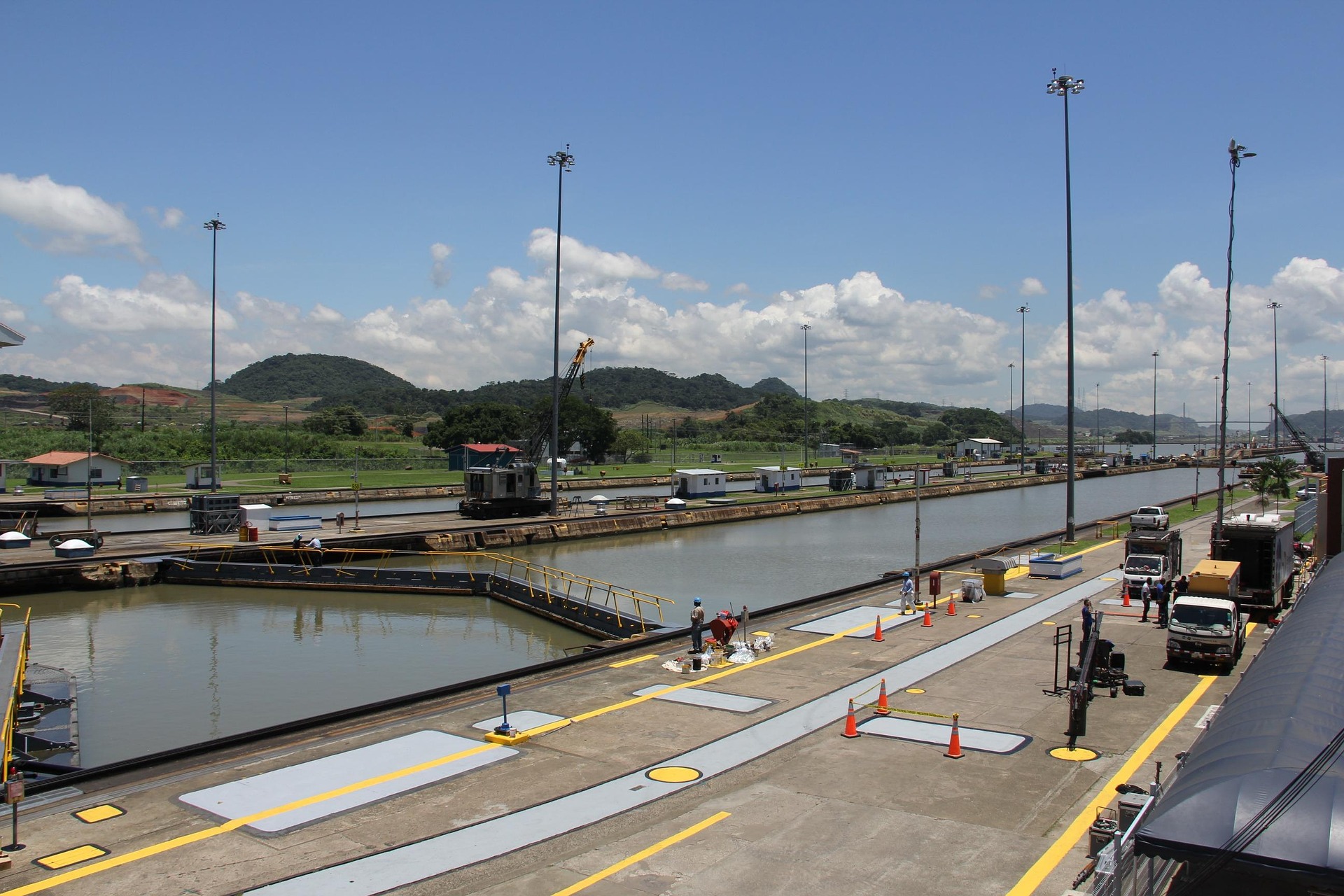
Central America: a Bridge Between Continents
Central America countries facts culture geography
Overview and Geography of Central America
Central America is the southernmost region of North America, serving as a narrow isthmus that connects North America to South America. The region lies between Mexico and Colombia, bridging the Caribbean Sea to the east and the Pacific Ocean to the west. Comprising seven sovereign nations—Guatemala, Belize, Honduras, El Salvador, Nicaragua, Costa Rica, and Panama—Central America covers approximately 522,760 square kilometers (201,838 square miles) with a combined population of around 50 million people.
Geographically, Central America extends roughly 1,140 miles (1,835 kilometers) from northwest to southeast in a curved arc. At its narrowest point, the isthmus is only about 30 miles (50 kilometers) wide, and no location in Central America is more than 125 miles (200 kilometers) from either ocean. This unique position has profoundly shaped the region's history, culture, and economic development, making it one of the world's most strategically important crossroads.
The terrain of Central America is dominated by a volcanic highland spine running along the Pacific side, with lower Caribbean lowlands covered in tropical rainforest to the east. Four-fifths of the region is either hilly or mountainous. The western band of Pacific coastal lowland is narrow and overshadowed by dramatic mountain ranges, while the eastern plains along the Caribbean, though somewhat broader in places like the Mosquito Coast, are still relatively constrained. Elevation steadily increases westward from the Caribbean lowlands, culminating in plateau highlands that feature over 100 volcanic cones, many exceeding 12,000 feet (3,700 meters) in elevation.
The volcanic geology of Central America is one of its defining characteristics. The region sits on the Caribbean Plate and lies directly within the Pacific Ring of Fire, resulting in frequent volcanic eruptions and earthquakes. Some of the major volcanic systems include the Sierra Madre de Chiapas in Guatemala, El Salvador and Honduras; the Cordillera Isabelia in Nicaragua; and the Cordillera de Talamanca running through Costa Rica and Panama. Volcán Tajumulco in Guatemala stands as Central America's highest peak at 4,220 meters (13,845 feet). While volcanic activity poses natural hazards, the weathered volcanic lavas create exceptionally fertile soil that has made the highlands highly productive agricultural zones and areas of dense population.
The climate of Central America is tropical, tempered by proximity to the sea, by elevation, and by local topography. This means climatic variations can be substantial over short distances. Elevation significantly mitigates the climatic effects of the tropical latitude, so average temperatures in the highlands are much lower than those in coastal lowlands. Rainfall occurs primarily during the summer season, with the heaviest precipitation occurring between May and November. January through March are the driest months. In general, the Caribbean side receives approximately twice as much rain as the Pacific region.
Central America's natural vegetation is remarkably diverse. Tropical rainforests occupy the eastern lowlands, while evergreen forests clothe the lower slopes along the Pacific coast, and pine and oak forests grow at higher elevations. However, much of Central America's original timberland has been cleared by agricultural cultivation. These Central American forests are relatively sparsely populated with mammals but generously populated with reptiles, birds, and insects. Monkeys, tree frogs, iguanas, and snakes are abundant, making the region a biodiversity hotspot of global significance. Despite covering only 0.5% of the world's land surface, Central America harbors an estimated 7-12% of the world's biodiversity.
History of Central America
The history of Central America encompasses some of the Western Hemisphere's most advanced pre-Columbian civilizations, followed by centuries of Spanish colonial rule and subsequent nation-building struggles.
The earliest known civilization in Mesoamerica was the Olmec civilization, which existed from approximately 1600 BCE to 400 CE. Though the heart of Olmec civilization was located north of Central America in Mexico, their influence extended south into present-day Belize, Guatemala, and Honduras. The Olmecs are known for their distinctive stone head carvings and sophisticated understanding of mathematics and astronomy.
Following the Olmecs came the Maya civilization, one of the most remarkable societies of the pre-Columbian Americas. The Maya rose around 250 CE, and the height of classical Maya civilization extended through 900 CE, with a post-classical period continuing until approximately 1200 CE. The Maya were an extraordinarily sophisticated civilization with advanced mathematics, astronomy, agriculture, and architecture. They developed a complex writing system, built massive pyramid temples, and organized themselves into city-states rather than a unified empire. The Maya inhabited the regions of Mexico, Guatemala, Belize, Honduras, and El Salvador. However, the Maya civilization mysteriously collapsed by 1200 CE when most major Mayan cities were abandoned. The cause remains debated among scholars, but environmental stress, overpopulation, and political fragmentation have all been proposed as contributing factors.
By the time of European contact, the great Mayan cities stood empty and overgrown by forests, and several other indigenous groups occupied Central America, including the Pipil in El Salvador, the Lenca in Honduras, and the Chorotega in Nicaragua and Costa Rica.
European contact with Central America began in 1502 when Christopher Columbus, on his fourth and final voyage, reached the coast of Honduras on July 30, 1502. Columbus was still searching for a westward route to Asia, unaware of the landmass before him. The conquest and colonization of Central America was a gradual process occurring over several decades in the first half of the sixteenth century.
In 1513, Vasco Núñez de Balboa crossed the Isthmus of Panama and became the first European to see the Pacific Ocean from the New World, claiming the ocean and surrounding lands for Spain. In 1523, Pedro de Alvarado, a lieutenant of Hernán Cortés, led an expedition from Mexico to Guatemala and began the conquest of the Maya. In 1524, Francisco Hernández de Córdoba explored and began the conquest of Nicaragua. Central America was never as economically important to Spain as some of their other American possessions—their primary concern was silver and gold found in Mexico and Peru—but Spanish rule became increasingly structured as they gained greater control over the territory they claimed.
In 1543, Spain established the Real Audiencia of Santiago de Guatemala, an administrative court that oversaw most of what is today Central America. An audiencia was a court that heard cases for the entire region. In 1609, the Captaincy General of Guatemala was established as a secondary administrative unit. The captain-general served as both governor and president of the audiencia and was granted significant autonomy to deal with threats, particularly military threats from pirates. The Captaincy General of Guatemala governed all of Central America except for Panama for over two centuries. Panama was part of the Viceroy of New Granada, established in 1717, which included modern-day Panama, Colombia, Venezuela, and Ecuador. Belize had a separate history; though a Spanish possession, British settlers established communities along the Caribbean coast in the eighteenth century. Following the Treaty of Paris in 1783, Britain officially agreed to settlements in Belize in exchange for logging rights, and this territory became the Crown Colony of British Honduras in 1862.
In the early nineteenth century, Spanish colonies throughout the Americas began undergoing revolution and declaring independence. Panama became part of the newly independent nation of Gran Colombia in 1819. In 1821, the provinces of the Captaincy General of Guatemala signed the Act of Independence of Central America, formally dissolving their allegiance to Spain. However, this independence proved temporary. In 1822, the provinces voted five to one to join the newly independent Mexican Empire. El Salvador voted against this union, and Chiapas, which had never been part of Guatemala, chose to join Mexico, where it remains today.
The union with Mexico lasted only one year. In 1823, the Central American provinces elected to leave Mexico. On July 1, 1823, they established the Federal Republic of Central America, a bold experiment in federation modeled on the United States Constitution. The Federal Republic had a legislature that appointed a triumvirate, with each member rotating executive authority monthly. The initial capital was Guatemala City.
The Federal Republic never achieved stability. Extreme political polarization divided the nation between liberals, who desired a decentralized government, separation of church and state, and extended voting rights, and conservatives, who favored centralized government, close ties to the Catholic Church, and restricted voting rights. In 1826, civil war broke out between these factions. Liberals eventually gained control of Guatemala City, and liberal president Francisco Morazán was elected in 1830.
The federal experiment ultimately failed. In 1837, a charismatic pig farmer named Rafael Carrera came to power in Guatemala, mobilizing both Catholic and indigenous populations. By 1838, the federal structure began to dissolve. Nicaragua announced its independence on April 30, 1838, Honduras followed in October, and Costa Rica in November. On February 2, 1839, the federal government collapsed when all officials resigned with no successors to replace them. Guatemala formally dissolved the Federal Republic on April 17, 1839, and El Salvador became the last country to declare independence in January 1841.
The twentieth century witnessed significant turmoil throughout Central America. From the 1870s onward, Central American countries experienced the "banana republic" era, when foreign corporations (particularly United States firms) and national elites developed agricultural export economies based on bananas and coffee. This period saw significant foreign intervention, particularly by the United States, in Central American affairs.
The twentieth century also brought devastating civil conflicts to several Central American nations. Guatemala experienced a brutal civil war from 1960 to 1985 that killed over 200,000 people, mostly indigenous civilians. El Salvador endured a vicious conflict from 1980 to 1992. Nicaragua experienced revolution in 1979 and subsequent civil conflict throughout the 1980s. Honduras and Costa Rica were less directly affected but served as either sanctuaries for refugees or staging grounds for proxy conflicts.
Peace processes beginning in the late 1980s and continuing through the 1990s gradually brought the region toward stability. The Central America Peace Accords of 1987, facilitated by Costa Rican President Oscar Arias Sánchez, provided a framework for ending conflicts. By the early 1990s, ceasefire agreements had been reached in all countries with active conflicts, and democratic elections resumed. While challenges remain—including gang violence, corruption, poverty, and inequality—Central America has largely emerged from the era of civil conflict.
Cultural Attributes
Central American culture is a rich tapestry woven from indigenous heritage, Spanish colonial influences, and African traditions brought through the slave trade. This multicultural foundation creates a unique cultural identity distinct from other Latin American regions.
Indigenous heritage remains a defining feature of Central American culture, particularly in Guatemala, where over forty percent of the population identifies as indigenous Maya. Indigenous communities maintain distinctive languages, clothing traditions, agricultural practices, and spiritual beliefs that blend pre-Columbian customs with Catholicism adopted during the colonial period. Traditional textile arts, including the hand-weaving of huipiles (traditional blouses), cortes (wraps), and other garments featuring intricate patterns and colors, remain an important cultural expression and economic activity throughout the region.
Spanish colonial influence is visible throughout Central America in architecture, language, religion, and social structures. Colonial-era cities and towns feature Spanish-style plazas, churches built in baroque and neoclassical styles, and administrative buildings reflecting Spanish governance traditions. Roman Catholicism, introduced by Spanish missionaries, remains the dominant religion, though evangelical Protestant denominations have made significant inroads, particularly since the late twentieth century. In rural areas, indigenous religious practices often coexist with Catholic traditions, creating syncretic belief systems unique to local communities.
Central American cuisine reflects the region's agricultural resources and multicultural heritage. Corn, beans, and squash—the ancient Mesoamerican staple trio—remain dietary foundations. Rice is another essential staple. Traditional dishes vary by country but often feature these core ingredients combined with locally available proteins and produce. Pupusas in El Salvador, baleadas in Honduras, gallo pinto in Costa Rica and Nicaragua, and ceviche throughout coastal regions represent distinctive national dishes. Street food culture is vibrant, with vendors offering tamales, tortillas, and various prepared foods. Coffee and cacao, once colonial export crops, have become deeply embedded in local food culture.
Music and dance traditions in Central America blend indigenous, Spanish, and African influences. Marimba, an African-derived percussion instrument, holds special significance in Guatemala, El Salvador, and Honduras. Traditional dances such as the punta, paranda, and cumbia reflect Garifuna and Caribbean influences, while other regions maintain Spanish-influenced dance traditions. Modern musical genres including reggaeton, cumbia, and local variations on contemporary Latin American styles are extremely popular among younger generations.
Arts and crafts traditions remain vibrant throughout Central America. Beyond textile weaving, indigenous artisans create pottery, carved wooden masks, and painted ceramics. Colonial and contemporary visual arts influence the region's artistic expression, with many countries supporting active contemporary art scenes in their capital cities. Traditional celebrations and festivals, including Semana Santa (Holy Week), Día de los Muertos (Day of the Dead), and local saint day celebrations, feature elaborate processions, traditional foods, and community participation that reflect centuries of cultural evolution.
Languages Spoken
Spanish is the dominant and official language in six of the seven Central American countries (Guatemala, El Salvador, Honduras, Nicaragua, Costa Rica, and Panama). Spanish spoken in Central America reflects both colonial influences and regional variations, with different countries and regions maintaining distinct dialects and vocabulary.
Belize is the exception, where English serves as the official language due to British colonial history rather than Spanish colonization. However, Spanish is widely spoken in Belize, particularly in border regions and among younger generations.
Indigenous languages remain spoken by significant indigenous populations throughout Central America, particularly among Maya communities. Maya languages form a diverse linguistic family including K'iche', Q'eqchi', Kaqchikel, Tzutujil, and many others, primarily spoken in Guatemala and Belize but also present in Honduras and El Salvador. Other indigenous languages include the Lenca language in Honduras and El Salvador, and various other Mesoamerican languages with smaller speaker populations.
The Garifuna language, a blend of Arawakan, Carib, French, and English influences, is spoken along Caribbean coasts of Guatemala, Honduras, Belize, and Nicaragua, primarily by Garifuna peoples who maintain distinct cultural communities. Garifuna culture represents a unique African-Caribbean heritage within Central America.
English is widely spoken as a second language, particularly among younger people and in tourism-related businesses. In Caribbean coastal areas, English or English Creole often serves as the lingua franca alongside Spanish or indigenous languages. Caribbean-influenced English dialects are prevalent throughout the coastal regions, reflecting centuries of British and American influence.
Famous Tourist Attractions
Central America has become an increasingly popular tourist destination, offering diverse attractions from ancient archaeological sites to pristine natural environments.
Tikal in Guatemala is one of the most important Maya archaeological sites, featuring massive pyramids, temples, and palaces nestled within dense jungle. The site dates to approximately 600 BCE and was occupied continuously until around 950 CE, representing one of the Maya civilization's greatest achievements.
Copán in Honduras is another remarkable Maya site featuring intricate hieroglyphic inscriptions, ball courts, and architectural structures that provide insights into Maya astronomical knowledge and artistic sophistication.
Lake Atitlán in Guatemala, surrounded by three volcanoes and dozens of Maya villages, is renowned for its stunning natural beauty, indigenous markets, and cultural significance. The lake and surrounding communities attract visitors interested in indigenous culture, natural landscapes, and spiritual practices.
The Great Barrier Reef system off the coast of Belize is the second-longest coral reef system in the world and offers exceptional opportunities for snorkeling, diving, and marine wildlife observation.
The Panama Canal, one of the world's greatest engineering achievements, attracts visitors who wish to learn about and observe this crucial interoceanic waterway. The canal connects the Atlantic and Pacific oceans and handles approximately five percent of global maritime trade.
Arenal Volcano in Costa Rica is one of the world's most active volcanoes and a major tourist draw. Its perfect cone shape, frequent eruptions, and surrounding natural hot springs and cloud forests make it a premier destination.
Monteverde Cloud Forest in Costa Rica is a unique ecosystem where clouds provide most moisture to vegetation. The forest contains over 400 bird species and numerous other animal species, making it a paradise for birdwatchers and nature enthusiasts.
Placencia and other Caribbean beach communities in Belize and Honduras offer tropical beach experiences, diving, and Rastafarian cultural influences that create a distinct Caribbean atmosphere within Central America.
Guatemala: History, Culture and Highlights
Guatemala, the most populous Central American nation with over eighteen million inhabitants, occupies the northwestern portion of the isthmus. Guatemala City serves as its capital and largest metropolitan center. The country covers approximately 108,889 square kilometers and features mountainous terrain, volcanic peaks, and tropical lowlands that create diverse ecological zones and microclimates throughout its territory.
Pre-Columbian Guatemala was the heartland of Maya civilization. The Maya flourished in Guatemala for over a thousand years, constructing elaborate cities and developing sophisticated mathematics, astronomy, and written language systems. When Spanish conquistador Pedro de Alvarado arrived in 1523, he encountered sophisticated Maya city-states and undertook a brutal conquest that decimated the indigenous population through violence and disease. The colonial period established Spanish administrative structures, Catholic religion, and plantation agriculture that displaced indigenous communities from their lands.
Modern Guatemala has struggled with political instability, violence, and social inequality since independence in 1821. The country experienced military dictatorships throughout much of the twentieth century and endured one of the Western Hemisphere's most brutal civil wars from 1960 to 1985, which killed approximately 200,000 people, overwhelmingly indigenous civilians. A U.N.-brokered ceasefire established fragile peace, though challenges including gang violence, corruption, and poverty persist. Guatemala declared itself a multilingual, multicultural nation in its 1985 constitution, finally recognizing the rights and identities of its indigenous Maya majority.
Culturally, Guatemala maintains the strongest indigenous heritage of any Central American nation. Over forty percent of Guatemala's population identifies as indigenous Maya, maintaining distinct languages, traditional dress, agricultural practices, and spiritual traditions that blend pre-Columbian beliefs with Catholicism. The highlands around Lake Atitlán are especially renowned for indigenous communities maintaining traditional ways of life. Guatemalan textiles represent some of the world's most intricate and colorful indigenous weaving traditions, with each community maintaining distinctive patterns and color combinations that identify specific villages and families. Semana Santa celebrations in Antigua and other colonial cities are elaborate multi-day events featuring religious processions, traditional foods, and community participation. Guatemalan cuisine features corn-based dishes including tamales, tortillas, and pozole, often accompanied by beans, fresh vegetables, and local fruits. Marimba music is deeply embedded in Guatemalan culture, with both indigenous and ladino (mixed-race) communities maintaining marimba traditions at celebrations and festivals.
Tourist attractions in Guatemala include the spectacular Lake Atitlán, the ancient Maya ruins of Tikal and Copán, the colonial charm of Antigua, vibrant indigenous markets, active volcanoes, and cloud forests supporting extraordinary biodiversity. Adventure activities include hiking, kayaking, and visiting traditional indigenous communities.
Belize: History, Culture and Highlights
Belize, smallest of the Central American nations with a population of approximately 410,000 and covering just 22,966 square kilometers, occupies the Caribbean coast between Guatemala and the Yucatan Peninsula. It is the only Central American country where English is the official language, a legacy of British colonial rule. Belmopan serves as the capital, though Belize City remains the largest metropolitan center.
Belize was the heartland of southern Maya civilization, and Maya ruins including Caracol, Xunantunich, and Lamanai remain as testament to this heritage. When Spanish conquistadors arrived in the sixteenth century, they encountered Maya communities but found few significant mineral resources, leading to less intensive colonization than in neighboring Guatemala. Instead, English buccaneers and pirates established settlements along the coast and cayes (islands). Gradually, British settlements formalized into what became British Honduras through treaties with Spain and later Guatemala. Britain maintained control until Belize achieved independence in 1981, one of the latest independences in Central America. The delay resulted from Guatemala's disputed territorial claims to Belize.
Contemporary Belize is extraordinarily multicultural and multilingual, with indigenous Maya, Garifuna, Creole, East Indian, Chinese, and Spanish communities coexisting. Garifuna culture, particularly strong in southern coastal towns, represents a unique African-Caribbean heritage. English serves as the official and dominant language, though Spanish is increasingly spoken as younger generations learn it, and Maya languages persist among indigenous communities. Belize maintains relatively stable democratic governance, though challenges including gang violence, human trafficking, and poverty persist.
Culturally, Belize blends Caribbean, indigenous Maya, and British colonial influences. Unlike its Spanish-speaking neighbors, British colonial heritage is visible in the language, some architectural styles, and governance traditions. Traditional creole cuisine features seafood, tropical fruits, coconut, and rice and beans. Garifuna traditions including the punta dance, paranda music, and Garifuna Settlement Day celebrations remain central to coastal communities. Indigenous Maya traditions persist in inland villages. Tourism is a major economic sector, driven by the spectacular Great Barrier Reef and nearby cayes offering world-class diving and snorkeling.
Tourist attractions include the Great Barrier Reef and hundreds of cayes perfect for diving and snorkeling, ancient Maya ruins at Caracol and Xunantunich, the Belmopan Butterfly Farm, community-based ecotourism projects, and Caribbean beaches. Belize's relative stability and English-language advantage make it an accessible Central American destination for many international tourists.
Honduras: History, Culture and Highlights
Honduras, covering 112,492 square kilometers and with approximately 10.3 million inhabitants, represents the geographically largest Central American nation after Nicaragua. Tegucigalpa serves as the capital and largest city. Honduras occupies the central portion of the isthmus, with Caribbean coastal lowlands, mountainous interior regions, and Pacific coastal plains creating diverse geography.
Honduras was inhabited by Maya civilization during the pre-Columbian era, with important sites including Copán, one of the Maya world's great achievements. Spanish conquistadors conquered Honduras beginning in 1524, establishing colonial institutions and agricultural plantations. The colonial period witnessed both exploitation of indigenous populations and African slavery. Honduras achieved independence in 1821 as part of the Federal Republic of Central America but struggled to maintain stability after federation dissolution in 1838. The nineteenth and twentieth centuries brought foreign domination through banana plantations controlled by United States companies, military coups, and authoritarian regimes that limited democratic participation and economic opportunity for the majority.
Honduras experienced gang violence and organized crime during recent decades, though security has improved somewhat. The country has undertaken democratic reforms and constitutional amendments aimed at strengthening governance and addressing corruption, though challenges remain significant. Honduras faces substantial poverty, limited economic opportunities, and educational challenges that drive migration and increase vulnerability to gang recruitment.
Culturally, Honduras represents a blend of Spanish colonial, indigenous Maya, and Caribbean influences. The interior highlands maintain indigenous Lenca and Mayan communities with distinct traditions. Coastal regions feature Garifuna, Creole, and Caribbean cultural influences. Traditional music includes marimba in western regions and Caribbean-influenced styles along the coast. Honduran cuisine features corn-based dishes, tropical fruits, seafood in coastal areas, and the popular baleadas consisting of wheat tortillas filled with refried beans, cheese, avocado, and crema (sour cream).
Tourist attractions in Honduras include the ancient Maya ruins of Copán, the Bay Islands offering diving and Caribbean beach experiences, the Great Barrier Reef's Honduran section, cloud forests in the interior, and various eco-tourism opportunities. Copán represents one of Central America's most important archaeological sites, featuring remarkable hieroglyphic inscriptions and architectural achievements that illuminate Maya astronomical and mathematical knowledge.
El Salvador: History, Culture and Highlights
El Salvador is the smallest Central American nation, covering just 21,041 square kilometers, yet it is the most densely populated, with approximately 6.3 million inhabitants. San Salvador serves as the capital and largest city. Uniquely among Central American nations, El Salvador lacks a Caribbean coastline, bordered instead by Guatemala to the west and Honduras to the north and east, with the Pacific Ocean comprising its entire southern boundary.
Pre-Columbian El Salvador was inhabited by several indigenous groups including the Pipil people. Spanish conquistadors conquered the territory beginning in the 1520s, establishing colonial institutions and plantation agriculture. El Salvador participated in the Federal Republic of Central America from 1823 to 1841, where it played an important early role. Subsequently, El Salvador developed as an agricultural exporter, with indigo production giving way to coffee cultivation in the nineteenth century. Wealthy coffee-growing families became the dominant political and economic force, controlling government and limiting democratic participation.
The twentieth century brought greater political turbulence. El Salvador experienced military dictatorships, fraudulent elections, and increasing political polarization between wealthy elites and marginalized poor majorities. This led to civil war from 1980 to 1992, one of Central America's bloodiest conflicts, killing over 75,000 people and displacing hundreds of thousands more. A United Nations-brokered ceasefire established fragile peace. Post-war El Salvador has undertaken democratic reforms, constitutional changes, and security initiatives aimed at improving governance and reducing violence, though gang violence and poverty remain significant challenges. Recent presidential administrations have taken controversial approaches to gang violence, including gang suppression strategies that raise human rights concerns.
Culturally, El Salvador represents Spanish colonial heritage blended with indigenous Pipil traditions, though indigenous identity has been less preserved than in Guatemala. The Salvadoran identity is strongly influenced by Catholicism, family structures, and strong national pride. Traditional music includes marimba and indigenous instruments combined with Spanish colonial influences. Salvadoran cuisine is distinctive within Central America, with pupusas standing as the quintessential national dish—handmade corn tortillas filled with beans, cheese, loroco (edible flower buds), and sometimes meat, typically served with fermented cabbage slaw and tomato-based salsa. Other traditional foods include tamales, fresh tropical fruits, and seafood in coastal regions.
Tourist attractions include Pacific beaches suitable for surfing, the towns of Suchitoto and Santa Ana with colonial architecture and cultural events, Lake Ilopango offering water activities, cloud forests and nature reserves, and archaeological sites representing indigenous heritage. Surfing has become increasingly popular, with El Salvador's Pacific coast offering excellent waves and a growing surf tourism industry.
Nicaragua: History, Culture and Highlights
Nicaragua is the largest Central American nation by area, covering 130,373 square kilometers, with approximately 7 million inhabitants. Managua serves as the capital and dominant metropolitan center. Nicaragua features two large freshwater lakes—Lake Nicaragua and Lake Managua—unique geological formations, and extensive Caribbean coastal lowlands covered in tropical rainforest.
Pre-Columbian Nicaragua was inhabited by various indigenous groups including the Chorotega and Nicarao peoples, after whom the country was named. Spanish conquistador Francisco Hernández de Córdoba conquered Nicaragua beginning in 1524, establishing colonial governance and Catholic religion. Nicaragua participated in the Federal Republic of Central America, becoming fully independent in 1838. The nineteenth century brought foreign interference, including the famous filibuster William Walker, an American adventurer who briefly established himself as president with southern U.S. support. Nicaragua was subsequently dominated by conservative and liberal political factions competing for power.
The twentieth century brought growing U.S. intervention, including military occupation from 1912 to 1933, and subsequent decades of dictatorship under the Somoza family regime, which ruled Nicaragua from 1937 to 1979. Popular opposition to Somoza's brutal dictatorship led to the Sandinista Revolution of 1979, which overthrew the regime and established a socialist-oriented government. The U.S.-backed Contras waged war against the Sandinista government throughout the 1980s, devastating the country and killing tens of thousands. The Sandinistas lost power in 1990 elections but returned to power in 2006. Contemporary Nicaragua faces challenges including corruption, poverty, lack of economic opportunity, and political polarization, particularly following contested 2021 elections.
Culturally, Nicaragua blends indigenous heritage, Spanish colonial influences, and Caribbean traditions, particularly on the Caribbean coast where Garifuna, Creole, and Miskitu peoples maintain distinct identities. Managua and Granada feature Spanish colonial architecture. Lake Nicaragua holds mythological and cultural significance. Traditional music includes Caribbean-influenced styles and Garibuna traditions on the coast. Nicaraguan cuisine features rice and beans (called gallo pinto for breakfast preparations), plantains, tropical fruits, seafood along coasts, and indigenous preparations. Coffee cultivation remains culturally and economically important.
Tourist attractions include Lake Nicaragua with its islands and freshwater sharks, Granada's colonial architecture and lake-based tourism, San Juan del Sur as a beach and surf destination, Caribbean coastal communities offering Caribbean beach culture and Garifuna traditions, cloud forests and nature reserves, and eco-tourism opportunities. The Caribbean coast offers a distinct cultural and environmental experience quite different from the Spanish colonial interior.
Costa Rica: History, Culture and Highlights
Costa Rica, covering 51,100 square kilometers with approximately 5.2 million inhabitants, has earned the nickname "Switzerland of Central America" due to its relative peace, stable democracy, and environmental leadership. San José serves as the capital and largest metropolitan center. Costa Rica features Pacific and Caribbean coastlines, mountainous interior regions, and diverse ecological zones from cloud forests to tropical lowlands.
Pre-Columbian Costa Rica was home to various indigenous groups who maintained relatively egalitarian societies compared to the hierarchical Maya and Aztec civilizations. Spanish conquistadors encountered less developed civilizations without large mineral deposits, leading to less intensive colonization than in neighboring countries. Costa Rica remained a relatively poor and marginalized Spanish colony focused on subsistence agriculture rather than export crops. After independence in 1821, Costa Rica joined the Federal Republic of Central America but withdrew by 1838. Nineteenth-century Costa Rica developed coffee cultivation with significant foreign investment and migration, particularly from Europe.
Costa Rica distinguished itself through political stability and democratic traditions. Beginning in the late nineteenth century, Costa Rican leaders established constitutional governance, abolished slavery relatively early, and supported public education. This democratic foundation prevented the military coups and authoritarian regimes that plagued neighboring countries throughout the twentieth century. Most remarkably, in 1948, following a brief civil war over an election dispute, Costa Rican President José Figueres Ferrer abolished the military entirely, redirecting defense spending to education, health care, and social services. This decision set Costa Rica apart from other Latin American nations and contributed to its development as a peaceful, prosperous society.
Contemporary Costa Rica is Central America's most developed economy and most stable democracy. It has invested heavily in environmental protection, declaring itself carbon neutral and protecting over 25 percent of its territory in national parks and reserves. This environmental commitment attracts significant tourism. Costa Rica achieved near-universal literacy, excellent health care, and high life expectancy. The Nicoya Peninsula is one of the world's "blue zones" where populations live significantly longer than average.
Culturally, Costa Rica maintains Spanish colonial heritage while having developed a distinctly Costa Rican identity centered on democracy, education, and environmental values. The national motto "Pura Vida" (pure life) reflects cultural emphasis on peaceful living and contentment. Traditional music includes calypso and reggae on Caribbean coasts, alongside Spanish-influenced styles in the interior. Costa Rican cuisine features rice and beans, tropical fruits, fresh vegetables, excellent coffee, and Caribbean seafood. Indigenous communities, though smaller percentages of the population than in Guatemala, maintain cultural traditions in reserves throughout the country.
Tourist attractions include Arenal Volcano and its surrounding cloud forests and hot springs, Monteverde Cloud Forest with exceptional biodiversity and birdwatching, Manuel Antonio National Park combining rainforest and beach, Caribbean beach communities, and numerous eco-tourism opportunities. Costa Rica has pioneered sustainable and community-based tourism, with many attractions prioritizing environmental protection and community benefit alongside tourism development.
Panama: History, Culture and Highlights
Panama, covering 75,417 square kilometers with approximately 4.4 million inhabitants, occupies the southeastern portion of Central America, serving as the geographic and cultural bridge to South America. Panama City serves as the capital and dominant metropolitan center. Panama's unique geography includes the Panama Canal, a 82-kilometer interoceanic waterway that fundamentally shaped the nation's history and economy.
Pre-Columbian Panama was inhabited by various indigenous groups with relatively decentralized political structures. Spanish conquistadors, including Vasco Núñez de Balboa who first saw the Pacific Ocean from the New World, arrived in the early sixteenth century. Panama became strategically important due to its location between two oceans, and colonists established ports and conducted trade across the isthmus. Panama remained part of the Viceroy of New Granada rather than the Captaincy General of Guatemala. After independence in 1821, Panama joined Gran Colombia and later became part of Colombia. Panama participated in the Federal Republic of Central America only minimally.
Panama's defining historical moment came with the Panama Canal, a dream that consumed international attention for centuries. French entrepreneur Ferdinand de Lesseps attempted canal construction beginning in 1881 but abandoned the effort after encountering engineering obstacles and disease that killed thousands of workers. The United States, under President Theodore Roosevelt, negotiated with Colombia to gain canal construction rights in 1901. When Colombia's government rejected terms, U.S. officials supported Panamanian independence movements. Panama declared independence in 1903 with U.S. support, and immediately signed the Hay-Bunau-Varilla Treaty granting the United States extensive control over the canal zone. U.S. engineers, led by John Stevens and later George Goethals, successfully completed the canal in 1914, one of the twentieth century's greatest engineering achievements. The canal fundamentally altered global commerce by providing a direct route between Atlantic and Pacific oceans without requiring passage around Cape Horn.
U.S. control of the canal and the canal zone became increasingly contentious. Growing Panamanian nationalism led to protests and demands for sovereignty. Under President Omar Torrijos, Panama negotiated the Torrijos-Carter Treaties in 1977, which transferred canal control to Panama on December 31, 1999. Panama has successfully managed the canal since then, expanding its capacity and continuing its critical role in global maritime commerce. Contemporary Panama has developed as a major international banking and financial center, and the canal and related services remain central to the nation's economy and identity. Panama is also a significant transit route for international trade and has addressed challenges including money laundering and drug trafficking through strengthened financial regulations.
Culturally, Panama blends Spanish colonial heritage, indigenous traditions, Caribbean influences, and more recently, international cultural influences stemming from global commerce and diverse immigrant communities. Panama City is an ultra-modern metropolis with significant international business and banking sectors. Spanish colonial heritage is visible in the historic Casco Viejo district of Panama City. Panama's cultural diversity is extraordinary, with descendants of African slaves, indigenous groups including the Kuna and Embera peoples, and migrants from Asia, Europe, and elsewhere creating multicultural society. The Kuna people maintain semi-autonomous governance over the San Blas Islands and preserve distinctive language, dress, and cultural traditions. Panamanian music and dance reflect Caribbean, African, and Spanish influences, with styles including cumbia, reggaeton, and traditional folk music. Panamanian cuisine features seafood, tropical fruits, plantains, rice and beans, and international influences reflecting Panama City's cosmopolitan character. The tortilla has been largely replaced by bread in urban areas, distinguishing Panamanian cuisine from other Central American nations.
Tourist attractions include the Panama Canal and canal-related historical sites and museums, the historic colonial Casco Viejo district of Panama City, San Blas Islands and Kuna indigenous communities, cloud forests and nature reserves including Darién National Park, Caribbean beaches, and modern Panama City with its contemporary architecture and international dining. The canal remains the iconic attraction, drawing visitors from around the world who wish to observe this engineering marvel and understand its historical significance.
Sources
https://www.roadscholar.org/collections/central-america/ https://www.roadscholar.org/blog/discover-costa-rica/ https://www.countryreports.org
Hashtags
#CentralAmerica #Guatemala #Belize #Honduras #ElSalvador #Nicaragua #CostaRica #Panama #MayaCivilization #CentralAmericanCulture #EcoTourism #IndigenousHeritage #TravelCentralAmerica #PanamaCanal
https://www.countryreports.org