
 English
 Español
 中文
中文 हिन्दी
 Français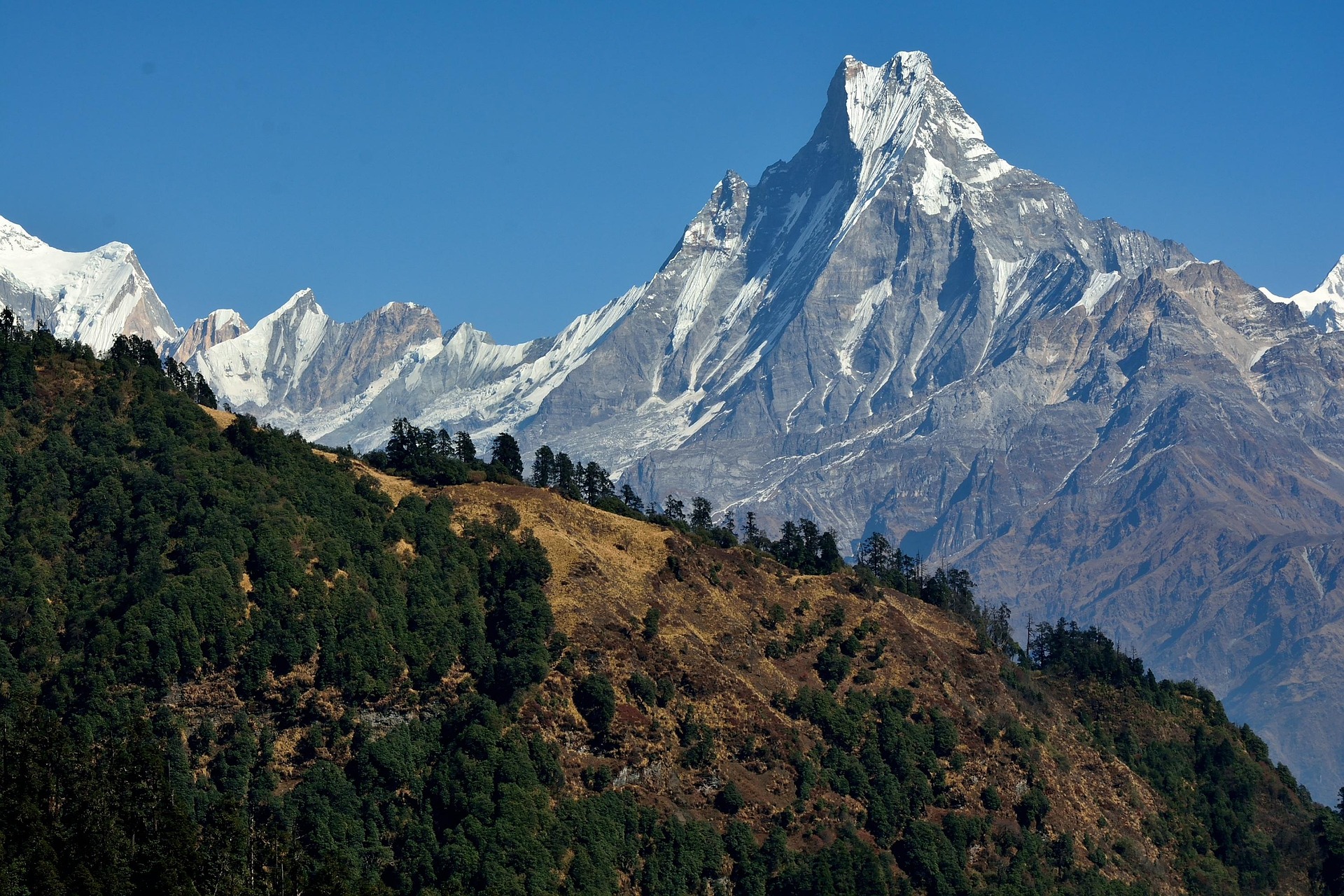
The Himalayas and Mount Everest: Nature's Supreme Masterpiece
Himalayas Mount Everest natural wonder biodiversity Sherpa culture glaciers climate change
The Birth of Titans: Geological Formation and Ongoing Rise
The Himalayas stand as one of Earth's most extraordinary natural wonders, born from one of the most dramatic geological events in planetary history. Approximately 50 million years ago, the Indian tectonic plate began its northward migration across the ancient Tethys Sea, colliding with the Eurasian plate. Unlike oceanic plates that typically subduct beneath continental plates, the Indian plate possessed insufficient density to sink into the Earth's mantle. Instead, it buckled upward in a massive collision that continues to reshape the landscape today. This ongoing convergence has created the most extensive mountain range of its kind on the planet, a monument to the relentless forces that drive continental geology.
What makes the Himalayas uniquely remarkable is that they are still rising. The collision between the Indian and Eurasian plates continues unabated, with the mountains growing at an average rate of approximately five millimeters per year. This means that in a single human lifetime, the Himalayas gain several inches in elevation. This active geological process stands in sharp contrast to older mountain ranges, such as the Appalachians in North America, which have largely stabilized through erosion and geological quiescence. The Himalayas represent a living, breathing geological system in its prime, still being built by the same immense forces that created them tens of millions of years ago.
The range spans an enormous arc of approximately 2,400 kilometers from west to east, stretching across five countries: Afghanistan, Pakistan, India, Nepal, and Bhutan. This vast expanse encompasses some of the most rugged and inaccessible terrain on Earth, with elevations that rise abruptly from tropical foothills to permanently frozen alpine peaks. The Himalayas are not a single continuous ridge but rather a complex system of parallel mountain chains, each with distinct geological characteristics and ecological zones. The western reaches near Hindu Kush gradually transition to the Great Himalayas, which contain the highest peaks, and eventually to the Lesser Himalayas and the Siwalik Range to the south.
Peaks That Touch the Heavens: the World's Highest Mountains
The Himalayas contain fourteen mountains that exceed 8,000 meters in elevation, more than any other mountain range on Earth. These peaks exist in what mountaineers grimly call the "death zone," a region of the atmosphere where the partial pressure of oxygen is so reduced that human bodies begin to shut down, cell by cell. At these altitudes, the air contains only one-third the oxygen available at sea level, and the human body cannot acclimate no matter how much time is spent at elevation. Every breath requires tremendous effort, and hypoxia begins to damage the brain and other organs within hours of arrival.
Mount Everest, at 8,848.86 meters, stands as the undisputed monarch of these peaks. Known locally as Chomolungma in Tibetan and Sagarmatha in Nepali, Everest has captured the imagination of mountaineers, adventurers, and dreamers for generations. Its name in English honors Sir George Everest, the British Surveyor General of India who established the first precise measurements of the peak in the nineteenth century. Everest's prominence extends far beyond its raw elevation; it has become a symbol of human ambition, perseverance, and the eternal desire to reach the ultimate summit.
K2, elevation 8,611 meters, ranks second among the world's peaks but is often considered the more formidable mountaineering challenge. Located on the China-Pakistan border in the Karakoram Range, which forms the northwestern extension of the Himalayan system, K2 is steeper, more technical, and more dangerous than Everest. Fewer people have stood on K2's summit than have traveled to space, and the mountain claims a life for approximately every four successful summits. The risks include massive avalanches, sudden whiteout conditions, crevasse fields, and exposure to winds that can exceed 200 kilometers per hour.
Kangchenjunga, the third-highest peak at 8,586 meters, straddles the border between Nepal and Sikkim in northeastern India. The name means "five treasures of the snows" in the Sikkimese language, referring to the five valleys it dominates. Annapurna, elevation 8,091 meters, has earned a fearsome reputation as one of the most dangerous peaks, with a fatality rate approaching one death for every three successful summits. Nanga Parbat, at 8,126 meters in Pakistan, claims the notorious distinction of being the most dangerous per-capita mountain, with a death rate that rivals Annapurna. These extreme peaks represent the ultimate challenges for high-altitude mountaineers, demanding not only exceptional physical fitness and mountaineering skill but also vast reserves of determination and an acceptance of mortality.
Mount Everest: the World's Highest Peak
Mount Everest dominates the Himalayan range and, by extension, the world's mountains. The peak stands on the border between Nepal and Tibet, accessible from both the southern and northern routes. The southern approach from Nepal follows the Khumbu Valley and the infamous Khumbu Icefall, a chaotic maze of crevasses and tottering seracs that shifts continuously and occasionally collapses catastrophically, killing mountaineers. The northern approach from Tibet involves crossing the Tibetan plateau and ascending the North Face, which features the Great Couloir and the Second Step, a near-vertical rock wall that requires ropes fixed in place for ascent.
The mountain's elevation is the result of geological uplift that continues today. The Indian plate, driven northward by seafloor spreading at the Indian Ocean ridge, collides with Asia and pushes upward. Over geological timescales, this collision has also raised the Tibetan plateau to an average elevation of 4,500 meters, making it the highest and largest plateau on Earth. Everest's position at the collision zone means it benefits from this continuous uplift, remaining the world's highest peak even as erosion works relentlessly to wear it down.
The first successful ascent of Everest came on May 29, 1953, when Sir Edmund Hillary from New Zealand and Tenzing Norgay, a Sherpa from Nepal, reached the summit together. Their achievement was the culmination of decades of attempts, numerous expeditions, and tragic losses. Earlier expeditions, particularly the 1924 attempt by the British climber George Mallory and his partner Andrew Irvine, had come tantalizing close but ended in tragedy. The famous question "Why did you want to climb the mountain?" was answered by Mallory with his equally famous response: "Because it's there." Whether Mallory and Irvine actually reached the summit before their deaths remains one of mountaineering's great unsolved mysteries, though most evidence suggests they did not.
Since Hillary and Tenzing's triumph, thousands have reached Everest's summit. The mountain has transformed from an exclusive domain of elite mountaineers to a destination that, while still extraordinarily dangerous and expensive, has become accessible to relatively well-prepared amateurs with sufficient funding. Commercial expedition companies guide clients, provide support, and manage logistics, though the mountain itself remains indifferent to human ambition. Climate change has intensified this transformation; rising temperatures have created longer weather windows for summit attempts, reducing the previously iron-clad dependence on the few ideal days each spring and autumn.
Ecological Zones and Biodiversity: From Tropics to Ice
The Himalayas encompass an astonishing range of ecological zones, creating distinct biotic communities across remarkably short distances. The southern foothills, where elevations measure in hundreds of meters, feature tropical and subtropical forests with sal trees, bamboo, and deciduous species that shed their leaves seasonally. These lowland forests support wildlife including Asian elephants, Bengal tigers, Indian rhinoceroses, and numerous primate species. The biodiversity here rivals any tropical region on Earth, despite being part of a mountain system more famous for its snow and ice.
As elevation increases, the tropical forests transition into temperate deciduous and coniferous forests. Oak, maple, and cedar species dominate, interspersed with rhododendron forests that produce stunning displays of flowers during spring months. The rhododendrons of the Himalayas are among the world's most spectacular, with blooms ranging from brilliant reds and pinks to delicate whites and purples. These forest zones support red pandas, a small cat-like carnivore that spends much of its time in trees; numerous deer species including musk deer; and countless bird species. The red panda, which has become an iconic symbol of Himalayan wildlife, weighs only two to four kilograms but possesses sufficient climbing ability to spend much of its life in the forest canopy.
Higher still, between approximately 2,800 and 4,000 meters, the vegetation transitions into alpine meadows and shrublands. Here, the true icons of Himalayan fauna dominate: the snow leopard, the Himalayan blue sheep, the bharal, and the Himalayan tahr. The snow leopard is perhaps the most charismatic of these animals, a solitary ambush predator weighing 45 to 55 kilograms that hunts the rocky, precipitous terrain with extraordinary agility. Snow leopards exist at the edge of extinction, with fewer than 4,000 individuals remaining in the wild across the entire Himalayan region and adjacent ranges. Their status as an endangered species has made them the focus of intensive conservation efforts in Nepal, Bhutan, and other range countries.
The Himalayan blue sheep, or bharal, is a wild sheep that inhabits the rocky alpine slopes and feeds on grasses and lichens. These animals possess extraordinary climbing abilities and can navigate terrain so steep and rocky that predators cannot pursue them effectively. They exist in small herds and have adapted their body structure to life among cliffs and rocky outcrops. The bar-headed goose represents one of nature's most extraordinary avian adaptations; these geese migrate between wintering grounds in India and breeding grounds in the Tibetan plateau, flying over Everest itself at altitudes exceeding 9,000 meters. The extreme altitude demands unique physiological adaptations, including hemoglobin that binds oxygen more efficiently than in other birds, larger lungs relative to body size, and enhanced oxygen utilization at the cellular level.
Above the alpine meadows, at elevations exceeding 4,500 meters, vegetation becomes extremely sparse. A few hardy plants including sedges, cushion plants, and low-growing herbs comprise the alpine tundra. Lichen and moss cover much of the exposed rock. At these extreme altitudes, plant growth is limited by oxygen availability, temperature extremes, intense ultraviolet radiation, desiccating winds, and the short growing season. Yet even here, specialized insects, spiders, and microorganisms have evolved to survive. The life that exists in the alpine tundra and glacial zones represents some of Earth's most remarkable examples of biological adaptation to extreme environments.
The Third Pole: Glaciers, Water Towers, and Climate Crisis
The Himalayas contain an estimated 44,000 square kilometers of glacial ice, earning them the nickname "the Third Pole" in recognition of their status alongside the Arctic and Antarctic as global repositories of frozen water. These glaciers are not quaint remnants of past ice ages but rather essential features of global hydrology, supplying fresh water to some 2 billion people across Asia. The major river systems originating in the Himalayas include the Ganges, Indus, Brahmaputra, Yangtze, and Mekong, among others. These rivers irrigate vast agricultural regions, provide water for drinking and sanitation, generate hydroelectric power, and sustain fisheries that feed millions.
The Ganges River, originating from the Gangotri Glacier at approximately 3,900 meters elevation, flows southeastward across northern India and eventually meets the Brahmaputra in Bangladesh before emptying into the Bay of Bengal. The Ganges basin supports over 400 million people and is the lifeblood of agricultural production across much of India. The Brahmaputra, originating from the Tibetan plateau north of the Himalayas, flows through Assam in northeastern India and carries enormous volumes of water and sediment. The Indus River, originating in Tibet and flowing westward into Pakistan, sustains irrigation systems that support tens of millions of people in the arid regions of Pakistan and northwestern India.
These glaciers and their meltwater have sustained civilizations for millennia, but they face an unprecedented crisis from climate change. Himalayan glaciers have been retreating at an accelerating pace for decades. The Gangotri Glacier has retreated over 2,400 meters since measurements began in the nineteenth century, with particularly rapid recession in recent decades. The Khumbu Glacier, which feeds the Khumbu Icefall on Everest's south side, has thinned dramatically, and many glaciers that once descended to accessible elevations now terminate much higher in the mountains, requiring mountaineers to trek farther and face different hazards than their predecessors.
The implications of glacial retreat extend far beyond mountaineering. As glaciers shrink, the seasonal flow of major rivers becomes less predictable. During wet monsoon seasons, less snow and ice means less buffering capacity, leading to more intense flooding. During dry seasons, reduced glacial meltwater means less water for irrigation and human consumption. Some water systems have already begun experiencing reductions in dry-season flow. Without significant reductions in greenhouse gas emissions, many glaciers could shrink to fractions of their current size within decades, potentially causing water shortages for billions of people.
Sherpa Culture, Monasteries, and Sacred Mountains
The Himalayas are not merely natural features but also cultural and spiritual centers for millions of people. The Sherpa people, indigenous to the Khumbu region of Nepal near Everest, have developed a remarkable culture adapted to high-altitude life. Sherpas traditionally herded yaks across the alpine pastures and engaged in trade, particularly in salt and wool, across the high passes connecting Nepal and Tibet. With the advent of mountaineering, Sherpas became renowned for their exceptional abilities at altitude, their strength in carrying heavy loads across difficult terrain, and their knowledge of the mountains and weather patterns. Today, Sherpa guides are essential to climbing operations on Everest and other high peaks, though their role has also become fraught with risks and questions about fair compensation and treatment.
The Sherpa practice Tibetan Buddhism, and their culture centers on monastic communities and spiritual practice. Tengboche Monastery, located at 3,860 meters in the Khumbu Valley, serves as the spiritual heart of the Sherpa region. The monastery was first established in 1923 and has been rebuilt after destructive fires in 1989. Monks practice at Tengboche, maintaining the Buddhist traditions and conducting religious ceremonies. Trekkers and mountaineers often visit the monastery, and many mountaineers ascending Everest receive blessings from the monks before beginning their summit attempts. The monastery also operates a school providing education to Sherpa children and a community center supporting Sherpa livelihoods.
Beyond Sherpa territory, the Himalayas contain numerous sacred sites important to both Hindu and Buddhist traditions. Mount Kailash, an isolated 6,638-meter peak in western Tibet, is held sacred by Hindus, Buddhists, Jains, and followers of the indigenous Bon religion. Hindu tradition holds that Kailash is the residence of Shiva, one of the principal deities of Hinduism. Buddhists revere it as the center of the universe. Pilgrims undertake the demanding trek around Kailash, a circumambulation believed to bring spiritual merit and purification. The peak itself is not summited out of respect for its sacred status, making it unique among major Himalayan mountains.
Muktinath, located at 3,710 meters on the southern slopes of the Himalayas in Nepal, is a sacred pilgrimage site for both Hindus and Buddhists. The site features a natural gas flame emerging from the mountainside, revered as a manifestation of Agni, the Hindu god of fire. Pilgrims bathe in natural hot springs and visit temples and monasteries at the site. Janakpur, located in the southern foothills of the Himalayas in Nepal, is the legendary birthplace of Sita, the goddess of fertility and wife of Rama in Hindu mythology. These sacred sites demonstrate that the Himalayas function not only as a natural wonder but also as a profound spiritual center for Hindu, Buddhist, and other traditions.
Early Expeditions and the Golden Age of Mountaineering
The history of mountaineering in the Himalayas is inseparable from the history of the range itself. European explorers and surveyors began mapping the Himalayas in the nineteenth century, and the highest peaks quickly became targets for ambitious mountaineers. The greatest barrier to climbing Everest was not merely the height but rather the severe altitude physiology, extreme weather, avalanche hazards, and logistical challenges of supplying teams at these elevations. Every expedition had to establish a series of camps at increasing elevations, stock them with supplies, and carefully manage the schedule to coincide with the narrow weather windows that occasionally permit progress.
The 1924 British Mount Everest Expedition remains one of the most famous mountaineering endeavors in history, despite ending in tragedy. George Mallory, already renowned as an exceptional climber and writer, led the assault on the summit. Accompanied by Andrew Irvine, a younger climber and oxygen equipment specialist, Mallory made his final push toward the summit. The two climbers were last seen at 12:50 p.m., high on the mountain and moving toward the summit. They never returned. Decades later, Mallory's body was discovered on the mountain, frozen and well preserved, confirming that he had indeed died on the descent. Whether Mallory and Irvine reached the summit remains one of mountaineering's great mysteries, though recent evidence has led most historians and mountaineers to conclude they probably did not.
The successful 1953 British Everest Expedition, led by John Hunt, represented a triumph of meticulous planning, careful acclimatization, and exceptional individual performances. Hillary and Tenzing's successful summit push, combined with the support efforts of dozens of other climbers, porters, and Sherpa staff, demonstrated that Everest could be climbed. This achievement spurred a golden age of Himalayan mountaineering. Subsequent decades saw the successful ascents of K2, Kangchenjunga, Annapurna, and virtually every other significant peak. These achievements required tremendous sacrifice; many climbers died in the attempt, and their names are honored in mountaineering history. The 1996 Everest disaster, immortalized in Jon Krakauer's book "Into Thin Air," claimed eight lives during a single summit attempt and demonstrated that Everest remains a profoundly dangerous mountain regardless of how many people have climbed it.
Modern Mountaineering Challenges and Everest Today
Contemporary mountaineering on Everest operates at a vastly different scale than the expeditions of earlier decades. Commercial guide services charge climbers fees ranging from $45,000 to over $100,000 for a guided Everest summit attempt. These expeditions employ multiple high-altitude porters, Sherpa guides with specialized mountaineering skills, team doctors, and sophisticated logistical support. The result is that Everest has become, in some senses, more accessible to well-financed amateurs, yet it remains extraordinarily dangerous. Hundreds of climbers attempt Everest annually, with roughly half succeeding in reaching the summit.
The concentration of climbers on Everest has created new challenges. The mountain experiences severe crowding during the brief summit windows, with climbers stacked in queues on narrow ridges and in dangerous sections, waiting for their turn to proceed. This crowding increases the risk of exposure, exhaustion, and decision-making errors. Climbers have spent many hours waiting in the death zone for their turn to progress, exhausting their oxygen supplies and patience. The physical toll of prolonged exposure to extreme altitude while stationary in the cold cannot be overstated. Fingers, toes, and noses are lost to frostbite; lungs are damaged by the extreme cold and low oxygen; brains deteriorate from hypoxia and exhaustion.
The environmental impact of mountaineering on Everest has become increasingly evident. The mountain's slopes are littered with abandoned equipment, empty oxygen bottles, and waste. The establishment and maintenance of base camps creates environmental disruption. In recent years, Nepalese authorities have required summit climbers to descend carrying all their garbage, attempting to reduce the pollution. The human impact on the mountain extends beyond waste; the sheer number of climbers, the trampling of fragile alpine vegetation, and the disruption to wildlife habitat all represent costs of contemporary mountaineering that earlier generations did not confront.
Altitude Physiology and the Death Zone
The human body experiences profound changes when exposed to the extreme altitudes of the Himalayas. At elevations above approximately 8,000 meters, the human body exists in what is universally called the death zone. Above this elevation, the partial pressure of atmospheric oxygen is so reduced that the human body cannot acclimate, no matter how gradually the ascent is made or how much time is spent at altitude. Every breath provides inadequate oxygen to sustain normal physiological function. The brain, which is exquisitely sensitive to oxygen deprivation, begins to deteriorate within hours of arrival in the death zone.
Acute mountain sickness, characterized by headaches, nausea, and cognitive impairment, can develop within hours of rapid ascent to high elevations. More serious conditions including high altitude pulmonary edema and high altitude cerebral edema involve the accumulation of fluid in the lungs and brain, respectively, and can be rapidly fatal. Even without these severe acute conditions, extended time at altitude causes cellular damage. The number of mitochondria, the cell's power-generating organelles, increases as the body struggles to generate enough energy with the limited oxygen available. However, these mitochondria generate excessive free radicals as a byproduct of their increased activity, causing oxidative damage to cells throughout the body.
Climbers acclimatize to intermediate altitudes by spending time at progressively higher elevations, allowing their bodies to increase red blood cell production, improve oxygen transport efficiency, and adapt their physiology to chronic hypoxia. This acclimatization process works well up to approximately 5,500 meters, the altitude of Everest base camp. Beyond this elevation, acclimatization plateaus; the body cannot adapt sufficiently to sustain indefinite survival. Climbers on Everest often spend days at camp four, located at approximately 8,000 meters, waiting for favorable weather to make the summit push. These days at extreme altitude cause cumulative damage that no amount of rest can fully reverse. Some climbers on Everest have described the final summit push as a form of controlled dying, a calculated acceptance that the body is being harmed in pursuit of the goal.
The Monsoon System and Himalayan Weather
The Himalayas exert a profound influence on Asian climate through their effects on the monsoon system. The summer monsoon, which brings moisture-laden winds northward from the Indian Ocean, encounters the Himalayan barrier and is forced to rise. As the moist air rises and cools, the moisture condenses into precipitation. The southern slopes of the Himalayas receive some of the heaviest rainfall on Earth, with certain locations receiving over 10 meters of rain annually. This enormous input of moisture supports the lush tropical and subtropical forests on the southern slopes and feeds the major river systems.
The monsoon system creates a distinct seasonal rhythm that dominates Himalayan weather patterns. The brief pre-monsoon season in late spring offers the most reliable summit window for Everest climbers, as the jet stream, which typically sits over the Himalaya or to the south of it, shifts northward ahead of the advancing monsoon. This shift reduces wind speeds and allows brief periods of reasonable weather on the summits. The monsoon itself brings heavy cloud cover, fierce winds, and intense precipitation at lower elevations and wind-driven snow at higher elevations. By autumn, the monsoon has retreated, and clear skies often prevail, but the weather remains unpredictable and can deteriorate rapidly.
The Himalayas also create the dry conditions of the Tibetan plateau on their northern side through a rain shadow effect. Moist air approaches the range from the south, precipitates on the southern and eastern slopes, and arrives on the Tibetan plateau depleted of moisture. This phenomenon has allowed the development of the semi-arid Tibetan plateau, a high desert supporting sparse vegetation and specialized wildlife. The contrast between the wet southern slopes and the dry northern slopes, both created by the Himalayan barrier, demonstrates how a single geographic feature can create entirely distinct ecosystems and climate zones.
Climate Change and the Future of the Himalayas
Climate change represents the greatest threat facing the Himalayas and the billions of people who depend upon them. Rising temperatures are causing glaciers to retreat at accelerating rates, reducing the stored water that sustains major river systems during dry seasons. The projections are stark; if current warming trends continue, many Himalayan glaciers could shrink to a fraction of their current size within decades. Some of the most important glaciers, including those feeding the Ganges, could virtually disappear within the lifetime of today's children.
The consequences of such changes would be catastrophic for South Asian civilization. Water shortages could force difficult choices between agricultural irrigation and municipal water supply, potentially leading to crop failures and food shortages. Hydroelectric power generation, which supplies a substantial fraction of electricity to countries including Nepal and Bhutan, would decline as rivers carried less water. Ecosystems adapted to the current climate and hydrology would face disruption. Species including the snow leopard might lose suitable habitat as the alpine zones shift to higher elevations and contract in area. The Hindu and Buddhist sacred sites that depend upon glacial streams and specific environmental conditions could be altered beyond recognition.
Changes to the monsoon system itself remain a possibility if global warming alters atmospheric circulation patterns. Such changes could have consequences extending far beyond the Himalayan region, potentially affecting rainfall patterns across all of South and East Asia. The mountains that have shaped Asian civilization for millennia could face transformations more rapid and severe than any experienced in recent geological history, all driven by human activities occurring thousands of kilometers away.
Conclusion: a Wonder Under Threat
The Himalayas and Mount Everest represent one of Earth's supreme natural wonders. They are geologically active, still rising from the collision of continents. They span the full range of terrestrial ecosystems, from tropical forests to permanent ice and snow. They harbor remarkable biodiversity including endangered species found nowhere else on Earth. They sustain major civilizations through the water supplied by their glaciers and rivers. They hold profound spiritual significance for over a billion people. They inspire human ambition and remind us of our capacity for perseverance and achievement.
Yet the Himalayas face unprecedented challenges from climate change, environmental degradation, and the pressures of human development. The glaciers that have sustained civilizations for thousands of years are retreating with alarming speed. The species that have adapted to the Himalayan environment now face uncertain futures as their habitats transform. The cultural traditions of Sherpa and other mountain peoples face pressures from tourism and modernization. The sacred peaks that have been revered for millennia now stand altered by pollution and mountaineering activity.
The future of the Himalayas depends upon global action to reduce greenhouse gas emissions and limit warming, combined with local conservation efforts to protect biodiversity and cultural heritage. The mountains that have witnessed human history for millennia deserve protection and respect. The 2 billion people who depend upon Himalayan water, the mountain communities whose cultures are rooted in these peaks, and the extraordinary diversity of life that calls the Himalayas home all have profound interests in ensuring that this greatest of natural wonders endures for future generations.
Sources
https://www.usgs.gov/faqs/what-are-himalayan-mountains
https://www.nps.gov/index.htm
https://www.worldwildlife.org/initiatives/protecting-snow-leopards
https://www.countryreports.org