
 English
 Español
 中文
中文 हिन्दी
 Français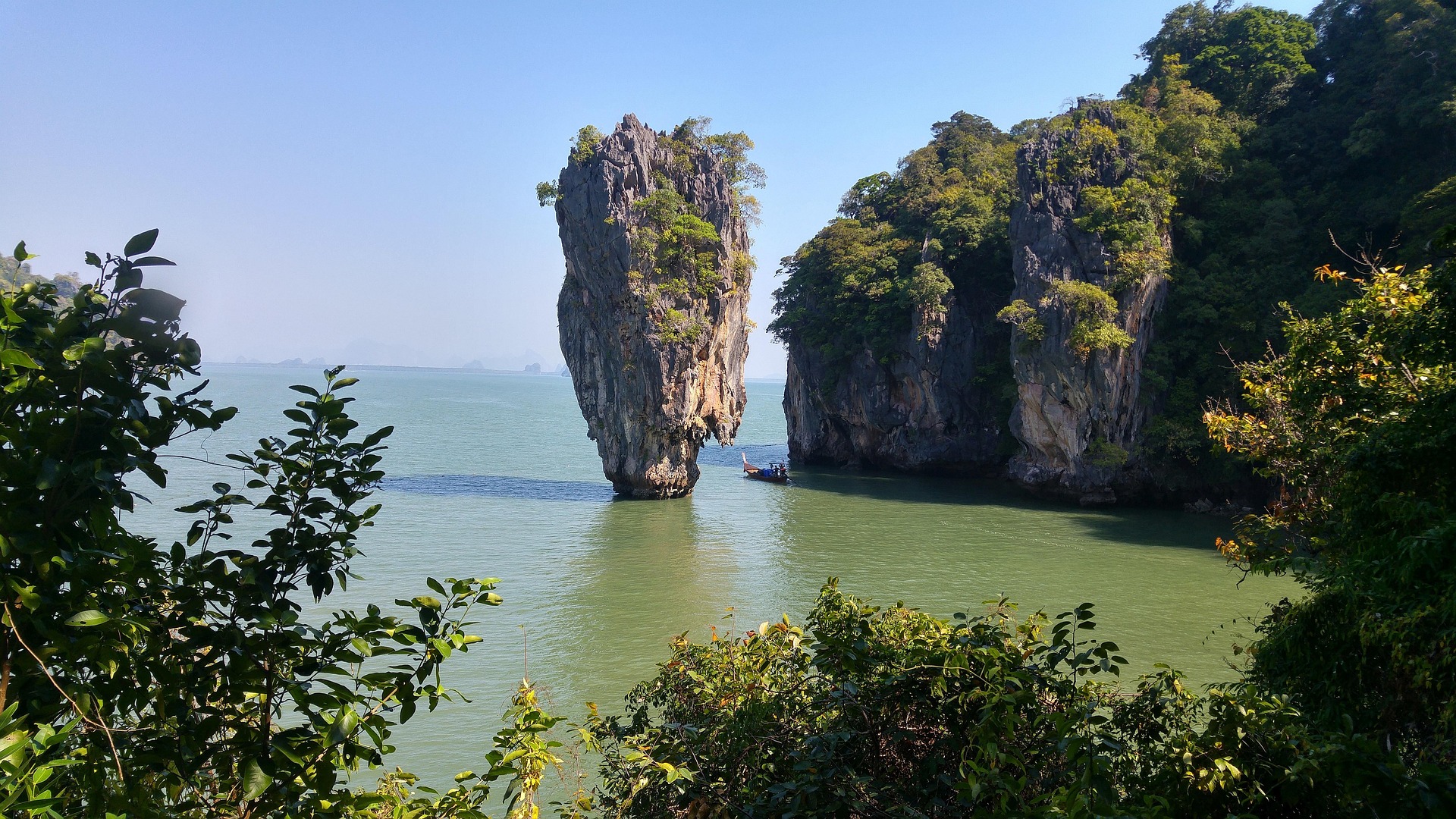
James Bond Island: Thailand's Most Iconic Rock Rising from the Sea
James Bond Island Thailand travel guide history
James Bond Island: Thailand's Most Iconic Rock Rising from the Sea
James Bond Island Thailand travel guide history
There is a place in southern Thailand where a single jagged limestone pinnacle rises almost vertically from the emerald waters of Phang Nga Bay, so dramatic in its shape that it seems to belong more to a painting than to the real world. Locals call it Khao Phing Kan, meaning leaning rocks in Thai. The world knows it as James Bond Island, and once you see it, you understand why it became one of the most photographed landscapes in all of Southeast Asia.
The island earned its famous nickname in 1974 when the producers of the James Bond film The Man with the Golden Gun chose Phang Nga Bay as a filming location. In the film, the villain Francisco Scaramanga, played by Christopher Lee, keeps his secret lair on a remote island in this bay, and the towering karst pillar known as Ko Tapu appears dramatically in several scenes. Ko Tapu, meaning nail island in Thai, is the slender spike of rock that stands apart from the main island of Khao Phing Kan. It rises about 20 meters from the water and its base is narrower than its top, giving it the appearance of something that should not physically be able to stand upright. Yet there it has stood for millions of years.
Before 1974, Phang Nga Bay was known mainly to the fishing communities who had worked its waters for generations and to the sea nomads, the Moken people, who had long navigated the region's islands and caves. The film changed everything. Within years of its release, tourists began arriving specifically to see the locations from the movie, and James Bond Island became one of the anchor attractions of southern Thailand's booming tourism industry.
HOW JAMES BOND ISLAND FORMED
The dramatic scenery of Phang Nga Bay is the result of geological processes that unfolded over hundreds of millions of years. The limestone karst formations that rise from the bay are remnants of ancient coral reefs and marine sediments that accumulated during periods when the area was covered by a warm shallow sea. Over time these sediments compressed into limestone, then tectonic forces pushed the rock upward. Erosion by rain, wind, and the sea then carved the limestone into the extraordinary shapes seen today, with sheer vertical walls, hidden caves, and sea caves called hongs, a Thai word meaning room, that can be entered by kayak at low tide to reveal secret lagoons hidden entirely from view.
Ko Tapu itself is believed to have broken away from the main island of Khao Phing Kan during a landslide, possibly triggered by an earthquake, though the exact timeline is uncertain. The narrowing of its base is the result of wave erosion at the waterline, which has eaten away the softer rock over thousands of years. Scientists have noted that the base is eroding at a measurable rate, though Ko Tapu is expected to stand for many thousands of years to come.
PHANG NGA BAY: THE BROADER LANDSCAPE
James Bond Island sits within Ao Phang Nga National Park, established in 1981 and covering 400 square kilometers of sea, islands, and mangrove forests. The bay contains more than 40 islands of varying sizes, many of them uninhabited. The water ranges from translucent green near the limestone cliffs to a deeper blue in the open bay.
The bay is one of the best-preserved marine environments in Thailand, sheltered from the open ocean and protected by its national park status. Mangrove forests line many of the shorelines, providing critical habitat for fish, crustaceans, and bird species. The park is home to monitor lizards, crab-eating macaques, and a wide variety of seabirds. The waters contain diverse marine life including reef fish, sea turtles, and the occasional dugong.
Phang Nga Bay is also notable for its cave systems. Tham Lod cave on Ko Panak island is a sea cave that can be navigated by kayak, passing through chambers where stalactites hang from the ceiling and opening suddenly into a hidden interior lagoon open to the sky. These enclosed lagoons, or hongs, are ecosystems unto themselves, sheltered from the outside world and filled with unique vegetation and birdlife.
VISITING JAMES BOND ISLAND TODAY
The island is located approximately 100 kilometers north of Phuket and about 30 kilometers from the town of Phang Nga. The most common way to visit is by longtail boat or speedboat from Phuket, Krabi, or Phang Nga town, typically as part of a guided tour of the bay. The journey by speedboat from Phuket takes approximately one hour. Longtail boat tours operate at a more leisurely pace and often include stops at fishing villages and caves along the way.
Upon arrival at Khao Phing Kan, visitors land on a small beach and can walk the short trail around the main island, viewing Ko Tapu from several angles. The views are remarkable from every direction, but the classic photograph of Ko Tapu framed against the surrounding islands and water is taken from the beach directly in front of it.
The island receives a very large number of visitors each year, and this popularity has brought challenges. On busy days the small beach and trails can become crowded, particularly during the peak tourist season between November and April. The Royal Thai government and the national park authorities have introduced visitor management measures over the years, including limits on the number of boats allowed to anchor at the island simultaneously and restrictions on what can be brought ashore.
There are vendors on the island selling food and souvenirs, including items themed around the James Bond film connection. A small museum near the beach provides context about the island's geology and its role in the 1974 film.
The best time to visit is during the dry season, which runs from November through April. During the monsoon season, from May through October, the bay can be rough and some boat services are reduced, though the landscape takes on a moody and dramatic character in the rain that many photographers find compelling.
THE MAN WITH THE GOLDEN GUN AND THAI TOURISM
The 1974 film was the ninth in the official James Bond series and starred Roger Moore as Bond alongside Christopher Lee as the assassin Scaramanga. The production team scouted locations across Southeast Asia before settling on Phang Nga Bay for its key villain's island scenes. The film also featured Hong Kong and Macau, but it is the Thai limestone scenery that has most endured in the popular imagination.
The film's legacy for Thai tourism is difficult to overstate. Before The Man with the Golden Gun, southern Thailand was a relatively obscure destination for international visitors. The film introduced the landscape to global audiences at a moment when air travel was becoming more accessible and international tourism was growing rapidly. It is widely credited with helping to establish Phuket and the surrounding region as one of the world's premier beach and island destinations.
Thailand's tourism industry has acknowledged this debt. The island's official designation as James Bond Island, rather than its traditional Thai name of Khao Phing Kan, is itself a recognition of how completely the film association has defined the location for international visitors.
ENVIRONMENTAL PRESSURES AND CONSERVATION
The enormous popularity of James Bond Island has brought environmental pressures that park authorities have worked to address. Coral reefs in parts of the bay have suffered from boat anchors and physical contact by visitors. Waste management on the small island has been an ongoing challenge. The sheer volume of visitors, with some estimates suggesting over a million people visiting Phang Nga Bay annually, creates pressure on a relatively fragile ecosystem.
In response, Thai authorities have worked with tour operators to establish mooring buoys that prevent anchor damage to the seafloor. Strict rules against feeding the macaque monkeys that live on the islands help prevent behavioral changes in the animals. The national park entrance fee contributes to conservation funding.
Environmental groups have at various times called for stricter limits on visitor numbers, particularly to the most sensitive sites within the bay. The balance between tourism, which provides livelihoods for tens of thousands of people in the region, and the preservation of the natural environment that makes the area valuable in the first place, remains an ongoing conversation in Thai conservation circles.
A PLACE UNLIKE ANY OTHER
Whatever name you know it by, whether Ko Tapu, Khao Phing Kan, or simply James Bond Island, the experience of seeing this landscape in person tends to exceed expectations even for visitors who have seen hundreds of photographs beforehand. The scale of the limestone karsts, the color of the water, the silence of the hidden lagoons accessible only by kayak through low cave entrances, and the sheer improbability of Ko Tapu standing as it does, narrow at the base and widening toward the top, combine into something that stays with visitors long after they have left.
Thailand has no shortage of beautiful places. But James Bond Island occupies a particular place in the global imagination, a landscape so distinctive that a single image of it is instantly recognizable to people who have never set foot in Asia. That is a rare thing. And unlike a film set, which can be dismantled when production wraps, this one was here for millions of years before the cameras arrived and will be here for millions of years after the last print of the film has faded.
SOURCES
Tourism Authority of Thailand, Phang Nga Bay: https://www.tourismthailand.org/Attraction/ao-phang-nga-national-park
UNESCO, Geological Heritage of Phang Nga Bay: https://www.unesco.org
Country Reports, Thailand: https://www.countryreports.org/country/Thailand.htm
https://www.countryreports.org