English
 Español
 中文
中文 हिन्दी
 Français
Government and Politics
Government and Politics of Cook Islands
Government structure, leadership, capital, military, and national symbols of Cook Islands.
Government Structure
Constitutional foundations, branches, parties, and leadership.
- Government Type
- self-governing parliamentary democracy
- Administrative Divisions
- none
- Legal System
- based on New Zealand law and English common law
- Suffrage
- NA years of age; universal adult
- Executive Branch
- chief of state: King CHARLES III (since 8 September 2022), represented by Sir Tom MARSTERS (since 9 August 2024); New Zealand High Commissioner represents New Zealand interests in the Cook Islands head of government: Prime Minister Mark BROWN (since 1 October 2020); Deputy Prime Minister Teariki HEATHER (since 2024) cabinet: Cabinet chosen by the prime minister; collectively responsible to Parliament elections: none; the monarch is hereditary; the King's representative is appointed by the monarch on the advice of the Cook Islands Government; the New Zealand High Commissioner is appointed by the New Zealand Government; following legislative elections, the leader of the majority party or the leader of the majority coalition usually becomes prime minister
- Legislative Branch
- unicameral Parliament (25 seats; members elected by popular vote to serve five-year terms) elections: last held 7 September 2004 (next to be held by 2009) election results: percent of vote by party - NA%; seats by party - CIP 10, DAP 9, Demo Tumu 4, independent 1; note - one seat undecided pending by-election note: the House of Ariki (chiefs) advises on traditional matters and maintains considerable influence, but has no legislative powers
- Judicial Branch
- High Court
- Political Parties
- Cook Islands National Party or CIN [Teariki HEATHER]; Cook Islands People's Party or CIP [Geoffrey HENRY]; Demo Party Tumu [Robert WOONTON]; Democratic Alliance Party or DAP [Terepai MAOATE]; New Alliance Party or NAP [Norman GEORGE]
- Head of State
- Queen ELIZABETH II
- Head of Government
- Prime Minister Jim MARURAI
- Cabinet
- Cabinet chosen by the prime minister; collectively responsible to Parliament
- Elections
- the monarch is hereditary; the UK representative is appointed by the monarch; the New Zealand high commissioner is appointed by the New Zealand Government; following legislative elections, the leader of the majority party or the leader of the majority coalition usually becomes prime minister
- Constitution
- 4-Aug-65
- Independence
- none (became self-governing in free association with New Zealand on 4 August 1965 and has the right at any time to move to full independence by unilateral action)
- National Holiday
- Constitution Day, first Monday in August (1965)
- International Organization Participation
- ACP, AsDB, FAO, ICAO, ICFTU, IFAD, IFRCS, IOC, OPCW, PIF, Sparteca, UNESCO, WHO, WMO
- Diplomatic Representation in the U.S.
- none (self-governing in free association with New Zealand)
- U.S. Diplomatic Representation
- none (self-governing in free association with New Zealand)
Capital City
Seat of government and political history.
- Capital City
- Avarua
- Location
- 21 12 S, 159 46 W
- Time Difference
- UTC-10 (5 hours behind Washington, DC, during Standard Time)
Military
Branches, service obligations, expenditures, and manpower.
- Military Branches
- No regular military forces; National Police Department
National Symbols
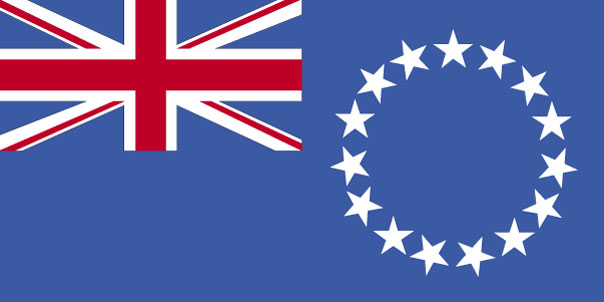
Flag, anthem, and other symbols of national identity.