English
 Español
 中文
中文 हिन्दी
 Français
Government and Politics
Government and Politics of Luxembourg
Government structure, leadership, capital, military, and national symbols of Luxembourg.
Government Structure
Constitutional foundations, branches, parties, and leadership.
- Government Type
- constitutional monarchy
- Administrative Divisions
- 3 districts; Diekirch, Grevenmacher, Luxembourg
- Legal System
- based on civil law system; accepts compulsory ICJ jurisdiction
- Suffrage
- 18 years of age; universal and compulsory
- Citizenship
- citizenship by birth: limited to situations where the parents are either unknown, stateless, or when the nationality law of the parents' state of origin does not permit acquisition of citizenship by descent when the birth occurs outside of national territory citizenship by descent only: at least one parent must be a citizen of Luxembourg dual citizenship recognized: yes residency requirement for naturalization: 7 years
- Executive Branch
- chief of state: Grand Duke HENRI (since 7 October 2000); Heir Apparent Prince GUILLAUME (son of the monarch, born 11 November 1981) head of government: Prime Minister Jean-Claude JUNCKER (since 1 January 1995) and Vice Prime Minister Jean ASSELBORN (since 31 July 2004) cabinet: Council of Ministers recommended by the prime minister and appointed by the monarch elections: none; the monarch is hereditary; following popular elections to the Chamber of Deputies, the leader of the majority party or the leader of the majority coalition is usually appointed prime minister by the monarch; the deputy prime minister is appointed by the monarch; they are responsible to the Chamber of Deputies note: government coalition - CSV and LSAP
- Legislative Branch
- unicameral Chamber of Deputies or Chambre des Deputes (60 seats; members are elected by direct popular vote to serve five-year terms) elections: last held 13 June 2004 (next to be held by June 2009) election results: percent of vote by party - CSV 36.1%, LSAP 23.4%, DP 16.1%, Green Party 11.6%, ADR 10%; seats by party - CSV 24, LSAP 14, DP 10, Green Party 7, ADR 5 note: there is also a Council of State that serves as an advisory body to the Chamber of Deputies; the Council of State has 21 members appointed by the Grand Duke on the advice of the prime minister
- Judicial Branch
- judicial courts and tribunals (3 Justices of the Peace, 2 district courts, and 1 Supreme Court of Appeals); administrative courts and tribunals (State Prosecutor's Office, administrative courts and tribunals, and the Constitutional Court); judges for all courts are appointed for life by the monarch
- Political Parties
- Action Committee for Democracy and Justice or ADR [Gast GIBERYEN]; Christian Social People's Party or CSV (also known as Christian Social Party or PCS) [Francois BILTGEN]; Democratic Party or DP [Claude MEISCH]; Green Party [Francois BAUSCH]; Luxembourg Socialist Workers' Party or LSAP [Alex BODRY]; Marxist and Reformed Communist Party dei Lenk/la Gauche (the Left) [no formal leadership]; other minor parties
- Head of State
- Grand Duke HENRI
- Head of Government
- Prime Minister Jean-Claude JUNCKER
- Cabinet
- Council of Ministers recommended by the prime minister and appointed by the monarch
- Elections
- monarch is hereditary; following popular elections to the Chamber of Deputies, the leader of the majority party or the leader of the majority coalition is usually appointed prime minister by the monarch; the deputy prime minister is appointed by the monarch; they are responsible to the Chamber of Deputies note: government coalition - CSV and LSAP
- Constitution
- 17 October 1868, occasional revisions
- Independence
- 1839 (from the Netherlands)
- National Holiday
- National Day (Birthday of Grand Duchess Charlotte) 23 June
- International Organization Participation
- ACCT, AsDB, Australia Group, Benelux, CE, EAPC, EBRD, EIB, EMU, EU, FAO, IAEA, IBRD, ICAO, ICC, ICCt, ICFTU, ICRM, IDA, IEA, IFAD, IFC, IFRCS, ILO, IMF, IMO, Interpol, IOC, IOM, ISO, ITU, NATO, NEA, NSG, OECD, OPCW, OSCE, PCA, UN, UNCTAD, UNESCO, UNIDO, UPU, WCL, WCO, WEU, WHO, WIPO, WMO, WTrO, ZC
- Diplomatic Representation in the U.S.
- chief of mission: Ambassador Joseph WEYLAND chancery: 2200 Massachusetts Avenue NW, Washington, DC 20008 telephone: [1] (202) 265-4171 FAX: [1] (202) 328-8270 consulate(s) general: New York, San Francisco
- U.S. Diplomatic Representation
- chief of mission: Ambassador Ann WAGNER embassy: 22 Boulevard Emmanuel Servais, L-2535 Luxembourg City mailing address: American Embassy Luxembourg, Unit 1410, APO AE 09126-1410 (official mail); American Embassy Luxembourg, PSC 9, Box 9500, APO AE 09123 (personal mail) telephone: [352] 46 01 23 FAX: [352] 46 14 01
Capital City
Seat of government and political history.
- Capital City
- Luxembourg
- Location
- 49 36 N, 6 07 E
- Time Difference
- UTC+1 (6 hours ahead of Washington, DC, during Standard Time)
- History
- the name derives from the Celtic lucilem (little) and the German burg (castle or fortress) to produce the meaning of the "little castle"; the name is actually ironic, since for centuries the Fortress of Luxembourg was one of Europe's most formidable fortifications; the name passed to the city that grew around the fortress
Embassy and Diplomatic Representation
Embassy location and contact details.
U.S. Embassy Luxembourg 22, Blvd Emmanuel Servais, L-2535 Luxembourg City Telephone: (352) 46 01 23 (available 24/7), Emergency after-hours telephone: (352) 621 547 133 (duty officer) Facsimile: (352) 46 19 39 Email: luxembourgconsular@state.gov
Military
Branches, service obligations, expenditures, and manpower.
- Military Branches
- Luxembourg Army (L'Armee Luxembourgeoises)
- Service Age and Obligation
- 18-24 years of age for male and female voluntary military service; no conscription; Luxembourg citizen or EU citizen with 3-year residence in Luxembourg
National Symbols
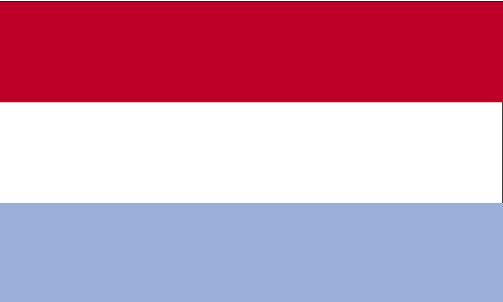
Flag, anthem, and other symbols of national identity.