English
 Español
 中文
中文 हिन्दी
 Français
Government and Politics
Government and Politics of Niue
Government structure, leadership, capital, military, and national symbols of Niue.
Government Structure
Constitutional foundations, branches, parties, and leadership.
- Government Type
- self-governing parliamentary democracy
- Administrative Divisions
- none; note - there are no first-order administrative divisions as defined by the US Government, but there are 14 villages at the second order
- Legal System
- English common law
- Suffrage
- 18 years of age; universal
- Executive Branch
- chief of state: Queen ELIZABETH II (since 6 February 1952); the UK and New Zealand are represented by New Zealand High Commissioner John BRYAN (since NA May 2000) head of government: Premier Young VIVIAN (since 1 May 2002) cabinet: Cabinet consists of the premier and three ministers elections: the monarch is hereditary; premier elected by the Legislative Assembly for a three-year term; election last held 12 May 2005 (next to be held May 2008) election results: Young VIVIAN reelected premier; percent of Legislative Assembly vote - Young VIVIAN (NPP) 85%, O'Love JACOBSEN (independent) 15%
- Legislative Branch
- unicameral Legislative Assembly (20 seats; members elected by popular vote to serve three-year terms; 6 elected from a common roll and 14 are village representatives) elections: last held 30 April 2005 (next to be held April 2008) election results: percent of vote by party - NA%; seats by party - NA
- Judicial Branch
- Supreme Court of New Zealand; High Court of Niue
- Political Parties
- Niue People's Action Party or NPP [Young VIVIAN]; Alliance of Independents or AI [leader NA]
- Head of State
- Queen ELIZABETH II
- Head of Government
- Acting Administrator Owen WALSH
- Cabinet
- Executive Council is made up of four of the nine members of the Legislative Assembly; the council devises government policy and acts as an advisor to the administrator
- Elections
- the monarch is hereditary; administrator appointed by the governor general of Australia and represents the monarch and Australia
- Constitution
- 19 October 1974 (Niue Constitution Act)
- Independence
- on 19 October 1974, Niue became a self-governing parliamentary government in free association with New Zealand
- National Holiday
- Waitangi Day (Treaty of Waitangi established British sovereignty over New Zealand), 6 February (1840)
- International Organization Participation
- ACP, FAO, PIF, Sparteca, UNESCO, WHO, WMO
- Diplomatic Representation in the U.S.
- none (self-governing territory in free association with New Zealand)
- U.S. Diplomatic Representation
- none (self-governing territory in free association with New Zealand)
Capital City
Seat of government and political history.
- Capital City
- Alofi
- Location
- 19 01 S, 169 55 W
- Time Difference
- UTC-11 (6 hours behind Washington, DC, during Standard Time)
Military
Branches, service obligations, expenditures, and manpower.
- Military Branches
- no regular indigenous military forces; Police Force
National Symbols
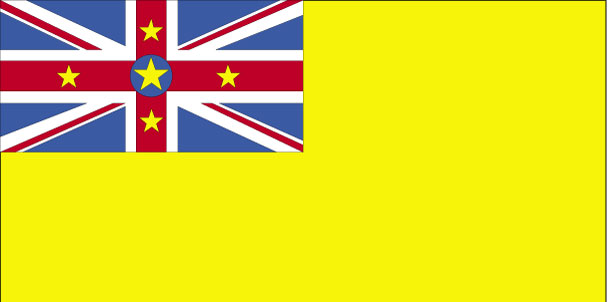
Flag, anthem, and other symbols of national identity.